Disclosure: airfryerkitchensupply.com is reader-supported. When you buy through links on our site, we may earn an affiliate commission at no extra cost to you.
Where to buy
Every model shortlisted for this guide to the best micom rice cookers with induction heating is sold on Amazon, where listings carry the current availability for each one. Start with these direct links:
- Zojirushi NP-HCC10XH Induction Heating System Rice Cooker, 5.5-Cup — Check the current price on Amazon
- Zojirushi NP-HCC18XH Induction Heating Rice Cooker, 10-Cup — Check the current price on Amazon
- Zojirushi NP-GBC05XT Induction Heating System Rice Cooker, 3-Cup — Check the current price on Amazon
- Tiger JKT-D10U 5.5-Cup Induction Heating Rice Cooker — Check the current price on Amazon
- CUCKOO CR-HA0810FG Induction Heating Rice Cooker, 8-Cup Uncooked — Check the current price on Amazon
- TOSHIBA Rice Cooker Induction Heating, 5.5 Cups, Low Carb — Check the current price on Amazon
The best micom rice cookers with induction heating combine two technologies that each fix a weakness of basic rice cookers. Micom, microcomputer control, adjusts time and temperature as the rice cooks instead of simply switching off at a set point. Induction heating heats the whole inner pot rather than a plate beneath it, so the water boils evenly from every side. Together they produce the most consistent plain rice a countertop machine can make. Every pick here was verified as a genuine micom induction model, not a fuzzy-logic plate cooker borrowing the language.
Set expectations on price and purpose before the picks. Induction micom cookers are premium appliances bought for one job done superbly, and they are priced like it, especially the Japanese- and Korean-made models. They will not pressure cook dinner or slow cook a stew, though several steam and cook grains, porridge and mixed dishes well. If rice is a daily staple and its quality is the difference between a good dinner and a flat one, this is the correct place to spend. If rice is a twice-a-month side, the honest advice is to buy a simpler cooker and better rice.
A word about who these machines are not for, because premium categories collect unhappy buyers. If your household’s rice is jasmine from a sack, cooked twice a week and served under a curry, a mid-tier conventional micom cooker will please you completely and this guide is an expensive detour. These induction models are for households where rice is the plate’s foundation, cooked daily and judged on its own. That self-knowledge, applied honestly, is worth more than any single pick below.
In this guide
Quick Picks
- Zojirushi NP-HCC10XH Induction Heating System Rice Cooker, 5.5-Cup — Best Overall: The NP-HCC10 is the reference induction micom cooker: the size most households need, Zojirushi’s mature fuzzy logic, and a reputation built on a decade of consistent white and brown rice. Check price on Amazon
- Zojirushi NP-HCC18XH Induction Heating Rice Cooker, 10-Cup — Best for Large Families: This is the HCC10’s formula at full family and entertaining scale: 10 cups uncooked for big households, rice-heavy cuisines and gatherings where the cooker runs twice a day. Check price on Amazon
- Zojirushi NP-GBC05XT Induction Heating System Rice Cooker, 3-Cup — Best Compact: The GBC05 brings full induction micom cooking to singles, couples and small kitchens: 3 cups uncooked, cooked properly at small scale, in a footprint a big cooker cannot match. Check price on Amazon
- Tiger JKT-D10U 5.5-Cup Induction Heating Rice Cooker — Best Mid-Tier IH: Tiger’s JKT-D10U is the value-conscious route into Japanese induction cooking: 5.5 cups, a dozen settings, and Tiger’s long rice-cooker pedigree at a step below Zojirushi’s flagship tier. Check price on Amazon
- CUCKOO CR-HA0810FG Induction Heating Rice Cooker, 8-Cup Uncooked — Best Large Non-Pressure IH: The Cuckoo HA0810 is the big-capacity induction option that stays non-pressure: 8 cups uncooked, a dozen modes and a turbo cycle for households that want volume without pressure-cooker complexity. Check price on Amazon
- TOSHIBA Rice Cooker Induction Heating, 5.5 Cups, Low Carb — Best Low-Carb Mode: The Toshiba is the induction pick with a dietary angle: a low-carb, low-sugar rice mode that cooks rice in a steamer arrangement to reduce starch, inside a full 5.5-cup IH cooker. Check price on Amazon
How These Picks Were Chosen
We verified the induction claim model by model in each listing, because the category is polluted with conventional micom cookers whose titles sit one keyword away from induction. Every pick below states induction heating in its verified Amazon title; models that could not be confirmed as true IH were excluded, however good their reputations. ASINs and exact titles were confirmed account, using standard retail listings only.
We then compared the variables that separate these machines in daily use: capacity in uncooked cups, inner pot construction and coating, the menu set beyond white rice, brown, GABA, porridge, mixed and scorched settings among them, keep-warm behaviour over hours, and whether the inner lid detaches for washing, which decides whether a premium cooker stays pleasant in year three. Badges follow household type, because a 3-cup IH cooker and a 10-cup IH cooker are both excellent and entirely different purchases.
We also weighed the cost of ownership beyond the box: replacement inner pots are the expensive consumable in this class, so we favoured models whose pots are obtainable and whose coatings have a track record, and we checked that detachable inner lids, the part that decides whether the machine stays fresh, were present where the tier promises them. Two fashionable models were cut at this stage; at premium prices, unobtainable pots are disqualifying.
The 6 Best Micom Rice Cookers With Induction Heating

Zojirushi NP-HCC10XH Induction Heating System Rice Cooker, 5.5-Cup — Best Overall
The NP-HCC10 is the reference induction micom cooker: the size most households need, Zojirushi’s mature fuzzy logic, and a reputation built on a decade of consistent white and brown rice.
Strengths
- Even induction heat plus proven micom control gives the most repeatable results in this guide
- 5.5-cup size is the sweet spot for families who eat rice daily
- Menu depth covers brown, mixed, sushi and porridge styles without gimmicks
Trade-offs
- Premium tier, several times a basic cooker’s price, for a single-purpose machine
- Nonstick inner pot needs gentle handling to protect the coating
- No pressure, so brown rice takes its natural, longer time
Key specs (from the verified listing)
- Capacity: 5.5-cup uncooked
- Heating from listing: Induction Heating System
- Finish from listing: Stainless Dark Gray
Ask rice enthusiasts to name one induction cooker and this is the answer, and the verified listing confirms the essentials: Induction Heating System, 5.5-cup capacity, Zojirushi’s micom control. The reason for the consensus is boring in the best way: the rice is the same on Tuesday as on Saturday, the keep-warm does not dry the edges by evening, and the machine simply continues, year after year, which is what premium money is supposed to buy.
The 5.5-cup rating deserves translating: that is uncooked capacity, yielding roughly eleven cups cooked, enough for a family dinner with leftovers for fried rice. Households of one or two who cook a cup at a time should look at the 3-cup GBC05 below rather than habitually cooking at this pot’s minimum, because even the best micom prefers a reasonable fill.
One habit extends this pot’s life noticeably: cook, serve, and then soak the empty pot in warm water while you eat rather than letting rice dry onto the coating. The nonstick releases perfectly when treated that way and degrades when scraped at dried rice with anything harder than the paddle. It is a thirty-second kindness that decides whether the pot is pristine in year five.
Best for: families eating rice most days who want the reference IH cooker / Not suited for: small households cooking a cup at a time or tight budgets
Check on Amazon — check price on Amazon for the current listing.

Zojirushi NP-HCC18XH Induction Heating Rice Cooker, 10-Cup — Best for Large Families
This is the HCC10’s formula at full family and entertaining scale: 10 cups uncooked for big households, rice-heavy cuisines and gatherings where the cooker runs twice a day.
Strengths
- True 10-cup induction capacity, rare in a market of 5.5-cup flagships
- Same micom consistency as the smaller model at double the volume
- Keep-warm at scale suits households where dinner is served in shifts
Trade-offs
- Large footprint and a heavy pot when full of cooked rice
- Premium tier rises further with size
- Small batches cook less ideally than in the 5.5-cup model
Key specs (from the verified listing)
- Capacity: 1.8 L, 10-cup class
- Heating from listing: Induction Heating
- Finish from listing: Dark Gray
Capacity is the entire review, and it is enough. The verified listing confirms the 1.8-litre, 10-cup induction model, which means the household that cooks rice for eight, or cooks tomorrow’s lunchbox rice with tonight’s dinner, stops running the cooker twice. Induction matters more at this size, not less: a heating plate under a 10-cup pot creates a hot centre and cool edges, while induction drives the whole pot, so the top layer cooks like the bottom.
If your household is three people, this is the wrong pick no matter how good it is, because its best work happens above half full. If your household is seven, or your cuisine serves rice at lunch and dinner, it is the most rational premium purchase in this guide.
At this size, also plan where the steam goes. A 10-cup cooker vents a serious plume, and under a low cabinet that plume will mark the finish over a season. Pull the machine forward for cooking or place it where the steam rises freely; flagship owners learn this once, and the cooker earns a permanent, sensible spot rather than a rotating series of compromises.
Best for: large families and rice-at-every-meal households / Not suited for: small households or occasional rice cooks
Check on Amazon — check price on Amazon for the current listing.

Zojirushi NP-GBC05XT Induction Heating System Rice Cooker, 3-Cup — Best Compact
The GBC05 brings full induction micom cooking to singles, couples and small kitchens: 3 cups uncooked, cooked properly at small scale, in a footprint a big cooker cannot match.
Strengths
- True IH cooking at 3-cup scale, where small batches actually cook evenly
- Small footprint suits apartments, offices and dorm-adjacent living
- Same Zojirushi control quality as the flagship models
Trade-offs
- Cannot scale up for guests; a second cooking method is needed for crowds
- Price per cup of capacity is the highest in this guide
- Premium tier for a small machine requires genuine daily use to justify
Key specs (from the verified listing)
- Capacity: 0.54 L, 3-cup class
- Heating from listing: Induction Heating System
- Finish from listing: Stainless Dark Brown
Small rice cookers are usually the worst rice cookers, built down to a price with crude controls, and the GBC05 exists as the rebuttal. The verified listing confirms a 0.54-litre Induction Heating System model, which means one or two people get the same even heat and micom judgement as the flagship, at the batch size they actually eat. A single cup of rice cooked in this pot tastes like the same cup from the HCC10, which cannot be said of any budget mini cooker.
The buying logic is frequency. Cook rice five days a week for one or two people and the cost per year of service is trivial against the daily improvement. Cook it twice a month and it is an indulgence. The machine itself will not help you decide; your calendar will.
The GBC05 is also the office and studio pick of this guide: it cooks a proper lunch portion of rice at a desk-adjacent counter without the sad compromise of a microwave pouch, and its small pot washes in a small sink. For the worker who eats rice daily away from a family kitchen, it converts a mediocre meal routine into a genuinely good one.
Best for: singles and couples who eat rice daily in small batches / Not suited for: anyone who regularly cooks for guests
Check on Amazon — check price on Amazon for the current listing.

Tiger JKT-D10U 5.5-Cup Induction Heating Rice Cooker — Best Mid-Tier IH
Tiger’s JKT-D10U is the value-conscious route into Japanese induction cooking: 5.5 cups, a dozen settings, and Tiger’s long rice-cooker pedigree at a step below Zojirushi’s flagship tier.
Strengths
- 12 auto-cook settings cover the practical grain repertoire
- Tiger’s inner-pot and tacook-style versatility suits mixed dishes
- Mid tier makes genuine IH accessible without flagship pricing
Trade-offs
- Finish and interface polish trail the Zojirushi flagships
- Accessory and community knowledge base is smaller in English-language sources
- Still a premium purchase next to any conventional micom cooker
Key specs (from the verified listing)
- Capacity: 5.5-cup
- Heating from listing: Induction Heating
- Menus from listing: 12 auto-cook settings
Tiger is the other great Japanese rice name, and the verified listing confirms the JKT-D10U as a 5.5-cup induction model with 12 auto-cook settings. In practice it trades blows with the HCC10 on the plate: rice quality is excellent, the menus are sensible, and the differences come down to interface taste and the last few percent of refinement rather than a class gap. For many buyers that makes it the smart-money IH pick.
Where Zojirushi pulls ahead is ecosystem and the accumulated decade of English-language troubleshooting, recipes and parts knowledge. Where Tiger pulls ahead is the tier for equivalent cooking. If you are stepping up from a basic cooker and want induction’s even heat without the flagship bill, start the comparison here.
Tiger’s tacook tradition, cooking a side dish in a tray above the rice, is worth exploring on this model if your dinners pair rice with a steamed or simmered accompaniment. It is the closest a rice cooker comes to cooking a meal, and for small households it can retire a steamer basket entirely. Check the tray compatibility for your exact unit when ordering accessories.
Best for: buyers wanting Japanese IH quality at a mid tier / Not suited for: buyers who value the largest support ecosystem over savings
Check on Amazon — check price on Amazon for the current listing.
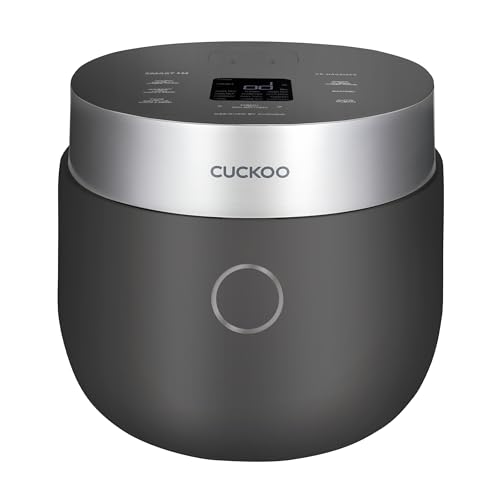
CUCKOO CR-HA0810FG Induction Heating Rice Cooker, 8-Cup Uncooked — Best Large Non-Pressure IH
The Cuckoo HA0810 is the big-capacity induction option that stays non-pressure: 8 cups uncooked, a dozen modes and a turbo cycle for households that want volume without pressure-cooker complexity.
Strengths
- 8-cup uncooked capacity exceeds most IH rivals short of the 10-cup class
- Turbo mode answers the weeknight problem of forgotten rice
- 12 modes cover grains and mixed dishes beyond plain white rice
Trade-offs
- Large machine; measure the counter and cabinet clearance
- Non-pressure design means brown and GABA cycles take their natural time
- Cuckoo’s premium support experience varies more by region than Zojirushi’s
Key specs (from the verified listing)
- Capacity: 8-cup uncooked, 16-cup cooked
- Heating from listing: Induction Heating
- Menus from listing: 12 cooking modes; Turbo Rice in 20-33 minutes per listing
Cuckoo’s strength in this guide is range, and the verified listing for the HA0810FG confirms a combination nobody else here quite offers: induction heating, 8-cup uncooked capacity, 12 cooking modes and a turbo rice cycle quoted in the listing at 20 to 33 minutes. That last feature is quietly the most used one in real kitchens, because the difference between a 50-minute and a 25-minute cook decides whether rice happens on a busy night.
Choose it over the Zojirushi 10-cup if your loads are big but not maximal and the turbo cycle appeals; choose the Zojirushi if you want the deepest track record at full size. Either way, this is a serious, made-for-rice-households machine, and its Korean engineering tradition in rice is as deep as Japan’s.
Cuckoo’s turbo cycle deserves a technique note: turbo rice is very good, but it is not identical to the standard cycle, running slightly firmer. Use turbo for the nights it saves and the standard cycle when the rice is the point of the meal, and you get both the convenience and the quality the machine was bought for, each on the right evening.
Best for: larger households wanting IH volume plus a fast turbo cycle / Not suited for: pressure-rice seekers or small kitchens
Check on Amazon — check price on Amazon for the current listing.
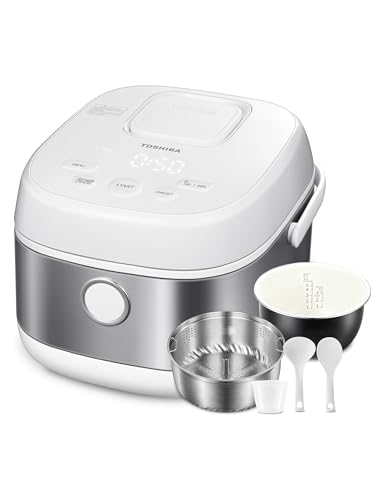
TOSHIBA Rice Cooker Induction Heating, 5.5 Cups, Low Carb — Best Low-Carb Mode
The Toshiba is the induction pick with a dietary angle: a low-carb, low-sugar rice mode that cooks rice in a steamer arrangement to reduce starch, inside a full 5.5-cup IH cooker.
Strengths
- Dedicated low-carb rice function no other pick here offers
- Full induction heating and 8 functions for everyday rice duty
- 24-hour timer suits scheduled breakfasts and dinners
Trade-offs
- Low-carb mode changes texture; it is a different dish, not identical rice minus guilt
- Brand’s rice-cooker presence and parts support are thinner than Zojirushi or Cuckoo
- Health outcomes depend on the whole diet; the cooker is a tool, not a treatment
Key specs (from the verified listing)
- Capacity: 5.5 cups uncooked
- Heating from listing: Induction Heating
- Functions from listing: Low carb low sugar mode, digital steamer functions, 8 cooking functions, 24H timer and keep warm
The verified listing is specific about this machine’s distinction: induction heating at 5.5 cups, eight cooking functions, and a low carb low sugar mode using a steamer arrangement. That mode cooks the rice so that some starch-rich water is separated rather than fully absorbed, producing a lighter-textured result that some households managing carbohydrate intake genuinely prefer as their daily rice. We make no medical claims for it; it is a cooking method with a different outcome, and buyers who want it know exactly who they are.
As a plain rice cooker it remains a proper IH machine with a useful timer, so the low-carb mode is an addition rather than the whole product. If nobody in the house will use that mode, the Zojirushi and Tiger above are the more proven spends. If it will be used daily, this is the only pick that does it with induction.
If you use the low-carb mode, treat its output as its own ingredient: the lighter, less sticky result suits fried rice and grain-bowl styles particularly well, and it reheats cleanly. Households often end up running the Toshiba in two roles, standard IH rice for the table and low-carb batches for lunches, which is the most convincing real-world case for the feature.
Best for: households that will genuinely use a low-carb rice mode daily / Not suited for: buyers seeking the most proven flagship or pressure texture
Check on Amazon — check price on Amazon for the current listing.
Comparison Table
| Pick | Badge | Key spec | Best for |
|---|---|---|---|
| Zojirushi NP-HCC10XH Induction Heating System Rice Cooker, 5.5-Cup | Best Overall | 5.5-cup uncooked | families eating rice most days who want the reference IH cooker |
| Zojirushi NP-HCC18XH Induction Heating Rice Cooker, 10-Cup | Best for Large Families | 1.8 L, 10-cup class | large families and rice-at-every-meal households |
| Zojirushi NP-GBC05XT Induction Heating System Rice Cooker, 3-Cup | Best Compact | 0.54 L, 3-cup class | singles and couples who eat rice daily in small batches |
| Tiger JKT-D10U 5.5-Cup Induction Heating Rice Cooker | Best Mid-Tier IH | 5.5-cup | buyers wanting Japanese IH quality at a mid tier |
| CUCKOO CR-HA0810FG Induction Heating Rice Cooker, 8-Cup Uncooked | Best Large Non-Pressure IH | 8-cup uncooked, 16-cup cooked | larger households wanting IH volume plus a fast turbo cycle |
| TOSHIBA Rice Cooker Induction Heating, 5.5 Cups, Low Carb | Best Low-Carb Mode | 5.5 cups uncooked | households that will genuinely use a low-carb rice mode daily |
How to Choose: Micom Rice Cookers With Induction Heating
Capacity is measured in uncooked cups
Rice cooker capacity counts uncooked rice, and cooked rice roughly doubles, so a 5.5-cup cooker makes about eleven cups cooked. Match the cooker to your typical pot, not your largest: a cooker run habitually at a quarter of capacity makes worse rice than a smaller cooker run half full, because the micom’s judgement assumes a reasonable mass of rice and water. Daily rice for one or two means the 3-cup class; family dinners mean 5.5; two meals a day or five-plus rice eaters justify 8 to 10. Also weigh the pot’s physical size: a 10-cup induction cooker is a large appliance that lives on the counter permanently.
Leftovers change the maths in rice’s favour. Cooked rice refrigerates and freezes well and becomes fried rice, so sizing one step up and cooking every other day is a legitimate strategy, provided the cooker still runs at a sensible fill. What does not work is the reverse: a small cooker run twice for a big dinner, with the first batch drying on warm while the second cooks.
What induction actually changes
A conventional cooker heats a plate; the plate heats the pot’s base; the base heats the water. The result is a hot centre, cooler walls and rice that cooks unevenly in large or small batches. Induction generates heat in the pot itself, across its base and lower walls, so the whole mass of water comes up together and the micom’s fine adjustments actually apply to all the rice, not just the middle. The differences show most in brown rice, mixed grains and the top layer of a full pot, which is exactly where plate cookers disappoint. That is the honest case for the premium: not magic, but uniformity, repeated daily.
Micom control is the other half, and it matters independently: the cooker senses the temperature curve and adjusts for the amount of rice, the water temperature and the menu, rather than running a fixed clock. Fuzzy logic is the marketing name; the lived experience is that the same measured cup and water line produce the same rice in January and July. Judge these machines on that repeatability, not on menu counts.
Inner pots, lids and keep-warm
The inner pot is the wear part and the flavour part. Thick, heavy pots with quality nonstick coatings cook most evenly and last longest when treated gently: rice paddle and soft sponge only, never the dishwasher’s harshest cycle if you want the coating to last, whatever the listing permits. Check whether the inner lid detaches. Rice steam condenses there, and a lid that pops off for washing keeps a premium cooker fresh, while a fixed lid slowly seasons the machine with old steam. Keep-warm quality separates the brands in daily life: good IH cookers hold rice pleasantly for many hours, lesser ones dry the surface and harden the edges, so households that serve in shifts should weight this as heavily as the cooking itself.
Finally, treat menu lists realistically. White, brown, mixed, porridge and a steam or slow-cook extra cover real life. GABA mode, which germinates brown rice for a softer, nuttier result, is genuinely used by brown-rice households. Cake and bread modes are brochure filler. Buy the menus you will press weekly.
Budget Tiers in Plain Language
There is no budget tier inside true induction; the technology sets a floor, and the variance above it buys capacity, origin and refinement. The Tiger is the value expression of the class, the Zojirushi HCC line its reference, the Cuckoo the capacity-and-turbo alternative, and the Toshiba a specialist. The real budget decision sits one category down, between induction and a good conventional micom cooker, and it should be made on frequency: daily rice amortises the induction premium to pennies a bowl, while weekly rice never does. Inside the class, choose by size and school, not by hunting a discount that the technology does not offer.
Three Rice Households
The daily-rice family of four. Rice at dinner most nights, leftovers at lunch. The HCC10’s 5.5 cups is this household’s exact size, run near its comfortable fill, and its keep-warm carries the second sitting. This is the buyer the entire category was designed for, and the flagship premium dissolves into a few cents a day across the machine’s decade.
The brown-rice household. Whole grains daily, often mixed, sometimes GABA. Induction’s even heat matters most here, because brown and mixed grains are where plate cookers produce their worst gradients, and the menus on the Zojirushi and Tiger models treat these grains as first-class citizens rather than a white-rice afterthought. If your grain basket is mostly brown, this category is not a luxury; it is the fix.
The couple in a small flat. Two people, one induction hob’s worth of counter, rice four nights a week. The GBC05’s 3 cups is the honest size, and its footprint respects the kitchen it lives in. The mistake version of this household buys the 10-cup flagship for imagined dinner parties and cooks a resentful cup and a half in it for years; the parties, when they happen, can borrow a pot.
Induction Versus Pressure Induction: Do You Need the Pressure?
The next guide in this series covers pressurized induction cookers, so the boundary deserves a plain explanation here. Pressure induction adds a sealed, pressurised cook to induction’s even heat, producing rice with a distinctly chewier, glossier, more separate-grain character that many Korean and Japanese enthusiasts prefer, plus faster brown rice. It costs more, the pots and gaskets are more complex, and the texture, while prized, is a preference rather than an upgrade everyone tastes as better. Plenty of serious rice households prefer the softer, classic result of non-pressure IH.
The practical rule: if you grew up on pressure-cooked rice or eat mostly short-grain rice where that chew is the point, save for the pressure models. If your standard is excellent fluffy white, brown and mixed rice without a texture agenda, the machines in this guide deliver it for less, with simpler pots to wash and no gaskets to age. Neither camp is wrong, and both are better served by an honest mid-tier model in their own camp than a flagship in the wrong one.
There is a quieter benefit to this class that rarely appears in comparisons: consistency changes how a household cooks everything else. When the rice is a known quantity, perfectly repeatable, the rest of the meal can take risks: a new curry, an experimental side, guests fed on a dish you have never served. Cooks with unreliable rice cook defensively around it. That is why owners of induction flagships so often describe the purchase as relaxing rather than exciting, and why so few of them, having lived with the consistency for a year, can imagine returning to a cooker whose results depend on the day. The premium buys certainty, and certainty, served daily, is a flavour of its own. Serve that certainty next to a new dish every week, and the cooker quietly raises the standard of the whole kitchen, one dependable bowl at a time, for years on end.
The Rice Itself: The Variable No Cooker Can Fix
An induction flagship will expose your rice before it improves it. Old, stale or poorly stored grain cooks up dull in a great cooker, because the machine’s consistency removes the noise that used to hide the ingredient. Households stepping up to this class usually discover their second purchase is better rice: fresher stock, bought in quantities they finish within a couple of months, stored airtight and cool. Short-grain households notice the largest jump, but every style benefits, and the cooker-plus-rice upgrade together costs less than the next tier of cooker alone.
Water is the other silent variable. Very hard water can leave rice tasting flat and looking grey; very soft water can push it toward softness. If your results in a new IH cooker are oddly worse than a friend’s identical model, cook one batch with filtered water before blaming the machine. Several mysterious disappointments in this category end at exactly that experiment.
Keeping an Induction Cooker at Its Best
The care routine is short and specific. Wash the inner pot with a soft sponge and never metal, dry the lid area and condensation collector after use, and wipe the temperature sensor in the base if grains or spills reach it, because the micom’s judgement is only as good as its sensor’s contact. The detachable inner lid, where fitted, should be rinsed weekly; it is the part that decides whether batch two hundred smells as clean as batch two.
Descaling is rarely needed for a rice cooker, but the steam vent and lid gasket area benefit from a monthly water-only cycle with a splash of vinegar in the pot if your water is hard, followed by a plain water cycle. Store the machine with the lid closed and the pot inside, cord loose. Do that, and an induction flagship’s realistic service life is a decade of daily rice, which is the timescale its price quietly assumes.
How to Cook Perfect Rice in an Induction Micom Cooker
Induction and micom control forgive a lot, but the fundamentals still decide the result. This routine gets the best from any pick in this guide.
- Measure rice with the cup supplied with the cooker, not a kitchen cup measure; cooker cups are a standard 180 ml and the pot’s water lines assume them.
- Rinse the rice in the pot or a bowl, swirling and draining, until the water runs mostly clear for white rice; this removes surface starch that makes the result gummy.
- Add water to the line inside the pot that matches your cups and menu, levelling the rice first; the lines are calibrated per menu, so use the brown line for brown rice, not the white one.
- Rest the loaded pot for 20 to 30 minutes before starting when time allows, especially for brown and mixed rice, so the grains hydrate evenly.
- Select the exact menu for the rice in the pot and let the cooker finish without lifting the lid; the micom’s final steaming phase is part of the cook.
- When it switches to warm, wait about ten minutes, then open and fluff with the paddle in cutting, folding strokes to release steam and separate the grains.
- Serve, then close the lid promptly if the rest is holding; every open minute dries the surface of the remaining rice.
For keep-warm beyond a few hours, portion and refrigerate instead; even the best warm cycle slowly dries rice, and chilled rice is tomorrow’s superior fried rice. Rinse the detachable inner lid and steam vent weekly so old condensation never seasons a fresh batch.
Pre-Purchase Checklist for an Induction Rice Cooker
Premium single-purpose appliances deserve a stricter checklist than most. These five checks confirm that an induction flagship fits your kitchen, your grains and your habits before it takes its permanent counter spot.
- Count your typical batch in uncooked cups. Use last week’s real pots, not aspirations. The cooker whose comfortable fill matches that number is your size, and it is smaller than most buyers first imagine. When between sizes, remember that leftovers reheat well and that cooking twice in a small cooker beats cooking small in a big one.
- List your grains honestly. White short-grain daily, brown on weekends, the occasional porridge: the menu set you need is in every pick here. Mostly long-grain under curries, twice a week: reconsider the category, because a conventional micom cooker will serve you nearly as well and the savings buy a year of excellent rice.
- Confirm the replacement pot before the cooker. Find the inner pot for the exact model, note its price and availability, and keep the part number with your records. The pot is the machine’s wear surface and its most expensive spare; a flagship whose pot cannot be replaced is a flagship with a deadline.
- Give it a permanent, steam-safe spot. These cookers live on counters and vent real steam. Choose the spot with headroom, away from cabinet undersides the plume would mark, near the rice storage and the sink. A flagship that must be fetched from a cupboard will be used like a cupboard appliance, which defeats the purchase.
- Budget the rice upgrade with the machine. Set aside a small part of the total for genuinely good, fresh rice in the quantity you will finish within two months. The cooker will show you exactly what your grain is made of; arriving with worthy grain turns the first week into the demonstration that justifies everything.
Common Buying Mistakes
- Using a kitchen measuring cup. Cooker cups and pot lines are one system. Mixing measures is the most common cause of mysteriously wet or dry rice.
- Skipping the rinse for white rice. Surface starch turns induction’s even heat into even gumminess. Rinse until the water runs mostly clear.
- Cooking tiny batches in a huge cooker. A cup of rice in a 10-cup pot cooks unevenly however smart the controls. Match batch to cooker size.
- Scraping the pot with metal. The nonstick inner pot is the machine’s precision surface. Paddles and soft sponges only, or the coating and the rice both degrade.
- Judging rice the second the cycle ends. The resting and fluffing step finishes the texture. Rice judged straight from the beep is being judged half-done.
- Leaving rice on warm overnight. Quality falls and food safety margins shrink. Refrigerate leftovers and reheat properly instead.
Final Recommendation
The Zojirushi NP-HCC10 is the induction micom cooker most households should buy, with its 10-cup sibling for large families and the 3-cup GBC05 proving small batches deserve the same technology. The Tiger JKT-D10U is the smart mid-tier alternative, the Cuckoo HA0810 adds volume and a turbo cycle, and the Toshiba serves the low-carb niche no one else here touches. If the pressure texture calls to you, read the pressurized induction guide next; if it does not, any pick here will quietly make the best rice your kitchen has produced.
Shortlist again: Zojirushi NP-HCC10XH Induction Heating System Rice Cooker, 5.5-Cup, Zojirushi NP-HCC18XH Induction Heating Rice Cooker, 10-Cup, Zojirushi NP-GBC05XT Induction Heating System Rice Cooker, 3-Cup — check price on Amazon for each before you decide.
Related guides on this site: Best Micom Rice Cookers With Pressurized Induction Heating Best Meal Cookers Best 3 Cup Rice Cookers Best Mini Rice Cookers For College Best Large Electric Pressure Cookers
Frequently Asked Questions
What does micom mean in a rice cooker?
Micom is short for microcomputer. A micom cooker monitors the cooking temperature curve and adjusts heat and time as the rice cooks, compensating for batch size and conditions. Basic cookers simply heat until a thermostat trips. The micom difference is repeatability: the same rice and water produce the same result every day.
Is induction heating worth the premium over a normal micom cooker?
If you eat rice daily, yes: induction heats the whole pot evenly, so full pots, brown rice and mixed grains cook uniformly instead of perfectly in the centre and poorly at the edges. If rice is occasional, a good conventional micom cooker is the rational spend and the difference will rarely be noticed.
How many cups do I need?
Capacity counts uncooked rice and roughly doubles when cooked. One or two daily rice eaters suit a 3-cup model; a family dinner with leftovers suits 5.5 cups; households cooking rice twice a day or feeding five or more rice eaters should look at 8 to 10 cups. Buy for your typical batch, because cookers perform best at a sensible fill.
Can an induction rice cooker cook more than rice?
Most handle porridge, mixed grains, steamed dishes and sometimes slow cooking or cake settings, and they do grains genuinely well. They are not pressure cookers or general multi-cookers, though. Buy one for rice excellence and treat the extra menus as useful bonuses rather than the reason for purchase.
How long does keep-warm stay good?
Quality holds well for several hours in a good IH cooker and declines gradually after that as the surface dries. For serving within the day it is excellent; for overnight holding, refrigerate the rice instead and reheat it properly. Prompt portioning also gives you better leftovers for fried rice.
Why is my rice still not perfect in an expensive cooker?
Almost always measurement: a kitchen cup instead of the cooker cup, water judged by eye instead of the pot’s menu-specific lines, or unrinsed white rice. Fix those three, rest the grains before cooking when you can, and fluff after the rest. The machine’s consistency means small routine fixes produce permanent improvements.


