Disclosure: airfryerkitchensupply.com is reader-supported. When you buy through links on our site, we may earn an affiliate commission at no extra cost to you.
Where to buy
Every pick below was cross-checked against the Amazon catalog before it earned a link, so the buying box stays simple: while comparing the best coffee makers that make espresso, start with the Breville Bambino Espresso Machine BES450 if you want the safest all-round choice, then compare the specialist picks underneath it. Prices move, so each pick links out with a prompt to check price on Amazon rather than a printed number that would be stale within weeks.
- Breville Bambino Espresso Machine BES450 — Best Overall: Check on Amazon — check price on Amazon
- Breville Bambino Plus Espresso Machine BES500 — Best for Automatic Milk: Check on Amazon — check price on Amazon
- Breville Barista Pro Espresso Machine BES878 — Best With Built-In Grinder: Check on Amazon — check price on Amazon
- De’Longhi Stilosa Compact Manual Espresso Machine — Best Budget: Check on Amazon — check price on Amazon
- CASABREWS CM5418 Compact Espresso Machine — Best Compact With Gauge: Check on Amazon — check price on Amazon
- Ninja Luxe Café Premier 3-in-1 Espresso Machine ES601 — Best Guided Premium: Check on Amazon — check price on Amazon
Searching for the best coffee makers that make espresso covers two very different animals: pump machines that push hot water through a tamped puck of finely ground coffee, and capsule machines that do it through a sealed pod. This roundup concentrates on pump machines — including one guided premium system — because they make espresso in the full sense and let you grow into the craft, with capsule alternatives covered honestly in our companion guides.
Every machine below was verified against the Amazon catalog before it earned a link, and the spec boxes quote only verified listing facts such as pump pressure, boiler material and tank size. One truth before the picks: your grinder matters as much as your machine, and several picks below assume you will pair them with one.
In this guide
Quick Picks
Breville Bambino Espresso Machine BES450 — Best Overall. The compact Breville that heats up almost instantly and pulls honest shots — the default first real espresso machine for most homes. Check on Amazon — check price on Amazon.
Breville Bambino Plus Espresso Machine BES500 — Best for Automatic Milk. The Bambino Plus adds automatic milk texturing to the compact formula — set the jug down and let the machine steam while you tidy up. Check on Amazon — check price on Amazon.
Breville Barista Pro Espresso Machine BES878 — Best With Built-In Grinder. The all-in-one craft station: a built-in grinder feeding a manual espresso machine, for households that want one appliance and full control. Check on Amazon — check price on Amazon.
De’Longhi Stilosa Compact Manual Espresso Machine — Best Budget. The honest budget pump machine: 15-bar extraction and a manual frother at an entry tier, from the biggest name in home espresso. Check on Amazon — check price on Amazon.
CASABREWS CM5418 Compact Espresso Machine — Best Compact With Gauge. A compact value machine with the learner’s best friend built in: a pressure gauge that tells you whether your grind and tamp were right. Check on Amazon — check price on Amazon.
Ninja Luxe Café Premier 3-in-1 Espresso Machine ES601 — Best Guided Premium. Ninja’s guided flagship removes the guesswork: grind guidance, assisted dosing and a dual froth system for hot and cold milk drinks. Check on Amazon — check price on Amazon.
How These Picks Were Chosen
Only machines that brew through a pressurised portafilter or an equivalent guided espresso system were eligible — steam toys and moka pots, enjoyable as they are, do not make espresso in the sense this search asks for, and stovetop makers are covered in their own guides.
Within that field, picks were balanced across the real decision axes: budget against build, manual control against guidance, compact against complete, and with-grinder against without. Each badge therefore maps to a buyer’s situation rather than a spec race, because the ‘best’ first espresso machine for a learner with a gauge is not the best machine for a latte-a-day household.
Milk capability was scored separately from extraction, since half of home espresso is steamed milk in practice. Manual wands, panarello frothers and automatic systems each appear, with their trade-offs stated plainly in every review.
The 6 Best coffee makers that make espresso
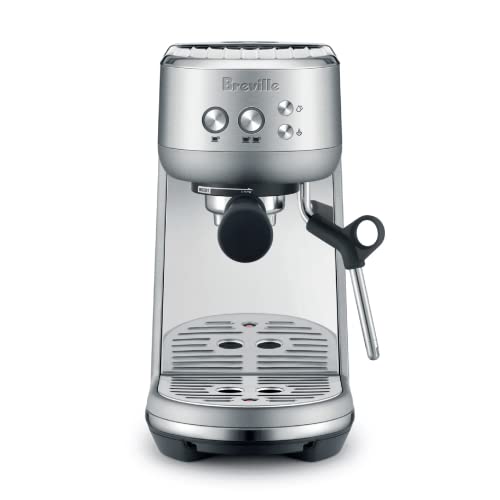
Breville Bambino Espresso Machine BES450 — Best Overall
The Bambino is where most home espresso journeys should start, because it removes the two frictions that kill beginners: waiting and guesswork. It is ready to brew in moments rather than the long warm-up of traditional boiler machines, its footprint is small enough for real kitchens, and the shot quality from its pump and basket setup is genuinely cafe-approaching once your grind is dialled in. The verified listing calls it beginner-friendly, and for once the marketing undersells it — experienced users keep Bambinos for years.
It is a manual machine, so the craft is yours: you grind (with a separate grinder), dose, tamp and time the shot. The steam wand is manual too, which means latte art is possible and practise is required. Buyers who want the machine to handle milk automatically should step up to the Bambino Plus below; buyers who want an integrated grinder should look at the Barista Pro.
Strengths
- Fast heat-up removes the morning wait entirely
- Compact footprint suits real home counters
- Manual wand allows true microfoam and latte art with practice
Trade-offs
- Grinder is a separate purchase
- Manual milk steaming has a learning curve
- Small drip tray needs frequent emptying
| Spec (from verified listing) | Compact manual espresso machine in brushed stainless steel for espresso, lattes and cappuccinos per verified listing title |
|---|
Best for: beginners who want real espresso without a huge machine / Not suited for: anyone wanting fully automatic milk at the press of a button
Check on Amazon — check price on Amazon.

Breville Bambino Plus Espresso Machine BES500 — Best for Automatic Milk
Everything that makes the standard Bambino appealing — the compact body, the fast readiness, the honest pump extraction — is present in the Plus, with one transformative addition: automatic milk texturing. You fill the jug, position it, select your temperature and texture, and the machine steams the milk for you. For households making two lattes every morning, that automation is the difference between a routine that survives busy weekdays and one that quietly stops.
The Plus also feels a step more finished in its details, which matters on a machine you touch daily. It remains a compact manual-extraction machine at heart — grind and tamp are still your job — so pair it with a capable espresso grinder and treat the automatic milk as the luxury it is, not as a reason to skip learning the basics of a good shot.
Strengths
- Automatic milk texturing transforms weekday latte routines
- Same compact, fast-heating Bambino platform
- A step up in finish and daily usability details
Trade-offs
- Premium over the standard Bambino for the milk system
- Still needs a separate espresso-capable grinder
- Auto texturing gives slightly less control than a manual wand
| Spec (from verified listing) | Compact semi-automatic espresso machine for home baristas per verified listing title |
|---|
Best for: daily latte and cappuccino drinkers who value their mornings / Not suited for: purists who want to steam every jug by hand
Check on Amazon — check price on Amazon.
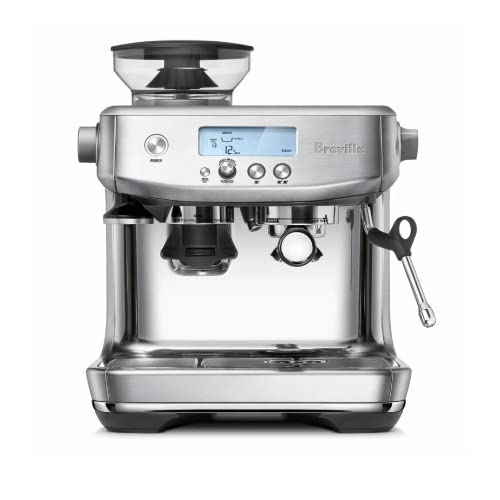
Breville Barista Pro Espresso Machine BES878 — Best With Built-In Grinder
The Barista Pro answers the Bambino’s one structural gap — the separate grinder — by building a capable conical burr grinder into the machine itself. Beans go in the hopper, grounds land in the portafilter, and the whole espresso ritual happens in one footprint with one power cord. Its fast heat-up keeps the craft spontaneous, and the manual steam wand produces the fine microfoam that latte art demands.
Integrated design carries the usual all-in-one caveat: the grinder and brewer live and die together, and a standalone grinder at the same combined money can be a step better. What you are buying is coherence — matched components, a tidy counter and a workflow with no friction between grinding and pulling. For most home baristas, that coherence is worth more than spec-sheet bragging.
Strengths
- Built-in grinder completes the craft in one footprint
- Fast heat-up and responsive manual controls
- Steam wand capable of genuine latte-art microfoam
Trade-offs
- Grinder and brewer share one fate if either fails
- Costs more than a Bambino plus a basic grinder route
- Hopper beans stale faster than single-dosing for purists
| Spec (from verified listing) | Manual espresso machine with built-in grinder for shots, lattes and cappuccinos per verified listing title |
|---|
Best for: home baristas who want one complete, tidy espresso station / Not suited for: buyers who prefer to choose grinder and machine separately
Check on Amazon — check price on Amazon.
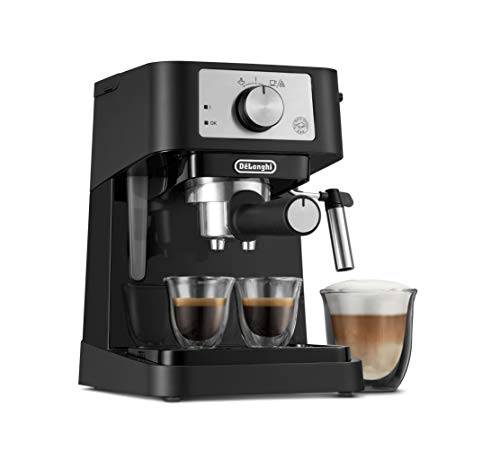
De’Longhi Stilosa Compact Manual Espresso Machine — Best Budget
The Stilosa is the machine to buy when the budget is real but the ambition is genuine espresso rather than pods. Its verified listing states the essentials plainly: a 15-bar pump, a stainless steel boiler and a manual milk frother, in a compact body. It takes ground coffee (and pods of the appropriate format on many versions), and it asks you to learn the fundamentals — dose, tamp, timing, steaming — on a machine that forgives a beginner’s budget rather than punishing it.
Expectations should be set honestly. The fit and finish are built to the price, the frother is a panarello style that makes abundant foam more easily than silky microfoam, and temperature stability will not match the Breville machines above. None of that prevents it making a satisfying espresso and a perfectly enjoyable cappuccino — thousands of home baristas started exactly here.
Strengths
- Lowest tier in this list for a true pump machine
- 15-bar pump and stainless boiler are the real fundamentals
- Compact body fits small kitchens and starter setups
Trade-offs
- Panarello frother favours foam over fine microfoam
- Build finish reflects the budget tier
- Shot consistency depends heavily on your grinder
| Spec (from verified listing) | Compact manual espresso machine with manual milk frother, 15-bar pump pressure and stainless steel boiler per verified listing title |
|---|
Best for: budget-conscious beginners who want to learn real espresso / Not suited for: shoppers expecting premium build and temperature precision
Check on Amazon — check price on Amazon.

CASABREWS CM5418 Compact Espresso Machine — Best Compact With Gauge
The CM5418’s standout feature for a learner is feedback. Its built-in pressure gauge shows extraction pressure live, turning the mysterious question of why a shot ran fast and sour into a visible dial you can correct — grind finer, dose more, tamp evenly. Add a 20-bar pump, a proper steam wand and a 34-ounce tank that does not need daily refilling, and you have a compact machine unusually well equipped for actually learning espresso rather than merely attempting it.
As a value-brand machine it asks for the usual understanding: long-term parts support will not match De’Longhi or Breville, and the ultimate shot ceiling sits below the premium picks. But for a first machine whose whole job is to teach you the craft while making enjoyable drinks, the gauge alone earns its place in this six.
Strengths
- Pressure gauge gives beginners immediate, useful feedback
- Generous 34 oz tank for a compact machine
- Steam wand supports cappuccinos and lattes from day one
Trade-offs
- Value-brand support network is thinner than the big names
- Fit and finish a step below Breville and De’Longhi
- 20-bar headline matters less than grind quality in practice
| Spec (from verified listing) | Compact espresso machine with steam wand, 20-bar pump, built-in pressure gauge and 34oz water tank per verified listing title |
|---|
Best for: learners who want visible feedback while they dial in / Not suited for: buyers who prioritise long-established brand support
Check on Amazon — check price on Amazon.
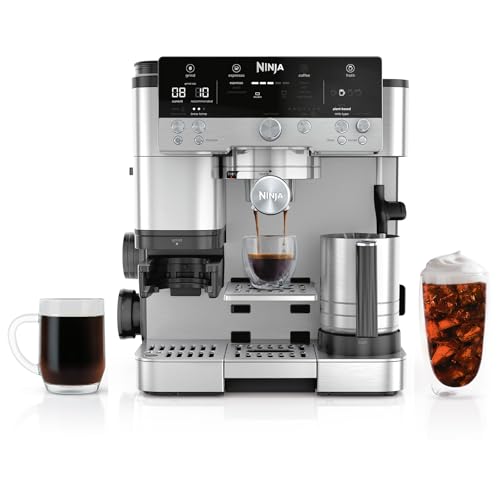
Ninja Luxe Café Premier 3-in-1 Espresso Machine ES601 — Best Guided Premium
Where the manual machines in this list teach espresso by immersion, the Luxe Café Premier teaches it by guidance. Its Barista Assist technology recommends grind settings and helps you dose accurately, the integrated grinder feeds the portafilter directly, and the dual froth system produces hot steamed milk or cold foam for iced drinks without technique. The result is the shortest distance in this roundup between unboxing and a genuinely good latte.
That guidance is a philosophy as much as a feature set: experienced baristas may find the assistance unnecessary, and the machine’s premium tier buys convenience and consistency rather than a higher ceiling than a skilled hand on a Barista Pro. Households who have abandoned a manual machine before, or who simply want cafe-style drinks without a hobby attached, are exactly who it was built for.
Strengths
- Guided grind and dose assistance flattens the learning curve
- Dual froth handles hot lattes and iced drinks equally
- Integrated grinder keeps the counter to one machine
Trade-offs
- Premium tier pricing
- Guidance is redundant for experienced home baristas
- Larger and more complex than the compact picks
| Spec (from verified listing) | 3-in-1 espresso machine with guided Barista Assist Technology and dual froth system per verified listing title |
|---|
Best for: households wanting cafe drinks without taking up a hobby / Not suited for: experienced baristas who prefer full manual control
Check on Amazon — check price on Amazon.
Comparison Table
The table separates the machines by what they ask of you: full manual craft, automatic milk, an integrated grinder, a learning gauge, or full guidance. Choose the workload first and the machine second. If you read one row closely, read the Breville Barista Pro Espresso Machine BES878 (Check on Amazon) — it is the pick readers most often underestimate.
| Pick | Badge | Key spec | Best for |
|---|---|---|---|
| Breville Bambino Espresso Machine BES450 (Check on Amazon) | Best Overall | Compact manual pump machine | beginners who want real espresso without a huge machine |
| Breville Bambino Plus Espresso Machine BES500 (Check on Amazon) | Best for Automatic Milk | Semi-automatic, auto milk texturing class | daily latte and cappuccino drinkers who value their mornings |
| Breville Barista Pro Espresso Machine BES878 (Check on Amazon) | Best With Built-In Grinder | Built-in grinder, manual machine | home baristas who want one complete, tidy espresso station |
| De’Longhi Stilosa Compact Manual Espresso Machine (Check on Amazon) | Best Budget | 15-bar pump, manual frother | budget-conscious beginners who want to learn real espresso |
| CASABREWS CM5418 Compact Espresso Machine (Check on Amazon) | Best Compact With Gauge | 20-bar pump, pressure gauge, 34 oz tank | learners who want visible feedback while they dial in |
| Ninja Luxe Café Premier 3-in-1 Espresso Machine ES601 (Check on Amazon) | Best Guided Premium | Guided assist, dual froth, 3-in-1 | households wanting cafe drinks without taking up a hobby |
How to Choose a Coffee Maker That Makes Espresso
Decide your involvement level before your budget. Manual machines (Bambino, Barista Pro, Stilosa, CM5418) make you part of the process — grind, tamp, time, steam — and reward that involvement with control and skill that transfers to any machine you ever own. Guided and automatic-milk machines trade some of that control for consistency on tired mornings. Neither is superior; they suit different temperaments, and the most common buying regret in home espresso is choosing the temperament you wish you had rather than the one you have.
Then settle the grinder question, because espresso lives or dies on grind quality. An integrated grinder (Barista Pro, Luxe Café) buys tidiness and matched performance. A separate grinder costs more and takes space but can be upgraded independently and usually offers finer adjustment. Budget honestly for one route or the other — a great machine fed by a poor grinder makes disappointing espresso.
Pump Pressure, Boilers and Other Specs That Actually Matter
Pump ratings are the most misunderstood number in espresso. Extraction happens around nine bars at the puck; machines advertise 15 or 20 bars because that is the pump’s maximum capability, not the brewing pressure. A 15-bar De’Longhi and a 20-bar value machine can both brew correctly — what separates them is temperature stability, build quality and how consistently they deliver water, not the headline number.
Heat-up design matters more to daily happiness. Fast thermocoil-style systems like Breville’s are ready in moments and suit spontaneous drinks; traditional boilers take longer to stabilise but reward planned rituals. Tank size, drip-tray depth and cup clearance sound dull and determine, in practice, how often the machine annoys you — weigh them accordingly.
The Honest Cost of Home Espresso
The machine is the entry ticket, not the whole cost. A capable grinder (if not built in), fresh beans on a rolling basis, a tamper that fits properly, milk for drinks, descaler and the occasional gasket or basket replacement form the real budget. None of it is extravagant, and home espresso still undercuts a daily cafe habit comfortably, but buyers surprised by the accessories are buyers who budgeted for the box only.
Tier-wise, the Stilosa and CM5418 prove the craft is learnable at an entry tier; the Bambino range is the value sweet spot for most homes; and the Barista Pro and Luxe Café are premium purchases of integration and guidance respectively. Spend where your daily friction actually lives.
How to Pull Your First Good Espresso Shot
Every machine in this list follows the same fundamentals. Learn them once and they transfer for life.
- Start with fresh beans and grind fine — espresso grind feels like fine sand between your fingers. Weigh the dose if you can; consistency beats guesswork.
- Distribute the grounds evenly in the basket, then tamp level with firm, even pressure. A crooked tamp channels water and ruins the shot.
- Lock the portafilter in immediately and start the shot at once; grounds sitting against a hot group head scorch.
- Watch for a slow, honey-like stream. A gusher means grind coarser or dose more; a choking drip means the opposite. Aim, as a starting frame, for roughly twice the liquid weight of your dose in the cup.
- Taste before judging by numbers: sour usually means under-extracted (grind finer or brew longer), bitter usually means over-extracted (grind coarser or shorten).
- Steam milk after the shot, purge the wand before and after, and wipe it immediately — dried milk is the one chore that punishes delay.
Change one variable at a time and keep notes for the first bag of beans. By the end of that bag, most new owners are pulling shots they would happily serve to guests.
Common Buying Mistakes
Buying the machine and skipping the grinder. Pre-ground coffee cannot be dialled in, and a poor grinder caps any machine. Espresso budgets must include grinding, built in or separate.
Chasing pump-pressure numbers. Fifteen versus twenty bars is a pump maximum, not a quality grade. Temperature stability and grind quality decide what is in the cup.
Using stale beans and blaming the machine. Espresso exposes bean freshness mercilessly. Buy smaller bags, store them sealed and cool, and grind immediately before brewing.
Never descaling. Scale strangles temperature and flow slowly enough that owners blame their technique. Follow the machine’s descale prompts and schedule.
Judging the first shot. The first shots on any new setup are tuition. Expect to spend most of the first bag learning the machine’s responses.
Final Recommendation
Most beginners should buy the Bambino and a good grinder; latte households should stretch to the Bambino Plus; tidy-counter craft lovers belong with the Barista Pro; guided premium buyers with the Ninja Luxe Café; and budget learners with either the Stilosa for brand reassurance or the gauge-equipped CM5418 for feedback. Any of the six, fed fresh beans and a dialled-in grind, makes real espresso at home.
Start with the Breville Bambino Espresso Machine BES450 (Check on Amazon) if you want the safest first choice, or the Breville Bambino Plus Espresso Machine BES500 (Check on Amazon) if its badge matches your household more closely — check price on Amazon for either.
Keep exploring the same cluster before you decide: Best Coffee Makers That Make Both Espresso And Regular Best Coffee Makers That Use K Cups Best Coffee Makers That Make Really Hot Coffee Best Coffee Makers Timer Best Clean Edge Can Openers
Espresso Machine Types, From Pump to Pod
Every machine that claims espresso falls into one of four families, and knowing which family you are buying prevents most disappointments. Manual pump machines — the Bambinos, the Barista Pro, the Stilosa, the CM5418 — put a tamped puck of ground coffee under pump pressure and put you in charge of the variables. Semi-automatic and guided machines keep the same extraction but automate milk or dosing decisions. Fully automatic machines grind, tamp and brew at a button press, at a price and maintenance level beyond this guide’s scope. Capsule machines seal the coffee in a pod and trade control for consistency.
This guide concentrates on the first two families because they teach transferable skill and keep per-cup costs low, but the honest shopper should know what is being declined. A fully automatic makes a decent espresso with zero learning and a four-figure commitment to the machine and its servicing. A capsule machine makes a consistent espresso-style drink with zero learning and a permanent per-cup premium. The pump machine makes the best espresso of the three once learned — and the worst during the learning, which is the trade in one sentence.
Lever and manual travel brewers form a small fifth family for enthusiasts and campers. They can produce superb espresso and demand the most technique of all. They are wonderful second machines and demanding first ones, which is why they appear in this site’s specialist guides rather than in a first-purchase roundup like this one.
The Grinder Question, Settled Properly
No topic in home espresso generates more heat than whether the grinder or the machine matters more, so here is the settled version: for the drink in the cup, the grinder matters at least as much, and for a beginner’s sanity it matters more. Espresso extraction is a negotiation between water and a precisely-sized bed of grounds. A grinder that produces uneven particles — boulders and dust together — makes that negotiation unwinnable: water channels through the loose spots, under-extracts them, and over-extracts the rest, in the same shot. No machine, at any price, can rescue that puck.
This is why the picks in this guide divide so deliberately. The Barista Pro and the Ninja Luxe Café build the grinder in, guaranteeing a matched, espresso-capable grind with no second purchase. The Bambino, Stilosa and CM5418 leave the grinder to you — which is freedom if you already own a good one, and a hidden cost if you do not. Budget for the pair, not the machine: a mid-tier machine with a capable grinder will out-brew a premium machine fed by a poor one, every single morning.
What counts as capable? Burr grinding rather than blades, fine enough adjustment steps to dial a shot in small increments, and low retention so yesterday’s grounds are not seasoning today’s. Single-dosing suits households that switch beans often; a hopper suits one-bean households that value speed. Either philosophy works — inconsistency is the only true enemy.
Dialling In: a Beginner’s Troubleshooting Field Guide
Sour, thin, fast: the classic under-extracted shot. The water rushed through, taking acidity without sweetness. Grind finer first; if the shot then chokes, you overshot — back off half a step and add a gram of dose. Bitter, harsh, slow: over-extraction, the mirror image. Grind coarser, or let slightly less water through, and confirm your water is not scalding — machines left idling at maximum heat benefit from a brief cooling flush before the shot.
Good time, bad taste usually means distribution, not grind. A puck tamped crookedly, or grounds clumped in one corner, channels water through a weak path while the rest of the coffee sits unused. Level the grounds before tamping — a fingertip sweep or any distribution tool — tamp on a flat surface, and keep the tamp level rather than merely hard. Evenness beats force at every level of this craft.
Milk troubles have their own short list. Big, soapy bubbles mean the wand tip sat too high and drank air; a screaming jug means it sat too deep and boiled rather than textured. Cold milk, a cold jug and a wand tip just below the surface — stretching gently at the start, then submerging to heat — will get a beginner to glossy, pourable milk within a week of breakfasts. The machines in this guide can all do it; the jug time is yours to spend.
Espresso Drinks, Translated: What Your Machine Will Actually Make
A home espresso machine is really a base for a menu, and new buyers are often surprised by how much of that menu is milk and water rather than espresso itself. The straight shot — solo or doppio — is the foundation and the diagnostic: if it tastes balanced alone, everything built on it works. Add hot water and it is an americano, the closest these machines come to a mug of regular coffee. Add steamed milk in increasing proportions and the menu unfolds: macchiato, cortado, flat white, cappuccino, latte — one skill, steaming, separating the whole family.
That is why this guide scores milk systems as heavily as extraction. A machine whose wand you never master is a machine that makes americanos and disappointment. The guided frothing of the Ninja Luxe Café and the automatic texturing of the Bambino Plus exist because manufacturers learned that the milk, not the shot, is where home espresso dreams usually stall. Choose the machine whose milk system matches the effort you will genuinely give it, and the menu opens. Choose aspirationally, and the wand becomes a ornament you wipe guiltily.
Iced espresso drinks complete the modern menu and ask one extra habit: pull the shot over the ice or into the cold milk promptly, and sweeten while it is hot if you sweeten at all. Every machine here can supply the shot; the drink is assembled by you. It is a pleasant reminder that even in a category full of engineering, the last ten percent is always the person.
Ownership Over Five Years: Seals, Descale and Sanity
An espresso machine is a small pressure vessel full of hot water, and five-year ownership is mostly the story of three consumables: water, seals and scale. Water first, because it is also an ingredient — heavily chlorinated tap water flattens espresso, and very hard water scales a machine from the inside. Filtered water of moderate mineral content is the sweet spot for both flavour and machine health, and it costs less than the descaler it saves.
Seals and gaskets are the wear items nobody mentions at purchase. The group-head gasket that seals the portafilter hardens with heat and age — typically over years, not months — and its failure announces itself as a leak around the portafilter during a shot. It is an inexpensive, user-replaceable part on the machines in this guide, and knowing that in advance converts a future ‘breakdown’ into a ten-minute maintenance job. Baskets, shower screens and steam-wand tips similarly reward an occasional deep clean rather than replacement.
Scale is the slow enemy and descaling is the entire defence. Follow the machine’s own schedule and prompts, use the solution it specifies, and never let a year pass in a hard-water area without one. Owners who do these three unglamorous things — decent water, an eye on the gasket, descaling on time — are the ones whose five-year-old machines pull shots indistinguishable from new. The craft of espresso gets the glory; the craft of ownership gets the results.
Espresso on a Budget: Where the Money Should Go First
Faced with a fixed budget, the beginner’s instinct is to spend it all on the machine and borrow the rest of the setup from the kitchen’s existing clutter. Five years of forum wisdom and returns counters say to do almost the opposite. Divide the budget deliberately: a competent machine from this guide’s lower half, a genuinely espresso-capable grinder, fresh beans from a local roaster, and the small tools — a tamper that fits the basket properly, a milk jug, a scale if you are inclined — that make the ritual repeatable. That portfolio makes better espresso than a flagship machine starved on every other line.
The upgrade path then runs in the right order. Beans first, always, because freshness is the cheapest quality in the entire hobby. Technique second, because it is free. The grinder third, when its limits become visible in the cup. The machine last, because a good grinder and good habits will have taught you exactly which machine you actually want — knowledge no amount of pre-purchase research fully replaces. The Stilosa and CM5418 in this guide are built for exactly this philosophy: honest starting machines that respect a phased budget.
What never to economise on is the coffee itself. Espresso is a magnifier; it shows you precisely what your beans are, at four times life size. A weekly small bag from a roaster whose roast dates are printed will teach you more, and taste better, than any equipment decision in this guide.
Espresso Around the World, Brewed at Home
The drinks your machine makes have addresses. The straight espresso is Naples and the Italian bar, taken standing, in moments. The cappuccino is a morning drink in its homeland — milk after midday marks the tourist — while the latte is its American enlargement, milk-forward and all day. The flat white travelled from Australia and New Zealand with its emphasis on velvet-textured milk in a smaller cup, and the cortado is Spain’s equal-parts compromise. A home machine collapses that whole geography onto one counter, which is part of its pleasure: the menu is a map, and learning it is a small education in how the world takes its coffee.
None of that requires pedantry at home. It suggests only that the proportions are worth learning once — not because rules matter, but because each drink was tuned by generations of drinkers to a balance that works. Start from the classic ratios, taste honestly, and then adjust to your own palate with the confidence of someone who knows what they are changing and why.
From First Shot to House Style: the Six-Month Arc
Month one is calibration: you, the grinder and the machine learning each other’s language, with the notes to prove it. Month two is where most owners report the turn — the shots become repeatable, the milk behaves, and the drinks stop being experiments. By month three a preference emerges, a house style: this household’s beans, this dose, this milk texture, made without thinking while conversation happens around it. That unthinking competence, not any single spectacular shot, is what the purchase was actually for.
Months four to six are for range, if you want it: a second bean to contrast with the house standard, a drink you have never made, a guest order taken with confidence. Some owners stop happily at house style forever, and they are not doing it wrong — the machine has already repaid them in daily ritual. Others discover the hobby’s deeper rooms. Either way, the arc begins with the unglamorous fundamentals this guide keeps returning to: fresh beans, a dialled grinder, and a machine whose milk system you actually use.
Your First Month, Week by Week
Week one is for setup and surrender: unbox, wash, prime, and pull shots you fully expect to discard while the grinder finds its neighbourhood. Keep the beans constant — changing coffee and settings simultaneously is how beginners chase their tails. By the end of the week the shots should run in a plausible time and taste like strong, if imperfect, coffee. That is success; write down the grinder setting that achieved it.
Week two is for one variable at a time. Adjust the grind half-steps toward balance, taste every shot before it goes near milk, and begin steaming with water-and-a-drop-of-milk practice jugs if the real thing is being wasted. Most owners pull their first genuinely enjoyable straight shot somewhere in this week, and the moment matters — it is the proof that the machine, the beans and the hands can agree.
Weeks three and four are for the menu and the routine: the milk drink you actually ordered the machine for, made daily until it is boring in the best way; a descaling calendar entry; a bean reorder before the bag runs out rather than after. By the end of the month the machine should have disappeared into the morning — which, as this guide has argued throughout, is the entire point of owning one.
Espresso Machine Safety and Sensible Practice
An espresso machine combines pressure, steam and near-boiling water in a countertop box, and it deserves the same calm respect as a kettle or a pressure cooker rather than fear or carelessness. The portafilter goes in locked and comes out after the pressure has settled; the steam wand is purged away from hands and is never left pointing where a child can reach it; the drip tray is emptied before it becomes a spill looking for a moment. None of this is burdensome — it is the ordinary choreography of a hot appliance, learned in the first week and automatic by the second.
Electrical and water discipline complete the picture. Keep the machine’s cord clear of the wet zone, never immerse any part that is not explicitly washable, and let the machine cool before deep cleaning around the group head and boiler-adjacent parts. Descaling solutions are chemicals: follow their instructions, rinse as directed, and keep them stored as you would any cleaning product. Treated with that ordinary care, the machines in this guide are among the safest ways to bring cafe pressure into a home — the engineering assumes a sensible operator, and rewards one.
A Final Word on Beans and Roast Dates
If this guide could leave a beginner with one shopping habit, it would be this: buy coffee the way you buy milk, not the way you buy rice. Small bags, recently roasted, from a seller who prints the date — and a new bag ordered when the current one is two-thirds gone, so the replacement rests while the last of the old bag is enjoyed. Espresso made from beans in their prime window forgives imperfect technique; espresso from beans bought by the kilo and stored for months forgives nothing. The machines here deserve the good windows.
Frequently Asked Questions
Do I need a special grinder for espresso?
Yes — espresso needs a fine, consistent, adjustable grind that general kitchen grinders cannot produce. Choose a machine with a built-in espresso grinder or budget for a dedicated espresso-capable grinder.
What does 15-bar or 20-bar actually mean?
It is the pump’s maximum rated pressure. Brewing itself happens at lower pressure at the coffee puck, so the headline number is a capability figure, not a quality ranking between machines.
How long does it take to learn espresso?
Most new owners pull enjoyable shots within the first bag of beans and keep improving for months. Guided machines and pressure gauges shorten the early learning phase considerably.
Can these machines make regular coffee too?
Pump espresso machines make espresso-based drinks, including a diluted americano, rather than drip pots. Households wanting both should look at combination machines, which this site covers in a dedicated guide.
How often do espresso machines need descaling?
It depends on water hardness and use, but plan on every two to three months for typical home use, or whenever the machine indicates it. Using filtered water extends the interval.
Are pods or ground coffee better for beginners?
Pods remove the learning curve and the mess, and capsule espresso is covered in our K-cup and capsule guides. Ground-coffee pump machines, the focus here, offer lower per-cup cost, fresher coffee and skills that last.


