Disclosure: airfryerkitchensupply.com is reader-supported. When you buy through links on our site, we may earn an affiliate commission at no extra cost to you.
Where to buy
The best infra red cookers are sold through the same mainstream channels as other small appliances, and every pick in this guide has a confirmed Amazon listing. Because ‘infrared’ is used loosely by marketers, buy the model number, not the buzzword — the listings below are the exact models whose infrared heating we could confirm.
- OVENTE Infrared Double Burner BGI302GB — check the current price on Amazon.
- Panasonic FlashXpress Toaster Oven — check the current price on Amazon.
- VAL CUCINA Infrared Air Fryer Toaster Oven Combo — check the current price on Amazon.
- Char-Broil Patio Bistro TRU-Infrared Electric Grill — check the current price on Amazon.
- Iwatani Hibachi Butane Stove with Infrared Burner — check the current price on Amazon.
- Char-Broil Big Easy TRU-Infrared Smoker, Roaster & Grill — check the current price on Amazon.
The best infra red cookers share one technology wearing several costumes: a heating element that radiates energy directly onto the food or the pan, rather than heating the air or the surface in between. In practice the label covers three families — countertop infrared hot plates and burners that heat any pan, infrared ovens and air fryers that brown food fast from above, and TRU-Infrared grills that put an emitter plate between the flame and the grate to kill flare-ups. The best infra red cookers in this guide are the strongest confirmed example of each family, because shoppers searching the term usually have one of the three jobs in mind.
Infrared’s genuine advantages are speed of response and searing power: an infrared burner is at full heat in seconds, and an infrared oven element browns like a broiler that never needs preheating. Its honest limits matter too — infrared burners cycle to hold low temperatures, and infrared grills cook differently from the charcoal they imitate. All six picks below carry confirmed Amazon listings; check the current price on Amazon for each, and read the family descriptions carefully so the cooker you buy is the kind of infrared you actually wanted.
In this guide
Quick Picks
Three kinds of infrared cooker, two picks each. Start with the family that matches your job.
- Best Infrared Burner: OVENTE Infrared Double Burner BGI302GB — a two-burner infrared hot plate that takes any pan — the portable-kitchen pick.
- Best Infrared Oven: Panasonic FlashXpress Toaster Oven — double infrared elements that toast and brown with no preheat — a cult favourite for a reason.
- Best Large Infrared Oven: VAL CUCINA Infrared Air Fryer Toaster Oven Combo — the big-countertop option — 26.3 quarts, ten functions, infrared-assisted air frying.
- Best Infrared Grill: Char-Broil Patio Bistro TRU-Infrared Electric Grill — infrared grilling with no gas bottle and no charcoal — made for patios and balconies.
- Best Portable: Iwatani Hibachi Butane Stove with Infrared Burner — a tabletop butane hibachi with a smokeless infrared burner — grill at the table, indoors or out.
- Best 3-in-1 Outdoor: Char-Broil Big Easy TRU-Infrared Smoker, Roaster & Grill — the Big Easy — infrared roasting famous for turkeys, plus smoking and grilling in one unit.
How These Picks Were Chosen
Because the keyword spans three appliance families, we structured the shortlist deliberately: two infrared burners/hot plates for stovetop-style cooking, two infrared ovens for countertop browning and roasting, and two TRU-Infrared grills for outdoor cooking. Every model was matched by brand and model number against our product database, and we only included products whose listings explicitly confirm infrared heating — several appliances marketed with vague ‘infra’ language did not make the cut.
Within each family we ranked by the infrared-specific questions. For burners: how fast the element responds and whether it accepts every pan material. For ovens: whether the infrared elements genuinely speed cooking and browning versus a conventional toaster oven. For grills: whether the emitter system actually delivers the flare-up-free, juicier results the technology promises, and how much cleaning that system demands in return.
The 6 Best Infra Red Cookers
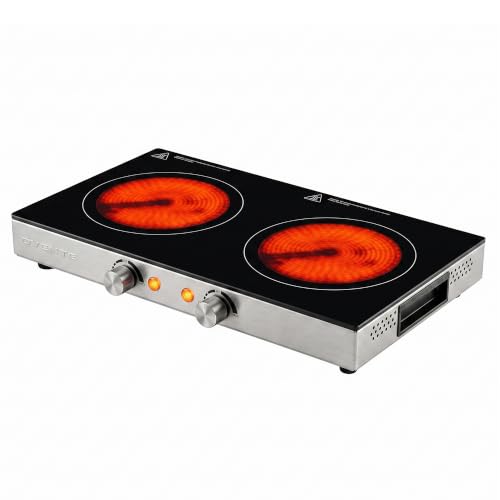
OVENTE Infrared Double Burner BGI302GB — Best Infrared Burner
The Ovente BGI302GB is what most people mean by an infrared cooker: a portable double hot plate whose infrared elements glow through a ceramic glass top and heat the pan directly. Its decisive advantage over a portable induction plate is hospitality — it works with all cookware, aluminium, copper, glass and steel alike, no magnet test required. Dual controllers run the two burners independently at a combined 1800 watts, which is a real two-pan cooking station for a dorm, a caravan, an office kitchen or a holiday-let overflow.
Strengths
- Works with every pan material — the key advantage over portable induction
- Two independently controlled burners for real two-pan cooking
- Ceramic glass top wipes clean and stores flat
Trade-offs
- Infrared burners cycle on and off to hold low heat — delicate sauces need attention
- 1800W shared across two burners means both cannot run at full blast
- Glass top stays hot after cooking; no residual-heat indicator culture like a fitted hob
| Power | 1800W total |
| Burners | 2, dual independent controllers |
| Surface | Ceramic glass |
| Cookware | All materials compatible |
As a cooking tool the Ovente behaves like a fast, honest electric hob. The infrared elements reach working heat in seconds, boil respectably, and sear well in a heavy pan that stores the heat through the element’s low-temperature cycling. That cycling is the technique note: on low settings the burner pulses, so a béchamel or a melting chocolate job wants a heavy-based pan to smooth the pulses out — in a thin pan you will see the sauce breathe with each cycle. For the jobs these plates actually do — pasta, frying, reheating, keeping a second dish alive while the main hob is full — it is entirely convincing.
Portability is the point of the format, and the Ovente is genuinely portable: flat, light, and happy on any stable surface with a standard outlet. Households buy it as insurance (the extra burners at holidays), as a primary hob in tiny kitchens, and as the outdoor-adjacent cooker for fondue nights and buffet keeping-warm duty. In all three roles the all-cookware compatibility quietly beats induction rivals that would reject half the pans in the house.
Best for: small kitchens, dorms, caravans and anyone needing two extra burners / Not suited for: cooks who need silk-smooth low heat for delicate sauces as the main job
Check on Amazon — check the current price on Amazon before you decide, because trim, finish and bundle options change between listings.
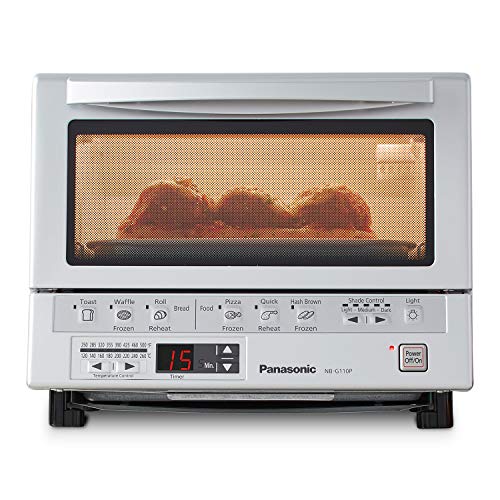
Panasonic FlashXpress Toaster Oven — Best Infrared Oven
The FlashXpress is the infrared appliance with a genuine cult following, and one session of toast explains it: twin infrared elements — near and far — heat instantly, so there is no preheat wait and the browning is even in a way conventional toaster ovens rarely match. It is a compact 4-slice countertop oven with six auto cook options and precise temperature control, aimed at people who want oven results at toaster speed.
Strengths
- Instant-on infrared elements — no preheating, ever
- Exceptionally even toasting and browning for its class
- Compact footprint that suits small counters
Trade-offs
- 4-slice capacity is a hard ceiling — this is not a family roasting oven
- Interior is cosy; tall items and large dishes need not apply
- Retro styling divides opinion on modern counters
| Heating | Double infrared (near and far elements) |
| Capacity | 4-slice |
| Programs | 6 auto cook options |
| Controls | Precise temperature control |
Infrared is doing real work here, not marketing work. Because the elements radiate directly and reach temperature instantly, the FlashXpress behaves like an oven that is always preheated: frozen waffles, reheated pizza (where it famously revives the crust instead of steaming it), gratins and small bakes all start cooking the second the door closes. The near/far element pairing is the subtle part — the far element cooks through, the near element finishes and browns — and it produces the even toast that owners evangelise about.
Size is the honest trade. A 4-slice oven reheats for two beautifully and roasts for four not at all; it is a second oven and a breakfast specialist, not a primary family oven. If your countertop ambitions are bigger, the VAL CUCINA below is the infrared step up. If your actual life is toast, reheats, small bakes and snacks, the FlashXpress does those things better than appliances three times its size.
Best for: small households, toast devotees and anyone who hates preheating / Not suited for: families needing a countertop oven as their main roasting oven
Check on Amazon — check the current price on Amazon before you decide, because trim, finish and bundle options change between listings.

VAL CUCINA Infrared Air Fryer Toaster Oven Combo — Best Large Infrared Oven
Where the Panasonic is a scalpel, the VAL CUCINA is the whole knife block: a 26.3-quart countertop oven with ten cooking functions, air frying and infrared heating to speed the browning that big ovens often deliver unevenly. This is the infrared pick for households that want one countertop appliance to cover roasting, baking, air frying and reheating for a family, with the infrared element helping the top of the food keep up with the fan-driven heat everywhere else.
Strengths
- Family-size 26.3 QT cavity handles whole chickens and sheet-pan dinners
- Ten functions replace several single-purpose appliances
- Infrared assist improves top browning versus fan-only ovens
Trade-offs
- A serious counter footprint — measure before you fall for the capacity
- More functions means more presets to learn and more to clean
- Runs hot externally like all big countertop ovens; needs clearance
| Capacity | 26.3 QT |
| Functions | 10-in-1 including air fry |
| Heating | Infrared heating with convection fan |
The infrared element earns its place in a big cavity for a specific reason: convection fans circulate hot air brilliantly around food but the tops of dishes — the cheese on a bake, the skin on a chicken — brown by radiation. Pairing the fan with infrared gives you both mechanisms at once, and in practice casseroles gratinate and potatoes crisp on top without the rotate-and-broil dance a fan-only oven demands. The ten functions are the usual countertop set — air fry, roast, bake, toast, dehydrate and friends — executed at a scale that feeds a family rather than a couple.
Ownership considerations are size and cleaning. This class of oven needs clearance on all sides, a counter that can spare the depth, and a crumb-and-grease routine after fatty cooks. Households that will actually run it daily get a genuine second oven; households buying it for occasional use should take the Panasonic’s smaller promise instead. The badge is about capability, and the capability is real — just be sure your kitchen’s life matches it.
Best for: families wanting one large countertop oven with fast, even browning / Not suited for: small counters or two-person households with modest needs
Check on Amazon — check the current price on Amazon before you decide, because trim, finish and bundle options change between listings.
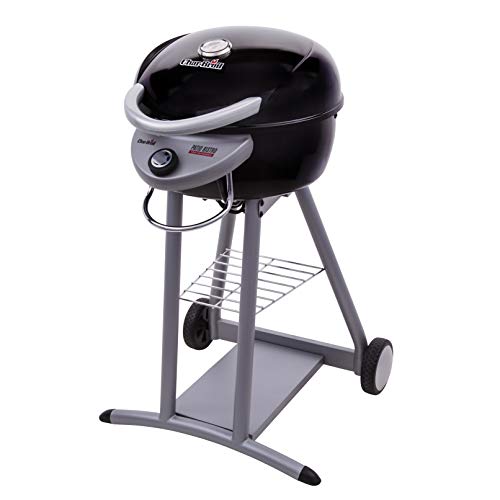
Char-Broil Patio Bistro TRU-Infrared Electric Grill — Best Infrared Grill
The Patio Bistro takes Char-Broil’s TRU-Infrared system — an emitter plate between the heat source and the grate that converts direct heat into even infrared — and puts it in an electric grill sized for a patio or balcony. That combination solves two common problems at once: buildings that ban gas and charcoal get a grill that is allowed, and cooks who hate flare-ups get the infrared emitter’s even, drip-vaporising heat instead.
Strengths
- Electric power suits balconies and buildings that ban gas or charcoal
- TRU-Infrared emitter virtually eliminates flare-ups
- Compact footprint with real grill grates, not a contact press
Trade-offs
- Electric heat has a searing ceiling gas rivals exceed
- Grilling area suits couples and small families, not parties
- Emitter plate needs regular cleaning to keep the infrared even
| Type | Electric grill, TRU-Infrared system |
| Format | Patio Bistro (model 20602107) |
| Fuel | Electric — no gas bottle or charcoal |
Infrared grilling cooks differently and it is worth being clear-eyed: the emitter plate blocks direct flame contact, vaporises drips into flavour-bearing smoke, and radiates heat evenly across the grate, so chicken skin does not char in one corner while staying pale in another, and fatty burgers do not erupt. What you trade is the extreme peak heat and live-fire theatre of charcoal. For the balcony cook, that trade is usually the entire point — even, controllable, neighbour-friendly grilling that the building permits.
The electric format adds its own conveniences: no bottle to refill, no ash, heat that starts with a dial. Keep the emitter clean — a stiff brush and an occasional deeper clean keep the perforations open and the heat even — and the Bistro delivers weeknight grilling with almost no ceremony. It will not cater a twenty-person barbecue, and it does not pretend to.
Best for: apartment and condo grillers, and anyone done with flare-ups / Not suited for: large-party hosts or charcoal purists chasing maximum sear
Check on Amazon — check the current price on Amazon before you decide, because trim, finish and bundle options change between listings.

Iwatani Hibachi Butane Stove with Infrared Burner — Best Portable
Iwatani’s hibachi brings infrared to the tabletop: a portable butane stove with an infrared burner under a wire grate, designed for the Japanese-style tabletop grilling of skewers, thin meats and vegetables — and described by the brand as smokeless, because the infrared burner and drip tray keep fat out of the flame. It runs on standard butane canisters, sets up in minutes, and works indoors with normal ventilation care as happily as on a patio.
Strengths
- True tabletop grilling — cook and eat in the same place
- Infrared burner plus drip tray keeps smoke down indoors
- Butane power means no outlet, no hose, total portability
Trade-offs
- Cooking surface suits skewers and small pieces, not big steaks
- Butane canisters are an ongoing consumable to keep stocked
- Tabletop heat demands a heat-safe surface and sensible clearance
| Fuel | Butane canister |
| Burner | Infrared, smokeless design |
| Included | Drip tray, wire cooking grate |
| Use | Indoor and outdoor tabletop |
This is a social cooker. Yakitori-style skewers, mushrooms, peppers, thin pork belly and prawns grill in ones and twos while people sit around the table cooking their own — the meal becomes the entertainment, which is the entire hibachi tradition. The infrared burner suits the format: fierce, even heat in a small area, with the drip tray catching the fat that would otherwise smoke. Thin cuts are not a limitation here; they are the cuisine.
Practicalities: keep spare butane canisters (they empty faster than intuition suggests on a long evening), give the stove a stable, heat-resistant surface, and treat indoor use with the respect any combustion appliance deserves — ventilation, clearance, and no leaving it burning unattended. Within those lines, it is the most fun per square inch of anything in this guide.
Best for: tabletop grilling fans, skewer nights and portable cooking anywhere / Not suited for: cooks wanting a general-purpose grill for large cuts
Check on Amazon — check the current price on Amazon before you decide, because trim, finish and bundle options change between listings.

Char-Broil Big Easy TRU-Infrared Smoker, Roaster & Grill — Best 3-in-1 Outdoor
The Big Easy built its reputation on one party trick — roasting a whole turkey with infrared heat, no oil, no brining gymnastics, crispy skin and juicy meat — and the 3-in-1 version adds smoking and grilling to the same TRU-Infrared chamber. The infrared walls of the cooking chamber radiate heat evenly around the food, so there are no hot spots to rotate away from and no flare-ups to manage, which is exactly what large roasts and poultry want.
Strengths
- Infrared chamber roasts whole poultry exceptionally evenly
- Three jobs in one footprint: smoke, roast, grill
- No flare-ups and no rotisserie turning to babysit
Trade-offs
- A specialist shape — the chamber suits roasts and birds, not every grilling task
- Gas-fired, so it is an outdoor-only, bottle-dependent appliance
- Infrared cooking times differ from recipes written for conventional grills
| Type | 3-in-1 smoker, roaster and gas grill |
| Heating | TRU-Infrared chamber |
| Model | 14101550 |
Judge the Big Easy by its home turf: a whole chicken or turkey lowered into the infrared chamber emerges with evenly bronzed skin because the heat arrives from all sides at once, and the juices stay in the bird rather than dripping into a flame. The smoker function takes wood chips in its smoker box for a gentle smoke ring on ribs and shoulders, and the grill top handles the burgers-and-sausages duty when the chamber is not roasting. It is a more versatile outdoor centre than its odd silhouette suggests.
The learning curve is real but short: infrared roasting runs a little faster and more evenly than the kettle-grill timings most recipes assume, so a meat thermometer — which you should own anyway — matters more than the clock for the first few cooks. Households whose outdoor cooking centres on roasts, birds and ribs will find it earns its patio space; flat-out grill traditionalists cooking steaks for twelve should look at a conventional large grill instead.
Best for: poultry and roast lovers who also smoke and grill / Not suited for: hosts whose outdoor cooking is mostly large flat-grill sessions
Check on Amazon — check the current price on Amazon before you decide, because trim, finish and bundle options change between listings.
Comparison Table
Six infrared appliances across three families. Compare within a family — the burner, the ovens and the grills solve different problems that happen to share a heating technology.
| Pick | Badge | Key spec | Best for |
|---|---|---|---|
| OVENTE Infrared Double Burner BGI302GB | Best Infrared Burner | 1800W double burner, ceramic glass, works with all cookware | small kitchens, dorms, caravans and anyone needing two extra burners |
| Panasonic FlashXpress Toaster Oven | Best Infrared Oven | Double infrared heating, 4-slice, 6 auto cook options | small households, toast devotees and anyone who hates preheating |
| VAL CUCINA Infrared Air Fryer Toaster Oven Combo | Best Large Infrared Oven | 26.3 QT capacity, 10-in-1, infrared heating | families wanting one large countertop oven with fast, even browning |
| Char-Broil Patio Bistro TRU-Infrared Electric Grill | Best Infrared Grill | Electric TRU-Infrared grill, patio/balcony format | apartment and condo grillers, and anyone done with flare-ups |
| Iwatani Hibachi Butane Stove with Infrared Burner | Best Portable | Portable butane hibachi, smokeless infrared burner, drip tray included | tabletop grilling fans, skewer nights and portable cooking anywhere |
| Char-Broil Big Easy TRU-Infrared Smoker, Roaster & Grill | Best 3-in-1 Outdoor | TRU-Infrared 3-in-1: smoker, roaster and gas grill | poultry and roast lovers who also smoke and grill |
How to Choose an Infra Red Cooker: Start With the Family, Not the Brand
The single most useful thing to know about this category is that ‘infrared cooker’ names a heating method, not an appliance type. Decide which job you are hiring for. If the job is stovetop cooking — boiling, frying, simmering in your own pans — you want an infrared burner or hot plate like the Ovente. If the job is fast countertop baking, toasting and roasting, you want an infrared oven like the Panasonic or the VAL CUCINA. If the job is outdoor grilling without flare-ups, you want a TRU-Infrared grill. Cross-shopping between families produces regret; the best infrared grill in the world makes terrible toast.
Within your family, the infrared-specific questions are these. For burners: does the element respond fast, and does it take all pan materials (infrared’s big advantage over induction)? For ovens: are the infrared elements doing the browning work, and is the cavity the size of your real meals? For grills: is the emitter system easy to clean, because a clogged emitter is an uneven grill? Answer those and the badge choices in this guide mostly make themselves.
- Name the job first: burner, oven or grill — never shop across families
- Burners: check total wattage and how it splits between zones
- Ovens: infrared plus fan beats either alone for browning and evenness
- Grills: emitter cleaning access decides long-term performance
- Portable infrared (butane) needs a canister budget and storage plan
How Infrared Heating Actually Works (and Where It Struggles)
Infrared cooking transfers energy as radiation: a hot element glows and the food or pan absorbs that radiant energy directly, the same way sunlight warms your face without warming the air first. That is why infrared feels fast — there is no intermediate medium to heat — and why it browns so well, since radiant heat drives surface temperatures high while the interior catches up gently. On a hot plate, the pan absorbs the radiation; in an oven, the food’s surface does; in a TRU-Infrared grill, an emitter plate absorbs the flame’s energy and re-radiates it evenly while blocking drips from reaching the burner.
The struggles are equally physical. A radiant element has no stored heat, so a burner holding a low temperature must cycle on and off — fine in a heavy pan, visible in a thin one. Infrared is line-of-sight, so shadowed areas cook slower, which is why oven designs pair elements with fans and grill emitters are shaped to spread the radiation. And radiant heat is fierce at close range, so the first cooks on any infrared appliance deserve a thermometer and a little humility about timings borrowed from conventional recipes.
Infrared vs Induction vs Conventional Electric: a Fair Fight
Shoppers often meet infrared while comparing portable hobs, so here is the honest three-way. Induction is the fastest and most precise, wastes the least energy, and keeps its surface coolest — but it rejects non-magnetic pans and costs the most. Infrared is nearly as fast to respond, accepts every pan you own, and costs less — but its surface stays hot and its low-temperature control pulses rather than glides. Conventional coil or radiant plates are the cheapest and simplest, accept all pans, and are the slowest and least precise of the three.
For ovens and grills the comparison shifts: infrared’s browning speed is its party trick indoors, and outdoors the TRU-Infrared emitter’s flare-up control is something neither gas-with-open-flame nor charcoal can offer at any price. The right question is never which technology wins in the abstract — it is which compromise set fits your pans, your food and your building’s rules.
Infrared Cooking Times: a Calibration Guide
Because radiant heat arrives instantly and browns aggressively, the most common new-owner error is cooking to conventional times and overshooting. Use these calibration habits rather than fixed conversions, because distance from the element matters as much as temperature. Toast and anything thin — skewers, asparagus, prawns — check at half the time you expect and then in short intervals; infrared goes from golden to dark quickly at the end. Burgers and chops on a TRU-Infrared grill run close to conventional gas timings but with fewer flare-up pauses, so start checking a couple of minutes early. Whole birds and roasts in an infrared chamber run evenly but not magically — the centre still needs its time, and a thermometer is the only honest clock.
Keep a small notebook or a note on your phone for the first month: dish, setting, time, result. Infrared appliances are unusually consistent once calibrated, because there is so little to vary — no charcoal bed, no ageing coil — so your notes stay true for years. That consistency, more than raw speed, is what converts sceptics: the grill that does the same thing every Tuesday is the grill that gets used every Tuesday.
Cleaning and Care for Infrared Appliances
Each family has one care task that decides its lifespan. For glass-top burners, it is wiping spills before they bake through repeated cycles — sugary spills especially, which can mark ceramic glass if they cook on. For infrared ovens, it is the crumb tray and interior walls: radiant elements cook the food and also bake splatter onto nearby surfaces, and a weekly wipe while the oven is merely warm keeps the job at two minutes instead of twenty. For TRU-Infrared grills, it is the emitter plate — brush it after cooks, and give it a deeper clean whenever the perforations start to close, because even radiation is the entire product promise.
None of this is onerous, but all of it is cheaper done little and often. Infrared appliances reward the wipe-down habit more than most, because their performance depends on clean radiant paths: a filmed-over emitter or a splattered oven element still gets hot, but it stops radiating evenly, and uneven is the one thing you did not buy.
Infrared in Small Spaces: Dorms, Caravans and Boats
Infrared’s portability story deserves its own note, because two of this guide’s families thrive where fitted kitchens do not exist. A double infrared burner like the Ovente turns a dorm room, a caravan galley or a boat’s counter into a real two-pan kitchen, with the all-pan compatibility mattering even more in those settings — nobody wants to discover their one saucepan is induction-incompatible three miles from a shop. The butane hibachi goes further off-grid still, needing nothing but a canister. The disciplines are the same in every small space: a stable, heat-resistant surface; clearance above and behind that respects how hot radiant appliances and their surroundings get; and ventilation whenever combustion is involved, because a butane burner indoors is a small fire and should be treated with a small fire’s respect.
Boats and caravans add one more consideration — power budgets. An 1800-watt burner is a serious draw on a small inverter or a campsite hookup shared with a kettle and a heater, so check the circuit before the first meal depends on it. Run within the limit and infrared’s speed becomes an economy: meals that cook in minutes rather than tens of minutes use less total energy than the slow alternatives, which is why the technology keeps appearing in exactly these space- and power-poor settings.
What Infrared Does Best: a Dish-by-Dish Honesty Check
Some foods are simply better under infrared, and naming them helps you judge whether the technology suits your cooking. Toast and anything cheese-topped — gratins, rarebit, the top of a shepherd’s pie — brown faster and more evenly than in most conventional small ovens, which is the FlashXpress’s whole reputation. Skewers and thin cuts on the hibachi char at the edges while staying juicy inside, because fierce radiant heat cooks them before they dry. Chicken pieces and burgers on a TRU-Infrared grill cook without the flare-up charring that ruins skin, and whole birds in the Big Easy’s chamber bronze uniformly in a way that makes rotisserie hardware unnecessary.
The honest counter-list matters too. Delicate sauces and custards prefer the smooth, stored heat of a heavy pan on a conventional hob to a cycling radiant element. Very thick steaks still want a two-stage approach — radiant sear, then gentler finishing — rather than infrared alone from start to finish. And big, flat, multi-pan breakfasts belong to a fitted hob or a griddle, not to any portable in this guide. Buy infrared for the first list, keep other tools for the second, and the technology will feel like a specialist you hired deliberately rather than a compromise you are enduring.
Buying Infrared Second-Hand and Spotting Tired Elements
Infrared appliances circulate heavily on the second-hand market — student burners, barely used countertop ovens, grills from one enthusiastic summer — and the technology has a useful property for used buyers: its wear is visible. A glass-top burner should glow evenly across the element; dark patches or a section that stays dull while its neighbours glow mean an element on its way out. An infrared oven’s elements should both fire within seconds of switch-on. A TRU-Infrared emitter plate should be intact, unwarped and perforated cleanly — a rusted-through or cracked emitter is the grill equivalent of a blown engine, whatever the seller says about the rest.
Ask the two questions that reveal how the appliance lived: was it stored dry, and was it cleaned or abandoned with grease on it? Infrared components forgive cooking and punish storage — damp garages corrode emitters and element housings faster than any amount of honest use. Buy a clean, evenly glowing used unit with confidence; walk away from a cheap one with a patchy glow, because replacement elements for budget models are rarely economical, and an infrared cooker with a tired element is just a cooker-shaped compromise.
Infrared and Your Energy Bill, Without the Hype
Infrared’s efficiency claim is specific and mostly true: because energy goes directly into the pan or the food rather than into heating air, a surface or a room, less of it is wasted on the journey — and because the element is at full power in seconds, less is wasted on warm-up. The effect is largest on short cooks: toast, reheats, skewers, a quick fry. On long cooks the advantage narrows, because once everything is hot the losses look much like any other electric appliance’s. Where infrared reliably saves money in real kitchens is behavioural rather than physical — a countertop infrared oven heating a small cavity for two people uses a fraction of the energy of a full-size oven heated for the same two people, and a portable burner that gets used because it is fast displaces takeaway more often than a slow alternative. Buy it for speed and evenness; let the modest energy saving arrive as a bonus rather than the justification.
A related myth deserves a quiet burial: infrared appliances do not meaningfully heat the room the way an open oven door or a long gas burn does, but the appliance itself and the food in it are every bit as hot as conventional cooking makes them. ‘Cool-touch technology’ it is not — treat every surface in this guide with the respect you would give a conventional hob, and teach the household the same, every single time, without exception, always.
How to Get the Best From an Infrared Cooker
Infrared rewards a few habits that differ from conventional cooking. Build them early and the technology’s speed stops surprising you.
- Step 1 — Preheat briefly, not long. Infrared elements reach working heat in seconds. Give a burner or grill a short warm-up measured in a minute or two, not the long preheat a conventional oven taught you.
- Step 2 — Use heavy pans on burners. A thick base stores heat and smooths the element’s low-temperature cycling, turning pulsing power into steady cooking.
- Step 3 — Watch the first cook of anything. Radiant heat browns faster than recipe timings assume. The first time you toast, grill or roast a given food, check early and note the correction.
- Step 4 — Keep line-of-sight in mind. In infrared ovens, food browns where the element can “see” it. Rotate or flip once for even results, and avoid stacking food in shadows.
- Step 5 — Manage drips on grills. TRU-Infrared emitters vaporise drips for flavour, but heavy fat loads still need a watchful eye and a clean drip tray.
- Step 6 — Clean emitters and glass while warm. A brush on a warm grill emitter and a wipe on a warm (not hot) glass top keep both performing; baked-on neglect is much harder work.
- Step 7 — Respect the hot surface. Infrared tops and grills stay hot after switch-off. Build the household habit: a pan left on the surface means “still hot” until it is cool to a hovered hand.
One conversion rule covers most recipes: keep the temperature setting, shorten the expected time by a small margin on the first attempt, and let a thermometer — not the clock — call doneness on anything thick. Two cooks in, your notes replace the guesswork.
Common Buying Mistakes
Shopping the buzzword instead of the appliance family. An infrared grill, oven and hot plate share a heating method and nothing else. Buying across families is the category’s most expensive mistake — name your job first.
Using thin pans on an infrared burner. Thin bases exaggerate the element’s on-off cycling into visible surging. A heavy pan is not an accessory on infrared; it is half the system.
Trusting conventional timings on the first cook. Infrared browns and sears faster than the recipes on your shelf assume. Check early, use a thermometer, and write down the corrected times.
Neglecting the emitter plate on a TRU-Infrared grill. Clogged perforations mean uneven radiation and the return of hot spots. A few minutes of brushing after cooks keeps the infrared promise intact.
Assuming infrared means smokeless everywhere. Only designs built for it — like the Iwatani’s burner-and-tray layout — genuinely minimise smoke. A fatty steak on any indoor burner will smoke; ventilate accordingly.
Final Recommendation
Match the family to the job and the badges follow. For portable stovetop cooking, the Ovente double burner is the infrared cooker to buy — fast, flexible and friendly to every pan you own. Indoors, the Panasonic FlashXpress is the infrared oven purists love for a reason, while the VAL CUCINA scales the same idea up to family size. Outdoors, the Char-Broil Patio Bistro brings flare-up-free infrared grilling to balconies that ban everything else, and the Big Easy remains the roast-and-poultry specialist. The Iwatani hibachi stands alone as the social pick — the only cooker here that turns dinner into the evening’s entertainment.
Whichever family you choose, respect the learning curve: infrared is faster and fiercer than the cooking it replaces, and the first two or three cooks are calibration, not verdicts. After that, most owners stop thinking of it as a technology at all — it is just the cooker that is ready before they are.
The shortlist one more time: OVENTE Infrared Double Burner BGI302GB (best infrared burner); Panasonic FlashXpress Toaster Oven (best infrared oven); Char-Broil Patio Bistro TRU-Infrared Electric Grill (best infrared grill) — check the current price on Amazon for each before you order.
Related reading on this site: Best Induction Cookers; Best Induction Range Cookers; Best Cookware Sets For Induction Cooktop; Best Indoor Steak Cookers.
Frequently Asked Questions
Is infrared cooking safe?
Yes — infrared in these appliances is simply heat radiation from a hot element, the same kind a toaster or a glowing hob produces. There is no microwave-style radiation and nothing exotic. The safety considerations are the ordinary ones for hot appliances: hot surfaces, sensible clearance, and ventilation for any indoor combustion model like the butane hibachi.
Does an infrared burner work with all pans?
Yes, and that is its headline advantage over induction. Aluminium, copper, glass, cast iron and stainless steel all absorb infrared energy. Heavy, flat-based pans work best because they store heat and smooth out the element’s temperature cycling.
Why does food cook faster under infrared?
Because the energy travels directly from the element to the food or pan without first heating air or a surface in between, and the elements reach full output in seconds. In practice the gain is largest on browning, toasting and searing; thick roasts still take the time their centres require.
What is TRU-Infrared on a grill?
It is Char-Broil’s system in which an emitter plate sits between the burners and the grate. The plate absorbs the burners’ energy and re-radiates it evenly across the cooking surface, while drips that land on it vaporise instead of falling into the flame — which is why these grills have virtually no flare-ups and very even heat.
Can I use an infrared hot plate as my main hob?
Many small households do exactly that with a double burner like the Ovente. The honest caveats are shared wattage across both burners and pulsing low heat — heavy pans solve the second, and meal planning solves the first. For a household that cooks two-pan dinners, it is a legitimate main hob.
Do infrared ovens replace air fryers?
The larger infrared countertop ovens, like the VAL CUCINA here, include air fry functions and do the job at family scale. The little Panasonic is a different specialist — toasting and reheating better than any air fryer, but without the capacity for family air frying. Match the oven to the job, as with everything in this category.


