Disclosure: airfryerkitchensupply.com is reader-supported. When you buy through links on our site, we may earn an affiliate commission at no extra cost to you.
Where to buy
Every linked pick in this guide to the best electric smokers with automatic feeders is sold on Amazon by the maker or an authorised seller. Prices in this category move with seasons, pellet and chip promotions and model-year changeovers, so we never print a fixed price in the article itself. Use the links here to check the current price on Amazon on the day you buy, and judge each model on its delivered cost rather than on a number copied from an old screenshot.
- Traeger Woodridge Pro Pellet Grill & Smoker — check price on Amazon
- Pit Boss 1600 Navigator Series Pellet Grill — check price on Amazon
- Z GRILLS 2026 Pellet Smoker & Grill — check price on Amazon
- recteq Flagship 1600 Pellet Smoker Grill — check price on Amazon
- Pit Boss Navigator 3-Series Pellet Vertical Smoker — check price on Amazon
- Green Mountain Grills Trek Prime 2.0 Portable Pellet Grill — check price on Amazon
The best electric smokers with automatic feeders solve the oldest problem in barbecue: somebody has to keep feeding the fire. In an automatic-feed smoker, an electric auger meters hardwood pellets from a hopper into a fire pot, a controller reads the cabinet temperature many times a minute, and the machine adds or withholds fuel to hold your set point for hours at a time. You load the hopper, set the temperature, put the meat on, and the feeder does the shift work that a stick-burner demands from a human being.
Be honest about what the phrase means before you shop. There is no mainstream electric cabinet smoker that automatically feeds wood chips the way a pellet grill feeds pellets; chip cabinets use manual or side-loading trays that you refill every hour or so. True automatic feeding in an electric smoker means a pellet auger, full stop. That is why every pick in this guide is a pellet machine: they are the only electric smokers whose fuel delivery is genuinely automatic, metered and self-regulating from the first minute of the cook to the last.
Capacity is the real dividing line in this category. Hopper size decides how long the feeder can run unattended — a small hopper empties overnight, a big one sails through a full brisket — and cooking area decides whether the automatic convenience is attached to a grill that fits your life. The six picks below span portable to very large, and each badge names the job that model does better than the rest.
There is also a lifestyle change hiding inside the specification sheet, and it is worth naming before the details begin. Owners of automatic feeders smoke more often than owners of manual smokers, for the simple reason that starting a cook stops being a commitment. A machine that lights itself, feeds itself and reports itself to your phone turns a Saturday production into a weeknight option, and turns winter — when standing over a fire is nobody’s hobby — into smoking season. Buy the feeder for the brisket if you like; you will keep it for the Tuesday chicken.
In this guide
Quick Picks
If you only read one section, read this one. These are the six best electric smokers with automatic feeders we would actually buy, each with a badge that says exactly who it is for. The detailed reviews further down explain the reasoning, the trade-offs and the ownership details behind every badge.
- Best Overall — Traeger Woodridge Pro Pellet Grill & Smoker: a big, app-controlled pellet grill whose feeder, Super Smoke mode and build quality make it the easiest automatic smoker here to live with every week.
- Best for Big Cooks — Pit Boss 1600 Navigator Series Pellet Grill: 1,593 sq in of cooking space, a 30 lb hopper and a touchscreen controller — the feeder here is attached to the biggest stage in the roundup.
- Best Long-Hopper Value — Z GRILLS 2026 Pellet Smoker & Grill: a PID 3.0 controller, dual meat probes and a hopper rated for up to 28 hours, in a mid-size grill that undercuts the famous names.
- Best Premium — recteq Flagship 1600 Pellet Smoker Grill: the biggest hopper here at 40 lb, 1,667 sq in of space and recteq’s reputation for temperature control — the no-regrets feeder.
- Best Vertical Auto-Feed — Pit Boss Navigator 3-Series Pellet Vertical Smoker: a tall five-rack cabinet fed automatically by a huge 50 lb hopper, with a low 130°F floor for jerky and sausage work.
- Best Portable — Green Mountain Grills Trek Prime 2.0 Portable Pellet Grill: automatic feeding that travels — a compact WiFi pellet grill that runs on 12V, built for camping, tailgates and RV life.
How These Picks Were Chosen
We chose these six by checking every candidate against Amazon’s own catalogue data, matching brand and model names to the titles the listed, and only linking models whose identity we could confirm exactly. Models we could not confirm with confidence are not in this guide at all, rather than linked on a guess. Prices and ratings from the listing were used only as internal sanity checks; neither appears in this article, because both change too often to print honestly.
On top of verification, each pick had to earn its place on feeder-specific criteria: auger and controller quality (a PID-style controller holds temperature far tighter than an on-off controller), hopper capacity in pounds and realistic hours per fill, the temperature range the feeder can hold at both ends, probe support for monitoring the meat the feeder is cooking, and how the machine behaves when the hopper runs low, the power blips, or the auger jams — because automatic systems fail in automatic ways, and a good one fails gracefully.
One more filter deserves stating plainly: we excluded pellet machines whose listings we could verify but whose feeder specifications were too vague to write about honestly. An automatic feeder lives or dies on numbers — hopper pounds, temperature range, controller type — and a maker who will not state them is telling you something about the machine. Every pick below publishes the figures that matter, in its own catalogue title or listing, which is why the spec boxes in this guide can be written without a single invented number.
The 6 Best electric smokers with automatic feeders

Traeger Woodridge Pro Pellet Grill & Smoker — Best Overall
This is the pick for the cook who wants automatic feeding to simply work, on a grill big enough for family briskets and party ribs, with an app that makes the automation visible. The Woodridge Pro pairs Traeger’s mature auger and controller system with WiFIRE connectivity, so the feeder’s work — holding temperature, running Super Smoke cycles — can be watched and adjusted from the couch or the store.
Strengths
- 970 sq in of cooking space swallows a full packer brisket or several racks of ribs without crowding
- Super Smoke mode leans on the feeder to push heavier smoke at low temperatures, where pellet grills are usually mildest
- WiFIRE app control turns the automatic feeder into a monitored system, with alerts instead of guesswork
Trade-offs
- It is a grill-shaped machine, so tall items like beer-can chickens need the grate layout planned around them
- The app ecosystem is a commitment — firmware updates and account sign-in are part of ownership
- Pellet consumption at high heat is brisk; the feeder is automatic, not free
| Specification | Detail |
|---|---|
| Cooking area | 970 sq in |
| Connectivity | WiFi with WiFIRE app control |
| Max temperature | 500°F |
| Standout mode | Super Smoke |
What separates the Woodridge Pro from cheaper auto-feed grills is how calmly the system behaves over a long cook. The controller does not hunt up and down around the set point; it feeds in small, frequent doses, which keeps smoke output steadier and bark formation more even. Overnight cooks are where this matters most — temperature stability at hour nine is what you are actually paying for, and this is the machine in the roundup we would trust with an expensive brisket while we slept.
As a grill, it is equally convincing. The feeder that idles along at smoking temperatures can also push the fire pot hard enough for proper searing work at the top of its range, and the side shelf and general fit and finish make it feel like an appliance rather than a project. If you buy one automatic feeder and stop thinking about the category for years, this is the one.
Ownership details are equally thought through. The grease management actually channels drippings instead of distributing them across the patio, the hopper is shaped to feed its last pellets rather than strand them in the corners, and the parts most likely to wear — igniter, auger motor, fan — sit inside a support ecosystem with genuine reach. Automatic feeding is a promise about the next five years of cooks, not just the first one, and the Woodridge Pro is built like a machine that expects to keep it.
Best for: most households wanting one do-everything automatic pellet smoker / Not suited for: shoppers who want a tall vertical cabinet shape
Check on Amazon to see the current price and the exact configuration on offer.
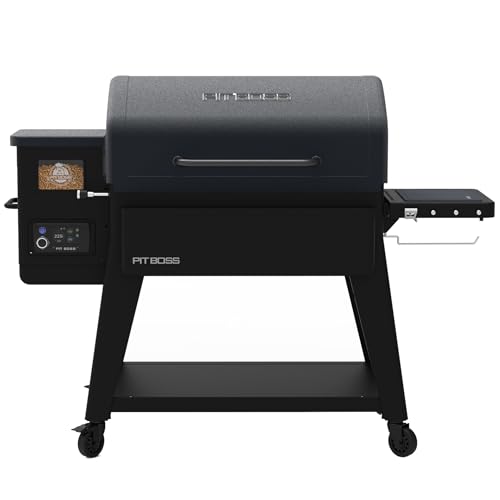
Pit Boss 1600 Navigator Series Pellet Grill — Best for Big Cooks
Buy the big Navigator if your cooks are events: whole briskets plus ribs plus a pan of beans, holiday turkeys with room to spare, or meal-prep Sundays that fill a freezer. A 30 lb hopper feeding 1,593 square inches means the automatic system is sized for genuinely long, genuinely large cooks, and the flame broiler plate adds direct-fire searing that most pellet grills only pretend to offer.
Strengths
- Largest cooking area in this guide by a wide margin, with room for multi-protein cooks
- 30 lb hopper gives the auger a long leash between refills on overnight cooks
- Flame broiler slider opens direct flame for steaks and burgers, unusual at this size
Trade-offs
- It is a large, heavy appliance that claims serious patio square footage
- Big fire pot plus big cabinet means pellet use per hour is the highest here
- Touchscreen controllers are wonderful until greasy fingers and winter gloves get involved
| Specification | Detail |
|---|---|
| Cooking area | 1,593 sq in |
| Hopper | 30 lb |
| Temperature range | 180°F to 500°F |
| Controller | Touchscreen, WiFi & Bluetooth, meat probe included |
Scale changes what automatic feeding has to do. A feeder holding temperature in a cabinet this size is moving real volumes of air and fuel, and the Navigator’s system is built for it: the hopper, auger and controller are all sized so a fourteen-hour brisket cook is a normal Tuesday for the machine, not an endurance test. The included meat probe closes the loop — the feeder manages the fire, the probe reports the meat, and you manage neither until it matters.
The honest cost of the size is everything around the cook. Assembly is a two-person job, the grill dominates a small patio, and heating this much steel for two chicken breasts is wasteful. Match it to genuinely big cooking and it is the best value per square inch in the guide; buy it for weeknight dinners for two and it will feel like commuting in a bus.
Best for: big families, party cooks and batch meal prep / Not suited for: small patios or mostly cooking for one or two
Check on Amazon to see the current price and the exact configuration on offer.

Z GRILLS 2026 Pellet Smoker & Grill — Best Long-Hopper Value
Z GRILLS built its name on giving you the feeder technology of pricier grills for noticeably less money, and this 2026 model is the clearest example in the roundup: a proper PID controller rather than a crude timer-based one, two meat probes instead of one, and a hopper the maker rates at up to 28 hours of runtime. The dual-wall insulated base matters more than it sounds — insulation is what lets a feeder sip pellets in cold weather instead of gulping them.
Strengths
- PID 3.0 control holds set temperatures tightly, which is the whole point of automatic feeding
- 28-hour rated hopper covers the longest realistic home cooks without a refill
- Dual meat probes let the feeder’s work be checked against two different cuts at once
Trade-offs
- The brand’s dealer and support network is thinner than Traeger’s or Pit Boss’s
- Fit and finish is good rather than luxurious — painted steel, not a showpiece
- App and smart features are less developed than the premium brands’ ecosystems
| Specification | Detail |
|---|---|
| Cooking area | 700 sq in |
| Controller | PID 3.0 precision control |
| Probes | Dual meat probes |
| Hopper | Rated up to 28 hours per fill |
| Construction note | Dual-wall insulated base, cover included |
The feeder question this grill answers is accuracy per dollar. Timer-based controllers feed pellets in fixed bursts and let temperature swing; a PID controller reads, predicts and trims constantly, so the fire the auger feeds is steadier and the smoke cleaner. In blind eating terms that shows up as bark that sets properly and ribs that do not alternate between steaming and scorching across a long cook.
Ownership is straightforward: standard pellet size, a covered storage life if you keep pellets dry, and an 8-in-1 brief that covers smoking, grilling, baking and roasting duties. For a first automatic feeder — or a second one bought purely for capacity — this is the value pick we would defend in any argument.
Best for: value hunters who still want true PID automatic feeding / Not suited for: buyers who prioritise a big dealer network and app polish
Check on Amazon to see the current price and the exact configuration on offer.
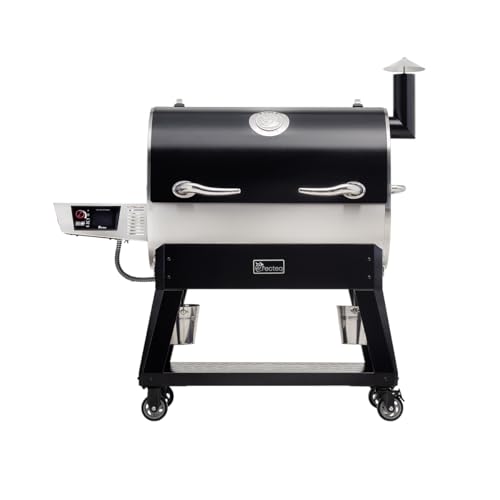
recteq Flagship 1600 Pellet Smoker Grill — Best Premium
The Flagship 1600 is what automatic feeding looks like with the budget objections removed. A 40 lb hopper is the largest in this guide, the cooking space matches it, and recteq’s controllers are known in the pellet world for holding set points with unusual discipline. If you cook for crowds often and want the machine’s behaviour to be the last thing you ever worry about, this is the premium answer.
Strengths
- 40 lb hopper — the longest unattended runtime potential in the roundup
- 1,667 sq in of cooking space handles catering-scale cooks
- Wi-Fi smart control with a strong reputation for stable, accurate temperatures
Trade-offs
- Premium pricing tier; the feeder is excellent, but so is the invoice
- Size and weight make it a permanent patio resident, not a movable feast
- Its capacity is wasted on small households — most cooks will use a fraction of it
| Specification | Detail |
|---|---|
| Cooking area | 1,667 sq in |
| Hopper | 40 lb |
| Connectivity | Wi-Fi smart grill control |
| Positioning | Premium tier |
Premium money in a pellet grill buys three things: steel, controller quality and support. The Flagship’s case rests mostly on the second. A feeder is a control system before it is a fire, and recteq’s PID implementation is the benchmark the mid-priced grills in this guide are measured against — small swings, quick recovery after the lid opens, and honest behaviour at both low smoking temperatures and high grilling ones.
It also buys headroom you can feel. Forty pounds of pellets is not a specification, it is a lifestyle: load it in spring and stop thinking about fuel for cook after cook. Pair that with the largest grate area here and you have the automatic feeder for the household that hosts — the one whose smoker is a neighbourhood institution.
Best for: enthusiasts and hosts who want the best feeder regardless of tier / Not suited for: budget shoppers or small households
Check on Amazon to see the current price and the exact configuration on offer.

Pit Boss Navigator 3-Series Pellet Vertical Smoker — Best Vertical Auto-Feed
Most auto-feed machines are grills; this one is a smoker first. The vertical cabinet stacks five racks over 1,118 square inches, hangs and layers food the way a smokehouse does, and its feeder draws on a 50 lb hopper — the biggest fuel supply in this guide. The 130°F low end matters: sausage, jerky and fish want gentle heat that grill-shaped pellet machines often cannot go low enough to give.
Strengths
- 50 lb hopper is the largest here — refills become a monthly event, not a per-cook chore
- Five-rack vertical layout suits jerky, sausage, ribs and hanging cuts
- 130°F floor opens low-temperature work most pellet grills cannot do
Trade-offs
- Top temperature of 420°F means no hard searing — this is a smoker, not a grill replacement
- Vertical cabinets shed heat when the door opens; batch loading needs a plan
- Footprint is small but the unit is tall — check your covered patio height
| Specification | Detail |
|---|---|
| Cooking area | 1,118 sq in on 5 racks |
| Hopper | 50 lb |
| Temperature range | 130°F to 420°F |
| Connectivity | WiFi & Bluetooth, meat probe included |
The feeder logic in a vertical smoker is different from a grill’s. There is no searing shift, no flame broiler — just hours of low, even heat while smoke washes upward through stacked racks. The Navigator’s controller and auger are tuned for exactly that patience, and the enormous hopper means a two-day jerky project or a weekend of sausage making never pauses for fuel.
Choose it if your smoking is about volume and variety at low temperatures: five racks of jerky, a cabinet of sausages, ribs standing in rows. Choose one of the grill-shaped picks instead if weeknight burgers and steaks share the machine’s duties. As a dedicated automatic smokehouse for a home cook, nothing else in the roundup is shaped like it — literally.
Best for: jerky, sausage and high-volume low-and-slow smoking / Not suited for: anyone needing one machine that also sears steaks
Check on Amazon to see the current price and the exact configuration on offer.
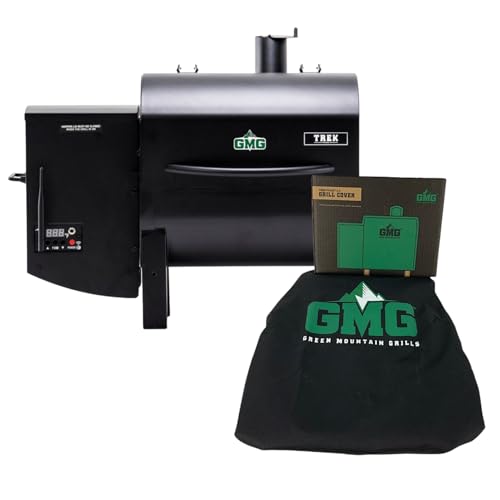
Green Mountain Grills Trek Prime 2.0 Portable Pellet Grill — Best Portable
Every other pick assumes a patio. The Trek Prime 2.0 assumes a truck bed. It shrinks the automatic feeder formula — auger, controller, hopper — into a portable grill that runs on 12V power as happily as on household current, with WiFi control and a cover included. For campers, tailgaters and RV travellers, it turns smoked brisket into something that happens at a lake, not just at home.
Strengths
- True automatic pellet feeding in a genuinely portable package
- 12V capability suits vehicles, RVs and off-grid battery setups
- WiFi control is rare at this size — the feeder reports to your phone at the campsite too
Trade-offs
- Cooking area is small; this is a travel grill, not a party machine
- Small hopper means the feeder needs attention on very long cooks
- Portable grills live hard lives — hinges, legs and latches earn their keep or fail trying
| Specification | Detail |
|---|---|
| Power | 12V capable, also runs on household power with adapter |
| Connectivity | WiFi enabled |
| Included | Cover |
| Use case | Camping, tailgating, RV |
Portability usually means giving up the good fire management — small charcoal grills are needy, small gas grills are flavourless. The Trek’s feeder changes that equation: the same set-and-monitor experience as a full-size pellet grill, in a box one person can load. At a tailgate, that means ribs that manage themselves while you actually watch the pre-game.
Be realistic about scale and runtime. The hopper is sized for travel cooks, not for a sixteen-hour brisket at a campsite with no pellet resupply, and the grate fits a couple of racks of ribs rather than a crowd’s worth. Within those honest limits, it is the only pick here that extends automatic feeding beyond the backyard — and for the right owner, that is the entire point.
Best for: campers, tailgaters and RV travellers who smoke / Not suited for: home cooks needing family-size capacity
Check on Amazon to see the current price and the exact configuration on offer.
Comparison Table
| Pick | Badge | Key spec | Best for |
|---|---|---|---|
| Traeger Woodridge Pro Pellet Grill & Smoker | Best Overall | 970 sq in, WiFIRE WiFi, Super Smoke | most households wanting one do-everything automatic pellet smoker |
| Pit Boss 1600 Navigator Series Pellet Grill | Best for Big Cooks | 1,593 sq in, 30 lb hopper, flame broiler | big families, party cooks and batch meal prep |
| Z GRILLS 2026 Pellet Smoker & Grill | Best Long-Hopper Value | 700 sq in, PID 3.0, 28-hour hopper | value hunters who still want true PID automatic feeding |
| recteq Flagship 1600 Pellet Smoker Grill | Best Premium | 1,667 sq in, 40 lb hopper, Wi-Fi | enthusiasts and hosts who want the best feeder regardless of tier |
| Pit Boss Navigator 3-Series Pellet Vertical Smoker | Best Vertical Auto-Feed | 1,118 sq in vertical, 50 lb hopper, 130°F low | jerky, sausage and high-volume low-and-slow smoking |
| Green Mountain Grills Trek Prime 2.0 Portable Pellet Grill | Best Portable | Portable, 12V capable, WiFi | campers, tailgaters and RV travellers who smoke |
Read the hopper column as runtime and the cooking area as lifestyle. The two big Pit Boss and recteq machines feed longest and cook most; the Z GRILLS matches their controller sophistication at a friendlier tier; the Traeger balances everything; the vertical Navigator trades searing for smokehouse volume; and the little Trek trades everything for the ability to leave home. There is no wrong pick here — only a wrong match between the feeder’s size and yours. If two rows still look equal after that, choose the one with the better controller, every time; it is the part of the machine you will interact with on every single cook, long after the novelty of the badge has worn off.
How to Choose the Best Electric Smokers with Automatic Feeders
Start with the controller, because in an automatic feeder the controller is the product. Timer-based controllers feed pellets in fixed on-off bursts and accept wide temperature swings as normal; PID controllers measure constantly and trim the feed rate, holding temperatures within a narrow band. For smoking — where the difference between 225°F and 260°F across ten hours changes the meat — PID control is worth real money, and it is why several picks in this guide advertise their controller generation by name.
Next, size the hopper to your longest realistic cook, not your average one. A rough rule from ownership: pellet grills burn on the order of a pound or two of pellets per hour at smoking temperatures, more in cold weather or at grilling heat. An overnight brisket therefore wants a hopper comfortably into double digits of pounds, or a maker-rated runtime that covers your cook with margin. The 28-hour Z GRILLS rating and the 30, 40 and 50 lb hoppers in this guide exist precisely because running dry at 4 a.m. is the classic automatic-feeder failure story.
Then match the shape to the food. Grill-shaped machines smoke, grill, bake and sear, and suit households replacing several appliances with one. Vertical cabinets smoke more food per square foot of patio and go lower in temperature, but cannot sear. Portable machines sacrifice both capacity and runtime for mobility. None of these is a compromise — each is the feeder optimised for a different life.
Automatic Feeders, Explained: Augers, Fire Pots and Failure Modes
The mechanism is simple, which is why it works. Pellets sit in the hopper; a motor-driven auger — a screw in a tube — carries them to a fire pot; a fan feeds the fire air; an igniter rod starts the first burn; and the controller orchestrates all of it against a temperature probe in the cabinet. Feed rate is heat. More pellets per minute, more fire. The sophistication lives entirely in how intelligently the controller varies that rate.
Know the three classic failures so you can choose machines that defend against them. A flame-out happens when the fire pot starves or gets smothered — good controllers detect the temperature fall and attempt relight. An auger jam usually traces to swollen, moisture-damaged pellets, which is why dry pellet storage is a feeder owner’s religion. A hopper bridge — pellets arching over the auger inlet and starving it while the hopper looks full — is cured by hopper designs that slope properly and by the simple habit of stirring pellets before an overnight cook.
Power cuts deserve a sentence of their own. An automatic feeder with no power is a box of unburned pellets and cooling meat. Every pick here restarts in a defined way when power returns, but a small battery backup or inverter for overnight cooks is cheap insurance that experienced owners swear by — the feeder is only automatic while the electricity is.
Pellet Choice: The Fuel Is Half the Feeder
An automatic feeder is only as good as what it is feeding. Pellets are compressed hardwood sawdust, and quality varies more than the bags suggest. Good pellets are hard, glossy and uniform, with very little dust in the bag; they feed smoothly, burn hot and leave modest ash. Poor pellets crumble, swell with the slightest humidity, and are the root cause of most auger jams and a good share of flame-outs. When an owner says their feeder is unreliable, the first diagnostic question is always what has been in the hopper.
Wood species is the flavour dial the feeder delivers. Hickory and oak give the assertive smoke most people picture with brisket and ribs; fruitwoods like apple and cherry burn milder and sweeter, suiting poultry, fish and cheese; mesquite is the strongest voice in the room and is best used in blends or short cooks. Because the auger meters fuel so consistently, pellet smokers respond predictably to wood changes — swap the hopper contents and you have genuinely changed the smoke, which makes experimentation cheap and repeatable.
Storage is the unglamorous half of pellet craft. Pellets are kiln-dried wood looking for moisture to absorb, and a bag left open in a damp garage becomes a bag of swollen, jam-prone fuel within weeks. Keep pellets in a sealed container, indoors if you can, off bare concrete, and never top a hopper with fresh pellets over a layer that has sat through a humid month. The feeder’s reliability statistics in your household will be decided more by this habit than by any specification on the box.
Budget Tiers for Automatic-Feed Smokers
We do not print product prices, but the tiers are stable enough to plan around. The budget tier buys a working auger and a basic controller on a mid-size grill: automatic in name and mostly in fact, with wider temperature swings. The mid tier — where the Z GRILLS and the big Pit Boss live — adds PID control, bigger hoppers, probes and connectivity, and is where most households should aim. The premium tier, represented by the recteq and the Traeger, buys controller refinement, thicker steel, better fit and finish, and support networks that answer the phone.
Spend first on the controller and the hopper, last on cosmetic stainless and extra shelves. A feeder that holds temperature through the night is worth more than any badge on the lid, and runtime you never use is still cheaper than a ruined brisket you did.
One tier note for the second-hand curious: automatic feeders age in their electronics, not their steel. A used premium grill with a healthy controller is a better buy than a new budget grill with a crude one, provided the auger turns freely, the fire pot is not rusted through, and the maker still sells igniters and boards for that model. The feeder is a system; buy the system, not the silhouette.
How to Run an Overnight Cook on an Automatic Feeder
An overnight brisket is the feeder’s defining exam, and it is passed the evening before, not during the night. Start with pellets you trust: dry, glossy, and stored sealed — dull, crumbly pellets with lots of dust in the bag are tomorrow’s auger jam. Fill the hopper completely even if the cook should not need it all; the extra weight keeps pellets feeding smoothly downward, and stir the top layer to break any bridging before you close the lid.
Clean the fire pot before the cook, not after the last one. Ash insulates the igniter and chokes airflow, and most flame-outs blamed on controllers are really ash problems. Vacuum the pot, check that the auger turns freely during the prime cycle, and confirm the cabinet probe is clean — a grease-caked probe lies to the controller, and the feeder will faithfully hold the wrong temperature all night.
Start the cook at least an hour before you need the meat on. Let the machine stabilise at temperature, watch one full feed cycle settle, and only then load the meat, probe it, and set your high and low temperature alarms in the app if your model supports them. Alarms are the difference between automation and abdication: the feeder runs the fire, but a low-temperature alert at 3 a.m. is what lets a human fix a problem while the brisket is still saveable.
In the morning, resist opening the lid to admire your work until the probe says the stall is underway or done. Every lid lift costs heat the feeder must replace, and pellet smoke is at its best in a closed, steady system. When the cook finishes, run the machine’s shutdown cycle properly — it burns off the fire pot safely and leaves the auger loaded and dry for next time — and store leftover pellets sealed and indoors if the grill lives outside.
One mid-cook habit separates calm owners from anxious ones: a single quiet check, two or three hours in, before you commit to sleep. Glance at the hopper level against your consumption estimate, confirm the cabinet temperature on the app matches the smoker’s own display within a few degrees, and make sure the probe cable is not pinched in the door or lid, which corrupts readings. That five-minute audit catches nearly every problem while it is still a story you tell, not a brisket you mourn — after it, the feeder, the alarms and the machine’s own controller divide the night watch between them, and your only remaining job is breakfast.
Common Buying Mistakes
Buying the feeder, forgetting the pellets. A season of automatic smoking burns real quantities of pellets, and bargain pellets with high ash and filler content cause the jams and flame-outs owners blame on machines. Budget for quality hardwood pellets as a running cost of the system, and store them sealed, dry and off concrete floors.
Judging by maximum temperature. A 500°F or 700°F headline tells you about grilling, nothing about smoking. The feeder’s quality shows at 225°F at hour ten. Buy for low-end stability and controller type; the searing number is a bonus, not the brief.
Ignoring hopper size for overnight cooks. The most common automatic-feeder disappointment is a hopper that empties at hour eleven of a fourteen-hour cook. Match hopper pounds or rated hours to your longest cook with margin, especially in cold weather when consumption rises.
Skipping the fire-pot cleaning routine. Ash build-up is the silent killer of automatic systems — it smothers ignition, distorts airflow and eventually stops the fire mid-cook. A two-minute vacuum before long cooks prevents the failure that ruins expensive meat.
Assuming automatic means unattended. These machines manage fire, not food safety, weather or power cuts. Use the probe alarms, keep the grill sheltered, and check in periodically. The feeder earns you sleep, not indifference.
Storing pellets in the hopper for months. A hopper is a feeder, not a warehouse. Pellets left sitting in an outdoor grill absorb humidity, swell and turn the next cook into an auger-clearing exercise. Empty the hopper back into sealed storage between widely spaced cooks, especially in damp climates.
Running the first cook on expensive meat. Every new feeder has a personality — a hot corner, a preferred pellet, a controller habit. Learn it on chicken and pork shoulder, which forgive everything, before a prime brisket depends on your reading of the machine.
Final Recommendation
If you buy one automatic feeder and want the decision to age well, make it the Traeger Woodridge Pro: the controller, the app and the capacity are balanced for real households. If value per feature is the argument, the Z GRILLS 2026 wins it, and if your cooks are the biggest or the most serious, the Pit Boss 1600 Navigator and the recteq Flagship 1600 divide that territory between size-for-money and outright premium quality.
Match the shape to the life before you match the badge to the budget: the vertical Pit Boss Navigator 3-Series for the smokehouse cook, the Green Mountain Trek for the traveller. Every feeder in this guide was verified against the maker’s catalogue data before it earned a link — check the current price on Amazon for the configuration you choose, and buy the hopper size your longest cook demands.
Start your shortlist with the three that fit most lives — the Traeger Woodridge Pro for balance, the Z GRILLS 2026 for value, and the Pit Boss 1600 Navigator for sheer capacity — then let hopper size and patio space make the final call.
Keep reading within this smoker programme:
- Best Electric Smokers With Bluetooth
- Best Electric Wood Pellet Smokers
- Best Electric Smokers With Heat Probe
- Best Electric Smokers With Windows
- Best Electric Wood Smokers
- Best Electric Smokers At Economical Prices
Frequently Asked Questions
What does an automatic feeder actually do in an electric smoker?
It replaces you as the fire-tender. An electric auger carries hardwood pellets from a hopper to a fire pot at a rate set by the controller, which reads the cabinet temperature constantly and feeds more or less fuel to hold your set point. Instead of adding chips or charcoal every hour, you fill the hopper once and the machine meters fuel for the whole cook.
Are automatic feeders only found on pellet smokers?
In practice, yes. Pellet augers are the one mature, mass-market automatic fuel system for home smokers. Electric chip cabinets load from the side and still need manual refills, and charcoal gravity-feed systems exist but burn charcoal rather than being electric smokers. If a listing promises an automatic feeder, check that it describes an auger and a hopper — that is the real mechanism.
How long can an automatic feeder run without attention?
It depends on hopper size, temperature and weather. At smoking temperatures a pound or two of pellets per hour is a fair planning figure, so a 30 lb hopper or a maker-rated 28-hour runtime covers any normal overnight cook with margin. Cold, wind and high temperatures all increase consumption, which is why experienced owners fill the hopper completely before sleeping regardless of the estimate.
What happens if the power goes out mid-cook?
The fire dies down, because the auger, fan and igniter all need electricity. When power returns, controllers restart in their defined way, but a long outage in the night can still cost you the cook. For valuable overnight cooks, many owners run the smoker through a small battery backup or inverter, and rely on app temperature alarms to wake them if the cabinet cools.
Do automatic-feed smokers produce real smoke flavour?
Yes — the fuel is real hardwood, burned in a real fire pot; only the delivery is mechanised. Pellet smoke is cleaner and milder than a stick-burner’s, which many people prefer for poultry and fish. Modes like Traeger’s Super Smoke, and simply cooking at lower temperatures for the first hours, deepen the smoke character when you want more of it.
What maintenance does an auger feeder need?
Three habits cover almost everything: vacuum the fire pot before long cooks so ash cannot smother the fire, keep pellets dry and sealed so they cannot swell and jam the auger, and empty or stir the hopper periodically so pellets cannot bridge over the inlet. Beyond that, an occasional check that the auger turns freely and the temperature probe is clean keeps the system honest for years.


