Disclosure: airfryerkitchensupply.com is reader-supported. When you buy through links on our site, we may earn an affiliate commission at no extra cost to you.
Where to buy
Pantry-minded shoppers comparing the best blenders for mason jars will find every pick in this guide on Amazon. This niche has one honest complication we will state up front: true blend-in-the-jar cooking — screwing a standard mason jar directly onto the blender base — is a threading trick that classic Oster-style bases are famous for, while most modern personal blenders instead blend in their own matched single-serve cups. We include both honestly labeled, and all are sold on Amazon, where you can confirm jar and cup compatibility before buying.
The six machines in this guide are: Oster Pro 1200 Blender with 24 oz Smoothie Cup, Oster Classic Series 8-Speed Blender, Ninja Fit QB3001SS Compact Personal Blender, nutribullet Pro+ N12-1001MK 1200W, magic bullet MBR-1101 Personal Blender, Hamilton Beach Portable Blender 51102G (2 Jars). Check the current price on Amazon for the model you choose, and check price on Amazon again before ordering if you are comparing configurations, because capacities, included accessories and finishes vary by listing.
Introduction: Blend in the Jar, Store in the Jar
The appeal behind the search for the best blenders for mason jars is a workflow, not a spec: blend a smoothie, sauce or spice mix directly in the jar it will be stored in, cap it, and skip washing a full-size pitcher. No transfer, no extra container, no lost sauce clinging to a big jar’s walls. For small-batch cooks — salad dressings, pesto, baby food portions, protein shakes, spice blends — that workflow is genuinely transformative.
The honest complication is compatibility. A standard regular-mouth mason jar threads onto classic Oster-style blender bases because those bases were designed around that thread — it is a decades-old kitchen hack that Oster owners have used for generations. Most other blenders do not accept mason jars at all; instead they offer their own single-serve cups that deliver the same blend-and-go workflow in a proprietary container. Both approaches are legitimate, and this guide labels which is which in every review rather than blurring the line.
Every pick was verified by brand and model. We print no prices and no ratings. Choose the Oster-style picks if true mason jar threading is your requirement; choose the personal-blender picks if the workflow matters more than the literal jar.
In this guide
Quick Picks
Best True Mason Jar Pick — Oster Pro 1200 Blender with 24 oz Smoothie Cup: The classic Oster thread: a glass-jar flagship whose base follows the Oster tradition that regular-mouth mason jars were made to match, plus its own 24 oz cup. Check the current price on Amazon.
Best Budget Jar Classic — Oster Classic Series 8-Speed Blender: The enduring budget classic with the same Oster thread heritage, an all-metal drive and a Crush Pro blade — the jar hack’s traditional home. Check the current price on Amazon.
Best Personal-Cup Alternative — Ninja Fit QB3001SS Compact Personal Blender: Not a mason jar thread — the honest alternative: two 16 oz blend-and-go cups that deliver the same workflow in Ninja’s own vessels. Check the current price on Amazon.
Best Power Personal Alternative — nutribullet Pro+ N12-1001MK 1200W: 1200 watts and a pulse button across 32 oz and 24 oz cups: the strongest single-serve workflow here, for jars’ worth of sauces and shakes alike. Check the current price on Amazon.
Best Compact Cupboard Pick — magic bullet MBR-1101 Personal Blender: The original personal blender: a tiny 250-watt base and three cups for the smallest kitchens and the simplest small-batch jobs. Check the current price on Amazon.
Best Travel-Jar Workflow — Hamilton Beach Portable Blender 51102G (2 Jars): Two 14 oz travel jars that blend and travel as the same vessel — the jar workflow, road-ready, at a budget tier. Check the current price on Amazon.
How These Picks Were Chosen
We selected on four criteria. First, the jar question answered honestly: does this machine thread a standard mason jar, or does it deliver the same workflow through its own cups? Second, small-batch performance: mason jar blending is single-serve work, so low-volume vortex and blade design matter more than headline wattage. Third, seal and storage practicality, because the jar is also the container. Fourth, everyday cleanup — the entire point of the workflow is fewer dishes.
We excluded full-size-only blenders with no single-serve option and no jar compatibility, and any model we could not verify. We also flag the safety rule that governs this whole niche in the how-to section: blend only cold or room-temperature contents in a mason jar, never hot liquids, because sealed glass and heat pressure are a dangerous combination.
The 6 Best Blenders for Mason Jars
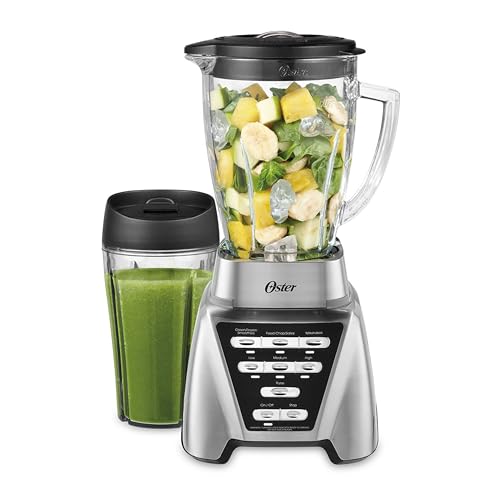
1. Oster Pro 1200 Blender with 24 oz Smoothie Cup — Best True Mason Jar Pick
The Oster Pro 1200 leads this guide because Oster is the name this niche is built on. The verified listing confirms a glass jar blender with seven speeds, Smart Settings technology, a dual-direction blade and an included 24 oz smoothie cup. Oster bases use the classic thread pattern that standard regular-mouth mason jars share — the reason generations of cooks have blended dressings and shakes directly in canning jars on Oster bases — and this model adds modern power and a dedicated smoothie cup for days when the jar stays in the cupboard.
Strengths
- Classic Oster base threading is the standard regular-mouth mason jar match this niche is famous for
- Dual-direction blade pulls small loads down into the blades instead of spinning them around the jar
- Seven speeds plus Smart Settings cover shakes, dressings, salsas and crushing ice
Trade-offs
- Jar threading is a fit for regular-mouth jars; wide-mouth jars need the blender’s own vessels
- Glass pitcher is the full-size piece to wash on big-batch days
- Always verify your specific jar’s thread fit gently by hand before first use — never force glass
| Specification | Detail |
|---|---|
| Jar | Glass jar (verified listing) |
| Speeds | 7 speeds, Smart Settings Technology |
| Blade | Dual Direction Blade |
| Included cup | 24 oz smoothie cup |
The dual-direction blade is the small-batch hero here. In a narrow jar — mason or otherwise — a one-direction blade can carve a pocket and spin the load around itself. Reversing direction breaks that pocket and folds the contents back through the blades, which is exactly what thick dressings, nut-based sauces and smoothie bowls need at jar scale. It is a meaningful engineering answer to the mason jar format’s known weakness.
Use the workflow honestly: cold and room-temperature blends only in glass jars, jar filled no more than two-thirds, and the jar seated by hand with a gentle quarter-turn feel — snug, never forced. Within those rules, the Pro 1200 delivers the true blend-in-jar experience this search is looking for, with a real full-size blender attached for everything else.
Best for: cooks who specifically want true mason jar blending on a capable full-size base / Not suited for: anyone wanting to blend hot soups in the jar — no mason jar setup is safe for hot liquids
Check on Amazon — check the current price on Amazon before you buy.

2. Oster Classic Series 8-Speed Blender — Best Budget Jar Classic
The Oster Classic Series 8-Speed is the traditional home of the mason jar trick: a 700-watt, six-cup blender with the Crush Pro 4 blade and an all-metal drive, per the verified listing, in the classic Oster format whose base threading matches regular-mouth mason jars. It has been the default recommendation for jar blending for years for a simple reason — it is the format the hack grew up on, at a budget tier, with a drive system built to be repaired rather than replaced.
Strengths
- Classic Oster format with the mason-jar-matching thread tradition
- All-metal drive is the durability standout at this tier — no plastic gear to strip
- Crush Pro 4 blade handles ice and frozen fruit at jar and pitcher scale
Trade-offs
- 700 watts is adequate, not powerful; thick nut butters will strain it
- Eight speeds with a simpler control feel than modern preset machines
- Like all jar blending: cold contents only, and check each jar’s fit by hand
| Specification | Detail |
|---|---|
| Power | 700W |
| Capacity | 6-cup |
| Blade | Crush Pro 4 Blade |
| Drive | All-metal drive |
Longevity is this pick’s argument. The all-metal drive and the model’s long production history mean parts, jars and blades remain easy to find — a real consideration for a workflow built around glass jars that occasionally chip or crack. A mason jar household is a household that replaces vessels, and a blender ecosystem that expects that is worth more than a sealed, disposable design.
Set power expectations plainly. Shakes, smoothies, dressings, salsas, spice grinds and pancake batter are its home ground, in jars or its own pitcher. Dense, dry loads like nut butter belong to the high-performance machines in our other blender guides. Within its lane, the Classic is the budget jar pick that has earned its reputation honestly.
Best for: budget jar-blending traditionalists who value repairability and the classic format / Not suited for: power users blending thick, dry or very large loads daily
Check on Amazon — check the current price on Amazon before you buy.

3. Ninja Fit QB3001SS Compact Personal Blender — Best Personal-Cup Alternative
The Ninja Fit does not thread a mason jar, and this guide will not pretend otherwise. It earns its place because it delivers the workflow most jar seekers actually want — blend a single serving in the vessel you will drink or store from — through two included 16 oz cups with spout lids, driven by a 700-watt base, per the verified listing. If the jar itself is negotiable and the workflow is the point, the Fit is the tidiest execution of it.
Strengths
- Two 16 oz cups with spout lids cover blend, drink and store with zero transfers
- 700W in a compact personal format crushes frozen fruit for smoothies reliably
- Dishwasher-safe cups keep the low-dishes promise that motivates this whole niche
Trade-offs
- Proprietary cups only — your mason jars stay in the pantry for storage, not blending
- 16 oz ceiling rules out family batches; this is a single-serve machine
- No full-size pitcher for soups, salsas or entertaining quantities
| Specification | Detail |
|---|---|
| Power | 700W |
| Cups | (2) 16-oz cups with spout lids |
| Format | Compact personal blender |
| Cleanup | Dishwasher safe |
Judge the Fit against the workflow honestly: a morning smoothie blended in its cup, lid swapped, out the door — that is the mason jar routine with the glass removed. The cups are also more forgiving than glass for gym bags, cars and kids. What you lose is the pantry aesthetic and the universal jar standard; what you gain is a sealed, purpose-built system with no thread-fit questions at all.
Frozen performance at this size is the pleasant surprise: the compact cup geometry keeps small loads in the blades’ path, so frozen berries and ice cubes process more completely than they do rattling around a big pitcher. For single smoothies, the small format is not a compromise — it is the correct tool.
Best for: smoothie drinkers who want the blend-and-go workflow without glass or thread questions / Not suited for: committed mason jar users who specifically want to blend in canning jars
Check on Amazon — check the current price on Amazon before you buy.

4. nutribullet Pro+ N12-1001MK 1200W — Best Power Personal Alternative
The nutribullet Pro+ is the power answer among the personal alternatives: the verified listing confirms 1200 watts, a pulse button — rare and valuable in this format — and 32 oz and 24 oz to-go cups with travel lids. The larger cup covers jar-and-a-half quantities like family dressings and double shakes, while pulse control gives the cook command over chunky salsas and spice rubs that one-speed extractors overshoot.
Strengths
- 1200W is the strongest personal format here — frozen and fibrous loads fully processed
- Pulse button restores texture control for salsas, rubs and chunky sauces
- 32 oz and 24 oz cups span single shakes through shareable small batches
Trade-offs
- Proprietary cups, not mason threads — the workflow, not the literal jar
- Extractor-style blades prefer some liquid in the load; very dry blends need care
- Cups and lids are a system to keep together; lost lids mean reordering parts
| Specification | Detail |
|---|---|
| Power | 1200W |
| Cups | 32 oz & 24 oz to-go cups with travel lids |
| Controls | Pulse button |
| Cleanup | Dishwasher safe |
Pulse is the feature that moves this machine from smoothie extractor to small-batch kitchen tool. Dressings emulsify without splitting, pesto stays textured, spice blends stop at coarse instead of powder. Mason jar cooks prize exactly that control at exactly that scale, which is why the Pro+ belongs in this guide despite wearing its own cups.
The 1200-watt motor also future-proofs the purchase: green smoothies with fibrous stems, frozen mango without thawing, and ice-heavy shakes all process fully instead of leaving the chunks that make people abandon personal blenders. If your small-batch blending is ambitious, this is the alternative-format pick with the headroom for it.
Best for: ambitious small-batch cooks who want jar-scale workflow with full-size power / Not suited for: purists for whom only a true glass mason jar on the base will do
Check on Amazon — check the current price on Amazon before you buy.

5. magic bullet MBR-1101 Personal Blender — Best Compact Cupboard Pick
The magic bullet is the machine that invented this category, and its verified listing confirms the formula is unchanged: a 250-watt base, a 22 oz cup and three to-go cups with a travel lid. It does not thread mason jars; it offers the smallest, simplest version of the blend-in-the-vessel idea, sized for dorms, desks, tiny kitchens and anyone whose blending is shakes, dressings and small sauces.
Strengths
- Smallest footprint here — lives in a cupboard corner or on a desk
- Three cups mean one blending while another is in the dishwasher or the fridge
- Dead-simple operation suits occasional and first-time blender owners
Trade-offs
- 250 watts is the weakest here; frozen and fibrous loads must be modest and liquid-assisted
- Proprietary cups only — no mason jar threading
- Not a family or entertaining machine in any configuration
| Specification | Detail |
|---|---|
| Power | 250W |
| Cups | 22 oz cup, (3) to-go cups, travel lid |
| Format | Personal blender |
| Cleanup | Dishwasher safe |
Honesty about the 250 watts matters: this is a machine for protein shakes, soft-fruit smoothies, dressings, dips and baby-food-scale purees, with liquid in the load. Ask it to crush a cup of ice dry or grind fibrous greens without liquid and it will struggle audibly. Within its lane, its tiny size is the feature — it is the blender that actually fits the kitchens the mason jar workflow usually serves.
The three-cup supply is a workflow detail veterans appreciate: the jar workflow’s promise is blend-store-drink with no washing bottleneck, and spare cups deliver that even when the dishwasher has not run. For a single person in a small space, that may matter more than raw power.
Best for: solo dwellers in tiny spaces making shakes, dressings and small sauces / Not suited for: frozen-drink or green-smoothie enthusiasts who need real crushing power
Check on Amazon — check the current price on Amazon before you buy.

6. Hamilton Beach Portable Blender 51102G (2 Jars) — Best Travel-Jar Workflow
Hamilton Beach’s portable design takes the jar idea literally in its own format: the verified listing confirms two 14 oz BPA-free travel jars with lids that serve as both blending vessel and drinking jar, driven by a 300-watt peak base with stainless blades. Blend in the jar, swap the blade assembly for the travel lid, and the jar leaves with you. It is the mason jar workflow reimagined for commutes instead of pantries.
Strengths
- Blend and travel in the same 14 oz jar — zero transfers, zero extra containers
- Two jars included, so one can be washing while the other travels
- Budget tier and compact size suit dorms, offices and second kitchens
Trade-offs
- Plastic travel jars, not glass mason jars — pantry purists should note the material
- 300 peak watts handles shakes and soft smoothies, not heavy frozen loads
- 14 oz is a single modest serving; bigger appetites need the larger-cup picks
| Specification | Detail |
|---|---|
| Power | 300W peak |
| Jars | (2) 14 oz travel jars with lids, BPA free |
| Blades | Stainless steel blades |
| Format | Personal smoothie blender |
The two-jar rotation is this pick’s quiet brilliance for routine builders: yesterday’s jar in the dishwasher never blocks this morning’s shake. For the price tier, that systems thinking matters more than wattage bragging. The jars’ drinking-lid design also removes the mason jar workflow’s one clumsy step — pouring from a threaded jar — for on-the-go use.
Keep loads honest: protein shakes, milkshakes, soft-fruit smoothies and iced coffee blends are its ground. Hard frozen fruit should be small, partially thawed or liquid-assisted. Judged as a travel-jar system rather than a power blender, it delivers exactly the workflow this search wants, at the friendliest tier in the guide.
Best for: commuters and routine shake drinkers who want blend-and-go in the same jar / Not suited for: glass-jar purists or anyone blending hard frozen loads daily
Check on Amazon — check the current price on Amazon before you buy.
Comparison Table
| Pick | Badge | Key spec | Best for |
|---|---|---|---|
| Oster Pro 1200 Blender with 24 oz Smoothie Cup | Best True Mason Jar Pick | Glass jar, 7 speeds, 24 oz cup included | cooks who specifically want true mason jar blending on a capable full-size base |
| Oster Classic Series 8-Speed Blender | Best Budget Jar Classic | 700W, 6-cup, all-metal drive | budget jar-blending traditionalists who value repairability and the classic format |
| Ninja Fit QB3001SS Compact Personal Blender | Best Personal-Cup Alternative | 700W, (2) 16 oz cups, personal format | smoothie drinkers who want the blend-and-go workflow without glass or thread questions |
| nutribullet Pro+ N12-1001MK 1200W | Best Power Personal Alternative | 1200W, pulse, 32+24 oz cups | ambitious small-batch cooks who want jar-scale workflow with full-size power |
| magic bullet MBR-1101 Personal Blender | Best Compact Cupboard Pick | 250W, 22 oz + 3 cups, ultra-compact | solo dwellers in tiny spaces making shakes, dressings and small sauces |
| Hamilton Beach Portable Blender 51102G (2 Jars) | Best Travel-Jar Workflow | 300W peak, (2) 14 oz travel jars | commuters and routine shake drinkers who want blend-and-go in the same jar |
The table divides cleanly in two, and the division is the decision. The Oster rows blend in true mason jars. The remaining rows deliver the same blend-store-go workflow in proprietary cups and travel jars. Choose your side of that line first; within each side, the rows then sort by power, vessel size and footprint in the ordinary way.
Two philosophies share this table: standardization and specialization. The Oster rows bet on a universal vessel the household already owns for a dozen other jobs. The cup-system rows bet on vessels engineered for exactly one job, done with fewer compromises. Both bets pay off in the right kitchen — the table’s job is to make you declare which kitchen yours is before money changes hands.
A closing thought on the table’s price-free logic: because this guide prints no prices, the rows sort by format and function rather than by spend — and in this niche that is the right order. The difference between the cheapest and dearest pick here is smaller than the difference between a jar household and a cup household. Decide the format question with your pantry, then let the budget settle which row on your side of the line comes home.
A practical closing test for the undecided: stand in your kitchen and count the mason jars you already own and use weekly. If the count is high and the mouths are regular, the Oster side of this table is your home and the only remaining question is power. If the count is low, or your jars are all wide-mouth heirlooms, the cup side will serve you better than a forced conversion — buy the workflow, keep the jars you love for storage, and let each vessel do the job it was shaped for.
If two rows still tie on your side of the format line, break the tie with your sink: the household that hand-washes will feel every extra part, every gasket and every cup lid, every single day. Count the pieces each finalist asks you to wash after its commonest job, and let the smaller number win. In a workflow whose entire promise is fewer dishes, the wash count is not a footnote — it is the product.
The Mason Jar Thread, Explained Honestly
Standard mason jars come in two mouths: regular and wide. The classic Oster-style blender base — its blade assembly and threaded collar — shares the regular-mouth thread pattern, which is why a regular-mouth jar can seat on those bases in place of the blender’s own jar. This is a thread compatibility, not a manufacturer endorsement for every jar ever made: glass varies, chips happen, and a jar that does not seat smoothly by hand should never be forced. Wide-mouth jars do not share the fit and belong in the pantry, not on the base.
Safety rules are absolute in this niche. Blend only cold or room-temperature contents in glass — hot liquid in a sealed glass jar builds pressure and can crack the jar or blow the seal. Fill to two-thirds at most, start on the lowest speed, and inspect jars for chips before every use. Cooks who want hot blending should use the blender’s own pitcher, which is what it is vented and built for.
Jar Workflow vs Cup Systems: Choosing Your Version
True jar blending wins on universality and storage: jars are cheap, standardized, freezer and pantry friendly, and the blend vessel is the storage vessel with a standard lid. It loses on fragility and on the cold-only rule. Proprietary cup systems win on durability, travel lids and purpose-built seals, and lose on ecosystem lock-in — a lost cup or lid is a parts order, not a pantry grab.
Neither answer is wrong; they serve different kitchens. Pantry cooks preserving sauces, dressings and spice blends in labeled jars should take an Oster pick. Commuters and gym-goers should take a cup system and never look back. Many households end up with both logics across two machines, which is why this guide refuses to crown a single format.
What Actually Belongs in a Jar: The Small-Batch Repertoire
The jar repertoire is wider than smoothies. Salad dressings emulsify beautifully at jar scale and store in their blending vessel for a week. Pesto and chimichurri come out textured rather than pureed when pulsed in short bursts. Spice blends and rubs grind evenly in a dry jar — a job full-size pitchers do badly because the volume is too small to circulate. Pancake and waffle batter for one or two, overnight oat bases, marinades, garlic confit oil, small salsas and baby food portions all share the same profile: under two cups, better fresh, and annoying to wash a pitcher for.
The repertoire has boundaries worth respecting. Anything hot is out, as the safety section states. Anything fibrous and dry — a kale-heavy green blend with no liquid — will pocket and stall in a narrow jar. And anything meant for a crowd belongs in a pitcher by definition. Cooks who learn the repertoire’s edges find the jar becoming the most-reached-for vessel in the kitchen, because most real blending, counted by frequency rather than volume, is small.
Jar Economics and the Pantry System
Part of the mason jar workflow’s appeal is economic: jars are among the cheapest standardized vessels in any kitchen, lids are universal, and a cracked jar is a trivial replacement rather than a parts order. A household can own a dozen blending-and-storage jars for less than the cost of one proprietary cup set, and every jar also works for canning, fermenting, dry storage and leftovers. That universality compounds: the jar blended in the morning is the jar that stores soup at night and carries salad to work tomorrow.
The counterweight is breakage and the cold-only rule, and honest households weigh both. Kitchens with small children, stone counters and a history of dropped glass may rationally choose cup systems and pay the ecosystem premium for peace of mind. Kitchens built around a pantry wall of jars will find the Oster route pays for itself in a season. The workflow is identical; the material is a household decision, not a performance one.
Ferments, Dressings and Storage: The Jar as a System
Once jars live on the counter as blending vessels, they tend to colonize the rest of the kitchen system — and that is a feature. The same regular-mouth jars hold the dressings blended on Sunday, the overnight oats portioned for the week, the spice blends ground in a dry jar, and the ferments and pickles that never touch the blender at all. A household standardized on one jar size owns one lid size, one storage geometry and one washing routine, and the blender becomes a node in that system rather than a standalone gadget.
Labeling discipline completes the system: a strip of tape and a date on every blended jar turns the fridge from an archaeology site into an inventory. Dressings keep a week, nut-based sauces less, spice blends months. The jar workflow’s deepest benefit is not the saved pitcher wash — it is this quiet standardization, which is why its devotees sound less like appliance owners and more like people who have adopted a method.
Troubleshooting the Jar: Pockets, Leaks and Lukewarm Results
The pocket — a load spinning around an air cavity while nothing blends — is the jar’s signature malfunction, and it has three causes: too little liquid, too much load, or hard items loaded at the bottom where they lock the blade’s first turn. The fixes follow the causes: add liquid a spoonful at a time, split the load, and always load liquids first and hard items last. On a dual-direction Oster the reversal breaks most pockets automatically; on single-direction bases, a stop, a tap on the counter to settle the load, and a restart on low resolves the rest.
Leaks at the thread mean one of three things: the jar was cross-threaded, the gasket in the blade assembly is worn or missing, or the jar was overfilled and the vortex is forcing liquid up the thread. Check the gasket first — it is the cheapest part in the system and the cause of most leaks — and never run a jar that does not seat with a clean, even feel. A jar that leaks on water will leak worse on a dressing, and the time to discover it is the water test in the setup step, not mid-recipe.
Lukewarm, under-blended results — chunky smoothies, gritty sauces — usually trace to sequence rather than power: frozen items added before liquid, or a load blended in one long run instead of staged pulses that let the vortex rebuild. Work in the load order this guide teaches, pulse to establish movement, then run. Jar blending rewards rhythm over force, and nearly every disappointment in this niche is a rhythm problem wearing a power problem’s clothes.
A Starter Week With a Jar Blender: Seven Days, Seven Jars
Day one is the water test and a first smoothie, learning the seat of the jar and the sound of a healthy vortex. Day two is a dressing — the recipe that converts most skeptics, because it emulsifies in twenty seconds and stores in its own jar. Day three is a spice blend, ground dry, labeled and shelved. Day four is a sauce for dinner, pulsed coarse on purpose. Day five is pancake batter for one, mixed and poured from the same vessel. Day six is a frozen drink that tests the load order honestly. Day seven is the review: which jars got washed, which workflow clicked, and what the machine will actually do in this kitchen.
That week is a better buying test than any review, including this one, because jar blending is a habit technology. Households that complete the week almost always keep the habit for years; households that stall at day two have learned, cheaply, that they are cup-system people or pitcher people instead. Either answer is a success — the only failure is a machine bought against the household’s real rhythm and discovered too late to return.
How to Choose the Best Blenders for Mason Jars
Decide whether the jar is literal or a workflow
If you preserve, label and store in mason jars and want to blend in them, only the Oster-style picks deliver the literal thread fit. If you want blend-store-go with minimum fuss, the cup systems deliver it more durably. Naming which one you mean is the entire decision — the rest is sizing.
Size the vessel to the batch
Jar blending is small-batch blending: 14 to 24 oz covers shakes and dressings, 32 oz covers double servings and family sauces. If your small batches regularly exceed that, you do not need a bigger jar — you need a full-size blender with a personal cup option, like the Oster Pro 1200’s dual format.
Respect the cold-only rule in your planning
No glass jar setup blends hot soup safely. If hot small batches are part of your cooking, plan to blend them in the machine’s own pitcher and store in the jar afterwards. The workflow survives; only the blending step moves vessels.
Regular-mouth versus wide-mouth: the detail that decides everything
Before buying anything for jar blending, inventory your jars. The Oster-style thread fit belongs to regular-mouth jars; wide-mouth jars — the ones most people prefer for storage — do not thread onto those bases. If your pantry is wide-mouth, your honest options are blending in the machine’s own vessels and storing in your jars afterwards, or adding a small stock of regular-mouth jars to the pantry for blending duty.
What about blending dry goods like spices and grains?
Dry grinding is a genuine jar strength: small volumes of spices, coffee-adjacent blends and oat flour circulate properly in a narrow jar where they would rattle uselessly in a big pitcher. Use a dedicated jar for spices if you also blend smoothies in jars — cumin perfumes glass less than plastic, but a labeled spice jar prevents the chili smoothie incident every jar household eventually jokes about.
A closing practical note before you decide
One last inventory habit will protect your purchase: before the machine arrives, gather the jars you intend to blend in, wash them, and hold each up to the light for chips around the rim. Retire any jar that fails inspection to dry storage only. That five-minute audit, done once, removes the commonest cause of jar-blending accidents and disappointments, and it costs nothing but attention. The jar system rewards households that treat glass as equipment rather than as packaging — inspected, standardized and respected — and it repays that respect with years of the simplest small-batch blending there is.
How to Blend Safely and Well in a Mason Jar
This method applies to Oster-style bases with regular-mouth jars. It protects the glass, the seal and the blend quality, in that order.
Step 1: Inspect and choose the jar
Use a regular-mouth jar with no chips, cracks or rim damage. Chips concentrate stress and are the leading cause of jar failure on a base. If a jar does not thread on smoothly by hand within a gentle turn, stop — that jar and that base are not a match.
Step 2: Load cold, load two-thirds
Add liquids first, then soft ingredients, then frozen or hard items last and smallest. Keep the total at or below two-thirds of the jar. Cold and room-temperature contents only — never hot soup, never fresh coffee, never anything steaming.
Step 3: Start low, then climb
Seat the jar, start on the lowest speed for a few seconds to establish the vortex, then increase. Small jars form their vortex quickly; if the load pockets, stop, tap the jar to settle contents, and restart rather than running the motor against air.
Step 4: Cap, label and store
Remove the jar, swap the blade assembly for a standard jar lid, label with contents and date, and refrigerate or freeze with headspace. The jar you blended in is the jar you store in — the entire point of the workflow, delivered.
Common Buying Mistakes
Blending hot liquids in a sealed jar
The most dangerous mistake in this niche. Heat plus a sealed glass vessel equals pressure and crack risk. Hot blends belong in the blender’s own vented pitcher, every time, no exceptions for small quantities.
Forcing a jar that does not thread smoothly
A cross-threaded or forced jar can crack under vibration. If it does not seat easily by hand, it is the wrong jar — wide-mouth jars in particular must never be forced onto a regular-thread base.
Overfilling past two-thirds
Blending needs headspace for the vortex. An overfilled jar blends unevenly, stresses the seal and leaks at the thread. Two smaller jars beat one brimming one.
Assuming every blender accepts jars
Most do not. Buying a blender for jar use without confirming the Oster-style thread — or choosing a cup system knowingly — is how this niche disappoints. Read the format, not just the marketing photo.
Final Recommendation
If you want the shortest possible shortlist, start with these three: Oster Pro 1200 Blender with 24 oz Smoothie Cup, Oster Classic Series 8-Speed Blender, Ninja Fit QB3001SS Compact Personal Blender. Each links to its Amazon listing, where you can check the current price on Amazon and confirm the exact configuration before deciding.
For the literal mason jar experience, the Oster Pro 1200 is the recommendation — real thread heritage, dual-direction small-batch performance and a full-size blender in the same purchase — with the Oster Classic as the budget, repairable classic. For the workflow without the glass, the Ninja Fit is the tidiest cup system, the nutribullet Pro+ the most powerful, the magic bullet the smallest, and the Hamilton Beach the commuter’s two-jar rotation.
Whichever format you choose, check the current price on Amazon, confirm the vessels included, and keep the cold-only rule sacred if glass is involved. The jar workflow rewards the cooks who respect its one limitation.
Keep exploring the cluster: Best Blenders For Smoothies Best Blenders For Small Kitchens Best Blenders For Baby Food Best Personal Blenders Best Blenders For Sauces
Frequently Asked Questions
Do mason jars really fit on blenders?
Regular-mouth mason jars share the thread pattern of classic Oster-style blender bases, which is the basis of the long-standing jar-blending practice. Wide-mouth jars do not fit that thread. Fit varies by jar, so a jar must always seat smoothly by hand — never force glass.
Is it safe to blend in a mason jar?
With rules: cold or room-temperature contents only, no chipped jars, fill to two-thirds, start on low speed. Hot liquids in a sealed glass jar are genuinely dangerous and must be blended in the machine’s own pitcher instead.
Can I blend hot soup and store it in the same jar?
Blend the soup in the blender’s vented pitcher, then pour it into the jar for storage once it has cooled slightly. You keep the jar-storage workflow without the sealed-hot-glass risk.
What are mason jar blenders best for?
Single-serve smoothies and shakes, salad dressings, pesto and small sauces, spice blends, baby food portions and pancake batter for one or two. The common thread is small batches that go straight from blending to storage.
Mason jar or personal cup system — which should I choose?
Choose jars if you store and preserve in glass and want vessel universality. Choose a cup system if you travel with your blends, want purpose-built drinking lids, or prefer plastic’s durability. Both deliver the blend-in-the-vessel workflow.
Why does my jar blend leave chunks at the top?
The load has pocketed — common in narrow vessels. Stop, tap or stir the contents down, ensure enough liquid is present, and restart on low before climbing. Dual-direction blades, like the Oster Pro 1200’s, reduce pocketing by reversing the flow.


