A bathtub drain stopper seals the drain so the tub holds water for a soak or a bath. Some are simple rubber or silicone plugs. Others are pop up tub drains that replace the part in the tub itself, and some are hair catchers that also cover the drain opening. Whether you call it a tub stopper or a tub drain cover, the right type depends on the drain you already have.
The six picks below cover plug style, lift and turn, toe touch and hair catching options. We have not used these products ourselves, and drain sizes and fit differ between tubs, so confirm the details on the current listing before buying and check your drain type first.
As an Amazon Associate we earn from qualifying purchases. Links below are affiliate links, and they do not change the product information we give.
What to Look For
| Feature | Why it matters |
|---|---|
| Drain type | Plug, lift and turn, toe touch and pop up drains are not interchangeable |
| Fit | Check the drain opening and thread size on the listing |
| Material | Rubber, silicone, brass and plastic wear differently |
| Hair control | A catcher keeps hair out of the pipe and saves on clogs |
| Install | Some drop in with no tools; others need a screwdriver |
In this guide
Specs at a Glance
| Stopper | Type | Material | Notes |
|---|---|---|---|
| Danco Universal Tub Stopper | Drop-in plug | Rubber and plastic | Meant to fit many drains |
| Danco Lift and Turn | Replacement stopper | Metal-style finish | Check your drain thread |
| TubShroom | Hair catcher | Silicone | Fits over the drain opening |
| OXO Good Grips | Drain protector | Silicone and steel | Wipe-clean design |
| Westbrass Tip-Toe | Toe touch | Brass | Replaces the existing trim |
| Kingston Brass Pop-Up | Pop up drain | Brass | Check size and finish |
The 6 Best Bathtub Drain Stoppers
Top pickBest for a quick replacement
1. Danco Universal Tub Stopper
A drop-in style stopper from a plumbing parts maker, designed to seal many standard tub drains. It is the low-effort route when your original plug has gone missing or worn out.
Suits: a quick replacement. Strengths: a simple fit with no installation work. Weaknesses: it will not suit every drain shape. Skip it if you want a built-in lever stopper.
View Danco Universal Tub Stopper on Amazon
Best for tubs with a lift and turn drain
2. Danco Lift and Turn Tub Drain Stopper
A replacement for tubs that use a lift and turn drain, where you twist the knob to open or close the seal. Check the thread and your existing drain before ordering, since fit depends on the tub.
Suits: tubs with a lift and turn drain. Strengths: a direct swap for a worn part. Weaknesses: fit is not universal. Skip it if your tub has a toe touch or pop up drain.
View Danco Lift and Turn Tub Stopper on Amazon
Best for keeping hair out of the pipe
3. TubShroom Tub Drain Protector
A silicone hair catcher that sits in the drain and collects strands before they reach the pipe. It protects the drain rather than sealing it, so pair it with a stopper when you want to soak.
Suits: keeping hair out of the pipe. Strengths: a well-known design that is easy to clean. Weaknesses: not a stopper on its own. Skip it if you only need to hold water.
View TubShroom Tub Drain Protector on Amazon
Best for low-maintenance hair control
4. OXO Good Grips Bathtub Drain Protector
A drain cover that catches hair using a silicone and steel build with a simple wipe-clean shape. Sizing depends on your drain, so look at the listing before you buy.
Suits: low-maintenance hair control. Strengths: a trusted kitchen and bath brand. Weaknesses: it protects the drain rather than stopping it. Skip it if you want a stopper that holds bathwater.
View OXO Good Grips Bathtub Drain Protector on Amazon

Best for upgrading an old stopper
5. Westbrass Tip-Toe Bathtub Drain
A toe touch drain that opens and closes when you press it with your foot. It is a trim-style replacement, so it fits tubs with a matching waste and overflow setup.
Suits: upgrading an old stopper. Strengths: a brass build and foot-operated use. Weaknesses: installation takes some plumbing know-how. Skip it if you want a drop-in plug.
Best for a full tub drain upgrade
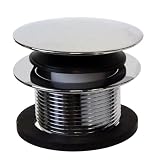
6. Kingston Brass Pop-Up Tub Drain
A pop up tub drain in brass, offered in several finishes. A pop up drain uses a linkage behind the overflow plate, so it takes more work to fit than a plug.
Suits: a full tub drain upgrade. Strengths: a built-in stopper and a finish choice. Weaknesses: fit and sizing need checking. Skip it if you want a no-tools fix.
View Kingston Brass Pop-Up Tub Drain on Amazon
Care and Setup
- Rinse stoppers and hair catchers after each shower.
- Clear trapped hair weekly to avoid clogs.
- Check seals for cracks every few months.
- Test a new stopper with a few inches of water before a full bath.
Mistakes to Avoid
- Ordering before identifying your drain type.
- Expecting a hair catcher to hold water.
- Over-tightening threaded parts.
- Ignoring a slow drip that signals a worn seal.
Identify Your Drain Before You Shop
Almost every wrong purchase in this category comes from skipping the identification step. Tub drains look similar from above, yet they work in different ways, and the parts are not interchangeable. Start with what you can see and feel. If the stopper has a knob you twist or lift to open and close, it is a lift and turn. If you press the stopper with your foot and it clicks up or down, it is a toe touch. If there is a lever on the overflow plate (the plate below the faucet) that you flip, it is a trip lever or pop up drain, with a linkage inside the wall. If the tub simply has an open drain and a loose rubber plug, you have a plug-style drain.
Next, look for a screw in the center of the stopper. Many lift and turn and toe touch stoppers are held by a set screw hidden under the cap or on the side, and unscrewing it can reveal the threaded post. Whether that post is a male or female thread, and its length and diameter, decide which replacement fits. Take clear photos and note the details, or remove the old stopper and bring it to a store, or match it against the listing carefully. A few listings give thread sizes and drain opening diameters; if yours does not, ask the seller.
Finally, note the finish and the overflow plate if you are replacing trim. Finish mismatch is not a function problem, but it looks odd, and brass, chrome, nickel and oil-rubbed bronze finishes vary between makers. Also check whether your tub is a standard residential tub or a specialty one, such as a freestanding tub, a whirlpool or a very old cast iron model, since these sometimes use different drain assemblies and need a matching waste and overflow kit.
Comparing Stopper Styles by Use
Each style suits a different kind of household. A plain drop-in plug is cheap, needs no tools, and is useful for rentals and spare parts, but it is easy to lose and does not always seal on a drain with a shallow or uneven seat. It also needs a hand in the water to remove. A lift and turn stopper is built into the drain, so there is nothing to misplace, and the seal is usually good, though the knob and the internal threads can wear with years of twisting.
A toe touch stopper is convenient because you operate it by foot without bending, and it is common in homes with an upgrade-friendly bath. It depends on an internal spring and a post that can loosen or fail, and replacing the full unit takes some effort. A pop up drain with a trip lever hides the seal mechanism inside the overflow, which looks tidy and is easy to use, but the linkage can slip out of adjustment, leading to slow leaks or a stopper that will not hold. Adjusting it often means loosening a lock nut and changing the rod length.
Think about who uses the tub. Older adults or people with limited grip may prefer a lever or toe action over a knob that needs twisting. Households with long hair may want the stopper paired with a catcher. Renters who cannot change the drain assembly may prefer a flexible suction or drop-in plug as a short-term solution. There is no single best style, only the one that suits your drain, your hands and how permanent the repair should be.
Installation Basics and Leak Checks
For a stopper swap, the tools are usually modest: a screwdriver, a pair of pliers or a drain key, and a cloth to protect the finish. Remove the old stopper using the set screw or by unscrewing it from the post. Compare it to the new part side by side before you install. If the thread length is too short, the stopper may not close properly; if it is too long, it may bottom out and leave a gap. Some replacements come with adjustable posts or extra washers, so read the packaging.
When replacing a full drain, such as a toe touch or pop up unit, you need to access the drain flange and sometimes the overflow. Use plumber’s putty or the gasket the maker supplies as directed, tighten evenly without cranking, and wipe away excess putty. Over-tightening can crack porcelain or acrylic or strip the threads, so stop when the part is firm. Work with good light and keep small parts in a bowl so they do not slip down the drain.
After installation, test before you trust it. Close the stopper, add a few inches of water, mark the level or watch it for ten to fifteen minutes, and look underneath if you have access for drips at the connections. Operate the stopper several times and confirm that it opens fully; a stopper that only lifts partway will drain slowly and may catch hair. If anything leaks, drain the tub, reseat the gasket or putty, and try again. If the tub drain is in a wall with no access panel and you are not confident, hire a plumber instead of risking a hidden leak.
Hair, Clogs and Slow Drains
Many people shop for a new stopper when the real problem is a slow drain. Before you spend money, check whether water is draining slowly or the stopper is leaking. A stopper that does not seal lets water seep away while you bathe; a clogged drain keeps water from leaving after you open it. These problems call for different fixes, and a new stopper will not clear a clog.
Hair is the usual culprit. It collects on the stopper’s post and crossbars, then builds up in the pipe just below. A catcher or a cover over the drain opening keeps most strands out, and it makes cleanup quicker. Whatever you use, pull hair out by hand or with a plastic drain tool every week or so, and rinse the stopper in warm water. Avoid pouring harsh chemical drain cleaners without reading the label, since they can damage some finishes and fittings and are risky if you later need to work on the drain by hand. A hand plunger or a drain snake is often safer for the pipe.
If you must combine a catcher and a stopper, check that the two do not interfere with each other. Some catchers sit over a lift and turn stopper, while others replace the stopper’s top and cannot be used with certain mechanisms. Read the listing for compatibility. If the tub keeps clogging deeper in the line even with a catcher in place, the problem may lie in the trap or the main line, and that is a job for a plumber.
Budget Tiers and When to Replace
Pricing tiers map to how much work and permanence you want. At the low end are plugs and simple replacement stoppers, suited to quick fixes, rentals and spare parts. In the middle are branded replacement stoppers and hair catchers, which cost a little more for better finish and fit. At the higher end are full brass drain kits and pop up assemblies, where you are paying for heavier material, finish options and a more durable build, plus the time to install them.
Think about total cost, not just the sticker. A cheap part that fails in a year, or one that needs a repair call because it was the wrong fit, is not good value. A better drain that matches your tub and sits tight for years is. Conversely, there is little reason to put a premium brass pop up drain on a tub you plan to replace soon. Finish matters in a visible bathroom, and plated finishes can wear if cleaned with abrasive products, so use a mild cleaner.
Signs that a stopper needs replacing include a seal that no longer holds water, a rubber gasket that is cracked, hardened or flattened, a knob or lever that spins without moving the seal, rust or pitting on metal parts, and a threaded post that has stripped. A recurring slow drip is a warning. If you replace one part and the problem returns, inspect the drain seat, the flange and the overflow connection. Questions to ask before you buy: what drain type does it fit, what thread and opening size, what finish, and does it come with the tools or washers you need?
Identifying the Drain You Already Have
The biggest source of returns for tub stoppers is a mismatch between the stopper and the drain. Tubs use several mechanisms, and a stopper designed for one will not seal on another. Spend a few minutes working out what is in your tub before looking at replacements, and take photographs to compare with listings.
- Lift and turn: you twist the stopper to open and close it.
- Push and pull: you press the cap to close and press again to open.
- Toe-touch: a foot press operates the stopper, similar in feel to push types.
- Trip lever: a lever on the overflow plate moves an internal plunger.
- Pop-up with linkage: a lever raises and lowers a stopper through a rod.
- Simple flat plug: a loose cover that sits in the drain opening.
Measure the drain opening across and check whether it has threads. If the mechanism is hidden or complicated, a plumber can identify it quickly, and may be needed for anything that involves disassembling pipes under the tub.
Material, Seal and Cleaning Notes
Once you know the type, think about what keeps the stopper working. Hair, soap residue and mineral scale all affect how the seal sits, and the materials differ in how they cope. The table compares general points.
| Part | What to look at |
|---|---|
| Rubber or silicone seal | Flexibility and fit against the drain edge |
| Metal body | Finish that resists corrosion and staining |
| Plastic components | Strength of threads and moving parts |
| Hair catcher | Whether it can be lifted out and cleaned easily |
| Fixing method | Whether a tool is needed to install or remove |
Clean the stopper regularly by removing visible hair and wiping the seal with mild soap and a soft cloth. Avoid strong chemicals unless the maker says they are safe for the finish, and never mix cleaning products.
If water drains slowly or the stopper leaks, check for hair and debris before replacing parts. A worn seal is often the cause, and a new gasket may cost less than a whole unit. Persistent leaks that appear beneath the tub, or pipes that feel damp, are a job for a licensed plumber.
Finally, follow any instructions on the packaging for fitting, and test the stopper with a small amount of water before filling the tub fully.
Before you order, check the return terms from the seller in case the fit is wrong. Keep the old stopper until the new one is confirmed to fit, and note the brand of your tub if it is visible, since some makers use their own parts. A short call to the tub maker or a plumbing supplier can confirm the type quickly and save you from buying twice.
Bathtub Drain Stopper FAQ
How do I know which tub stopper fits?
Look at how your current drain works. Lift and turn, toe touch, pop up and plug styles each need a different part, so match the type before you check size.
Can I replace a pop up tub drain myself?
Often yes with basic tools, but the linkage behind the overflow plate can be fiddly. Hire a plumber if you are unsure.
Is a hair catcher the same as a stopper?
No. A catcher keeps hair out of the pipe, while a stopper seals the drain. Many people use both.
Why does my tub not hold water even with the stopper closed?
The seal may be worn, the stopper may be the wrong size, or a pop up linkage may be out of adjustment. Inspect the gasket and the drain seat, and adjust or replace the part that is failing.
Do all tub stoppers use the same thread?
No. Thread size and length vary between drains and makers, so check the listing and compare it to your existing post before ordering.
Can I put a hair catcher over any drain?
Not always. Catchers are made for specific drain shapes and mechanisms, so read the listing for compatibility with your stopper type.
How do I remove an old stopper?
Look for a set screw under the cap or on the side and loosen it, then unscrew the stopper from the post. Some seize with age, so use gentle force and protect the finish.
What tools do I need to replace a tub drain?
A screwdriver and pliers or a drain key are common, and plumber's putty or a gasket for full drain swaps. The package or the maker's instructions will list exactly what you need.
Is plumber's putty needed for a stopper?
Not for a stopper swap on an existing drain. It is typically used when installing a new drain flange, so follow the instructions for the specific part.
Are chemical drain cleaners safe with these parts?
Check the labels of both the cleaner and your fittings, as some products can harm finishes and seals. A hand tool or a snake is often a gentler first step.
Choosing Bathtub Drain Stoppers in Practice: Reading Past the Headline Features
Most listings for bathtub drain stoppers lead with their most photogenic feature, but the details that decide whether you stay happy with a purchase are usually further down the page. Start by writing down your non-negotiables before you look at any single product: the space you have, who will use it, how often it will be used, and what you are replacing. That short list protects you from being steered by a feature you will rarely touch. Then read each listing in the same order every time — dimensions and fit first, what is included in the box second, care requirements third, and only then the styling or convenience extras. Consistency matters because it is very easy to compare the best feature of one option against the weakest feature of another and walk away with a distorted picture.
Pay close attention to what a listing does not say. If the description of bathtub drain stoppers is vague about materials, included parts or compatibility, treat that silence as information rather than a detail to assume in your favour. Established options such as the Danco Universal Tub Stopper and the Danco Lift and Turn Tub Drain Stopper are easier to evaluate precisely because their listings tend to state clearly what ships, what is sold separately and what the product is designed to work with. Where a listing links to a manual or a specification sheet, open it. Manuals are written for installers and owners rather than shoppers, so they describe clearances, limits and maintenance in plainer language than marketing copy, and they often reveal whether a product suits a small household, a busy family bathroom or a rental property far better than the headline does.
Finally, think about the total job rather than the single item. A purchase that needs extra fittings, a different drain position, a stronger floor, a new cover or a matching accessory costs more time and money than the product page suggests. Listing those extras before you order — for every candidate, not just your favourite — turns a vague price-tier comparison into a fair one, and it is the simplest way to avoid the most common disappointment with bathtub drain stoppers: a good product that turns out to be the wrong fit for the room, the routine or the people using it.
Matching Bathtub Drain Stoppers to Real Households and Routines
A busy family home asks different things of bathtub drain stoppers than a quiet household of one or two people, and naming your situation honestly is the fastest route to the right pick. Families need durability, easy cleaning and forgiving surfaces, because use is frequent and rarely gentle. A product that needs delicate handling or a long routine after every use tends to be skipped, and a skipped routine quickly becomes visible wear. If that sounds like your home, weight the simpler, sturdier options in this guide more heavily, even when a more elaborate alternative looks more impressive in photos.
Smaller spaces reward careful measuring and honest thinking about access. Check not just whether the product fits its final position, but whether it fits through doorways, around corners and up stairs to get there, and whether doors, drawers and nearby fixtures still open comfortably once it is in place. Options in this guide such as the TubShroom Tub Drain Protector suit shoppers comparing compact footprints, but only your own tape measurements can confirm a fit. Renters face a third pattern: favour choices that install and remove cleanly, keep every original part you take off, and photograph the area before you start, so the space can be returned to its original condition without argument.
Guest spaces and second bathrooms or occasional-use setups change the maths again. Infrequent use means products sit idle for long stretches, so resistance to drying out, dust, stale water or stiff seals matters more than heavy-duty construction. Run water, check seals and give everything a quick clean before guests arrive rather than assuming an unused setup is ready. Households with older relatives or anyone with limited mobility should prioritise secure footing, easy reach and controls that do not demand grip strength or balance, and should treat stability aids as essentials rather than accessories. Matching the product to the people, not the photograph, is what separates a purchase that serves the home for years from one that is merely tolerated.
Comparing the Picks in This Guide Side by Side
Readers often ask for a single winner, but the honest answer for bathtub drain stoppers is that each pick in this guide earns its place by suiting a different priority. The Danco Universal Tub Stopper is the natural starting point for shoppers who want the most straightforward interpretation of the category, while the Danco Lift and Turn Tub Drain Stopper appeals to buyers who are comparing several shapes, sizes or configurations and want room to choose. Neither is automatically better; the right one is the one whose stated strengths line up with the job you actually described in your own notes before you started shopping.
The TubShroom Tub Drain Protector and the OXO Good Grips Bathtub Drain Protector illustrate the most useful comparison in this list, because they show how two similar-looking options can serve different homes. Compare them on the points the original write-ups raise: who each one suits, what its honest limitation is, and what would make you skip it. Those three answers, written side by side, usually settle the choice faster than any feature table. If both still look equal, decide on the practical grounds — what is included in the box, how the product is cleaned, and how easily it can be returned or exchanged if the fit is wrong — because those are the differences you will actually live with.
The Westbrass Tip-Toe Bathtub Drain and the Kingston Brass Pop-Up Tub Drain round out the list for shoppers whose needs are more specific, whether that is a particular style, a tighter space or a simpler setup. Specific picks reward specific questions, so check their listings hardest on exactly the detail that makes them different rather than re-reading the general description. Across all six options, a useful discipline is to eliminate rather than accumulate: remove any pick that fails a non-negotiable, then choose between the survivors on care effort and included parts. Shoppers who decide that way rarely need a second purchase to correct the first.
Day-to-Day Use, Cleaning and Storage That Prevents Most Problems
Rinse surfaces after each use and wipe away standing water, because soap residue and hard-water minerals are far easier to remove while they are fresh than after they have dried into a film. Use a soft cloth or a non-scratch sponge with a gentle cleaner, and avoid abrasive powders or stiff brushes unless the maker specifically allows them, since fine scratches collect grime and make every later cleaning harder. Dry fittings and edges where water tends to sit, and check seals, caulk lines and drain areas every few weeks so a small gap or a slow drip is caught while it is still a quick fix rather than hidden damage behind a wall or under a floor.
Build a light routine rather than relying on occasional deep cleans. Small, frequent attention — a rinse, a wipe, a quick check of the parts that move or seal — prevents the build-up that makes bigger jobs necessary, and it doubles as an inspection habit that catches wear early. Keep the basic supplies the maker recommends in one place near where the product is used, because a routine that requires hunting for the right cloth or cleaner is a routine that gets skipped. When something does go wrong, change one thing at a time and note what you did; that record makes patterns obvious and stops you repeating a fix that never worked.
Seasonal checks are worth scheduling alongside other household jobs. Look at seals, hoses, fasteners, feet and any part that flexes or carries weight, and deal with looseness or wear while replacement parts are easy to match. If the product will sit unused for a long stretch, clean and dry it thoroughly first, leave air able to circulate where the maker allows, and follow the maker’s guidance for that situation rather than improvising. Owners who treat storage as part of care, not an afterthought, consistently get longer service from bathtub drain stoppers than owners who only react when something fails.
Planning the Purchase: Delivery, Returns and Long-Term Costs
Large or fragile items in the bathtub drain stoppers category deserve a delivery plan made before the order, not after the truck arrives. Measure the route from the street to the final room, note tight turns and low doorways, and arrange a second pair of hands for the day. Inspect the packaging and the product itself before the delivery team leaves or the return window starts closing, photographing any damage immediately. Keep the packaging until you are certain the product fits and works, because returning a bulky item without its box ranges from awkward to impossible, and return shipping for oversized goods can erase the saving that made the purchase attractive.
Think about long-term costs with the same honesty. Consumables, replacement parts, filters, seals and the cleaning products a choice requires all add up over years of ownership, and a cheaper purchase that needs frequent replacements can cost more than a sturdier one that simply keeps working. Check that replacement parts for your chosen model are actually listed and obtainable before you commit, since a product that cannot be maintained becomes disposable the first time a small part wears out. Register the product or keep the receipt and model details somewhere findable, so warranty questions months later start with facts rather than a search through old emails.
Timing can matter too, in practical rather than speculative ways. Renovations, guests arriving, a new baby or a change of season all create deadlines, and ordering bathtub drain stoppers against a deadline leaves no room for an exchange if the first choice is wrong. Order early enough that a return and a second choice still land inside your schedule, and avoid installing or using a product you suspect you will send back, since many sellers will not accept used items. A purchase made calmly, with the route measured, the box kept and the parts list checked, almost never becomes the story owners tell about the one that went wrong.
First Use and the First Month: A Practical Walkthrough
Before the first proper use of any product in the bathtub drain stoppers category, set aside enough unhurried time to read the manual fully, lay out every part that came in the box and confirm each one against the parts list. This unboxing check feels slow, but it is the moment when a missing fitting, a damaged edge or a wrong variant is cheapest to fix, because nothing has been installed, filled or used yet. Keep the packaging flat and stored until the return window closes, and photograph the product from a few angles so you have a clear record of its condition on arrival.
During the first uses, pay attention to the small signals rather than just whether the product works at all: unusual noises, slow drainage, a seal that needs reseating, a surface that marks more easily than expected, or a step in the routine that takes longer than the instructions suggest. Most of these settle once parts bed in and you learn the routine, but a signal that grows worse instead of better is worth acting on immediately, while the seller and the maker can still help easily. Note what you observe with dates; a short written record turns a vague complaint into a solvable problem.
By the end of the first month, most owners have found the routine that suits their household, and that is the right moment for a deliberate review. Check every fastener, seal and moving part, clean the areas that daily use tends to miss, and re-read the care section of the manual with your own experience in mind. If the product needs a consumable, a spare part or a matching accessory to keep working well, order or note it now rather than discovering the need on the day guests arrive or a busy week begins. Products in this category reward that early attention disproportionately: the habits set in the first month are usually the ones that decide whether the purchase still feels right years later.
When Something Seems Wrong: Checks Before You Replace or Return
Most problems reported with bathtub drain stoppers turn out to be setup or routine issues rather than defects, so a calm sequence of checks saves both money and frustration. Start with the basics the manual lists: correct assembly, correct position, clean surfaces and seals, and the right product or setting for the job. Work through them one at a time, changing a single thing and testing the result before moving on, because changing three things at once leaves you unable to tell which one mattered — and unable to repeat the fix next time.
If the basics check out, look at the environment around the product. Water quality, room ventilation, floor level, temperature swings and what other products are used nearby all change how this category behaves, and none of them appear in a headline score or a feature list. A change that began after a new cleaner, a new routine or a household change is a strong clue about where to look first. Compare the situation against the troubleshooting section of the manual before searching more widely, since the maker has usually seen your exact symptom before and ordered the checks by likelihood.
Only when those steps fail is it time to consider a return, a warranty claim or a replacement — and by then your dated notes make that conversation short and factual. Photograph the issue, keep failed parts rather than discarding them, and describe what you tried in order. Sellers and makers resolve well-documented cases faster, and the same record helps you choose a better-fitting replacement if it comes to that. The goal of troubleshooting is not to defend a purchase that is genuinely wrong for your home; it is to make sure a good product is not sent back for a two-minute fix, and a wrong one is identified with evidence rather than guesswork.
More Questions About Bathtub Drain Stoppers
Can I return bathtub drain stoppers if the fit is wrong?
Return terms vary by seller and by whether the item has been installed or used, so read the current policy before ordering rather than after. Keep all packaging, fittings and paperwork until you are certain the product fits and works as expected. Bulky items can be expensive to send back, which is why careful measuring and a parts check on arrival are worth the few minutes they take.
What is the most common reason buyers are disappointed with bathtub drain stoppers?
Mismatched expectations about fit and included parts account for most disappointment, ahead of product quality itself. Buyers assume a size is standard, assume a fitting or accessory is included, or skip the care instructions and then judge the product harshly for the result. Reading the full listing, the manual and the box contents for your exact model — and measuring your own space — prevents nearly all of these cases.
Is professional help worth it for installing or setting up bathtub drain stoppers?
It depends on what the job involves. Straightforward swaps that the maker describes as user tasks are reasonable for a confident owner with the right tools. Anything involving plumbing changes, electrical work, structural support or gas should go to a qualified professional, both for safety and because incorrect installation is a common reason warranties are refused. Getting one quote before you buy also tells you the true total cost of the project.
How do I measure my space for bathtub drain stoppers before ordering?
Measure the length, width and height of the space, then measure again, and write the numbers down rather than relying on memory. Add the clearances the maker specifies for doors, access panels or safe use, and check the route the product must travel to reach the room. Compare your figures against the dimensions on the current listing for the exact model, since sizes can differ between variants sold under similar names.
What should I check in the box when my order arrives?
Open the packaging promptly and compare the contents against the parts list in the manual or on the listing, before anything is installed or used. Look for transit damage, missing fittings and incorrect finishes, and photograph anything wrong straight away. If a part is missing or damaged, contact the seller before attempting a workaround, because using substitute parts can affect both safety and warranty cover.
One more habit separates satisfied owners from frustrated ones with bathtub drain stoppers: they re-read the maker’s instructions after the first few weeks of use, not just on the first day. Details that meant little before you had hands-on experience — a cleaning interval, a storage position, a warning about a common household product — suddenly make sense once you know your own routine, and catching them early prevents the slow, avoidable wear that owners often blame on the product itself. Keep the manual with the product or photograph its key pages, so the guidance is there when a question comes up months later rather than lost with the packaging.
If you are buying bathtub drain stoppers as a gift or for someone else’s home, ask about their space and routine before choosing rather than after. A short conversation about measurements, who will use it and how it will be cleaned prevents the most awkward outcome in this category: a well-chosen product that simply does not fit the room or the household it was bought for. When in doubt, favour the option with the clearest listing, the most complete box contents and the simplest care requirements, because the recipient will live with those practical details long after the surprise of the gift has passed.
Keep a simple ownership record for bathtub drain stoppers: the exact model name, the order date, where the receipt lives and any parts you replace along the way. That one small note turns future questions — a warranty claim, a replacement part, a second purchase for another room — from guesswork into a two-minute job. It also helps you judge honestly, a year or two on, whether the choice served your home well, which is the most useful information you can carry into your next purchase in this category.
Accessibility and comfort deserve a deliberate pass before you finalise a choice of bathtub drain stoppers, because they are easy to overlook in a showroom or a product photo and impossible to retrofit cheaply later. Think about who will use the product on a tired day, with wet hands, reduced grip or limited balance, and whether heights, reaches and controls suit the shortest and least steady person in the household, not just the person doing the shopping. Small details — a control that turns without force, an edge that is easy to grip, a surface that stays secure underfoot, room for a seat or a support — decide whether the product quietly helps everyone or quietly excludes someone. If a household member’s needs are likely to change, favour the option that adapts: the one that accepts accessories, adjusts, or works alongside support aids rather than blocking them. Ten minutes spent on these questions before ordering is worth more than any single feature upgrade, because comfort and safety are the qualities a household notices every single day, long after styling preferences have faded into the background of ordinary use.
The Short Version
For a quick plug, the Danco Universal. For a lift and turn swap, the Danco Lift and Turn. For hair, the TubShroom or OXO. For a toe touch upgrade, the Westbrass. For a pop up drain, the Kingston Brass.