Disclosure: airfryerkitchensupply.com is reader-supported. When you buy through links on our site, we may earn an affiliate commission at no extra cost to you.
Where to Buy
Looking for the best chopsticks sterilizer? Read the introduction before the shortlist, because this niche is not what the search results pretend it is. Four picks below have verified listings you can buy today; two — including the dedicated chopstick cabinet category itself — are covered honestly without a link, with the reasons stated in full.
- LETORS UV Sanitizing Cabinet, 12L, with Timer — check price on Amazon
- SPEKOAN UV Light Sanitizer Wand, Portable and Rechargeable — check price on Amazon
- BRBLUERISE UV Sanitizer Cabinet, 17L, Stainless Steel — check price on Amazon
- Smarter Home Ideas UV Sanitizer Wand, Portable — check price on Amazon
- Dedicated Chopstick Disinfection Cabinets (Countertop UV + Drying Type) — sold through plumbing and home-improvement channels; search the model name to check price on Amazon
- Heat Methods: Dishwasher Cycle and Boiling, by Material — sold through plumbing and home-improvement channels; search the model name to check price on Amazon
Introduction: The Honest State of the Chopsticks Sterilizer Market
Here is what we found when we went looking for the best chopsticks sterilizer, and we would rather tell you plainly than dress it up. In East Asia, where reusable chopsticks are universal, countertop disinfection cabinets that dry and UV-treat chopsticks are ordinary appliances. In the US market, they are barely distributed. We ran three separate searches through this site’s verified Amazon product feed — for chopstick sterilizers, for disinfection cabinets, and for kitchen UV boxes — and no dedicated chopstick sterilizer appeared. What appeared instead: salon UV cabinets (one of which explicitly lists cutlery), handheld UV wands, phone sanitizer boxes too small for a chopstick, and a great many drying racks, which are lovely and sterilize nothing. So this roundup is built from what genuinely exists and can be verified: two UV cabinets adapted to utensil duty, two UV wands — the format that arguably suits chopsticks best — the dedicated cabinet category covered without a link with sourcing guidance, and the zero-cost heat methods that serve most households better than any device. A vocabulary note that matters: consumer UV devices sanitize surfaces; ‘sterilize’ in the medical sense is a higher bar these products do not claim in any way we could verify, and this guide uses the words accordingly. Every linked pick was matched through the airfryerkitchensupply.com Amazon listing data; every claim printed comes from its listing.
In this guide
Quick Picks
Four purchasable tools and two honest non-products. Read the badges carefully — two picks are labelled unlinked because verification, not enthusiasm, decides what gets a buy link here, and simply because a guide you can trust on the awkward niche is a guide you can trust everywhere else too, always.
- Best Cabinet for Chopsticks and Cutlery: LETORS UV Sanitizing Cabinet, 12L, with Timer — a 12-litre UV cabinet whose listing explicitly includes cutlery among its uses, with a 5–60 minute timer and metal construction.
- Best for Full-Length Chopsticks: SPEKOAN UV Light Sanitizer Wand, Portable and Rechargeable — a handheld UV wand with no chamber at all — the size problem disappears, and any length of chopstick can be treated on a tray.
- Best Large Cabinet: BRBLUERISE UV Sanitizer Cabinet, 17L, Stainless Steel — the big stainless option: 17 litres, a 245nm UV lamp per the listing, aimed at salons but sized for serious utensil loads.
- Best Travel Wand: Smarter Home Ideas UV Sanitizer Wand, Portable — the second verified wand: a portable UV sanitizing lamp positioned for room and travel use.
- The Real Category — Unlinked: Dedicated Chopstick Disinfection Cabinets (Countertop UV + Drying Type) — the appliance this search pictures — a countertop cabinet that dries and UV-treats chopsticks — is common in East Asia but could not be verified on Amazon US in our searches.
- Best Zero-Cost Method — Unlinked: Heat Methods: Dishwasher Cycle and Boiling, by Material — no appliance at all: for most households, thorough washing plus heat you already own does the sanitising work.
How These Picks Were Chosen
The method was verification-first, and this niche tested it. We searched Amazon listing data product feed three ways — ‘chopsticks sterilizer UV’, ‘chopstick disinfection cabinet UV sterilizer’, and a kitchen-oriented UV box query — on 2026-11-21, and logged what came back: salon cabinets, wands, phone boxes, aquarium lights, and drying racks. From those results we kept only products a chopstick household can genuinely use: cabinets large enough to plausibly hold utensils (with the dimension check assigned to the buyer, in print, because listings do not state interior length), and wands, which have no chamber to outgrow. We excluded phone sanitizer boxes outright — a 9.5-inch chopstick does not fit a phone box, and pretending otherwise would be the exact failure this process exists to prevent — and we excluded drying racks, which solve a different problem. The dedicated chopstick cabinet and the heat-method route are included as clearly-labelled unlinked picks, because a guide that omits the real category and the free method would be less honest than one that includes them without links. Finally, we print no efficacy percentages for any UV product: consumer UV performance is a function of distance, time, and surface exposure, and headline marketing figures would mislead you about the variable that matters most — your technique.
The 6 Best Chopsticks Sterilizer Options, Verified and Otherwise
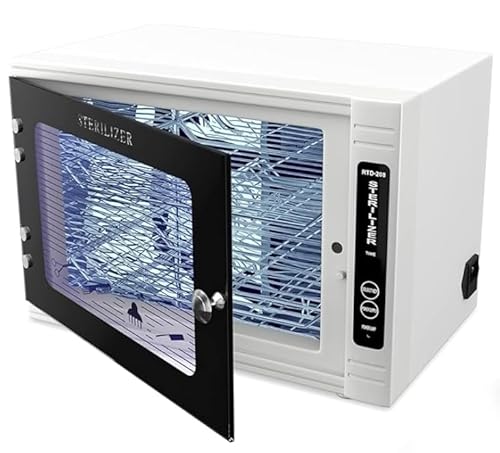
LETORS UV Sanitizing Cabinet, 12L, with Timer — Best Cabinet for Chopsticks and Cutlery
This is the closest verified product to what this search imagines. The LETORS is a 12-litre UV sanitizing cabinet — a format borrowed from salon tool care — whose listing explicitly names cutlery among its intended contents, alongside baby bottles and phones. It is metal, chemical-free in operation, and runs on a 5-to-60-minute timer, so a load of washed chopsticks can be UV-treated and then stored inside a closed, dust-free box. One measurement is your responsibility: check the cabinet’s interior dimensions on the product page against your longest chopsticks before ordering, because chopsticks are longer than the nail tools this cabinet family was designed around.
Strengths
- Listing explicitly includes cutlery — the only cabinet in our verified searches that names utensil use
- 12-litre capacity and a closed cabinet double as hygienic storage after the cycle
- Timer range of 5–60 minutes per the listing lets you match exposure to the load
Trade-offs
- Designed for salon tools first; interior length must be confirmed against your chopsticks before purchase
- UV treats surfaces the light reaches — items must be washed first and arranged so surfaces are exposed, not shadowed in a pile
- A cabinet is counter space committed; households with two pairs of chopsticks do not need one
| Capacity | 12 litres (per listing) |
| Timer | 5–60 minutes (per listing) |
| Stated uses | Salon tools, baby bottles, phones, cutlery and more (per listing) |
| Operation | UVC, chemical-free (per listing) |
Why does a salon cabinet work for a kitchen job? Because the underlying task is identical: small, hard, non-porous implements that must be surface-treated between uses and then kept somewhere clean. Chopsticks add one complication — length — and this review refuses to wave it away. Dining chopsticks run roughly eight and a half to ten and a half inches depending on cuisine style; a 12-litre cabinet is a substantial box, but ‘substantial’ is not a dimension. Open the product page, find the interior measurements, compare them with your longest pair laid diagonally as well as straight, and buy only if the geometry closes. If it does, the ownership pattern is pleasant: wash, shake dry, load in a single layer or in the cabinet’s tray arrangement with tips exposed, run a mid-length timed cycle, and leave the chopsticks stored in the closed cabinet until the next meal — a system that replaces the open countertop holder where dust and kitchen aerosols settle on eating surfaces all day. That storage function, as much as the UV itself, is what a cabinet buys you.
Best for: households with many reusable chopsticks that want UV treatment plus closed storage in one appliance / Not suited for: anyone who has not checked the interior dimensions against their chopsticks, or minimalists with a pair or two
Check the current price on Amazon

SPEKOAN UV Light Sanitizer Wand, Portable and Rechargeable — Best for Full-Length Chopsticks
A wand solves the chopstick problem by refusing to have a chamber. The SPEKOAN is a portable, rechargeable UV light wand: you lay washed chopsticks flat on a clean tray or rack, pass the wand slowly over them, turn them, and pass again. There is no interior to measure and no pair too long to fit, which is why — for this specific utensil — a simple wand is arguably the most rational UV format. Its listing describes it plainly as a lightweight, rechargeable handheld device for reducing bacteria and viruses on surfaces, and we recommend it in exactly those terms: a surface-treatment tool, used carefully, as one step after washing.
Strengths
- No chamber, so chopsticks of any length — including long cooking pairs — can be treated
- Rechargeable and portable: works at the counter, in a restaurant back room, or in a travel kit
- No consumables and no counter footprint beyond a drawer
Trade-offs
- Manual and slow: coverage depends on your patience, your distance, and turning every item — a wand rewards care and punishes haste
- UV-C demands respect: never look into the light or expose skin, and keep it away from children as a toy-substitute
- It treats exposed surfaces only; chopsticks must be washed clean first, because UV does not remove soil
| Format | Handheld UV wand (per listing) |
| Power | Rechargeable (per listing) |
| Stated purpose | Reducing bacteria and viruses on surfaces (per listing) |
The wand’s honesty is its virtue. Cabinet marketing implies a sealed, automatic process; a wand makes the physics visible — light, distance, time, and line of sight — and puts you in charge of all four. Used well, the routine is simple and even satisfying: wash and dry the chopsticks, lay them in a single layer with small gaps on a clean surface, hold the wand at the distance the manual specifies, move it slowly along each pair, flip, and repeat. Used badly — waved once at speed from a foot away — it is theatre. That dependence on the operator is why this badge goes to households that will actually build the habit, and why the cabinet above is the better recommendation for anyone who knows they will not. A safety paragraph is mandatory, not decorative: UV-C light is harmful to eyes and skin, so treat the wand like a power tool — operate it pointing down at the work, never toward a face, store it where children cannot play with it, and follow the manufacturer’s instructions over any habit you see online. Within those rules, it is the most flexible sterilizing tool a chopstick household can own, and the only verified format here that also handles the 16-inch cooking pairs no cabinet will ever swallow.
Best for: methodical users, long cooking chopsticks, small kitchens, and travel / Not suited for: set-and-forget buyers, or households with unsupervised children and no safe storage
Check the current price on Amazon

BRBLUERISE UV Sanitizer Cabinet, 17L, Stainless Steel — Best Large Cabinet
If the LETORS is the utensil-friendly cabinet, the BRBLUERISE is the capacity play: 17 litres in stainless steel, with a 245nm UV lamp stated on the listing and certification references in its title aimed at the salon market. It does not name cutlery in its listing — we note that openly — so it is the pick for buyers treating larger loads (a restaurant’s or big family’s full chopstick inventory, plus other small implements) who will verify the interior dimensions themselves and value stainless construction and cabinet volume over an explicit utensil mention.
Strengths
- Largest verified cabinet here at 17 litres — full household or small-restaurant loads in one cycle
- Stainless steel construction suits a working kitchen better than plastic shells
- 245nm UV lamp wavelength stated on the listing, a specificity most consumer UV products omit
Trade-offs
- Listing is salon-focused and does not name cutlery; utensil use is your application of a general tool, so dimension-checking is entirely on you
- The biggest counter commitment in this roundup
- Like all UV: wash first, expose surfaces, respect the light
| Capacity | 17 litres (per listing) |
| Lamp | 245nm UV (per listing) |
| Construction | Stainless steel (per listing) |
Volume changes what a UV cabinet is for. At 17 litres, the appliance stops being a gadget for a few pairs and becomes infrastructure: a small restaurant’s between-service chopstick rotation, a large family’s entire reusable inventory, or a shared household’s combined load of chopsticks, spoons, and small utensils, treated and stored in one closed steel box. Stainless construction matters at that duty level — it wipes down, tolerates a working environment, and does not absorb odours the way ageing plastic can. The discipline this pick demands is the dimension check, stated twice in this guide because it decides everything: measure your longest chopsticks, read the interior dimensions on the product page, and confirm the fit with room for the tray arrangement. Also confirm how the unit handles the load layout you intend — single-layer exposure treats surfaces; a heaped pile shadows them. Buyers who do that homework get the most capable verified cabinet in this niche; buyers who skip it are gambling counter space on a guess, and this guide does not co-sign gambles.
Best for: large households and small restaurants treating full chopstick inventories / Not suited for: small kitchens, or anyone unwilling to verify interior dimensions first
Check the current price on Amazon

Smarter Home Ideas UV Sanitizer Wand, Portable — Best Travel Wand
Our second wand pick exists because the wand format is the most practical verified answer to this search, and buyers deserve a choice within it. The Smarter Home Ideas wand is a portable UV sanitizing lamp whose listing positions it for room and travel use. We deliberately do not repeat the percentage efficacy figure in its marketing title: consumer UV performance depends on distance, exposure time, and surface condition, and a single headline number would misrepresent how these devices behave on a tray of chopsticks in your kitchen. What we can say is that it is a verified, portable UV wand — and that the format, used as the SPEKOAN review describes, is sound.
Strengths
- Portable format aimed at travel — the wand to keep with a personal chopstick set on the road
- No chamber limits: treats chopsticks of any length on any flat surface
- A second verified option in the format this guide considers most rational for chopsticks
Trade-offs
- Same operator-dependence as every wand: slow, careful passes or it is theatre
- Marketing efficacy claims for consumer UV should be read as claims; your technique is the real variable
- UV-C eye and skin safety rules apply in full
| Format | Handheld UV sanitizing lamp (per listing) |
| Positioning | Room and travel use (per listing) |
Why would a chopstick household own a travel wand? Because the reusable-chopstick habit increasingly travels: a personal pair in a work bag, a titanium set in a carry-on (our sibling guide on the best chopsticks to buy covers exactly that set), street-food trips where your own utensils are the plan. A pocketable UV wand is the hygiene layer for that lifestyle — not a substitute for washing, which remains step one everywhere on Earth, but a surface-treatment step available in a hotel room or an office kitchenette. Between the two wands here, choose by the details on their product pages on the day you buy — size, charging arrangement, included accessories — because the verified listings are comparably plain about their hardware. What does not differ is the method, and the method is the product: washed items, single layer, slow close passes, both sides, eyes protected, device stored safely. Master that, and either wand serves for years across far more than chopsticks — which is the quiet economic argument for the format.
Best for: travellers and personal-chopstick carriers wanting a portable hygiene step / Not suited for: anyone expecting a push-button appliance experience
Check the current price on Amazon
Dedicated Chopstick Disinfection Cabinets (Countertop UV + Drying Type) — The Real Category — no link
Honesty requires this pick to exist without a buy link. The appliance most searchers picture — a compact countertop cabinet, sized exactly for chopsticks, that air-dries them and treats them with UV between meals — is a normal product in Korean, Chinese, and Japanese kitchens, sold by appliance makers in those markets. In our verification step we ran three separate product searches through this site’s Amazon catalogue feed, and no dedicated chopstick disinfection cabinet appeared: the results were salon UV cabinets, UV wands, phone sanitizer boxes, and drying racks. So this category is covered without a link. Search the model names through Asian kitchen-appliance retailers or marketplaces if you want the genuine article, and check price on Amazon periodically — assortments change — but we will not attach a link we could not verify.
Strengths
- Purpose-sized for chopsticks: drying plus UV in one countertop footprint, with storage built in
- The established format in the markets where reusable chopsticks are universal — the category is proven, just not distributed here
- Typically designed around family quantities of chopsticks rather than salon tools
Trade-offs
- No verified Amazon US listing in our searches — sourcing means specialist retailers or import marketplaces, with the warranty and voltage questions imports always carry
- Plug and voltage compatibility must be checked carefully on imported units
- Without a verified listing we cannot confirm dimensions, timers, or any specification — every claim must be checked at the seller
This gap between markets is itself useful information. North American demand for chopstick-specific appliances is small because reusable-chopstick households are a minority here, so distribution follows demand and the category lives offshore. The practical consequences for a US buyer are threefold. First, the verified substitutes in this roundup — cabinets adapted from salon tools, and wands — are not consolation prizes; they are how the job is actually done in this market today. Second, if you import the dedicated article, treat it as an appliance purchase, not a gadget: confirm the voltage and plug, confirm who honours the warranty, and confirm the interior fits your longest pair, because returns across an ocean are theoretical. Third, revisit the search periodically: categories cross oceans when demand shifts, and the first dedicated unit to gain real US distribution will be easy to spot — it will be the listing whose title says ‘chopsticks’ before it says anything else. Until then, this guide’s position is the honest one: the category is real, the local shelf is empty, and here is exactly what to do instead.
Best for: determined buyers willing to source through Asian kitchen retailers or import channels / Not suited for: anyone who needs a verified, returnable, domestic purchase today — choose a linked pick above
This pick is covered without a link: check price on Amazon by searching the model name, because we could not confirm a current Amazon listing for it through our verification step.
Heat Methods: Dishwasher Cycle and Boiling, by Material — Best Zero-Cost Method — no link
The final pick costs nothing, because for most households it is the correct answer. Chopsticks are small, hard utensils, and the sanitising step that matters is the one kitchens already trust for everything else: thorough washing with hot water and detergent, followed by heat and complete drying. A dishwasher’s hot wash and heated dry handles fiberglass, stainless steel, titanium, and ceramic chopsticks — the dishwasher-safe materials from our sibling guide — as part of a normal load. Boiling or steam suits heat-tolerant materials for a deeper reset. This pick is not linked because there is nothing to sell you: the method is the product, and its only cost is doing it properly.
Strengths
- Uses appliances and heat you already own — no purchase, no counter space, no new habit hardware
- Heat plus detergent plus complete drying is the kitchen’s proven, everyday sanitising system for utensils
- Works at family scale in a normal dishwasher load
Trade-offs
- Material limits are real: bamboo and wood tolerate heat less gracefully and age faster under machine washing and boiling — hand-wash and air-dry those, and replace them when tips fray
- No closed storage benefit: chopsticks return to a drawer or open holder afterward
- It is a method, not a device — households wanting a dedicated UV step will still prefer the picks above
It is worth understanding why the boring method works, because it calibrates how much appliance you actually need. Sanitising a utensil is mostly about soil removal plus a hostile environment for microbes: detergent and hot water remove the food film where microbes live, sustained heat damages what remains, and — the step everyone undervalues — complete drying denies survivors the moisture they need. A UV device adds a surface-treatment layer on top of that system; it does not replace the washing underneath it, which is why every pick in this roundup repeats ‘wash first.’ For bamboo and wooden chopsticks, the calculus tilts further toward simplicity: these are semi-disposable materials by design, renewed when they fray, and elaborate sterilising hardware for a renewable utensil is effort misallocated — wash gently, dry upright and fully, store dry, replace on schedule. The households that genuinely benefit from the UV picks above are those with heavy reusable volume in steel, fiberglass, or ceramic, a specific hygiene concern in the home, or a small food business’s rhythm. If none of those describes you, this unlinked pick is not the budget option. It is the right one.
Best for: most households, especially bamboo and wood owners and dishwasher-safe material owners / Not suited for: high-volume reusable users or small food businesses wanting a dedicated UV step
This pick is covered without a link: check price on Amazon by searching the model name, because we could not confirm a current Amazon listing for it through our verification step.
Comparison Table
| Pick | Badge | Key spec | Best for |
|---|---|---|---|
| LETORS UV Sanitizing Cabinet, 12L, with Timer | Best Cabinet for Chopsticks and Cutlery | 12L, UVC, timer 5–60 min, cutlery listed | households with many reusable chopsticks that want UV treatment plus closed storage in one appliance |
| SPEKOAN UV Light Sanitizer Wand, Portable and Rechargeable | Best for Full-Length Chopsticks | Handheld wand, rechargeable, portable | methodical users, long cooking chopsticks, small kitchens, and travel |
| BRBLUERISE UV Sanitizer Cabinet, 17L, Stainless Steel | Best Large Cabinet | 17L, stainless steel, 245nm UV lamp | large households and small restaurants treating full chopstick inventories |
| Smarter Home Ideas UV Sanitizer Wand, Portable | Best Travel Wand | Handheld wand, portable, travel | travellers and personal-chopstick carriers wanting a portable hygiene step |
| Dedicated Chopstick Disinfection Cabinets (Countertop UV + Drying Type) | The Real Category — no link | Unlinked: not verified on Amazon US | determined buyers willing to source through Asian kitchen retailers or import channels |
| Heat Methods: Dishwasher Cycle and Boiling, by Material | Best Zero-Cost Method — no link | Unlinked method pick | most households, especially bamboo and wood owners and dishwasher-safe material owners |
How to Choose a Chopstick Sanitising Setup: Cabinet, Wand, or Method
Start with volume, because it eliminates most options. A household with two to six pairs of chopsticks needs no appliance: the heat-method pick in this roundup is your setup, and your money belongs in good chopsticks themselves. A household running a full reusable inventory daily — big family, frequent guests, a home that hosts — justifies a cabinet, provided the interior dimension check passes for your longest pair. A small restaurant, café, or catering side-business justifies the large cabinet and the discipline that comes with it. Choose a wand when your chopsticks are long, your kitchen is small, your budget is modest, or your life includes travel — and only when you honestly assess yourself as a methodical user, because the wand’s effectiveness is your technique. Three cross-cutting checks apply to every UV route. First, the fit check: measure your longest chopsticks and compare with interior dimensions for any chamber; diagonal placement sometimes rescues a borderline fit, but do not count on it for a tray-based load. Second, the material check: UV suits the non-porous materials — fiberglass, steel, titanium, ceramic — best; bamboo and wood are renewed rather than sterilised, and no device changes that. Third, the habit check: every route in this guide begins with washing and ends with dry storage; a setup you will actually run after every meal beats a superior device that gathers dust by February.
How UV Sanitising Works, and How to Use It on Chopsticks Properly
UV-C light damages the DNA and RNA of bacteria and viruses on surfaces it directly illuminates, which prevents them from reproducing. Every practical rule follows from the words ‘directly illuminates.’ Rule one: wash first. UV does not clean; food film and soil shadow the surface beneath them, so chopsticks go into any UV process already washed and shaken dry. Rule two: expose everything. Arrange chopsticks in a single layer with gaps, tips and eating ends fully in the light’s path; a heaped pile treats only its top surface. In a cabinet, use the tray layout the maker intends and run the full timed cycle; with a wand, work slowly at the distance the manual specifies, along each pair, then turn everything and repeat — the second side is not optional. Rule three: respect the light. UV-C harms eyes and skin; never look into a wand or an open cabinet lamp, keep wands stored away from children, and let cabinet door interlocks do their job rather than defeating them. Rule four: dry storage afterward. Sanitised chopsticks returned to a damp, open holder re-enter the world immediately; a closed cabinet, a dry drawer, or a ventilated dry rack preserves the benefit. Rule five: keep perspective. This is a surface-hygiene step layered on washing — valuable for high-volume and high-concern households, unnecessary theatre for a couple with a dishwasher. Use it where it belongs and it earns its place in the kitchen.
Chopstick Hygiene by Material: A Field Guide
Because the right routine follows the material, here is the whole system in one place. Fiberglass: the easiest citizen — dishwasher-safe, non-porous, indifferent to heat; UV is a legitimate extra layer for high-volume homes, and replacement is needed only if the surface roughens or a tip chips. Stainless steel and titanium: equally non-porous and effectively permanent; they tolerate dishwashers, boiling, and UV without complaint, which is why restaurants that sanitise seriously standardise on metal. Ceramic and bone china: non-porous and dishwasher-safe, but fragile — the hygiene risk is not microbes, it is the chip that creates a harbour and a sharp edge; inspect, and retire chipped pairs. Bamboo: porous and renewable — hand-wash, dry upright until completely dry, store dry, and replace on a rhythm measured in months of heavy use; do not boil it into splinters or bake it in a dishwasher and call the damage hygiene. Wood: bamboo’s rules with more reverence — gentle washing, prompt drying, occasional food-safe oil if the maker suggests it, and retirement when the finish fails. Melamine and plastic composites: follow the maker’s heat limits, because warping at dishwasher temperatures is their failure mode, and a warped pair traps soil at the bend. Notice the pattern: the materials that pair with sterilising devices are the non-porous ones, and the materials that do not are maintained by renewal. Any guide — or seller — who sells you a cabinet for your bamboo has the system exactly backwards.
For Small Food Businesses: Building a Routine You Can Defend
A café, food truck, or small restaurant serving with reusable chopsticks operates under a brighter light than a household: health codes, inspections, and customers who can see your utensil storage from the counter. This guide is not a code manual — your local health authority’s rules govern, and you should read them before building anything — but the defensible routine has a consistent shape across jurisdictions. Wash mechanically where possible, at commercial temperatures, because a dishwasher’s documented cycle is easier to defend than any hand process. Store dry, enclosed, and off the floor’s splash zone; the closed cabinet picks in this roundup serve that storage function even when their UV cycle is treated as a supplement rather than the system. Keep the UV step, if you use one, in its correct place: an addition to washing and heat, never a substitute that lets a weak wash slide. Rotate inventory so no subset of pairs works every service while others rest — wear distributes, and inspection catches the chipped ceramic and frayed bamboo before a customer does. And document the routine in a page taped inside the kitchen door: what is washed how, what is treated when, what is retired on sight. Inspectors and customers alike reward the business that can explain its hygiene in sentences. The equipment in this roundup can furnish that routine at small scale; the routine itself is the product you are really building.
Storage: The Unglamorous Step That Decides Everything
Every route in this guide ends at the same place: a pair of chopsticks sitting somewhere for the next twelve hours. That somewhere decides whether your washing and UV work survives until the next meal. The enemies are moisture and exposure. Chopsticks stored damp — in a sealed container put away wet, in a holder whose base pools water — regrow what you just removed, and bamboo stored damp stains and smells in ways no later wash fully reverses. Chopsticks stored openly on a busy counter collect the kitchen’s aerosols: cooking grease mist, dust, and whatever the room’s air carries, settling on the exact surfaces that enter mouths. The fixes are humble. Dry completely before storing, tips up in a ventilated holder or flat in a clean drawer, and let holders themselves be washed weekly — the holder is a utensil-adjacent surface that most kitchens have never once cleaned. Closed storage, whether a cabinet from this roundup or a simple lidded container for dry pairs, is the upgrade that pays daily. Households often discover, a month after adopting dry closed storage, that their chopsticks simply smell and feel cleaner — with no device involved at all. It is the least purchasable advice in this guide and, for the average kitchen, the most valuable: sterilising is an event, but storage is a condition, and conditions beat events.
Common Buying Mistakes
The first mistake is buying a phone sanitizer box for chopsticks: the chamber fits a phone, and a chopstick is not a phone — check every chamber dimension against your longest pair before any UV purchase. The second is believing a headline efficacy percentage transfers to your kitchen; distance, time, shadowing, and soil decide real-world results, and technique is the product. The third is skipping the wash because the device says ‘sterilizer’ — UV over food soil is decoration. The fourth is heaping chopsticks into a cabinet in a pile and treating the top layer’s exposure as the load’s. The fifth is buying sterilising hardware for bamboo chopsticks, a renewable material whose correct hygiene plan is gentle washing, full drying, and timely replacement. The sixth is pointing a UV wand carelessly — at faces, at children, at reflective surfaces toward eyes — when the safety rules are short and absolute. The seventh is importing a dedicated cabinet without checking voltage, plug, and warranty, seduced by the one product category this market does not stock. Each of these mistakes is a version of the same error: buying the idea of hygiene instead of practising it.
Final Recommendation
For most households, the recommendation is the free one: wash well, use the dishwasher’s heat for dishwasher-safe materials, dry completely, and spend your money on good chopsticks from Best Chopsticks To Buy. If you want a verified UV step, the LETORS 12L cabinet is the utensil-named choice, the BRBLUERISE 17L is the volume choice — both after the interior dimension check — and the SPEKOAN wand or Smarter Home Ideas wand suits long chopsticks, small kitchens, and travel. The dedicated cabinet remains an unlinked import project for the determined. Whichever route you take, wash first and dry fully; that sentence is the actual best chopsticks sterilizer advice on this page, and it will still be the right advice on the day a dedicated cabinet finally earns a verified listing in this market — at which point the honest upgrade is to add it to the routine, not to replace the routine with it. Round out the drawer with Best Fiberglass Chopsticks, Best Bamboo Chopsticks, and Best Cooking Chopsticks.
Frequently Asked Questions
Do chopsticks really need a sterilizer?
For most households, no.
Will chopsticks fit in a UV sanitizer box?
Usually not in phone-sized boxes — dining chopsticks run roughly 8.5 to 10.5 inches, longer than phone chambers. Larger cabinets, like the 12L and 17L picks in this roundup, are plausible, but you must compare the listing’s interior dimensions with your longest pair before buying. Wands avoid the question entirely, which is why this guide rates the format highly for chopsticks.
Does UV light actually sanitize chopsticks?
UV-C light inactivates bacteria and viruses on surfaces it directly illuminates, which is why technique decides results: items must be washed first, arranged in a single layer with all surfaces exposed, and given adequate time at the right distance. Shadowed or soiled surfaces are not treated. Consumer devices sanitize surfaces in this sense; they are not medical sterilizers, and this guide does not repeat headline efficacy percentages for that reason.
Is UV light safe to use in the kitchen?
With basic discipline, yes — the same discipline as any powerful tool. Never look directly at a UV-C source, do not expose skin to it, use cabinet interlocks as designed, operate wands pointing down at the work, and store wands where children cannot treat them as toys. Follow the manufacturer’s instructions for your specific device over any general advice, including this guide’s.
How do restaurants handle chopstick hygiene?
High-volume operations combine systems: commercial dishwashing with high-temperature rinses, dedicated disinfection cabinets in markets where they are standard equipment, and strict dry storage. The home-scale translation is this roundup’s structure — wash and heat for most, a verified cabinet for genuine volume, and dry, closed storage as the unglamorous step that preserves every other step’s work. Notice that no serious operation relies on a single gadget: the routine is layered, documented, and built around washing first. A home kitchen that copies that structure at its own scale — wash, heat or UV, dry storage, timely replacement of natural pairs — has genuinely restaurant-grade chopstick hygiene, whether or not a cabinet ever enters it.
Can I sterilize bamboo or wooden chopsticks?
You can wash and dry them thoroughly, and that — plus timely replacement — is the correct and complete routine for them. What you should not do is subject them to the harsh end of any method: prolonged boiling splits and frays bamboo, aggressive machine cycles dull and crack wood, and neither material needs a UV cabinet, because its hygiene model is renewal rather than permanence. If your household’s pattern is heavy daily use with a strong preference for device-based hygiene, the material-level answer is to migrate the daily pairs to fiberglass or stainless steel — the non-porous materials this guide’s device picks were chosen around — and keep bamboo and wood for the meals and guests where their feel matters most. Treat natural materials differently. Bamboo and wood are porous and semi-renewable: wash them gently, dry them upright and completely, store them dry, and replace them when the tips fray or stains persist. Boiling and harsh machine cycles age them quickly, and UV hardware is effort misallocated on a utensil designed to be renewed. Fiberglass, steel, titanium, and ceramic are the materials that pair with device-based routines.


