Disclosure: airfryerkitchensupply.com is reader-supported. When you buy through links on our site, we may earn an affiliate commission at no extra cost to you.
Where to buy
Every pick in this guide to the best blenders for making protein shakes is sold through Amazon, and personal-blender lineups change often — cup sizes, lid styles and bundle contents shift between model years. Use the links below to confirm the exact model and cup set before you buy:
- nutribullet Pro+ Personal Blender N12-1001MK — Check the current price on Amazon
- Ninja Nutri-Blender Pro BN401 — Check the current price on Amazon
- nutribullet Turbo Personal Blender NB50400 — Check the current price on Amazon
- Ninja Fit Compact Personal Blender QB3001SS — Check the current price on Amazon
- nutribullet Full-Size Blender Combo NBF50500 — Check the current price on Amazon
- Vitamix 5200 Professional-Grade Blender — Check the current price on Amazon
If a listing shows a different model number or a cup count that does not match the description here, you are looking at a different bundle. Back out and search the exact model name rather than assuming the listing is an updated version of the same machine.
Introduction
The best blenders for making protein shakes are not necessarily the biggest or most powerful blenders on the counter. A protein shake is a specific job: powder that clumps if it is not fully dispersed, liquid that splashes if the vortex is too violent for a small cup, and add-ins — frozen banana, ice, nut butter, oats, spinach — that separate the machines that merely stir from the machines that actually emulsify. This guide ranks six blenders by how well they handle that exact job, from single-cup machines you blend and carry out the door to full-size pitchers for households making several shakes at once.
One honest framing note before the picks: a blender does not change what is in your shake. It cannot add protein, fix a badly balanced recipe, or turn a sugary mix into a health food. What a good shake blender does is remove the friction — no dry powder pockets at the bottom, no gritty ice shards, no leaking cup in a gym bag — so the routine you already planned actually happens every day. We judge these machines on texture, cleanup and day-to-day convenience, not on any health promise, because the machine only controls the first of those honestly.
We also separated two styles of shake making that buyers often blur together. Personal cup blenders blend in the vessel you drink from, which is ideal for one person on a schedule. Full-size pitchers make more sense when two or more people shake at the same time, or when the same machine also handles smoothies, soups and frozen drinks for the household. Both styles appear below, labelled clearly, so you can shop your actual routine instead of a generic ranking.
Key Takeaways
- Format first: personal cups for solo routines, pitchers or combos for households.
- Powder goes onto liquid, never into a dry cup — that one habit prevents most clumps.
- Frozen add-ins, not powder, decide how much motor you need.
- The lid is part of the product if the shake travels; check the seal before the specs.
- Rinse immediately — protein residue is only stubborn once it dries.
In this guide
Quick Picks
Short on time? These are the six picks in one line each — the detailed reviews further down explain who each one suits and where each one falls short.
- Best Overall — nutribullet Pro+ Personal Blender N12-1001MK: A strong 1200W personal blender with a pulse button, a large 32 oz cup for thick shakes and a 24 oz cup for standard servings. Check the current price on Amazon
- Best for Frozen Fruit and Ice — Ninja Nutri-Blender Pro BN401: An 1100 peak-watt personal blender with Auto-iQ programs and two 24 oz cups that powers through frozen fruit without babysitting. Check the current price on Amazon
- Best for a Simple Daily Routine — nutribullet Turbo Personal Blender NB50400: A 1000W personal blender with 32 oz and 24 oz cups and two flip-top travel lids, built for blend, seal and leave. Check the current price on Amazon
- Best Budget — Ninja Fit Compact Personal Blender QB3001SS: A compact 700W personal blender with two 16 oz cups that covers the classic powder-and-banana shake at a budget-tier price — check price on Amazon. Check the current price on Amazon
- Best for Couples and Batching — nutribullet Full-Size Blender Combo NBF50500: A 1200W combo with a 64 oz pitcher for batch shakes and a 24 oz tumbler cup for solo days, covering both routines in one base. Check the current price on Amazon
- Best Premium — Vitamix 5200 Professional-Grade Blender: A professional-grade 64 oz blender with a variable speed dial and high-speed switch that produces the smoothest shake texture in this guide. Check the current price on Amazon
How These Picks Were Chosen
These picks were chosen by matching verified product data against the specific demands of protein shakes. Every model below was cross-checked through Amazon listing for this site, and only models whose Amazon title confirmed the exact machine, motor and cup configuration were given a purchase link. Specs quoted in the mini spec boxes come from those verified listings, not from roundup articles or retailer copy.
The shake-specific test criteria matter more than raw power figures. Powder dispersion was weighted first: a shake blender must pull dry powder down into the liquid instead of plastering it to the cup wall. Ice and frozen-fruit handling came second, because many shake drinkers add both. Third was the drinking and cleaning experience — flip-top lids that seal, cups that fit a car holder, and parts that rinse clean in under a minute — because a shake habit dies on cleanup friction long before it dies on motor failure.
- Powder dispersion: the blade and cup geometry must create a vortex that folds dry powder into liquid with no clumps left at the base.
- Frozen add-in handling: ice cubes and frozen fruit must break down fully, not bounce on top of the blade or leave shards.
- Cup and lid practicality: blend-and-go cups, sealing travel lids and sizes that match a single serving without waste.
- Cleanup speed: few parts, no deep blade wells that trap protein residue, and cups that rinse or load into a dishwasher easily.
- Sustained motor manners: enough torque to run a thick shake for a full cycle without stalling, overheating smells or walking across the counter.
The 6 Best Blenders for Making Protein Shakes

nutribullet Pro+ Personal Blender N12-1001MK — Best Overall
The nutribullet Pro+ earns the top spot for protein shakes because it solves the two problems that define the job. First, its extractor blade and tall cup geometry pull powder down into the liquid fast, so whey, plant protein or collagen blends in instead of clinging to the wall in dry patches. Second, the 1200W motor has enough reserve to keep that vortex moving when you add frozen banana, a handful of ice or a spoon of peanut butter — the exact moment weaker personal blenders start to labour and leave grit behind.
Strengths
- 1200W motor keeps a thick vortex moving through frozen add-ins
- Pulse button pre-wets dry powder and prevents clumping
- 32 oz and 24 oz cups cover meal shakes and standard servings
Trade-offs
- Single-serve format means back-to-back cycles for couples
- Cup-and-blade system is proprietary to the brand
- Tall cups need cabinet clearance when stored upright
| Specification | Detail |
|---|---|
| Motor | 1200W |
| Cups | 32 oz and 24 oz blending cups |
| Control | Push-down blend with pulse button |
| Style | Personal / single-serve |
The cup pairing is well judged for shake drinkers. The 32 oz cup handles a full meal-style shake with oats, fruit and milk without riding up to the max line, while the 24 oz cup covers the standard post-workout mix. The pulse button is more useful than it sounds: a two-second pulse before the main blend knocks dry powder off the surface and into the liquid, which is the single easiest trick for a clump-free result. Cleanup is the usual nutribullet routine — rinse the cup, rinse the blade base, done — and the cups are sized for a normal hand, not a pitcher juggling act.
Who should skip it? Anyone regularly making shakes for two or more people at once will tire of running back-to-back cycles, and anyone who wants one machine for big smoothie batches should look at the full-size combo pick below instead. As a dedicated one-person shake station, though, this is the most complete package in the group.
Ownership is straightforward: the cups, lids and blade base are the whole system, replacements are easy to source, and the footprint left on the counter is small enough that the machine earns permanent residence — which, for a daily habit appliance, is half the battle won before the first blend.
Best for: one person making a daily protein shake with frozen add-ins / Not suited for: households blending several shakes at the same time
Check the current price on Amazon
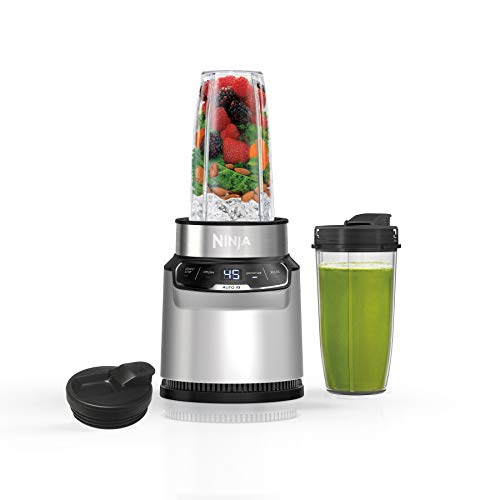
Ninja Nutri-Blender Pro BN401 — Best for Frozen Fruit and Ice
If your protein shake formula leans frozen — frozen berries, frozen banana, ice cubes for thickness — the Ninja Nutri-Blender Pro BN401 is the personal blender built for that habit. The 1100 peak-watt motor and Ninja’s stacked extraction blades are tuned for crushing frozen ingredients in a small cup, and the Auto-iQ programs run timed pulse-and-blend patterns that break up frozen chunks progressively instead of slamming them at full speed from a standstill. The result is a shake that pours smooth rather than one you have to chew through at the end.
Strengths
- Auto-iQ cycles crush frozen fruit and ice progressively and evenly
- Two identical 24 oz cups suit staggered routines
- Strong extraction blades leave few frozen shards behind
Trade-offs
- Preset programs reduce hands-on control for tinkerers
- Cups are mid-size only — no large meal-shake vessel
- Lid and blade threads need a rinse straight after thick shakes
| Specification | Detail |
|---|---|
| Motor | 1100 peak watts |
| Cups | Two 24 oz single-serve cups |
| Control | Auto-iQ preset programs |
| Style | Personal / single-serve |
The two matching 24 oz cups make a quiet practical difference: one can be in the dishwasher while the other is in service, and two people with staggered mornings can each have a cup ready. Auto-iQ also removes the guesswork for newer shake makers — press the program, walk away, and the cycle stops itself. The trade-off for that automation is control: if you like to stop mid-blend, add liquid and restart by feel, the preset logic can feel like it is driving. Experienced users do get manual operation as well, but the machine’s personality is set-and-forget.
Texture on leafy add-ins is good for the class. A handful of spinach disappears into a chocolate shake without flecks, though very fibrous greens in very thick mixes may need a splash more liquid than the nutribullet above. For frozen-first shake recipes, this is the pick to beat.
A practical note on the Auto-iQ cycles: they are calibrated for a reasonably full cup. Half-filled cups can finish before the frozen load is fully worked, so either blend full servings or finish a small serving with a short manual run. Used at its intended fill, the automation is the most reliable in the personal class.
Best for: shake drinkers whose recipes start with frozen fruit and ice / Not suited for: buyers who want a large pitcher for family batches
Check the current price on Amazon
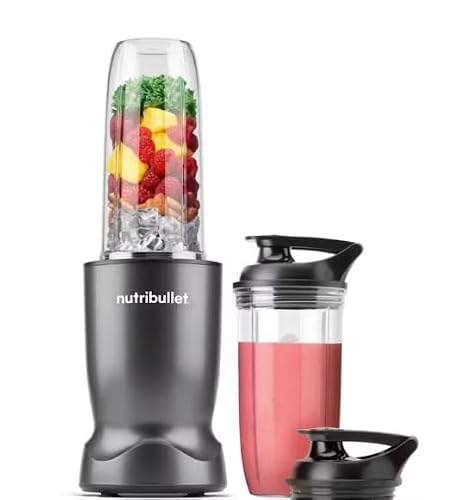
nutribullet Turbo Personal Blender NB50400 — Best for a Simple Daily Routine
The nutribullet Turbo is the routine machine: blend in the cup, swap the blade base for a flip-top lid, and walk out. Its 1000W motor sits a step below the Pro+ above, but for the classic shake builds — powder, milk or water, banana, a few ice cubes — it has power to spare, and the cup pairing mirrors the Pro+ with a 32 oz vessel for bigger shakes and a 24 oz for standard ones. Where it earns its own badge is the pair of flip-top travel lids, which seal properly for a bag or car holder instead of asking you to decant into a second bottle.
Strengths
- Flip-top travel lids turn the blending cup into the drinking bottle
- Simple push-down operation with no programs to learn
- 32 oz and 24 oz cups cover large and standard shakes
Trade-offs
- Less motor headroom than the Pro+ for very thick mixes
- No pulse button for pre-wetting powder
- Travel lids are hand-wash friendlier than the cups
| Specification | Detail |
|---|---|
| Motor | 1000W |
| Cups | 32 oz and 24 oz cups |
| Lids | Two flip-top travel to-go lids |
| Style | Personal / single-serve |
In daily use the Turbo feels deliberately uncomplicated. There are no programs to learn and no dial to set; you lock the cup, press down, and watch the vortex. Powder dispersion is strong as long as you follow the basic order — liquid first, powder on top of the liquid, frozen items last — and the blade base rinses clean without the deep wells that trap residue on some rivals. The gunmetal finish also wipes down neatly, a small thing that matters on a machine that lives permanently on the counter.
The honest limitation is headroom. Very thick shakes loaded with frozen fruit and nut butter make the Turbo work noticeably harder than the Pro+, and cycle times stretch. If your shake is closer to a soft-serve than a drink, step up. If your shake is a drink, this is all the blender the job needs.
The Turbo also moonlights well beyond shakes — salad dressings, single servings of soup and small smoothie batches all suit its cups — which helps justify it in a small kitchen where every appliance must hold two jobs. Its simplicity is the feature that keeps paying out, month after month.
Best for: commuters who blend, seal and drink from the same cup / Not suited for: very thick, frozen-heavy shake recipes
Check the current price on Amazon

Ninja Fit Compact Personal Blender QB3001SS — Best Budget
The Ninja Fit is the honest budget answer for protein shakes. Its 700W motor and 16 oz cups will not win a spec contest, but the classic shake — powder, liquid, half a banana, a small handful of ice — is well inside its ability, and it costs a fraction of the premium personal blenders while taking up the counter space of a large mug. For students, first apartments and office kitchens, that combination is exactly right: a real shake routine without a serious purchase decision behind it.
Strengths
- Compact base suits small kitchens, dorms and offices
- Two 16 oz cups with lids included for grab-and-go use
- Handles the classic powder, banana and ice shake reliably
Trade-offs
- 16 oz cups are too small for meal-style shakes
- 700W motor labours on large frozen loads
- Push-down pulsing only — no sustained hands-free cycle
| Specification | Detail |
|---|---|
| Motor | 700W |
| Cups | Two 16 oz cups with travel lids |
| Control | Push-down pulse blending |
| Style | Personal / compact |
Operation is push-down pulsing, which teaches good habits fast. Short pulses settle the powder, then a sustained press finishes the blend. The 16 oz cups are the constraint to understand before buying: a shake with oats, fruit, yogurt and milk will overflow this format, so meal-replacement builders should size up to a 24 or 32 oz cup system. Within its size, though, the Fit is consistent — frozen berries break down, powder disperses, and the cups go straight into a bag with their travel lids.
Longevity expectations should be set at the tier. This is a light-duty motor designed for one or two shakes a day, not a household workhorse, and running it in long continuous bursts on very frozen loads shortens its life. Used as intended, it is the cheapest legitimate route into a daily shake habit in this guide.
Two ownership tips extend the Fit’s life considerably: keep frozen pieces small — halved strawberries, banana coins — and resist the urge to run it in long continuous bursts. Pulse, rest a breath, pulse again. Treated that way, this light-duty machine delivers far more service than its tier suggests.
Best for: budget buyers and small spaces making standard shakes / Not suited for: large meal-replacement shakes or heavy frozen loads
Check the current price on Amazon

nutribullet Full-Size Blender Combo NBF50500 — Best for Couples and Batching
Households split the difference with the nutribullet Full-Size Blender Combo. On weekday mornings one person uses the 24 oz tumbler cup like any personal blender. On weekends, or when two people train together, the 64 oz pitcher makes a full batch of shakes in one cycle — same recipe, doubled, poured into two glasses. The shared 1200W base means neither format is underpowered, which is where cheaper combo systems usually cut the corner.
Strengths
- One 1200W base covers solo cups and family-size batches
- 64 oz pitcher doubles as the household smoothie blender
- Tumbler cup keeps the weekday routine fast and low-wash
Trade-offs
- Largest footprint and parts count in this guide
- Pitcher vortex builds slower — powder order matters
- Overkill for a strictly one-person shake routine
| Specification | Detail |
|---|---|
| Motor | 1200W |
| Vessels | 64 oz pitcher and 24 oz tumbler cup |
| Control | Multiple speeds with pulse |
| Style | Full-size combo |
The pitcher also widens the machine’s life beyond shakes. The same base handles family smoothies, frozen drinks and soup bases, so the counter space it occupies is easier to justify than a shake-only appliance. Powder dispersion in the pitcher needs one adjustment versus the cups: add powder after the liquid and blend a few seconds before adding frozen fruit, because the wider vessel builds its vortex more slowly. Follow that order and clumping is a non-issue.
The compromises are size and parts count. This is a full-size footprint with a pitcher, a tumbler, two blade systems and lids to store, and washing a 64 oz pitcher for a single small shake feels like overkill — which is precisely why the tumbler cup exists. As a two-format household solution, it is the most flexible pick here.
Think of the Combo’s storage before it arrives: pitcher, tumbler, two blade systems and lids want a dedicated shelf or deep drawer. Households that plan that space find the system seamless; households that improvise it find parts migrating. The blending itself needs no such planning — the base handles whichever vessel the day demands.
Best for: couples and families who batch shakes and smoothies / Not suited for: solo users with limited counter and storage space
Check the current price on Amazon

Vitamix 5200 Professional-Grade Blender — Best Premium
The Vitamix 5200 is the premium answer, and for protein shakes its advantage is texture ceiling. The variable speed dial lets you start slow — folding powder into liquid gently, without the explosive splash a fixed high-speed start causes in a big container — then ramp up until the vortex is violent enough to erase ice, frozen fruit, oats and seeds completely. Shakes come out uniformly smooth in a way personal blenders approach but rarely match, especially with fibrous or seedy add-ins.
Strengths
- Variable dial folds powder in gently, then ramps to full power
- Smoothest texture ceiling, including oats, seeds and fibrous greens
- Self-cleaning cycle handles protein residue fast
Trade-offs
- Premium tier price — check price on Amazon
- 64 oz container is inefficient for single small shakes
- Tall profile may not fit under low cabinets
| Specification | Detail |
|---|---|
| Container | 64 oz |
| Control | Variable speed dial plus high-speed switch |
| Blades | Stainless steel |
| Cleaning | Self-cleaning cycle with warm water and a drop of soap |
The 64 oz container reframes who this pick suits. It is a batch machine: shakes for two to four people, or one very large shake, made in a single cycle. Its self-cleaning routine — warm water, a drop of soap, thirty seconds on high — is genuinely effective on protein residue, which matters because dried shake residue is the worst smell in a small kitchen. The build quality and motor cooling are in a different class from the personal blenders here, and the machine is designed for daily hard use over years.
The costs are money and scale. This is a premium-tier purchase, it is tall under cabinets, and using a 64 oz container for one modest shake is inefficient — minimum practical volumes are real. Buy it if shakes are one job among many in a serious blending household; the personal picks above are smarter money for shake-only use.
The 5200’s shake role expands naturally into everything around the shake: nut butters for the recipe, oat flour, frozen fruit purees, post-training soups. Buyers who cost it against shake duty alone undervalue it; buyers who cost it against a decade of all-purpose blending usually conclude it was the economical choice after all.
Best for: serious blending households making batch shakes / Not suited for: shake-only buyers watching the budget
Check the current price on Amazon
Comparison Table
The table below lines the six picks up by the specs that matter for shakes — motor, vessel and control style. Use it to shortlist, then read the full review of any machine you are seriously considering.
| Pick | Badge | Key spec | Best for |
|---|---|---|---|
| nutribullet Pro+ Personal Blender N12-1001MK | Best Overall | 1200W motor, 32 oz and 24 oz cups, pulse control | one person making a daily protein shake with frozen add-ins |
| Ninja Nutri-Blender Pro BN401 | Best for Frozen Fruit and Ice | 1100 peak watts, two 24 oz cups, Auto-iQ programs | shake drinkers whose recipes start with frozen fruit and ice |
| nutribullet Turbo Personal Blender NB50400 | Best for a Simple Daily Routine | 1000W motor, 32 oz and 24 oz cups, flip-top travel lids | commuters who blend, seal and drink from the same cup |
| Ninja Fit Compact Personal Blender QB3001SS | Best Budget | 700W motor, two 16 oz cups, compact base | budget buyers and small spaces making standard shakes |
| nutribullet Full-Size Blender Combo NBF50500 | Best for Couples and Batching | 1200W motor, 64 oz pitcher plus 24 oz tumbler cup | couples and families who batch shakes and smoothies |
| Vitamix 5200 Professional-Grade Blender | Best Premium | 64 oz container, variable speed dial, high-speed switch, self-cleaning | serious blending households making batch shakes |
How to Choose a Blender for Protein Shakes
Choosing among the best blenders for making protein shakes comes down to four decisions: format, motor headroom, cup logistics and how thick your typical shake runs. Get those four right and almost any machine in this guide will serve you well; get the format wrong and even an excellent blender becomes an annoyance you stop using.
The sections below work through each decision in plain terms, including the budget framing. Nothing here requires paying premium money for a shake — the differences that matter are about matching the machine to the recipe and the routine, not about chasing the biggest wattage number on the box.
Personal cup or full-size pitcher?
Decide by headcount and habit. One person, one shake, most days: a personal cup blender wins on speed, washing and storage, and the drink is made in the vessel it is consumed from. Two or more shake drinkers, or one machine that must also handle family smoothies and frozen drinks: a pitcher or combo system earns its footprint. The mistake is buying a pitcher for a solo routine — the washing alone will quietly kill the habit within a month.
How much motor do shakes actually need?
A basic shake of powder and liquid needs very little power. The demand arrives with frozen fruit, ice, nut butter and oats, which is why this guide’s picks range from a 700W budget unit to professional machines. As a working rule: mostly liquid shakes with fresh fruit, a mid-power personal blender is plenty; daily frozen add-ins, look at the stronger personal models; batch shakes with heavy frozen loads, step up to a full-size motor. Peak-watt marketing numbers are not comparable across brands, so weight the format and the verified motor class over the headline figure.
Cup size, lids and the commute test
Match cup volume to your real recipe with headroom to spare — a shake that fills a cup to the max line blends badly and leaks. If the shake travels, the lid is not an accessory, it is the product: flip-top and sip lids that seal under bag pressure matter more than an extra speed setting. Also check the boring logistics before buying: does the cup fit your car holder, does it fit your hand, and can you buy a replacement cup without replacing the whole system when one eventually cracks or goes missing?
Thickness, texture and add-in strategy
Decide how thick you honestly like a shake. Drinkable shakes suit every pick here. Spoon-thick shakes with frozen banana and nut butter need either a stronger motor or a technique adjustment: more liquid than you think, frozen items added in two stages, and a pause to shake the cup halfway. Fibrous add-ins like kale stems, flax and chia also separate the field — chia and flax gel quickly, so blend them fully at the start rather than sprinkling them in at the end, whatever machine you choose.
Accessories that earn their drawer space
Around any shake blender a small economy of accessories grows, and only some of it earns its place. A spare cup in rotation is the first genuinely useful addition — it converts the dishwasher’s schedule from a constraint into an irrelevance. A second blade base matters only if the first is regularly captive in a soaking sink, which the rinse-immediately habit prevents. Bottle brushes sized to the cup, by contrast, pay for themselves weekly, reaching the base corners where protein film starts. Travel lids beyond the included pair are worth buying only when cups genuinely multiply. Everything else — decorative sleeves, novelty straws, branded shakers duplicating the cup you already own — is the shake economy selling you the feeling of progress. The machine plus a spare cup plus a brush is the complete professional setup; the rest is retail.
How to Blend a Protein Shake Without Clumps
Technique fixes most shake complaints. This order of operations works on every pick in this guide and eliminates the three classic failures — dry clumps, icy grit and a cup that leaks on the way out the door.
- Start with liquid: pour in milk, water or your base liquid first, to roughly half the cup. Powder added to a dry cup bottom is the number one cause of clumps.
- Add powder onto the liquid: tip the powder in so it lands on the liquid surface, not against the dry wall. A two-second pulse at this stage, if your blender has one, pre-wets everything.
- Add soft ingredients next: banana, yogurt, nut butter and oats go in before frozen items, so the forming vortex can pull them down evenly.
- Add frozen items last: ice and frozen fruit sit on top and get drawn down progressively instead of jamming the blade at startup.
- Blend a full cycle: run until the surface of the vortex looks uniform and no powder film remains on the wall — usually one full program or a sustained press of around a minute on simple models.
- Check and adjust once: if the shake is too thick, add liquid a splash at a time and re-blend for a few seconds rather than starting over with a new recipe.
- Rinse immediately: protein residue dries into a stubborn film within the hour. A ten-second rinse now saves a scrubbing session later.
If clumps persist on a weaker blender, split the difference: blend the liquid and powder alone for ten seconds, then add everything else. That two-stage method rescues almost any recipe on almost any machine in this guide.
What a Shake Actually Asks of a Blender
It helps to think of a protein shake as three jobs stacked inside one cup. The first is wetting: dry powder particles must be surrounded by liquid before they can dissolve, and powder that touches a dry wall or floats as a raft on the surface resists wetting for the whole cycle. The second job is suspension: oats, cocoa, seeds and fruit fibres must be held evenly through the drink rather than settling into a sludge at the bottom or a foam at the top. The third is demolition: ice and frozen fruit must be reduced small enough to drink through a straw or a flip-top lid without chewing. Every blender in this guide does all three jobs; they differ in how much attention each job demands from you. Strong personal blenders automate the sequence — the cup geometry wets the powder, the vortex suspends the solids, the motor finishes the frozen work. Weaker or larger-format machines ask the cook to help: pre-wetting with a pulse, loading in the right order, choosing the right vessel size. Neither approach is wrong, but knowing which jobs you are outsourcing, and which you are keeping, is the real difference between the picks — and it is a more useful frame than any wattage figure printed on a box.
Building a Shake Routine That Survives Real Life
The best shake blender is the one embedded in a routine that survives tired mornings, travel days and the week the novelty wears off. A few patterns separate the routines that last. Keep the machine where the shake happens — a personal blender that lives on the counter gets used; one that must be fetched from a cupboard gets used on weekends. Keep the recipe to a formula rather than a script: a liquid, a powder, a fruit, a fat, a handful of greens, varied within each slot, so a missing banana never becomes a skipped shake. Prep the dry side the night before if mornings are the bottleneck — powder and oats measured into the cup, refrigerated, with liquid and frozen fruit added at blend time. And protect the cleanup step ruthlessly: the rinse-immediately habit is worth more than any feature in this guide, because the day a shake cup sits unwashed in a hot car is the day the routine quietly ends. Choose the pick that makes your version of this routine easiest, and the nutrition you planned will take care of itself.
Matching the Blender to the Training Day
Shake routines are rarely one recipe. The post-workout shake is liquid, fast and functional; the breakfast shake is a meal with oats, fruit and staying power; the evening shake, where it exists, is often the thick, dessert-leaning one. A blender chosen only against the simplest of those will strain against the others, which is why this guide’s ranking weights headroom: the Pro+ and the BN401 absorb the full range without a recipe ever needing to apologise to the machine. There is a planning lesson in that for buyers between tiers. Price the blender against your hardest regular recipe, not your average one, because the hardest recipe is the one that decides whether the routine survives February. The breakfast shake with frozen banana, oats and nut butter is the honest test load of this entire category — if a machine makes that one gladly, the post-workout shake is a formality. Every pick above the budget line in this guide passes that test; the budget pick passes it in a smaller cup with smaller frozen pieces, which for many solo routines is not a compromise at all but simply the right size of tool.
Common Buying Mistakes
Buying by wattage alone
Peak wattage is a marketing number measured differently by every brand. A well-designed 1000W personal blender with the right blade and cup shape will out-blend a poorly designed machine claiming far more. Judge by format, verified motor class and the job your recipes actually demand.
Adding powder first
Powder into a dry cup cakes onto the base and walls where the vortex cannot reach it. Liquid first, powder onto liquid — this single habit change fixes most clump complaints without spending anything.
Filling to the max line with frozen loads
A cup filled to the line with frozen fruit has no room for the circulation that blending requires. Leave headroom, add liquid generously, and let the vortex form; a slightly thinner shake that blends fully beats a thick one full of shards.
Ignoring the lid and cup ecosystem
The blender is a system: cups crack, lids get lost, seals wear. Before buying, confirm replacement cups and lids for that exact model are easy to find, or a minor accident turns into a full replacement purchase.
Letting the cup sit unwashed
Protein residue is uniquely stubborn once dry and uniquely unpleasant by the next morning. Every pick here rinses clean in seconds if you do it immediately; none of them are pleasant after a day in a hot car.
Final Recommendation
If you buy one pick from this guide, make it the nutribullet Pro+ — it has the motor headroom, the pulse control and the cup sizes that cover the widest range of real shake recipes. Frozen-first recipes point to the Ninja Nutri-Blender Pro BN401, commuters to the nutribullet Turbo, and tight budgets to the Ninja Fit. Couples should look at the nutribullet Combo, and households that blend far more than shakes can justify the Vitamix 5200.
Whichever you choose, keep the technique section above in mind: liquid first, powder onto liquid, frozen last, rinse immediately. The best blenders for making protein shakes reward good habits far more than they reward extra spending, and the machine that fits your routine is the one still in daily use six months from now.
- nutribullet Pro+ Personal Blender N12-1001MK — Check the current price on Amazon
- Ninja Nutri-Blender Pro BN401 — Check the current price on Amazon
- nutribullet Turbo Personal Blender NB50400 — Check the current price on Amazon
Best Blenders For Making Smoothies With Ice Best Blenders For Making Smoothies Under Hundred Bucks Best Blenders For Manual Control
Frequently Asked Questions
Do I need a special blender for protein shakes?
No dedicated category exists — you need a blender whose blade and cup create a strong vortex for powder dispersion and enough motor for your frozen add-ins. Personal cup blenders suit most shake drinkers best because the shake is made, sealed and drunk from one vessel with minimal washing.
Why does my protein shake come out clumpy?
Almost always order of ingredients. Powder that touches a dry cup wall or sits under frozen fruit never reaches the liquid. Add liquid first, powder onto the liquid, frozen items last, and use a brief pulse at the start if your machine offers one.
Can a personal blender handle ice and frozen fruit every day?
The stronger personal models in this guide — the 1000W class and above — are built for exactly that. Budget models handle modest frozen loads but will wear faster if you ask for large amounts of ice daily; keep frozen pieces small and add enough liquid.
Is a bigger pitcher better for one person’s shake?
Usually not. A large container needs a minimum volume to form a vortex, so a single small shake can splash and under-blend in a 64 oz pitcher. Personal cups or a combo system with a single-serve vessel suit solo routines better.
How do I stop my shake cup leaking in my bag?
Check the lid type before buying — flip-top travel lids are designed to seal under movement, while simple storage caps are not. Also avoid filling past the max line, since a full cup pressurises slightly as it warms and pushes liquid past the seal.
What is the easiest shake blender to clean?
Personal cup systems win: cup, blade base, lid, all rinsed in under a minute. Among full-size machines, the Vitamix 5200’s self-cleaning cycle is the standout — warm water and a drop of soap on high speed clears protein residue without disassembly.
Can I make a shake the night before?
You can, with texture caveats. A blended shake keeps in the fridge overnight and is safe and drinkable the next day, but it will separate, thicken unevenly and lose its just-blended lightness. A quick five-second re-blend in the morning restores most of it. Many people prefer prepping the ingredients in the cup overnight and blending fresh — the best of both routines.
Do I need to add ice to a protein shake?
No. Ice is a texture and temperature tool, not a requirement. Frozen fruit does the same chilling and thickening work with more flavour; a banana and cold milk make a perfectly good shake with neither. Add ice when you want a thicker, frostier result — and choose a blender with the motor for it, as the frozen-first picks in this guide provide.
Best Blenders For Kale Shakes Best Blenders For Making Frozen Drinks Best Affordable Blenders For Smoothies


