Disclosure: airfryerkitchensupply.com is reader-supported. When you buy through links on our site, we may earn an affiliate commission at no extra cost to you.
Where to buy
Choosing the best blenders for leafy green smoothies starts with the leaf, not the logo. Leafy green smoothies ask a blender to do the one thing cheap blenders cannot fake: completely liquefy leaves. Spinach, kale, chard, romaine, herbs — each green breaks down differently, and the failure mode is always visible, as flecks, strings, or a gritty sediment in the glass. The six blenders below were verified through Amazon listing and chosen for sustained blade speed and jar circulation across the whole family of greens, from tender spinach to stemmy chard. If your green is specifically kale, the two sibling guides in this series go deeper on kale shakes and kale smoothies; this page is the wide lens. Check price on Amazon before ordering.
- Vitamix 5200 Professional-Grade Blender, 64 oz, Black (Best Overall) — check price on Amazon
- Blendtec Classic 575 with WildSide+ Jar, Black (Best for Tough Stems and Big Batches) — check price on Amazon
- Ninja Professional Blender BL610, 1000W, 72 oz (Best Value Pitcher) — check price on Amazon
- nutribullet SmartSense Blender Combo NBF50700, 1400W (Best Auto-Adjusting) — check price on Amazon
- KitchenAid K400 Variable Speed Blender KSB4027, Passion Red, 56 oz (Best Mid-Range Control) — check price on Amazon
- Hamilton Beach Power Elite 58148AG, 700W, 40 oz Glass Jar (Best Budget for Greens) — check price on Amazon
The best blenders for leafy green smoothies are defined by a single capability: turning leaves into liquid so completely that the green is a color, not a texture. That sounds simple until you watch a weak blender try it — the leaves wrap around the blades, ride the jar walls, or shred into confetti that floats in the finished drink, and the smoothie becomes something to endure rather than enjoy. Leaf tissue is mostly water held in fibrous cell walls, and breaking those walls down to invisibility takes sustained blade speed, good circulation, and a little technique.
The greens themselves are not one ingredient. Spinach is the beginner’s green: tender, mild, gone in seconds in any decent machine. Kale is the demanding one, with fibrous leaves and cable-like ribs. Chard brings thick stems that behave like celery. Romaine and butter lettuce are mild and watery, easy to blend but easy to make taste like salad water. Herbs — parsley, cilantro, mint, basil — are potent in small handfuls and stringy if their stems are handled carelessly. A blender for leafy green smoothies has to handle that whole range, because the households that stick with green smoothies are the ones that rotate their greens.
This guide therefore ranks machines on green range, not just green power: how they handle tender leaves in small personal batches, fibrous leaves in family pitchers, and stemmy loads in between. The six picks run from the high-performance benchmark and its blunt-blade rival, through a value pitcher and an auto-adjusting combo system, to a characterful mid-range machine and an honest budget option whose Wave Action design is surprisingly leaf-friendly. The buying guide maps greens to machines, and the how-to covers the universal greens-first method plus per-green adjustments.
In this guide
Quick Picks
Ranked across the full leaf family — spinach to chard stems — for smoothies where the green is a color and never a texture.
- Best Overall: Vitamix 5200 Professional-Grade Blender, 64 oz, Black — the long-standing benchmark for green smoothies — variable speed, a 64 oz container, and the sustained power that reduces any leaf, kale included, to a uniform green liquid. Check the current price on Amazon.
- Best for Tough Stems and Big Batches: Blendtec Classic 575 with WildSide+ Jar, Black — preprogrammed cycles and a WildSide+ jar that drags stemmy, leafy loads down into a deep vortex — family-size green smoothies with the least babysitting. Check the current price on Amazon.
- Best Value Pitcher: Ninja Professional Blender BL610, 1000W, 72 oz — 1000W of Total Crushing power in a 72 oz pitcher — the value route to family green smoothies, with stacked blades that pull leaves through the whole column. Check the current price on Amazon.
- Best Auto-Adjusting: nutribullet SmartSense Blender Combo NBF50700, 1400W — a smart auto cycle that senses the load and adjusts speed and time, in a 1400W combo system — green smoothies that tune themselves as the leaves break down. Check the current price on Amazon.
- Best Mid-Range Control: KitchenAid K400 Variable Speed Blender KSB4027, Passion Red, 56 oz — a five-speed dial with Intelli-Speed motor control and presets for icy drinks and smoothies, in a 56 oz jar — hands-on green blending with a motor that refuses to surge. Check the current price on Amazon.
- Best Budget for Greens: Hamilton Beach Power Elite 58148AG, 700W, 40 oz Glass Jar — 700W with a Wave Action system that continuously pulls leaves down into the blades, twelve functions, and a 40 oz glass jar — the budget machine whose design happens to suit leaves. Check the current price on Amazon.
How These Picks Were Chosen
This shortlist was built leaf by leaf. Candidates were verified through Amazon listing, then assessed against the whole green family rather than a single test leaf: tender spinach, fibrous kale, stemmy chard, watery lettuces, and concentrated herbs each stress a blender differently, and a machine that only aced spinach would have been a spinach pick wearing a wider title. Sustained speed, jar circulation, and small-load behavior all counted.
The six picks that remain divide the territory deliberately: the all-greens benchmark, the stemmy-batch specialist, the value family pitcher, the automatic option, the controlled mid-ranger, and a budget machine whose circulation design flatters tender greens. Each review names the greens the machine handles natively and the greens where it asks for prep help, so a reader can match the machine to the leaf they actually buy — which is the only honest way to buy for this category.
The 6 Best Blenders for Leafy Green Smoothies

Vitamix 5200 Professional-Grade Blender, 64 oz, Black — Best Overall
The Vitamix 5200 is the machine green smoothie culture was built on, and it still earns the top badge here. Its combination of a powerful motor, true variable speed, and a container designed to fold a load over itself handles the full leaf family: spinach vanishes in seconds, kale liquefies completely with the greens-first method, chard stems break down rather than stringing, and herb handfuls incorporate instead of speckling.
Strengths
- Sustained full-speed power finishes the toughest leaves — kale, chard stems — completely
- Variable speed lets you ramp a leafy load from gentle engagement to full liquefaction
- 64 oz container and self-cleaning suit daily family green smoothie routines
Trade-offs
- Premium tier positioning
- No preset programs — the control is manual, which some drinkers love and others never learn
- A single small smoothie is a modest load in a 64 oz container
| Container | 64 oz |
| Controls | Variable speed with high-speed switch |
| Blades | Stainless steel (per Amazon listing) |
| Cleaning | Self-cleaning (per Amazon listing) |
The 5200’s green smoothie virtue is the finish. Many blenders get a green smoothie to 90% — smooth to the eye, with a faint fibrous whisper on the tongue — and stall there because their blades cannot sustain the last stage. The Vitamix holds the speed that takes the drink the rest of the way, and with greens-first sequencing the result is a uniform, pourable green with no sediment settling as it stands. It also forgives: ribs left on kale, a chard stem thicker than ideal, an extra handful of spinach — the margin absorbs sloppy prep that would fleck a lesser machine’s smoothie. For a household committing to green smoothies as a daily practice, that forgiveness is what the premium actually buys.
Greens first is universal, but the reason is worth understanding: leaves need maximum exposure to the blades while the load is still mostly liquid, because once fruit and frozen ingredients thicken the blend, leaves hide between chunks and survive. Liquid plus greens alone, blended until the liquid itself is the green — that is stage one for every green and every machine on this page, and it is worth 20–30 seconds of anyone’s morning.
Best for: committed green smoothie households blending the full range of leaves daily / Not suited for: spinach-only beginners, whose needs the friendlier tiers here cover fully
Check on Amazon — check the current price on Amazon before you decide, since listings and included accessories change over time.

Blendtec Classic 575 with WildSide+ Jar, Black — Best for Tough Stems and Big Batches
The Blendtec Classic 575 approaches leafy greens with force and jar geometry. Its WildSide+ jar creates a deep vortex that keeps pulling leaves and stems down into the blade zone — the exact circulation problem green smoothies pose — and its four preprogrammed cycles include the ramp pattern that lets a load of chard and kale seat itself before the full-speed finish. For big green batches, it is the most hands-off machine here.
Strengths
- WildSide+ vortex excels at stemmy, leafy loads that ride other jars’ walls
- Preprogrammed cycles automate the ramp greens need
- Large jar suits family green smoothie batches in one run
Trade-offs
- Loud at the full-speed finish — greens take a long run and the house will hear it
- Small single servings underfill the jar and blend less completely
- Less low-speed finesse than the Vitamix for delicate manual work
| Jar | WildSide+ jar (90 oz total capacity marking per Amazon listing) |
| Speeds | 5 speeds |
| Cycles | Four preprogrammed cycles (per Amazon listing) |
| Cleaning | Self-cleaning (per Amazon listing) |
Chard is the Blendtec’s showcase green. Chard stems are essentially celery in leaf form, and in a tapered jar they can surf above the blend while the leaves liquefy around them, leaving pale strings in a green drink. The WildSide jar’s geometry keeps refeeding them until they give up, and the cycle’s sustained finish completes the job. The same applies to big kale batches for a family: the jar takes the volume, the vortex takes the leaves, and the result is uniform. Solo drinkers should note the flip side — this is a batch machine, and a single handful of spinach in it is a small job in a big room. Match it to family-scale green routines and it is superb.
Each green has a prep signature. Spinach: rinse and go, stems are tender. Kale: strip the ribs, tear the leaves. Chard: treat the stem like celery — slice it thin across the grain or save it for cooking, and blend the leaves. Romaine and lettuce: tear and pack loosely; they are mostly water and blend instantly. Herbs: use the leaves and tender tops, chop any long stems once so they cannot wind around the blade hub. Five greens, five small habits, one smooth result.
Best for: families batching green smoothies, especially with chard and kale / Not suited for: solo drinkers making one small smoothie at a time
Check on Amazon — check the current price on Amazon before you decide, since listings and included accessories change over time.
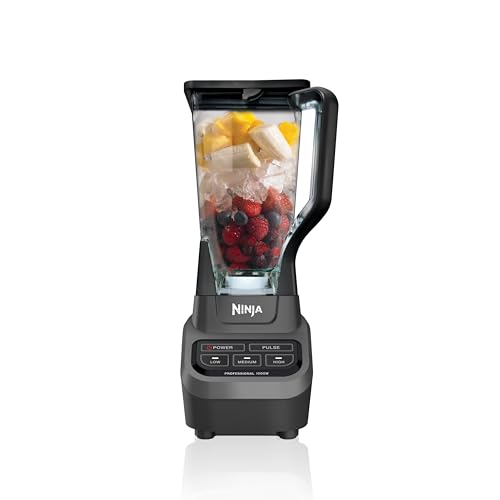
Ninja Professional Blender BL610, 1000W, 72 oz — Best Value Pitcher
The Ninja BL610 is the value pitcher for green smoothies: a 1000W base, a 72-ounce pitcher, and Total Crushing stacked blades that engage the full height of the load rather than only its bottom. For leafy greens, that stacked design has a real argument — leaves distributed through a tall pitcher get cut at several levels as they circulate, instead of waiting to sink to a bottom blade.
Strengths
- Stacked blades engage leaves throughout the pitcher, not just at the base
- 72 oz capacity covers family green smoothie rounds
- 1000W handles kale and frozen fruit credibly at a value tier
Trade-offs
- Fibrous finish is a notch below the Vitamix on the toughest kale and chard
- Three speeds plus pulse is a simple control set — technique substitutes for programs
- Stacked blade assembly demands care in washing
| Motor | 1000W |
| Pitcher | 72 oz |
| Controls | 3 speeds (per Amazon listing class) |
| Technology | Total Crushing blades (per Amazon listing) |
The BL610 makes green smoothies the Ninja way: fill the pitcher at least a third full so the blade column has something to work with, liquid and greens first for a stage-one liquefy, then fruit, and let the power run a full minute. Spinach and romaine disappear entirely; kale finishes smooth with ribs stripped; chard wants its thickest stems trimmed or extra time. The honest gap against the Vitamix is the last whisper of fiber on the toughest loads — a difference a family drinking together will rarely notice and a texture purist will. At its value positioning, with family capacity included, the BL610 is the easiest recommendation on this page to defend to a budget.
Frozen greens are a legitimate strategy, not a compromise. Frozen spinach and kale are typically blanched before freezing, which softens their structure — they often blend smoother than raw — and they chill the smoothie as they go. Keep a bag of each in the freezer and the green smoothie habit survives the weeks when the fresh produce drawer fails you, which is when habits usually die.
Best for: families wanting green smoothies at a value tier with real capacity / Not suited for: texture purists focused on kale and chard perfection
Check on Amazon — check the current price on Amazon before you decide, since listings and included accessories change over time.

nutribullet SmartSense Blender Combo NBF50700, 1400W — Best Auto-Adjusting
The nutribullet SmartSense is the automation pick: nutribullet’s most powerful blender class at 1400W, with a smart auto cycle that adjusts speed, time, and function as it senses the load changing. Green smoothies are a load that changes character mid-blend — a jar of distinct leaves becomes a liquid — and a cycle designed to respond to that transition is a genuinely apt idea, particularly for drinkers who do not want to learn manual technique.
Strengths
- Smart auto cycle adapts as the leafy load liquefies — true set-and-forget blending
- 1400W is ample for kale, stems, and frozen fruit
- Combo format covers pitcher batches and smaller blends in one system
Trade-offs
- Automation occasionally finishes a touch early or late for unusual loads; manual override habits help
- Less transparent than a dial — you trust the sensor’s judgment
- Premium-mid positioning above the value picks
| Motor | 1400W |
| Programs | Smart auto cycle that adjusts speed, time, and function (per Amazon listing) |
| Model | NBF50700 |
| Finish | Gunmetal Gray |
The SmartSense earns its badge on weekday mornings. Load liquid, greens, and fruit in the right order, press the auto cycle, and make coffee while the machine ramps, senses the leaves collapsing, and extends the finish until the load runs like liquid. For spinach and mixed greens the results are flawless; for kale and chard the sensor’s extension of the blend does the work that a manual drinker does by watching and adding twenty seconds. It is not magic — ribs-in curly kale can still leave the machine asking for a second short cycle — but it is the closest thing here to a green smoothie appliance that removes the operator from the equation, and for busy households that is a feature worth paying for.
Color is information. A green smoothie should be vividly, evenly green; pale streaks mean unblended leaf, and darkening at the top means oxidation from a long stand. Blueberries and blackberries turn green smoothies swamp-brown — delicious, but if the color puts a beginner off, keep berries out until the habit is established and use mango, pineapple, and banana as the fruit base instead.
Best for: busy households wanting automatic, technique-free green smoothies / Not suited for: manual-control drinkers who enjoy conducting each blend
Check on Amazon — check the current price on Amazon before you decide, since listings and included accessories change over time.

KitchenAid K400 Variable Speed Blender KSB4027, Passion Red, 56 oz — Best Mid-Range Control
The KitchenAid K400’s green smoothie credential is Intelli-Speed: motor control that senses the load and holds the chosen speed steady as leaves collapse and the blend thins. Surging — the speed hunting up and down as the load changes — is what leaves the last flecks unblended in mid-range machines, because the blades keep changing the terms of the vortex. The K400 holds its line, and its five-speed dial and smoothie preset make that stability easy to use.
Strengths
- Intelli-Speed holds blade speed steady as the leafy load changes character
- Five-speed dial plus presets suits both manual technique and one-touch routines
- 56 oz jar is a versatile household size for green smoothies
Trade-offs
- Fibrous ceiling below the high-performance pair on kale and chard stems
- No tamper in this configuration — thick loads need a pause-and-stir
- Mid-range positioning; the budget-conscious will look at the pick below
| Controls | 5-speed variable dial with Intelli-Speed Motor Control |
| Presets | Ice Crush, Icy Drinks, Smoothie (per K400 line listing) |
| Jar | 56 oz |
| Model | KSB4027, Passion Red |
The K400 is for the drinker who likes a dial and a say in the process. Start a green smoothie at a middle speed to fold the leaves in without splashing, walk it up as the load liquefies, and finish at full speed for thirty seconds — the Intelli-Speed control keeps each stage honest instead of letting the motor race when the load thins. Spinach and lettuce greens are effortless; kale is smooth with ribs stripped and stage one respected; chard stems want trimming. It is also, in Passion Red, the one machine on this page that guests will compliment unprompted, which is not nothing for an appliance that lives on the counter and anchors a daily habit.
Balance greens against fruit by handfuls, not by hope. A working ratio for a standard smoothie is one packed handful of greens per serving against one to one-and-a-half cups of fruit, with liquid to blend. More greens than that and the drink turns vegetal in a way that tests commitment; less and it is a fruit smoothie wearing a green costume. Adjust by quarter-handfuls across a week and you will find your household’s line precisely.
Best for: hands-on drinkers wanting steady mid-range green blending with style / Not suited for: anyone wanting the absolute fibrous ceiling or the lowest price
Check on Amazon — check the current price on Amazon before you decide, since listings and included accessories change over time.

Hamilton Beach Power Elite 58148AG, 700W, 40 oz Glass Jar — Best Budget for Greens
The Hamilton Beach Power Elite is the budget pick, and its inclusion for greens is about design rather than power. Its Wave Action system is engineered to pull the blend downward into the blades continuously — and leaves, whose whole survival strategy in a blender is to ride upward and outward, are exactly what such a system counteracts. At 700W with a 40-ounce glass jar and twelve functions including puree and ice crush, it is a modest machine that punches at its weight class’s top for leafy work.
Strengths
- Wave Action circulation is genuinely leaf-friendly at this tier
- 40 oz glass jar suits one-to-two green smoothies
- Twelve functions and an ice-crush setting cover a beginner’s whole routine
Trade-offs
- 700W is the floor: kale needs ribs stripped, small loads, and full stage-one patience
- Chard stems and other tough loads are beyond its honest brief
- Glass jar is heavy and the finish on fibrous greens is good, not silken
| Motor | 700W |
| Jar | 40 oz glass jar |
| Functions | 12 functions including puree and crush ice (per Amazon listing) |
| Model | 58148AG |
Be precise about what the Power Elite does for greens: spinach, romaine, baby kale, and herb handfuls blend completely and pleasantly; full-grown kale is achievable with ribs stripped, leaves torn small, and a patient two-stage blend; chard stems should be trimmed to the leaf. Within that brief — which covers a large share of real green smoothie drinkers, especially beginners starting on spinach — it delivers a genuinely smooth drink at a budget positioning, and the Wave Action design means the leaves spend their time in the blades rather than plastered to the jar. Beginners who later graduate to daily kale will graduate to a stronger machine with clear knowledge of why, which makes this a good first blender rather than a compromise to apologize for.
Drink green smoothies promptly and rinse immediately. Leaf pigments oxidize — the top of a standing glass darkens within the hour — and the same pigment sets into jar walls if left unrinsed. Neither fact should scare anyone; both simply reward the routine of blending, drinking, and rinsing as one continuous act. A green smoothie habit is a small daily ritual, and rituals survive on smoothness — of the drink and of the process alike.
Best for: beginners and spinach-led green smoothie drinkers on a budget / Not suited for: daily kale and chard drinkers, who need the power higher on this page
Check on Amazon — check the current price on Amazon before you decide, since listings and included accessories change over time.
Comparison Table
| Pick | Badge | Key spec | Best for |
|---|---|---|---|
| Vitamix 5200 Professional-Grade Blender, 64 oz, Black | Best Overall | 64 oz; variable speed; self-cleaning | All greens, finest finish |
| Blendtec Classic 575 with WildSide+ Jar, Black | Best for Tough Stems and Big Batches | WildSide+ jar; 5 speeds; 4 cycles | Stemmy greens in big batches |
| Ninja Professional Blender BL610, 1000W, 72 oz | Best Value Pitcher | 1000W; 72 oz; Total Crushing | Value family green smoothies |
| nutribullet SmartSense Blender Combo NBF50700, 1400W | Best Auto-Adjusting | 1400W; smart auto cycle; combo | Automatic green smoothies |
| KitchenAid K400 Variable Speed Blender KSB4027, Passion Red, 56 oz | Best Mid-Range Control | 56 oz; 5-speed Intelli-Speed; presets | Controlled mid-range green smoothies |
| Hamilton Beach Power Elite 58148AG, 700W, 40 oz Glass Jar | Best Budget for Greens | 700W; 40 oz glass; Wave Action | Budget green smoothies, tender greens |
The leaf family sorts these machines more than brand loyalty does. Tender-green drinkers can buy almost anywhere on this page and be happy; kale regulars should live in the top half; chard and batch drinkers belong with the Blendtec or the Vitamix; automation lovers have exactly one address, the SmartSense. The budget pick is honest about its greens and dishonest about none. Choose by the leaf you actually buy every week.
How to Choose the Best Blenders for Leafy Green Smoothies
Identify your primary green first, because it sets the power floor. Spinach-led drinkers: every machine here works, and budget and format should drive the choice. Kale-led drinkers: sustained speed is the requirement, and the honest shortlist is the high-performance class plus the stronger mid machines with technique. Chard and mixed-stem drinkers: jar circulation joins power as a requirement, favoring the WildSide geometry or a tamper-equipped design. Herb-heavy drinkers (green smoothies as a vehicle for parsley and cilantro) need complete liquefaction in small volumes — personal formats and the premium pitchers both serve, weak mid machines speckle.
Then consider rotation. Households that rotate greens — the ones still drinking green smoothies in month six — need a machine whose ceiling covers their toughest green, not their average one. Buying for your spinach and suffering your kale is the classic under-purchase in this category. The premium here is not really about luxury; it is about a ceiling high enough that no green in the market resets your technique or your expectations.
Matching Greens to Machines: a Practical Map
Spinach and baby greens are the universal donors — every pick blends them perfectly, including the budget Hamilton Beach, which makes them the right starting point for beginners on any machine. Kale is the gatekeeper green: it separates the page into machines that finish it natively (the Vitamix, the Blendtec, the SmartSense on a full cycle) and machines that finish it with prep help (ribs stripped, stage one extended — the Ninja, KitchenAid, and, for tender kale only, the Hamilton Beach). Chard is the specialist test, rewarding vortex design and stem prep in equal measure.
Herbs deserve a specific note because they are where small-volume blending shines. A handful of parsley or cilantro in a big pitcher can disperse so widely it never concentrates in the blade zone; in a personal jar or a half-filled premium pitcher it liquefies completely. If your green smoothies are herb-led — tabbouleh-style parsley drinks, cilantro-lime blends — favor the machines and formats that handle modest volumes violently, and chop long stems once before they go in.
The Economics of Green Smoothies: Tiers and Truth
Green smoothies are a grocery habit as much as an appliance: fresh greens several times a week, fruit to balance them, and a machine that must survive daily use. The tier logic that follows is practical. Budget tier buys tender-green competence and a year or two of learning what your household actually drinks. Mid tier buys kale competence with technique. Premium tier buys all-greens competence with forgiveness, plus the build to run daily for years. The expensive mistake is buying the budget tier for a kale habit and concluding green smoothies are gritty; the cheap mistake is buying the premium tier for a spinach habit that a third of the machine would have served.
One more economic truth: the best green smoothie machine is the one whose jar you do not mind washing daily. Self-cleaning programs, dishwasher-safe jars, and personal-cup formats are not conveniences bolted onto the real product — in a daily habit, they are the product. Weigh them as heavily as wattage when you choose, because the smoothie you make is the one whose cleanup you tolerated yesterday.
Herb-forward green smoothies deserve their own note because they are where this category gets interesting for experienced drinkers. A parsley-cucumber-lime smoothie, a cilantro-pineapple blend, a mint-romaine-pear drink — these are closer to the green drinks of juice bars than to the fruit smoothies most households start with, and they ask the most of a blender in the smallest volumes. Make them in personal jars or half-batches where the herbs cannot escape the blade zone, chop the stems once, and serve them very cold. They are an acquired taste that, once acquired, tends to displace the sweeter recipes entirely.
How to Make a Leafy Green Smoothie That Is Actually Smooth
One universal method, with per-green adjustments noted. It is written for a pitcher batch of two servings and scales to personal formats by halving and inverting the load order.
- Prep by green: spinach rinsed whole; kale ribs stripped and leaves torn; chard stems sliced thin or saved for cooking; lettuce torn; herb stems chopped once.
- Add liquid first — 1 to 1.5 cups for two servings (water, coconut water, milk, or juice).
- Stage one: add all the greens to the liquid and blend 20–30 seconds, until the liquid is uniformly green and no leaf fragments are visible. This stage is the smoothie.
- Add the fruit base — mango, pineapple, banana, apple — and any soft additions like yogurt.
- Add frozen fruit or ice last for cold and body, staying under the max line.
- Stage two: blend 30–45 seconds at full speed until the drink pours in a single smooth ribbon with no flecks or strings.
- Check by pouring a little into the glass first: if flecks ride it, return the glassful and blend 15 more seconds. Catching it now beats discovering it mid-drink.
- Serve immediately, rinse the jar at once, and note the green-to-fruit ratio if it was not right — green smoothies are a tuned recipe, not an improvisation.
A rotation that keeps a household interested for a month: Monday spinach-mango, Wednesday kale-pineapple, Friday chard-apple-ginger, Sunday romaine-pear-mint. Each uses the same method; only the green and its prep change. That variety is the deeper purpose of this page’s wide lens — a blender that handles the whole leaf family lets the smoothie follow the market and the season instead of repeating one recipe until everyone is tired of it.
Finally, respect the learning curve of the palate itself. A household that starts on spinach-mango in January may find it cloying by June and be drinking chard-ginger by autumn — not because the recipes changed, but because the drinkers did. Buy the machine for the drinker you are becoming, with ceiling enough for the greens getting tougher and the fruit getting quieter, and the purchase will look wiser every season. That is the deepest argument for the top half of this page, and it has nothing to do with wattage.
Green Smoothies Through the Seasons
A green smoothie practice that lasts follows the market’s year. Spring is spinach and herbs at their tender best, with citrus still bright. Summer belongs to romaine, cucumber, mint, and stone fruit — the lightest, coldest versions of the drink. Autumn brings chard and kale back to the center with apples and pears as the natural fruit partners. Winter runs on frozen greens and frozen fruit with ginger doing the brightening that citrus does in other seasons, and it is the season where a freezer-based routine proves the habit is real. A blender chosen for the whole leaf family — the premise of this page — is what lets the drink migrate with the seasons instead of stalling on one recipe.
Preserving the glut is the companion skill. Greens freeze well for smoothies: wash, dry, and freeze spinach and kale in portioned bags, and summer’s cheap abundance becomes winter’s stage one. Fruit freezes the same way. The household that freezes in season blends all year at a fraction of the cost of out-of-season fresh, and the smoothies are, if anything, more consistent — frozen ingredients are the same every time, which makes your tuned recipe repeatable in a way fresh produce never quite is.
Common Buying Mistakes
Mistake one: adding greens with everything else. Leaves that enter a thick, fruity load hide and survive. Greens and liquid first, alone, until the liquid is green — this single habit fixes most ‘my blender can’t do greens’ complaints about machines that demonstrably can.
Mistake two: buying for your easiest green. A machine chosen on spinach and fed kale weekly will disappoint weekly. Specify for the toughest green in your real rotation and every other green becomes effortless.
Mistake three: ignoring stems until they string. Chard stems and kale ribs are not leaf tissue; they are structure. Slice them thin, strip them, or cook them elsewhere — but do not ask any blender to make them vanish whole, because the honest answer is that the best ones need them at least torn down to size.
Mistake four: letting the smoothie stand and judging the method by the oxidized result. Green smoothies darken and separate as they sit; a dull, separated glass an hour later says nothing about the blend and everything about the wait. Blend, drink, rinse — in one motion.
Mistake five: treating ice as an afterthought in warm months. A green smoothie served merely cool tastes markedly more vegetal than the same smoothie served properly cold, because warmth amplifies the green flavors and dulls the fruit. In summer, build the cold in: frozen fruit, frozen greens, or a solid handful of ice, and serve immediately. Many ‘I don’t like green smoothies’ verdicts are actually ‘I don’t like lukewarm green smoothies’ verdicts, and the fix costs nothing.
Final Recommendation
For the committed, all-greens household, the Vitamix 5200 remains the benchmark: it finishes every leaf in the market and forgives the prep shortcuts of real mornings. The Blendtec Classic 575 matches it for stemmy batches with hands-off cycles, the nutribullet SmartSense removes the operator almost entirely, and the Ninja BL610 brings family capacity to a value tier. The KitchenAid K400 is the mid-range charmer with real control, and the Hamilton Beach Power Elite starts beginners honestly on tender greens.
Every pick was verified against Amazon listing — check price on Amazon, confirm the jar in the box, and then let your green rotation choose. Buy for your toughest leaf, blend your greens first, and the color in the glass will finally match the promise on the produce bag.
End with the rotation rule that keeps this whole category alive: never let one green run longer than a fortnight unchallenged. Swap spinach for kale, kale for chard, add an herb week, return with new appreciation. The machines on this page were chosen to make that rotation mechanically effortless — the rest is curiosity, and curiosity, it turns out, is the nutrient green smoothie habits actually run on.
A short note on children and green smoothies, since many households blend for an audience that includes small critics: start them on the spinach end of the family, serve small portions in opaque cups with straws, and let sweetness lead for the first weeks. The palate adapts remarkably fast when the drink is cold, sweet, and not a battleground — and the household that drinks green smoothies together tends to keep the habit longer than the one blending for an audience of one. The machines here all handle the family batch; the recipe diplomacy is yours, and it is easier than it looks.
The all-greens benchmark is the Vitamix 5200 — every leaf, finished completely.
For stemmy batches hands-off, the Blendtec Classic 575 and its WildSide+ jar are built for the load.
For automatic blending, the nutribullet SmartSense senses the leaves breaking down and adjusts itself.
Keep exploring the shortlist: Best Blenders For Kale Smoothies Best Blenders For Kale Shakes Best Blenders For Green Drinks And Smoothies Best Blenders For Juicing Vegetables Best Blenders For Healthy Smoothies.
Frequently Asked Questions
Which green is easiest to blend into a smoothie?
Spinach, by a wide margin — its leaves are tender, its stems are negligible, and it liquefies completely in every machine on this page, including the budget pick. Baby kale and romaine are next easiest. Full-grown kale and chard sit at the demanding end, needing sustained speed and the prep described in this guide. Beginners should start on spinach and add tougher greens as the habit forms.
Why does my green smoothie have strings in it?
Strings come from stems — chard stems, kale ribs, and long herb stems — that were fed whole. Leaf tissue liquefies; stem structure shreds into fibers if it is not cut down first. Slice chard stems thin across the grain, strip kale ribs, and chop herb stems once. If strings persist on a strong machine, extend stage one by fifteen seconds before suspecting the blender.
Can I put frozen greens straight into a smoothie?
Yes, and it is often better: frozen spinach and kale are usually blanched before freezing, which softens them, and they chill the drink as they blend. Add them in stage one with the liquid and give that stage a few extra seconds. Frozen greens are also the practical backbone of the habit — they end the tyranny of the wilting fresh bunch at the back of the fridge.
How do I keep a green smoothie from tasting like salad?
Balance and temperature. Use a dominant sweet fruit (mango, pineapple, banana) at roughly one to one-and-a-half cups per handful of greens, add a brightener like citrus or ginger, and serve the drink properly cold — warmth makes greens taste more vegetal. Mild greens (spinach, romaine) for the salad-averse; kale and chard for those who have acquired the taste and want the deeper flavor.
Is it normal for a green smoothie to separate?
Yes — a whole-food smoothie is a suspension, not a solution, and it will settle and separate as it stands, with the top darkening slightly from oxidation. A stir or shake restores it. Drinking within the hour avoids the question entirely, and storing any remainder in a completely filled, sealed container slows both separation and darkening. Separation is physics, not a blending failure.
Do green smoothies need a high-performance blender?
Only if your greens demand it. Spinach-led drinkers are fully served by mid and even budget machines on this page. Kale-led and chard-led drinkers benefit genuinely from the high-performance class, because those leaves test sustained speed and circulation — the two things premium machines actually sell. The honest rule: buy for your toughest regular green, and every other green takes care of itself.


