Disclosure: airfryerkitchensupply.com is reader-supported. When you buy through links on our site, we may earn an affiliate commission at no extra cost to you.
The best flush valve with 1.6 gallon toilets in mind is a replacement part, not a toilet — and that distinction matters before you spend anything. A flush valve is the assembly in the center of the tank (or, on commercial fixtures, the chrome valve on the wall pipe) that releases the flush water. On a 1.6 GPF toilet — the generation installed from the mid-1990s onward — the flush valve is calibrated to deliver that 1.6 gallons decisively: the tower or flapper opens fully, the water column drops fast, and the valve closes on time so the toilet does not run. When a 1.6 toilet starts flushing weakly, double-flushing, or refilling on its own, the flush valve and its seal are the first suspects, and replacing the valve restores the toilet you already own for a fraction of a new fixture’s cost. The six picks below cover the real situations: a complete home repair kit, standalone 2-inch and 3-inch valves, the tower-style valves Mansfield 1.6 toilets use, the genuine OEM Mansfield part, and the flushometer class that serves commercial 1.6 GPF fixtures. Match the valve to your toilet’s type first — tank or flushometer, 2-inch or 3-inch outlet, flapper or tower — and every pick here will do its job.
Where to buy
The confirmed picks in this guide are sold through Amazon, where you can check the current price on Amazon for each valve, confirm compatibility details on the listing (outlet size, toilet brand and model series), and have the part delivered before you drain the tank. Start with these confirmed options:
- Fluidmaster 400AKRP10 Universal Toilet Repair Kit — Best Complete Kit for Home 1.6 GPF Toilets: Check the current price on Amazon
- Korky Standard 2-Inch Adjustable Flush Valve Kit 4030 — Best Standalone 2-Inch Valve: Check the current price on Amazon
- Korky Large 3-Inch Flush Valve Kit 5030 — Best 3-Inch Valve: Check the current price on Amazon
- Korky Flush Valve and Seal Kit for Mansfield 210/211 — Best for Mansfield Tower Valves: Check the current price on Amazon
- Mansfield Flush Valve Model 211 — Best Genuine OEM Replacement: Check the current price on Amazon
- Sloan Regal 111 Manual Flushometer 1.6 GPF — Best Flushometer Valve: Check the current price on Amazon
In this guide
Quick Picks
- Best Complete Kit — Fluidmaster 400AKRP10: fill valve, 2-inch flush valve, flapper, lever and gasket in one box, listed for most 1.6–3.5 GPF toilets. Check price on Amazon
- Best Standalone 2-Inch Valve — Korky 4030: adjustable height with no cutting, plus the tank-to-bowl gasket. Check price on Amazon
- Best 3-Inch Valve — Korky 5030: the large-outlet valve performance 1.6 toilets use; note it does not fit Kohler. Check price on Amazon
- Best for Mansfield Towers — Korky 4033 Kit: fits Mansfield 208–211 tower valves and adjusts for 1.6 and 3.5 GPF. Check price on Amazon
- Best OEM — Mansfield 211 Flush Valve: the genuine Mansfield part for all trip-lever Mansfield toilets using the 211. Check price on Amazon
- Best Flushometer — Sloan Regal 111: the commercial standard at 1.6 GPF for tankless fixtures. Check price on Amazon
How These Picks Were Chosen
Every valve here was verified against its live Amazon listing before it earned a link, and the compatibility language in this article — outlet sizes, GPF ranges, the toilet series each valve fits — comes from those listings, not from general knowledge. Three filters shaped the list. First, the valve had to genuinely serve 1.6 GPF toilets: either listed for the 1.6 class directly, adjustable to it, or the OEM part for a 1.6 toilet family. Second, it had to solve a distinct job — a whole-tank refresh, a single-valve swap, a tower-valve seal, a genuine part, or the commercial flushometer case — because “flush valve” covers at least three different mechanisms that do not interchange. Third, brands had to have a real replacement-parts ecosystem, since a flush valve is itself a wear part whose seal you will replace again someday. Where a listing states a limitation — the Korky 3-inch kit’s Kohler exclusion is the honest example — this guide repeats the limitation rather than smoothing it over.
The Best Flush Valve With 1.6 Gallon Toilets: 6 Picks Reviewed

Fluidmaster 400AKRP10 Universal Toilet Repair Kit — Best Complete Kit for Home 1.6 GPF Toilets
Most 1.6 GPF home toilets that flush badly are not suffering from one failed part — the fill valve is slow, the flapper is warped and the flush valve seal is tired, all at once. This kit answers that reality: the listing describes a universal repair kit with a 2-inch flush valve, fill valve, flapper, tank lever and gasket, fitting most 1.6–3.5 GPF toilets. It suits homeowners with an aging 1.6 toilet that needs a full tank refresh in one session. It is not the pick if your toilet uses a 3-inch flush valve or a tower-style canister — measure and identify yours first.
Strengths
- Complete tank overhaul in one box — flush valve, fill valve, flapper, lever and gasket
- Listing specifies fit for most 1.6–3.5 GPF toilets, covering the whole 1.6 generation
- Fluidmaster parts are the most widely stocked toilet internals in North America
Trade-offs
- 2-inch flush valve only — 3-inch toilets need the Korky 5030 class instead
- Replacing everything takes longer than swapping a single seal
- Not for tower/canister flush designs or flushometer fixtures
| Specification | Detail |
|---|---|
| Kit contents | Fill valve, 2-inch flush valve, flapper, tank lever, gasket |
| Compatibility | Most 1.6–3.5 GPF toilets (per listing) |
| Flush valve size | 2-inch |
| Application | Gravity tank toilets |
The economics of this kit are the argument: a 1.6 GPF toilet’s ceramic will outlive several sets of tank internals, and refreshing all of them at once restores factory flush behavior — full valve opening, correct water level, clean shutoff — instead of fixing one symptom while the next one develops. The job is a genuine DIY: shut off the water, drain and remove the tank, swap the components, and set the fill valve height so the waterline matches the mark. Budget an unhurried hour the first time. If your toilet is a mainstream 1.6 two-piece from the big brands, this is the default prescription.
Best for: aging home 1.6 GPF toilets needing a full tank refresh / Not suited for: 3-inch, tower-style or flushometer toilets
Check the current price on Amazon

Korky Standard 2-Inch Adjustable Flush Valve Kit 4030 — Best Standalone 2-Inch Valve
When only the flush valve itself has failed — a cracked overflow tube, a warped valve seat, a leak between tank and bowl that a new flapper did not cure — the Korky 4030 is the focused fix. The listing highlights its EasyADJUST height (no hacksawing the overflow tube to length), an oversized funnel that reduces flood risk, and the tank-to-bowl gasket in the kit. It suits DIYers replacing a 2-inch valve on a 1.6 GPF toilet who want the adjustment done by twisting, not cutting. It does not suit 3-inch toilets or anyone whose fill valve is also failing — that is the full-kit case above.
Strengths
- Adjustable overflow height without cutting — faster, cleaner install
- Includes the tank-to-bowl gasket, the part most likely to leak after a valve swap
- Korky’s Chlorazone rubber resists the chlorine that eats ordinary flappers and seals
Trade-offs
- Valve only — fill valve and lever are separate purchases if needed
- 2-inch size does not fit 3-inch performance toilets
- Tank removal is still required, so it is a bigger job than a flapper swap
| Specification | Detail |
|---|---|
| Flush valve size | 2-inch, adjustable height |
| Includes | Flush valve and tank-to-bowl gasket kit |
| Application | Gravity tank toilets with 2-inch outlets |
The adjustable height is more than a convenience: the overflow tube’s height sets the maximum tank water level, and water level sets flush energy. A tube cut too short by a previous installer is a quiet cause of weak 1.6 flushes, and a valve that dials to the correct height removes the guesswork. Pair the swap with a fresh flapper if yours is more than a few years old — the valve seat and flapper are a sealing pair, and replacing one while the other is warped invites a callback to your own bathroom.
Best for: single-valve replacement on 2-inch 1.6 GPF toilets / Not suited for: 3-inch toilets or full tank refreshes

Korky Large 3-Inch Flush Valve Kit 5030 — Best 3-Inch Valve
Performance 1.6 GPF toilets — the ones with the decisive, whoosh-and-done flush — move water through a 3-inch flush valve, and when that valve’s seal or tower fails, a 2-inch replacement is not an option. The Korky 5030 is the large-outlet kit: adjustable height, oversized funnel, and a listing that states plainly it fits many brands and does not fit Kohler. It suits owners of 3-inch 1.6 toilets from brands like American Standard and Gerber whose flush has gone weak or leaky. Kohler owners should order the Kohler-specific valve instead — the exclusion is real.
Strengths
- True 3-inch outlet restores the fast tank discharge performance toilets are built around
- Adjustable height without cutting, with the same flood-resistant funnel design
- Fixes the tank-to-bowl leak path with a fresh gasket as part of the job
Trade-offs
- Does NOT fit Kohler, per the listing — check your brand before ordering
- Brand fit varies within the 3-inch class; confirm your model on the listing
- Full tank removal required, as with any flush valve swap
| Specification | Detail |
|---|---|
| Flush valve size | 3-inch, adjustable height |
| Compatibility | Many brands; does not fit Kohler (per listing) |
| Application | Gravity tank toilets with 3-inch outlets |
Why the inch matters: flow through the valve scales with its area, and a 3-inch opening passes water dramatically faster than a 2-inch, which is precisely how a 1.6 toilet builds a strong siphon from a modest volume. When a 3-inch toilet starts needing a second flush, the usual culprit is the large flapper or seal shrinking or warping until it closes early — the tank never fully commits. Replacing the valve assembly renews the seat, the seal and the overflow in one operation, and the flush goes back to sounding like it means it.
Best for: 3-inch performance 1.6 GPF toilets (non-Kohler) / Not suited for: Kohler toilets or 2-inch models

Korky Flush Valve and Seal Kit for Mansfield 210/211 — Best for Mansfield Tower Valves
Mansfield’s 1.6 GPF toilets do not use a flapper at all — they use a tower (canister) flush valve, the 210 and 211 series, which lifts a cylindrical seal to release the flush. When a Mansfield starts running or flushing weakly, this Korky kit is the targeted repair: the listing says it fits Mansfield 208, 209, 210 and 211 valves and adjusts for both 1.6 and 3.5 GPF tower-style flush valves. It suits Mansfield owners who want the seal and valve refresh without replacing the whole tower assembly. It does not suit flapper-style toilets of any brand.
Strengths
- Purpose-built for Mansfield tower valves — the correct geometry, not a universal approximation
- Adjusts for 1.6 and 3.5 GPF towers, covering both Mansfield generations
- Korky’s rubber compounds are formulated to resist harsh, chlorinated water
Trade-offs
- Mansfield-only — useless for flapper toilets
- If the tower body itself is cracked, you need the full valve (next pick), not the seal kit
- Tower valves have a different service procedure than flappers — read the instructions first
| Specification | Detail |
|---|---|
| Fits | Mansfield 208, 209, 210 and 211 flush valves (per listing) |
| GPF adjustment | 1.6 and 3.5 GPF tower-style valves |
| Type | Flush valve and seal kit |
Tower valves fail gracefully and then all at once: the big flat seal at the tower’s base hardens, and the toilet begins the phantom-refill cycle — a few seconds of fill valve activity every hour as tank water seeps into the bowl. That seep is wasted water around the clock, and on a 1.6 toilet it also means the tank is rarely at full level when someone flushes, which is why the flush feels weak. Renewing the seal restores both the water bill and the flush. The 1.6/3.5 adjustment matters because Mansfield sold both generations with near-identical towers; set it to 1.6 for a 1.6 tank so the tower closes on time.
Best for: Mansfield 1.6 GPF toilets with running or weak flushes / Not suited for: flapper toilets or cracked tower bodies
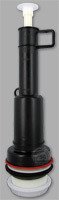
Mansfield Flush Valve Model 211 — Best Genuine OEM Replacement
Sometimes the right answer is the manufacturer’s own part. This is the genuine Mansfield 211 flush valve — the listing describes it as the Model 211 for all trip-lever Mansfield toilets. It suits owners whose tower body, not just its seal, has failed, and anyone who prefers OEM geometry over aftermarket approximation. It is not the cheapest route — a seal kit costs less when the seal is all that failed — and it fits Mansfield trip-lever models only.
Strengths
- Genuine Mansfield part — exact fit and flush calibration for 211-series towers
- Replaces the complete valve, ending seal, tower and seat problems in one job
- Works across the trip-lever Mansfield range that uses the 211
Trade-offs
- Overkill when only the seal has hardened — try the seal kit first
- Mansfield trip-lever models only; push-button towers differ
- Full valve replacement is the biggest of the tank jobs in this guide
| Specification | Detail |
|---|---|
| Part | Mansfield Flush Valve, Model 211 |
| Compatibility | All trip-lever Mansfield toilets using the 211 (per listing) |
| Type | Complete tower flush valve, OEM |
The OEM-versus-aftermarket decision is really about tolerance. A tower valve’s seal land, lift height and closing timing are calibrated as a system; the genuine part reproduces the flush the toilet was rated for at 1.6 gallons, with no adjustment experiments. If your Mansfield’s tower is original to a 1990s or 2000s toilet and the plastic has gone brittle, this is the one-and-done repair — and while the tank is off, it is the natural moment to renew the tank-to-bowl gasket and bolts as well, so the next decade starts from all-new wear parts.
Best for: Mansfield owners replacing the whole tower valve / Not suited for: seal-only failures or other brands

Sloan Regal 111 Manual Flushometer 1.6 GPF — Best Flushometer Valve
A whole class of 1.6 GPF toilets has no tank at all: commercial and institutional fixtures flushed by a flushometer — the chrome valve on the exposed pipe that meters pressurized water directly into the bowl. The Sloan Regal 111 is that category’s standard-bearer, listed as a manual water closet flushometer at 1.6 GPF with a top-spud fixture connection. It suits facility managers, restaurants, offices and the rare residential flushometer installation. It does not fit, adapt to, or belong on a tank toilet — the two systems share a name and nothing else.
Strengths
- The commercial standard — Regal valves are serviced everywhere, with universal rebuild parts
- Metered 1.6 GPF delivery independent of tank refill, so back-to-back flushes never weaken
- Diaphragm design is rebuildable for decades rather than replaceable
Trade-offs
- Requires flushometer plumbing — a pressurized supply and top-spud bowl, not a tank rough-in
- Commercial pricing and installation expectations (check price on Amazon)
- Flush is assertive and audible, as flushometers are
| Specification | Detail |
|---|---|
| Type | Manual flushometer, exposed |
| Flush volume | 1.6 GPF |
| Connection | Top spud fixture connection (per listing) |
| Finish | Polished chrome |
Flushometers exist because tanks cannot keep up with commercial duty cycles: a tank toilet needs a minute to refill, while a flushometer is ready again in seconds and delivers its 1.6 gallons at line pressure, which is also why flushometer bowls clear so decisively. The Regal’s diaphragm is its wear part, and rebuild kits for it are commodity items — a facility can keep a Regal in service essentially indefinitely. If your “1.6 gallon toilet” is in a business, a school or a church, this — not a tank kit — is your flush valve, and the buying-guide section below explains how to tell which system you have before ordering.
Best for: commercial 1.6 GPF flushometer fixtures / Not suited for: any tank toilet
Comparison Table
| Pick | Badge | Key spec | Best for |
|---|---|---|---|
| Fluidmaster 400AKRP10 Kit | Best Complete Kit | 2-in valve + fill valve + flapper; fits most 1.6–3.5 GPF | Full tank refresh |
| Korky 4030 | Best 2-Inch Valve | 2-in adjustable-height valve + gasket | Single valve swap |
| Korky 5030 | Best 3-Inch Valve | 3-in adjustable valve; not for Kohler | Performance 1.6 toilets |
| Korky Mansfield 210/211 Kit | Best for Mansfield Towers | Fits 208–211; adjusts 1.6/3.5 GPF | Mansfield seal/valve repair |
| Mansfield 211 Valve | Best OEM | Genuine Mansfield 211 complete valve | Full tower replacement |
| Sloan Regal 111 | Best Flushometer | 1.6 GPF manual flushometer, top spud | Commercial fixtures |
How to Choose the Right Flush Valve for a 1.6 GPF Toilet
Identify your system before anything else, because the three families do not interchange. Open the tank: if a flapper on a chain seals a round opening at the tank’s bottom, you have a flapper valve — measure the opening (2-inch is the older standard; 3-inch is the performance standard) or check the toilet’s paperwork. If a cylindrical tower lifts straight up from the center, you have a canister/tower valve — Mansfield’s 210/211 is the classic 1.6 example. If there is no tank and a chrome valve sits on a pipe behind the bowl, you have a flushometer, and tank parts are irrelevant to you.
Next, diagnose before you buy. A toilet that refills briefly on its own has a sealing failure (flapper, tower seal or valve seat). A toilet that flushes weakly but holds water usually has a water-level, rim-jet or partial-opening problem — the valve may be fine. A leak at the floor or between tank and bowl points at gaskets, not the valve mechanism. Buying the valve that matches the diagnosis is the whole game: the picks above are organized by exactly that logic, from the full-kit refresh (everything is old) to the seal kit (one part is old).
Tank Valves vs Flushometers: Why the Distinction Matters
The phrase “flush valve” names two different machines. In a tank toilet, the flush valve is a passive gate: it holds back stored water and releases it by gravity, and its performance depends on opening size and how long it stays open. In a flushometer, the valve is an active metering device connected to pressurized supply; it admits a measured 1.6 gallons at line pressure and shuts itself off. Confusing them wastes money in both directions — tank parts cannot repair a flushometer, and a flushometer cannot be fitted to a tank bowl. Homes almost always have tank valves; businesses, schools and institutions usually have flushometers. One more variant deserves an honest mention: dual-flush conversion kits exist that retrofit a 1.6 tank with two flush volumes. They are a legitimate water-saving experiment, but they change the toilet’s flush calibration, so treat them as a conversion project, not a repair part.
How to Replace a Tank Flush Valve on a 1.6 GPF Toilet
- Shut off the angle stop and flush to empty the tank. Hold the handle to drain as much as possible, then sponge out the remainder.
- Disconnect the supply line from the fill valve, and place a towel and shallow pan under the tank — some water always escapes.
- Remove the tank: unbolt the tank-to-bowl bolts from below, alternating sides, and lift the tank straight off. This is the moment of truth for the gasket — note how the old assembly sat.
- Unscrew the old flush valve’s mounting nut from under the tank and lift the valve out. Clean the tank’s mounting surface of old gasket residue and mineral crust.
- Fit the new valve with its gasket, set the overflow tube height to match the old valve or the manufacturer’s mark for your tank, and tighten the mounting nut firmly by hand plus a small wrench turn — the gasket seals, not torque.
- Re-seat the tank on a new tank-to-bowl gasket, tighten the bolts evenly in alternation until the tank is level and stable, and reconnect the supply.
- Install or adjust the flapper/tower seal and chain (a small amount of slack — the chain should never hold the seal open or prevent it lifting fully).
- Open the water, let the tank fill to the marked waterline, and flush several times. Check under the tank and at the base with a dry paper towel after each flush.
- Fine-tune: if the flush is weak, confirm the water level and full seal lift before suspecting the new valve; if the toilet runs, check chain slack and seal seating.
Common Buying Mistakes
Ordering by brand alone. “Fits American Standard” is not enough — the same brand sold 2-inch flapper, 3-inch flapper and tower designs across the 1.6 era. Size and type first, brand second.
Ignoring the printed exclusion. The Korky 3-inch kit states it does not fit Kohler. Listing exclusions like that are engineering facts, not marketing; ordering anyway buys a return, not a repair.
Replacing the valve when the seal was the problem. A hardened flapper or tower seal mimics valve failure. If the valve body is sound, the seal kit is the faster, cheaper, correct repair.
Cutting the overflow tube to the wrong height. Tube height sets maximum water level, and water level sets flush power. Adjustable valves exist precisely to remove this error — use the adjustment.
Bringing tank logic to a flushometer. A commercial 1.6 fixture that flushes weakly usually needs a diaphragm rebuild, not a new valve and never a tank part. Identify the system first.
Final Recommendation
For most home 1.6 GPF toilets, the Fluidmaster complete kit is the smart buy — everything in the tank ages together, so refresh it together. If only the valve failed, take the Korky in your size: the 4030 for 2-inch, the 5030 for 3-inch. Mansfield owners should stay in the family — the Korky seal kit for seal problems, the genuine 211 for whole-valve problems — and commercial fixtures belong to the Sloan Regal. Related reading in this cluster: Best Fill Valves For Toilets for the other half of the tank, Best Flappers For Toilets for seal-only repairs, Best 1.6 Gallon Flush Toilets if the toilet itself is beyond saving, and Best Flush Toilets Low Flow for its modern low-flow replacements.
Symptoms Decoder: Which Part Is Actually Failing?
Flush valves get blamed for every tank symptom, and half the time the guilty part is something else. Decode before you order. The toilet refills briefly on its own, every so often: water is seeping past the flush valve’s seal into the bowl — the flapper, tower seal or (rarely) the valve seat. Start with the seal; it is the cheapest part in the tank. The flush is weak but the tank holds water fine: check the water level against the tank’s line first, then the rim jets for scale, then whether the flapper lifts fully and stays up long enough — a waterlogged flapper that sinks early cuts every flush short. Water on the floor at the base after flushing: that is the wax seal or the bowl, not the flush valve; do not buy tank parts for a floor problem. Moisture between tank and bowl: the tank-to-bowl gasket or bolts — which is why the valve kits in this guide include the gasket: if you are removing the tank anyway, renew it. The tank fills slowly or noisily: that is the fill valve, the flush valve’s innocent neighbor. A flushometer flushes long or will not stop: the diaphragm is the wear part, and a rebuild kit — not a new valve — is the standard repair. Ten minutes of diagnosis is what separates a one-part fix from a shopping cart of maybes.
Flapper, Tower and Flushometer: Service Life and Parts Logic
The three valve families age differently, and knowing your family’s rhythm prevents both neglect and over-repair. Flapper systems are the consumable champions: the flapper itself is a wear item on a multi-year cycle (chlorinated water shortens it; that is why chlorine-resistant compounds like Korky’s Chlorazone exist), while the valve body beneath it can serve for decades unless its seat pits or its overflow tube cracks. Tower (canister) systems invert the pattern: the tower body is durable, and its large flat seal is the wear item — a seal swap restores the valve, and full tower replacement is reserved for cracked or brittle plastic, typically on units old enough to have earned it. Flushometers are the marathoners: the valve body is essentially permanent brass, and the diaphragm kit is the periodic renewal — facilities rebuild them on schedule rather than waiting for failure. The practical rule across all three: replace the wear element first, the assembly when the wear element no longer fixes it, and the whole toilet only when the ceramic or the drain — not the valve — is the problem. That sequence, followed honestly, is why a 1.6 GPF toilet can remain in service for thirty years.
Rebuild Kits: The Flushometer’s Second Life
Because the commercial picks raise the question, it deserves a direct answer: a flushometer that flushes weakly, runs long, or will not shut off almost never needs replacing. The diaphragm inside it — the flexible metering element — is designed to be renewed, and rebuild kits for the major valves (Sloan’s Regal line and Zurn’s Aquaflush line both have them, sized by GPF) restore factory metering in a short service visit with the water shut off. The 1.6 GPF figure matters here too: rebuild kits are volume-specific, and fitting a kit of the wrong rating changes the fixture’s flush volume and its compliance. For a facility, the economics are decisive — a shelf of diaphragm kits keeps an entire building’s flushometers at specification for a small fraction of one valve replacement. For a homeowner who has inherited a flushometer fixture, the same logic applies at single scale: identify the valve model, buy its 1.6 GPF rebuild kit, and treat a full valve purchase as the last resort, not the first.
When the Right Answer Is a New Toilet Instead
Valve replacement has an honest limit, and crossing it wastes money in small bills. Replace the toilet, not the valve, when: the bowl’s trapway is rough or damaged (no valve fixes a bad passage); the ceramic is cracked anywhere; the toilet is a first-generation 1.6 whose waterways were a restricted 3.5 design — the generation that gave low-flow its bad name — because a new valve cannot redesign its bowl; the flange or floor beneath has failed and the fixture must come up anyway, making it the rational moment to upgrade; or the household’s needs have changed (height, bowl shape) so that even a perfectly repaired toilet is the wrong toilet. In those cases, this cluster’s guides to modern low-flow and 1.6 toilets are the next read. Everything short of that list, a valve, a seal or a kit in this guide will fix — which is most toilets, most of the time.
A Note on Dual-Flush Conversions and Water-Saving Kits
Because this search attracts them, the conversion kits deserve a fair hearing. A dual-flush conversion replaces a 1.6 toilet’s flapper mechanism with a two-volume device — the tank keeps its water, but the flush releases a reduced volume for liquids and the full volume for solids. The better kits are adjustable and genuinely effective in the right tank; the category’s honest caveats are three. First, results vary by toilet: a bowl designed around a full 1.6 delivery may wash less completely on the reduced flush, so bowl cleanliness, not just clearing, is the test. Second, a conversion changes the toilet from its rated configuration — acceptable for a homeowner optimizing their own bathroom, questionable for a landlord standardizing a fleet. Third, a conversion is not a repair: if the existing valve or seal has failed, restore the toilet to specification first (the picks above), then convert a healthy toilet if the water saving still appeals. Treated as an experiment on a sound toilet, conversions are a legitimate tool; treated as a substitute for maintenance, they disappoint.
Tools and Supplies for a Flush Valve Job
The job needs less than most people fear, and assembling it beforehand is what makes the work calm. Essentials: an adjustable wrench and a pair of slip-joint pliers for the mounting and supply nuts; a flat screwdriver; a sponge and a bucket for the tank water that always remains; towels for the floor; and a small container for the bolts you remove, in the order you remove them. Consumables: the new valve or kit, a fresh tank-to-bowl gasket if your kit does not include one (the picks in this guide were chosen partly because they do), a new supply line as a matter of policy, and thread tape for the supply connection if your line’s fitting calls for it. Optional but wise: a flashlight for reading the old valve’s markings before removal — photograph the existing assembly from two angles before touching anything, because the old installation is the best instruction manual for the new one — and a tube of plumber’s grease for gasket seating where the instructions suggest it. Everything on this list is a household staple or a few dollars at any hardware store, which is precisely why valve replacement is the best-value repair in the bathroom.
After the Install: The First Week With a New Flush Valve
A new flush valve earns trust gradually, and the first week is when small adjustments pay compound interest. Flush the toilet a dozen times across the first day and glance at the base and tank bolts each time — most installation leaks announce themselves early and politely, as a bead of moisture rather than a puddle. Listen once, deliberately, to a full cycle: fill, shutoff, silence. The silence is the specification; a valve that sighs, dribbles or tops up is telling you about a seal or a chain adjustment while the fix is still free. Check the flush quality against the problem that started the job — if the original complaint was a weak flush and it persists with a new valve at the correct water level, the diagnosis moves downstream to the rim jets, the trapway or the drain, and the symptoms decoder earlier in this guide is the map. Finally, write the valve’s model and the install date on a card and tape it inside the tank lid. The next person to service this toilet — possibly you, in seven years, having forgotten everything — will be grateful, and a 1.6 GPF toilet maintained on that rhythm is a toilet that never needs the dramatic repair.
The Maintenance Calendar for a 1.6 GPF Toilet
A 1.6 toilet asks for attention on a schedule measured in years, and writing that schedule down is what separates owners from victims of entropy. Every year: one deliberate listen to a full flush cycle, a dry-hand check of the supply connection and tank bolts, and a glance at the water level against its line. Every two to three years in chlorinated water: inspect the flapper or tower seal for stiffness, warping or slime — replacement at the first sign of any of the three costs little and prevents the phantom-refill season entirely. Every five years or so: expect the fill valve to be the next conversation; slow or noisy filling is its announcement. On any symptom, at any time: the decoder in this guide before the shopping cart. Followed loosely — nobody services a toilet like a boiler — this calendar keeps a 1.6 toilet flushing at specification indefinitely, which is the entire economic argument for repairing valves instead of replacing fixtures: the ceramic is a lifetime asset, and the calendar is how you collect on it.
A Short Glossary for Valve Shopping
The vocabulary of this category is small and worth owning before you buy. Flush valve: the assembly that releases tank water (or, in a flushometer, meters line water) for the flush. Flapper: the rubber seal on a chain that covers the flush valve’s outlet in most gravity toilets. Tower / canister valve: a cylindrical flush valve that lifts vertically — Mansfield’s 210/211 pattern — sealing with a flat gasket at its base. Overflow tube: the vertical pipe in the valve’s center that routes excess water to the bowl and sets the maximum tank level. Fill valve: the separate assembly that refills the tank and bowl after a flush — a neighbor, not a synonym, of the flush valve. Flushometer: the tankless commercial valve (Sloan, Zurn) that meters pressurized water directly. Diaphragm: the flexible metering element inside a flushometer, renewed by a rebuild kit. Tank-to-bowl gasket: the large seal between tank and bowl, renewed whenever the tank comes off. A buyer fluent in those eight terms can read any listing in this category — including its exclusions — and know exactly what is being sold.
Why This Guide Exists: The Cost of Guessing Wrong
Close with the stakes, because they justify every check in this article. A flush valve is a small purchase with an outsized blast radius: the wrong size or type costs a return cycle at best, and at worst a tank removed twice, a gasket disturbed once too often, and a weekend surrendered to a toilet that still runs. The 1.6 generation’s variety — two valve sizes, two sealing philosophies, an entire commercial parallel universe of flushometers — means the guess is a genuine gamble, and the identification steps in this guide (system, size, symptom) are what convert it into a certainty. That is the whole editorial argument for treating a modest part with this much respect: an hour of diagnosis and a correctly matched valve return a twenty-year fixture to specification, while the same money spent guessing buys education at retail. The toilet in your bathroom is almost certainly repairable. This guide exists so that the repair is the one you perform — once, correctly, and then not again for years.
Related guides
Frequently Asked Questions
How do I know if my flush valve is 2-inch or 3-inch?
Measure the opening at the bottom of the tank that the flapper or tower seals — or simpler, measure the flapper itself. Roughly 2-inch and 3-inch classes are visibly different in size, and many toilets have the size in their model documentation. When in doubt, bring the old flapper’s dimensions to the listing’s compatibility notes before ordering.
Will a universal flush valve work on my 1.6 GPF toilet?
Usually, if the type and size match: a universal 2-inch flapper valve fits most 2-inch 1.6 toilets, and kits like the Fluidmaster in this guide are listed for most 1.6–3.5 GPF models. Tower-style toilets (Mansfield being the common one) and 3-inch performance models are the exceptions that need their specific parts.
What are the signs the flush valve — not the flapper — has failed?
A cracked or scaled overflow tube, a valve seat that stays rough or pitted after cleaning, water leaking between tank and bowl with a sound gasket elsewhere, or a tower body that has gone brittle. If the sealing surface the flapper closes against is damaged, new flappers will keep failing until the valve itself is replaced.
Can I convert my 1.6 GPF toilet to dual flush with a new valve?
Conversion kits exist and can cut water use for liquid waste, but they re-calibrate how the tank delivers water, and results vary by toilet model. Treat a conversion as an experiment with a return policy, not as a repair — and if your goal is simply a toilet that works as designed, restore the original valve type instead.
How long does a flush valve replacement take?
For a tank valve, plan on about an hour the first time, including draining, tank removal and leak checks; experienced hands do it in half that. A seal-only swap on a tower valve is faster. A flushometer replacement is a plumbing job with the water main involved — facilities typically assign it to a plumber or maintenance tech.
Why does my toilet refill on its own every so often?
That phantom refill means tank water is slowly leaking into the bowl past the flush valve’s seal, dropping the tank level until the fill valve tops it up. The cause is almost always the flapper or tower seal, occasionally a damaged valve seat. It wastes water continuously and also leaves the tank under-filled, which is why the flush feels weak — fix the seal and both symptoms end.


