Disclosure: airfryerkitchensupply.com is reader-supported. When you buy through links on our site, we may earn an affiliate commission at no extra cost to you.
The best flapper for older toilets is not the newest flapper — it is the one that seals against a flush valve seat that has had twenty or thirty years to pit, warp and crust with minerals. Older toilets, the 3.5 and 5 GPF generations and early 1.6 GPF models, overwhelmingly use 2-inch flappers, and their owners face a specific frustration: a brand-new universal flapper that still leaks because the seat beneath it is no longer flat. This guide ranks six verified flappers for that reality — flexible and Chlorazone-rubber designs that conform to tired seats, classic patterns made for old brass flush valves, and a hinge-specific fit for older Kohlers — and the buying guide covers the seat inspection that decides whether any flapper can succeed.
Two honest boundaries before the picks. First, if the flush valve seat is deeply pitted, no flapper seals it — that toilet needs a flush valve or a complete repair kit, and this guide says so rather than selling you a third flapper. Second, older toilets with 3-inch flush valves and canister systems exist, but they are the minority of the older installed base; measure your opening before ordering anything here, because every pick below is a 2-inch pattern unless its review says otherwise.
Where to buy
All six flappers are sold through Amazon, where you can check the current price on Amazon and confirm the flapper size and pack count on the listing. Start with these confirmed options:
- Korky 2000BP Classic Plus Flapper — Best Overall for Older Toilets: Check the current price on Amazon
- Korky 2001BP Plus Standard 2-Inch Flapper — Best Standard Replacement: Check the current price on Amazon
- Fluidmaster 501CT Bulls Eye Flapper — Best Classic Rubber: Check the current price on Amazon
- Fluidmaster 506 Flexible Frame Flapper — Best for Warped Seats: Check the current price on Amazon
- Korky Standard 2-Inch Flapper, 3 Pack — Best Multi-Pack: Check the current price on Amazon
- Korky Fits Kohler Hinge Flapper — Best for Older Kohler Hinge Models: Check the current price on Amazon
Confirm the size on the listing against the opening you measured — flapper packaging across brands uses similar names for 2-inch and 3-inch models, and the older-toilet picks below are the 2-inch patterns their titles describe.
In this guide
Quick Picks
- Best Overall for Older Toilets: Korky 2000BP Classic Plus Flapper — Chlorazone rubber classic made to seal the brass flush valves in older high-volume toilets — Check the current price on Amazon
- Best Standard Replacement: Korky 2001BP Plus Standard 2-Inch Flapper — The long-lasting standard 2-inch Korky — the default flapper for the largest group of older toilets — Check the current price on Amazon
- Best Classic Rubber: Fluidmaster 501CT Bulls Eye Flapper — The Bulls Eye 501 — the thermoplastic classic that has sealed older tanks for decades — Check the current price on Amazon
- Best for Warped Seats: Fluidmaster 506 Flexible Frame Flapper — Flexible-frame 2-inch flapper that bends to meet seats that are no longer flat — Check the current price on Amazon
- Best Multi-Pack: Korky Standard 2-Inch Flapper, 3 Pack — Three standard Korky 2-inch flappers in flexible rubber — for houses where several older toilets age together — Check the current price on Amazon
- Best for Older Kohler Hinge Models: Korky Fits Kohler Hinge Flapper — The hinge-mount pattern for the older Kohler toilets that do not take a standard ear-mount flapper — Check the current price on Amazon
How These Picks Were Chosen
Each flapper was verified by searching brand and model through the airfry site’s Amazon listing data connection and matching the returned listing title. Only confirmed listings carry links. Ranking for older toilets weighed seat conformity — flexible frames and softer rubber that seal imperfect surfaces — chemical resistance for decades-old tanks on modern chlorinated water, and compatibility with the brass flush valves and hinge mounts that newer universal flappers sometimes ignore.
We excluded canister seals and 3-inch flappers from the main list deliberately: they serve different toilets, and mixing them into an older-toilet guide is how readers end up with the wrong part. The one specialty fit included — the Kohler hinge pattern — is labeled as such and applies only to the older Kohler models that use it.
The 6 Best Options for Best Flapper for Older Toilets
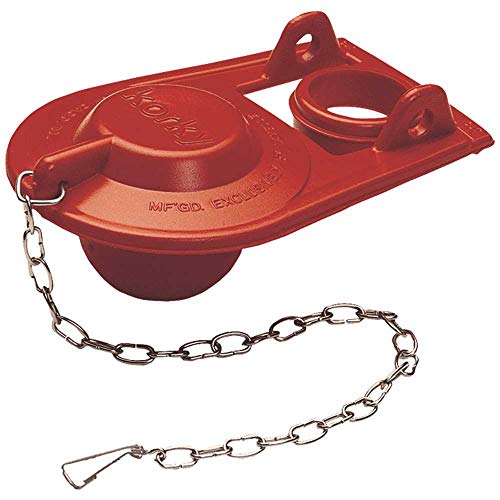
Korky 2000BP Classic Plus Flapper — Best Overall for Older Toilets
The Korky 2000BP Classic Plus is the flapper older toilets were waiting for: a classic-pattern flapper in flexible Chlorazone rubber, described in its listing as giving a tight seal with easy installation. The classic pattern matters because older tanks — especially the 5 and 7 GPF generations with brass flush valves — predate the dimensions some modern universals assume. The flexible rubber matters because an old brass seat is rarely perfectly flat anymore. And Chlorazone matters because the tank water in a modern home is chlorinated in a way the original flapper in a 1980s toilet never had to survive.
Strengths
- Classic pattern suits older brass flush valves that modern universals can fit poorly
- Flexible Chlorazone rubber conforms to seats with minor pitting and crust
- Chlorine-resistant material outlasts standard rubber on modern municipal water
Trade-offs
- 2-inch pattern — measure first, as always
- Flexible conformity has limits: a deeply pitted seat still needs a flush valve
- Premium rubber costs more than the bargain-bin flappers it outlasts several times over
| Model | Korky 2000BP Classic Plus |
| Material | Chlorazone rubber, flexible (per listing title) |
| Size | 2 inch |
| Target | Older toilets incl. brass flush valves |
The test of this flapper is the dye test a week after install. Standard rubber on an old seat often passes on day one and weeps by day ten as it takes a set against an imperfection; the Classic Plus flexible compound keeps conforming. Pair the install with the seat preparation in the how-to section — a gentle cleaning of the seat surface, never aggressive abrasion on brass — and most older toilets go silent at night for years.
Choose the 2000BP when the toilet is worth keeping: a solid older Kohler, American Standard or Eljer with good porcelain and a strong flush that simply leaks at the flapper. These toilets flush with a volume modern toilets cannot match, and a correct flapper restores them fully. If the seat inspection shows deep pitting or the flush valve itself is corroded through, spend the money on a complete repair kit instead — this flapper is excellent, not miraculous.
Best for: older toilets with brass flush valves and minor seat wear / Not suited for: toilets whose flush valve seat is deeply pitted or corroded

Korky 2001BP Plus Standard 2-Inch Flapper — Best Standard Replacement
If the Classic Plus is the specialist, the 2001BP is the standard-bearer: Korky Plus flapper in the standard 2-inch size, in long-lasting rubber, made in the USA per its listing. Most older toilets that take a flapper at all take this pattern — the 1.6 and 3.5 GPF generations from the major brands — and the 2001BP is the flapper plumbers reach for when the tank in front of them is unremarkable. Its virtue is the absence of surprises: it hangs correctly, seals predictably, and its rubber is compounded to last on chlorinated water rather than to hit the lowest price.
Strengths
- Standard 2-inch fit covers the bulk of older flapper toilets
- Long-lasting rubber formulation for chlorinated supplies
- Made in USA, per the listing, with wide parts-counter availability
Trade-offs
- Standard rigidity conforms less than the Classic Plus on a worn seat
- No adjustability — flush volume is what the toilet was designed for
- Still a wear part: expect years, not decades
| Model | Korky 2001BP Plus |
| Size | 2 inch, standard |
| Material | Long-lasting rubber (per listing title) |
| Origin | Made in USA (per listing title) |
The 2001BP is the right first flapper for an older toilet in unknown condition, because its behavior is the reference behavior. If it seals, the seat is fine and you are done for years. If it weeps slowly despite a clean seat, you have learned the seat needs the more conformable Classic Plus — or the flush valve needs replacing — and you have learned it with the least expensive quality part. Diagnosis by substitution only works when the substitute is above suspicion, and this flapper is.
Landlords and multi-bathroom households standardize on this pattern for the same reason: one flapper on the shelf covers most of the toilets they will ever meet. Keep the chain slack at the half-inch standard, replace the flapper rather than cleaning a hardened one, and the older toilets in the building stop being the ones that run at night.
Best for: standard older 2-inch toilets and multi-toilet households / Not suited for: brass-valve antiques needing the classic pattern, or worn seats needing maximum conformity

Fluidmaster 501CT Bulls Eye Flapper — Best Classic Rubber
The Fluidmaster 501, sold here in its 501CT Bulls Eye form, is the other classic in this guide: a thermoplastic flapper whose design predates most of the toilets it will be installed in. Longevity of the pattern is itself the recommendation for older toilets — the 501 geometry matches the flush valves of the generations it was designed alongside, and its thermoplastic construction shrugs off the chlorine that turns plain rubber tacky. Hardware stores have stocked it forever because older tanks keep asking for it by name.
Strengths
- Pattern matched to the older flush valve generations
- Thermoplastic construction resists chlorine degradation
- Among the most widely stocked flappers anywhere
Trade-offs
- Firmer material conforms less than Korky flexible rubber on a rough seat
- Basic design — no adjustability and no premium seal geometry
- Like all 2-inch picks here, wrong for 3-inch and canister toilets
| Model | Fluidmaster 501CT Bulls Eye |
| Material | Thermoplastic (per listing title) |
| Size | 2 inch |
| Type | Classic flapper |
Choose between the 501 and the Korky pair by seat condition and water. On a smooth seat with aggressive chlorine, the thermoplastic 501 is a set-and-forget part. On a seat with visible crusting or light pitting, the Korky flexible compounds seal better. The price difference between them is small enough that the seat, not the budget, should decide — this is the recurring theme of the whole guide, because the expensive outcome is the flapper that leaks, whichever brand it is.
Installation is the universal two-minute pattern: old flapper off the ears, new one on, chain clipped with a little slack. The 501 rewards one extra check — confirm the flush valve ears on an old tank are not corroded thin, because a classic flapper on a failing ear mount will be blamed for a leak that belongs to the valve. Sound ears, clean seat, correct chain: the 501 then does what it has done for decades.
Best for: older toilets with smooth seats on chlorinated water / Not suited for: rough or pitted seats needing a conformable flapper

Fluidmaster 506 Flexible Frame Flapper — Best for Warped Seats
Some older flush valve seats are not pitted — they are warped, tilted by decades of heat cycles and overtightened tank bolts into a surface no rigid flapper can follow. The Fluidmaster 506 answers with a flexible frame: a 2-inch universal flapper whose frame bends to meet an imperfect seat instead of bridging across its low spots. It is the problem-solver pick of this guide, the one to try when a quality standard flapper still weeps and the seat inspection shows unevenness rather than damage.
Strengths
- Flexible frame conforms to warped and uneven seats
- Universal 2-inch fit for the standard older generations
- Fluidmaster availability and support
Trade-offs
- Conformity is a remedy for mild warping, not for a failed flush valve
- Flexible designs can take a set over time and need the dye test check after a week
- Black thermoplastic-style build lacks the Chlorazone longevity story of the Korky picks
| Model | Fluidmaster 506 |
| Frame | Flexible (per listing title) |
| Size | 2 inch, universal |
| Target | Warped or uneven flush valve seats |
Diagnose before you buy: with the tank drained, lay a fingertip around the seat and feel for a high or low side, or watch how the old flapper sat — a wear ring that is dark on one side and faint on the other is the signature of a tilted seat. That is the 506 case. If instead the seat feels uniformly rough, the problem is surface, not geometry, and the Classic Plus or a flush valve replacement is the better answer.
Treat the 506 as the last flapper before a flush valve job, and judge it honestly after a week with a dye test. If it seals, you have deferred a tank-off repair for years at flapper cost. If it still weeps, believe it — the valve has told you twice — and move to the complete-kit repair rather than trying a fourth flapper. The guide internal links at the end point to that next step.
Best for: older toilets with tilted or warped flush valve seats / Not suited for: uniformly pitted seats or failed flush valves

Korky Standard 2-Inch Flapper, 3 Pack — Best Multi-Pack
Older houses rarely have one older toilet. The 3-pack of Korky standard 2-inch flappers — flexible rubber for a tight seal, per the listing — is the fleet purchase: replace the flappers in every bathroom in one pass, because toilets installed together wear together, and the one you skip is the one that starts running in a month. The per-flapper cost of a multipack also removes the temptation to stretch a hardened flapper through one more season of ghost flushing.
Strengths
- Three flappers for whole-house or landlord replacement rounds
- Flexible rubber seals a range of seat conditions
- Standard 2-inch pattern covers the common older generations
Trade-offs
- Standard compound rather than the premium Chlorazone of the 2000BP/2001BP line
- Assumes your toilets share the 2-inch pattern — verify each tank
- Spares stored in a hot garage age faster; keep them cool and dark
| Model | Korky Standard 2-Inch Flapper |
| Pack | 3 pack (per listing title) |
| Material | Flexible rubber (per listing title) |
| Size | 2 inch flush valve opening |
The whole-house round has a second benefit beyond price: it resets your maintenance calendar. When every flapper shares an install date, the first future leak tells you the fleet is aging together, and the next round can be planned rather than reacted to. Note the date on the inside of each tank lid in pencil — a small habit that turns toilet maintenance from folklore into a schedule.
Keep one flapper from the pack as the shelf spare if you have only two toilets. A spare flapper in the house converts a running toilet from a weekend project into a ten-minute fix, and at multipack pricing that insurance is nearly free. For a single toilet, the individual 2001BP is the tidier purchase; for two or more older toilets, this pack is the economical shape of the same quality.
Best for: homes with two or more older 2-inch toilets, and landlords / Not suited for: single-toilet homes or premium-compound seekers

Korky Fits Kohler Hinge Flapper — Best for Older Kohler Hinge Models
A specific group of older Kohler toilets mounts the flapper on a hinge rather than on the flush valve ears, and a standard universal flapper simply has nothing to attach to in those tanks. Korky makes a standard 2-inch flapper explicitly for the Kohler hinge pattern — its listing says exactly that — and it closes this guide because misidentifying a hinge tank is a classic older-Kohler frustration. If your Kohler flapper pivots on a hinge post rather than snapping onto ears, this is your part and the universals above are not.
Strengths
- Correct hinge mount for the older Kohler models that use it
- Standard 2-inch sealing size
- Korky rubber quality in a specialty pattern
Trade-offs
- Fits the hinge-pattern Kohlers only — not a universal
- Older Kohler model coverage varies; confirm your tank hardware visually
- Specialty patterns stock less deeply than the standard picks
| Model | Korky Fits Kohler Hinge Flapper |
| Mount | Hinge pattern for Kohler (per listing title) |
| Size | 2 inch, standard |
| Fit | Older Kohler hinge-mount toilets |
Identification is visual and instant: open the tank and watch the flapper as you press the lever. An ear-mount flapper lifts off two posts on the flush valve; a hinge flapper swings from a fixed hinge at the back of its mount. The two are not convertible. Owners who discover the hinge after buying a universal have not bought a bad flapper — they have bought the answer to a question their tank never asked.
This pick also illustrates the guide closing principle for older toilets: the older the tank, the more its hardware may be brand-specific, and the more valuable a ten-second look inside becomes. Kohler hinge models are good toilets worth keeping; with the correct flapper they seal like anything else here. Match the mount, then apply all the same seat and chain discipline as any other pick.
Best for: older Kohler toilets with hinge-mounted flappers / Not suited for: every other toilet, including ear-mount Kohlers
Comparison Table
Compare these on conformity and chemistry — the two properties that decide success on an old seat. Sizes are 2-inch throughout, per the verified titles; pack counts are stated where the title states them.
| Pick | Badge | Key spec | Best for |
|---|---|---|---|
| Korky 2000BP Classic Plus Flapper | Best Overall for Older Toilets | Chlorazone flexible rubber; classic pattern | Older high-volume toilets |
| Korky 2001BP Plus Standard 2-Inch Flapper | Best Standard Replacement | Standard 2-in; long-life rubber | Default older-toilet replacement |
| Fluidmaster 501CT Bulls Eye Flapper | Best Classic Rubber | Thermoplastic classic; 2-inch | Chlorine resistance, traditional fit |
| Fluidmaster 506 Flexible Frame Flapper | Best for Warped Seats | Flexible frame; 2-inch universal | Uneven seat surfaces |
| Korky Standard 2-Inch Flapper, 3 Pack | Best Multi-Pack | 3 pack; flexible rubber; 2-inch | Whole-house replacement rounds |
| Korky Fits Kohler Hinge Flapper | Best for Older Kohler Hinge Models | Hinge mount; 2-inch | Older Kohler hinge tanks |
How to Choose a Flapper for an Older Toilet
Begin with the seat, not the flapper. Drain the tank, remove the old flapper, and run a bare fingertip slowly around the flush valve seat. Three findings decide everything: a smooth seat takes any quality flapper in this guide; a crusted or lightly pitted seat wants flexible Chlorazone rubber and a gentle cleaning first; a deeply pitted, cracked or corroded seat defeats every flapper and needs a flush valve — buy the repair kit, not a third flapper. This two-minute inspection is the difference between a repair and a ritual.
Then confirm the two fit facts: opening size — 2-inch for the overwhelming majority of older toilets — and mount type, ears versus the Kohler hinge. Both are visible at a glance. Finally, match material to water: chlorinated municipal supplies reward Chlorazone and thermoplastic; gentle well water forgives standard rubber. The picks above are ordered so that each common combination of those findings has a named answer.
Why older toilets leak again right after a flapper change
The usual causes are a seat that was never cleaned — mineral crust holds the new flapper off its surface in one spot — and chain slack set wrong: too tight and the flapper never fully seats, too loose and it can land crooked. A third cause is the refill tube clipped inside the overflow, siphoning and mimicking a flapper leak. All three are workmanship, not parts, and the how-to section addresses each.
Keeping an Older Toilet: When a Flapper Is Enough and When It Is Not
Older toilets earn their keep. A sound 3.5 GPF toilet flushes with authority, its porcelain outlasts modern finishes, and its parts — as this guide shows — are still made by the major brands. A flapper is enough when the porcelain is sound, the flush valve seat passes the fingertip test, the fill valve fills and shuts off cleanly, and the tank hardware is dry. That describes most older toilets that “run”: one wear part, honestly replaced, restores them.
It is not enough when the seat is pitted through, the flush valve is cracked, the tank bolts weep, or the bowl jets are so mineral-bound that the flush itself has gone lazy. Those are flush valve, full-kit and descaling jobs respectively. The economics still favor repair over replacement for a quality older toilet — but repair means fixing the part that failed, and the fingertip test is how you know which part that is.
The Older Toilet Installed Base: What Is Actually in American Tanks
The older installed base falls into three generations, and each has its flapper expectations. The 5 and 7 GPF antiques of the pre-1980s era run brass flush valves, long levers and classic-pattern flappers — the 2000BP home ground. The 3.5 GPF generation of the 1980s and early 1990s standardized the 2-inch flapper across brands and is the largest surviving group. The first 1.6 GPF generation of the 1990s kept the 2-inch pattern while toilets learned efficiency, sometimes badly — early low-flow models with weak flushes are often blamed on their flappers when the real fault is a bowl designed in haste.
Knowing your generation predicts your repair. Antique brass rewards classic patterns and gentle seat care. The 3.5 generation takes anything in this guide. Early 1.6 models deserve a flapper with correct buoyancy — a too-heavy flapper closes early and makes a weak flush weaker — and benefit from the adjustable patterns in the sibling flapper guides when the standard fixed flappers underperform.
Brass Flush Valves: Care Rules for the Antique Case
A brass flush valve is a lifetime part maintained wrong by well-meaning owners. Its seat is soft metal that seals beautifully when smooth and leaks forever once grooved. The rules are absolute: no abrasive pads, no files, no rotary tools on the seat — cloth and water only, with mineral crust softened by patience and a vinegar-soaked cloth if needed. The flapper does the conforming in this partnership; the seat must be protected from improvement.
The rest of the brass assembly rewards the same restraint. Overflow tubes corrode thin at the waterline over decades; handle them as the fragile parts they are during a flapper change, supporting the tube rather than levering against it. A brass valve treated this way outlives the house plumbing around it, and its owner buys flappers — cheap, modern, better than the originals — forever. That is the happiest ownership pattern in this entire cluster of guides.
Ghost Flushing, Quantified: What a Leaking Flapper Really Costs
A ghost-flushing toilet tops itself up every few minutes to replace water leaking past the flapper, and the arithmetic is unforgiving: even a modest seep runs continuously, day and night, occupied house or empty. Across a billing quarter, a single leaking older toilet can waste more water than the household uses for every other bathroom purpose combined — and it does so silently, in a part that costs less than a pizza to replace with the premium option in this guide.
That asymmetry is why this guide treats the dye test as a household ritual rather than a repair step. Twice a year, color every tank in the house and check every bowl twenty minutes later. Ten minutes of food coloring finds the leaks that water bills find at a hundred times the price, and on older toilets — whose flappers are the oldest rubber in the building — it finds them while they are still flapper-sized problems rather than seat-sized ones.
Chain, Lever and the Forgotten Half of the Flapper System
A flapper is half a system; the lever and chain are the other half, and older toilets accumulate lever problems on the same schedule as flapper problems. A corroded lever arm drops the chain at a changing angle; a stretched or kinked chain changes its effective length with every flush; a lever nut worked loose lets the whole geometry wander. When a new flapper behaves inconsistently — sealing one flush in three — the chain and lever deserve inspection before the flapper is blamed, because the flapper can only land where the chain puts it.
The renewal is trivially cheap and belongs in any older-toilet service: a fresh stainless or plastic chain at the correct slack, a lever that moves without grinding, and a handle that returns crisply. Owners who renew the whole lifting system with the flapper discover that many possessed toilets were simply mis-rigged ones. The flapper guides in this cluster repeat the half-inch slack figure because it is the single most consequential measurement in the tank.
Keeping the Whole Older Toilet in Tune
A flapper restores the seal; the rest of the older toilet deserves the same honest audit while the lid is off. The fill valve should fill briskly and stop dead at the line — a valve that seeps at rest imitates a flapper leak in the water bill while passing every dye test, because its overflow path is the leak. The tank bolts should be dry to a fingertip. The bowl jets and rim holes, mineral-choked on many older toilets, decide whether the restored flush actually performs; a descaling with a pumice-free bowl cleaner and patience returns flush authority that owners often credit to parts.
That audit is the difference between an older toilet that is maintained and one that is merely old. The maintained ones — sealed, filled, jetted and dry — flush with a confidence modern toilets envy, at a parts cost per decade that rounds to nothing. This guide exists because that outcome is available to any older toilet whose porcelain is sound, and the flapper is simply where the audit usually starts.
What to Do With the Flapper You Removed
The old flapper is evidence, and it should be read before it is binned. Swollen and tacky means your water chemistry is the story — upgrade the compound next time and shorten the interval. Hard and warped means age and heat did it — any quality replacement resets a long clock. A sealing face grooved in one spot points at the seat — inspect it before the new flapper inherits the same groove. A chain rusted through means the lifting system was the next failure regardless.
Reading wear parts is the habit that separates maintenance from replacement roulette, and it costs nothing but attention. The older toilet rewards it disproportionately, because its parts are honest: what failed, and why, is written on the rubber for anyone who looks. Look, and the next purchase is already decided correctly.
Flapper Weights, Tank Balls and Other Pre-Flapper Hardware
Some genuinely old toilets predate the modern flapper entirely, sealing with a tank ball on a lift wire or an early flapper variant with a guide arm. Owners of those tanks find this guide still applies in spirit: the sealing surface, the seat condition and the chain discipline are identical, and conversion to a modern flapper pattern — where the flush valve accepts one — is the standard modernization. Where the valve is an unusual antique pattern, a plumbing supplier who stocks classic parts is the correct channel, and the Korky classic-pattern picks here are the first things to try.
The deeper principle is that sealing technology converged on the flapper for good reasons: it is self-aligning, tolerant of minor seat wear, and replaceable by hand. Every generation of hardware before it demanded more skill to maintain and delivered less seal. An older toilet that can take a modern flapper should — it keeps the porcelain and the flush volume that make the toilet worth keeping, while retiring the only part of its design that time genuinely improved upon.
Seasonal and Second-Home Older Toilets
Older toilets in seasonal homes live the hardest flapper life: months of stagnation in treated water, dry-down at the waterline, then intensive use on opening weekends. Rubber that would last years in a daily home perishes on that cycle, which is why seasonal properties should run the chlorine-resistant end of this guide and treat flapper renewal as an opening ritual rather than a repair. A fresh flapper at season start, a dye test before the first guests, and the water left on with confidence afterward.
Shut-down deserves the mirror care: leave the tank full rather than drained, so the flapper stays immersed and supple instead of drying against the seat, unless freeze risk dictates a full winterization drain. Where freezing is possible, drain completely and accept the flapper replacement in spring as a known cost — a cracked tank or split valve is the alternative, and against those, a flapper is nothing.
The Sound of a Healthy Older Toilet
An older toilet in tune has an acoustic signature worth learning, because ears catch what eyes schedule too late. The flush should be a single confident rush, the flapper landing inaudible inside it. The refill should be a steady, moderate fill that ends once, cleanly, at the same duration every time. Silence afterward is the certificate: no trickle, no periodic top-up, no faint hiss at the wall. Any deviation names its part — a refill that varies is a valve losing its seal discipline; a top-up cycle is the flapper; a flush that sounds thin is a bowl jet problem, not a tank problem at all.
Teach the household those three sounds and the older toilet gains monitors in every room. It is the cheapest diagnostic network in the house, and it works at 3 a.m. without a single tool — which is when these faults prefer to announce themselves, and when knowing exactly which ten-minute repair the morning holds is worth the most.
A Last Word on Patience With Old Porcelain
Everything in this guide converges on a temperament: older toilets reward owners who look before they buy and test after they fit. The fingertip around the seat, the dye in the tank, the week-later second test — none of it is technique so much as respect for how these fixtures communicate. They tell you exactly what they need, in rubber, sound and water level, and they keep their promises when given the right part. A toilet that has served thirty years has earned the two minutes of diagnosis this guide keeps asking for, and it will repay them with years of the strongest, simplest flushing in the house.
How to Replace a Flapper in an Older Toilet (and Make It Seal)
The swap itself takes minutes; making it seal for years takes the preparation around it. This sequence assumes a drained tank and the new flapper in hand.
- Close the supply stop, flush, and sponge the tank dry enough to work — you will be reaching to the bottom of the tank.
- Unhook the chain from the lever and lift the old flapper off its ears or hinge. Note how it mounted before it comes off.
- Clean the flush valve seat: wipe it with a cloth or a plastic scouring pad and water only. On brass seats, never use abrasives or files — you are removing crust, not reshaping metal.
- Run the fingertip test around the full seat. Smooth or lightly marked: proceed. Deeply pitted or cracked: stop and order a flush valve or complete kit instead.
- Mount the new flapper on the same ears or hinge, confirming it sits centered over the opening and swings freely.
- Connect the chain to the lever with about half an inch of slack at rest — enough that the flapper can seat fully, not so much that it can land sideways.
- Clip the refill tube at the top of the overflow tube, outlet above the waterline — never pushed down inside it.
- Open the supply, fill, and flush three times, watching the flapper drop squarely onto the seat each time.
- Dye-test after an hour: color in the tank, none in the bowl after twenty minutes unflushed means the seal is real. Repeat the test at one week to confirm it held.
If the dye test fails on a clean seat with correct chain, escalate one step in conformity — from a standard flapper to the Classic Plus or the flexible-frame 506 — before concluding the valve is bad. Geometry and chemistry each get one attempt; a seat that defeats both has given its verdict.
Common Buying Mistakes
Buying a flapper without looking at the seat
The seat decides whether any flapper can work. Two minutes with a fingertip prevents the most common failed repair in this entire category.
Scrubbing a brass seat with abrasives
Brass flush valve seats are soft. Aggressive cleaning cuts grooves that leak forever. Cloth, water and patience — the crust is softer than the seat.
Setting chain slack by habit
Older levers and chains vary. Too tight is a leak, too loose is a crooked landing. Half an inch of visible slack at rest, verified by watching three flushes.
Assuming every older toilet is 2-inch
Most are — and the exceptions strand a job mid-tank. Measure the opening or check the flapper you removed before ordering.
Replacing flappers annually without asking why
A flapper a year means chlorine is eating standard rubber or the seat is destroying them. Change material — Chlorazone or thermoplastic — or fix the seat, rather than repeating the purchase.
Final Recommendation
Start with the Korky 2000BP Classic Plus if your older toilet has a brass flush valve or a tired seat, the 2001BP for a standard tank in decent shape, and the Fluidmaster 501CT where chlorine resistance on a smooth seat is the need. The flexible-frame 506 is the answer to a warped seat, the Korky 3-pack covers a houseful of older toilets, and the hinge-pattern Korky is the only correct answer for hinge-mount Kohlers. Inspect the seat first — then check price on Amazon on the flapper that matches what you found.
- Korky 2000BP Classic Plus Flapper: Check the current price on Amazon
- Korky 2001BP Plus Standard 2-Inch Flapper: Check the current price on Amazon
- Fluidmaster 501CT Bulls Eye Flapper: Check the current price on Amazon
Keep exploring the cluster: Best Flapper For Toto Toilets Best Flappers For Toilets Best Flapper Seal For Toilets Best Fill Valves For Toilets Best Flapper Toilets
Frequently Asked Questions
Why does my older toilet still run with a new flapper?
Either the flush valve seat is pitted or crusted so the flapper cannot seal, the chain is too tight to let it seat, or the refill tube is siphoning inside the overflow. Clean the seat, set half an inch of chain slack, clip the tube above the waterline — and if it still runs, the seat has failed and the flush valve is the repair.
Are older toilets all 2-inch flappers?
Most are, across the 3.5, 5 and early 1.6 GPF generations, but not all — some later older models use 3-inch valves. Measure the opening the flapper seals before ordering; the size is visible with the flapper removed.
How long should a flapper last in an older toilet?
Years with the right material for your water. Standard rubber on chlorinated water is the short-lived combination; Chlorazone and thermoplastic compounds exist specifically to extend that life. A flapper needing annual replacement is a material mismatch, not bad luck.
Can I clean an old flapper instead of replacing it?
Wiping slime off a flapper that is still supple can restore a seal temporarily, but a flapper that has gone stiff, warped or tacky cannot be cleaned back to life. Replacement is inexpensive and definitive; cleaning is a diagnostic, not a repair.
What is the Kohler hinge flapper about?
Some older Kohler toilets mount the flapper on a hinge instead of flush valve ears. Those tanks need the hinge-pattern flapper — Korky makes one in the standard 2-inch size — because a universal ear-mount flapper has nothing to attach to.
Should I replace my old toilet instead of its flapper?
Not for a flapper leak on a sound toilet. Older toilets with good porcelain and a strong flush are worth their wear parts. Replacement enters the conversation when the flush valve, porcelain or bowl performance has failed — not when a rubber seal has aged.


