Disclosure: airfryerkitchensupply.com is reader-supported. When you buy through links on our site, we may earn an affiliate commission at no extra cost to you.
Where to buy
Every pick in this guide to the best electric rice cookers was checked against live Amazon listings before publication, and only models with a confirmed listing carry a buy link. Prices move constantly on large appliances and countertop cookers alike, so we never print a fixed price here — use the links to check the current price on Amazon, confirm the exact configuration, and read the delivery and installation terms before you order.
CUCKOO Micom Fuzzy Logic Rice Cooker CR-0375FW (3-Cup Uncooked) — Check the current price on Amazon
CUCKOO Twin Pressure Induction Rice Cooker CRP-LHTR0609FW (6-Cup Uncooked) — Check the current price on Amazon
Zojirushi 3 Cup Rice Cooker/Steamer (White) — Check the current price on Amazon
Toshiba Mini Rice Cooker (3 Cups Uncooked, White) — Check the current price on Amazon
AROMA ARC-914SBD Digital Rice Cooker (4-Cup Uncooked) — Check the current price on Amazon
AROMA ARC-150SB Digital Rice Cooker (20-Cup Cooked) — Check the current price on Amazon
The best electric rice cookers share one unglamorous virtue: they make the same good pot of rice on a tired Tuesday that they made the day you bought them, without you thinking about water ratios, watching a pot, or scraping a scorched bottom. Everything else — fuzzy logic, induction heating, pressure — is refinement on top of that promise, and this guide is organised around how much refinement your household actually eats.
The six picks below span the real market: a fuzzy-logic all-rounder, a Korean pressure-induction flagship for serious rice households, a simple one-lever classic that has outlived trends, a fuzzy-logic mini for small kitchens, a budget digital model that also steams and slow-cooks, and a big family-size cooker. Every model was verified against its live Amazon listing before earning a link here.
One honest note on tiers: rice cookers are a category where spending more genuinely changes the texture of the result — pressure and induction models produce a noticeably different grain — but the jump only matters if rice is a daily staple in your house. Occasional rice cooks are well served by the simpler picks, and we say so in each review rather than pushing everyone upmarket.
In this guide
Quick Picks
If you only have a minute, these are the short answers. Each pick below earned its badge for a different reason, and the badge stays the same in the detailed reviews further down, so you can jump straight to the model that matches your kitchen.
- CUCKOO Micom Fuzzy Logic Rice Cooker CR-0375FW (3-Cup Uncooked) — Best Overall. Fuzzy-logic cooking, nine modes and a quick white-rice cycle in a compact 3-cup body — the sweet spot for one to three rice eaters. Check price on Amazon.
- CUCKOO Twin Pressure Induction Rice Cooker CRP-LHTR0609FW (6-Cup Uncooked) — Best Premium Pressure. Twin-pressure cooking plus full induction heating and 21 menus — the flagship texture machine for households where rice is the main event. Check price on Amazon.
- Zojirushi 3 Cup Rice Cooker/Steamer (White) — Best Simple Classic. One lever, no menus, decades-proven design: the cooker for people who want rice, not a relationship with an appliance. Check price on Amazon.
- Toshiba Mini Rice Cooker (3 Cups Uncooked, White) — Best for Small Kitchens. Fuzzy logic, a 24-hour delay timer and one-touch cooking in a mini footprint made for one to three people. Check price on Amazon.
- AROMA ARC-914SBD Digital Rice Cooker (4-Cup Uncooked) — Best Budget Digital. Digital programs for white and brown rice, grains, steam and more in a 2-quart stainless cooker at the friendly end of the category. Check price on Amazon.
- AROMA ARC-150SB Digital Rice Cooker (20-Cup Cooked) — Best for Big Families. Ten cups uncooked, twenty cooked, plus slow-cook and steam functions — the feeder of crowds, teams and big-batch households. Check price on Amazon.
How These Picks Were Chosen
We selected these six by cooking method first. One-lever cookers (the Zojirushi classic) heat until the water is absorbed and click to warm — simple and durable. Micom (microcomputer) models like the CUCKOO CR-0375FW, the Toshiba Mini and the AROMA digital adjust temperature through the soak, heat and steam phases, which is what ‘fuzzy logic’ actually means in practice. Pressure and induction models — the CUCKOO flagships — cook above boiling point or heat the whole pot, changing texture in ways daily rice eaters can taste.
Capacity was the second filter, and we label it the way manufacturers do: cups are uncooked unless stated, and a ‘cup’ is the roughly 180 ml measure that ships in the box, not a US 240 ml cup. A 3-cup cooker serves one to three people; 5.5–6 cups (uncooked) is the family sweet spot; the 10-cup AROMA is for big households and batch cooking. Buy for your typical Tuesday, not your biggest party.
Third, ownership: inner-pot coating quality and replacement availability, keep-warm behaviour that does not dry rice out over an evening, and cleaning (detachable inner lids matter). Finally, every pick was matched to its manufacturer listing — brand, model and capacity confirmed — and only those confirmed listings carry dp links.
The 6 Best Electric Rice Cookers

CUCKOO Micom Fuzzy Logic Rice Cooker CR-0375FW (3-Cup Uncooked) — Best Overall
The CR-0375FW is what we recommend when someone says “just tell me which rice cooker to buy” for a small household. CUCKOO’s micom chip manages the soak-heat-steam curve properly, the nine modes cover white, brown, porridge and grains without menu-diving, and the quick cycle turns out white rice in the time the listing states — fast enough for weeknights.
Strengths
- Fuzzy logic adjusts the cook curve instead of just boiling and clicking off
- Nine modes including porridge and multi-grain cover breakfast to dinner
- Auto-clean cycle and a compact footprint suit small kitchens
Trade-offs
- 3-cup uncooked capacity tops out around three hungry adults
- No pressure cooking — texture is excellent, not flagship-level
- White finish shows turmeric and curry splashes if you are careless
| Specification | Detail |
|---|---|
| Capacity | 3 cups uncooked / 6 cups cooked |
| Model | CR-0375FW |
| Modes | 9 cooking modes |
| Quick cycle | White rice in 26–28 minutes (per listing) |
| Pot | Nonstick inner pot |
What fuzzy logic buys you, concretely, is forgiveness. A little too much water, rice that sat in the pantry for a year, a batch of brown rice with uneven grains — the cooker senses the temperature curve and compensates instead of blindly following a timer. Owners coming from a one-lever cooker notice it most with brown rice and mixed grains, where the simple machines undercook the centre or scorch the base.
The keep-warm behaviour also deserves mention, because small households rarely eat the whole pot at once. This class of micom cooker holds rice at serving temperature without the progressive drying and yellowing cheap warmers cause over a few hours. It is not a licence to leave rice overnight — food safety still applies — but an evening is fine, and second helpings taste like firsts.
Best for: one to three people who eat rice several times a week and want set-and-forget quality / Not suited for: families needing 5+ cups uncooked, or pressure-rice devotees chasing flagship texture
Check on Amazon to see the current price, configuration options and delivery terms for the CUCKOO CR-0375FW.

CUCKOO Twin Pressure Induction Rice Cooker CRP-LHTR0609FW (6-Cup Uncooked) — Best Premium Pressure
This is the cooker for people who can taste the difference between good rice and great rice and eat it daily. The CRP-LHTR0609FW combines CUCKOO’s twin-pressure system — high pressure for sticky, chewy grains or no pressure for fluffier results — with induction heating that heats the entire inner pot rather than a plate beneath it, across 21 menus.
Strengths
- Twin pressure lets you choose sticky/chewy or fluffy texture deliberately
- Induction heating is even and fast — turbo rice in as little as the listing’s stated range
- 21 menus, voice guide and auto clean: a complete flagship package, made in Korea
Trade-offs
- Premium tier pricing logic applies — this is an investment appliance
- Voice guide delights some owners and annoys others (it can be managed in settings)
- Heavier and larger than micom models; claim the counter space first
| Specification | Detail |
|---|---|
| Capacity | 6 cups uncooked / 12 cups cooked |
| Model | CRP-LHTR0609FW |
| Heating | Induction, twin pressure |
| Menus | 21 |
| Turbo cycle | 12–19 minutes (per listing) |
| Origin | Made in Korea |
Pressure changes rice in a way no amount of fuzzy logic can imitate: above boiling point, water penetrates the grain more completely, starch gelatinises further, and the result is the plump, glossy, slightly chewy texture that Korean and Japanese premium restaurants are built on. The twin-pressure twist is control — the same cooker can back off to no-pressure cooking for jasmine or basmati styles that would turn gummy under full pressure.
Induction matters for a subtler reason: the pot itself becomes the heater, so there is no hot plate hotspot at the base and the temperature adjustments the chip commands happen everywhere at once. In practice that means the top layer cooks like the bottom layer, and mixed dishes — rice with beans, grains, chestnuts — come out uniform instead of layered. If your household cooks rice twice a day, this is the machine whose results justify its tier every single meal.
Best for: daily rice households who want restaurant-level texture and menu depth / Not suited for: occasional rice cooks, tiny counters, or anyone who wants a silent, simple appliance
Check on Amazon to see the current price, configuration options and delivery terms for the CUCKOO CRP-LHTR0609FW.
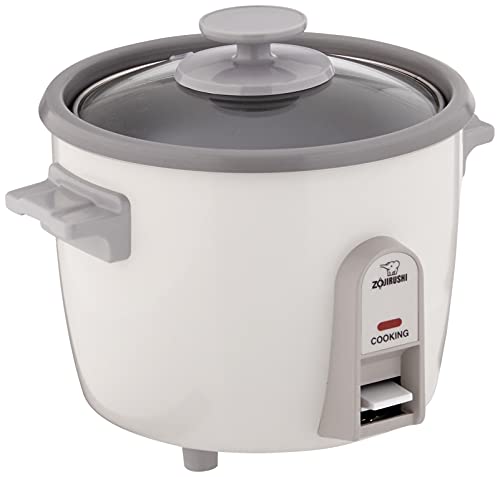
Zojirushi 3 Cup Rice Cooker/Steamer (White) — Best Simple Classic
In a list full of chips and pressure systems, the Zojirushi 3-cup is the reminder that the original electric rice cooker formula — a pot, a heater, a lever that clicks from Cook to Warm — still works beautifully for plain white rice and steaming. It is the pick for minimalists, students, and anyone who has ever bounced off a 40-page appliance manual.
Strengths
- Single-lever operation anyone can run half-asleep
- Doubles as a steamer for vegetables, dumplings and eggs
- Compact, light and famously long-lived design
Trade-offs
- No fuzzy logic: brown rice and grains need soaking and patience
- No timer or delay start
- 3-cup size is strictly for one to three people
| Specification | Detail |
|---|---|
| Capacity | 3 cups (per listing) |
| Type | One-lever cooker/steamer |
| Colour | White |
| Controls | Cook / Warm lever |
The virtue here is not nostalgia; it is failure-mode math. There is almost nothing on this cooker to break, misconfigure or update, and its cooking method — bring the pot to the boil, let the rice absorb, rest on warm — is exactly the method stovetop cooks used for generations, automated. For short- and medium-grain white rice, results are honestly good, and the steamer function earns its counter space in small kitchens.
Know its limits before buying: long-grain and brown rice benefit from a soak and a rest, and the keep-warm will slowly dry rice if left for many hours. Treat it as a cook-and-serve appliance rather than a hold-all-day one, and it will repay you with years of unglamorous reliability. There is a reason this design has sold, in evolving forms, for decades.
Best for: minimalists, students and small households cooking plain rice and steamed sides / Not suited for: brown-rice devotees, timer users, or families above three rice eaters
Check on Amazon to see the current price, configuration options and delivery terms for the Zojirushi 3-cup.
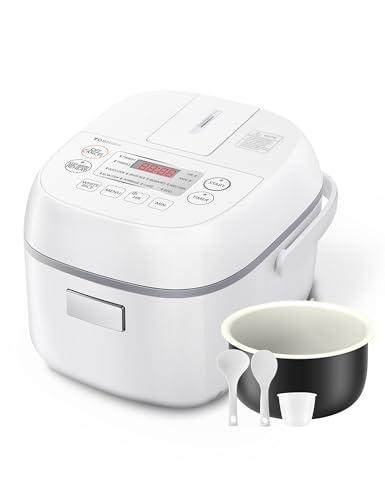
Toshiba Mini Rice Cooker (3 Cups Uncooked, White) — Best for Small Kitchens
The Toshiba Mini is the small cooker for people who still want the modern conveniences: proper fuzzy logic for better grains, a 24-hour delay timer so rice is ready when you walk in, one-touch operation, and a steamer basket — all sized for one to three people and the countertops that come with small kitchens.
Strengths
- Fuzzy logic at a mini size — better brown rice than one-lever minis
- 24-hour delay timer suits workday scheduling
- One-touch cooking keeps daily use effortless
Trade-offs
- 3-cup ceiling is firm — no cooking for guests in this pot
- Mini cookers’ parts (pots, lids) are model-specific; handle the coating with care
- White body, like all white minis, shows splashes
| Specification | Detail |
|---|---|
| Capacity | 3 cups uncooked, for 1–3 people |
| Technology | Fuzzy logic |
| Timer | 24-hour delay timer |
| Functions | Cooker, steamer, warmer |
| Colour | White |
The delay timer is the feature owners end up using daily. Load rice and water in the morning (or the night before, within food-safety sense), set the finish time, and the cooker soaks and cooks so the pot is at its rested best exactly at dinner. Fuzzy logic makes the soak productive rather than risky — the chip manages the phases instead of the rice sitting in warm water unmanaged.
As a steamer it punches above its size: fish fillets, gyoza, corn and eggs all cook in the basket while rice runs below, which is the entire dinner for one or two people in a single small appliance. If your kitchen is a studio or a small apartment galley, this is the rice cooker that respects both your space and your standards.
Best for: singles and couples in small kitchens who want timers and fuzzy logic / Not suited for: households above three people or batch cookers
Check on Amazon to see the current price, configuration options and delivery terms for the Toshiba Mini.

AROMA ARC-914SBD Digital Rice Cooker (4-Cup Uncooked) — Best Budget Digital
AROMA built its name on exactly this formula: a digital rice cooker that does the everyday jobs — white rice, brown rice, grains, steaming — in a modest 4-cup (uncooked) size, wrapped in stainless, at a tier that does not require a family meeting. The ARC-914SBD is our budget digital pick because it keeps the useful programs and skips the theatre.
Strengths
- Dedicated brown rice and grain settings beat one-lever results
- Steamer function and multicooker programs stretch its usefulness
- Stainless exterior wipes clean and suits most kitchens
Trade-offs
- Nonstick pot needs gentle utensils to stay nonstick
- Keep-warm is fine for an evening, not a full day
- No pressure or induction — texture ceiling is standard micom level
| Specification | Detail |
|---|---|
| Capacity | 4 cups uncooked / 8 cups cooked, 2 Qt |
| Model | ARC-914SBD |
| Exterior | Stainless steel |
| Functions | Rice, grains, steam, multicooker programs |
For most households stepping up from a stovetop pot or a one-lever cooker, this is the upgrade that actually registers: brown rice that finishes tender without a babysat second cycle, grains like quinoa and oatmeal handled by a program instead of a prayer, and a steamer tray that turns the rice cooker into a weeknight two-course machine.
The honest limitation is the same as every cooker at this tier: the inner pot’s coating is the lifespan of the appliance. Use the supplied paddle, wash it by hand or gently, and the cooker will serve for years; scour it with metal and you will be shopping again. Replacement-pot availability for AROMA models is generally good, which quietly extends the value case.
Best for: budget-conscious households wanting digital programs and a steamer in one / Not suited for: texture perfectionists or anyone rough on nonstick coatings
Check on Amazon to see the current price, configuration options and delivery terms for the AROMA ARC-914SBD.

AROMA ARC-150SB Digital Rice Cooker (20-Cup Cooked) — Best for Big Families
When the household is big, the gatherings are frequent, or meal prep means a mountain of rice on Sunday, the ARC-150SB is the pick: a 10-cup (uncooked) digital cooker that also slow-cooks and steams, in a stainless exterior sized for the job. It is less a personal appliance and more a small piece of catering infrastructure.
Strengths
- 20-cup cooked capacity handles parties, teams and batch prep
- Slow cooker and steamer functions replace a second appliance
- Digital controls keep big batches consistent
Trade-offs
- Large footprint and a big pot to wash for small batches
- Minimum batches still apply — tiny amounts cook unevenly in a big pot
- Overkill, in every sense, for one or two people
| Specification | Detail |
|---|---|
| Capacity | 10 cups uncooked / 20 cups cooked |
| Model | ARC-150SB |
| Functions | Rice cooker, slow cooker, food steamer |
| Exterior | Stainless steel |
Big cookers obey different physics: the depth of the rice bed means the soak and rest phases matter more, and this AROMA’s programs are tuned for those loads. Where it shines is repeatability at volume — the same pot of rice for twelve on Friday as for the family on Tuesday — and the slow-cook function means the appliance earns its storage space on non-rice days too.
Buy it with your real minimum batch in mind. If weekday cooking is two cups and weekend cooking is ten, a mid-size pick plus this one is not madness — it is how restaurants think. But if the big pot would only come out twice a year, rent the capacity instead: cook two batches in a 5.5-cup machine and keep the counter space.
Best for: large families, frequent entertainers and serious meal preppers / Not suited for: small households or anyone whose typical batch is under three cups
Check on Amazon to see the current price, configuration options and delivery terms for the AROMA ARC-150SB.
Comparison Table
| Pick | Badge | Key spec | Best for |
|---|---|---|---|
| CUCKOO Micom Fuzzy Logic Rice Cooker CR-0375FW (3-Cup Uncooked) | Best Overall | Fuzzy logic, 9 modes, 3-cup uncooked | one to three people who eat rice several times a week and want set-and-forget quality |
| CUCKOO Twin Pressure Induction Rice Cooker CRP-LHTR0609FW (6-Cup Uncooked) | Best Premium Pressure | Twin pressure + induction, 21 menus, 6-cup uncooked | daily rice households who want restaurant-level texture and menu depth |
| Zojirushi 3 Cup Rice Cooker/Steamer (White) | Best Simple Classic | One-lever, 3-cup, steamer function | minimalists, students and small households cooking plain rice and steamed sides |
| Toshiba Mini Rice Cooker (3 Cups Uncooked, White) | Best for Small Kitchens | Fuzzy logic mini, 24h timer, 3-cup | singles and couples in small kitchens who want timers and fuzzy logic |
| AROMA ARC-914SBD Digital Rice Cooker (4-Cup Uncooked) | Best Budget Digital | 4-cup uncooked digital, steamer, 2 Qt | budget-conscious households wanting digital programs and a steamer in one |
| AROMA ARC-150SB Digital Rice Cooker (20-Cup Cooked) | Best for Big Families | 20-cup cooked, slow cook + steam | large families, frequent entertainers and serious meal preppers |
How to Choose the Best Electric Rice Cookers
Choose the cooking technology first, because it decides the texture ceiling. One-lever cookers are simple, cheap and durable, and make good plain rice. Micom/fuzzy-logic cookers manage the whole cook curve and are visibly better at brown rice, mixed grains and forgiving imperfect water ratios — the right default for most homes. Induction heats the whole pot for evenness, and pressure cookers push past boiling point for the plump, glossy texture daily rice cultures prize. Each step up costs more and matters more the more often you eat rice.
Size second, and size honestly. Rice cooker cups are the ~180 ml measure in the box, and capacities are quoted uncooked unless the listing says cooked. Rough guide: 3 cups uncooked serves 1–3, 5.5–6 cups serves a family of four to six, 10 cups is entertaining and batch-prep territory. A cooker also has a minimum — big pots cook small batches badly — so match the machine to your Tuesday dinner, not your annual party.
Then look at the ownership details: a detachable inner lid and an auto-clean function make the cooker far easier to keep sweet; keep-warm should hold rice for an evening without drying it (and no cooker should hold rice indefinitely — refrigerate leftovers promptly); and the inner pot’s coating quality is effectively the appliance’s lifespan, so check that replacement pots exist for the model you choose.
Rice Cooker Cups, Water Ratios and Other Confusions, Explained
Almost every bad rice-cooker experience traces back to measurement. The plastic cup in the box is about 180 ml — roughly three-quarters of a US cup — and the water lines inside the pot are calibrated to that measure: two cooker-cups of rice, water to the “2” line. Use a US measuring cup for the rice and the pot’s lines for water and the ratio silently breaks, which is why the same machine gets praised and blamed in different kitchens.
Ratios still vary by rice: aged basmati wants less water, fresh jasmine a touch more, brown rice considerably more plus time. The programs on micom and pressure cookers encode those differences, which is the practical meaning of “fuzzy logic” — the machine adjusts the curve so you do not have to memorise a chart. Whichever cooker you buy, use its cup, its lines, and rinse rice until the water runs mostly clear for the cleanest flavour and texture.
Is a Pressure Rice Cooker Worth It?
For households that eat rice once a week, honestly, no — a good micom cooker like our Best Overall pick gets you most of the way there. For households that eat rice daily, the pressure difference is not subtle: grains cook above boiling point, absorb water more completely, and come out plumper, glossier and more distinct, with a gentle sweetness that plain cooking does not develop. It is the texture that premium rice restaurants in Seoul and Tokyo are selling, reproduced at home.
The twin-pressure generation, represented by the CUCKOO CRP-LHTR0609FW in our picks, adds a real choice: high pressure for sticky, chewy short-grain styles, no pressure for delicate long grains that would slump under pressure. If your kitchen cooks both Korean-style rice and jasmine or basmati in the same week, that flexibility — plus induction’s even heating — is what the flagship tier is actually for.
Rice Varieties and Their Programs: A Cook’s Field Guide
Short-grain white rice (the sushi and Korean table styles) wants full hydration and a gentle rest, and it is the rice pressure cookers transform most dramatically. Medium-grain (calrose-style) is the forgiving all-rounder of family kitchens. Long-grain jasmine should come out distinct and fragrant — it is the rice most easily ruined by excess water and by pressure applied carelessly, which is why twin-pressure cookers’ no-pressure mode exists. Basmati, aged and aromatic, wants the least water of the common rices and benefits from a soak that micom programs build in automatically.
Brown rice is a different food wearing a similar name: the bran layer slows water penetration, so it needs more water, more time and a proper soak — the exact combination fuzzy logic manages and one-lever cookers cannot. Black, red and wild rices behave like brown rice’s even tougher cousins and reward the mixed-grain programs on the CUCKOO and AROMA picks. Steel-cut oats and porridge belong on the porridge setting, where the cooker’s gentle curve prevents the boil-over that stovetop oats are famous for. The lesson across all of it: the program button is not decoration. Each encodes a water-and-temperature strategy, and using the right one is worth more than any hardware upgrade in this guide.
Keep-Warm, Food Safety and the Leftover Rice Rules
Cooked rice has a specific food-safety profile that every rice-cooker owner should know once and follow forever. Rice can carry Bacillus cereus spores that survive cooking; left at room temperature, cooked rice lets those spores germinate and produce toxins that reheating does not reliably destroy. The rules that follow from that single fact are simple: serve rice promptly, refrigerate leftovers within an hour or so in shallow containers, keep them no more than a few days, and reheat until steaming throughout, once.
Keep-warm mode sits in the middle of this picture. A quality cooker holds rice above the danger-zone temperature, which is why an evening on warm is fine — the picks in this guide hold temperature properly. What keep-warm is not is storage: overnight and beyond, rice dries, yellows and accumulates risk even in a good cooker. The premium models’ superior warm performance is about texture across an evening, not permission across a weekend. Cook the amount the meal needs, refrigerate the rest promptly, and fried rice tomorrow becomes a feature of the system rather than a gamble.
Inner Pots: Coatings, Care and When to Replace
In every cooker in this guide, the inner pot is both the cooking surface and the component that decides the appliance’s lifespan. Nonstick coatings — the standard across rice cookers — fail in predictable ways: metal utensils score them, abrasive pads thin them, and thermal shock (a hot pot plunged into cold water) stresses them. The care rules are correspondingly simple: serve with the paddle provided or silicone tools, wash with a soft sponge, and let the pot cool before washing. Followed, a coating lasts for years of daily use; ignored, it can be tired within a year.
Know the replacement signs: food sticking where it never used to, visible scratches through to the metal, or flaking — at which point the pot should be replaced, both for performance and for peace of mind. This is where brand choice quietly pays: AROMA, CUCKOO, Toshiba and Zojirushi all sell replacement pots for their mainstream models, turning a worn pot into a modest parts order instead of a new appliance. When you shortlist a cooker, check its replacement-pot availability the same day; it is the cheapest longevity insurance in the category, and the stainless-pot exception (some premium models) removes the question entirely for cooks who prefer to buy once.
Rice Cooker vs Multi-Cooker for Rice: An Honest Verdict
Every household with a multi-cooker eventually asks why a dedicated rice cooker exists. The answer is texture, timing and texture again. A multi-cooker’s rice mode is a competent sideline: it cooks rice well enough, especially white rice in family quantities. A dedicated micom cooker manages the soak and steam phases with a finesse the multi-cooker’s generalist programming does not attempt, holds rice on warm for an evening without the drying a pressure pot’s keep-warm can cause, and — the practical point — is free to make rice while the multi-cooker does the curry. In rice-daily households, the two appliances are partners, not rivals.
Where the multi-cooker wins the argument is the rice-weekly household with limited storage: one appliance, acceptable rice, no second pot to house. The deciding question is frequency, as it is throughout this guide. Eat rice four or more times a week and a dedicated cooker — even the simple Zojirushi — will justify itself in texture and convenience within a month. Eat it twice a month and the multi-cooker’s rice mode is the rational choice, and this guide’s picks will be here when your habits change.
One middle path deserves naming: the small dedicated cooker beside the big multi-cooker. A 3-cup Toshiba or CUCKOO handles the daily rice perfectly and parks in a corner, while the multi-cooker handles everything pressure-shaped. It is the configuration a surprising number of serious home cooks land on, and it costs less in total than one flagship appliance trying to be both.
Rice Storage, Rinsing Debates and Water: The Remaining Variables
Once the cooker is chosen, three variables still decide your results, and none of them is the machine. Storage first: rice is a pantry staple that quietly goes stale — oils in brown rice’s bran turn rancid within months, and even white rice loses its fresh aroma with age and warm storage. Buy in quantities your household uses within a few months, store airtight and cool, and treat the last scoop of an old bag with adjusted expectations: older rice absorbs more water, which is why the same cooker and the same ratio can drift across a bag’s life. Fuzzy logic compensates for some of that drift; your notes compensate for the rest.
Rinsing is the second variable, and the honest position is: rinse, mostly. Rinsing removes surface starch that makes grains gluey and carries away dust from milling and transport; the exceptions are enriched rices whose added nutrients you may prefer to keep, and risotto-style dishes where the starch is the point. Three or four changes of water, swirled gently, is enough — you are washing, not laundering, and the water need not run perfectly clear for family rice.
Water itself is the third: very hard water can leave rice with a faint mineral note and a duller surface, and heavily chlorinated water announces itself in delicate white rices. Most households will never notice either; the ones cooking premium short-grain in a flagship cooker — the audience of our premium pick — sometimes find filtered water worth the small trouble. The hierarchy to remember is ratio first, rice freshness second, water third. Get them in that order and any cooker in this guide will show you what it can really do.
A Note on Rice Cooker Timers and Morning Porridge
One under-sung use of the timer-equipped picks in this guide deserves its own paragraph: breakfast. Steel-cut oats or rice porridge loaded the night before and set to finish at waking is the single most civilised thing a rice cooker does — the Toshiba Mini’s 24-hour timer and the micom models’ porridge programs exist precisely for it. Use the porridge setting (it manages the foaming grains gently), keep the load modest, and refrigerate any leftovers promptly as you would any cooked grain.
The same timer logic serves the evening in reverse: rice set to finish as you walk in, rested and ready, removes the last excuse for the takeaway detour. Between the morning porridge and the evening rice, a timer-equipped cooker quietly works two shifts a day — which is how a single small appliance earns a permanent place on a crowded counter.
One Last Thing: The Paddle, the Cup and the Lid
Keep the measuring cup and paddle that came with your cooker, and keep them with the cooker. The cup is calibrated to the pot’s water lines — losing it and substituting a kitchen measure is the quiet beginning of a hundred disappointing batches, as the guide above explains. Replacement cups exist, but the habit of storing the original inside the pot costs nothing and prevents the problem entirely.
And wipe the lid’s underside and the steam vent after porridge and mixed-grain cooks, the two messiest programs. Starchy residue there is the usual source of the faint off-smell owners blame on the machine. Thirty seconds with a cloth after the messy cooks, and the cooker stays as neutral as the day it arrived — ready for plain rice that tastes of nothing but rice.
How to Use an Electric Rice Cooker for Perfect Rice Every Time
Technique matters more than the machine: the same cooker produces mediocre or excellent rice depending on five habits. These steps work for every pick in this guide, with the program names adjusted to your model.
- Measure with the cup that came in the box, and rinse the rice in a bowl, swirling and draining until the water runs mostly clear — this removes surface starch that makes rice gummy.
- Add water to the pot’s line for the number of cups you measured (for the matching rice type), then let the rice soak 20–30 minutes if your cooker does not do it automatically — micom and pressure models handle this in-program.
- Level the rice, wipe the outside of the inner pot dry, seat it in the cooker, and close the lid fully — a damp pot base or a tilted pot is a common cause of uneven cooking.
- Select the correct program (white, brown, mixed grain) rather than defaulting to white for everything; brown rice on a white cycle is the most common rice-cooker disappointment.
- When the cooker switches to warm, leave the lid closed for 10–15 minutes. This rest finishes the texture; opening early releases the steam the surface grains still need.
- Fluff with the paddle using a cutting-and-folding motion, serve, and either hold on warm for the evening or refrigerate leftovers promptly in shallow containers.
Common Buying Mistakes
Mixing measuring systems. A US cup of rice with water to the pot’s matching line over-waters every batch. Use the cooker’s own cup and lines together, always.
Skipping the rinse and the rest. Unrinsed rice turns gummy; unrested rice is wet on top and firm underneath. Rinse before, rest after — the cooker cannot do either for you (except the rest, if you let it).
Buying capacity for the party, not the week. A 10-cup cooker makes poor two-cup rice. Size for your normal batch; cook twice for the rare crowd.
Scouring the inner pot. Metal utensils and abrasive pads destroy the coating that makes the cooker work and last. Paddle only, gentle washing, and the pot will outlast the warranty by years.
Leaving rice on warm indefinitely. Keep-warm is for hours, not days. Rice held warm too long dries out and, more importantly, becomes a food-safety risk. Refrigerate leftovers and reheat them properly.
Final Recommendation
Start with the CUCKOO CR-0375FW if you want the modern default done well in a small size, or step up to the twin-pressure induction CRP-LHTR0609FW if rice is a daily centrepiece and texture is worth a flagship. Minimalists should take the Zojirushi classic and never think about their cooker again; small kitchens with schedules should take the Toshiba Mini; the AROMA ARC-914SBD is the budget digital done right, and the ARC-150SB feeds the crowds.
Whichever you pick, use its cup, rinse the rice, and let it rest. Those three habits are worth more than any single feature in this guide.
Shortlist first: CUCKOO Micom Fuzzy Logic Rice Cooker CR-0375FW (3-Cup Uncooked), CUCKOO Twin Pressure Induction Rice Cooker CRP-LHTR0609FW (6-Cup Uncooked), Zojirushi 3 Cup Rice Cooker/Steamer (White) — check price on Amazon for each before you decide.
Keep exploring the cooker cluster: Best 3 Cup Rice Cookers Best 4 Cup Rice Cookers Best 6 Cup Rice Cookers Best Cuckoo Rice Cookers Best Asian Rice Cookers Best Compact Rice Cookers
Frequently Asked Questions
What size rice cooker do I need for a family of four?
A 5.5- to 6-cup (uncooked) model is the usual family sweet spot, cooking roughly 11–12 cups of cooked rice at full load while still handling a 2-cup Tuesday batch well. Our CUCKOO pressure pick is exactly this size. If your family of four eats modest portions and rarely hosts, a 3-cup model like the Best Overall pick can still work — but you will run it at its ceiling often.
Are expensive rice cookers actually better?
In this category, measurably yes — up to a point. Fuzzy logic improves brown rice and forgiving-ness; induction evens the cooking; pressure changes the texture itself. The returns diminish with how rarely you eat rice: a daily rice household tastes the flagship difference at every meal, while a weekly rice household is better served by a good micom model and the money saved.
Can I cook other grains and foods in a rice cooker?
Yes — that is half the point of the digital models. Quinoa, oats, barley and mixed grains all have programs or easy adaptations on micom cookers, and most of our picks steam vegetables, dumplings, fish or eggs above the rice. Slow-cook-capable models like the big AROMA go further. Follow the manual’s liquid ratios for non-rice grains the first time.
Why did my rice come out mushy (or hard)?
Mushy almost always means too much water — usually from mixing a US measuring cup with the pot’s lines — or opening the lid during the rest. Hard centres mean too little water, an unsoaked brown-rice batch on a white-rice cycle, or a pot that was not seated flat. Fix the measurement first; it solves most cases on its own.
How long can rice stay on keep-warm?
Treat keep-warm as an evening-length feature: a few hours is fine on a quality cooker, and premium models hold texture better. Beyond that, rice dries out and food safety becomes the real issue — cooked rice should be refrigerated promptly and reheated thoroughly. When in doubt, refrigerate and microwave with a sprinkle of water.
Induction vs pressure rice cookers — what is the difference?
They improve different things. Induction is about heating: the whole pot becomes the heat source, so cooking is even top to bottom. Pressure is about temperature: sealing the pot raises the boiling point, so grains absorb water more completely and turn plumper and glossier. Flagships like our CUCKOO premium pick combine both, which is why they sit at the top of the category.


