Disclosure: airfryerkitchensupply.com is reader-supported. When you buy through links on our site, we may earn an affiliate commission at no extra cost to you.
Where to buy
Every linked pick in this guide to the best customer service microwaves was verified against Amazon’s catalog on 2026-11-21, so the model names and headline specifications below match the listings you will actually land on. Start with Panasonic NN-SN76LS 1.6 Cu.Ft Cyclonic Inverter Countertop Microwave, GE 1.6 Cu.Ft Countertop Microwave (Black Stainless Steel), Toshiba EM131A5C 1.2 Cu.Ft Countertop Microwave. Picks that could not be pinned to a verified listing are written unlinked and flagged honestly, with no link attached. Check the current price on Amazon from any pick’s link, because finishes, bundles and stock rotate often.
The best customer service microwaves are not a separate species of appliance — they are good microwaves from brands whose support systems actually work when you need them. That need arrives in predictable forms: a turntable plate chips in year two, a door latch wears, the manual is long gone, a warranty question needs a human answer, or an over-the-range installation part turns out to be missing from the box. When any of that happens, the difference between brands stops being about watts and starts being about parts catalogs, documentation, registration systems and how reachable a knowledgeable support team is.
This guide therefore ranks verified microwaves by the support ecosystem standing behind them: breadth of replacement parts, quality and availability of manuals and documentation, the maturity of the brand’s US service and support channels, and the sheer installed base that keeps parts flowing for years. Every linked model was verified on 2026-11-21. One rule governs everything below: this guide states no specific warranty durations or policy terms, because those vary by model, retailer and registration, and the honest advice is to confirm the current terms on the product listing and register your appliance when it arrives.
Read the picks as two decisions in one. First, the oven itself must fit your kitchen and cooking — capacity, power and features still matter, and each review covers them. Second, the badge tells you what kind of ownership support that model plugs you into. A cheap oven from a brand with no parts pipeline is expensive the first time a fifteen-dollar part fails; a mainstream model from a support-rich brand is cheap to keep alive for a decade.
In this guide
Quick Picks
Six verified models from support-strong brands made the cut. Each carries its own badge, and the same badge follows it into the full review below so you can track a recommendation from summary to verdict.
- Best Overall — Panasonic NN-SN76LS 1.6 Cu.Ft Cyclonic Inverter Countertop Microwave: A flagship inverter oven backed by the most established microwave-only support ecosystem in this guide. Best suited to buyers who keep appliances for a decade and want parts and documentation to match. Key spec: 1.6 cu ft / 1250W / Cyclonic Inverter + Genius Sensor.
- Best US Service Network — GE 1.6 Cu.Ft Countertop Microwave (Black Stainless Steel): A mainstream GE countertop oven standing in front of one of the largest appliance service infrastructures in the US. Best suited to buyers who value a national service footprint and easy parts sourcing. Key spec: 1.6 cu ft / 1150W / 8 convenience cook settings, fingerprint resistant.
- Best Value with Real Support — Toshiba EM131A5C 1.2 Cu.Ft Countertop Microwave: A sensor-equipped mid-size oven from a global electronics brand with established support channels. Best suited to buyers who want genuine features and a real brand behind them at a mid tier. Key spec: 1.2 cu ft / 1000W / smart humidity sensor.
- Best for Wear-Part Simplicity — Sharp SMC1662KS 1.6 Cu.Ft Countertop Microwave: A family Sharp built around the long-running Carousel platform, whose wear parts are standardized and easy to source. Best suited to practical owners who fix small things themselves. Key spec: 1.6 cu ft / 1100W / 13.6-inch Carousel turntable.
- Best Supported Over-the-Range — LG 1.7 Cu.Ft Over-the-Range Microwave with EasyClean: An over-the-range model from a global appliance major with extensive support infrastructure and documentation. Best suited to OTR buyers, whose ownership questions include installation and venting parts, not just cooking. Key spec: 1.7 cu ft / over-the-range / EasyClean interior.
- Best Budget with Brand Backing — Frigidaire 1.1 Cu.Ft Countertop Microwave (Stainless Steel): A compact Frigidaire — part of a major appliance group — with auto defrost and ten power levels. Best suited to budget buyers who refuse to buy a brand that might vanish. Key spec: 1.1 cu ft / 1000W / auto defrost settings.
How These Picks Were Chosen
Selection started from the verified microwave catalog and filtered for ownership support. The criteria: the brand maintains a real US parts channel for wear items like turntable plates, roller rings, filters and door parts; manuals and support documentation are published and findable by model number; the brand operates established customer support channels — phone, chat, online registration and troubleshooting resources — rather than a bare contact form; and the model belongs to a high-volume line, because volume is what keeps parts in production years after a model year ends.
Deliberately excluded: white-label and store-brand models whose listings could not be tied to a durable parts and documentation ecosystem, however attractive their specifications. Also excluded is any claim this guide cannot stand behind — you will find no invented warranty periods, no promised response times and no service ratings here. Support quality is described in structural terms you can verify yourself on the brand’s support pages before you buy, and each review tells you exactly what to check.
One more selection note deserves recording: this guide treated Amazon availability itself as a weak support signal. A model that a major brand lists and sells through the largest appliance channel in the country is a model with a living supply chain behind it — parts, documentation and successor models flow through the same river. That is not a guarantee, and the guide’s five structural checks remain the real test. But as a first filter for a keyword about service, presence in the verified catalog, from brands with the systems described above, proved a sound place to start.
The 6 Best Customer Service Microwaves

Best Overall: Panasonic NN-SN76LS 1.6 Cu.Ft Cyclonic Inverter Countertop Microwave
Panasonic is the rare brand whose entire microwave line is its own platform: it designs the inverter technology the rest of the industry licenses or imitates, publishes deep documentation by model number, and supports a long tail of parts for its high-volume ovens. The NN-SN76LS plugs you into that ecosystem at its flagship level.
Strengths
- Microwave-specialist brand with deep model documentation
- Huge installed base keeps wear parts available for years
- Mature inverter platform with established support knowledge
Trade-offs
- Premium tier — you pay for the platform as well as the oven
- Support is brand-channel based rather than local-store based
- Feature depth means the manual is worth actually reading
| Capacity | 1.6 cu ft |
| Power | 1250W |
| Power delivery | Cyclonic Inverter |
| Sensor | Genius Sensor cooking |
| Type | Countertop |
The support case starts with specialization. A company that sells microwaves as a core category maintains parts diagrams, model-specific manuals and troubleshooting flows for them as a matter of routine, and Panasonic’s Genius Sensor and inverter lines have been in continuous production long enough that common questions — sensor behavior, turntable parts, door components — are documented rather than mysterious. When you search a Panasonic model number, you find Panasonic answers.
The oven itself justifies the flagship slot on merit: Cyclonic Inverter delivery, Genius Sensor cooking and 1250W in a 1.6 cu ft family cavity. Buy it as the best-supported route to top-tier microwave cooking, register it on arrival, and keep the model number somewhere durable — with a brand like this, that number is a key that unlocks parts and documentation for the life of the appliance.
There is also a resale and hand-me-down dimension to support quality that rarely gets said aloud. A flagship Panasonic with a live parts trail holds its usefulness — and its value — when it moves to a relative’s first apartment or a second home, because the next owner inherits the same documentation and parts access. Appliances from vanished labels become e-waste at the first chipped platter. Buying into a durable ecosystem is therefore not only about your decade with the oven; it is about the oven having a second decade at all, which is the most sustainable outcome any purchase in this guide can claim.
Best for: long-term owners wanting the deepest microwave support ecosystem / Not suited for: buyers who prefer in-store service desks or the lowest tier
Check on Amazon — check price on Amazon for the current listing.

Best US Service Network: GE 1.6 Cu.Ft Countertop Microwave (Black Stainless Steel)
GE Appliances operates one of the biggest appliance service and parts operations in the United States, and that infrastructure is the product here as much as the oven is. The microwave itself is a sensible 1.6 cu ft, 1150W family model in fingerprint-resistant black stainless — the support network behind it is the headline.
Strengths
- Backed by a national appliance service and parts infrastructure
- Model-number parts lookup is a mature, well-trodden path
- Mainstream volume means wear parts stay in circulation
Trade-offs
- Countertop models are often handled as replace-or-part rather than bench repair
- Black stainless is a coated finish — clean it gently
- Fewer sensor luxuries than the Panasonic flagship
| Capacity | 1.6 cu ft |
| Power | 1150W |
| Programs | 8 convenience cook settings |
| Finish | Black stainless, fingerprint resistant |
| Type | Countertop |
For most owners, ‘customer service’ for a countertop microwave means three concrete things: can I get a replacement turntable or roller ring without a saga, can I find the manual and the right filter or part by model number, and can I reach a human or a competent self-service system when something odd happens. GE’s scale makes all three routine. Its parts ecosystem is built to serve an enormous installed base across every appliance category, and microwaves ride on that infrastructure.
Judge the oven on its own terms too: 1.6 cu ft covers family plates, 1150W sits right at packaged-food assumptions, the eight convenience settings cover daily work, and the fingerprint-resistant finish suits busy kitchens. It lacks the Panasonic’s inverter finesse, so defrost-and-sauce perfectionists should look up-list. For buyers whose priority is painless ownership inside the largest support machine in American appliances, this is the rational pick.
A concrete example clarifies what infrastructure means in practice. The glass turntable is the most commonly replaced microwave part in America — it is heavy, it is glass, and it meets tile floors. For a mainstream GE model, that plate is a commodity: orderable by model number from multiple parts channels, priced by competition. For an obscure label, the same plate can be a months-long hunt ending in a replacement oven. Multiply that one example across roller rings, filters and door parts over ten years, and the GE premium — where one exists at all — is revealed as an insurance policy with a very reasonable premium.
Best for: buyers who want national-scale parts and service backing / Not suited for: inverter perfectionists or the tightest budgets
Check on Amazon — check price on Amazon for the current listing.

Best Value with Real Support: Toshiba EM131A5C 1.2 Cu.Ft Countertop Microwave
The value trap in appliances is the no-name model with great specifications and no tomorrow. The EM131A5C is the opposite construction: a high-volume Toshiba with a smart humidity sensor, sold in numbers that guarantee a living parts and documentation trail, from a brand with established support channels in the US market.
Strengths
- High-volume model — parts and documentation follow volume
- Established global brand support channels
- Sensor features usually absent at this tier
Trade-offs
- Support runs through brand channels, not local dealers
- Mid-size cavity limits the largest dishes
- Conventional power delivery, not inverter
| Capacity | 1.2 cu ft |
| Power | 1000W |
| Sensor | Smart humidity sensor |
| Turntable | 12.4-inch removable |
| Extras | Mute function, ECO mode, easy-clean interior |
Volume is an underrated support feature. A model that sells in large numbers generates everything an owner needs years later: stocked turntable plates and roller rings, forum answers, video walkthroughs, and a manufacturer knowledge base that has seen your exact problem before. The EM131A5C is one of the most widely sold sensor microwaves in its class, and that ubiquity is a genuine ownership asset this guide weighs deliberately.
As an oven it holds its own in any company: the humidity sensor automates reheating, the mute function and ECO mode suit shared living, and 1000W matches packaged-food instructions exactly. Buyers who want flagship support depth should step up to the Panasonic; buyers who want a sensible oven whose brand will still answer for it in five years will find this the sweet spot of the group.
Toshiba’s position deserves one clarification for buyers comparing badges: this is a licensed, high-volume line produced at enormous scale, and scale is precisely what its support case rests on. The model’s ubiquity means its documentation is mirrored across retailer and support sites, its common questions are answered in public many times over, and its wear parts are stocked because thousands of owners need them monthly. Connoisseurs of corporate structure may prefer a wholly in-house brand; pragmatists will note that the EM131A5C owner searching for a roller ring at year six finds one — which is the only test that matters at year six.
Best for: mid-budget buyers wanting features plus a durable brand trail / Not suited for: buyers needing the largest capacity or inverter delivery
Check on Amazon — check price on Amazon for the current listing.

Best for Wear-Part Simplicity: Sharp SMC1662KS 1.6 Cu.Ft Countertop Microwave
Sharp’s support story is standardization. Its Carousel turntable platform has run for decades across a huge model range, which means the parts that actually wear or break — glass platters, roller rings, couplers — follow long-lived, widely stocked patterns. The SMC1662KS is the current family-size expression of that philosophy.
Strengths
- Carousel platform parts are standardized and widely stocked
- Long-running brand presence in US microwaves
- Simple, focused design means fewer exotic components
Trade-offs
- Less sensor automation than flagship rivals
- Support depth varies by component — electronics are brand-channel items
- Plain feature set next to combo models
| Capacity | 1.6 cu ft |
| Power | 1100W |
| Turntable | 13.6-inch Carousel, removable |
| Type | Countertop |
| Brand | Sharp |
Most microwave ‘repairs’ in real homes are not repairs at all: a chipped platter, a cracked roller ring, a lost manual, a worn door component. Ownership happiness is mostly the speed of solving those small problems, and standardized platforms solve them fastest. Sharp’s decades of Carousel production mean the SMC1662KS’s wear items sit in a deep, competitive parts market rather than a single fragile supply line.
The oven itself is a straightforward family tool: 1.6 cu ft, 1100W, a 13.6-inch turntable that handles big plates, and controls that ask little of the user. It will not out-sensor the Panasonic or out-network the GE. It will, however, be exceptionally easy to keep whole — and for owners who maintain their appliances rather than replacing them, that is a first-rank virtue.
Sharp also illustrates a quieter support virtue: continuity of interface. Owners replacing an older Sharp with this model find the control logic familiar, the turntable system identical in spirit, and the learning curve near zero. Brands that reinvent their interfaces yearly impose a small tax on every replacement; brands with platform discipline do not. For households that keep a microwave position filled for decades across two or three units, that continuity compounds into genuine ease — the new oven is understood the day it arrives, and its parts philosophy is the one the household already knows.
Best for: self-reliant owners who replace wear parts themselves / Not suited for: buyers wanting maximum automation or smart features
Check on Amazon — check price on Amazon for the current listing.
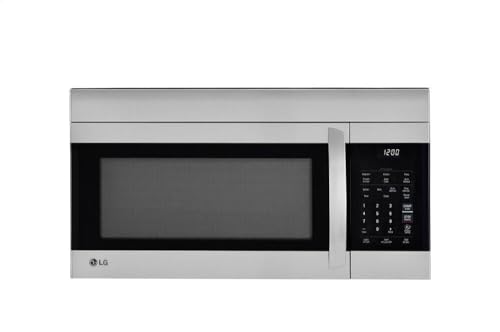
Best Supported Over-the-Range: LG 1.7 Cu.Ft Over-the-Range Microwave with EasyClean
Over-the-range ownership raises support stakes: charcoal filters, mounting hardware, venting adapters and cooktop lamps join the usual wear items, and installation questions arrive on day one. LG’s scale as a global appliance maker — with the documentation and parts systems that scale requires — is why its 1.7 cu ft OTR represents the type in this guide.
Strengths
- Global-major documentation and parts systems
- EasyClean interior reduces the most common OTR upkeep chore
- Full OTR parts trail: filters, lamps, mounting and vent pieces
Trade-offs
- OTR support questions often need an installer, not just the brand
- Stainless finish only in this verified listing
- Installation quality matters more than brand for venting results
| Capacity | 1.7 cu ft |
| Type | Over-the-range |
| Interior | EasyClean |
| Brand | LG |
An OTR microwave is half appliance, half building component, and its support needs reflect that: the manual’s venting diagrams, the correct charcoal filter for recirculating setups, the mounting template — these documents are the product experience. LG publishes and maintains this material at the standard its global volume demands, and its parts channels stock the consumables OTR owners actually reorder. That infrastructure, more than any single feature, is the pick’s argument.
The EasyClean interior deserves its mention on ownership grounds too: OTR cavities live above a cooktop and collect grease relentlessly, so an interior designed to wipe clean reduces the upkeep burden that makes owners neglect the appliance. Pair it with a competent installer for the venting work, register the unit, and keep the filter part numbers from the manual — OTR ownership then becomes a routine of cheap consumables rather than expensive surprises.
One OTR-specific support reality deserves emphasis: the charcoal filter. In recirculating installations the filter is a consumable with a finite life, and when it saturates, the hood quietly stops doing even its limited recirculating job. Owners of supported brands reorder the correct filter by part number in minutes; owners of orphaned models discover the filter was proprietary and is gone. If your LG will recirculate while a duct project waits — a common sequence — that reorder path is not a footnote. It is the difference between a functioning interim setup and a greasy kitchen, and it is exactly the kind of mundane excellence this guide exists to reward.
Best for: over-the-range buyers wanting a full parts and documentation trail / Not suited for: countertop shoppers or renters who cannot install OTR
Check on Amazon — check price on Amazon for the current listing.

Best Budget with Brand Backing: Frigidaire 1.1 Cu.Ft Countertop Microwave (Stainless Steel)
The budget end of the microwave market is crowded with labels that exist for a season. Frigidaire is the antidote in this guide: a compact, fairly priced oven whose badge belongs to a major appliance group with established US support, so the cheapest pick here still comes with a parts and documentation trail.
Strengths
- Major-group brand backing at a budget tier
- Auto defrost settings unusual at this level
- Compact size with full 1000W power
Trade-offs
- Budget construction means cosmetic parts are basic
- 1.1 cu ft limits family duty
- No sensor cooking at this tier
| Capacity | 1.1 cu ft |
| Power | 1000W |
| Programs | 10 power levels, auto defrost settings |
| Type | Countertop |
| Brand | Frigidaire |
What does brand backing buy at the budget tier? Realistically: a manual you can find by model number in five years, a turntable plate you can replace without hunting auction sites, and a support channel that exists if the unit misbehaves early. Those are modest promises, but they are exactly the ones no-name budget ovens break. Frigidaire’s group infrastructure keeps them as a matter of corporate routine.
The oven covers the compact brief properly — 1.1 cu ft, a full 1000W rather than the 700W many compacts settle for, ten power levels and auto defrost settings that lift it above bare-bones rivals. Dorms, offices, first apartments and small households get a real appliance with a real trail behind it. If it ever needs a wear part, you will be able to buy one; in this tier, that sentence is the whole review.
Offices are the Frigidaire’s second home, and defrosting is the office microwave’s secret workload: the forgotten frozen lunch, thawed at noon under time pressure. Auto defrost settings matter there precisely because the user is distracted — email open, meeting in five — and a program that meters the cycles beats a manual timer set by hope. The compact footprint fits the break-room counter, the 1000W keeps the queue moving, and when the inevitable plate chips, the brand trail this guide keeps praising turns a replacement into an order rather than an incident.
Best for: budget buyers who still want a durable brand behind the oven / Not suited for: families or sensor-cooking seekers
Check on Amazon — check price on Amazon for the current listing.
Comparison Table
| Pick | Badge | Key spec | Best for |
|---|---|---|---|
| Panasonic NN-SN76LS 1.6 Cu.Ft Cyclonic Inverter Countertop Microwave | Best Overall | 1.6 cu ft / 1250W / Cyclonic Inverter + Genius Sensor | long-term owners wanting the deepest microwave support ecosystem |
| GE 1.6 Cu.Ft Countertop Microwave (Black Stainless Steel) | Best US Service Network | 1.6 cu ft / 1150W / 8 convenience cook settings, fingerprint resistant | buyers who want national-scale parts and service backing |
| Toshiba EM131A5C 1.2 Cu.Ft Countertop Microwave | Best Value with Real Support | 1.2 cu ft / 1000W / smart humidity sensor | mid-budget buyers wanting features plus a durable brand trail |
| Sharp SMC1662KS 1.6 Cu.Ft Countertop Microwave | Best for Wear-Part Simplicity | 1.6 cu ft / 1100W / 13.6-inch Carousel turntable | self-reliant owners who replace wear parts themselves |
| LG 1.7 Cu.Ft Over-the-Range Microwave with EasyClean | Best Supported Over-the-Range | 1.7 cu ft / over-the-range / EasyClean interior | over-the-range buyers wanting a full parts and documentation trail |
| Frigidaire 1.1 Cu.Ft Countertop Microwave (Stainless Steel) | Best Budget with Brand Backing | 1.1 cu ft / 1000W / auto defrost settings | budget buyers who still want a durable brand behind the oven |
What “Good Customer Service” Means for a Microwave
Strip the phrase down to the moments of truth. A microwave asks for support in five situations: something in the box is missing or damaged on arrival; a wear part — turntable plate, roller ring, filter, lamp — needs replacing; the manual or a specification is needed and lost; the unit misbehaves and you need troubleshooting or a warranty conversation; and, for over-the-range models, installation and venting questions need authoritative answers. A brand serves you well when each of those moments has a prepared path: a parts lookup by model number, a documents library, a reachable support channel, and instructions written for owners rather than lawyers.
Notice what is not on that list: speed of cooking, sensor quality, design. Those decide which oven to buy; service decides how the ownership feels in years two through ten. This guide’s picks were chosen so you do not have to trade one for the other — each is a competent oven first — but when two models tie on cooking, the support ecosystem is the tiebreaker that matters most over a decade.
A practical habit multiplies any brand’s service quality: register the appliance when it arrives and photograph the model plate. Registration timestamps your ownership for any warranty conversation, and the model number is the key to every parts diagram and manual. It takes three minutes and converts every future support interaction from archaeology into lookup.
How to Check a Brand’s Support Before You Buy
- Find the parts page — search the brand’s site by a current model number and confirm you can reach diagrams and wear parts without an account or a phone call.
- Find the manual — the same model number should produce a full owner manual PDF, not just a quick-start leaflet.
- Find the registration path — online product registration should exist and take minutes.
- Find the support channels — look for published phone and chat routes plus a troubleshooting knowledge base, not only a contact form.
- Check consumables — for OTR models, confirm filters and lamps are listed as orderable parts for current models.
Run those five checks on any brand this guide did not cover before trusting it with a decade of breakfasts. The checks take ten minutes and they are structural — they test systems, not promises. A brand that passes all five will almost certainly handle your real problem well, because your real problem will be one of the five moments above, and each already has a path.
Warranty Conversations, Without the Fiction
This guide deliberately prints no warranty durations, coverage lists or claim promises for any pick, and you should be suspicious of any guide that does. Terms vary by model, change between model years, and can depend on registration and on where the unit was bought. The only authoritative sources are the warranty document for your exact model and the current listing at the moment of purchase — read them there, keep the receipt, and register promptly, since some brands tie enhanced handling to registration.
What can be said structurally: established brands run warranty processes as routine operations with case numbers, parts logistics and escalation paths, which is precisely why this guide weights brand infrastructure so heavily. When a problem arises, the strongest position an owner can be in is boring: registered product, receipt kept, model number photographed, symptoms described plainly. Set that up on day one and any of the six brands here will be straightforward to deal with.
The Parts That Actually Fail, and What They Teach
Rank microwave support needs by real-world frequency and a pattern emerges: glass turntable plates lead by a distance, followed by roller rings, then OTR consumables — charcoal filters and cooktop lamps — then door components and control wear. Almost nothing on that list is electronic, and almost all of it is cheap. The lesson for buyers is that microwave ownership is a logistics game played with small parts over long years, and the winners are the brands whose logistics never sleep: deep catalogs, model-number lookup, multiple retail channels for the same part.
This is also why the guide weighs installed base so heavily. A part stays in production while a population of owners keeps ordering it; populations belong to high-volume models from durable brands. When you buy one of the six picks here, you are joining a population large enough to keep its own supply chain alive — a collective benefit no individual specification can match, and the truest meaning of buying customer service in an appliance.
When to Repair, When to Replace: A Support-Aware View
Countertop microwaves occupy an unusual economic position: the appliance is inexpensive enough that major electronic repairs rarely make sense, yet durable enough that small parts keep it alive for a decade. The support-aware owner’s rule is simple. Wear parts — plates, rings, filters, lamps — are always worth replacing on a supported brand, because the part costs little and the oven’s remaining life is long. Control or magnetron failures on an aging countertop unit usually argue for replacement, and the supported brand makes even that painless: your documentation, your registration history and often your exact successor model are all in one ecosystem.
Over-the-range models shift the calculus, because installation labor is part of their cost. A failed OTR from a major brand justifies more repair effort — the bracket, duct and cabinet work are already done, and a like-for-like replacement or a genuine repair preserves that investment. This is one more reason the guide insists on brand depth for OTR picks specifically: the support question is not only whether a part exists, but whether the whole installed system remains serviceable.
Either way, the day-one habits decide the outcome years later. The registered owner with a photographed model plate gets the fast version of every one of these stories. The unregistered owner of an orphaned label gets the slow version, or no version at all. Customer service, in the end, is a partnership — and this guide has shown you both halves of it.
A Final Word on Buying the Ecosystem
Every guide in this program ranks products; this one has ranked the companies standing behind them, and the distinction will outlast any single model year. Models refresh, finishes rotate, and today’s flagship becomes tomorrow’s closeout — but a brand’s parts catalog, documentation library and support channels persist across all of it, quietly deciding how your purchase ages. The six picks here were chosen so that aging goes well: each plugs into an ecosystem with the scale and the habits to support a decade of ordinary failures, which are the only kind most owners ever meet.
Do your half. Register the appliance, photograph the model plate, download the manual, and note the wear-part numbers while everything is new and easy. Those fifteen minutes convert you from a person hoping for good service into a customer any good system can serve quickly. Combined with the right brand, that is the whole secret of painless appliance ownership — and it was never really about the microwave at all.
How to Set Up a New Microwave for Painless Ownership
Fifteen minutes of setup on day one saves every future support interaction. This is the routine this guide recommends for any pick above.
- Photograph the model and serial plate before the oven goes into its final position — that number is the key to parts, manuals and warranty handling.
- Register the appliance on the brand’s site the same day; keep the confirmation with your receipt.
- Download the full manual PDF to a place you will actually find it, and note the page with the parts diagram.
- Write down the wear-part numbers for your model — turntable plate, roller ring, and for OTR models the charcoal filter and lamp — in the manual or a kitchen note.
- Run the clock-setting and a cup-of-water test, and confirm the turntable seats and rotates smoothly before the packaging goes out.
- Keep the box and inserts until the first week of cooking is done; arrival problems are the easiest support cases while everything is at hand.
None of this is exciting, and all of it is the difference between a support interaction that takes one lookup and one that takes a week of emails. Ownership quality is mostly decided by preparation, and preparation is entirely in your control.
Keep the support file where the kitchen can find it: a single folder or phone note with the receipt, the registration confirmation, the model-plate photo and the wear-part numbers. When something fails at year four, the person holding that file resolves it in one session; the person without it starts from zero, on hold, guessing at a model number from memory. Brands build the systems this guide has described — but the file is the part of the system that lives in your house, and building it is the last step of the setup routine for a reason. Fifteen minutes, once, is the entire price of being the customer every support team wishes all customers were.
Common Buying Mistakes
Support pain is usually self-inflicted months earlier. Avoid these patterns.
- Never registering the appliance — then trying to reconstruct proof of purchase during a warranty conversation.
- Throwing away the model number — the plate is on the unit, but owners routinely install OTR models so the plate is awkward to read; photograph it first.
- Buying the no-name bargain — specifications fade; a missing parts pipeline is forever.
- Expecting a countertop oven to be bench-repaired like a range — many countertop issues resolve as parts swaps or replacement; set expectations by category.
- Ignoring consumables on OTR models — charcoal filters saturate and stop working long before they look dirty.
- Quoting a review’s warranty claim — including this guide’s, which makes none; terms live in your model’s documents, nowhere else.
Final Recommendation
If support depth is the priority, the Panasonic NN-SN76LS pairs the strongest microwave-specialist ecosystem with the best oven in this guide. Buyers who think in national infrastructure should take the GE; the Toshiba EM131A5C is the value pick with a real brand trail; the Sharp serves self-reliant owners with standardized parts; the LG covers over-the-range ownership; and the little Frigidaire proves a budget oven can still come from a house that answers. Whichever you choose, do the day-one setup routine — registration and a photographed model plate are the cheapest customer service you will ever buy.
If you are choosing between two picks in this guide and everything else is equal, choose the one whose brand you already own happily elsewhere in the house. Familiarity with a support system — its registration flow, its parts site, its documentation style — is worth real time across a decade of appliances, and households standardized on one or two ecosystems consistently report the smoothest ownership. It is the softest criterion in this guide and, over twenty years of kitchen equipment, possibly the one that saves the most hours.
The shortlist, linked: Best Overall — Panasonic NN-SN76LS 1.6 Cu.Ft Cyclonic Inverter Countertop Microwave; Best US Service Network — GE 1.6 Cu.Ft Countertop Microwave (Black Stainless Steel); Best Value with Real Support — Toshiba EM131A5C 1.2 Cu.Ft Countertop Microwave; Best for Wear-Part Simplicity — Sharp SMC1662KS 1.6 Cu.Ft Countertop Microwave; Best Supported Over-the-Range — LG 1.7 Cu.Ft Over-the-Range Microwave with EasyClean; Best Budget with Brand Backing — Frigidaire 1.1 Cu.Ft Countertop Microwave (Stainless Steel). Check price on Amazon from any of these links to see the current listing for that model.
Keep exploring the microwave range with these related guides: Best Countertop Microwaves For Reheating Food Best Countertop Microwaves With Inverter Technology Best Defrosting Countertop Microwaves Best Direct Vent Microwaves Best Countertop Microwaves With Trim Kits
Frequently Asked Questions
Which microwave brand has the best customer service?
There is no honest single answer, because service quality is structural rather than a score. Panasonic offers the deepest microwave-specialist ecosystem, GE the largest US service and parts infrastructure, and Toshiba, Sharp, LG and Frigidaire all maintain established channels. This guide ranks by the kind of support each brand is strongest in, and shows you the five checks to verify any brand yourself.
What support will I actually need for a microwave?
Mostly wear parts and documents: a turntable plate or roller ring, an OTR charcoal filter or lamp, the manual for your model, and occasionally a troubleshooting or warranty conversation. Bench repairs are comparatively rare for countertop models, which is why parts availability matters so much.
Should I register my microwave?
Yes, on the day it arrives. Registration timestamps ownership for any warranty handling, links your model to recall and support notices where applicable, and takes minutes. Photograph the model plate at the same time — that number unlocks every parts diagram and manual. It also costs nothing, which makes it the highest-value step in this entire guide.
Why does this guide not state warranty lengths?
Because they vary by exact model, model year and purchase channel, and printing a duration here would risk stating terms that do not apply to the unit you buy. The authoritative source is the warranty document for your model and the listing at purchase time. Any guide that prints confident warranty terms for a whole brand should be read with suspicion.
Are parts available for older microwave models?
For high-volume models from established brands, wear parts typically remain available for years, because the installed base keeps demand alive. Obscure and white-label models are the opposite: parts vanish with the production run. That asymmetry is a core reason this guide favors mainstream models.
What should I do first when a microwave misbehaves?
Note the model number and the exact symptoms, consult the troubleshooting section of your model’s manual, and check the simple causes first — power, door seating, turntable placement. If the problem persists, contact the brand’s support channel with that information ready; a prepared first contact resolves most cases fastest. Keep the model number, the receipt and a plain description of the symptoms together, and most support conversations become short, factual and quickly resolved.


