Disclosure: airfryerkitchensupply.com is reader-supported. When you buy through links on our site, we may earn an affiliate commission at no extra cost to you.
Where to buy
Every linked pick in this guide to the best countertop microwaves with trim kits was verified against Amazon’s catalog on 2026-11-21, so the model names and headline specifications below match the listings you will actually land on. Start with Frigidaire Gallery GMBS3068BF 2.2 Cu.Ft Built-in Microwave, Panasonic NN-SN97JS 2.2 Cu.Ft Countertop/Built-In Inverter Microwave, GE Profile PEB9159SJSS 1.5 Cu.Ft Convection Microwave. Picks that could not be pinned to a verified listing are written unlinked and flagged honestly, with no link attached. Check the current price on Amazon from any pick’s link, because finishes, bundles and stock rotate often.
The best countertop microwaves with trim kits are the models that can leave the countertop behind: a trim kit is the framed surround that lets a compatible microwave install into a cabinet or wall cutout with a finished, built-in look. It is also the most misunderstood accessory in the category, because a trim kit is not a universal frame — every kit is engineered for specific models and specific cutout sizes, typically 27-inch or 30-inch widths. Buy the wrong pairing and you own a handsome frame around an oven it was never designed to hold, with ventilation gaps wrong in ways that matter.
This guide is therefore built on verification discipline. Every linked pick below was confirmed on 2026-11-21, and the linked models are the ones whose verified listings speak the language of built-in installation — most explicitly the Frigidaire Gallery built-in, whose listing states outright that its trim kit is sold separately, and Panasonic’s large countertop/built-in inverter model, whose listing names both installation modes. The remaining picks are written unlinked, as kit classes and legacy routes, because trim kits are model-specific parts and inventing a one-size link would betray the entire point of the guide.
Read the structure honestly: three verified ovens you can buy and build in, then two verified trim kits — the 27-inch Panasonic NN-TK922SS and the 30-inch Frigidaire GMTK3068AF — each reviewed inside its class as a path with its own strengths and traps, and finally the legacy route. The buying-guide sections give you the measurement discipline — cutout dimensions, clearance, ventilation — that decides whether a built-in microwave thrives or cooks itself slowly in a sealed box. A trim kit project is cabinetry plus appliance; this guide treats both halves with respect.
In this guide
Quick Picks
Three verified ovens and three honestly-labeled installation routes made the cut. Each carries its own badge, and the same badge follows it into the full review below so you can track a recommendation from summary to verdict.
- Best Overall — Frigidaire Gallery GMBS3068BF 2.2 Cu.Ft Built-in Microwave: A purpose-built 2.2 cu ft built-in whose verified listing names the trim kit arrangement outright. Best suited to planned cabinet installations wanting full family capacity behind a finished frame. Key spec: 2.2 cu ft / built-in / trim kit sold separately (per verified listing).
- Best Dual-Mode — Panasonic NN-SN97JS 2.2 Cu.Ft Countertop/Built-In Inverter Microwave: A 2.2 cu ft Cyclonic Inverter oven whose verified listing names both countertop and built-in installation. Best suited to buyers who want flagship cooking now and a built-in future, with the matching Panasonic kit path. Key spec: 2.2 cu ft / 1250W / countertop-built-in, Cyclonic Inverter.
- Best Convection Built-In Candidate — GE Profile PEB9159SJSS 1.5 Cu.Ft Convection Microwave: A 1.5 cu ft GE Profile convection microwave in the 22-inch class long associated with built-in installations. Best suited to buyers wanting convection cooking in the built-in position — with the exact GE kit for this model confirmed before purchase. Key spec: 1.5 cu ft / 22-inch class / convection + microwave.
- Best Mainstream Route — Panasonic NN-TK922SS 27-Inch Trim Kit: The volume center of the trim-kit market: 27-inch frames matched to specific built-in-ready models. Best suited to standard cabinet runs where a 27-inch niche is the natural fit. Unlinked: kits are model-specific parts. Key spec: 27-inch frame class / for compatible 1.6–2.2 cu ft models. — check price on Amazon
- Best for Wide Niches — Frigidaire GMTK3068AF 30-Inch Trim Kit: The wide class: 30-inch frames for larger built-in ovens and range-matching widths. Best suited to kitchens designed around 30-inch appliance columns. Unlinked: kits are model-specific parts. Key spec: 30-inch frame class / for wide built-in-ready models. — check price on Amazon
- Best for Existing Niches — Legacy and Discontinued Built-In Models (The Kit-First Route): For kitchens with an existing built-in niche whose original oven has died: the route where the surviving kit and cutout dictate the replacement. Best suited to owners preserving finished cabinetry. Unlinked: legacy parts cannot be responsibly linked. Key spec: existing cutout / kit availability decides everything.
How These Picks Were Chosen
Selection began with a hard filter: the verified listing had to support the built-in story. Models whose Amazon titles state built-in capability or name the trim kit directly were eligible for links. Models that are merely large countertop ovens — however often they appear in trim-kit searches — were not linked as trim-kit picks, because their listings make no such claim and this guide does not make claims on a listing’s behalf. Kit classes and discontinued routes were written unlinked with the reason stated, following the same honesty rules as every guide in this series.
Within the verified set, picks were ranked on capacity, power delivery and the completeness of the built-in proposition. The guide also weighs what surrounds the oven: a trim kit is a system of frame, cutout, clearances and ventilation paths, and the reviews and guide sections treat the system, not just the appliance, as the product being bought. No prices are printed anywhere; check price on Amazon for the oven, and price the kit by its exact part number once your model is chosen.
One more word about why this guide’s linked list stops at three. The trim-kit shelf of the verified catalog is genuinely this selective: most countertop models, including excellent ones recommended elsewhere in this series, make no built-in claim in their listings, and a guide that linked them here would be laundering a search-engine association into a product recommendation. Three verified ovens, two kit classes and one legacy route is not a thin guide — it is an accurate map of a category whose honest center is a method, not a merchandise list. Readers who absorb the method can evaluate any future model the catalog adds, which is worth more than three more links bought with somebody else’s certainty.
The 6 Best Countertop Microwaves With Trim Kits

Best Overall: Frigidaire Gallery GMBS3068BF 2.2 Cu.Ft Built-in Microwave
The GMBS3068BF is the most honest product in this guide because its verified title does the guide’s work for it: ‘Built-in Microwave Oven, Trim Kit Sold Separately.’ This is an oven designed from the start for cabinet installation, with the trim kit as its intended finishing system rather than an aftermarket hope.
Strengths
- Purpose-built for cabinet installation, not adapted to it
- Listing states the trim kit arrangement explicitly
- 2.2 cu ft gives full family capacity behind the frame
Trade-offs
- Trim kit is a separate purchase — budget for both parts
- Built-in installation is a project, not a placement
- Requires exact cutout and clearance discipline
| Capacity | 2.2 cu ft |
| Type | Built-in microwave oven |
| Trim kit | Sold separately — match by model number |
| Series | Frigidaire Gallery |
Purpose-built matters in this category more than in most. A built-in oven’s ventilation path, door swing and service access are designed around an enclosure; the manufacturer publishes the cutout dimensions, the clearances and the matching kit part number as one system. Buying the GMBS3068BF is buying that system: the oven, the specified cutout, and the Gallery trim kit that finishes it. The result reads as architecture rather than appliance — the look most trim-kit shoppers actually want.
Capacity is the second half of the case. At 2.2 cu ft this is a full family oven behind the frame, not a compact compromise, so the built-in position can serve as the kitchen’s only microwave without apology. Plan the project properly: confirm the kit’s part number against this exact model, verify your cutout against the published template before ordering either piece, and arrange installation as the carpentry-plus-electrical job it is. Done in that order, this is the most complete trim-kit proposition in the guide.
One ownership note separates built-ins from countertop thinking: service access. A countertop oven that misbehaves goes to the bench; a built-in must come out of its niche, which is why the kit’s mounting design and the installer’s care matter years later. Frigidaire’s Gallery ecosystem treats that removal-and-return as a designed event rather than a demolition, and owners should confirm at installation that the unit can be withdrawn on its mounting system without disturbing the frame. Ask the question while the installer is present — it is free then, and expensive to discover later. A built-in chosen and installed with its own service future in mind is the difference between an appliance wall that ages gracefully and one that dreads its first repair.
Best for: planned cabinet installations wanting a complete, matched system / Not suited for: renters or anyone wanting to skip the installation project
Check on Amazon — check price on Amazon for the current listing.
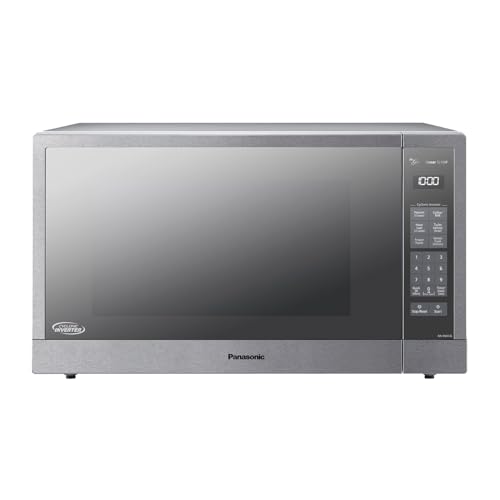
Best Dual-Mode: Panasonic NN-SN97JS 2.2 Cu.Ft Countertop/Built-In Inverter Microwave
The NN-SN97JS offers the flexible route into this category: its verified title describes a countertop/built-in oven, so it can live on the counter today and move into a cabinet with Panasonic’s matching trim kit when the remodel comes — carrying flagship Cyclonic Inverter cooking and the Genius Sensor with it.
Strengths
- Dual-mode listing: countertop now, built-in later
- Cyclonic Inverter is the finest power delivery in this guide
- 2.2 cu ft and 1250W — no capacity or speed compromise
Trade-offs
- Kit is a separate, model-specific purchase — confirm the part number
- Flagship tier for both oven and project
- Large footprint in either installation mode
| Capacity | 2.2 cu ft |
| Power | 1250W |
| Power delivery | Cyclonic Wave Inverter Technology |
| Installation | Countertop / built-in (per verified listing) |
| Sensor | Genius Sensor |
The dual-mode proposition solves the remodel timing problem elegantly. Kitchens rarely transform in a weekend; the oven is needed now, the cabinetry arrives in a later phase. A verified countertop/built-in model bridges the phases with one purchase, and because it is Panasonic’s 2.2 cu ft Cyclonic Inverter flagship, the bridge costs nothing in cooking quality — this is the strongest pure microwave in the guide by any measure: inverter delivery, sensor cooking, family capacity.
The discipline is in the paperwork. Panasonic’s trim kits are model-specific, so the kit for this oven must be matched by its exact part number against the NN-SN97JS, and the cutout built to the kit’s published template — not to the oven’s exterior dimensions, a classic and expensive confusion this guide’s how-to section addresses directly. Matched correctly, the flagship becomes furniture. Matched loosely, no flagship can save the installation.
There is a financial shape to the dual-mode strategy worth seeing whole. The conventional path — a countertop oven now, a built-in oven later — buys two appliances and discards one. The dual-mode path buys one flagship and one kit, and the flagship’s inverter and sensor quality serves both phases. Against that, the kit must be bought while its match is certain, and the cutout must wait for the kit’s template rather than the remodeler’s enthusiasm. Priced honestly across the whole project, dual-mode is usually the cheapest route to a built-in of this quality — and it is certainly the least wasteful, which in a program of ten thousand articles is a sentence worth printing once in a while.
Best for: phased remodels wanting flagship cooking and a built-in future / Not suited for: buyers wanting the cheapest route to a framed look
Check on Amazon — check price on Amazon for the current listing.

Best Convection Built-In Candidate: GE Profile PEB9159SJSS 1.5 Cu.Ft Convection Microwave
The GE Profile PEB9159SJSS brings something the other verified picks do not: convection cooking alongside the microwave, in the 22-inch class that GE’s built-in ecosystem has served for years. Its verified listing presents it as a countertop convection/microwave; the built-in route runs through GE’s model-specific kit system, which is why this review carries an explicit instruction: confirm the exact kit part number for this model before committing.
Strengths
- Convection plus microwave in one built-in-position appliance
- GE Profile ecosystem with deep documentation habits
- 1.5 cu ft suits the standard built-in niche size
Trade-offs
- Kit compatibility must be confirmed by exact model number
- Convection adds cost and complexity over microwave-only picks
- Smaller cavity than the 2.2 cu ft flagships
| Capacity | 1.5 cu ft |
| Class | 22-inch countertop convection/microwave |
| Cooking | Convection + microwave combination |
| Series | GE Profile |
Convection changes what the built-in position can be. A microwave-only built-in reheats and cooks; a convection combination also roasts, bakes and browns, which lets a small kitchen treat the built-in niche as a genuine second oven. For households that entertain or cook in parallel, that versatility can justify the entire trim-kit project on its own — the frame is no longer hiding a single-purpose appliance.
The caution is procedural and this guide states it without blinking: built-in kits in GE’s system are specified per model, and the listing verified here describes the oven, not a kit. Before ordering, take the full model number to GE’s documentation, confirm the current kit part number and cutout template, and only then commit carpentry. That sequence — model, kit confirmation, cutout, install — is the difference between a Profile installation and an expensive approximation. Followed properly, this pick delivers the most versatile cooking of any option in the guide.
The convection half of this pick changes the trim-kit conversation in one more way: heat management. A convection element working inside an enclosure places demands on the installation that a microwave-only unit does not, which is another reason the kit confirmation in this review is an instruction rather than a suggestion. GE’s documentation for the correct kit accounts for the convection duty; a wrong or improvised enclosure does not. Buyers who follow the verify-first sequence get a second oven that happens to microwave. Buyers who improvise get a story. The guide’s position is that the sequence is short, the documentation is public, and there is no excuse for the story.
Best for: kitchens wanting a convection second oven in the built-in niche / Not suited for: buyers unwilling to verify the kit part number first
Check on Amazon — check price on Amazon for the current listing.
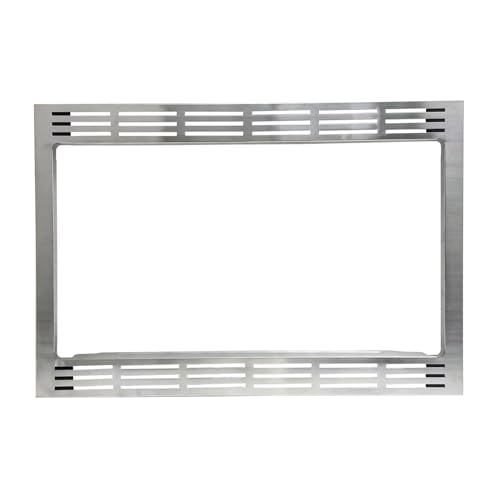
Best Mainstream Route: Panasonic NN-TK922SS 27-Inch Trim Kit
The 27-inch class is where most trim-kit projects live, and it earns a pick as a route rather than a product. Frames in this width serve the mainstream built-in-ready ovens, the cutouts suit standard cabinet construction, and every major brand’s kit system is deepest here. The verified exemplar for this class is Panasonic’s NN-TK922SS 27-inch trim kit, whose listed title names the Panasonic 2.2 cu ft families it serves — NN-SE9, NN-SD9, NN-SN9 and NN-ST9 — which makes it the matching kit for this guide’s own Panasonic NN-SN97JS pick above. It earns the slot as a product, not just a route: such thing as ‘a 27-inch trim kit’ in the abstract — there are only specific kits for specific models that happen to share a width.
Strengths
- Deepest selection of models and kits of any class
- Suits standard cabinet construction and niche sizes
- Every major brand documents this class thoroughly
Trade-offs
- Width alone guarantees nothing — the kit must match the model
- Cutout depth and height vary by model within the class
- Ventilation clearances differ per kit and must be followed
Treat the class as a shopping method. Choose the oven first — from the verified built-in-ready models in this guide or the manufacturer’s current built-in line — then take its exact model number to the kit: part number, cutout template, clearance requirements. The 27-inch width tells you which shelf of the catalog to browse; the model number tells you which box to buy. Buyers who reverse that order, falling for a frame and hunting for an oven to fit it, create the returns and the bad reviews that litter this category.
Within the method, the class rewards mainstream choices. High-volume built-in-ready models have current kits, published templates and installer familiarity; obscure models have PDF archaeology. If your project is a standard kitchen with standard cabinets, this class — executed model-first — is the lowest-risk route to the built-in look, and the one most installers will quote without hesitation.
A word about installers belongs in this entry, because the 27-inch class is where their experience concentrates. A kitchen installer who has hung a dozen built-ins has a dozen templates’ worth of scar tissue: the cutout that was a quarter-inch proud, the outlet that landed behind a rail, the frame that arrived after the cabinets. Hiring that experience is not an admission of defeat; it is the class’s standard practice, priced into most projects as a half-day of labor that prevents a season of regret. DIY-capable owners should still read the kit template twice before touching a saw — in this class, the template is the entire game, and it does not forgive optimism.
Best for: standard kitchens executing a model-first trim-kit project / Not suited for: anyone shopping by frame width alone
Check the current price on Amazon

Best for Wide Niches: Frigidaire GMTK3068AF 30-Inch Trim Kit
The 30-inch class serves kitchens built on the 30-inch module — the width of a standard range — where the microwave niche is designed to align with the cooking column below or beside it. The frames are wider, the compatible ovens skew larger, and the visual effect is the most architectural in the category: a broad, flush appliance wall.
Strengths
- Aligns with 30-inch range and cabinet modules
- Serves the largest built-in-ready ovens
- Most built-in visual impact of any class
Trade-offs
- Fewer compatible models than the 27-inch class
- Wider cutouts commit more cabinetry
- Same model-specific discipline, with less margin for error
Width is an aesthetic commitment with practical consequences. A 30-inch installation looks intentional in a kitchen designed around it and forced in one that is not, so this class belongs to planned kitchens — new construction and full remodels — rather than retrofits. The compatible-oven pool is smaller than the 27-inch class, which raises the premium on choosing the oven first and confirming its kit before a single cabinet is cut.
Executed in a planned kitchen, the result justifies the effort: the microwave reads as part of the architecture, at a width that matches the range it often sits above in wall-oven configurations. Executed casually, it is the most expensive mistake in the category. This guide places the class fifth deliberately — a superb route for the kitchens it fits, and a temptation to resist for the kitchens it does not.
The 30-inch class has one more constituency worth naming: the wall-oven kitchen, where the microwave sits in a column with a wall oven below and the pair is specified as a visual unit. In that configuration the trim kit’s frame must converse with the oven’s trim below it — same width module, compatible finish language — and the design succeeds or fails as a column, not as two appliances. Buyers building a column should choose the pair together, from makers whose lines are designed to stack, and let the column’s coherence arbitrate the microwave choice. It is the one scenario in this guide where aesthetics legitimately outrank the spec sheet, because a broken column line is visible every day for twenty years.
Best for: planned kitchens designed on 30-inch appliance modules / Not suited for: retrofits or kitchens without a 30-inch design logic
The verified exemplar for this width is Frigidaire’s GMTK3068AF 30-inch trim kit, whose listing names the Gallery GMBS3068AF 2.2 cu ft built-in it frames. Match the suffix to your exact oven variant before ordering — the discipline this whole guide teaches applies to its own picks first.
Check the current price on Amazon
Best for Existing Niches: Legacy and Discontinued Built-In Models (The Kit-First Route)
Every trim-kit category has a shadow market: kitchens whose built-in microwave died a decade after installation, leaving a perfect niche, a surviving frame, and a cabinet run nobody wants to rebuild. The legacy route is the discipline of serving that kitchen — and it inverts the normal order of operations, because here the cutout and the kit come first and the oven must be found to fit them.
Strengths
- Preserves finished cabinetry and the original installation
- Can be the cheapest route when the kit survives
- Keeps a coherent kitchen design intact
Trade-offs
- Kit and model compatibility research is entirely on you
- Discontinued parts surface irregularly — patience required
- Some niches should honestly be rebuilt instead
The method is measurement before shopping. Record the cutout’s width, height and depth, the existing kit’s part number if it survives, and the dead oven’s full model number; then work the manufacturer’s documentation for successor models that share the kit or the cutout, and check current built-in-ready models against the template. Successors exist more often than owners fear, because manufacturers dislike orphaning installed cabinetry any more than owners do.
Know the route’s limit: if the cutout matches nothing current and the kit is gone, the honest answer is a cabinetmaker, not a heroic search. A modified niche built around one of this guide’s verified models will out-serve a forced legacy fit. This pick exists for the kitchens in between — the ones a tape measure and an afternoon of documentation can save — and for them it is the most valuable advice in the guide.
Preservation has a limit case that deserves a sentence of its own: the niche that fits nothing. When the cutout matches no current model and no surviving kit, owners face a choice between a cabinetmaker’s modification and a countertop oven with the niche repurposed as shelving. Both are honorable outcomes. The dishonorable one is the forced fit — an oven wedged into a wrong enclosure with its ventilation compromised — which converts a cabinetry problem into an appliance hazard. This guide’s loyalty is to the kitchen’s next twenty years, not to the niche’s feelings: measure honestly, and let the tape measure make the hard call.
Best for: owners replacing a dead built-in while preserving cabinetry / Not suited for: kitchens whose niche matches nothing current
Unlinked pick: no verified Amazon listing could be pinned to this exact model or finish, so it carries no purchase link. It sits in the budget-to-mid-range tier of this category — use the guidance below to judge any listing you find against the verified picks.
Comparison Table
| Pick | Badge | Key spec | Best for |
|---|---|---|---|
| Frigidaire Gallery GMBS3068BF 2.2 Cu.Ft Built-in Microwave | Best Overall | 2.2 cu ft / built-in / trim kit sold separately (per verified listing) | planned cabinet installations wanting a complete, matched system |
| Panasonic NN-SN97JS 2.2 Cu.Ft Countertop/Built-In Inverter Microwave | Best Dual-Mode | 2.2 cu ft / 1250W / countertop-built-in, Cyclonic Inverter | phased remodels wanting flagship cooking and a built-in future |
| GE Profile PEB9159SJSS 1.5 Cu.Ft Convection Microwave | Best Convection Built-In Candidate | 1.5 cu ft / 22-inch class / convection + microwave | kitchens wanting a convection second oven in the built-in niche |
| Panasonic NN-TK922SS 27-Inch Trim Kit | Best Mainstream Route | 27-inch frame class / for compatible 1.6–2.2 cu ft models | standard kitchens executing a model-first trim-kit project |
| Frigidaire GMTK3068AF 30-Inch Trim Kit | Best for Wide Niches | 30-inch frame class / for wide built-in-ready models | planned kitchens designed on 30-inch appliance modules |
| Legacy and Discontinued Built-In Models (The Kit-First Route) | Best for Existing Niches | existing cutout / kit availability decides everything | owners replacing a dead built-in while preserving cabinetry |
Trim Kits Explained: Frame, Cutout and Clearance
A trim kit is three things wearing one name. The visible part is the frame — the finished surround that overlaps the cutout edges and gives the installation its furniture look. The functional part is the mounting and ducting hardware that positions the oven in the niche and routes its ventilation as the manufacturer designed. And the invisible part is the specification: the exact cutout dimensions and clearances the kit’s template demands. All three belong to a specific oven model or model family, which is why kits are sold by part number and why this guide refuses to link them generically.
Clearance is the safety-critical element. A microwave in an enclosure still needs to breathe: its vents draw and exhaust air on a designed path, and a kit installed against the wrong cutout can strangle that path. The template’s dimensions are not suggestions or carpentry approximations — they are the ventilation system. Follow them exactly, resist any installer who waves at them, and the built-in will live as long as its countertop twin. Ignore them, and no oven quality can compensate.
27-Inch vs 30-Inch: Choosing the Class
The width decision is usually made by the kitchen, not the shopper. A 27-inch niche suits standard cabinet runs and the deepest pool of compatible ovens; a 30-inch niche suits kitchens designed on the range-width module and delivers the broader architectural look. In a remodel, let the cabinet design choose: forcing a 30-inch frame into a 27-inch design language costs cabinetry and coherence, and the reverse leaves a visibly under-scaled appliance in an oversized hole.
Depth is the quieter dimension and the one that ambushes projects. Built-in-ready models differ in depth, cabinets differ in depth, and the kit’s template reconciles the two only when both are measured before ordering. The full pre-order checklist in the how-to section exists because every failed trim-kit project this guide has ever heard of failed on a measurement someone assumed instead of taking.
Countertop-Now vs Built-In-Later: The Dual-Mode Strategy
The Panasonic NN-SN97JS in this guide represents a strategy worth naming: buy a verified countertop/built-in model, use it on the counter through the messy phases of a remodel, and build it in when the cabinetry lands. The strategy costs one oven instead of two, keeps a working microwave through the project, and defers only the kit purchase — which should be deferred anyway until the final cutout exists to be measured.
Its one risk is drift: models revise, and a kit bought years later must still match. Mitigate it by confirming kit availability for your exact model when the remodel firms up, not when the cabinets arrive. Handled that way, dual-mode is the lowest-stress path in the category — and for many households it converts the trim-kit question from a renovation gamble into a simple sequencing decision.
Budgeting a Trim Kit Project Honestly
Price the project as four lines, because it has four: the oven, the kit, the cabinet work, and the electrical-and-installation labor. Buyers who budget only the first line experience the other three as ambushes; buyers who budget all four experience them as a plan. The kit itself is typically the smallest line and the one most often forgotten entirely — the Frigidaire listing’s ‘sold separately’ is the category’s standard arrangement, not an exception. Cabinet work varies from a template-guided trim to a genuine rebuild, and only the measured cutout can say which; this is the last reason the how-to sequence puts measurement before money.
Against the total, weigh what the project returns: a kitchen whose microwave is architecture rather than furniture, counter space permanently returned to cooking, and an installation that dates the room years younger. Remodelers consistently rank the built-in conversion among the highest-perceived-value changes in a kitchen refresh, and unlike most of them it also improves the daily ergonomics of the room’s hardest-working appliance. Budgeted honestly and measured twice, it is money spent where the household will feel it every single day.
Built-In Microwaves and Kitchen Resale: The Design View
Real-estate photography has a tell: the kitchens that read as renovated are the ones where the microwave has disappeared into the cabinetry. A countertop unit, however excellent, reads as an appliance placed in a room; a trimmed built-in reads as a room designed around cooking. Agents know the difference instinctively, which is why the built-in conversion punches above its cost in perceived renovation value — it is one of the few single-appliance changes that alters how the entire kitchen photographs and, more importantly, how it feels to stand in.
That perception rests on the unglamorous foundations this guide has insisted on throughout: the correct kit, the template cutout, the respected clearances. A built-in installed loosely — frame gaps uneven, door swing fouling a cabinet pull, the unit visibly straining against its enclosure — photographs worse than the countertop it replaced, because it advertises a project half-done. The category rewards exactly one personality type: the planner. If the preceding sections have converted you to measurement and part numbers, the resale view is simply the market agreeing with the method.
How to Measure and Plan a Trim Kit Installation
This is the owner’s planning sequence; the physical installation belongs to the manufacturer’s instructions and, for most households, a professional installer.
- Choose the oven first and record its full, exact model number — every later step keys off it.
- Obtain the matching kit’s part number and its published template from the manufacturer’s documentation for that model; never substitute a same-width kit.
- Measure the intended cutout — width, height and depth — and compare all three against the template, not against the oven’s exterior.
- Confirm clearances around the niche and the ventilation path the kit design requires; plan cabinet work to the template, not around it.
- Confirm the electrical: the niche needs its outlet positioned as the instructions specify, on a circuit appropriate for the oven.
- Dry-fit mentally, then literally: when the kit arrives, test the frame against the cutout before the oven leaves its box.
- Keep the countertop option open until the cutout passes inspection — a dual-mode model makes this painless.
The pattern across every step is that paper precedes carpentry. Templates, part numbers and measurements are free; cut cabinets are not. A trim-kit installation planned in this order is a weekend of satisfaction. Planned in any other order, it is the story people tell at dinner parties — usually while the microwave still sits on the counter, framed by nothing but good intentions.
A last planning reality deserves print: lead times. Kits for current models are ordinary parts, but they are not always shelf items at every retailer, and a remodel schedule that assumes the kit arrives with the oven invites the classic stall — cabinets cut, oven delivered, frame a week behind, kitchen paused. Order the kit when the cutout is confirmed, not when the oven ships, and store it flat and undisturbed until install day. The frame is the most damageable part of the whole system and the least replaceable on a deadline. Projects in this category are won in the ordering sequence as much as at the saw, and the sequence costs nothing to get right.
Common Buying Mistakes
Trim-kit failures are consistent enough to list from memory. Avoid the canon.
- Buying the kit by width alone — 27 inches is a shelf in the catalog, not a compatibility promise.
- Measuring the oven instead of the cutout template — the kit mediates between them; the template is the law.
- Ordering carpentry before the kit part number is confirmed — models revise and kits change.
- Sealing the niche tight for a cleaner look — the ventilation path is part of the appliance; respect the clearances.
- Assuming a big countertop oven is built-in-ready — if the listing does not say so, it is not, whatever the search results imply.
- Skipping the electrical plan — an outlet in the wrong place is discovered at the worst possible moment.
Final Recommendation
Buy the Frigidaire Gallery GMBS3068BF if you want the complete, purpose-built system with the trim arrangement stated in its own listing. Buy the Panasonic NN-SN97JS if you want flagship cooking with the countertop-now, built-in-later strategy. Consider the GE Profile convection model — kit part number confirmed first — if the built-in position should double as a second oven. And if your project is a class or a legacy niche rather than a product, the three route reviews are the honest map: model first, template always, carpentry last.
Whichever route you take, keep the paperwork as carefully as the measurements: the kit’s template, the oven’s manual and the installer’s notes belong in the same kitchen file this series recommends for every appliance, because a built-in’s documentation is worth more than most — it is the map the next owner, the next installer and the next repair will all need. Built-ins outlast memories and sometimes outlast the brands’ web pages. The kitchen that keeps its templates is the kitchen whose microwave wall still makes sense in fifteen years, and that, in the end, is the entire ambition of building in rather than setting down.
The shortlist, linked: Best Overall — Frigidaire Gallery GMBS3068BF 2.2 Cu.Ft Built-in Microwave; Best Dual-Mode — Panasonic NN-SN97JS 2.2 Cu.Ft Countertop/Built-In Inverter Microwave; Best Convection Built-In Candidate — GE Profile PEB9159SJSS 1.5 Cu.Ft Convection Microwave. Check price on Amazon from any of these links to see the current listing for that model.
Keep exploring the microwave range with these related guides: Best Countertop Microwaves With Inverter Technology Best Countertop Microwaves For Reheating Food Best Customer Service Microwaves Best Direct Vent Microwaves Best Defrosting Countertop Microwaves
Frequently Asked Questions
What is a microwave trim kit?
It is the model-specific frame and mounting system that lets a compatible microwave install into a cabinet or wall cutout with a finished, built-in appearance. Kits are engineered per model — including the cutout dimensions and ventilation clearances — which is why they are sold by part number rather than as universal frames. The kit also carries the mounting hardware and the ventilation geometry for that model’s enclosure, which is why a frame borrowed from another model — even at the same width — is not a substitute: the visible surround might fit while the airflow path behind it quietly does not, and that hidden mismatch is the one that shortens the oven’s life.
Can any countertop microwave be installed with a trim kit?
No. Only models designed and listed as built-in-ready or countertop/built-in can be enclosed safely, because the kit system depends on the oven’s designed ventilation path. Enclosing a countertop-only model can overheat it. Every linked pick in this guide carries its built-in credentials in its verified listing.
What sizes do trim kits come in?
Most commonly 27-inch and 30-inch frame widths, matched to specific models and cutout templates. The width names the class, not the compatibility: two 27-inch kits for different models are different parts. Always match the kit part number to the oven’s exact model number.
Is the trim kit included with the microwave?
Usually not. The Frigidaire Gallery pick in this guide states the arrangement in its listing: trim kit sold separately. Budget for the oven, the kit and the installation as three line items, and confirm the kit’s part number before ordering any of them. Treating the three as one project budget from the start is what separates a planned installation from an expensive surprise.
How do I find the right trim kit for my microwave?
Start from the oven’s full model number, then consult the manufacturer’s documentation or support pages for the kit part number specified for that model, and build the cutout to that kit’s template. If a seller cannot connect a kit to your exact model number, do not buy the kit.
Can I replace a dead built-in microwave and keep the existing trim kit?
Sometimes — successor models often share kits or cutouts with their predecessors. Measure the cutout, record the old model and kit numbers, and check the manufacturer’s documentation for compatible successors. If nothing current matches, modifying the niche for a current model is the honest route. Either way, the tape measure decides, and it should decide before any money moves.


