Disclosure: airfryerkitchensupply.com is reader-supported. When you buy through links on our site, we may earn an affiliate commission at no extra cost to you.
Where to buy
Every machine in this guide to the best coffee makers for hot coffee is sold on Amazon, and each verified pick links to its listing so you can check the current price on Amazon. We do not print prices — they change too often to stay honest — and every model below was matched against Amazon’s product data feed for this site before it earned a link.
- Café Specialty Drip Coffee Maker 10-Cup — check the current price on Amazon
- Technivorm Moccamaster KBGV Select — check the current price on Amazon
- Bonavita 8-Cup Coffee Maker BV1900TS — check the current price on Amazon
- Breville Precision Brewer BDC400 — check the current price on Amazon
- Cuisinart PerfecTemp 14-Cup Programmable Coffeemaker DCC-3200 — check the current price on Amazon
- Mr. Coffee 10-Cup Programmable Thermal Coffee Maker — check the current price on Amazon
The best coffee makers for hot coffee solve a problem most product pages never mention: a surprising share of home machines simply do not brew hot enough. Coffee needs water in a narrow, properly hot band to extract fully; fall short and the cup is sour and thin no matter how good the beans are. Then a second failure waits on the counter, as coffee that was brewed warm cools — or worse, cooks on a plate — before the second cup. This roundup judges machines on both halves of the problem: how hot and accurately they brew, and what happens to the heat afterwards.
A note on what ‘hot’ should mean, because hotter is not infinitely better. Water far above the proper band scorches extraction and pulls bitterness forward; the goal is the certified sweet spot, held steady from first drip to last. That is why this list favors SCA-certified brewers, adjustable-temperature machines, and designs that advertise hotter brewing as an engineering feature — every pick verified against Amazon’s product feed for this site, with no prices printed; check the current price on Amazon from each pick.
If your complaint has been ‘my coffee is never hot enough,’ start with the Café Specialty and the Moccamaster. If your complaint is ‘the second cup is always cold or cooked,’ start with the thermal picks. The guide below explains the physics so you can choose with confidence.
In this guide
Quick Picks
- Best Temperature Control: Café Specialty Drip Coffee Maker 10-Cup — best for drinkers who want to set brew temperature themselves and have it stay hot
- Best Overall Hot Brew: Technivorm Moccamaster KBGV Select — best for purists who want correct hot brewing with zero settings to manage
- Best Value Hot Brew: Bonavita 8-Cup Coffee Maker BV1900TS — best for value hunters who want certified-hot brewing plus thermal holding
- Best for Tinkerers: Breville Precision Brewer BDC400 — best for experimenters who want real temperature and flow control
- Best Hot Pot for a Crowd: Cuisinart PerfecTemp 14-Cup Programmable Coffeemaker DCC-3200 — best for large scheduled households wanting a genuinely hot big pot
- Best Brew-and-Hold Budget: Mr. Coffee 10-Cup Programmable Thermal Coffee Maker — best for budget buyers who want hot brewing and thermal holding in one machine
How These Picks Were Chosen
Candidates were verified against the site’s Amazon product data — model, listing, and every spec printed below — and then screened on the two variables this search lives on: delivered brew temperature (certification, adjustable ranges, and heater design) and heat retention after brewing (carafe type and realistic holding behavior). Machines with standard heaters and glass carafes and nothing else to say were cut; every survivor either brews demonstrably hotter, holds demonstrably longer, or does both at a fair tier.
The result spans one adjustable-temperature flagship, two certified brewers, a laboratory-grade tinkering machine, a big scheduled pot, and a budget brew-and-hold system — six different answers to the same complaint.
The 6 Best Coffee Makers for Hot Coffee

Café Specialty Drip Coffee Maker 10-Cup — Best Temperature Control
The Café Specialty suits the drinker who has measured their disappointment: coffee that arrives merely warm, from a machine that never quite reaches brewing temperature. Its dial-a-temperature control exists for you. It does not suit buyers who want zero setup, or thermal-carafe loyalists — this is a glass-carafe machine.
Strengths
- Adjustable brew temperature across a 185–205°F range — set it hot and keep it there
- SCA-certified brewing with four strength modes and precision control
- Auto Brew scheduling plus app control for the organised household
Trade-offs
- Glass carafe: brewed-hot coffee still cools on the counter faster than thermal
- Feature depth means a learning curve the first week
- Wi-Fi features are optional garnish — the value is the temperature control
| Capacity | 10-cup glass carafe |
| Temperature | Adjustable 185–205°F brew range |
| Strengths | 4 strength modes |
| Extras | Auto Brew, WiFi app control, SCA certified |
This is the rare mainstream machine that treats temperature as a setting rather than a hope. Light roasts want the top of the range to extract their sweetness; dark roasts give up their bitterness when you back a few degrees off; and the drinker who simply wants coffee that is properly hot in the mug can run the machine at the top of its band and stop reheating cups in the microwave. The SCA certification underneath means the shower and the flow are doing their jobs too, so the temperature you set is the temperature the grounds actually see. For the hot-coffee brief specifically, no other pick hands you this much direct control over the variable the keyword is about.
Start at the top of the range for a week, then step down two degrees at a time with your usual beans. Most drinkers find a personal setting a few degrees below maximum where the cup is still steaming but noticeably sweeter — that setting is yours; save it and stop experimenting.
Owning the Café Specialty means owning a small ritual of precision: the temperature setting becomes part of the household’s coffee knowledge, written on the bean bag or the cabinet card, adjusted when the roast changes. The app control, once configured, handles the schedule; the machine’s job is to hold its set temperature with a fidelity that cheaper electronics promise and rarely deliver. Care is standard — descale, wash, wipe — with one addition: change the temperature deliberately, by roast, rather than leaving the dial wherever the last experiment ended.
Best for: drinkers who want to set brew temperature themselves and have it stay hot / Not suited for: set-and-forget minimalists or thermal-carafe households

Technivorm Moccamaster KBGV Select — Best Overall Hot Brew
The KBGV Select suits the purist: no settings to manage because the machine’s copper element simply holds the correct hot brewing band every cycle, pot after pot, year after year. It does not suit anyone who wants a timer, a thermal carafe in this configuration, or a budget price.
Strengths
- Copper heating element holds the ideal hot brewing band with unusual consistency
- Full 40 oz pot brews in about six minutes — less time losing heat anywhere
- Hand-built and repairable, with a five-year warranty
Trade-offs
- Glass carafe version: drink promptly or decant to keep it hot
- No programmability or temperature dial — its answer is fixed, by design
- Premium tier cost
| Capacity | 10-cup / 40 oz (1.25 L) glass carafe |
| Heating | Copper boiling element |
| Brew time | About 6 minutes, full pot |
| Batch options | Full and half-batch selector |
Hot coffee fails in two places: water that never gets hot enough to extract, and coffee that cools while it waits. The Moccamaster eliminates the first failure completely — its element is famous in the industry for reaching and holding the proper band while cheaper machines wander ten degrees below it — and its six-minute brew attacks the second, because a pot that finishes fast spends less time dripping into a cold carafe. Pour within the first half hour and this is, plainly, the hottest-tasting honest cup in the roundup. Its discipline is the trade: Technivorm decided what correct is, and the machine does that, only that, extremely well, for a very long time.
Pre-warm the carafe with a rinse of hot tap water while you load the grounds on cold mornings. The first litre of coffee into a room-temperature glass carafe gives up noticeable heat to the glass; a warmed carafe keeps that heat in the cup instead.
Moccamaster ownership is famously uneventful, which for a temperature-obsessed buyer is the point: the element that brews at the correct band in month one is mechanically the same element in year nine, with no software between you and it. The glass carafe is the consumable — treat it kindly, replace it if life happens, and the brewer itself continues. Descale twice a year in average water, more in hard, and the machine’s one promise — correct heat, every pot — simply keeps being kept.
Best for: purists who want correct hot brewing with zero settings to manage / Not suited for: timer households or anyone wanting a thermal carafe at this price

Bonavita 8-Cup Coffee Maker BV1900TS — Best Value Hot Brew
The BV1900TS suits the drinker who wants certified-hot brewing and a thermal carafe without paying the European premium — one button, correct temperature, coffee that stays hot by insulation. It does not suit programmers, big households, or anyone who wants strength settings.
Strengths
- Powerful heater engineered to reach and hold proper brewing temperature
- SCA-certified pour-over style shower for even, full extraction
- Thermal carafe keeps the properly brewed coffee hot without a plate
Trade-offs
- One-button simplicity: no timer, no strength control
- 8-cup ceiling
- Carafe pour can be slow and deliberate — a known Bonavita quirk
| Capacity | 8-cup thermal carafe |
| Certification | SCA Certified Home Brewer |
| Heater | High-wattage element for full brewing temperature |
| Extras | Optional pre-infusion (bloom) mode |
Bonavita built its reputation on a single claim — we spend the money on the heater and the shower head, not the display — and the BV1900TS is that claim in product form. The element is deliberately overpowered for the machine’s size, which is exactly what holding temperature through a full brew requires, and the wide shower head wets the bed like a pour-over kettle. The optional pre-infusion mode, which pauses to let fresh grounds bloom, is a feature machines at twice the price advertise. Then the thermal carafe takes over the second half of the hot-coffee problem. As a system — brew hot, hold hot — it is the best value in this roundup by a clear margin.
Use the pre-infusion mode with beans roasted within the last few weeks and skip it with older beans; blooming stale coffee adds time without adding the aromatic payoff the mode exists to release.
Bonavita ownership is minimalist: one button, one carafe, one descale schedule. The thermal carafe’s interior wants a weekly soak to stay bright, and the shower head unscrews for the occasional deep clean. The BV1900TS has been in production long enough that its quirks are documented folklore — the deliberate pour, the carafe’s last-ounce reluctance — and its spares are findable. For a buyer who wants certified heat without a relationship with their coffee maker, this is the lowest-drama path in the roundup.
Best for: value hunters who want certified-hot brewing plus thermal holding / Not suited for: scheduling households or 12-cup families
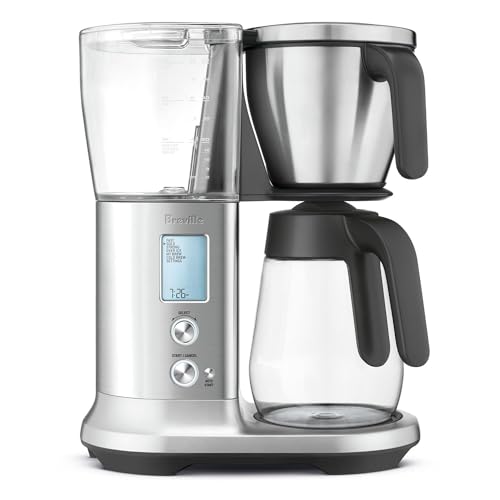
Breville Precision Brewer BDC400 — Best for Tinkerers
The Precision Brewer suits the experimenter: the drinker who adjusts bloom time, flow rate, and temperature the way other people adjust a recipe. Its Gold setting also makes it the easiest certified-standard cup in the list for anyone who never touches the menus. It does not suit the one-button buyer or small counters.
Strengths
- Gold setting brews to SCA standards automatically; custom mode adjusts temperature, bloom and flow
- Six brew modes including Strong, Iced and Cold Brew from one machine
- Large 60 oz capacity covers households and small gatherings
Trade-offs
- Big, tall, and premium-priced
- Menu depth is wasted on drinkers who will only ever press Gold
- Glass carafe — holding heat is not this configuration’s strength
| Capacity | 12-cup / 60 oz glass carafe |
| Modes | Gold, Fast, Strong, My Brew, Iced, Cold Brew |
| Control | Adjustable temperature, bloom time and flow rate |
| Certification | Gold mode meets SCA standards |
Temperature control on the Precision Brewer goes further than a hot-medium dial: in My Brew you set the actual brewing temperature, the bloom duration, and the flow rate, which makes this the only machine here that can chase a specific roast’s preferences rather than a generic ideal. For the hot-coffee drinker, the practical payoff is range — a delicate light roast brewed at the top of the band with a long bloom tastes like a different drink from the same beans on a standard machine. And when experimentation fatigue sets in, the Gold preset quietly brews the certified-standard pot. It is a laboratory that also makes breakfast.
Change one custom variable per week, not per pot, and keep notes on the bag of beans. The Precision Brewer rewards methodical tinkerers; random menu wandering produces random coffee and the false conclusion that the machine is inconsistent.
The Precision Brewer is the one pick here that rewards a notebook. Its custom profiles multiply quickly — one for the weekday blend, one for the light roast, one for cold brew — and owners who label them get a laboratory; owners who do not get a menu they are afraid of. Breville’s build quality supports the long game, and the glass carafe is replaceable when the inevitable happens. Budget the first weekend for learning the machine properly; after that, its depth becomes depth you own rather than depth you rent from the manual.
Best for: experimenters who want real temperature and flow control / Not suited for: one-button buyers or small kitchens

Cuisinart PerfecTemp 14-Cup Programmable Coffeemaker DCC-3200 — Best Hot Pot for a Crowd
The DCC-3200 suits the busy household that runs on a schedule and drinks a lot of coffee: PerfecTemp’s hotter brewing keeps a big pot honest, and the timer has it ready at the alarm. It does not suit slow grazers — a glass carafe on a plate is a countdown, not a storage system.
Strengths
- PerfecTemp system brews hotter than Cuisinart’s standard models — built for this brief
- 14-cup capacity with 24-hour programmability
- Brew-strength control and a proper 1–4 cup small-batch mode
Trade-offs
- Warming plate cooks coffee held beyond about an hour
- Large footprint
- Hot brewing at this size depends on descaling discipline — scale steals heat
| Capacity | 14-cup glass carafe |
| Heating | PerfecTemp hotter brewing |
| Programming | 24-hour programmable, auto shutoff |
| Small batch | 1–4 cup setting, brew-strength control |
Big pots are where weak heaters embarrass themselves, because fourteen cups of grounds absorb heat that an eight-cup bed never asks for. PerfecTemp is Cuisinart’s direct answer — a heating system tuned to deliver water at the hotter end of the proper band and hold it there through the full cycle — and in practice the DCC-3200’s big pot tastes brewed rather than diluted, which is not true of most large mainstream machines. Pair that with a real timer and this becomes the hot-coffee pick for households whose problem is not subtlety but volume at 6:30 a.m. Drink it within the plate’s honest window and it delivers exactly what the search promises.
Set the auto shutoff to the shortest window your household tolerates. The plate’s job is to bridge the gap between the first and second cup, not to keep a pot warm until lunch — treating it that way keeps every cup tasting like the first hour.
The DCC-3200’s ownership rhythm is the scheduled household’s rhythm: load at night, wake to the pot, rinse the carafe, repeat. Its size shows in small ways — a full 14-cup fill is a two-handed pour from the jug — and its PerfecTemp advantage depends on the descale schedule more than most, because scale taxes exactly the heater performance you paid for. Treat the descale as part of the programming, and the machine returns the favor every morning at temperature.
Best for: large scheduled households wanting a genuinely hot big pot / Not suited for: slow all-morning grazers or thermal devotees
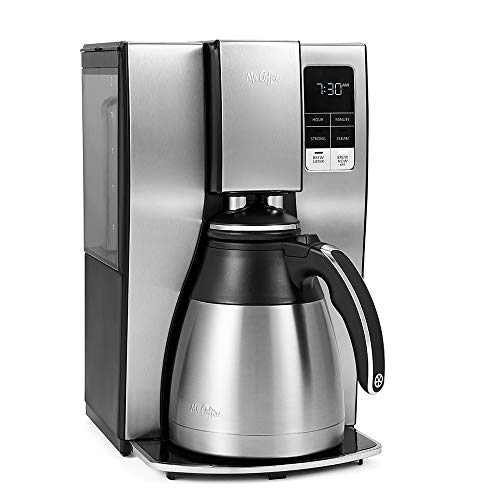
Mr. Coffee 10-Cup Programmable Thermal Coffee Maker — Best Brew-and-Hold Budget
This Mr. Coffee suits the budget buyer who refuses lukewarm: it brews hotter and faster by design, then hands the pot to an insulated thermal carafe instead of a plate. It does not suit buyers wanting certified precision or premium materials — it suits buyers wanting hot coffee, twice, at a fair price.
Strengths
- Engineered to brew hotter and faster than the brand’s standard models
- Insulated thermal carafe holds the heat the brew created — no plate cooking
- Programmable with a strong-brew selector for drinkers who like it punchy
Trade-offs
- Thermal carafe at this tier holds well, not exceptionally — plan on a two-hour prime window
- Fit and finish are budget-grade
- No certification — temperature performance is good, not laboratory-grade
| Capacity | 10-cup thermal carafe |
| Heating | Brews hotter and faster (manufacturer design) |
| Programming | Fully programmable |
| Extras | Strong Brew selector, auto pause |
Most budget machines lose the hot-coffee battle twice — a weak heater, then a plate that trades flavor for warmth. This Mr. Coffee is the inexpensive machine that refuses both losses: the brew side is tuned hotter and faster than the brand’s entry models, and the insulated carafe keeps that heat passively. The strong-brew selector matters here too, because a properly hot extraction at standard strength can taste sharp to some palates; the option to slow the brew and deepen the cup gives the drinker a real adjustment instead of a complaint. For the price tier, it is the complete hot-coffee system — and completeness, not any single spec, is what this search actually needs.
Thermal carafes at every price share one rule: fill them. A full carafe holds its temperature far longer than a half-full one, because the coffee itself is the insulation’s partner. Brew the batch your morning will actually finish.
Mr. Coffee ownership is the budget contract kept simple: mainstream parts, a carafe that can be replaced without drama, and controls that never need a firmware thought. The thermal carafe at this tier benefits from the tablet-soak routine to keep its interior — and therefore its coffee — fresh-tasting. The machine’s hotter-faster design brief means its element works hard; descaling on schedule is what keeps that brief true in year three. For the price, the ownership ask is small and the hot-coffee delivery is honest.
Best for: budget buyers who want hot brewing and thermal holding in one machine / Not suited for: precision seekers or premium-material buyers
Comparison Table
| Pick | Badge | Key spec | Best for |
|---|---|---|---|
| Café Specialty Drip Coffee Maker 10-Cup | Best Temperature Control | 10-cup glass carafe | drinkers who want to set brew temperature themselves and have it stay hot |
| Technivorm Moccamaster KBGV Select | Best Overall Hot Brew | 10-cup / 40 oz (1.25 L) glass carafe | purists who want correct hot brewing with zero settings to manage |
| Bonavita 8-Cup Coffee Maker BV1900TS | Best Value Hot Brew | 8-cup thermal carafe | value hunters who want certified-hot brewing plus thermal holding |
| Breville Precision Brewer BDC400 | Best for Tinkerers | 12-cup / 60 oz glass carafe | experimenters who want real temperature and flow control |
| Cuisinart PerfecTemp 14-Cup Programmable Coffeemaker DCC-3200 | Best Hot Pot for a Crowd | 14-cup glass carafe | large scheduled households wanting a genuinely hot big pot |
| Mr. Coffee 10-Cup Programmable Thermal Coffee Maker | Best Brew-and-Hold Budget | 10-cup thermal carafe | budget buyers who want hot brewing and thermal holding in one machine |
How to Choose a Coffee Maker That Brews Properly Hot
Understand the Temperature Band Coffee Actually Wants
Extraction chemistry sets the target: water in the high 190s to low 200s Fahrenheit dissolves coffee’s desirable compounds fully and evenly. Below the band, acids extract first and sugars lag — the sour, salty, thin cup that makes people add sugar to coffee they bought expensive. Above it, bitter compounds dominate. Good machines are not the ones that boil hardest; they are the ones that arrive in the band and stay there for the whole brew, which is a heater-power and control problem. This is why wattage, element design, and SCA certification — which tests delivered temperature — predict cup quality better than any feature list.
Why Your Current Machine Probably Brews Too Cool
Three quiet causes explain most lukewarm home coffee. First, cost: a heater sized to a price point sags as the reservoir empties. Second, scale: mineral deposits insulate the element a fraction more every month, so a machine that brewed hot in January drifts cool by winter. Third, physics: the first water through cold tubing and into a cold carafe gives up heat before it ever meets a mug. The fixes map to the picks — buy heater headroom, descale on schedule, and pre-warm the carafe — and they work on machines you already own, too.
Brewed Hot Is Only Half the Problem: Holding Heat
Coffee leaves the basket near the top of its drinking range and starts falling immediately. A warming plate arrests the fall by adding heat from below, which keeps the cup hot and steadily degrades it — an hour on a plate is a flavor tax everyone has tasted. A thermal carafe adds nothing and loses heat slowly through insulated walls, preserving both temperature and flavor for a realistic two-to-three-hour window. Air temperature matters too: a thermal pot brewed in a cold kitchen and opened twelve times loses its prime faster than the same pot left closed. Match the holding method to your drinking pattern, not your hopes.
Adjustable Temperature: Who Actually Needs It
If you drink one roast style year-round, a fixed, correct machine like the Moccamaster serves you perfectly. Adjustable temperature earns its complexity when you rotate roasts: light roasts are denser and need the top of the band to open up; dark roasts extract easily and taste smoother a few degrees lower. It also serves the drinker who simply wants the mug hotter at serving — running the top of the band and pre-warming the mug stacks small gains into a visibly steaming cup. The Café Specialty and the Breville exist for these drinkers; everyone else can let the engineers decide.
Pre-Warming, Mug Choice, and Other Free Heat
Before you spend anything, stack the free wins. Rinse the carafe with hot water before brewing. Warm the mug — a cold ceramic mug is a heat sink that can pull a serving down noticeably in the first minute. Brew the batch size you will drink within the hour rather than a monument pot. And keep the machine descaled: it is the cheapest temperature upgrade in coffee. These habits add more perceived heat than the gap between many machines, which is why the how-to section below treats them as procedure, not tips.
The Mug Matters: Serving Temperature Is a System
Coffee loses heat at every handoff: brewer to carafe, carafe to mug, mug to mouth. The last of those handoffs is the one drinkers control completely, and it is routinely the worst managed. A cold, thick ceramic mug can pull a fresh serving down by a startling margin in the first minute — the mug’s mass must be heated by the coffee before the coffee can stay hot in it. Pre-warming the mug with hot water while the pot brews is not fussiness; it is recovering degrees the brewer already paid to create.
Material compounds the effect. Thin glass feels elegant and sheds heat fastest; standard ceramic is the middle; double-wall insulated mugs and travel mugs hold serving temperature several times longer. The drinker who complains that coffee ‘goes cold while I drink it’ usually does not need a hotter machine — they need a warmer mug, and it is the cheapest fix in this entire guide.
Altitude, Voltage, and Other Reasons Your Mileage Varies
Two households can buy the same machine and honestly report different temperatures. Altitude is the quiet variable: water boils at a lower temperature in Denver than in Miami, and high-altitude brewing needs machines — like BUNN’s high-altitude variants and the adjustable models here — that account for it, or the extraction runs perpetually cool through no fault of the heater.
Voltage sag in older wiring, an outlet shared with a hungry appliance, and even a very cold kitchen all shave degrees at the margin. None of these is a reason to return a good machine; they are reasons the adjustable-temperature picks exist, and why the honest test of any brewer is the cup it makes in your kitchen, in your winter, at your altitude.
Descaling: The Temperature Maintenance Nobody Does
Scale is a mineral jacket on the heating element, and like any jacket it insulates — the element works harder, the water leaves cooler, and the drift is so gradual that drinkers blame their beans for a season before suspecting the machine. Hard water accelerates everything; a household on well water may need descaling three times as often as the manual’s gentle suggestion.
The routine is ten minutes: a descaling solution or a vinegar cycle per the maker’s instructions, followed by fresh-water rinses. Put it on the calendar rather than on your intentions. Of all the advice in this guide, this is the one that most reliably resurrects a machine its owner had written off as dying — because in temperature terms, it was, and now it is not.
How Hot Should the Cup Be at the Table?
Brewing temperature and drinking temperature are different numbers, and confusing them produces both scorched palates and disappointed drinkers. Coffee brewed in the proper band reaches the mug somewhere in the 170s Fahrenheit after carafe and mug losses, and most drinkers find their personal drinking sweet spot a little below that, where aromatics open up instead of steaming off. Coffee that must be blown on for five minutes was not better brewed; it was worse served.
This is why ‘hottest possible’ is the wrong target and ‘hot, held, and served well’ is the right one. The machines in this roundup aim at the correct brewing band; the drinker’s job — warm mug, prompt pour, thermal holding for the second cup — is to lose as few of those degrees as possible on the way to the table. Judge your setup by the temperature of the last sip of the second cup; that number is your system’s true score.
Hot Coffee Across the Day: A Practical Serving Strategy
Households that drink across many hours should stop asking one pot to do it. The strategy that preserves both heat and flavor is staged brewing: a full pot in a thermal carafe for the morning’s core hours, then a fresh half-batch — ideally on a machine with a real small-batch mode — when the afternoon demands it. Two good pots beat one heroic pot at every hour after the second.
For the work-from-home drinker, the desk changes the math: an insulated travel mug filled from the thermal carafe outperforms both the cooling ceramic mug and the microwave relay, and it travels to meetings. Build the system around where the coffee is actually drunk, and the ‘hot coffee’ problem mostly dissolves into logistics — which is good news, because logistics is solvable and physics is only manageable.
Hot Coffee in Winter Versus Summer: Adjusting Across the Year
The hot-coffee problem is seasonal in ways machines cannot see. In winter, kitchens are cold, carafes start cold, mugs start colder, and the same setup that satisfied in July delivers a tepid cup in January — the pre-warming habits in this guide matter most exactly when they feel most skippable. In summer the failures reverse: coffee brewed at the top of the band into a warm kitchen stays almost too hot to drink, and households drift toward the iced roundups without ever naming the cause.
Adjustable-temperature owners have a seasonal ritual available: a degree or two higher in the cold months, a touch lower in the warm ones, chasing the cup rather than the number. Fixed-temperature owners adjust the periphery instead — warmer mugs in winter, a rested pot in summer. Either way, treat the year’s first cold morning as a recalibration day, and the machine you already own will seem to improve with the weather.
Before You Buy: Testing Your Current Setup First
Before spending on a hotter machine, spend one morning measuring the problem you actually have — because ‘my coffee is not hot enough’ has three different causes with three different price tags. Brew a pot as usual. If the first cup, poured immediately into a pre-warmed mug, is satisfying, your brewer’s temperature is fine and your problem is holding: the answer is a thermal pick, not a hotter brewer. If the first cup is already tepid in a warm mug, descale and repeat once; scale acquits more machines than any other suspect.
Only if a descaled machine still pours a lukewarm first cup is the heater itself the limit — and that is the diagnosis that justifies this roundup’s certified and adjustable picks. The test costs one pot of coffee and saves the classic error of this category: buying a laboratory-grade brewer to solve a carafe problem, or a flagship carafe to solve a heater problem, and concluding from the unchanged cup that the whole category is a scam.
Write the result down — first-cup verdict, holding verdict — before you shop. The picks above are organised by exactly that split: Café Specialty and Moccamaster for the brewing half, the thermal Bonavita and Mr. Coffee for the holding half, and the Cuisinart for households whose test indicted volume more than temperature. Diagnose first, and the correct machine is usually the obvious one.
A Note on ‘Hot’ Versus ‘Fresh’: Do Not Confuse the Two
One last distinction protects buyers in this category from a subtle disappointment: hot and fresh are different virtues, and no machine confers the second by delivering the first. Coffee held at a perfect temperature for three hours is hot, and it is also three hours old, with the aromatics of its youth behind it. The thermal systems in this roundup slow that aging dramatically compared with a plate, but they do not stop time.
The practical synthesis is the staged approach from the serving-strategy section: brew the amount the next two hours will drink, at the right temperature, into insulation — then brew again when the day demands it. Hot coffee, in the end, is a freshness discipline with a temperature requirement, and the households that understand both halves stop chasing equipment and start enjoying the cup.
How to Get the Hottest Possible Cup From Any Coffee Maker
- Descale first. If the machine is more than a few months into hard-water service, run a descaling cycle before judging its temperature — scale is the most common and most reversible cause of a cooling brew.
- Pre-warm everything the coffee will touch: hot-water rinse for the carafe, hot water standing in the mugs while the pot brews. Pour the rinse water out at the last moment so the surfaces are at temperature when the coffee lands.
- Brew a full or near-full batch. Small batches in big machines lose proportionally more heat to the basket, the air, and the carafe walls; if you regularly brew small, use a machine with a genuine small-batch mode from this roundup.
- Serve the first cup immediately and close the thermal carafe or return the glass carafe to the (freshly timed) plate. Every open minute and every unnecessary pour-and-return costs the pot heat it never recovers.
- If a cup has still gone lukewarm, reheat it gently in short microwave bursts rather than one long blast — and treat the need as data: it means the holding half of your system, not the brewing half, is the one to upgrade next.
Common Buying Mistakes
- Assuming hotter settings always mean better coffee. Cranking an adjustable machine to its ceiling scorches dark roasts into bitterness. The band exists for a reason; adjust within it, by taste, a few degrees at a time.
- Blaming the machine for a scaled heater. Months of mineral buildup quietly steal the degrees you paid for. Descale before you replace — a shocking share of ‘broken’ hot-coffee complaints end at a descaling cycle.
- Storing coffee on a warming plate all morning. The plate keeps it hot and makes it taste progressively worse. Thermal holding, or brewing smaller batches more often, beats the plate for anyone drinking past the first hour.
- Brewing into a cold carafe in a cold kitchen. The first pot of a winter morning donates its heat to cold glass and steel. A thirty-second hot rinse is the cheapest temperature upgrade you will ever make.
- Buying temperature features and never setting them. An adjustable machine left on its factory default is a fixed machine at a higher price. Spend one week dialing in your roast, then write the setting down.
Final Recommendation
For direct control, the Café Specialty Drip is the hot-coffee pick: set the temperature, keep the temperature. For zero-effort correctness, the Moccamaster KBGV Select. For the same certified heat at a friendlier tier, the Bonavita BV1900TS — and for keeping the heat after brewing, its thermal carafe shows the way.
Tinkerers get the Breville Precision Brewer, crowds get the Cuisinart DCC-3200, and budget buyers get the complete brew-and-hold answer in the Mr. Coffee thermal. If your real problem is coffee going cold over a long morning rather than brew temperature itself, read the companion guide next: Best Coffee Makers For Keeping Coffee Hot, alongside Best Coffee Makers For Flavor, Best Coffee Makers For Drip Brewing, Best Coffee Makers For Home Use, and Best Coffee Makers For Ground Coffee.
Start your comparison with the three reader favourites: the Café Specialty Drip Coffee Maker 10-Cup, the Technivorm Moccamaster KBGV Select and the Bonavita 8-Cup Coffee Maker BV1900TS — check the current price on Amazon on each before you decide.
Frequently Asked Questions
What temperature should a coffee maker brew at?
The accepted band for drip brewing is roughly 195–205°F at the grounds. Machines certified by the Specialty Coffee Association are tested against standards in this range, which is why certification is the easiest shortcut for a shopper who wants properly hot coffee without measuring anything.
Why does my coffee maker brew lukewarm coffee?
The usual causes are an underpowered heater, mineral scale insulating the element, or heat lost to a cold carafe and cold mugs. Descale first, pre-warm the carafe, and if the coffee is still tepid, the machine’s heater is the limit — the picks in this roundup are chosen to not have that limit.
Does a thermal carafe keep coffee hotter than a warming plate?
For the first stretch they are comparable, and then they diverge: the plate can hold temperature indefinitely but steadily cooks the flavor, while a good thermal carafe holds a prime drinking window of roughly two to three hours with flavor intact. For taste across a morning, thermal wins.
Will brewing hotter make my coffee bitter?
Within the proper band, no — bitterness usually comes from over-extraction: too-fine grounds, too long a brew, or stale beans. Water genuinely above the band can add harshness, which is why adjustable machines should be tuned a few degrees at a time rather than maxed out.
How can I keep a single mug hotter for longer?
Pre-warm an insulated travel mug and pour the coffee into it straight from the brew, lid on. It is the same physics as the thermal carafe at single-cup scale, and it outperforms any ceramic mug on a desk by a wide margin.
Is the Moccamaster really hotter than cheaper machines?
Its copper element is engineered to reach and hold the proper brewing band, and its reputation rests on doing that consistently for years. Cheaper machines vary — some brew acceptably hot when new and drift as they scale, which is why maintenance matters as much as the badge.


