Disclosure: airfryerkitchensupply.com is reader-supported. When you buy through links on our site, we may earn an affiliate commission at no extra cost to you.
Where to buy
Here is where to buy the best blenders for grinding coffee recommended in this guide. Every linked model below was matched against Amazon catalog data before inclusion, and the short list is the same six picks reviewed in full further down. Start here if you already know your brief, or read the intro and buying guide first if you are still deciding — and check price on Amazon at the moment you order, because bundles and configurations change.
- Vitamix 5200 Professional-Grade Blender, 64 oz — Best Overall. Check the current price on Amazon before you order.
- Preethi Eco Plus Mixer Grinder, 110-Volt — Best for Small, Frequent Batches. Check the current price on Amazon before you order.
- AMPOIA 2000W Blender with 28 oz Grinder Cup — Best with a Dedicated Grinder Cup. Check the current price on Amazon before you order.
- Ninja Nutri-Blender Pro BN401, 1100 Peak W — Best Personal-Cup Pick. Check the current price on Amazon before you order.
- nutribullet Pro+ Personal Blender, 1200W — Best Compact Alternative. Check the current price on Amazon before you order.
- Hamilton Beach Power Elite 58148AG, 700W, 40 oz Glass Jar — Best Budget with Honest Limits. Check the current price on Amazon before you order.
Here is the honest headline coffee lovers deserve: a blender can grind coffee, and for some brews it grinds it well — but it is a blade device, and blade grinding is uneven by nature. The best blenders for grinding coffee are the ones that manage that unevenness best: small loads that stay on the blades, pulse control that lets you shake and redistribute, and enough power to powder a coarse batch quickly before friction heat dulls the aroma you are grinding to enjoy.
Match the machine to the brew and most people will be happy. Cold brew and French press forgive — even welcome — a coarse, rustic grind. Cafetera and drip sit in the middle, drinkable from a careful blender grind with a few fines in the cup. Espresso is the hard line: it demands a fine, uniform particle size that no blender delivers, and this guide will not pretend otherwise. If espresso is your daily drink, buy a burr grinder and let your blender do the hundred other jobs it is better at.
Every pick below was verified against Amazon catalog data for this site, and the reviews are written for coffee specifically — cup size, pulse behaviour and heat management — not recycled smoothie praise. Two picks earn their place through format alone: a mixer grinder and a dedicated grinder cup, because with coffee, keeping a small load trapped on the blades matters more than headline wattage.
Key Takeaways
- Best Overall: Vitamix 5200 Professional-Grade Blender, 64 oz — Variable speed dial gives true low-to-high control, not just presets.
- Best for Small, Frequent Batches: Preethi Eco Plus Mixer Grinder, 110-Volt — Mixer-grinder format is purpose-built for dry spices and pastes.
- Best with a Dedicated Grinder Cup: AMPOIA 2000W Blender with 28 oz Grinder Cup — Dedicated grinder cup keeps dry work out of the big pitcher.
- Every pick in this guide was verified against Amazon catalog data before inclusion; only verified models carry Amazon links.
- Match the machine to your real routine first and the headline specification second — fit decides satisfaction in this category.
In this guide
Quick Picks
The short version for best blenders for grinding coffee: six picks, six different briefs. Each badge below is used again at the top of that pick’s full review, so you can jump straight to the model that matches your kitchen.
- Vitamix 5200 Professional-Grade Blender, 64 oz — Best Overall. Variable speed dial gives true low-to-high control, not just presets. Check price on Amazon.
- Preethi Eco Plus Mixer Grinder, 110-Volt — Best for Small, Frequent Batches. Mixer-grinder format is purpose-built for dry spices and pastes. Check price on Amazon.
- AMPOIA 2000W Blender with 28 oz Grinder Cup — Best with a Dedicated Grinder Cup. Dedicated grinder cup keeps dry work out of the big pitcher. Check price on Amazon.
- Ninja Nutri-Blender Pro BN401, 1100 Peak W — Best Personal-Cup Pick. Small cups keep a modest load right on the blades. Check price on Amazon.
- nutribullet Pro+ Personal Blender, 1200W — Best Compact Alternative. Small-batch blending keeps ingredients moving without a tamper. Check price on Amazon.
- Hamilton Beach Power Elite 58148AG, 700W, 40 oz Glass Jar — Best Budget with Honest Limits. Glass jar resists staining and odours from strong ingredients. Check price on Amazon.
How These Picks Were Chosen
Coffee grinding criteria differ from general blending criteria in one decisive way: batch geometry beats power. We scored small-container options, personal cups and grinder jars highest, because 30 to 60 grams of beans in a giant pitcher mostly bounce and hide, while the same load in a small cup is struck repeatedly and powders far more evenly. Pulse control and a true low speed scored next, enabling the shake-and-pulse rhythm coffee needs.
We also weighted heat behaviour and cleanup. Coffee oils coat containers and stale quickly, so machines with a separable small cup you can dedicate to coffee scored over shared-pitcher-only designs. Burr grinders are not in this guide because the brief is blenders — but the guide says clearly where their territory begins. All ASINs were matched to verified Amazon catalog data held for this site.
The 6 Best Options: Best blenders for grinding coffee Reviewed

Vitamix 5200 Professional-Grade Blender, 64 oz — Best Overall
This pick earns the badge Best Overall in our best blenders for grinding coffee line-up. It suits buyers whose brief matches that badge closely, and it is included because its verified design — not its marketing — fits the job this article is about. Read the strengths and trade-offs together: every machine here gives something up, and the honest question is whether what it gives up is something your kitchen will ever miss.
Strengths
- Variable speed dial gives true low-to-high control, not just presets
- 64 oz container handles family batches in one blend
- Self-cleaning cycle makes daily use realistic on busy mornings
Trade-offs
- Tall container can be awkward under low wall cabinets
- Manual control means you learn timing by doing, not by program
- Premium tier positioning compared with basic blenders
| Specification | Verified detail |
|---|---|
| Container | 64 oz |
| Controls | Variable speed with high-speed switch |
| Blades | Stainless steel |
| Cleanup | Self-cleaning cycle |
In daily use, the Vitamix 5200 Professional-Grade Blender, 64 oz makes its case through consistency rather than novelty. It handles the core work of blenders for grinding coffee — the work described in the buying guide below — with the control its specification promises, and its limitations show up exactly where the trade-offs above say they will, not as surprises a month later. That predictability is what a recommendation should buy you: a machine whose good days and bad days you can picture before it arrives, matched against the meals and drinks your household actually makes.
Ownership is the second half of the story. Cleaning follows the pattern set out in this guide — deal with residue promptly, treat coatings and seals as the manufacturer directs after the kind of work blenders for grinding coffee involves, and the machine stays pleasant for years. Accessories and replacement containers are worth checking on the listing if your household is hard on equipment, because a popular, well-supported model is easier to keep in service than an obscure one, however strong its first impression.
Judged specifically on blenders for grinding coffee, the detail that matters most is this: container — 64 oz. That single verified fact shapes how the Vitamix 5200 Professional-Grade Blender, 64 oz behaves on the work this article covers, and it is the reason this model holds the Best Overall badge while other strong machines in the line-up take different badges. Its second strength underlines the point: 64 oz container handles family batches in one blend. Buyers who care about that combination will feel the benefit in the first week; buyers who do not should be honest with themselves and look at the neighbouring picks, because paying for a badge your kitchen never uses is the quietest waste in this whole category.
Before you order, run three quick checks against your own kitchen. First, the honest limitation: tall container can be awkward under low wall cabinets — decide whether that touches your routine at all. Second, the physical fit for blenders for grinding coffee: measure the counter or cupboard space this format needs, including room to open, lift or pull out whatever moves during use. Third, the household fit: if someone else will run this machine as often as you will, walk them through its controls in your head and ask whether the routine still sounds simple. A pick that passes all three checks on paper almost always pleases in person, and a pick that fails one usually annoys out of proportion to the failure.
Best for: buyers who want best overall performance for blenders for grinding coffee. Not suited for: buyers whose main brief is a different pick’s badge in this guide, or whose kitchen cannot accommodate this model’s size and format.
Check on Amazon — check the current price on Amazon for the Vitamix 5200 Professional-Grade Blender, 64 oz.
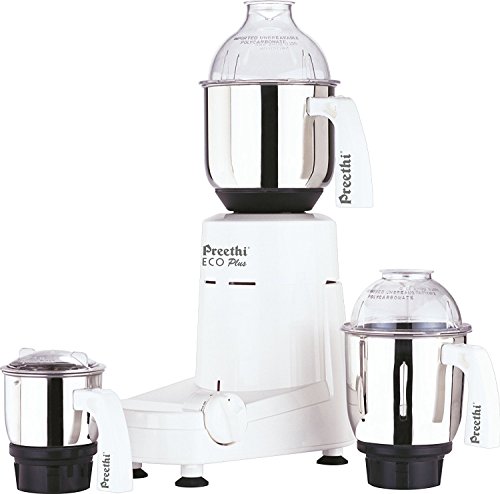
Preethi Eco Plus Mixer Grinder, 110-Volt — Best for Small, Frequent Batches
This pick earns the badge Best for Small, Frequent Batches in our best blenders for grinding coffee line-up. It suits buyers whose brief matches that badge closely, and it is included because its verified design — not its marketing — fits the job this article is about. Read the strengths and trade-offs together: every machine here gives something up, and the honest question is whether what it gives up is something your kitchen will ever miss.
Strengths
- Mixer-grinder format is purpose-built for dry spices and pastes
- Small jars excel at the small batches blenders struggle with
- 110-volt version is made for USA and Canada use
Trade-offs
- Not a full-size smoothie blender; jar sizes are modest
- Different workflow from a countertop blender takes adjustment
- Check jar configuration on the listing before ordering
| Specification | Verified detail |
|---|---|
| Format | Mixer grinder, 110-volt for USA/Canada (per Amazon title) |
In daily use, the Preethi Eco Plus Mixer Grinder, 110-Volt makes its case through consistency rather than novelty. It handles the core work of blenders for grinding coffee — the work described in the buying guide below — with the control its specification promises, and its limitations show up exactly where the trade-offs above say they will, not as surprises a month later. That predictability is what a recommendation should buy you: a machine whose good days and bad days you can picture before it arrives, matched against the meals and drinks your household actually makes.
Ownership is the second half of the story. Cleaning follows the pattern set out in this guide — deal with residue promptly, treat coatings and seals as the manufacturer directs after the kind of work blenders for grinding coffee involves, and the machine stays pleasant for years. Accessories and replacement containers are worth checking on the listing if your household is hard on equipment, because a popular, well-supported model is easier to keep in service than an obscure one, however strong its first impression.
Judged specifically on blenders for grinding coffee, the detail that matters most is this: format — Mixer grinder, 110-volt for USA/Canada (per Amazon title). That single verified fact shapes how the Preethi Eco Plus Mixer Grinder, 110-Volt behaves on the work this article covers, and it is the reason this model holds the Best for Small, Frequent Batches badge while other strong machines in the line-up take different badges. Its second strength underlines the point: small jars excel at the small batches blenders struggle with. Buyers who care about that combination will feel the benefit in the first week; buyers who do not should be honest with themselves and look at the neighbouring picks, because paying for a badge your kitchen never uses is the quietest waste in this whole category.
Before you order, run three quick checks against your own kitchen. First, the honest limitation: not a full-size smoothie blender; jar sizes are modest — decide whether that touches your routine at all. Second, the physical fit for blenders for grinding coffee: measure the counter or cupboard space this format needs, including room to open, lift or pull out whatever moves during use. Third, the household fit: if someone else will run this machine as often as you will, walk them through its controls in your head and ask whether the routine still sounds simple. A pick that passes all three checks on paper almost always pleases in person, and a pick that fails one usually annoys out of proportion to the failure.
Best for: buyers who want best for small, frequent batches performance for blenders for grinding coffee. Not suited for: buyers whose main brief is a different pick’s badge in this guide, or whose kitchen cannot accommodate this model’s size and format.
Check on Amazon — check the current price on Amazon for the Preethi Eco Plus Mixer Grinder, 110-Volt.

AMPOIA 2000W Blender with 28 oz Grinder Cup — Best with a Dedicated Grinder Cup
This pick earns the badge Best with a Dedicated Grinder Cup in our best blenders for grinding coffee line-up. It suits buyers whose brief matches that badge closely, and it is included because its verified design — not its marketing — fits the job this article is about. Read the strengths and trade-offs together: every machine here gives something up, and the honest question is whether what it gives up is something your kitchen will ever miss.
Strengths
- Dedicated grinder cup keeps dry work out of the big pitcher
- High-speed motor suits short, intense grinding bursts
- Big pitcher still covers smoothies and frozen drinks
Trade-offs
- Grinder cup is small for large spice or grain batches
- Lesser-known brand support network than the big names
- High speed demands short bursts and rest intervals on dry loads
| Specification | Verified detail |
|---|---|
| Pitcher | 70 oz |
| Grinder | 28 oz grinder cup (per Amazon title) |
| Power | 2000W (per Amazon title) |
| Blade | 6-leaf blade |
In daily use, the AMPOIA 2000W Blender with 28 oz Grinder Cup makes its case through consistency rather than novelty. It handles the core work of blenders for grinding coffee — the work described in the buying guide below — with the control its specification promises, and its limitations show up exactly where the trade-offs above say they will, not as surprises a month later. That predictability is what a recommendation should buy you: a machine whose good days and bad days you can picture before it arrives, matched against the meals and drinks your household actually makes.
Ownership is the second half of the story. Cleaning follows the pattern set out in this guide — deal with residue promptly, treat coatings and seals as the manufacturer directs after the kind of work blenders for grinding coffee involves, and the machine stays pleasant for years. Accessories and replacement containers are worth checking on the listing if your household is hard on equipment, because a popular, well-supported model is easier to keep in service than an obscure one, however strong its first impression.
Judged specifically on blenders for grinding coffee, the detail that matters most is this: pitcher — 70 oz. That single verified fact shapes how the AMPOIA 2000W Blender with 28 oz Grinder Cup behaves on the work this article covers, and it is the reason this model holds the Best with a Dedicated Grinder Cup badge while other strong machines in the line-up take different badges. Its second strength underlines the point: high-speed motor suits short, intense grinding bursts. Buyers who care about that combination will feel the benefit in the first week; buyers who do not should be honest with themselves and look at the neighbouring picks, because paying for a badge your kitchen never uses is the quietest waste in this whole category.
Before you order, run three quick checks against your own kitchen. First, the honest limitation: grinder cup is small for large spice or grain batches — decide whether that touches your routine at all. Second, the physical fit for blenders for grinding coffee: measure the counter or cupboard space this format needs, including room to open, lift or pull out whatever moves during use. Third, the household fit: if someone else will run this machine as often as you will, walk them through its controls in your head and ask whether the routine still sounds simple. A pick that passes all three checks on paper almost always pleases in person, and a pick that fails one usually annoys out of proportion to the failure.
Best for: buyers who want best with a dedicated grinder cup performance for blenders for grinding coffee. Not suited for: buyers whose main brief is a different pick’s badge in this guide, or whose kitchen cannot accommodate this model’s size and format.
Check on Amazon — check the current price on Amazon for the AMPOIA 2000W Blender with 28 oz Grinder Cup.
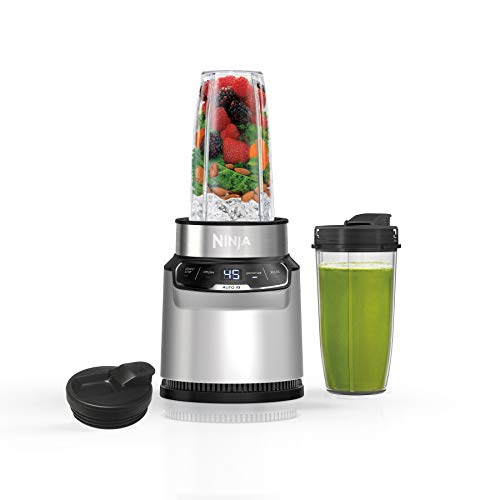
Ninja Nutri-Blender Pro BN401, 1100 Peak W — Best Personal-Cup Pick
This pick earns the badge Best Personal-Cup Pick in our best blenders for grinding coffee line-up. It suits buyers whose brief matches that badge closely, and it is included because its verified design — not its marketing — fits the job this article is about. Read the strengths and trade-offs together: every machine here gives something up, and the honest question is whether what it gives up is something your kitchen will ever miss.
Strengths
- Small cups keep a modest load right on the blades
- Auto-iQ programs remove guesswork for repeat blends
- Blend-in-cup format means minimal washing up
Trade-offs
- No full-size pitcher for family batches or hot liquids
- Cup format is wrong for large dry batches
- Extractor texture differs from high-performance pitcher blenders
| Specification | Verified detail |
|---|---|
| Power | 1100 peak watts (per Amazon title) |
| Cups | (2) 24-oz to-go cups |
| Programs | 2 Auto-iQ programs |
| Cleanup | Dishwasher safe |
In daily use, the Ninja Nutri-Blender Pro BN401, 1100 Peak W makes its case through consistency rather than novelty. It handles the core work of blenders for grinding coffee — the work described in the buying guide below — with the control its specification promises, and its limitations show up exactly where the trade-offs above say they will, not as surprises a month later. That predictability is what a recommendation should buy you: a machine whose good days and bad days you can picture before it arrives, matched against the meals and drinks your household actually makes.
Ownership is the second half of the story. Cleaning follows the pattern set out in this guide — deal with residue promptly, treat coatings and seals as the manufacturer directs after the kind of work blenders for grinding coffee involves, and the machine stays pleasant for years. Accessories and replacement containers are worth checking on the listing if your household is hard on equipment, because a popular, well-supported model is easier to keep in service than an obscure one, however strong its first impression.
Judged specifically on blenders for grinding coffee, the detail that matters most is this: power — 1100 peak watts (per Amazon title). That single verified fact shapes how the Ninja Nutri-Blender Pro BN401, 1100 Peak W behaves on the work this article covers, and it is the reason this model holds the Best Personal-Cup Pick badge while other strong machines in the line-up take different badges. Its second strength underlines the point: auto-iQ programs remove guesswork for repeat blends. Buyers who care about that combination will feel the benefit in the first week; buyers who do not should be honest with themselves and look at the neighbouring picks, because paying for a badge your kitchen never uses is the quietest waste in this whole category.
Before you order, run three quick checks against your own kitchen. First, the honest limitation: no full-size pitcher for family batches or hot liquids — decide whether that touches your routine at all. Second, the physical fit for blenders for grinding coffee: measure the counter or cupboard space this format needs, including room to open, lift or pull out whatever moves during use. Third, the household fit: if someone else will run this machine as often as you will, walk them through its controls in your head and ask whether the routine still sounds simple. A pick that passes all three checks on paper almost always pleases in person, and a pick that fails one usually annoys out of proportion to the failure.
Best for: buyers who want best personal-cup pick performance for blenders for grinding coffee. Not suited for: buyers whose main brief is a different pick’s badge in this guide, or whose kitchen cannot accommodate this model’s size and format.
Check on Amazon — check the current price on Amazon for the Ninja Nutri-Blender Pro BN401, 1100 Peak W.

nutribullet Pro+ Personal Blender, 1200W — Best Compact Alternative
This pick earns the badge Best Compact Alternative in our best blenders for grinding coffee line-up. It suits buyers whose brief matches that badge closely, and it is included because its verified design — not its marketing — fits the job this article is about. Read the strengths and trade-offs together: every machine here gives something up, and the honest question is whether what it gives up is something your kitchen will ever miss.
Strengths
- Small-batch blending keeps ingredients moving without a tamper
- Pulse button is ideal for short, controlled bursts
- Cups blend and travel, so there is less washing up
Trade-offs
- Personal format cannot batch for a family
- No large pitcher for soups or hot blends
- Cup capacity limits how much dry material you can process at once
| Specification | Verified detail |
|---|---|
| Power | 1200W |
| Cups | 32 oz and 24 oz to-go cups |
| Controls | Pulse button |
| Cleanup | Dishwasher safe |
In daily use, the nutribullet Pro+ Personal Blender, 1200W makes its case through consistency rather than novelty. It handles the core work of blenders for grinding coffee — the work described in the buying guide below — with the control its specification promises, and its limitations show up exactly where the trade-offs above say they will, not as surprises a month later. That predictability is what a recommendation should buy you: a machine whose good days and bad days you can picture before it arrives, matched against the meals and drinks your household actually makes.
Ownership is the second half of the story. Cleaning follows the pattern set out in this guide — deal with residue promptly, treat coatings and seals as the manufacturer directs after the kind of work blenders for grinding coffee involves, and the machine stays pleasant for years. Accessories and replacement containers are worth checking on the listing if your household is hard on equipment, because a popular, well-supported model is easier to keep in service than an obscure one, however strong its first impression.
Judged specifically on blenders for grinding coffee, the detail that matters most is this: power — 1200W. That single verified fact shapes how the nutribullet Pro+ Personal Blender, 1200W behaves on the work this article covers, and it is the reason this model holds the Best Compact Alternative badge while other strong machines in the line-up take different badges. Its second strength underlines the point: pulse button is ideal for short, controlled bursts. Buyers who care about that combination will feel the benefit in the first week; buyers who do not should be honest with themselves and look at the neighbouring picks, because paying for a badge your kitchen never uses is the quietest waste in this whole category.
Before you order, run three quick checks against your own kitchen. First, the honest limitation: personal format cannot batch for a family — decide whether that touches your routine at all. Second, the physical fit for blenders for grinding coffee: measure the counter or cupboard space this format needs, including room to open, lift or pull out whatever moves during use. Third, the household fit: if someone else will run this machine as often as you will, walk them through its controls in your head and ask whether the routine still sounds simple. A pick that passes all three checks on paper almost always pleases in person, and a pick that fails one usually annoys out of proportion to the failure.
Best for: buyers who want best compact alternative performance for blenders for grinding coffee. Not suited for: buyers whose main brief is a different pick’s badge in this guide, or whose kitchen cannot accommodate this model’s size and format.
Check on Amazon — check the current price on Amazon for the nutribullet Pro+ Personal Blender, 1200W.

Hamilton Beach Power Elite 58148AG, 700W, 40 oz Glass Jar — Best Budget with Honest Limits
This pick earns the badge Best Budget with Honest Limits in our best blenders for grinding coffee line-up. It suits buyers whose brief matches that badge closely, and it is included because its verified design — not its marketing — fits the job this article is about. Read the strengths and trade-offs together: every machine here gives something up, and the honest question is whether what it gives up is something your kitchen will ever miss.
Strengths
- Glass jar resists staining and odours from strong ingredients
- Wave Action design keeps mixtures circulating
- Budget tier positioning with honest, simple controls
Trade-offs
- 700W motor works harder and longer on frozen or dry loads
- 40 oz jar is small for family batches
- Thick, low-liquid mixtures need patience and scraping down
| Specification | Verified detail |
|---|---|
| Jar | 40 oz glass jar |
| Power | 700W |
| Functions | 12 functions including puree and crush ice |
| System | Wave Action |
In daily use, the Hamilton Beach Power Elite 58148AG, 700W, 40 oz Glass Jar makes its case through consistency rather than novelty. It handles the core work of blenders for grinding coffee — the work described in the buying guide below — with the control its specification promises, and its limitations show up exactly where the trade-offs above say they will, not as surprises a month later. That predictability is what a recommendation should buy you: a machine whose good days and bad days you can picture before it arrives, matched against the meals and drinks your household actually makes.
Ownership is the second half of the story. Cleaning follows the pattern set out in this guide — deal with residue promptly, treat coatings and seals as the manufacturer directs after the kind of work blenders for grinding coffee involves, and the machine stays pleasant for years. Accessories and replacement containers are worth checking on the listing if your household is hard on equipment, because a popular, well-supported model is easier to keep in service than an obscure one, however strong its first impression.
Judged specifically on blenders for grinding coffee, the detail that matters most is this: jar — 40 oz glass jar. That single verified fact shapes how the Hamilton Beach Power Elite 58148AG, 700W, 40 oz Glass Jar behaves on the work this article covers, and it is the reason this model holds the Best Budget with Honest Limits badge while other strong machines in the line-up take different badges. Its second strength underlines the point: wave Action design keeps mixtures circulating. Buyers who care about that combination will feel the benefit in the first week; buyers who do not should be honest with themselves and look at the neighbouring picks, because paying for a badge your kitchen never uses is the quietest waste in this whole category.
Before you order, run three quick checks against your own kitchen. First, the honest limitation: 700W motor works harder and longer on frozen or dry loads — decide whether that touches your routine at all. Second, the physical fit for blenders for grinding coffee: measure the counter or cupboard space this format needs, including room to open, lift or pull out whatever moves during use. Third, the household fit: if someone else will run this machine as often as you will, walk them through its controls in your head and ask whether the routine still sounds simple. A pick that passes all three checks on paper almost always pleases in person, and a pick that fails one usually annoys out of proportion to the failure.
Best for: buyers who want best budget with honest limits performance for blenders for grinding coffee. Not suited for: buyers whose main brief is a different pick’s badge in this guide, or whose kitchen cannot accommodate this model’s size and format.
Check on Amazon — check the current price on Amazon for the Hamilton Beach Power Elite 58148AG, 700W, 40 oz Glass Jar.
Comparison Table
| Pick | Badge | Key spec | Best for |
|---|---|---|---|
| Vitamix 5200 Professional-Grade Blender, 64 oz | Best Overall | Container: 64 oz | Best Overall |
| Preethi Eco Plus Mixer Grinder, 110-Volt | Best for Small, Frequent Batches | Format: Mixer grinder, 110-volt for USA/Canada (per Amazon title) | Best for Small, Frequent Batches |
| AMPOIA 2000W Blender with 28 oz Grinder Cup | Best with a Dedicated Grinder Cup | Pitcher: 70 oz | Best with a Dedicated Grinder Cup |
| Ninja Nutri-Blender Pro BN401, 1100 Peak W | Best Personal-Cup Pick | Power: 1100 peak watts (per Amazon title) | Best Personal-Cup Pick |
| nutribullet Pro+ Personal Blender, 1200W | Best Compact Alternative | Power: 1200W | Best Compact Alternative |
| Hamilton Beach Power Elite 58148AG, 700W, 40 oz Glass Jar | Best Budget with Honest Limits | Jar: 40 oz glass jar | Best Budget with Honest Limits |
Use the table to shortlist, then read the full reviews before you decide: the badge tells you the brief, the key spec tells you the format, and the review tells you the trade-offs that a table cannot carry. Every model named here is one we would point a friend to for its specific badge — the choice between them is about fit for blenders for grinding coffee, not about finding a single winner for every kitchen.
How to Choose the Best Blenders for Grinding Coffee: Brew Method Decides Everything
Start from your brewer, not from the blender aisle. Cold brew drinkers can buy almost any pick here and be delighted: coarse, even-ish particles, long steep, forgiving extraction. French press drinkers need coarse with minimal dust, which means short pulsing and a sieve if you are particular. Drip and pour-over drinkers live in the hardest middle — blender grounds will make a good cup, with more fines and a slightly muddier finish than burr grounds give.
Espresso drinkers should read this guide as a buying guide for everything except espresso. A blender cannot produce the uniform fine grind an espresso machine chokes on correctly, and no technique section can change particle physics. Many households solve this happily in two parts: burr grinder for espresso, blender for cold brew batches, spice work and everything else — which is why the versatile picks here still make sense in a coffee kitchen.
Load size is the practical filter after brew method. If you grind 30 grams each morning, a personal cup or small jar is not a compromise, it is the correct tool. If you grind 150 grams for a cold brew batch, a full-size machine with pulse control and a mid-size effective load wins. Buy for your gram weight, not your ambition.
Blade Grinding, Explained Without the Fairy Tales
A blade does not cut beans to a size; it shatters them, and the pieces keep circulating and shattering further. The result is always a spread: some dust, some ideal particles, some stubborn chunks — boulders and fines in the same spoonful. Time narrows the spread but never closes it, and longer grinding trades uniformity for heat and dust. That is the whole science of this category, and every technique in this guide exists to narrow the spread: small loads, pulsing, shaking the sealed cup so boulders return to the blades, and stopping early for coarse brews.
Freshness is the counterweight that keeps blender grinding worthwhile. Beans ground seconds before brewing, even unevenly, often taste livelier than week-old pre-ground coffee from a perfect grinder. If your choice is blender-fresh or bag-stale, blender-fresh wins for coarse brews every time — which is the real, defensible case for the machines on this page.
Heat deserves respect. A long, continuous blast warms grounds noticeably and drives off the aromatics you ground them for. Work in bursts of a few seconds, shake between them, and let the cup rest if it feels warm. Your nose will tell you the difference between a pulsed batch and a scorched one before your palate does.
Dedicating a Cup to Coffee: The Small Decision That Pays Daily
Coffee oil is persistent and perfumes everything it touches, and a smoothie that tastes faintly of last week’s beans is nobody’s goal. If you grind coffee regularly, dedicate the small cup or grinder jar to it: brush it out after use, wash it occasionally, and keep your main pitcher for food and drinks. The two format picks in this guide — the Preethi’s jars and the AMPOIA’s grinder cup — make that separation effortless, and the personal-cup Ninjas and nutribullet do the same by design.
How to Use a Blender for Grinding Coffee: Pulse, Shake, Sieve
This routine gets the most even coarse-to-medium grind a blade device can give, on any pick in this guide.
- Measure a small load — roughly what you will brew now. Fresh and small beats large and stored, in both flavour and evenness.
- Use the smallest container you have: grinder cup, personal cup or small jar. Beans must keep meeting the blades, not hiding under them.
- Pulse for a few seconds at a time. Between pulses, stop, and shake the sealed container firmly so large pieces fall back into the blade path.
- Check early and often for coarse brews: you want mostly coarse, even-looking particles. Stop while a few larger pieces remain rather than grinding everything to dust chasing them.
- For drip, grind a little longer in the same pulse-and-shake rhythm, then shake the grounds through a fine kitchen sieve if you want to knock out the finest dust for a cleaner cup.
- Brew immediately. Ground coffee stales in minutes-to-hours, not days, so the grinder-to-brewer gap is part of the recipe.
- Brush the cup out while it is dry. Wash only occasionally, and dry fully before the next batch so no moisture clumps the grounds.
Common Buying Mistakes
Grinding a full pitcher of beans. A big load in a big jar is the unevenness maximum: dust at the base, whole beans surfing the top. Small loads in small cups, always.
Holding the button for thirty seconds. One long blast heats the grounds, bakes off aroma and still leaves boulders. Pulse and shake instead.
Grinding for espresso and blaming the machine. Blenders cannot make espresso-uniform grounds. That is burr territory, and pretending otherwise wastes good beans and mornings.
Grinding a week’s coffee on Sunday. Pre-ground coffee stales fast however it was ground. The blender’s whole advantage is freshness — grind per brew and keep it.
Sharing one perfumed pitcher for everything. Coffee oil haunts plastic. Dedicate a cup to coffee or accept bean-flavoured smoothies as a lifestyle choice.
Final Recommendation
If you want the shortest possible shortlist, start with these three and read their full reviews above: Vitamix 5200 Professional-Grade Blender, 64 oz (Best Overall), Preethi Eco Plus Mixer Grinder, 110-Volt (Best for Small, Frequent Batches), AMPOIA 2000W Blender with 28 oz Grinder Cup (Best with a Dedicated Grinder Cup). One of those three fits the great majority of kitchens shopping this brief; the remaining picks exist for the specific needs their badges name.
For an all-round kitchen that also grinds coffee, the Vitamix 5200 remains the anchor pick. Frequent small-batch grinders should look hard at the Preethi Eco Plus and the AMPOIA’s dedicated grinder cup, because format wins this category. Solo brewers are best served by the Ninja BN401 or the nutribullet Pro+ personal cups, and budget buyers can start with the Hamilton Beach Power Elite for coarse brews with eyes open about its ceiling. Espresso households: buy the burr grinder first, then come back for the blender everything else needs.
The neighbouring guides complete the grinding picture: Best Blenders For Grinding covers spices, grains and nuts, Best Blenders For Coffee Beans approaches beans from the coffee-first angle, Best Blenders For Grinding Bones handles the cooked-bone brief with its strict limits, and Best Blenders For Smoothies covers the wet work these same machines do daily.
Frequently Asked Questions
Can a blender grind coffee beans well enough?
For cold brew and French press, yes, genuinely well with the pulse-and-shake method. For drip, good with a little muddiness. For espresso, no — espresso needs a burr grinder’s uniform fine particles, and this guide says so in every relevant review.
How much coffee should I grind at once in a blender?
A single brew’s worth, in the smallest container available. Small loads circulate through the blades evenly; large loads stratify into dust and boulders and heat up while you chase the boulders.
Why does blender-ground coffee taste muddy in a drip machine?
Fines. Blade grinding always produces some dust, which over-extracts and clouds the cup. Shorter pulsing for a coarser average, plus an optional sieve shake to remove dust, cleans the cup up noticeably.
Is freshly blender-ground coffee better than pre-ground?
Usually, yes, for coarse brews: freshness outweighs unevenness when the alternative is coffee ground days or weeks ago. Grind right before brewing and the blender’s case makes itself.
Will grinding coffee damage my blender?
Coffee beans are well within these machines’ ability in small, pulsed loads. The wear risks are heat from long continuous runs and oil build-up in seals — both solved by pulsing, resting and brushing the cup out dry.
Should I just buy a burr grinder instead?
If espresso or precision pour-over is your main drink, yes — and keep the blender for everything else. If cold brew, press and occasional drip are your world, a pick from this guide covers coffee credibly without another appliance.


