Disclosure: airfryerkitchensupply.com is reader-supported. When you buy through links on our site, we may earn an affiliate commission at no extra cost to you.
Where to buy
The best conventional toaster ovens are an Amazon staple, and every model below was cross-checked against Amazon catalog data before it earned a link, so the model number and function list you see here match the listing you land on. We never print fixed prices — conventional oven prices swing with sales and finishes — so use the links to check price on Amazon for the exact model you are considering.
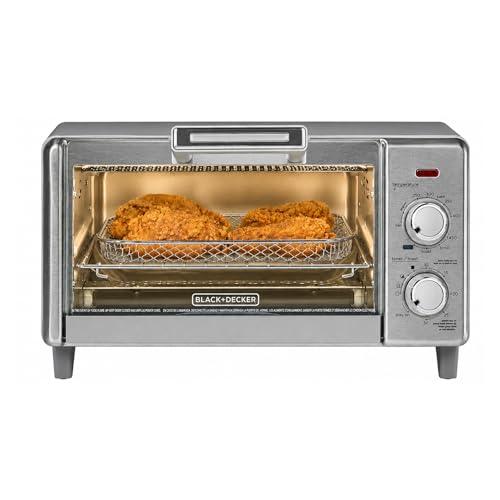
- BLACK+DECKER TO1745SSG 4-Slice Toaster Oven — view on Amazon
- Panasonic FlashXpress NB-G110P Toaster Oven — view on Amazon
- Hamilton Beach Easy Reach 4 Slice Countertop Toaster Oven — view on Amazon
- Proctor Silex 4 Slice Countertop Toaster Oven 31260G — view on Amazon
- Hamilton Beach 4 Slice Countertop Toaster Oven 31143J — view on Amazon
- Oster TSSTTVDFL1 Convection 6-Slice Digital Toaster Oven — view on Amazon
The best conventional toaster ovens do something unfashionable: they toast, bake, and broil without pretending to be six other appliances. A conventional toaster oven in this guide means a straightforward countertop oven built around bake, broil, toast, and keep-warm functions, simple controls you can run half-asleep, and heating elements that behave the way ovens have behaved for decades. No air fry headline act, no fifteen presets named after foods you will never cook in it. For a lot of kitchens, that restraint is exactly the point.
This roundup favors ovens that get the fundamentals right: even toast without pale centers, a broiler that actually browns, a cavity that fits a 9-inch pizza or four slices without crowding, and a timer that shuts the oven off instead of trusting you to remember. The six picks below span the realistic range — a budget workhorse, a toast specialist with infrared elements, a roll-top door design for tight counters, and a larger convection-assisted model for households that bake more than they toast. If your main oven takes twenty minutes to preheat for a job this size, a conventional toaster oven is the appliance that quietly takes over weekday cooking.
In this guide
Quick Picks
Six conventional ovens, six honest jobs. Badges match the full reviews below, and every pick was chosen for fundamentals — toast quality, control simplicity, and cavity usefulness — not feature count.

BLACK+DECKER TO1745SSG 4-Slice Toaster Oven — Best Overall Conventional
The conventional template done right: four core functions, Even Toast element layout, a 9-inch pizza fit, and a removable crumb tray — the oven most households actually need.
Check on Amazon — check price on Amazon.
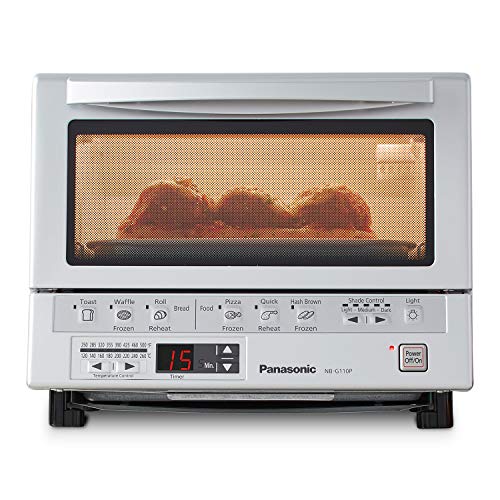
Panasonic FlashXpress NB-G110P Toaster Oven — Best for Toast
Double infrared heating means no preheat and toast that browns fast and evenly — the specialist pick for people whose oven is really a toast machine with ambitions.
Check on Amazon — check price on Amazon.

Hamilton Beach Easy Reach 4 Slice Countertop Toaster Oven — Best Roll-Top Door for Tight Counters
The door rolls up over the top instead of swinging down into your counter — a small idea that solves burned wrists and blocked counters in one motion.
Check on Amazon — check price on Amazon.

Proctor Silex 4 Slice Countertop Toaster Oven 31260G — Best Budget Conventional
The honest budget pick: bake, broil, and toast across a full temperature range with a 30-minute timer and auto shutoff, and nothing you do not need inflating the price.
Check on Amazon — check price on Amazon.
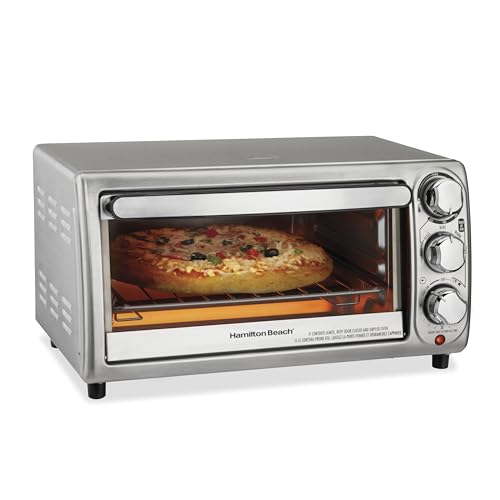
Hamilton Beach 4 Slice Countertop Toaster Oven 31143J — Best for Bagels and Mixed Breakfasts
A dedicated bagel mode plus two rack positions make this the conventional pick for households where breakfast is a mixed order, not just toast.
Check on Amazon — check price on Amazon.

Oster TSSTTVDFL1 Convection 6-Slice Digital Toaster Oven — Best Larger Conventional for Baking
Six slices, digital control, and convection assistance for the household that bakes more than it toasts — the big end of conventional without leaving the category.
Check on Amazon — check price on Amazon.
How These Picks Were Chosen
We defined conventional strictly: bake, broil, toast, and keep-warm as the core functions, with convection allowed only where it supports those jobs rather than headlining as air fry. Every candidate needed a mechanical or simple electronic timer with auto shutoff, a removable crumb tray, and a cavity sized to its slice rating. We cross-checked each model against Amazon catalog data before assigning a link, and we dropped models whose listings could not confirm the function set.
Toast performance weighed heaviest, because it is the job these ovens do daily and the one cheap models fail quietly. We favored quartz or well-spaced elements, multiple rack positions, and bagel or toast shade controls that give repeatable results. Where a model trades a feature for simplicity, the review says so plainly — in a conventional oven, a short feature list is a design choice, not a flaw, as long as the fundamentals are strong.
The 6 Best Conventional Toaster Ovens
BLACK+DECKER TO1745SSG 4-Slice Toaster Oven — Best Overall Conventional
If you picture a conventional toaster oven, you are picturing something like the TO1745SSG. It covers the four core functions — bake, broil, toast, keep warm — with BLACK+DECKER’s Even Toast element arrangement, which exists to solve the classic cheap-oven problem of toast that is dark at the edges and pale in the middle. The cavity takes four slices or a 9-inch pizza, which covers breakfast and personal-pizza night for most homes.
Strengths
- Even Toast technology targets the uneven browning that plagues basic ovens
- Four honest functions with a timer and removable crumb tray for easy cleaning
- Fits a 9-inch pizza, covering the most common real-world bake job
Trade-offs
- Four-slice capacity is tight for families — reheating happens in shifts
- No convection fan, so larger bakes cook a touch less evenly than fan models
- Basic control layout asks you to learn its toast shade dial by trial
| Functions | Bake, broil, toast, keep warm |
| Capacity | 4 slices / 9-inch pizza |
| Cleaning | Removable crumb tray |
The TO1745SSG’s virtue is repeatability. Once you learn its toast dial — every oven has a personality here — it produces the same result morning after morning, and the keep-warm function rescues the second slice when the first eater is slow. Baking is honest small-oven baking: cookies, reheated casserole portions, and frozen snacks all come out as expected, without the learning curve of a multi-mode digital oven.
Choose it as the default conventional oven unless a specific need below — toast obsession, tight counter depth, family capacity — points you elsewhere. It is the pick we recommend to people who ask for a toaster oven without adjectives.
Best for: most households wanting a simple, even oven / Not suited for: large families who reheat in batches
Check on Amazon — check price on Amazon.
Panasonic FlashXpress NB-G110P Toaster Oven — Best for Toast
The FlashXpress is the conventional oven for toast perfectionists. Its double infrared heating — near and far infrared elements working together — heats instantly, so there is no preheat wait, and it browns with an evenness that conventional wire elements struggle to match. Six auto cook options and precise temperature control round out a compact 4-slice oven that treats toasting as a craft rather than a checkbox.
Strengths
- Double infrared elements heat instantly — no preheating, ever
- Exceptionally even, fast browning for toast, bagels, and reheating pizza
- Precise temperature control extends it credibly into small baking jobs
Trade-offs
- Compact cavity is strictly 4-slice / small pizza territory
- Infrared intensity asks for a short learning curve with delicate items
- Premium positioning within the conventional class
| Heating | Double infrared, 1300W |
| Capacity | 4 slices, compact |
| Controls | 6 auto cook options, precise temp control |
Infrared changes the morning routine: bread goes in, and by the time coffee pours, toast is done — not started, done. The same speed revives leftover pizza with a crisped crust instead of the microwave’s surrender, and frozen waffles emerge actually crisp. The trade is size; this is a deliberate compact, and households baking casseroles should look at the larger picks.
If toast quality is the metric by which you will judge any oven — and for many buyers it honestly is — this is the conventional oven to beat. Its following among toast lovers is earned one breakfast at a time.
Best for: toast-first households and small kitchens / Not suited for: families needing a large baking cavity
Check on Amazon — check price on Amazon.
Hamilton Beach Easy Reach 4 Slice Countertop Toaster Oven — Best Roll-Top Door for Tight Counters
Conventional oven doors swing down, occupy counter space, and put the hot interior at wrist height. The Easy Reach replaces that with a roll-top door that lifts up and over, so the opening is unobstructed and the door never becomes a hot shelf in front of the oven. Inside is a straightforward 4-slice conventional oven — bake, broil, toast across 200 to 450 degrees with auto shutoff — that suits small kitchens and anyone who has ever brushed a forearm on a dropped door.
Strengths
- Roll-top door removes the swing-down hazard and frees the counter in front
- Easy access makes removing food safer, especially for kids learning and older cooks
- Full 200–450°F range with auto shutoff covers the conventional job list
Trade-offs
- Roll-top mechanism is one more moving part than a basic hinged door
- 4-slice size limits batch cooking
- Door design means the top of the unit needs clearance to open fully
| Functions | Bake, broil, toast |
| Temperature | 200–450°F |
| Door | Roll-top, easy reach |
In a galley kitchen or a crowded counter, the roll-top earns its keep daily: you can stand close, see in, and lift food straight up instead of reaching over a hot door. The oven behind the door is unremarkable in the best way — predictable temperatures, honest toast, and a broiler that handles cheese toast and small fish portions without drama.
Pick the Easy Reach when your counter layout, mobility, or household includes anyone for whom the classic drop-down door is a genuine annoyance or risk. It is a design solution first and a perfectly good conventional oven second.
Best for: tight counters and safer-access households / Not suited for: high-volume family baking
Check on Amazon — check price on Amazon.
Proctor Silex 4 Slice Countertop Toaster Oven 31260G — Best Budget Conventional
Budget conventional ovens usually cut the wrong corners — a timer that never shuts off, or a temperature range too narrow to bake. The 31260G keeps the corners that matter: a full 200 to 450 degree range, a 30-minute timer with automatic shutoff, and the core bake, broil, and toast trio in a 4-slice cavity. It is the oven for dorms, first apartments, offices, and second-oven duty where the job list is short and reliability beats refinement.
Strengths
- Full 200–450°F range at a budget tier where rivals often truncate it
- 30-minute timer with automatic shutoff — the safety feature budget ovens skip
- Simple controls anyone can run without a manual
Trade-offs
- Toast evenness is good, not great — rotate slices for perfection
- Basic fit and finish compared with mid-range picks
- No keep-warm or bagel-specific mode
| Functions | Bake, broil, toast |
| Temperature | 200–450°F |
| Timer | 30 minutes, auto shutoff |
Set expectations correctly and this oven delights: toast, garlic bread, reheated leftovers, frozen snacks, and small bakes all come out well, and the auto shutoff means a forgotten snack does not become an incident. The black and silver finish looks tidy on the counter, and the footprint suits the small spaces budget buyers usually have.
If your budget is firm and your job list is basic, stop here — the money saved buys a lot of bread. Step up to the BLACK+DECKER above only if toast evenness is a daily grievance you are willing to pay to fix.
Best for: dorms, first apartments, and tight budgets / Not suited for: toast perfectionists
Check on Amazon — check price on Amazon.
Hamilton Beach 4 Slice Countertop Toaster Oven 31143J — Best for Bagels and Mixed Breakfasts
The 31143J adds one function that changes mornings: a bagel mode that toasts the cut side while gently warming the crust, instead of scorching both. Around it sits a capable conventional oven — bake, broil, toast, and keep warm across 200 to 450 degrees, two rack positions for broiling versus baking, and stay-on or auto-shutoff flexibility in stainless steel. For households splitting between bagels, toast, and English muffins, it ends the settings fiddling.
Strengths
- Dedicated bagel mode browns the cut side without drying the crust
- Two rack positions improve both broiling and baking results
- Five modes still stay inside the conventional, no-manual-needed philosophy
Trade-offs
- Still a 4-slice cavity — family breakfasts run in two shifts
- Bagel mode rewards correct placement; cut side must face up
- Stainless finish shows fingerprints and asks for a wipe-down habit
| Functions | Bake, broil, toast, keep warm, bagel |
| Temperature | 200–450°F |
| Racks | 2 positions |
The two rack positions deserve more credit than they get: broiling cheese toast on the high rack and baking muffins on the low one produces visibly better results than the single-rack compromise in cheaper ovens. Combined with the bagel mode, this is the conventional oven most tuned to how breakfast actually happens in a mixed-preference household.
Choose it when bagels are a weekly staple rather than an occasional guest. Pure toast households are served as well by the simpler picks above; bagel households will use this oven’s signature mode every single week.
Best for: bagel households and mixed breakfasts / Not suited for: large-batch family cooking
Check on Amazon — check price on Amazon.
Oster TSSTTVDFL1 Convection 6-Slice Digital Toaster Oven — Best Larger Conventional for Baking
Some households outgrow 4-slice ovens but still want conventional simplicity. The Oster answers with a 6-slice cavity, digital controls for repeatable settings, and convection circulation that evens out larger bakes — a tray of cookies, a small casserole, a 12-inch-class pizza night. It stays in the conventional family in spirit: the controls serve bake, broil, and toast rather than a festival of presets, and the stainless build suits a permanent counter position.
Strengths
- 6-slice cavity handles family portions and larger bakeware
- Convection evens out multi-item bakes and speeds preheats
- Digital controls give repeatable time and temperature settings
Trade-offs
- Larger footprint demands real counter commitment
- Convection fan adds a little noise versus silent radiant models
- Digital interface is a step more complex than dial-only rivals
| Capacity | 6 slices |
| Controls | Digital |
| Heating | Convection assisted |
The Oster is the pick for the household whose toaster oven is really a second oven: weeknight sheet-pan portions, baked potatoes while the main oven roasts, holiday overflow. The convection assist shows most in foods that suffer from hot spots — cookies brown evenly across the tray instead of in a gradient. Toast remains good, if not quite at the Panasonic’s specialist level.
If you regularly cook for four or more, or your main oven is often occupied, this is the conventional oven that keeps up. Small households will find its capacity mostly empty air to heat, and should stay with the 4-slice picks.
Best for: families and second-oven duty / Not suited for: tiny counters and solo households
Check on Amazon — check price on Amazon.
Comparison Table
| Pick | Badge | Key spec | Best for | Shop |
|---|---|---|---|---|
| BLACK+DECKER TO1745SSG 4-Slice Toaster Oven | Best Overall Conventional | 4-slice, Even Toast, 4 functions | most households wanting a simple, even oven | Check on Amazon |
| Panasonic FlashXpress NB-G110P Toaster Oven | Best for Toast | 1300W double infrared, 4-slice | toast-first households and small kitchens | Check on Amazon |
| Hamilton Beach Easy Reach 4 Slice Countertop Toaster Oven | Best Roll-Top Door for Tight Counters | 4-slice roll-top door, 200–450°F | tight counters and safer-access households | Check on Amazon |
| Proctor Silex 4 Slice Countertop Toaster Oven 31260G | Best Budget Conventional | 4-slice, 30-min timer, auto shutoff | dorms, first apartments, and tight budgets | Check on Amazon |
| Hamilton Beach 4 Slice Countertop Toaster Oven 31143J | Best for Bagels and Mixed Breakfasts | 5 modes incl. bagel, 2 rack positions | bagel households and mixed breakfasts | Check on Amazon |
| Oster TSSTTVDFL1 Convection 6-Slice Digital Toaster Oven | Best Larger Conventional for Baking | 6-slice digital convection | families and second-oven duty | Check on Amazon |
Conventional ovens separate on three axes: toast quality (Panasonic leads), capacity (Oster leads), and access or budget (Hamilton Beach roll-top and Proctor Silex). The BLACK+DECKER sits deliberately in the middle — the oven with no weakness worth naming.
How to Choose the Best Conventional Toaster Ovens
Size the cavity to your real jobs. Four slices suits one to three people and a 9-inch pizza; six slices suits families and 12-inch pizzas. Measure your counter before falling for capacity — conventional ovens need clearance above and behind for heat, and a too-large oven exiled to a cupboard is an oven that never gets used. Check the interior height too if you plan to bake in small Dutch ovens or ramekin stacks.
Controls are a lifestyle choice. Dials are fastest and most repairable; digital pads give repeatable precision. For a conventional oven, either is fine — what matters is a timer with auto shutoff, which protects both food and household. Stay-on modes are useful for long, low bakes but should never be the only option on an oven that will live in a busy kitchen.
Element style shapes results. Traditional wire and quartz elements are the conventional standard and behave predictably. Infrared, as in the Panasonic pick, heats instantly and browns exceptionally but concentrates intensity, rewarding attention. Convection assistance, as in the Oster, evens larger bakes. None is universally best; match the element to your dominant job — toast, baking, or reheating.
Conventional vs Air Fry Toaster Ovens: An Honest Comparison
Air fry toaster ovens add a powerful fan and a basket, and they genuinely crisp frozen foods faster. What they cost is noise, cleaning effort, cavity complexity, and usually price. A conventional oven crisps more gently and slowly, but it toasts more evenly in many models, runs silently, and wipes clean in seconds. Households that fry weekly should buy the fan; households that toast daily and fry monthly are usually happier conventional.
There is also a longevity argument. Every added system is a future failure point, and the conventional oven’s simplicity — elements, thermostat, timer — is why examples from decades ago still toast in farm kitchens today. If you value an appliance you can keep rather than replace, the conventional category remains the rational default, with air fry as a deliberate upgrade for a specific job.
Getting Even Toast: Technique Beats Technology
Even the best conventional oven toasts better with small habits. Use the middle rack position unless broiling. For two slices, center them rather than hugging the sides. Frozen bread needs the lighter end of the dial plus a few seconds, not a darker setting that burns the surface before the center thaws. And let the oven’s personality reveal itself over the first week — mark your dial mentally once you find your shade, and the oven will repeat it faithfully.
Crumb discipline matters more than owners expect. A loaded crumb tray insulates the lower element, smokes faintly, and subtly unevenly toasts. Every pick in this guide has a removable tray; empty it weekly and the oven performs like new for years. Wipe the interior while it is merely warm, never hot, and never use oven cleaner sprays inside a toaster oven — a damp cloth with a little baking soda handles baked-on splatter safely.
Element Types in Conventional Ovens: What Actually Differs
Conventional ovens heat with one of three element families, and the differences are practical rather than mystical. Exposed wire and tubular elements are the traditional standard: they glow, cycle on and off with the thermostat, and produce the gentle, forgiving heat that makes conventional baking predictable. Quartz elements heat faster and respond quicker to thermostat changes, tightening temperature control in small cavities. Infrared elements, the Panasonic pick’s specialty, transfer heat directly to the food surface, which is why they toast so fast and brown so evenly without preheating.
For the buyer, the translation is simple. If your oven’s life is toast and reheating, infrared and quartz reward you daily. If its life is baking — casseroles, cookies, small roasts — traditional elements with good spacing and a trustworthy thermostat matter more than speed, because baking punishes hot spots over thirty minutes in ways toasting never reveals in three. Convection assistance, where present as in the Oster pick, evens the cavity for multi-item loads; it is a supporting actor in a conventional oven, not the plot.
Element placement matters alongside type. Top elements decide broiling character — closely spaced elements brown evenly, a single central element leaves pale margins. Bottom elements decide whether pizza crusts crisp or steam. The models in this guide were chosen partly on this invisible geometry: their elements are arranged for the jobs their badges claim, which is more than can be said for ovens designed by silhouette.
Sizing a Conventional Oven: Slices, Pizzas, and Honest Cavities
Slice ratings are the category’s least honest number, because they assume standard sandwich bread placed by an optimist. Four-slice ovens fit four modest slices or two generous artisan ones; six-slice ovens fit a family’s breakfast or one person’s feast. Pizza ratings are more reliable — a 9-inch fit is a personal pizza, a 12-inch fit is a family one — and interior height, the forgotten dimension, decides whether a ramekin stack, a small Dutch oven, or a muffin tin in a high-domed shape can bake at all.
Measure your most-used bakeware before choosing, and bring the tape to the counter as well: the oven’s exterior, its door’s swing, and the clearance above it all join the decision. A conventional oven that fits its cavity to your pans and its body to your counter will be used daily; one that misses either fit becomes a guest appliance, dragged out and put away, and eventually not dragged out at all.
Households between sizes should size by the weekly job, not the monthly one. The family that bakes a 12-inch pizza twice a month and toasts daily is a 4-slice household with a main oven for pizza nights — unless pizza night is sacred, in which case the Oster’s capacity earns its counter honestly. There is no universal right answer, only an honest census of your own cooking.
Conventional Oven Energy and Speed: The Real-World Ledger
The small cavity is the conventional oven’s economic argument: it preheats in three to ten minutes where a full-size oven takes fifteen to twenty-five, and it heats a fraction of the volume for the same portion of food. For reheating a plate, baking two potatoes, or toasting breakfast, the energy difference is not marginal — it is the difference between heating a closet and heating a room. Households that shift daily small jobs to the counter oven feel it in both the utility bill and the kitchen’s summer temperature, since every watt the big oven spends also becomes heat the room must absorb.
Speed compounds across a week. Five minutes saved per use, twice a day, is an hour a week returned — and more importantly, the small oven’s speed changes what you bother to cook. Leftovers get properly reheated instead of microwaved into compromise; a single chicken breast gets roasted instead of skipped. Appliances earn their counter through changed behavior, and the conventional oven’s quiet superpower is making real cooking feel smaller than the effort of avoiding it.
Living With a Conventional Oven: Placement, Noise, and Longevity
Placement decides longevity more than brand does. Give the oven its clearances — heat rises and radiates, and cabinets, walls, and stored items above and behind it age under daily thermal stress. Keep the cord direct to a wall outlet, the top surface clear, and the crumb tray on a weekly rhythm. Ovens placed with this respect routinely serve a decade; ovens wedged into hot corners with blocked vents die young and take their owners’ opinion of the category with them.
Noise is the conventional oven’s understated luxury: radiant models are effectively silent, convection-assisted ones add a modest fan hum, and none approaches an air fry oven’s roar. In open-plan homes and small apartments, that silence is a daily quality-of-life feature that spec sheets never list. Judge it in the first week — if you can hold a conversation beside your oven at breakfast, you bought the right category.
Converting Main-Oven Recipes to a Conventional Toaster Oven
Small cavities cook differently from large ones in three predictable ways, and converting recipes is mostly accounting for them. First, proximity: food sits closer to the elements, so surfaces brown faster — check doneness five to ten minutes early on a first conversion and shield delicate tops with a loose foil tent if they race ahead of the center. Second, heat recovery: opening a small oven dumps a larger share of its heat, so peek through planning rather than curiosity, and let the oven recover a minute after loading before timing begins. Third, pan color and material matter more at close quarters — dark pans in a toaster oven can scorch bottoms that a main oven would forgive.
Temperature itself usually transfers directly; time is the variable. Casseroles and baked goods in the 4-slice picks here run close to main-oven times once preheated, while the 6-slice Oster’s convection trims time modestly and rewards a small temperature reduction for fan-assisted jobs. Keep a conversion notebook for your five most-made recipes — the second bake of anything is the accurate one, and a written record turns conversion from folklore into your oven’s personal cookbook.
Some jobs should not convert at all: anything tall that would sit near the top element, large roasts that need hours of gentle, even surround heat, and delicate soufflés that resent both proximity and door openings. The conventional oven’s empire is the wide middle of home cooking — recognize its borders and everything inside them cooks beautifully.
Toast Shade, Decoded: Why Your Dial Is Not Lying to You
Every conventional oven’s toast dial is a timer wearing a color’s clothing: it does not measure browning, it measures minutes at power. That single fact explains the category’s most common complaints. The first cycle of the morning starts from a cold cavity and toasts lighter than the second, which starts warm — the dial did not change, the oven did. Frozen bread thaws before it toasts, spending the cycle’s first minute on ice rather than color. Sugary and enriched breads brown faster than lean ones at identical settings, because sugar is doing chemistry the timer cannot see.
The owner’s response is a personal shade chart, built in the first week: your bread, your setting, fresh and frozen, first cycle and second. Two minutes of experimentation buys years of repeatable breakfasts, and it is why experienced owners defend ‘their’ oven’s dial against objectively better machines — they have learned its language. The Panasonic’s infrared consistency narrows these variables more than most, which is precisely its specialist appeal, but even it rewards the chart.
One more variable hides in the crumb tray: a loaded tray insulates and smokes, subtly lightening lower-side browning while adding yesterday’s flavor to today’s toast. Weekly emptying is not housekeeping vanity; it is toast calibration, and it belongs in the same sentence as the dial.
Conventional Ovens for Specific Jobs: Pizza, Leftovers, and Frozen Snacks
Pizza is the conventional oven’s public examination. A 9-inch pizza in the 4-slice picks wants a fully preheated oven and the middle rack; the crust crisps from below while the cheese finishes from above, and a minute under the broiler at the end — watched, never trusted — delivers the browned top that separates oven pizza from microwave pizza morally as well as culinarily. The Oster’s 12-inch class extends the same logic to family size. Frozen pizza follows its box directions reduced by vigilance: small ovens run earnest, and the last two minutes decide between golden and gone.
Leftovers are the oven’s daily bread, and the rules are moisture rules. Foods that were crisp — fries, roast potatoes, anything breaded — reheat uncovered at moderate-high heat and return nearly to life. Foods that were moist — casseroles, pasta bakes, rice dishes — reheat covered at moderate heat with a spoonful of water married back in. Frozen snacks are the category’s gift to households with teenagers: the conventional oven turns them out properly crisp in the time a main oven spends preheating, which is precisely why so many of these ovens are bought ‘for the kids’ and quietly adopted by the adults.
When a Conventional Oven Is the Wrong Purchase
Honesty about the category’s borders protects buyers better than enthusiasm. If your household fries — truly fries, weekly, in volume — a conventional oven will always feel like a compromise, and the air fry models in our sibling guides are the honest destination. If you bake bread with ambition, the small cavity’s proximity to elements and its temperature swings will frustrate what a main oven does calmly. If your family is six and your portions are sheet-pan scale, even the 6-slice Oster will spend its life running in relays.
Renters in fused and ancient kitchens should also pause: a conventional oven is among the heavier loads on a circuit, and an oven that trips breakers is an oven that gets returned. None of these borders diminishes the category — they define the household it serves perfectly, which is most households, most days, for the jobs that actually recur. Buy inside the borders and the conventional oven is the least regretted appliance in the kitchen; buy across them and no badge in this guide can save the purchase.
A Conventional Oven Maintenance Calendar That Takes Minutes
Weekly, the crumb tray: out, shaken, wiped, back — the single habit with the highest return in this guide, since it governs toast evenness, smoke, and the faint burnt-crumb perfume that otherwise seasons everything. Monthly, the interior: a warm, damp cloth over every surface while the oven is cold enough to touch and warm enough to loosen film, the rack and pan washed in the sink, the door’s inner glass cleared with a baking soda paste where browning has filmed it. Quarterly, the exterior and the details: stainless wiped along its grain, dial markings checked for legibility, the cord inspected where it bends, and the oven pulled forward once to clear the dust and crumbs that migrate behind any counter appliance.
Nothing on this calendar needs a product stronger than dish soap, and nothing on it is optional if the oven is to cook in year five the way it cooked in week one. Owners treat maintenance as the price of the category’s simplicity: an oven with no self-cleaning cycle and no service contract asks only to be kept clean enough for its elements to work in clear air. Set the tray habit to a fixed day — trash day works — and the rest of the calendar attaches itself to it.
How to Use a Conventional Toaster Oven for Baking, Broiling, and Toasting
For toast: place slices on the rack in the middle position, select your shade, and let the timer run its full course — opening the door mid-cycle dumps heat and guarantees a pale second side. For bagels, cut side up, and use a bagel mode if your oven has one. For baking: preheat five to ten minutes (instant for infrared models), use the lower rack position for casseroles and baked goods, and reduce your main-oven recipe temperature slightly if your conventional oven runs hot, checking doneness a few minutes early the first time you convert a recipe.
For broiling: use the high rack position, keep the food close to the upper element, and do not walk away — broiling in a small cavity moves from golden to burnt in under a minute. Line the baking pan, not the rack, for fatty foods so drips are contained. For reheating leftovers, moderate temperatures around 325 to 350 degrees restore texture without the microwave’s sogginess; pizza and fried foods especially reward the patience. Let the oven cool with the door ajar after greasy jobs, and empty the crumb tray once cool.
Common Buying Mistakes
Four mistakes recur. Buying capacity for guests instead of for Tuesdays, which leaves a huge oven heating air for one slice. Using parchment or foil loosely under the broiler, where a fan-less oven still lets it curl into an element. Expecting main-oven times in a small cavity — conventional ovens often cook faster, and first attempts should be checked early. And placing the oven tight under cabinets, where rising heat damages finishes over months; give it the clearance the manual asks for, or pull it forward in use.
Final Recommendation
Short on time? Start your comparison with BLACK+DECKER TO1745SSG 4-Slice Toaster Oven, Panasonic FlashXpress NB-G110P Toaster Oven, Hamilton Beach Easy Reach 4 Slice Countertop Toaster Oven — then check price on Amazon for the one that matches your needs.
Start with the BLACK+DECKER TO1745SSG unless a specific need speaks louder: the Panasonic for toast devotion, the Easy Reach for tight counters and safer access, the Proctor Silex for a firm budget, the Hamilton Beach 31143J for bagel households, and the Oster when family capacity and baking move to the front. Conventional ovens reward buyers who know their dominant job — buy for that job and the oven will feel custom-made.
Compare the wider counter family in Best Counter Toaster Ovens and Best Counter Top Toaster Ovens, browse everything in Best Toaster Ovens, or look at the convection specialists in Best Convection Ovens. If your mornings are really about sliced bread alone, Best 2 Slot Toasters may serve you better than any oven.
Frequently Asked Questions
What does conventional mean in a toaster oven?
A conventional toaster oven cooks with radiant heating elements — bake, broil, and toast — without a headline air fry system. Some include gentle convection assistance, but the cooking style is the classic small-oven method: steady radiant heat in a compact cavity.
Can a conventional toaster oven replace a main oven?
For one to three people, very often yes for daily jobs: toast, reheating, small bakes, broiling portions, and frozen snacks. It will not fit a turkey or a full sheet pan, so most households keep the main oven for large and holiday cooking.
Why is my toast uneven?
Usually crumb buildup under the lower element, slices placed at the cavity edges, or a shade setting learned for fresh bread being used on frozen. Clean the tray, center the slices, and adjust one shade step at a time.
Do conventional toaster ovens use less energy than a main oven?
For small jobs, yes — heating a compact cavity for ten minutes uses far less energy than preheating and running a full-size oven for the same portion. The savings are largest for reheating and single portions.
How long should a conventional toaster oven last?
A simple conventional oven with elements, thermostat, and timer has few failure points and commonly serves for many years. Longevity habits are basic: keep the crumb tray empty, avoid slamming the door, and do not use it as storage for bread bags on top.
Is infrared better than conventional elements?
Infrared heats instantly and browns toast exceptionally evenly, which is why the Panasonic pick uses it. Traditional elements are gentler and more forgiving for baking. Better depends on whether your oven’s main job is toast or baking.
Can I put foil in a conventional toaster oven?
On the baking pan, yes, as a liner — kept flat, weighted by food, and away from the elements. Never line the crumb tray or the oven floor with foil, and never let a loose sheet curl near the upper element: in a compact cavity, foil belongs on cookware, not on the oven itself.
Why does my new toaster oven smell on first use?
Manufacturing oils and coatings burn off during the first runs — a normal break-in, best done empty at a moderate bake setting for ten to fifteen minutes with a window open. The smell should vanish within the first few uses; a persistent chemical smell after that is a reason to contact the maker.