Disclosure: airfryerkitchensupply.com is reader-supported. When you buy through links on our site, we may earn an affiliate commission at no extra cost to you.
Where to buy
Every vehicle in this guide is sold through Amazon, and every pick below was verified against a live Amazon listing through the airfry Creators API check on 2026-11-21, so the links in this article lead to the exact models described. Ride-on stock rotates quickly around birthdays and holidays, and colour variants sell out first, so if the exact finish you want shows as unavailable, check the same listing’s other colours before switching models.
Buy the vehicle and nothing else at first. The battery and charger are included with these ride-ons as standard; what is worth adding to the same order is a simple outdoor cover if the car will live in a garage corner or under a carport, because dust and damp are what age these toys between riding seasons.
Quick links to the verified listings covered in this guide: Best Choice Products Large 12V Kids Ride-On Car Gotrax 12V Ride On ATV for Toddlers Garvee 12V Kids UTV Ride On Car (2-Seater) Winado 12V Licensed Chevrolet Colorado Electric Ride On Car (Black) Peg Perego John Deere Farm Power 12 Volt Ride-On Tractor and Trailer TRINEAR 12V Ride On Car with Parent Remote Control.
The best 12 volt ride along is not really a car purchase; it is a walking purchase. In this format your child sits at a real steering wheel and drives, while you walk alongside with a parent remote in your hand, able to steer, slow and stop the vehicle at any moment. That shared arrangement — child driving, adult supervising at walking pace — is what ‘ride along’ means in this guide, and it is why every pick here is judged first on its supervision tools and only then on its styling.
The 12V class is the sweet spot for this. Smaller 6V toys are quickly outgrown and stall on anything but perfect floors, while 24V machines are aimed at older children riding independently. A 12V ride-on moves at or near adult walking pace, carries enough battery for a proper outing, and still leaves the adult in charge. The six picks below cover the main ways families ride along: a full car with harness and locking doors, a deliberately slow toddler quad, a two-seater for siblings, a licensed truck, a garden tractor with trailer, and a budget car that keeps the remote and drops the frills.
One honesty note before the picks: manufacturers publish figures unevenly. Some listings state speed, age range and load precisely; others say almost nothing. Where a listing states a figure, this guide uses it and says so. Where it does not, the guide says that too, and the buying advice defaults to a supervised first-ride check rather than an invented number. No children’s product earns trust with made-up specifications, and none are printed here.
In this guide
Quick Picks
- Best Choice Products Large 12V Kids Ride-On Car — Best Overall. A full-size car body with a parent remote, locking doors and a harness, so an adult walks alongside and keeps steering authority while the child feels like the driver. — Check price on Amazon
- Gotrax 12V Ride On ATV for Toddlers — Best for Toddlers. A deliberately slow 1.5 MPH quad with a stated 80-minute battery and a 66 lb load limit, sized for first rides at 18 months to 4 years while a parent walks within arm’s reach. — Check price on Amazon
- Garvee 12V Kids UTV Ride On Car (2-Seater) — Best for Riding With a Friend. A true two-seater UTV with a parent remote and dual motors, so your child can ride along with a sibling or friend while you still hold override control. — Check price on Amazon
- Winado 12V Licensed Chevrolet Colorado Electric Ride On Car (Black) — Best Licensed Truck Look. An officially licensed Chevrolet Colorado in black, with remote control, soft start and Bluetooth — the ride-along pick for kids who want a real truck, not a toy car shape. — Check price on Amazon
- Peg Perego John Deere Farm Power 12 Volt Ride-On Tractor and Trailer — Best for Yard and Garden Play. A John Deere tractor with its own trailer and a remote control, built for ride-along laps hauling leaves, toys and imaginary harvests around the garden. — Check price on Amazon
- TRINEAR 12V Ride On Car with Parent Remote Control — Best Budget Ride-Along. A straightforward 12V car with parent remote, spring suspension, LED lights and a music player — the supervision essentials without paying for licensed bodywork. — Check price on Amazon
How These Picks Were Chosen
Picks were chosen for supervised, ride-along use specifically, which reorders the usual priorities. First came the supervision layer: a parent remote control, a soft or gentle start, a harness or contained seating, and a top speed at or near walking pace. Five of the six picks include a parent remote confirmed in their listings; the sixth, the toddler quad, substitutes a hard 1.5 MPH speed cap that keeps a walking adult in physical control at all times.
Second came verified information. Each model had to appear in a live Amazon listing confirmed through the Creators API, with its headline features — remote, suspension, seating, speed or load where published — matching what the listing actually claims. Models whose listings made claims that could not be confirmed were left out, and no speed, age or weight figure appears in this guide unless the listing itself states it.
A note on what was excluded: 24V and 36V two-seaters appear constantly in search results for this category, and several are excellent machines, but they are built for older children riding independently at higher speeds, which is a different product from a supervised ride-along. They were left out on purpose, and families shopping for a six-year-old’s independent off-roader should look at those listings separately rather than stretching a ride-along purchase beyond its design.
Third came format coverage. Ride-along families do not all ride the same way, so the list deliberately spans a car, a quad, a two-seater UTV, a licensed truck, a tractor with trailer and a budget car. Finally, each pick had to suit a realistic home: chargeable from a normal outlet, storable in a garage or shed corner, and usable on the pavements, driveways and garden paths where supervised rides actually happen.
The 6 Best 12 Volt Ride Along Vehicles for Supervised Family Rides
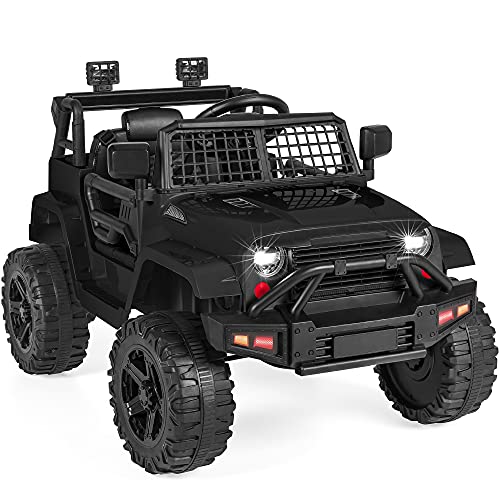
Best Choice Products Large 12V Kids Ride-On Car — Best Overall
This is the ride-along format at its most complete: a car-sized 12V vehicle your child sits in and drives, while you walk beside it holding a parent remote that can steer, slow and stop the car. The listing confirms the remote, locking doors, a harness, spring suspension, Bluetooth audio and LED headlights, with a stated top speed of 2.8 MPH and an age guide of 3 years and up. For families who picture weekend laps around the block together, this is the benchmark the rest of the list is measured against.
Strengths
- Parent remote gives the adult walking alongside real steering and stopping authority, not just an emergency brake
- Locking doors and a harness keep an excited rider seated and contained between stops
- Spring suspension and a walking-pace 2.8 MPH top speed suit sidewalks, driveways and park paths
Trade-offs
- Car-sized body needs car-sized storage; measure your garage or shed corner before ordering
- The harness and doors add steps to every ride, which impatient riders will protest
- Bluetooth and lights are fun, but they draw on the same 12V battery as the motors
| Specification | Detail |
|---|---|
| Power | 12V rechargeable battery |
| Top speed (listing) | 2.8 MPH |
| Age guide (listing) | Ages 3+ |
| Parent remote | Yes |
| Extras | Locking doors, harness, spring suspension, Bluetooth, LED headlights |
The ride-along experience lives or dies on the remote, and this car’s remote is the centre of its design rather than an accessory. Walking alongside, you can nudge the car away from a driveway edge, pause for a neighbour’s dog, or take over completely when your child decides the steering wheel is a drum kit. Because the top speed sits at a comfortable adult walking pace, you are never jogging to keep up, which is what makes longer outings realistic instead of a five-minute novelty.
The harness and locking doors matter more than they sound. A three-year-old who can climb out mid-roll will, and the combination of a belted seat and doors that stay shut turns the ride into something you supervise rather than something you chase. The spring suspension takes the sharpness out of pavement joints and dropped kerbs, so the child is not jolted at every expansion gap, and the LED headlights make the car visible on dull afternoons. Treat the Bluetooth speaker as a bonus for parked dance breaks rather than a driving feature, and plan routes on smooth surfaces, because this is a car body, not an off-roader.
Best for: Families who want a parent-controlled, car-style ride-along for ages 3+ on paved routes / Not suited for: Yards with rough grass, gravel drives or no adult available to walk alongside
Check the current price on Amazon

Gotrax 12V Ride On ATV for Toddlers — Best for Toddlers
Not every ride-along needs a remote. For the youngest riders, the honest solution is a vehicle so slow and small that a walking parent is always the safety system. The Gotrax listing is unusually specific: a 12V battery rated for 80 minutes, a maximum speed of 1.5 MPH, forward and reverse gears, and a maximum load of 66 lbs, aimed at ages 1.5 to 4 years. That is a specification written for a toddler’s first powered rides around a patio or a short stretch of pavement, with an adult right there.
Strengths
- 1.5 MPH top speed is slower than adult walking pace, so supervision is physical and effortless
- Listing states an 80-minute battery, the clearest runtime figure in this guide
- Forward and reverse two-gear layout teaches cause and effect without speed
Trade-offs
- No parent remote is mentioned in the listing, so control is proximity, not electronics
- The 66 lb load cap and toddler sizing mean children outgrow it quickly
- ATV styling on a slow quad; older siblings will find it tame within minutes
| Specification | Detail |
|---|---|
| Power | 12V lead-acid battery (replaceable, per listing) |
| Top speed (listing) | 1.5 MPH |
| Runtime (listing) | 80 minutes |
| Max load (listing) | 66 lbs |
| Age guide (listing) | 1.5–4 years |
The value here is honesty of purpose. Many ride-ons claim toddler suitability while running at speeds a small child cannot steer out of trouble; this one caps speed at a level where a walking adult can simply reach out and steady the handlebars. The stated 80-minute battery is also longer than a toddler’s attention span for one session, so the battery will rarely be the reason a ride ends. Forward and reverse gears give a first, gentle lesson in direction without any of the mode menus that confuse small riders.
The trade-off is lifespan. A child who starts at 18 months may be ready for something bigger by age four, and the 66 lb ceiling is a hard stop, not a guideline. Buy it as a first vehicle with a planned hand-me-down path, supervise every ride at arm’s length, and keep it on flat, smooth ground where the small wheels roll freely. Within those limits, it is the most age-appropriate starting point in this guide.
Best for: First powered rides for toddlers aged 1.5–4 with a parent walking alongside / Not suited for: Children over 66 lbs, or families wanting a remote-controlled option
Check the current price on Amazon

Garvee 12V Kids UTV Ride On Car (2-Seater) — Best for Riding With a Friend
Ride-along sometimes means two children along for the ride. The Garvee is a genuine two-seater UTV: the listing states a 2-to-5 MPH speed range, ages 3 to 8, a combined load figure of 110 lbs, dual motors, a parent remote, spring suspension, LED roof lights, music and USB playback, and a low-battery indicator. It is the biggest, most capable vehicle in this guide, and the one that turns a solo toy into a shared activity.
Strengths
- True two-seat layout with a stated 110 lb combined load figure for pairs of riders
- Parent remote plus dual motors: shared riding without giving up adult override
- Low-battery indicator helps you end rides at the house instead of mid-route
Trade-offs
- Largest footprint here; two-seaters need a clear storage bay and wider turning space
- A 5 MPH top setting is brisk for new riders; keep beginners on the lower settings
- Two riders means double the argument about who steers; set turns before you set off
| Specification | Detail |
|---|---|
| Power | 12V, dual motor |
| Speed range (listing) | 2–5 MPH |
| Age guide (listing) | Ages 3–8 |
| Max load (listing) | 110 lbs |
| Parent remote | Yes |
| Extras | LED roof lights, music/USB, low-battery indicator, spring suspension |
The dual-motor layout is what makes two-up riding work. A single small motor hauling two children slows to a crawl on any incline; spreading drive across two motors keeps pace steady on the flat paths and gentle slopes where families actually ride. The speed range matters too: start a mixed-age pair at the low end, and only open up the higher settings on long, clear stretches where the walking adult can see the whole route.
Plan for the social side as much as the mechanical side. Decide who drives each leg before the ride starts, use the remote to pause negotiations that begin mid-roll, and remember the 110 lb figure is the combined weight of both riders plus whatever they have loaded into the car. The low-battery indicator is a genuinely useful ride-along feature: it lets you turn for home while there is still charge to get there, rather than pushing a two-seater back yourself.
Best for: Siblings or friends riding together, ages 3–8, with an adult on remote duty / Not suited for: Solo toddlers, small apartments or routes with steep grass banks
Check the current price on Amazon

Winado 12V Licensed Chevrolet Colorado Electric Ride On Car (Black) — Best Licensed Truck Look
Some children will accept nothing less than a truck, and the licensed Chevrolet Colorado styling is this Winado’s whole argument. The listing confirms remote control, Bluetooth, a soft-start function and LED lights on a 12V ride-on aimed at toddlers and young children. Soft start deserves emphasis in a ride-along guide: instead of a jolt when the pedal is pressed, power feeds in gently, which keeps small passengers settled and makes walking alongside calmer for everyone.
Strengths
- Licensed Chevrolet Colorado styling looks like the real truck, which matters enormously to the target audience
- Soft start removes the lurch that startles new riders and the adult walking beside them
- Remote control and LED lights cover the supervision and visibility basics
Trade-offs
- The listing gives no top speed or load figure, so judge pace on the first supervised ride
- Licensed styling is the premium here; unlicensed trucks in this guide offer similar hardware for the budget-minded
- Truck bed is decorative scale, not a cargo solution for ride-along supplies
| Specification | Detail |
|---|---|
| Power | 12V rechargeable battery |
| Parent remote | Yes |
| Start | Soft start |
| Extras | Bluetooth, LED lights, licensed Chevrolet Colorado styling |
Ride-along trucks live on pavement and paths, and the Colorado behaves accordingly: the soft start keeps departures smooth, the remote gives the walking adult the final say, and the lights help on overcast days. The licensed bodywork is not a trivial detail. Children ride longer and more willingly in a vehicle they recognise from the road, and parents report fewer ‘I don’t want that one’ negotiations when the toy matches the family truck in the driveway.
Because the listing does not publish a speed or weight figure, do the sensible thing: run the first ride on the emptiest stretch of pavement you have, walk the full route yourself at the car’s pace, and confirm your child plus any passenger stays comfortably within how the car feels under load. If it strains or slows sharply, lighten the load. That first-ride check is good practice for every vehicle in this guide, and it is essential for the ones with thinner published data.
Best for: Truck-mad toddlers who want licensed Chevrolet styling and gentle soft-start departures / Not suited for: Buyers who need published speed and load figures before they buy
Check the current price on Amazon

Peg Perego John Deere Farm Power 12 Volt Ride-On Tractor and Trailer — Best for Yard and Garden Play
The Peg Perego John Deere Farm Power pairs a 12V tractor with a detachable trailer and, unusually for a tractor format, a remote control. That combination changes what ride-along means: instead of laps of the driveway, the game becomes work — hauling a trailer of sticks, stuffed animals or harvested leaves from one end of the garden to the other, with a parent walking the route and able to intervene by remote.
Strengths
- Trailer turns riding into hauling games that hold attention far longer than plain laps
- Remote control on a tractor format is rare and genuinely useful in garden spaces
- John Deere farm styling suits children who prefer working vehicles to sports cars
Trade-offs
- The listing is thin on published figures; no speed, runtime or load numbers are stated
- Tractor plus trailer is the longest outfit here and needs the most storage room
- Garden routes mean grass and soil, which slow any 12V vehicle; keep loads light
| Specification | Detail |
|---|---|
| Power | 12V (per listing title) |
| Parent remote | Yes |
| Included | Tractor and trailer |
| Styling | Licensed John Deere Farm Power |
Tractors reward a different kind of supervision. The ride-along adult becomes the farm manager: setting the route, deciding what gets loaded, and calling the stops. The trailer is the attention engine — a child who would tire of circling in ten minutes will happily make deliveries for an hour — and the remote means you can pause the operation at the flowerbed boundary without a chase.
Be realistic about surfaces. Grass, especially long or damp grass, is the hardest common surface for 12V ride-ons, and a loaded trailer adds drag. Keep the grass short, the trailer loads light and symbolic, and the route mostly on paths and patios with garden excursions rather than the other way round. Judged as a garden play system rather than a car substitute, this is the most imaginative pick in the guide.
Best for: Garden ride-along play with hauling games, for families with outdoor space / Not suited for: Pavement-only homes, or buyers who need full published specifications
Check the current price on Amazon
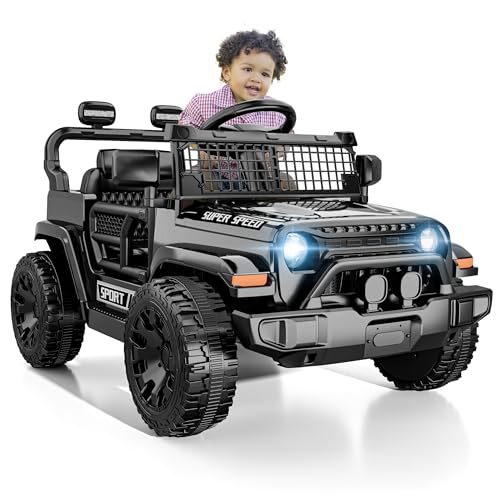
TRINEAR 12V Ride On Car with Parent Remote Control — Best Budget Ride-Along
The TRINEAR covers the ride-along checklist at the budget end of the market: the listing confirms a parent remote control, spring suspension, LED lights and a music player in a black 12V car body. There is no licensed badge and no long feature list, and that is precisely its appeal for families who want the supervised ride-along experience — adult on the remote, child at the wheel — without paying for styling they do not care about.
Strengths
- Parent remote, suspension and lights: the ride-along essentials are all present
- Budget-tier positioning leaves money for a helmet, storage cover or second battery later
- Music player keeps parked waiting time entertaining
Trade-offs
- No speed, age or load figures are stated in the listing, so the first-ride check is essential
- Plain styling will not win an argument with a child set on a licensed truck
- Fewer comfort extras than the premium picks in this guide
| Specification | Detail |
|---|---|
| Power | 12V rechargeable battery |
| Parent remote | Yes |
| Extras | Spring suspension, LED lights, music player |
Budget ride-ons earn their keep when the fundamentals are right, and the fundamentals here are the ones that matter for ride-along use: the adult can take over by remote, the suspension softens pavement joints, and the lights mark the car out on grey days. What you give up is published data and polish. There is no stated top speed, so assume nothing; walk the first route, watch how the car pulls away with your child aboard, and set your own rules from what you observe.
This is also the sensible gift purchase. Grandparents buying a ride-along for a child they supervise on visits get the complete supervision package without the licensed-model premium, and the money saved covers the extras that make rides smoother in practice — a fitted cover so the car lives outdoors under shelter, and a routine of charging after every ride so it is always ready when small visitors arrive.
Best for: Budget-conscious families and grandparents who want remote-supervised riding / Not suited for: Buyers who want licensed styling or fully published specifications
Check the current price on Amazon
Comparison Table
| Pick | Badge | Key spec | Best for |
|---|---|---|---|
| Best Choice Products Large 12V Kids Ride-On Car | Best Overall | 2.8 MPH, parent remote, harness | Families who want a parent-controlled, car-style ride-along for ages 3+ on paved routes |
| Gotrax 12V Ride On ATV for Toddlers | Best for Toddlers | 1.5 MPH, 80-min battery, 66 lb limit | First powered rides for toddlers aged 1.5–4 with a parent walking alongside |
| Garvee 12V Kids UTV Ride On Car (2-Seater) | Best for Riding With a Friend | 2-seater, 2–5 MPH, 110 lb load | Siblings or friends riding together, ages 3–8, with an adult on remote duty |
| Winado 12V Licensed Chevrolet Colorado Electric Ride On Car (Black) | Best Licensed Truck Look | Licensed Chevy Colorado, soft start, remote | Truck-mad toddlers who want licensed Chevrolet styling and gentle soft-start departures |
| Peg Perego John Deere Farm Power 12 Volt Ride-On Tractor and Trailer | Best for Yard and Garden Play | Tractor + trailer, remote control | Garden ride-along play with hauling games, for families with outdoor space |
| TRINEAR 12V Ride On Car with Parent Remote Control | Best Budget Ride-Along | Parent remote, spring suspension, music | Budget-conscious families and grandparents who want remote-supervised riding |
How to Choose a 12 Volt Ride Along Vehicle
Start with who is actually in charge. In a ride-along vehicle, the answer should be the adult for the first months of use, which makes the parent remote the single most important feature on the specification sheet. A good remote does three things: steers, controls speed or direction, and stops the car outright. If a listing does not mention a remote, assume there is none and ask whether the vehicle’s speed is low enough for proximity supervision instead, as with the toddler quad in this guide.
Next, match pace to the walker. The adult sets the real speed limit, and a vehicle that tops out around a comfortable walking pace makes outings longer and calmer. Stated figures in this guide run from 1.5 MPH for toddlers to a 2–5 MPH range on the two-seater; treat anything at the top of that band as a setting for wide, empty spaces, not for pavements with pedestrians. If a listing publishes no speed, your first ride is the test: walk the route, note how the car behaves, and set family rules from observation.
Then check containment. Harnesses, locking doors and high seat backs are what let a young rider enjoy the ride without climbing, standing or leaning out at the interesting moments — which are exactly the moments an adult cannot predict. For two-seaters, check the combined load figure rather than guessing: the Garvee in this guide states 110 lbs for both riders together, and exceeding a stated limit slows the car, strains the motors and shortens battery life.
Finally, plan the unglamorous logistics. Measure the storage space before ordering, because car-bodied ride-ons do not fold. Confirm where the vehicle will charge, and build the habit of charging after every ride rather than before the next one; a ride-on that is always charged is a ride-on that actually gets used. Keep the route plan as part of the purchase decision too: smooth pavement and short grass suit this class, while gravel, sand and steep banks defeat it regardless of what the styling suggests.
Ride Along Formats Compared: Car, Quad, UTV, Truck and Tractor
The classic car format, represented here by the Best Choice Products car and the TRINEAR, is the most natural ride-along shape: doors, a harness on the premium pick, car-like controls and a body children instantly understand. Cars are pavement vehicles. Their wheels and ride height are happiest on smooth surfaces, and their appeal is the driving fantasy rather than terrain ability.
Quads and ATVs, like the Hot Wheels and Gotrax models in this guide, put the rider on top rather than inside. That makes them simpler to mount, easier to store, and often slower and more controllable at toddler sizes. The trade-off is containment: there is no door or harness, so the supervision model is speed and proximity, and the rider should be a child who will stay seated because the ride itself is the reward.
UTVs and trucks are the load-carriers. The Garvee UTV seats two and drives through two motors; the Costzon-style trucks and the Peg Perego tractor add beds and trailers that turn riding into hauling. These formats suit siblings, garden play and longer sessions, at the cost of size. If your rides are mostly about transporting a passenger or a trailer-load of toys, start here; if they are about a single child’s driving fantasy, a car will serve better and store easier.
Battery Care for 12 Volt Ride-Ons
Almost every disappointment with a 12V ride-on is a battery story, not a motor story. These vehicles use sealed lead-acid batteries that dislike two things: being left flat, and being left for months. Charge after every ride, even a short one, and if the vehicle will sit through winter, follow the manufacturer’s storage guidance and top the battery up periodically rather than discovering a dead battery on the first spring weekend.
Runtime expectations should be set by the listings that publish them: an 80-minute figure on the toddler quad and a one-hour figure on the licensed Silverado in the wider ride-on range are honest working numbers for this class under a child-sized load. Runtime falls with heavier riders, grass surfaces, inclines and cold weather, so plan routes with margin. The low-battery indicator on the Garvee UTV is worth singling out: knowing the battery is fading while you can still drive home beats pushing a two-seater back from the far end of the park.
Never substitute a charger or battery that the manufacturer does not approve for the vehicle, and keep charging indoors, dry and supervised as the manuals direct. Replacement batteries exist for the big platforms, but the correct first move with a fading battery is checking charge habits, connections and the charger itself before spending on parts.
Sizing, Storage and the Real Cost of Ride-Along Ownership
Ride-ons fail families on logistics more often than on mechanics, so size the purchase properly. Car-bodied models like the Best Choice Products car and the INFANS-style sports bodies in the wider market occupy roughly the footprint of a large suitcase stood on its wheels, and two-seaters like the Garvee are bigger again. They do not fold, they do not stack, and they are awkward to carry through a house. Measure the garage bay, shed corner or hallway where the vehicle will live, and measure the doorway it must pass through, before the box arrives.
Weight matters for the adult, not just the rider. You will move this vehicle every time it is used: out of storage, onto charge, back again. If the route between storage and riding area involves steps, a heavy two-seater becomes a reason rides stop happening. The tractor and trailer outfit in this guide separates into two lighter pieces, which is a genuine practical advantage for garden households with steps between shed and lawn.
Budget beyond the vehicle in qualitative terms. The realistic extras are a weather cover for anything stored under a carport, spare batteries for the remote, and eventually a replacement main battery if the vehicle serves several children across several years. None of these are reasons to avoid the category; they are reasons to choose the budget pick when money is tight, since the TRINEAR leaves room in the budget for exactly these ownership costs while the licensed models consume it in styling.
Finally, think about the second and third rider. A ride-on bought for a three-year-old often serves a younger sibling two years later, which argues for the durable formats — the harness-equipped car, the two-seater, the tractor — over the most size-limited toddler models. The exception is the deliberate first vehicle: the Gotrax quad’s short service life is acceptable precisely because its slow, small format is the right tool for the first year of powered riding, after which it hands down or moves on.
How to Run a Safe Ride-Along Session, Step by Step
A ride-along session goes well when the adult treats it like a short expedition rather than turning a key and hoping. The routine below takes two minutes to set up and prevents nearly every common problem.
- Charge and check before the rider arrives. Confirm the battery is charged, the remote has working batteries, tyres and wheels are undamaged, and the harness or doors operate properly.
- Walk the route first. Note driveway crossings, dropped kerbs, puddles, loose gravel and any slope. Choose the emptiest, smoothest loop available for early rides.
- Seat and secure the rider. Helmet on if your family uses one for ride-ons, harness fastened or doors locked, feet on the footrests, hands on the wheel before the vehicle is switched on.
- Start on remote control. Drive the first minutes yourself from the remote while the child holds the wheel and learns the sounds and motion. Hand over pedal control in short stretches on straight, empty sections.
- Walk on the traffic side. Position yourself between the vehicle and any road or driveway entrance, remote in hand, at a pace the vehicle matches rather than chases.
- End on a schedule, not a flat battery. Turn for home while charge remains, park, switch off, and put the vehicle on charge the same day so it is ready for the next outing.
If the vehicle behaves unexpectedly at any point — pulling to one side, surging, or ignoring the remote — stop the session, switch off, and check the basics: remote batteries, obstructions around the wheels, and the vehicle’s own reset or fuse guidance in its manual. Supervised riding stays fun precisely because the adult keeps the authority to call a halt.
Common Buying Mistakes
The most common ride-along mistake is buying for the photograph instead of the supervision model. A licensed sports car looks wonderful in the listing and miserable in practice if it has no remote and your rider is two. Decide first how the adult stays in charge — remote, speed cap, or both — and let styling argue afterwards.
The second mistake is ignoring load limits, especially on two-seaters where the figure is a combined weight. An overloaded ride-on is not just slower; it strains motors and gearboxes and drains the battery in a fraction of its normal runtime, which parents then misdiagnose as a faulty vehicle. Weigh the riders, add their cargo honestly, and compare against the stated figure where one is published.
Third is surface optimism. Marketing images show ride-ons on lawns and trails, but 12V vehicles are at their best on pavement, patios and very short, dry grass. Long or wet grass, gravel and sand multiply rolling resistance until the motors labour. Build routes around the surfaces the vehicle handles, and treat grass as a short excursion, not the whole ride.
Fourth is battery neglect: leaving the vehicle uncharged after rides, storing it flat through winter, or charging with whatever adapter fits. Charge after use, store with care, and use the supplied charger. Most ‘dead ride-on’ stories are dead-battery stories, and most dead batteries were preventable.
- Buying a vehicle with no remote for a child too young to steer reliably.
- Exceeding a stated combined load limit on a two-seater.
- Planning routes over long grass, gravel or steep banks.
- Leaving the battery flat between rides or through winter storage.
- Letting the rider stand, lean out or ride without the harness fastened where one is fitted.
Final Recommendation
For most families, the Best Choice Products Large 12V Car is the ride-along to buy: it is the only pick here combining a parent remote, locking doors and a harness at a stated walking pace, which is the full supervision package in one vehicle. If your rider is under four, start slower and smaller with the Gotrax toddler quad and its honest 1.5 MPH cap. For siblings who will only ride together, the Garvee two-seater UTV is the purpose-built answer, and for garden households the Peg Perego tractor and trailer turns riding into hauling games that last all afternoon.
Choose the Winado Chevrolet Colorado when licensed truck styling is what will actually get your child into the seat, and the TRINEAR when the budget matters more than the badge — it keeps the remote, which is the feature that defines this category. Whichever you pick, walk the first route yourself, keep charge in the battery, and keep the remote in the adult’s hand until the rider has genuinely earned the pedal.
Related guides in this series: Best 12 Volt Ride On Best 12 Volt Ride On For Kids Best 12 Volt Ride On 2 Seater Best 12 Volt Powered Ride On Truck Best 12 Volt Power Wheels Best 12 Volt Ride On Toy
Frequently Asked Questions
What does ‘ride along’ mean for a 12 volt ride-on?
It means the child rides in or on the vehicle while an adult supervises at walking pace, usually holding a parent remote control that can steer and stop the car. The child gets the driving experience; the adult keeps the authority. Five of the six picks in this guide include a remote confirmed in their listings, and the sixth is a toddler quad capped at 1.5 MPH so a walking adult stays in physical control.
What age is a 12V ride along suitable for?
It depends on the model, and this guide only repeats age guides the listings themselves state: the toddler quad is listed for 1.5–4 years, the large Best Choice Products car for ages 3+, and the Garvee two-seater for ages 3–8. Beyond the numbers, judge readiness directly: the rider must stay seated, keep hands on the controls, and respond when an adult says stop.
How fast do 12 volt ride along vehicles go?
Stated figures in this guide run from 1.5 MPH for the toddler quad, through 2.8 MPH for the large car, to a 2–5 MPH range on the two-seater UTV. Those are walking-pace speeds by design. Where a listing publishes no speed, this guide does not invent one; assess pace on a supervised first ride and set your family rules from what you see.
Can two children ride in a 12V ride along?
Yes, in a vehicle built and listed as a two-seater. The Garvee UTV in this guide is listed as a 2-seater with a combined load figure of 110 lbs and a speed range of 2–5 MPH for ages 3–8. Do not put two children in a single-seat vehicle: seating, harnessing and load limits are designed around one rider, and the combined weight figure is the one that matters.
How long does the battery last on a ride along toy?
Listings that publish runtime in this class state figures around one to one-and-a-half hours; the toddler quad here states 80 minutes. Real runtime depends on rider weight, surface, slopes and temperature, and it falls as batteries age. Charge after every ride, avoid running the battery completely flat on a regular basis, and plan routes that end at home with charge to spare.
Are parent remote controls worth it?
For ride-along use, yes — the remote is what makes the format work. It lets the adult pause for traffic at a driveway crossing, steer around an obstacle a young rider has fixated on, and end a ride that has stopped being fun, all without grabbing the vehicle. Check that the remote is included in the listing, keep spare batteries for it, and test its stop function at the start of every session.


