Disclosure: airfryerkitchensupply.com is reader-supported. When you buy through links on our site, we may earn an affiliate commission at no extra cost to you.
Where to buy
The best 12 volt hammer drill is the compact end of the masonry-capable world: a drill/driver that adds a hammer mode for occasional holes in brick, block and mortar, in a body small enough for cabinets, ladders and overhead work. Every pick in this guide was verified against Amazon catalog data through the site’s Creators API connection before it earned a link, and the kits and bare tools are labeled as what they are — a bare tool is only a bargain if you already own the platform’s batteries. We never print fixed prices here, because kit contents and promotions shift constantly; use the links to check the current price on Amazon.
- Milwaukee M12 FUEL 1/2″ Hammer Drill-Driver Kit (Best Overall): available on Amazon. Check the current price on Amazon.
- Bosch GSB12V-300B22 12V Max Brushless Hammer Drill/Driver Kit (Best Compact): available on Amazon. Check the current price on Amazon.
- SKIL PWR CORE 12 Brushless Hammer Drill Kit HD6290A-10 (Best Value Kit): available on Amazon. Check the current price on Amazon.
- Bosch PS130-2A 12V Ultra-Compact Hammer Drill/Driver Kit (Best Lightweight Classic): available on Amazon. Check the current price on Amazon.
- DEWALT 12V MAX XR Hammer Drill (Bare Tool) (Best for DEWALT 12V Owners): available on Amazon. Check the current price on Amazon.
- Makita 12V Max CXT Hammer Driver Drill Kit (Best for Makita CXT Owners): available on Amazon. Check the current price on Amazon.
Choosing the best 12 volt hammer drill starts with an honest question: how much masonry do you actually drill? If the answer is a few tapcon screws into block, anchors into brick, and the occasional hole in mortar — while 90 percent of your work is flat-pack furniture, cabinet hardware, deck repairs and general driving — a 12 volt hammer drill is not a compromise, it is the right-sized tool. It weighs far less than an 18 or 20 volt hammer drill, fits between studs and inside cabinets, and its batteries charge quickly and cost less to replace. This guide is written for that buyer, and it is honest about the ceiling: nobody should reach for a 12 volt tool to drill a grid of half-inch holes in poured concrete.
The verified field splits into two philosophies. Milwaukee’s M12 FUEL line treats 12 volt as a professional platform, with a 1/2-inch chuck and brushless power that embarrasses older compact tools. Bosch answers with two generations of 3/8-inch hammer drill/drivers that prize small size and low weight, including a brushless model that is among the smallest in the class. SKIL’s PWR CORE 12 kit is the value disruptor, bundling a brushless 1/2-inch hammer drill with fast charging at a kit price point the premium brands rarely match. Makita’s CXT entry and DEWALT’s 12V MAX XR bare tool round out the field for buyers already invested in those battery platforms.
One warning before the picks: platform matters more than any single specification. A hammer drill is a ten-year relationship with a battery system, because the same packs will power your impact driver, your lights and your next three tools. If you already own 12 volt batteries from one of these brands, the best 12 volt hammer drill for you is very likely that brand’s model, even when a rival wins a spec-sheet skirmish. The reviews below say so where it applies.
In this guide
Quick Picks
Six verified options across five platforms. The Milwaukee M12 FUEL kit is the performance default; the SKIL is the value shock; the Bosch brushless kit is the size champion.
- Milwaukee M12 FUEL 1/2″ Hammer Drill-Driver Kit — Best Overall. The strongest verified 12 volt hammer drill kit, with a 1/2-inch chuck, brushless FUEL performance and the deepest 12 volt tool ecosystem behind it. Check the current price on Amazon.
- Bosch GSB12V-300B22 12V Max Brushless Hammer Drill/Driver Kit — Best Compact. Bosch’s brushless 12V Max hammer drill kit with two 2.0Ah batteries — the smallest, lightest serious option here, built for cabinets and tight bays. Check the current price on Amazon.
- SKIL PWR CORE 12 Brushless Hammer Drill Kit HD6290A-10 — Best Value Kit. A brushless 1/2-inch hammer drill kit with ratcheting chuck, LED worklight, 2.0Ah battery and fast PWR JUMP charging — the specification upset of this guide. Check the current price on Amazon.
- Bosch PS130-2A 12V Ultra-Compact Hammer Drill/Driver Kit — Best Lightweight Classic. Bosch’s long-running ultra-compact hammer drill kit — the featherweight option that made 12 volt hammer drills a category in the first place. Check the current price on Amazon.
- DEWALT 12V MAX XR Hammer Drill (Bare Tool) — Best for DEWALT 12V Owners. DEWALT’s XR-tier 12V MAX hammer drill as a bare tool — the automatic choice for anyone already holding DEWALT 12V batteries. Check the current price on Amazon.
- Makita 12V Max CXT Hammer Driver Drill Kit — Best for Makita CXT Owners. Makita’s CXT slide-battery hammer driver drill kit with 2.0Ah power — smooth, refined, and the natural pick inside Makita’s 12 volt system. Check the current price on Amazon.
How These Picks Were Chosen
Verification came first: each pick’s ASIN was taken from Amazon catalog data returned through the site’s Creators API connection, searching by brand and model — Milwaukee M12 FUEL hammer drill, Bosch GSB12V-300 and PS130, SKIL PWR CORE 12 hammer drill, DEWALT 12V MAX XR hammer drill, Makita CXT hammer driver drill — and matching the returned titles before any link was attached. Tools that search surfaced but that were not true hammer drills, including plain drill/drivers wearing similar names, were excluded even when they were excellent tools, because a buyer following this guide needs the hammer mode they searched for.
Ranking weighed chuck size, brushless efficiency, kit completeness and platform depth, in that order, with ergonomics as the tiebreaker. We applied the site’s standing editorial rules throughout: no fixed prices, since kit promotions change weekly, and no star ratings or review counts, since those figures move constantly and age badly in print.
The 6 Best 12 Volt Hammer Drill for Most Buyers

Milwaukee M12 FUEL 1/2″ Hammer Drill-Driver Kit — Best Overall
If you want one answer, this is it. Milwaukee’s M12 FUEL hammer drill-driver is the tool that redefined what 12 volt means: a brushless, 1/2-inch-chuck hammer drill in a compact body, backed by the largest 12 volt tool lineup in the industry. As a kit it arrives ready to work, and as a platform decision it keeps paying off every time another M12 tool joins the bag.

Strengths
- 1/2-inch chuck accepts the full range of bits and accessories, unlike 3/8-inch rivals
- Brushless FUEL performance leads the 12 volt class for both driving torque and hammer work
- M12 platform depth means batteries bought for this drill power an enormous tool range
Trade-offs
- Premium positioning — the kit costs more than value-brand alternatives
- Heavier than the smallest Bosch models, which matters for all-day overhead work
- Power tempts overuse: it is still a 12 volt tool, and poured concrete remains 18 volt territory
| Chuck | 1/2 inch (per API title) |
| Platform | Milwaukee M12 FUEL (per API title) |
| Form | Kit with batteries and charger (per API title) |
In wood and metal, the M12 FUEL simply feels like a class above: it drives structural screws without drama, bores clean holes with spade and auger bits within reason, and never makes you reach for a bigger drill on ordinary work. In hammer mode it handles brick, block and mortar the way a 12 volt tool should — steadily, with sharp carbide bits and sensible expectations about diameter. Keep holes modest, let the hammer mechanism do the work instead of leaning your body weight into it, and it rewards you with clean anchor holes.
The kit question matters. Buying this as a kit anchors your M12 battery stock with fresh packs and a charger, which is the right foundation if this is your first Milwaukee 12 volt tool. Existing M12 owners should compare the bare tool below instead and put the difference into an extra high-output battery. Either way, the ownership experience — parts, accessories, resale, loaner availability — is the strongest in this guide.
Best for: buyers who want the best 12 volt hammer drill outright and a platform worth building on / Not suited for: shoppers whose only criterion is the lowest kit price
Check the current price on Amazon to see today’s configuration, included accessories and delivery options for the M12 FUEL kit.

Bosch GSB12V-300B22 12V Max Brushless Hammer Drill/Driver Kit — Best Compact
Bosch built its 12V Max reputation on a simple idea: a drill should disappear into the work. The GSB12V-300 kit pairs a brushless motor with a 3/8-inch chuck in one of the shortest head lengths in the class, and includes two 2.0Ah batteries so the rotation never stops. For installers, cabinet makers and anyone who drills overhead or inside furniture carcasses, that size is not a luxury — it is the feature.
Strengths
- Brushless efficiency stretches small batteries further and runs cooler
- Two batteries included in the kit, so work continues while one charges
- Compact head length reaches inside cabinets and between joists where bigger drills cannot go
Trade-offs
- 3/8-inch chuck limits the largest bits and hole saws you can mount
- Torque trails the Milwaukee — heavy structural driving is slower
- Bosch 12V Max lineup is narrower than M12 for future tool additions
| Chuck | 3/8 inch (per API title) |
| Motor | Brushless (per API title) |
| Batteries | Two 2.0Ah included (per API title) |
The Bosch shines in the rhythm of installation work: drill, drive, move, repeat, all day, without the forearm fatigue a bigger drill accumulates. Its hammer mode is honestly scoped — anchors in brick and block, holes in mortar joints, the occasional tile-backer job with the right bit — and within that scope it is quick and controllable. The brushless motor’s real dividend is runtime: small 2.0Ah packs last noticeably longer than they did in Bosch’s brushed generation.
Choose it when the work is fitted, finished and close-quarters. Choose the Milwaukee when the work is structural, outdoor or mixed with heavier driving. Neither answer embarrasses the other; they are tools aimed at different days. If your bag already holds Bosch 12V Max batteries, this kit refreshes them while adding the platform’s best drill.
Best for: installers, cabinet and furniture work, and anyone prioritizing size and weight / Not suited for: buyers needing a 1/2-inch chuck or maximum driving torque
Check the current price on Amazon to see today’s configuration, included accessories and delivery options for the Bosch GSB kit.

SKIL PWR CORE 12 Brushless Hammer Drill Kit HD6290A-10 — Best Value Kit
Read the SKIL’s verified listing slowly: brushless motor, 1/2-inch keyless ratcheting chuck, LED worklight, 2.0Ah battery and a PWR JUMP charger, in a 3-in-1 hammer drill kit. A few years ago that specification belonged to premium kits at premium prices. SKIL’s PWR CORE 12 line exists to disrupt exactly that assumption, and for a homeowner or new DIYer building a first kit, it is the most specification per dollar in this guide.
Strengths
- 1/2-inch ratcheting chuck matches the Milwaukee on bit capacity
- Brushless motor and fast-charge system are rare at this kit tier
- LED worklight is genuinely useful in cabinets, basements and engine bays
Trade-offs
- Smaller long-term platform and dealer network than Milwaukee or Bosch
- Single battery in the kit — heavy users should budget for a second pack
- Resale and accessory ecosystem trail the legacy brands
| Chuck | 1/2 inch keyless ratcheting (per API title) |
| Motor | Brushless (per API title) |
| Battery | 2.0Ah with PWR JUMP charger (per API title) |
Performance in hand is the pleasant surprise: the SKIL drives, drills and hammers through the standard homeowner repertoire — curtain hardware into block, anchors into brick, endless flat-pack and fence repairs — without the wheeze older budget drills had. The ratcheting chuck deserves its mention, because bit slippage under hammer action is the classic cheap-drill failure, and a chuck that locks down properly removes it.
The honest caveat is ecosystem, not ability. If you plan to own two or three tools, SKIL serves you well and saves real money. If you dream of a wall of specialized 12 volt tools, Milwaukee’s catalog is deeper. For the buyer this kit targets — first serious drill, mixed household work, occasional masonry — it is the value benchmark every other pick must justify itself against.
Best for: first-kit buyers and homeowners who want brushless 1/2-inch specification on a budget / Not suited for: professionals committed to a deep single-brand platform
Check the current price on Amazon to see today’s configuration, included accessories and delivery options for the SKIL hammer drill kit.
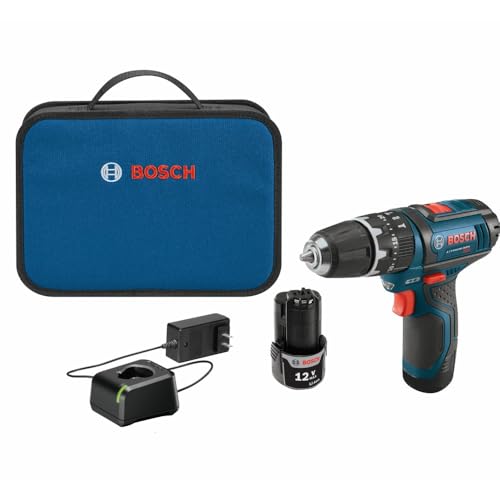
Bosch PS130-2A 12V Ultra-Compact Hammer Drill/Driver Kit — Best Lightweight Classic
The PS130-2A is the veteran of this guide, and its longevity in Bosch’s catalog is itself a review. This ultra-compact 3/8-inch hammer drill/driver kit defined the pocketable end of the category: a tool light enough to hang on a belt all day and small enough to live in a kitchen drawer, yet with a genuine hammer mode for the anchor-into-brick jobs that define household masonry.
Strengths
- Ultra-compact, lightweight design is the easiest here to carry and use overhead
- Proven, mature platform with widely available batteries and parts
- Complete kit format suits buyers starting from zero
Trade-offs
- Older brushed-era design gives back runtime and power to the brushless picks
- 3/8-inch chuck caps accessory size
- Hammer capability is light-duty — mortar and brick, not a concrete specialist
| Chuck | 3/8 inch (per API title) |
| Design | Ultra-compact (per API title) |
| Form | Kit (per API title) |
There is a specific buyer the PS130 still serves better than any rival: the person whose drilling life is pictures, shelves, blinds, hinges and the occasional masonry anchor, and who values a tool that is never a burden to fetch. Heavier drills get left in the garage; this one gets used, because using it costs nothing in effort. Its hammer mode, applied with sharp bits and patience, handles the household masonry list without complaint.
If you are choosing between this and its brushless sibling above, the decision is appetite: the GSB12V-300 is the better tool for frequent work, while the PS130 remains the charming, proven lightweight for occasional work — often at a friendlier kit price. Check the current price on Amazon for both before deciding, since promotions regularly reshuffle their order.
Best for: homeowners wanting the lightest proven hammer drill kit for household work / Not suited for: frequent users who will feel brushed-era runtime limits
Check the current price on Amazon to see today’s configuration, included accessories and delivery options for the Bosch PS130 kit.

DEWALT 12V MAX XR Hammer Drill (Bare Tool) — Best for DEWALT 12V Owners
Bare tools live or die on platform loyalty, and this one is simple: if your chargers already say DEWALT 12V MAX, this XR hammer drill is your pick, full stop. The XR badge marks DEWALT’s brushless, higher-performance tier, and as a bare tool it converts your existing batteries into a masonry-capable drill for the price of the tool alone — the most economical route in this entire guide for platform owners.
Strengths
- XR brushless tier brings DEWALT’s best 12 volt performance
- Bare-tool format is the cheapest entry for existing platform owners
- DEWALT ergonomics and belt-hook practicality suit site work
Trade-offs
- No battery or charger included — a poor buy as a first tool
- DEWALT’s 12V line is a sideline to its 20V empire, so new-tool variety is limited
- Listing title is terse, so confirm kit contents carefully before ordering
| Tier | 12V MAX XR (per API title) |
| Form | Bare tool — battery and charger not included (per API title) |
Platform economics deserve plain speech: batteries are the expensive half of cordless ownership, and a bare tool that reuses packs you own beats a rival kit whose batteries orphan your existing stock. DEWALT 12V owners — often tradespeople who chose the line for its compact screwdrivers and inspection tools — get a hammer drill that keeps the whole bag on one charger. That coherence is worth more on a workday than a spec-sheet point or two.
For everyone else, the calculus inverts: adding batteries and a charger to this bare tool usually lands near the Milwaukee or SKIL kit money, at which point those complete kits make more sense. This pick is proudly conditional, and the condition is printed on your batteries.
Best for: existing DEWALT 12V MAX owners adding hammer capability / Not suited for: first-time buyers, who should choose a complete kit instead
Check the current price on Amazon to see today’s configuration, included accessories and delivery options for the DEWALT XR bare tool.

Makita 12V Max CXT Hammer Driver Drill Kit — Best for Makita CXT Owners
Makita’s 12V Max CXT line takes a different ergonomic path, with slide-style batteries that give its tools a balanced, big-tool feel in miniature. This hammer driver drill kit, listed with 2.0Ah lithium-ion power, brings Makita’s trademark smoothness — refined triggers, quiet gearboxes, tools that feel machined rather than molded — to the 12 volt hammer category.
Strengths
- Slide-battery CXT design balances well and stands up on its pack
- Makita fit, finish and trigger control are the most refined here
- Full kit with 2.0Ah battery suits new CXT owners and upgraders
Trade-offs
- CXT is a separate island from Makita’s famous 18V LXT system — batteries do not cross over
- Class performance is competitive rather than class-leading
- Accessory and specialty-tool depth trails Milwaukee M12
| Platform | Makita 12V Max CXT (per API title) |
| Battery | 2.0Ah lithium-ion (per API title) |
| Form | Hammer driver drill kit (per API title) |
Makita tools reward people who notice refinement: the CXT hammer drill’s variable-speed control at low revs is genuinely delicate, which matters when you are starting screws in finished surfaces or drilling tile-adjacent work where a lurch means damage. In hammer mode it covers the brick-and-block brief with composure. It will not out-muscle the Milwaukee, and it does not try to; it out-smooths everything here.
The strategic warning is the island problem. CXT batteries power CXT tools only, so buying this kit starts a second Makita collection beside any 18V LXT stock. For dedicated 12 volt users that is no hardship — the CXT range covers the essentials well — but LXT owners expecting cross-compatibility should look again before ordering.
Best for: Makita fans and detail-focused users who value control and refinement / Not suited for: 18V LXT owners assuming battery cross-compatibility
Check the current price on Amazon to see today’s configuration, included accessories and delivery options for the Makita CXT kit.
Comparison Table
| Pick | Badge | Key spec | Best for |
|---|---|---|---|
| Milwaukee M12 FUEL 1/2″ Hammer Drill-Driver Kit | Best Overall | 1/2″ chuck, M12 FUEL brushless platform, full kit | buyers who want the best 12 volt hammer drill outright and a platform worth building on |
| Bosch GSB12V-300B22 12V Max Brushless Hammer Drill/Driver Kit | Best Compact | 3/8″ chuck, brushless, two 2.0Ah batteries | installers, cabinet and furniture work, and anyone prioritizing size and weight |
| SKIL PWR CORE 12 Brushless Hammer Drill Kit HD6290A-10 | Best Value Kit | 1/2″ ratcheting chuck, brushless, PWR JUMP charger | first-kit buyers and homeowners who want brushless 1/2-inch specification on a budget |
| Bosch PS130-2A 12V Ultra-Compact Hammer Drill/Driver Kit | Best Lightweight Classic | 3/8″ chuck, ultra-compact kit | homeowners wanting the lightest proven hammer drill kit for household work |
| DEWALT 12V MAX XR Hammer Drill (Bare Tool) | Best for DEWALT 12V Owners | XR tier, bare tool for 12V MAX platform | existing DEWALT 12V MAX owners adding hammer capability |
| Makita 12V Max CXT Hammer Driver Drill Kit | Best for Makita CXT Owners | CXT slide battery, 2.0Ah kit | Makita fans and detail-focused users who value control and refinement |
Two columns decide most purchases here: chuck size, which caps your accessories, and form — kit versus bare tool — which decides whether the price you see is the price you pay to start working. Read those before falling in love with any single row.
How to Choose a 12 Volt Hammer Drill?
Decide the chuck first. A 1/2-inch chuck (Milwaukee, SKIL) swallows every bit, hole saw and accessory a homeowner or tradesperson will meet, including the larger carbide bits hammer work sometimes wants. A 3/8-inch chuck (both Bosch models) trades that ceiling for a shorter, lighter head — a trade worth making if your work lives inside cabinets and your masonry is anchor-sized. There is no wrong answer, only a wrong match between chuck and workload.
Then decide kit versus bare with your battery shelf in view. Own the platform already? Bare tools are the smartest money in cordless. Starting fresh? A kit with two batteries beats a kit with one for any tool you will use in hammer mode, because masonry sessions are the longest continuous draws in this class and a single pack turns drilling day into charging day.
- 1/2-inch chuck for maximum accessory range; 3/8-inch for minimum size
- Brushless motors earn their premium in runtime on small batteries
- Two-battery kits suit hammer work; one-battery kits suit light driving
- Platform depth decides your next five tool purchases, not just this one
What Can a 12 Volt Hammer Drill Actually Drill?
In hammer mode with sharp carbide bits, expect confident work in mortar joints, brick, concrete block, stucco and tile backer — the masonry of houses. Small-diameter anchor holes are its home turf. Poured, aggregate-heavy structural concrete is where honesty begins: a 12 volt hammer drill will make a few small holes slowly, and will hate every one, and sustained work there belongs to an 18 volt hammer drill or a rotary hammer. Knowing that boundary keeps both your tool and your temper intact.
In rotary mode it is simply a good compact drill/driver: flat-pack, cabinetry, deck boards, framing repairs, hole saws in doors, and driving up to moderate structural screws. Most owners find the hammer mode is used monthly while the drill/driver earns its shelf space daily — which is exactly why buying the drill you enjoy using daily, with hammer as the bonus, is the right frame for this whole category.
Which Battery Platform Should You Commit To?
Milwaukee M12 offers the deepest bench: if a 12 volt tool exists, M12 probably has two versions of it, including heated gear, inspection cameras and specialty trade tools. Bosch 12V Max and Makita CXT serve the core trades elegantly with smaller catalogs. SKIL PWR CORE 12 is building outward from strong core tools at disruptive prices. DEWALT 12V MAX is the compact companion to a 20V world many pros already own.
The practical rule: inventory what you own, price the batteries you would need, and let total system cost — not the drill alone — make the decision. A ‘cheap’ drill that orphans three good batteries is the most expensive option on the page.
Which Bits and Accessories Does a 12 Volt Hammer Drill Need?
A hammer drill is only ever as good as the steel in its chuck, and the accessory kit matters more at 12 volts than at 18 because there is less surplus power to bully a dull bit through. The essential bench is short: a set of carbide-tipped masonry bits in the anchor sizes you actually use — for most households the small-to-mid diameters that match common wall plugs and Tapcon-style screws — a quality set of titanium or black-oxide twist bits for wood and metal, a spade bit or two for rough wood boring, and a magnetic bit holder with a honest selection of Phillips, square and Torx insert bits for the driving half of the tool’s life. Buy the masonry bits one quality tier above your instinct; in this category, bit sharpness is performance.
Two accessories separate prepared owners from frustrated ones. The first is a depth stop or a simple tape flag habit for anchor holes, because a hole drilled through a block cavity’s far wall holds nothing. The second is a compact right-angle or offset attachment for the cabinet work these drills are bought for — the inside-corner screw that no straight drill reaches gracefully. Neither costs much; both convert the drill from a tool you own into a system you rely on. Store bits in a case that lives with the drill, because a 12 volt tool’s whole philosophy is grab-and-go, and a bit hunt is the tax on disorganization.
- Carbide masonry bits in your actual anchor sizes, bought a tier up
- Twist bits for wood and metal, spade bits for rough boring
- Magnetic holder plus Phillips, square and Torx inserts for driving
- Tape-flag depth discipline for every anchor hole
- Bits stored in a case with the drill, always
How Does a 12 Volt Hammer Drill Compare With an 18 or 20 Volt One?
The bigger drills win three things outright: sustained masonry pace, large-diameter capacity, and driving muscle for structural fasteners in volume. If your year includes a fence build, a deck, or a masonry wall that needs a grid of holes, the 18 and 20 volt class is not a luxury — it is the correct tool, and no review in this guide should talk you out of it. Where the bigger tools lose is everything else: weight on the belt and overhead, size inside cabinets and between studs, battery cost, and the simple willingness to be picked up for a two-screw job. Tools that are pleasant get used; tools that are chores get scheduled, and scheduled jobs pile up.
That is why so many two-drill households exist, and why the 12 volt is so often the senior partner in them despite its junior voltage. The compact drill handles the daily census — furniture, hardware, fixtures, anchors, repairs — while the big drill waits for its dozen heavy days a year. If you can own only one, let your masonry volume decide: occasional anchors argue 12 volt, regular concrete argues bigger. If you can own two eventually, the order matters less than the honesty: buy the one this year’s projects demand, and let next year’s projects argue for the other.
What Maintenance Keeps a Compact Hammer Drill Alive?
Cordless drills ask little, but the little matters. Keep the chuck jaws clean and occasionally exercised through their full range, because masonry dust is an abrasive that migrates everywhere, and a gritty chuck both wobbles bits and wears its own mechanism. Blow dust out of the motor vents with dry air after masonry sessions — the same dust that dulls bits settles in cooling paths. Store batteries neither flat nor baking: a partial charge in a cool, dry place is the lithium ideal, and a drill stored in a freezing or roasting vehicle ages its packs years ahead of its motor.
Finally, retire bits before they retire your opinion of the drill. A carbide bit that has lost its edge will make the finest 12 volt hammer drill feel gutless in brick, and owners routinely blame the tool for the consumable. Fresh bits, clean chucks, aired vents, kindly stored batteries — that is the entire liturgy, and a drill kept to it will outlast the kitchen it was bought to hang.
Safety and Control: Getting Clean Results Without Damage
Compact drills forgive a lot, but three disciplines separate clean work from callbacks. The first is workpiece respect: finished surfaces get protected, pilot decisions get made before the trigger does, and the drill’s clutch is set for the fastener rather than left at maximum out of habit — a 12 volt drill can still snap a small screw or bury a head through cabinet stock in a blink. The second is body mechanics: brace the workpiece, not your other hand, keep the bit’s line true with your eye over the drill’s spine, and let a ladder or platform bring the work to you instead of reaching into imbalance with a spinning tool.
The third is masonry-specific: dust control and awareness of what hides in walls. Cables and pipes share wall cavities with your anchor ambitions, and a stud finder with wire and pipe detection is a cheap oracle. Masonry dust deserves a mask and, in older buildings, the humility to stop and think about what the wall is made of before drilling merrily onward. None of this is advanced technique — it is the ordinary professionalism that makes a small drill’s results indistinguishable from a big drill’s, which is, in the end, the entire promise of the category when it is used well.
- Set the clutch for the fastener, not for your optimism
- Brace the work, never with the hand near the bit line
- Check for cables and pipes before masonry holes in walls
- Mask up for masonry dust, especially in older buildings
What Does a Good Compact Hammer Drill Feel Like in the Hand?
Specifications end where the hand begins, and compact drills are unusually honest tools to judge by feel. A good one balances on its battery without nosing down, so a wrist held level stays level. Its trigger meters speed finely at the bottom of its travel, because starting screws and seating bits are low-speed arts. Its mode collar clicks between drill, drive and hammer with a decision you can feel through a glove. And its grip fills the hand without forcing it — the difference, across a day of installation work, between a tool you forget you are holding and one you keep putting down.
None of the six drills in this guide fails that examination, but they pass it with different accents: Milwaukee with professional density, Bosch with installation lightness, SKIL with eager value, DEWALT and Makita with their houses’ familiar ergonomics. If a store visit is possible, hold two finalists with a battery fitted and work their triggers and collars for a full minute each. The drill your hand chooses in that minute is very often the right answer to the whole comparison — the spec sheet merely explains why.
What Should You Do on the First Weekend With the Drill?
New-tool weekends set ownership patterns, so spend this one deliberately. Charge both batteries fully and label them with the month, because rotation is easier to remember than regret. Run the drill through its liturgy on scrap: a dozen screws driven and removed at clutch settings from low to high until the clutch’s language is in your hands, a row of holes in pine, one in hardwood, and then — with a fresh carbide bit and the technique sequence from this guide — three anchor holes in a sacrificial block or an unseen mortar joint. Set one real anchor and hang something honest on it.
Finish by casing the system the way you intend to keep it: drill, both batteries, charger, bit case, and the manual’s home in the bag’s pocket. That half-hour converts a purchase into a practiced capability, and the first real job — which will arrive, as real jobs do, at an inconvenient hour — will be met by an owner who already knows the tool’s voice.
How to Drill Into Brick and Block With a 12 Volt Hammer Drill
Technique matters more at 12 volts than at 18, because you have less surplus power to waste. This sequence gets clean anchor holes without cooking bits or cracking faces.
- Mark the hole and center-punch or tape the spot so the bit cannot wander across the brick face at startup.
- Fit a sharp carbide-tipped masonry bit of the anchor maker’s specified diameter — dull bits are the top cause of “weak drill” complaints.
- Select hammer mode and a moderate speed; high revs glaze brick dust into the hole and overheat the bit.
- Start in rotary-only for the first seconds to establish the hole, then switch to hammer once the bit is seated and tracking true.
- Use firm, steady pressure and let the hammer mechanism work; leaning with body weight slows the motor and bends small bits.
- Peck-drill: withdraw the bit every few seconds to clear dust from the flutes, especially in block cavities and deep holes.
- Stop at the anchor maker’s depth plus a small allowance for dust, blow or vacuum the hole clean, then set the anchor.
- For visible brick faces, drill the mortar joint when the layout allows — it is softer, kinder to the tool, and repairable later.
Eye protection is not optional in hammer mode — masonry chips are fast and sharp — and a dust mask matters in older brick and any material of unknown composition. Small tool, real hazards, same respect as the big tools.
Common Buying Mistakes
Buying a bare tool with no batteries. The DEWALT XR in this guide is a superb buy for platform owners and a frustrating one for everyone else, because the tool alone cannot drill anything. Always total the working cost — tool plus batteries plus charger — before comparing against kits.
Using wood bits in masonry. Hammer mode demands carbide-tipped masonry bits. A brad-point or twist bit in brick will be destroyed in one hole and may convince you the drill is weak when the bit was simply wrong.
Expecting rotary-hammer work. A hammer drill/driver vibrates the bit; a rotary hammer drives a piston. For grids of holes in poured concrete, rent or buy the piston tool. Asking a 12 volt hammer drill to do it ends in heat, slowness and shortened tool life.
Ignoring the chuck size. Buyers discover the 3/8-inch ceiling the day they meet a 1/2-inch-shank accessory. If your work includes larger hole saws or mixing paddles, choose a 1/2-inch model from the start.
Pushing harder instead of clearing dust. Packed dust insulates the bit, kills cutting and overheats the motor. Pecking and clearing is faster than force, every time, in every masonry material.
Final Recommendation
The Milwaukee M12 FUEL kit is the default recommendation: the strongest tool here, in the deepest platform, with the chuck that never limits you. The Bosch GSB12V-300 kit wins when size and weight lead the brief; the SKIL kit wins when value does; the PS130 remains the lightweight classic for occasional work; and the DEWALT and Makita picks are the right answers inside their own platforms. Notice the pattern — in 12 volt tools, the best drill is usually the one whose batteries you will still be glad you own in five years.
Round out the compact-tool picture with the neighboring guides in this series:
- Milwaukee M12 FUEL 1/2″ Hammer Drill-Driver Kit (Best Overall): Check the current price on Amazon.
- Bosch GSB12V-300B22 12V Max Brushless Hammer Drill/Driver Kit (Best Compact): Check the current price on Amazon.
- SKIL PWR CORE 12 Brushless Hammer Drill Kit HD6290A-10 (Best Value Kit): Check the current price on Amazon.
- Bosch PS130-2A 12V Ultra-Compact Hammer Drill/Driver Kit (Best Lightweight Classic): Check the current price on Amazon.
- DEWALT 12V MAX XR Hammer Drill (Bare Tool) (Best for DEWALT 12V Owners): Check the current price on Amazon.
- Makita 12V Max CXT Hammer Driver Drill Kit (Best for Makita CXT Owners): Check the current price on Amazon.
Best 12 Volt Hammer Drills Best 12 Volt Handheld Vacuum Best 12 Volt Hair Dryer
Frequently Asked Questions
Is a 12 volt hammer drill strong enough for brick?
Yes — brick, mortar and block are exactly its working range with a sharp carbide bit and sensible hole sizes. Poured structural concrete is the boundary: a few small holes are possible, sustained work belongs to an 18 volt hammer drill or a rotary hammer.
What is the difference between a hammer drill and a rotary hammer?
A hammer drill/driver vibrates its chuck to chip as it rotates, and doubles as an everyday drill/driver. A rotary hammer uses a piston to deliver far heavier blows and is a dedicated masonry tool. Homeowners need the former weekly and the latter rarely.
Should I buy a kit or a bare tool?
Buy a bare tool only when you already own that platform’s batteries and charger. Everyone else should buy a kit, ideally with two batteries, because hammer drilling draws packs down faster than light driving.
Does brushless really matter at 12 volts?
It matters more, not less: small batteries hold little energy, so the efficiency and runtime gains of a brushless motor are felt immediately, along with cooler running and longer motor life.
Can a 12 volt hammer drill replace my regular drill?
For most households, yes. In rotary mode these are full-featured drill/drivers for furniture, cabinetry, repairs and moderate construction. Only frequent large-diameter or structural work justifies adding a bigger drill beside one.
Why do Bosch models have 3/8-inch chucks?
To keep the head short and the tool light for installation work. The trade is accessory ceiling: bits and hole saws above the chuck’s capacity will not mount. Match the chuck to your largest regular accessory and the choice makes itself.
Best 12 Volt Handheld Spotlights Best 12 Volt Heated Blanket


