Disclosure: airfryerkitchensupply.com is reader-supported. When you buy through links on our site, we may earn an affiliate commission at no extra cost to you.
In this guide
Quick Picks
- Bedsure Queen Sheet Set (4 Pieces) — Best Everyday Value
- Bedsure PureWoven Bamboo Sheets (Queen) — Best Cooling Natural Feel
- Bedsure Deep Pocket Queen Sheets Set — Best for Tall Mattresses
- Mellanni Iconic 4-Piece Bed Sheet Set (Queen) — Best Proven All-Rounder
- Mellanni 400TC Cotton Sateen Sheets (Queen) — Best Cotton Feel
- Mellanni Cotton Flannel Sheet Set (Queen) — Best for Winter
Key Takeaways
- Learning how to choose a bed sheet set comes down to four checks: fabric, fit, weave, and care — in that order.
- Measure your mattress depth including any topper, then buy pocket depth with one to two inches to spare.
- Thread count only matters within one fiber: a quality 300–500TC cotton beats any inflated four-digit claim, every single time.
- Buy two sets and rotate weekly; rotation is the cheapest way to double the working life of every sheet you own.
- Every set shortlisted below was verified against Amazon catalog data for this site; confirm size, color and pocket depth on the listing.
Knowing how to choose a bed sheet set sounds simple until you stand in front of the wall of near-identical packages — or scroll the endless listings — all promising luxury in numbers that cannot be compared. Thread counts in the thousands, fibers with invented names, pocket depths described only as ‘deep’: the sheet market is where bedding specifications go to be exaggerated. This guide cuts through it with a method: choose the fiber by how you sleep, the fit by tape measure, the weave by hand-feel, and the care routine by your actual laundry habits.
Sheets matter more than their price suggests, because they are the layer your skin actually touches for a third of your life. A set that sleeps hot, pops its corners at 3 a.m., or pills by the tenth wash taxes every night it survives. The good news is that sheet quality is legible once you know the few honest specifications — fiber, weave, pocket depth, and elastic construction — and the shortlist at the end of this guide shows those specifications embodied in six verified sets, each best at a different job.
A promise about scope: this guide will not crown one set as best for everyone, because sheets are the most personal textile in the house — the hot sleeper and the cold sleeper need opposite products, and both are right. What it will do is teach you to read any set’s specifications the way a textile buyer does, so that the right choice for your bed becomes obvious, and stays obvious the next time you shop, in any store, at any tier.
Which sheet fabric should you choose?
Fiber decides how a sheet sleeps, so start here. Cotton is the reference: breathable, durable, and available in weaves from crisp to silky; its quality lives in staple length and weave, not in headline thread count. Bamboo-derived rayon (viscose) is the cooling specialist — smooth, round fibers that feel cool on contact and drape fluidly — and it asks for gentler washing in return. Microfiber, finely woven polyester, is the value workhorse: soft, wrinkle-resistant, and easy to wash, with a warmer, less breathable hand than cotton that warm sleepers should weigh honestly. Linen, the premium summer classic, breathes superbly and softens for years, at a price and a rumpled aesthetic that suit some households perfectly and others not at all.
Match fiber to sleeper, not to marketing. Hot sleepers: bamboo rayon, percale cotton, or linen. Cold sleepers: flannel in winter, sateen cotton year-round. Sensitive skin: smooth fibers, washed before first use, with detergent fully rinsed. Households that wash hot and often: cotton and quality microfiber forgive the most. The fiber decision made honestly at this step makes every later decision easier, because weave and thread count only tune a character the fiber has already set.
What do weave and thread count actually mean?
Weave is the sheet’s personality. Percale is a plain, one-over-one-under weave: matte, crisp, breathable, the hotel-shirt feel that cool sleepers love and that softens with washing. Sateen floats more yarn on the surface: smoother, slightly lustrous, a calmer and warmer hand. Flannel is not a weave but a finish — brushed cotton whose raised nap traps air and feels warm instantly. Jersey knits like a T-shirt: stretchy, casual, and divisive. When a listing names its weave plainly, that is a mark of an honest sheet; when it hides behind thread count alone, be suspicious.
Thread count counts threads per square inch, and it has a physical ceiling: only so many yarns fit. Beyond a few hundred, higher numbers are achieved with multi-ply yarns counted thread by thread — arithmetic, not quality. Within a single fiber, a well-made 300–500 count is the genuine sweet spot; beyond it you are buying marketing. The 400TC cotton sateen in this guide’s shortlist is the honest example: a mid-range count, a named weave, a real fiber. Judge sheets by fiber and weave first, and let thread count break ties between near-identical candidates — never the reverse.
How do you get the fit right? Pockets, elastic and sizing
Measure your mattress before anything else: depth from base to crown, including any topper, because the topper sleeps on the mattress and the sheet must contain both. Then choose a fitted sheet whose stated pocket depth exceeds your measurement by one to two inches — enough to tuck and grip without straining. The verified sets in this guide span the real range: 15-inch pockets for standard modern mattresses, 16-inch for the taller middle, and a full 21-inch capacity for thick hybrids and topper stacks. A set that publishes its number, like those, is a set you can buy by measurement instead of hope.
Elastic construction is the fit’s second half. Full-perimeter elastic grips the whole mattress; corner-only elastic is cheaper and pops sooner. Whatever the design, a strained fit dies early — elastic held at maximum stretch through every wash ages in months — which is why the spare inches matter as much as the depth itself. Finally, check the flat sheet’s dimensions if you are tall or tuck hospital corners: the generous 90-by-102-inch flat in the cotton sateen set below is the kind of published detail that prevents the nightly tug-of-war for coverage.
How should sheets be washed and cared for?
Wash sheets weekly — they collect skin, oil, and the week’s nights — in warm water for cotton and microfiber, cooler and gentler for bamboo rayon. Wash sets separately from towels and clothing: zippers and rough fabrics abrade sheet surfaces, and towel lint embeds in smooth weaves. Use a moderate amount of detergent; excess detergent that does not rinse out stiffens fibers and dulls the hand-feel people blame on the sheet. Skip fabric softener on performance and cooling fabrics especially — softeners coat fibers, and coated fibers wick and breathe worse, which quietly uninstalls the properties you paid for.
Dry on medium, remove promptly, and fold or refit while slightly warm to minimize wrinkling without ironing. Rotate two sets weekly: each set rests a week between washes, elastic recovers, and both sets last roughly twice as long as one set washed twice as often — the single most economical habit in this entire guide. Store the spare set in the pillowcase of its own set, a trick that keeps sets together and linen closets sane.
How many sheet sets do you need, and in what colors?
Two sets per bed is the functional minimum this guide recommends — one on the bed, one in the wash or the closet — and three is the comfortable number that absorbs laundry delays and guests. Beyond that, buy by season rather than by novelty: a cool set and a warm set (the flannel principle) cover the year better than four identical sets. The shortlist below is organized exactly this way, so a household can assemble a system — everyday value plus a specialist — instead of a pile.
Color is a practical decision wearing an aesthetic hat. White is the classic for a reason: it tolerates hot washes, shows you honestly when it is clean, and matches everything — and it shows every mark with the same honesty. Mid-tone colors and gentle patterns hide the week’s wear best and suit busy households. Whatever you choose, buy the second set in the same or a coordinating color at the same time: dye lots drift, lines retire, and the household that falls in love with a sheet in March may not find its twin in October.
How to choose sheets for guest rooms, kids and rental properties
Guest beds have a different brief: they must please unknown sleepers, survive irregular washing, and look crisp after weeks of standing empty. The proven all-rounder profile — mid-depth pockets, easy care, white or a forgiving mid-tone — is the professional answer; it is no accident that hotels converge on the same formula. Add the second set so a same-day guest turnaround never waits on a dryer, and choose the fabric that forgives a hot, hurried wash, because guest laundry is rarely gentle laundry.
Kids’ beds reward durability and stain tolerance over hand-feel refinement: value microfiber and cotton blends in mid-tones and patterns that hide the evidence, in two-set rotation because childhood generates laundry at industrial rates. For rental properties and Airbnb-style hosting, standardize: one model, one color, several sets, so any set fits any bed and replacements are a reorder, not a research project. The Mellanni and Bedsure value sets in the shortlist exist precisely in this workhorse class.
Sheets and sleep temperature: building a year-round system
Treat sheets as the adjustable layer of the bed’s climate system. The mattress and duvet set the broad temperature; the sheet — the layer on your skin — fine-tunes it, and swapping sheets is faster and cheaper than swapping anything else. A two-season system covers most climates: a cool set (bamboo rayon or percale) for the warm months and a standard or warm set (sateen, then flannel for real winters) for the cold ones. Shoulder seasons are handled by keeping the cool set and adding a blanket, which is easier to kick off at 3 a.m. than a too-warm sheet is to escape.
Hot sleepers with partners who run cold — the classic household negotiation — can split the difference with a breathable cotton set and separate light blankets per side, rather than one shared thermal regime. And remember the wash rule that protects the whole system: no fabric softener on the cooling sets, ever, because the coating that makes a sheet feel slick in the store is the coating that stops it breathing in August.
How to tell a quality sheet in a listing before it arrives
Read listings like an inspector. Quality signals: the fiber named precisely (100 percent cotton; rayon derived from bamboo) rather than poetically; the weave named (percale, sateen, flannel); pocket depth given as a number; flat sheet dimensions published; piece count explicit; and care instructions that sound like laundry rather than legal defense. The sets in this guide’s shortlist pass that reading test — their catalog titles state materials, pockets, and contents plainly — which is one reason they were shortlisted.
Discount the opposite signals: thread counts in the high hundreds or thousands with no fiber staple information; ‘luxury’ and ‘hotel’ doing all the descriptive work; pocket depth described only as deep; and photographs that show the bed from across the room but never the fabric up close. A sheet is a textile, and textiles are bought by specification. When a seller will not specify, the market has plenty who will — several of them are reviewed below this section.
Sheet sizing across beds: twins, fulls, queens and kings without mistakes
Sheet sizes are less standardized than mattress sizes in one treacherous way: the fitted sheet’s pocket depth varies by line even within one size, and pillowcase counts change — twin sets typically include one case, larger sets two, and king sets may include king-size cases that swallow standard pillows. When furnishing more than one bed, buy per bed from measurements rather than assuming the household’s sizes are uniform; the guest room’s older, thinner mattress and the master bed’s tall hybrid are different fits wearing the same ‘queen’ label.
For split kings and adjustable bases, confirm the set is actually sold in that configuration rather than improvising with two twin XL fitted sheets under a king flat — an improvisation that works, but should be a decision, not a surprise. And for children’s beds that will graduate to teen beds, the full-size set bought once often outlasts the twin bought twice; measure the room and the growth curve with the same tape.
What should a good bed sheet set cost, and where does the money go?
Sheet money buys fiber quality first: long-staple cotton, genuine bamboo-derived rayon, and real linen cost more at the bale than short-staple cotton or basic polyester, and no weaving trick repeals that arithmetic. It buys construction second — full-perimeter elastic, generous flat dimensions, deep pockets properly sewn rather than stretched standard ones — and finishing third: dyes that hold, hems that stay, quality control that keeps the second set identical to the first. Brand and packaging are in the price too, but they are the smallest honest components; when a set is expensive, demand to see the money in the first three categories, in the listing’s specifications.
The value strategy this guide keeps returning to is not ‘buy cheap’ but ‘buy twice, rotate, and specialize only where you sleep demands it.’ Two value sets in rotation outlast one premium set in constant service, and a single specialist — the cooling set for the hot sleeper, the flannel for the cold room — delivers more nightly benefit than a whole wardrobe of mid upgrades. Spend where your skin notices, save where it cannot, and let the tape measure and the fiber label, not the thread-count headline, allocate the budget.
How to make the first wash and first night a fair test
Every new set deserves a wash before its first night: manufacturing finishes, sizing, and warehouse dust all rinse out, and the sheet your skin judges should be the sheet as it will actually live, not the showroom version. Wash it exactly as you intend to wash it weekly — same temperature, same detergent, no softener if it is a cooling set — because the first wash is also your care routine’s audition. Dry it the way you will dry it, and note the fit afterward on the actual mattress: this is the moment to discover a pocket problem, while the second set is still returnable and the lesson is cheap.
Then sleep a full week before judging. New cotton softens across its first several washes; bamboo’s drape settles; flannel sheds its early lint and finds its nap. A sheet reviewed on night one is a first impression, and first impressions of textiles are notoriously wrong in both directions. The households that love their sheets are usually the ones who bought by specification, washed correctly, and judged at week two — which is, not coincidentally, the entire method of this guide in miniature.
How to Choose a Bed Sheet Set in Seven Steps
- Identify your sleeper type: Hot, cold, or neutral; sensitive skin; how warm the room runs. This chooses the fiber family before any product is considered.
- Pick the fiber: Cotton for the all-round reference, bamboo rayon for cooling, microfiber for easy-care value, flannel for winter warmth, linen for premium summer breathability.
- Choose the weave: Percale for crisp and cool, sateen for smooth and calm, flannel’s brushed nap for cold rooms. Let your hand, not the headline, decide.
- Measure the mattress: Depth including topper, in inches. Write it down; you will compare it against every pocket claim you meet.
- Match pocket depth: Select a fitted sheet rated one to two inches deeper than your measurement, with full-perimeter elastic where possible.
- Verify the set’s contents: Four pieces is standard (fitted, flat, two pillowcases; twin sets carry one). Confirm flat sheet dimensions if you are tall.
- Buy two and rotate: Purchase the second set at the same time, rotate weekly, wash by the care rules for the fiber, and replace elastic-tired sets without nostalgia.
Troubleshooting: Problems People Hit and How to Fix Them
Problem: the fitted sheet keeps popping off the corners → The pocket is too shallow for the mattress-plus-topper stack, or the elastic is tired. Measure the true depth and move up a pocket class; sheet suspenders are a stopgap, not a fix.
Problem: the sheets sleep hotter than expected → Check the fiber first — microfiber and dense sateen sleep warmer than percale or bamboo — and remove fabric softener from the wash, since coating kills breathability. If the room itself is hot, a cooling-fiber set is the real answer.
Problem: the fabric is pilling after a few washes → Pilling comes from abrasion: wash sheets alone, inside out for brushed fabrics, on gentler cycles, and never with towels. Short-staple fibers pill faster; it is a fiber-quality signal for the next purchase.
Problem: white sheets are yellowing → Body oils oxidize in storage and in hot dryers. Wash whites separately in warm water, dry on medium rather than high, and store fully dry in a breathable place — and do not use the set’s own pillowcase trick until the set is bone dry.
Problem: the flat sheet is never wide enough → Your set’s flat sheet is undersized for your tuck or your height. Next purchase, shop the published flat dimensions — the 90-by-102 class — and consider sizing the flat up while keeping the fitted size exact.
Models That Match These Criteria
Six sets, each verified against Amazon catalog data for this site, each demonstrating a different answer to the method above: everyday value, cooling bamboo, maximum pocket depth, the proven all-rounder, honest cotton sateen, and winter flannel. All are queen 4-piece sets as reviewed here; confirm the size and color you need on the listing before you order.

1. Bedsure Queen Sheet Set (4 Pieces) — Best Everyday Value
The Bedsure 4-piece queen set is the sensible default of this guide: soft, breathable sheets positioned as cooling bedding, with deep pockets, easy care, and fade and shrink resistance in its catalog description. It demonstrates what most households actually need — a set that fits, breathes, survives the wash, and can be reordered in another color without a committee meeting.
| Spec | Detail |
|---|---|
| Size | Queen, 4 pieces |
| Fit | Deep pocket |
| Care | Easy care; fade and shrink resistant |
| Positioning | Soft, breathable, cooling |
Strengths
- Deep pockets fit modern mattresses without corner wrestling
- Easy-care fabric suits weekly washing reality
- Breathable hand-feel suits warm rooms and warm sleepers
Trade-offs
- Microfiber-class softness is a different feel from cotton — know your preference
- Light colors in any brand show wear sooner
- Buy two sets; rotation doubles the life of both
Within this guide the Bedsure is the control sample: the set against which fancier materials must justify themselves. Its virtues are the unglamorous ones the choosing sections emphasize — pocket depth that actually contains a modern mattress, elastic that survives the wash, a hand-feel that stays pleasant after the newness fades. For guest rooms, kids’ beds, and first apartments, this profile is not a compromise; it is the correct answer.
It also teaches the rotation lesson better than any paragraph could: at its value tier, owning two sets costs less than one premium set, and alternating them weekly extends both sets’ elastic and fabric life dramatically. If your sheet budget is fixed, the Bedsure-times-two strategy is the most sophisticated purchase in this entire guide.
Best for: Everyday households, guest rooms and anyone building a two-set rotation / Not suited for: Cotton purists who know they dislike microfiber’s hand-feel
Check on Amazon — check price on Amazon before you buy, because countertop oven pricing moves often and the listing is the only place to confirm the current configuration, included accessories, and delivery options.
2. Bedsure PureWoven Bamboo Sheets (Queen) — Best Cooling Natural Feel
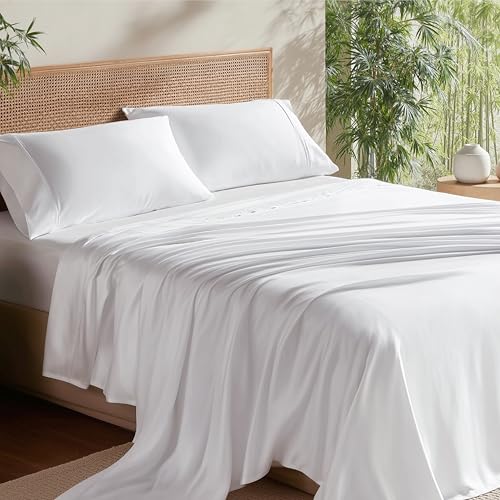
The PureWoven set is made from 100 percent rayon derived from bamboo, in a 4-piece queen set with a 16-inch deep pocket, positioned for hot sleepers with a breathable, silky hand-feel and an OEKO-TEX credential in its catalog title. It is this guide’s worked example of the bamboo-viscose category: genuinely cool to the touch, fluid and drapey, and asking for gentler washing in return.
| Spec | Detail |
|---|---|
| Material | 100% rayon derived from bamboo |
| Size | Queen, 4 pieces |
| 16-inch deep pocket | |
| Certification | OEKO-TEX (per catalog title) |
Strengths
- Cool, silky first touch that warm sleepers notice immediately
- Deep 16-inch pocket fits tall modern mattresses
- Breathable weave suits summer and warm climates
Trade-offs
- Bamboo rayon wants gentle cycles and low heat to age well
- Drapey fabric wrinkles and moves differently from crisp cotton
- Premium tier relative to basic microfiber sets
Bamboo-derived rayon earns its cooling reputation honestly: the fibers are smooth and round, so the fabric feels cool on contact and slides rather than grips, which is why hot sleepers describe the first night as a revelation. The trade is care — the same smooth fibers are less forgiving of hot washes and aggressive drying, and the fabric’s fluid drape will not give you the crisp, tucked, hotel-corner look no matter how you iron it.
Choose PureWoven if temperature is your first criterion and you are willing to wash like it matters. In the terms of this guide’s method, it is the pick where one dominant need — sleeping cooler — legitimately outranks every other consideration, and the rest of the checklist (pocket depth, certification, piece count) still passes.
Best for: Hot sleepers who prioritize a cool, silky feel and will wash gently / Not suited for: Anyone who wants crisp, structured, hotel-style sheets
Check on Amazon — check price on Amazon before you buy, because countertop oven pricing moves often and the listing is the only place to confirm the current configuration, included accessories, and delivery options.

3. Bedsure Deep Pocket Queen Sheets Set — Best for Tall Mattresses
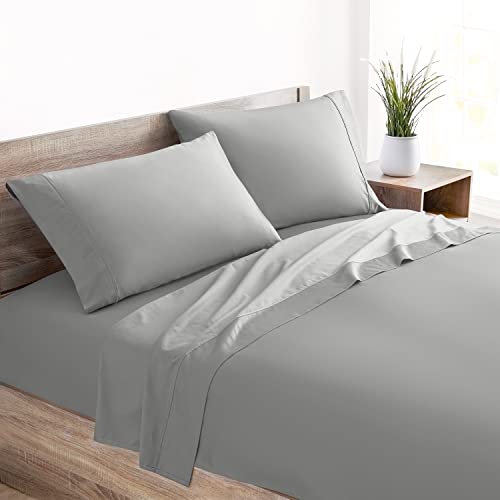
This Bedsure set is built around one specification: a fitted sheet that accommodates mattresses up to 21 inches thick. It is a 4-piece GentleSoft set with moisture-wicking, soft and cooling positioning, in light grey. If your bed wears a tall hybrid or a topper, this is the set in the guide designed around your tape measure.
| Spec | Detail |
|---|---|
| Fit | Fits mattresses up to 21 inches thick |
| Size | Queen, 4 pieces |
| Properties | Moisture wicking; soft and cooling positioning |
| Color | Light grey (reviewed configuration) |
Strengths
- The deepest pocket in this guide — tall mattresses and toppers contained
- Moisture-wicking positioning suits warm sleepers
- Secure fit ends the nightly corner-pop problem
Trade-offs
- On a slim mattress, extra pocket fabric can bunch — match depth to your bed
- Deep-pocket sets cost a small premium over standard fits
- Color range in the reviewed listing is the starting point, not the whole palette
Pocket depth is the most lied-about number in sheets, usually by omission: sets say ‘deep pocket’ and mean 14 inches. This set publishes its number — up to 21 inches — which is why it anchors the fit section of this guide. Measure your mattress including any topper, add an inch of tuck, and if the total lands in the high teens, this is your category and this set is its reference example.
The lesson generalizes: buy pocket depth like you buy shoes, by measurement against your own foot. A set that fits perfectly is quieter, smoother, and longer-lived than a ‘better’ set straining at the corners, because elastic under constant strain is elastic dying on schedule. Fit first, fabric second — the Bedsure Deep Pocket is what that rule looks like as a product.
Best for: Tall hybrids, thick mattresses and beds with toppers / Not suited for: Slim mattresses under about 12 inches, where the extra depth will bunch
Check on Amazon — check price on Amazon before you buy, because countertop oven pricing moves often and the listing is the only place to confirm the current configuration, included accessories, and delivery options.

4. Mellanni Iconic 4-Piece Bed Sheet Set (Queen) — Best Proven All-Rounder
The Mellanni Iconic is the long-runner of the category: a 4-piece queen set with a 16-inch deep pocket in white, carrying a Good Housekeeping Best Bedding history in its catalog title and a lab-tested positioning around breathability and color retention. It is the set for buyers who want the decision pre-made by years of category presence.
| Spec | Detail |
|---|---|
| Size | Queen, 4 pieces |
| 16-inch deep pocket | |
| Color | White (reviewed configuration) |
| Recognition | Good Housekeeping Best Bedding (per catalog title) |
Strengths
- 16-inch pocket covers most modern mattresses honestly
- Long category track record and bedding-award history
- Breathable, easy-care profile suits weekly washing
Trade-offs
- White shows every mark — beautiful and demanding in equal measure
- Value-tier fabric feel differs from long-staple cotton crispness
- Its popularity means many lookalike listings — buy the exact model
There is a specific comfort in buying the set a category is known by. The Iconic’s catalog description leans on lab testing and longevity — staying bright and smooth — which matches its real-world role: the set households reorder in a second color because the first set behaved. Its 16-inch pocket sits in the honest middle of modern mattress depths, covering most beds without the bunching an ultra-deep pocket causes on slim ones.
Within this guide it plays the role of the safe pair of hands: not the coolest (that is the bamboo), not the deepest (the 21-inch Bedsure), not the crispest (the cotton sateen below) — but the set with no weak answer anywhere on the checklist. For a primary bed in a normal room, that completeness is usually the right choice.
Best for: Main bedrooms wanting a proven, no-weakness all-rounder / Not suited for: Shoppers chasing one extreme property above all others
Check on Amazon — check price on Amazon before you buy, because countertop oven pricing moves often and the listing is the only place to confirm the current configuration, included accessories, and delivery options.
5. Mellanni 400TC Cotton Sateen Sheets (Queen) — Best Cotton Feel
For buyers who know they want cotton, the Mellanni 400TC sateen set is this guide’s reference: 100 percent cotton in a smooth sateen weave, queen size, with a 15-inch fitted pocket, a 90-by-102-inch flat sheet, and two pillowcases, in light gray. It demonstrates what thread count should mean — a mid-range count in a quality weave — rather than the inflated numbers the fiber section of this guide warns about.
| Spec | Detail |
|---|---|
| Material | 100% cotton, sateen weave |
| Thread count | 400TC |
| 15-inch fitted pocket | |
| Flat sheet | 90 x 102 inches; 2 pillowcases |
Strengths
- True cotton breathability and a smooth sateen hand
- Honest mid-range thread count in a proper weave
- Generous flat sheet dimensions for tuck and drape
Trade-offs
- Cotton wrinkles more than microfiber — sateen softens the look, not the physics
- 15-inch pocket is mid-depth; very tall mattresses should look above
- Cotton asks for prompt removal from the dryer to look its best
Sateen is the weave for people who like cotton’s breathability but not percale’s crisp rustle: the yarn arrangement puts more thread on the surface, producing a smooth, lightly lustrous face that feels calm against skin. A 400 thread count in real cotton sateen is the category’s honest sweet spot — substantial without the stuffed, airless density that four-digit marketing counts imply and never deliver.
Choose this set if your hands know cotton and reject substitutes, if your room runs warm but you dislike bamboo’s drape, or if you simply want the sheet equivalent of a well-made white shirt: natural fiber, correct construction, no theater. Wash it warm, dry it promptly, and it will soften gracefully for years.
Best for: Cotton loyalists who want a smooth sateen hand at an honest thread count / Not suited for: Anyone needing pockets deeper than 15 inches
Check on Amazon — check price on Amazon before you buy, because countertop oven pricing moves often and the listing is the only place to confirm the current configuration, included accessories, and delivery options.
6. Mellanni Cotton Flannel Sheet Set (Queen) — Best for Winter
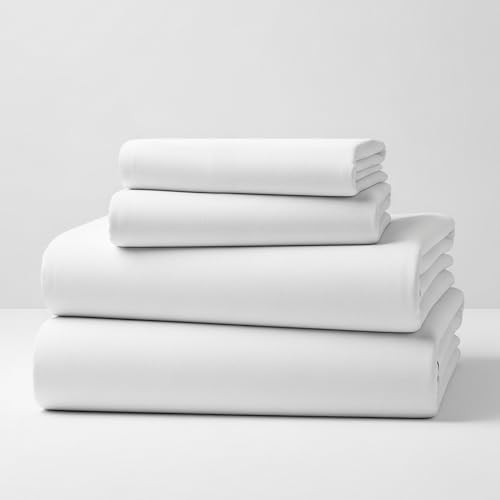
The Mellanni flannel set is the seasonal specialist: cotton flannel, double brushed for softness, with a deep-pocket fitted sheet up to 16 inches, in a 4-piece queen set in white. Flannel is not a failed summer sheet; it is a different instrument — brushed cotton that traps a whisper of air and feels warm on contact in a cold room.
| Spec | Detail |
|---|---|
| Material | Cotton flannel, double brushed |
| Size | Queen, 4 pieces |
| Deep pocket up to 16 inches | |
| Color | White (reviewed configuration) |
Strengths
- Double-brushed surface feels warm instantly in cold rooms
- Cotton flannel breathes better than synthetic winter alternatives
- Deep pocket fits modern mattresses through the winter stack
Trade-offs
- Genuinely warm — hot sleepers should rotate it out by spring
- Flannel can pill in early washes if dried harshly
- White flannel shows winter’s mud and cocoa honestly
Flannel’s warmth is mechanical, not magical: brushing raises a nap of fine fibers, the nap holds still air, and still air is insulation — the same principle as a fleece, executed in cotton. In a cold bedroom, the first-touch difference against percale or sateen is dramatic, and for cold sleepers it converts the worst moment of the night (getting into a cold bed) into the best one.
Its place in this guide is the seasonal rotation argument made physical. Sheets are not one purchase but a wardrobe: a cool set and a warm set, each used in its season, each lasting twice as long for the rest. If your home has real winters, a flannel set like this is not an indulgence — it is half of the correct system.
Best for: Cold sleepers, winter climates and anyone building a seasonal sheet wardrobe / Not suited for: Hot sleepers in warm climates, except as a short winter rotation
Check on Amazon — check price on Amazon before you buy, because countertop oven pricing moves often and the listing is the only place to confirm the current configuration, included accessories, and delivery options.
Comparison Table
| Model | Badge | Key spec | Best for |
|---|---|---|---|
| Bedsure Queen Sheet Set (4 Pieces) | Best Everyday Value | Deep pocket queen, easy care | Everyday households, guest rooms and anyone building a two-set rotation |
| Bedsure PureWoven Bamboo Sheets (Queen) | Best Cooling Natural Feel | Bamboo rayon, 16-inch pocket | Hot sleepers who prioritize a cool, silky feel and will wash gently |
| Bedsure Deep Pocket Queen Sheets Set | Best for Tall Mattresses | Fits up to 21-inch mattresses | Tall hybrids, thick mattresses and beds with toppers |
| Mellanni Iconic 4-Piece Bed Sheet Set (Queen) | Best Proven All-Rounder | 16-inch pocket, award-history set | Main bedrooms wanting a proven, no-weakness all-rounder |
| Mellanni 400TC Cotton Sateen Sheets (Queen) | Best Cotton Feel | 400TC cotton sateen | Cotton loyalists who want a smooth sateen hand at an honest thread count |
| Mellanni Cotton Flannel Sheet Set (Queen) | Best for Winter | Double-brushed cotton flannel | Cold sleepers, winter climates and anyone building a seasonal sheet wardrobe |
Common Buying Mistakes
Shopping by thread count alone
Thread count without fiber and weave is a number about nothing. A quality 400TC cotton sateen will out-sleep and out-last inflated counts in mystery fibers every night of the year.
Guessing pocket depth
‘Deep pocket’ is not a measurement. Mattresses with toppers defeat guessed fits weekly; measure once and buy the published depth that exceeds it.
Buying one set to save money
One set washed twice as often wears out in half the time and leaves you sheetless on laundry day. Two rotating sets are the true economy, as the value pick in this guide demonstrates.
Using fabric softener on cooling sheets
Softener coats fibers and disables the wicking and breathability you bought the set for. If a cooling set stops cooling, the wash — not the sheet — is the first suspect.
Washing sheets with towels and jeans
Abrasion is pilling’s cause and elastic’s enemy. Sheets wash best in their own load, at their fiber’s temperature, with room to move.
Final Recommendation
Assemble your answer as a system. Most households should start with the proven all-rounder or the everyday value set as the base — Mellanni’s Iconic or Bedsure’s 4-piece — then add the specialist their sleep demands: bamboo for hot sleepers, the 21-inch deep-pocket set for tall mattresses, cotton sateen for cotton loyalists, flannel for winter. Bought in pairs and rotated, that is a sheet wardrobe that covers the year and lasts.
Before ordering, confirm on the listing the exact size, color, and pocket depth of the set you chose, and check price on Amazon there. Then measure your mattress one final time — the thirty seconds that prevent the most common sheet disappointment there is. Sheets chosen this way stop being a recurring annoyance and become what they should have been all along: the quiet, comfortable background of a good night’s sleep, replaced on schedule, washed without drama, and never thought about at 3 a.m. again.
Three verified examples worth opening first while you apply the criteria above: Bedsure Queen Sheet Set (4 Pieces) (Best Everyday Value) — Check on Amazon; Bedsure PureWoven Bamboo Sheets (Queen) (Best Cooling Natural Feel) — Check on Amazon; Bedsure Deep Pocket Queen Sheets Set (Best for Tall Mattresses) — Check on Amazon. Confirm the exact size and configuration on the listing, and check price on Amazon there.
Related guides on this site that pair naturally with this one: Bed Sheet Set Buying Guide How To Choose A Bed Frame How To Choose A Cooling Pillow How To Choose A Bedside Lamp Cooling Pillow Buying Guide How To Choose A Cooling Mattress Topper
Frequently Asked Questions
What is the best thread count for sheets?
Within one fiber, 300–500 is the honest sweet spot for cotton; the 400TC sateen in this guide sits squarely in it. Counts far above that are usually multi-ply arithmetic rather than finer fabric. Fiber and weave change how a sheet sleeps far more than count does — choose those first.
Are bamboo sheets really cooler?
Bamboo-derived rayon feels cool on contact because its fibers are smooth and round, and it drapes away from the body rather than insulating. Hot sleepers consistently notice the difference on the first night. The trade is care: wash cool and gentle, dry on low, and it will reward you for years.
How deep should fitted sheet pockets be?
One to two inches deeper than your mattress measured with any topper in place. Standard modern mattresses suit 15–16 inch pockets; tall hybrids and topper stacks need the 18–21 inch class. Too shallow pops corners; far too deep bunches — measure and match.
How often should sheets be washed and replaced?
Wash weekly; rotate two sets so each rests between washes. Replace when elastic no longer grips, fabric thins or pills despite gentle care, or stains survive honest washing — typically after a few years of rotated use, far sooner for a single set in constant service.
Is microfiber a good sheet material?
It is a good value material: soft, durable, wrinkle-resistant, and easy to wash, which is why it anchors the everyday sets in this guide. Its honest trade is warmth — it breathes less than cotton — so hot sleepers should choose bamboo or percale cotton instead, with eyes open rather than by headline.
What does OEKO-TEX on a sheet set mean?
It indicates the textile has been tested for harmful substances under the OEKO-TEX standard, as noted in the bamboo set’s catalog title in this guide. It is a safety credential about the fabric’s chemistry, separate from claims about softness or cooling — worth having, and worth not confusing with performance.
Should I buy sheets in a set or as separate pieces?
Sets are the economical default and guarantee the fitted depth, flat size, and cases were designed together — every shortlisted option in this guide is a set for that reason. Separates make sense in two cases: replacing one worn piece (usually the fitted sheet, whose elastic dies first) without retiring a good flat and cases, and split or unusual bed configurations where no set exists. If you buy separates, match fiber and color from the same line where possible, because dye lots and hand-feel drift between lines even within one brand.