Disclosure: airfryerkitchensupply.com is reader-supported. When you buy through links on our site, we may earn an affiliate commission at no extra cost to you.
Where to buy
The fastest way to compare the best cookie mixers in this guide is on Amazon, where most of the models below are sold by the brands themselves or by authorized kitchen and audio retailers. Prices and stock move around, especially on seasonal colors and bundle configurations, so every pick here is listed with a live price check rather than a fixed number.
Confirm the exact bowl size and included beater on the listing: several models below are sold in multiple capacities and colors, and the flex-edge beater that cookie dough loves is included with some configurations and sold separately for others.
- Bosch Universal Plus Stand Mixer (500 Watt, 6.5 Quart) (Best Overall for Cookies) — check price on Amazon
- KitchenAid 7 Quart Bowl-Lift Stand Mixer (KSM70) (Best for Big Batches) — check price on Amazon
- Ankarsrum Original Stand Mixer (AKM6230) (Best Premium) — check price on Amazon
- KitchenAid 5.5-Qt Bowl-Lift Stand Mixer (KSM55) (Best Bowl-Lift Value) — check price on Amazon
- Cuisinart Stand Mixer SM-50 (5.5 Quart) (Best Mid-Range) — check price on Amazon
- KitchenAid Artisan 5-Qt Tilt-Head Stand Mixer (KSM150PS) (Best Classic All-Rounder) — check price on Amazon
The best cookie mixers are not simply the best stand mixers with a different label, because cookie dough is a specific kind of punishment. It starts with cold butter that must be creamed without melting, moves through a heavy load of flour that turns the bowl into wet cement, and finishes with chips, nuts, and oats that lesser beaters push around instead of folding through. A mixer that breezes through cake batter can stall, walk, or leave a ring of unmixed flour at the bottom of a serious cookie batch — and holiday baking, when most people make cookies, is exactly when double batches tempt fate.
This guide therefore judges mixers the way cookie bakers actually use them: creaming performance, torque at low speed, bowl capacity for a full batch with mix-ins, beater design (a flex-edge beater that scrapes as it mixes is worth real money here), and the stamina to do batch after batch in December without overheating. Every pick below can handle a standard batch of chocolate chip or oatmeal dough; the reviews state plainly which ones handle doubles, stiff shortbread-style doughs, and marathon sessions.
Two philosophies dominate. The American planetary school — KitchenAid and Cuisinart — orbits a beater around a fixed bowl and excels at creaming and control. The European school — Bosch and Ankarsrum — attacks dough differently, with the Bosch kneading in a driven bowl and the Ankarsrum rotating the bowl against a stationary roller and scraper, a design descended from serious bread work that treats stiff cookie dough as a light snack. Both philosophies have genuine cookie champions, and this list carries both.
There is a budget truth in this category too: cookie performance does not scale linearly with price. The jump from a budget twin-beater to a proper planetary or driven-bowl machine is transformative — it is the difference between supervising a struggling appliance and simply baking. The jump from the mid tier to the premium tier buys scale, stamina, and decades of service rather than better cookies from a standard batch. That is why this guide carries a genuine mid-range pick without apology: for the standard-batch baker, it is not a compromise at all.
One honest note on hand mixers: a good one handles soft drop-cookie doughs and small batches, and many bakers own one happily for years. But the volume and stiffness of serious cookie baking is stand-mixer territory, so this guide stays with stand mixers and leaves hand-mixer coverage to the compact and convertible guides in this cluster.
In this guide
Quick Picks
If you are short on time, these are the six best cookie mixers worth your attention first. Each one carries a badge for the job it does best, and the same badge follows it into the detailed review further down the page.
- Bosch Universal Plus Stand Mixer (500 Watt, 6.5 Quart) — Best Overall for Cookies. A driven-bowl design with enormous torque that creams, kneads, and powers through double batches and stiff doughs that stall planetary rivals. Check price on Amazon.
- KitchenAid 7 Quart Bowl-Lift Stand Mixer (KSM70) — Best for Big Batches. KitchenAid’s largest home bowl-lift with 11 speeds and a half-speed fold setting — the planetary pick when batch size is the whole argument. Check price on Amazon.
- Ankarsrum Original Stand Mixer (AKM6230) — Best Premium. The Swedish rotating-bowl icon: a roller and scraper work dough like hands do, with a huge bowl and a design built to be inherited. Check price on Amazon.
- KitchenAid 5.5-Qt Bowl-Lift Stand Mixer (KSM55) — Best Bowl-Lift Value. The bowl-lift stability and 11 speeds of the big KSM70’s sibling in a 5.5-quart size that suits most households better. Check price on Amazon.
- Cuisinart Stand Mixer SM-50 (5.5 Quart) — Best Mid-Range. Twelve speeds, a 5.5-quart bowl, and the full beater set at a mid tier — the value pick that still takes cookie dough seriously. Check price on Amazon.
- KitchenAid Artisan 5-Qt Tilt-Head Stand Mixer (KSM150PS) — Best Classic All-Rounder. The iconic Artisan: 59-touchpoint planetary mixing, a pouring shield, and the full attachment hub — the cookie mixer most kitchens already dream in. Check price on Amazon.
How These Picks Were Chosen
Every pick was verified against live Amazon catalog data, so model names, capacities, and included attachments match current listings. We required planetary or proven dough-system mixing action, a bowl of at least 5 quarts (with one deliberate classic exception), an included flat beater and dough hook, and a motor and frame rated by their makers for dense doughs.
We weighted the cookie-specific tests: creaming cold butter evenly without leaving lumps at the bowl wall; pulling a full flour load into the dough without stalling or throwing flour; incorporating chips and nuts at low speed without crushing them; and repeating the cycle — because a mixer that needs a rest after one batch fails the December test. Bowl shape mattered too: wide, shallow bowls cream faster and accept mix-ins more gracefully than tall, narrow ones.
Excluded: compact and mini mixers (their dough ceilings are covered honestly in the compact guides), twin-beater budget models whose beaters carve channels through stiff dough, and any machine whose maker warns against dense doughs. Cookies are the test; these six pass it at different tiers.
The 6 Best Cookie Mixers
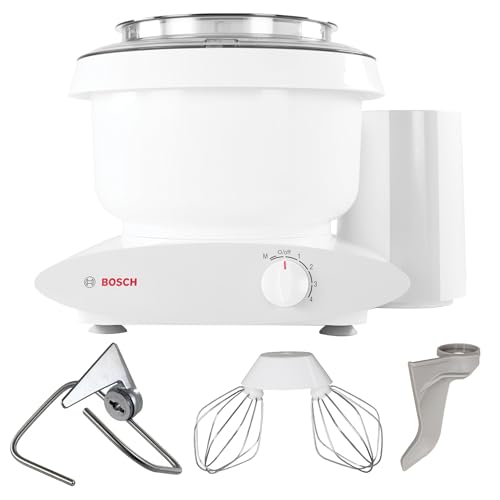
Bosch Universal Plus Stand Mixer (500 Watt, 6.5 Quart) — Best Overall for Cookies
The Bosch Universal Plus looks wrong to eyes trained on KitchenAid — the motor sits in the base and drives the bowl and attachments from below — and then it makes a double batch of oatmeal raisin dough without changing pitch, and the argument is over. Its belt-driven system delivers the low-speed torque cookie dough actually demands, and the 6.5-quart bowl takes the biggest home batches with room for mix-ins. This listing bundles the wire whips, dough hook, and a dough hook extender that keeps dough from climbing — a detail cookie and bread bakers appreciate immediately.
Strengths
- Outstanding low-speed torque for stiff and double batches
- 6.5-quart bowl swallows holiday production
- Driven-bowl design makes additions and cleanup easy
Trade-offs
- Wide footprint; bowl often stored separately
- Louder, more industrial character than rivals
- Bosch-only accessory ecosystem
| Bowl capacity | 6.5 quart |
| Power | 500 watt, belt-driven |
| Included | Wire whips, dough hook, dough hook extender (bundle) |
Creaming is the surprise: despite its dough reputation, the Bosch with its whips and beater-style attachments creams butter and sugar thoroughly, and the open, driven bowl design makes adding flour and chips mid-batch easy. Cleanup is the other quiet win — the bowl and drive are simple shapes that wash without the nooks a tilt-head hides.
The trade-offs are footprint, noise character, and learning curve: it stores as a wide base rather than a tall tower (many owners store the bowl separately), it sounds like the powerful machine it is, and its accessory ecosystem, while deep, is Bosch’s own. For pure cookie production — volume, stiffness, repetition — it is the best tool in this guide, at a premium-mid tier. Check the current price on Amazon.
Best for: High-volume cookie bakers and double-batch devotees / Not suited for: Tiny counters or buyers wanting a classic tilt-head look
Check the current price on Amazon

KitchenAid 7 Quart Bowl-Lift Stand Mixer (KSM70) — Best for Big Batches
The KSM70 is the KitchenAid for bakers whose cookie sessions are measured in dozens. The 7-quart bowl takes double batches with headroom for mix-ins, the bowl-lift frame holds the machine planted and composed under loads that make tilt-heads nod, and the 11-speed range includes a half-speed fold setting that is genuinely made for this job: chips, nuts, and oats fold through finished dough gently instead of being beaten into crumbs.
Strengths
- 7-quart bowl for true double batches
- Half-speed fold setting protects mix-ins
- Double flex-edge beater included in this configuration
Trade-offs
- Premium price tier
- Heavy — a permanent counter resident
- Oversized for small single batches
| Bowl capacity | 7 quart |
| Design | Bowl-lift, planetary |
| Speeds | 11 including 1/2-speed fold |
| Included | Double flex edge beater and 4 other accessories |
This configuration includes the accessory set bakers want, including a double flex-edge beater — the scraper-edged beater that wipes the bowl as it orbits, eliminating the stop-and-scrape rhythm from creaming and mixing. Planetary action with the brand’s many-touchpoint sweep leaves no flour ring at the bowl bottom, the chronic cookie-dough failure of lesser machines.
It is a premium-tier, heavy, counter-committed machine, and its size is wasted on single small batches, which mix less efficiently in a bowl this large. Buy it as a production tool for a baking household and it will feel correctly sized every December. Check price on Amazon, noting that color and bundle configurations vary.
Best for: Holiday production bakers and big households / Not suited for: Occasional bakers or small kitchens
Check the current price on Amazon
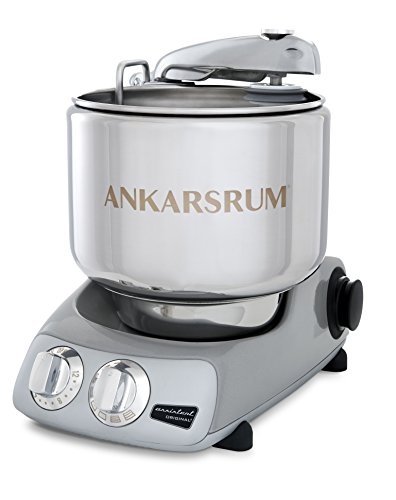
Ankarsrum Original Stand Mixer (AKM6230) — Best Premium
The Ankarsrum approaches mixing from first principles: instead of spinning a beater through a fixed bowl, it rotates a large stainless bowl against a stationary roller and scraper — mechanically closer to how hands knead and fold. For stiff cookie doughs, shortbread-style mixtures, and the heavy end of the cookie spectrum, the result is dough that is worked rather than beaten, developed evenly without the strain noises planetary machines make at the same loads.
Strengths
- Rotating-bowl system excels at stiff doughs
- Large bowl and legendary durability
- Versatile system beyond cookies
Trade-offs
- Highest price tier here
- Learning curve for the roller technique
- Creaming technique differs from planetary habit
| Design | Rotating bowl, roller and scraper |
| Model | AKM6230 |
| Included | Dough roller, scraper, dough knife system |
The bowl capacity is generous, the machine is famously durable — owners measure service in decades — and the system extends well beyond cookies into bread and, with its second bowl and attachments, whipping and blending tasks. It is the mixer bakers buy when they have decided to buy once.
The honest costs: the highest tier in this guide, a genuine learning curve (the roller-and-scraper technique rewards a few practice batches), and a creaming style that some bakers find less familiar than a planetary beater for butter-and-sugar work, though the system handles it well once learned. Check the current price on Amazon; in Jubilee Silver it is also, not irrelevantly, beautiful.
Best for: Serious bakers wanting a decades-long machine for dough of all kinds / Not suited for: Budget buyers or one-button simplicity seekers
Check the current price on Amazon

KitchenAid 5.5-Qt Bowl-Lift Stand Mixer (KSM55) — Best Bowl-Lift Value
The KSM55 is the considered buyer’s KitchenAid: the same bowl-lift architecture that keeps heavy dough work stable, the same 11-speed range with the gentle fold setting, in a 5.5-quart bowl that matches how most households actually bake — full batches comfortably, doubles when the dough is not at its stiffest. It includes the flat beater, dough hook, and wire whip the cookie workflow needs.
Strengths
- Bowl-lift stability under stiff dough
- 11 speeds with gentle fold setting
- Right-sized 5.5-quart bowl for most households
Trade-offs
- Flex-edge beater may be a separate purchase
- Heavy and counter-committed
- Premium-leaning tier
| Bowl capacity | 5.5 quart |
| Design | Bowl-lift, planetary |
| Speeds | 11 |
| Included | Flat beater, dough hook, wire whip |
Against tilt-head models, the bowl-lift advantage for cookies is composure: the head cannot nod or flex because there is no hinge, so the beater-to-bowl relationship stays exact through a whole batch of stiff dough. Against its 7-quart sibling, the advantage is proportion — smaller batches mix more efficiently, and the machine asks slightly less of your counter and budget.
It remains a premium-leaning purchase and a heavy one, and the flex-edge beater that makes creaming effortless is an accessory to confirm on the listing or add. For most cookie households, this is the sweet spot of the KitchenAid line. Check the current price on Amazon.
Best for: Regular cookie bakers wanting lift stability without 7-quart scale / Not suited for: Small-batch minimalists or tight budgets
Check the current price on Amazon

Cuisinart Stand Mixer SM-50 (5.5 Quart) — Best Mid-Range
The SM-50 is the mixer for bakers who want real cookie capability without entering premium pricing. Its 5.5-quart stainless bowl handles full standard batches, its 12-speed dial gives fine low-speed control for folding in flour and chips, and the box includes the chef’s whisk, mixing paddle, dough hook, and a splash guard with a pour spout that earns its place during flour additions.
Strengths
- Full beater set and splash guard included
- 12 speeds with good low-end control
- 5.5-quart bowl fits standard batches whole
Trade-offs
- Not for repeated stiff double batches
- Smaller attachment ecosystem
- Tilt-head flex under the heaviest loads
| Bowl capacity | 5.5 quart |
| Design | Tilt-head, planetary |
| Speeds | 12 |
| Included | Chef’s whisk, mixing paddle, dough hook, splash guard |
In cookie work it creams competently, pulls a full flour load together without drama, and holds its composure through standard-stiffness doughs. The die-cast build feels a clear step above budget machines, and the tilt-head format keeps it familiar to anyone upgrading from a hand mixer.
Its ceiling shows at the extremes: repeated double batches of the stiffest doughs are bowl-lift or Bosch work, and the attachment ecosystem is thinner than KitchenAid’s. At its mid tier — check price on Amazon — it is the rational buy for weekly bakers who make cookies often but not industrially.
Best for: Weekly bakers wanting real capability at a mid tier / Not suited for: Production-volume or stiffest-dough specialists
Check the current price on Amazon

KitchenAid Artisan 5-Qt Tilt-Head Stand Mixer (KSM150PS) — Best Classic All-Rounder
The Artisan is the default stand mixer of the English-speaking kitchen for reasons that hold up under cookie dough: planetary action with 59 touchpoints around the bowl creams butter and sugar evenly and leaves no flour pocket at the bottom, the 5-quart bowl takes a standard batch with mix-ins, and the pouring shield in this configuration tames the flour-cloud moment. Ten speeds cover the whole cookie workflow from gentle folding to brisk creaming.
Strengths
- 59-touchpoint planetary action mixes evenly
- Full KitchenAid attachment ecosystem
- Pouring shield included in this configuration
Trade-offs
- Tilt-head flex on the stiffest doubles
- 5-quart ceiling for bulky batches
- Flex-edge beater is an add-on for many configurations
| Bowl capacity | 5 quart |
| Design | Tilt-head, planetary, 59 touchpoints |
| Speeds | 10 |
| Included | Pouring shield, standard beater set |
Its ecosystem is the long-term argument: the front hub accepts the full KitchenAid attachment line, replacement bowls and flex-edge beaters are everywhere, and the machine is serviceable for decades. For cookies specifically, adding the flex-edge beater when you buy turns a very good cookie mixer into an effortless one.
The honest limits are the tilt-head format’s: under repeated stiff double batches the head can flex and the motor works harder than the bowl-lift models, and 5 quarts is the ceiling for single batches of bulky doughs. As the classic all-rounder at a mid-to-premium tier, it remains the right answer for most households. Check the current price on Amazon.
Best for: Most households wanting one mixer for cookies and everything else / Not suited for: Stiff-dough production bakers
Check the current price on Amazon
Comparison Table
| Pick | Badge | Key spec | Best for |
|---|---|---|---|
| Bosch Universal Plus Stand Mixer (500 Watt, 6.5 Quart) | Best Overall for Cookies | 6.5-qt, high torque, driven bowl | High-volume cookie bakers and double-batch devotees |
| KitchenAid 7 Quart Bowl-Lift Stand Mixer (KSM70) | Best for Big Batches | 7-qt bowl-lift, 11 speeds, flex beater | Holiday production bakers and big households |
| Ankarsrum Original Stand Mixer (AKM6230) | Best Premium | Rotating bowl, premium build | Serious bakers wanting a decades-long machine for dough of all kinds |
| KitchenAid 5.5-Qt Bowl-Lift Stand Mixer (KSM55) | Best Bowl-Lift Value | 5.5-qt bowl-lift, 11 speeds | Regular cookie bakers wanting lift stability without 7-quart scale |
| Cuisinart Stand Mixer SM-50 (5.5 Quart) | Best Mid-Range | 5.5-qt, 12 speeds, full beater set | Weekly bakers wanting real capability at a mid tier |
| KitchenAid Artisan 5-Qt Tilt-Head Stand Mixer (KSM150PS) | Best Classic All-Rounder | 5-qt, 59 touchpoints, attachment hub | Most households wanting one mixer for cookies and everything else |
Read this table by dough ambition: the Cuisinart and Artisan own the standard-batch world, the KSM55 adds lift stability, the KSM70 and Bosch own doubles and production, and the Ankarsrum owns the stiff end of the spectrum entirely.
How to Choose a Cookie Mixer: Torque, Bowl, and Beater
Torque at low speed is the first specification, and it is the one manufacturers least like to print. Cookie dough is mixed slowly — flour folds in at the lowest gears, chips fold in slower still — so a mixer’s ability to pull hard at speed one or two decides everything. Planetary machines achieve it through gearing (the bowl-lift KitchenAids), the Bosch through its belt-driven base, the Ankarsrum by rotating the bowl itself. Wattage figures, by contrast, describe electrical appetite at maximum speed and predict cookie performance poorly; use them only to spot the truly underpowered.
Bowl size and shape come second. Five quarts is the practical minimum for standard batches with mix-ins; 5.5 to 7 quarts buys double-batch freedom. Shape matters as much as volume: a wide bowl gives the beater a shorter path through the dough and accepts additions gracefully, while a tall narrow bowl concentrates dough around the beater and can leave the edges unmixed. Every pick here uses a bowl shape suited to dough work — one of the quiet reasons compact and novelty mixers were excluded.
The beater is third, and the flex-edge beater is the cookie baker’s best friend: its flexible scraper edge wipes the bowl wall continuously, so creamed butter does not hide unmixed at the sides and flour incorporates instead of stratifying. If your chosen model includes one (the KSM70 configuration here does), you are set; if not, it is the first accessory to buy — ahead of any hub attachment — because it improves every single batch.
Finally, judge the frame. Stiff dough pushes back, and the mixer’s answer is weight, a bowl-lift’s rigid column, or a driven bowl that cannot be pushed at all. A machine that walks, nods, or audibly strains on your standard recipe is telling you its ceiling; the reviews above translate that behavior model by model so you can match the machine to your stiffest regular dough, not your easiest.
Why Cookie Dough Breaks Lesser Mixers (and How These Six Survive It)
Cookie dough attacks a mixer in three phases. Phase one, creaming, is a test of evenness: cold butter and sugar must become a uniform, aerated base, and any butter left smeared on the bowl wall becomes a greasy streak in the finished cookies. Planetary sweep and flex-edge beaters exist for this phase. Phase two, the flour load, is the torque test: the mixture passes through a shaggy, heavy stage where weak motors stall and twin beaters carve a channel and spin uselessly inside it. Phase three, mix-ins, is the gentleness test: chips and nuts must distribute without being smashed, at the lowest speeds, through the heaviest dough of the cycle.
Heat is the cumulative enemy across all three phases, and across batches. Motors shed heat slowly, and December baking stacks batch on batch. The machines in this guide survive because their motors and gear trains are sized with margin — the professional way of saying they are loafing at loads that redline lesser machines. Your part of the bargain is technique: room-temperature ingredients where the recipe allows, flour added in portions, and a brief rest between back-to-back batches if the head feels warm.
There is also a recipe-side truth worth knowing: hydration decides difficulty more than batch size does. A wet, soft drop-cookie dough at double volume can be easier on a mixer than a single batch of dry, stiff shortbread-style dough. When a recipe warns that the dough will be stiff, believe it, and reach for the Bosch, the Ankarsrum, or a bowl-lift — or split the batch. The mixer you save is your own.
Creaming Butter Properly: The Step Your Mixer Cannot Do for You
The most consequential minute in cookie baking is the creaming of butter and sugar, and it is a partnership between baker and machine. The butter must be at cool room temperature — pliable, holding an indentation, not glossy or melting — because too-cold butter will not aerate and too-warm butter cannot hold the air that gives cookies their lift and texture. No mixer, at any price, creams melted butter into structure.
Technique on the machine is simple and specific: beat butter briefly alone to smooth it, add sugar, and mix at medium speed until the mixture visibly pales and increases in volume — longer than most beginners allow, typically several minutes. Scrape the bowl once during creaming (or let a flex-edge beater do it continuously), add eggs one at a time with a spoonful of the flour if the mixture threatens to curdle, and only then begin the flour additions at the lowest speed.
Every mixer in this guide can execute this beautifully; the differences appear in how much help they give — the KSM70’s included flex beater scraping as it goes, the Bosch’s open bowl making the scrape trivial, the Artisan’s 59-point sweep minimizing dead spots. Learn the visual cues — pale, fluffy, increased volume — rather than timing by the clock, and your cookies improve more than any equipment upgrade could achieve.
Batch Strategy for Holiday Baking: Doubles, Freezing, and Rotation
Holiday production rewards planning more than power. The efficient pattern used by experienced home bakers is to mix doughs in sequence from lightest to darkest (sugar cookies before chocolate, so the bowl needs only a scrape between), portion and chill doughs as you go, and let the freezer do the scheduling: most cookie doughs freeze beautifully as portioned balls for weeks, which converts December’s marathon into November’s pleasant weekends.
Doubling deserves its own rule: double only within your mixer’s proven class. The KSM70 and Bosch take true doubles of standard doughs; the 5 to 5.5-quart planetary models double soft doughs and should split stiff ones; and every mixer thanks you for adding a doubled flour load in three portions instead of two. When in doubt, two single batches back to back mix better, strain nothing, and — because each mixes faster and cleaner — often take less total time than one struggling double.
Rotation keeps the machine healthy across a long session: alternate a heavy dough with a light task (a frosting, a whipped filling) or a short rest, and keep the head’s warmth as your gauge. A mixer that ends the day merely warm has been respected; the picks here are built for exactly this kind of day, used exactly this way.
How to Mix a Perfect Batch of Cookie Dough in a Stand Mixer
This sequence works for a standard chocolate chip or oatmeal batch on any pick in this guide; scale and stiffness adjustments are noted where they matter.
- Set up the bowl and beater. Fit the flat beater (flex-edge if you have it), and confirm the bowl is locked and, on tilt-heads, the head is latched. Keep the dough hook nearby only if the dough proves very stiff at the end.
- Cream the butter. Beat cool room-temperature butter briefly to smooth it, add the sugars, and mix at medium speed until pale and visibly fluffy — several minutes, scraping once midway unless your beater scrapes for you.
- Add eggs one at a time, mixing each in fully at medium-low, then the vanilla. If the mixture looks curdled, a spoonful of the measured flour restores it.
- Combine dry ingredients separately — flour, leavening, salt — so the leavening distributes evenly before it meets the fat.
- Add the flour mixture in three portions at the lowest speed, mixing only until each portion mostly disappears. Stop while faint streaks remain; they will vanish in the next step, and stopping early is how cookies stay tender instead of tough.
- Fold in chips, nuts, or oats at the lowest speed — or the KSM70’s half-speed fold — for just a few revolutions, finishing the last distribution by hand with a spatula if the dough is stiff.
- Rest and portion. Give the dough a short rest (or a chill, for slice-and-bake control and less spread), portion evenly, and note the batch’s behavior — time, speed, any strain — in the recipe margin. That note is your personal sizing data for next time.
Clean the beater and bowl promptly — dried cookie dough is tomorrow’s concrete — and if another batch follows immediately, a quick scrape and rinse is all the reset the machine needs before the next creaming begins.
Planetary, Driven-Bowl, and Rotating-Bowl: Three Ways to Mix a Cookie
The three architectures in this guide are worth understanding because they feel different in daily use. Planetary mixing — KitchenAid and Cuisinart — is the most familiar: precise, versatile across batters and doughs, with the richest attachment ecosystems. Its weakness is physics at the extreme: a beater pushing through very stiff dough loads the head and gears, which is why the bowl-lift versions exist.
The Bosch’s driven bowl inverts the layout: power comes from below, the bowl is wide and open, and dough work is its home terrain. Bakers who make cookies and bread in volume often end up preferring it, accepting a less conventional creaming style and a wider storage footprint as the price of torque. The Ankarsrum’s rotating bowl is the connoisseur’s path: the gentlest, most hand-like dough handling and the longest service life, at the highest price and with a technique to learn.
None of the three is the “correct” answer; they are answers to different bakers. The weekly family baker is served by planetary convenience, the production baker by Bosch torque, the buy-once traditionalist by Ankarsrum craft. This guide’s badges map to those bakers deliberately — match yourself honestly and the machine will feel chosen rather than merely bought.
Attachments and Extras Worth It for Cookie Bakers
Beyond the flex-edge beater already praised, three additions earn their storage for cookie-focused kitchens. A second bowl ends the wash-between-batches bottleneck during production days and lets a chilled dough rest in its own bowl while the next mixes. A spare flat beater does the same at lower cost for bakers who alternate dough and frosting. And a simple kitchen scale — not a mixer accessory at all — improves cookie consistency more than any attachment, because flour measured by weight makes every batch behave like the last one.
The hub attachments deserve a colder eye. Pasta rollers, grinders, and ice cream makers are excellent on the KitchenAid models, but they serve other cooking, not cookies; buy them for those jobs if you want them, not as cookie equipment. Decorative covers, novelty beaters, and bowl-liner gadgets solve problems cookie bakers do not have. In a category where the core machine is a considered purchase, the discipline of buying only the extras that change batches is what keeps the kitchen — and the budget — sane.
How Long Do Cookie Mixers Last? Durability by Design
Cookie duty is hard duty, so lifespan in this guide tracks architecture. The Ankarsrum and Bosch are effectively buy-once machines whose owners report decades of service; their designs put wear parts where they can be serviced and motors where they can breathe. KitchenAid’s bowl-lift models share that serviceable philosophy — gears and parts exist, technicians know them — while the tilt-head Artisan trades a little ultimate dough stamina for the same long ecosystem. The Cuisinart SM-50 is the value end of durability: honestly built for years of weekly use, without the same decades-deep parts culture.
Across all six, the lifespan lever the owner controls is respect for the stiff-dough ceiling and heat. A mixer rested between December batches, loaded with flour in portions, and never asked to chew a double batch of shortbread in a 5-quart tilt-head will outlive its warranty by a wide margin. Abuse, conversely, is remarkably efficient at shortening any of these lives — the machines are strong, not magical.
Troubleshooting Cookie Dough in a Stand Mixer
Four problems account for nearly every cookie-mixer complaint, and all four are diagnosable at the bowl. Dough climbing the beater or hook means the batch is large or stiff for the tool: stop, push it down, continue at lower speed, and note the batch size as your ceiling for that recipe. Flour left in a ring at the bottom means the beater-to-bowl clearance or the addition technique needs help: add flour in smaller portions, scrape once at the shaggy stage, and consider the flex-edge beater, which exists precisely to erase this failure.
A mixer that walks across the counter is overloaded or on a slick surface: reduce the batch, set the machine on a mat, and check that a tilt-head’s hinge pin and latch are sound. A head that grows hot and a motor note that turns strained is the machine asking for the rest it has earned: fifteen minutes off, dough finished by hand or after the pause. None of these is a defect; they are the communication channel between baker and machine, and the bakers who listen get decades from the picks in this guide.
Common Buying Mistakes
Melting the butter to save time. Melted butter cannot be creamed, and the cookies spread thin and greasy no matter how good the mixer is. Cool room temperature is a specification, not a suggestion.
Adding all the flour at once. It guarantees a flour cloud, an overworked motor at the shaggy stage, and overmixed, tough cookies. Three portions, lowest speed, every time.
Doubling a stiff dough in a mid-size tilt-head. The batch fits in the bowl and still overloads the machine. Split stiff doubles; the two halves mix better and the mixer lives longer.
Mixing chips at high speed. It smashes mix-ins and overworks the finished dough. The fold happens at the lowest speed for a few revolutions — or by hand.
Judging creaming by the clock. Pale, fluffy, and increased in volume is the target; cold kitchens take longer. Under-creamed butter is the invisible cause of dense cookies blamed on recipes.
Skipping the flex-edge beater. On planetary mixers it is the single highest-value accessory for cookies, ending the stop-scrape-repeat cycle. If your configuration lacks one, it is the first addition to make.
Final Recommendation
For cookie baking as the main event, the Bosch Universal Plus is our first recommendation: its torque, bowl size, and driven-bowl ease make standard and double batches feel routine. Bakers loyal to the planetary way should choose by scale — the KSM70 for production, the KSM55 for bowl-lift stability at household size, the Artisan for the classic all-round kitchen — and the Ankarsrum stands apart as the premium, buy-once machine for the stiffest doughs.
The Cuisinart SM-50 holds the value line honestly: full batches, real capability, mid tier. Whichever you choose, add the flex-edge beater if it is not in the box, weigh your flour, and respect the stiff-double rule — technique and machine together are what make a cookie mixer great — and what make the cookies themselves the kind people ask about, batch after batch, season after season, in kitchens of every size and every level of experience imaginable, from first apartments to farmhouses that have hosted fifty years of holidays, and in all of them the same simple truth applies: the right machine, honestly matched to the baking, disappears into the work and lets the cookies themselves become the entire point of the whole happy exercise.
Ready to buy? Start with Bosch Universal Plus Stand Mixer (500 Watt, 6.5 Quart), KitchenAid 7 Quart Bowl-Lift Stand Mixer (KSM70), Ankarsrum Original Stand Mixer (AKM6230) — check the current price on Amazon for each and confirm the exact color and configuration on the listing before you order.
Keep exploring the rest of this cluster: Best Compact Stand Mixers Best Stand Mixers For Bread Dough Best Mixers For Baking Best Compact Small Mixers Best Stand Mixers Under $500
Frequently Asked Questions
What size mixer is best for cookie dough?
Five quarts is the practical minimum for standard batches with mix-ins; 5.5 to 7 quarts adds double-batch freedom. Bowl shape matters too — wide bowls mix dough more evenly than tall, narrow ones. Match the size to your largest regular batch, not your average one, if December baking is part of your life.
Can a stand mixer handle double batches of cookie dough?
The right ones can: the Bosch Universal Plus and the 7-quart KitchenAid KSM70 are built for doubles of standard doughs. Mid-size tilt-heads should double soft doughs only and split stiff ones. When a double strains, two singles mix faster in total — and far more kindly.
Is a bowl-lift or tilt-head better for cookies?
Bowl-lift, at the heavy end: the rigid column cannot flex, so beater clearance stays exact through stiff dough, and the larger bowls suit production. Tilt-heads are friendlier for everyday access and smaller kitchens and handle standard batches beautifully. The dough you make most should decide.
Do I need a flex-edge beater for cookies?
It is the highest-value accessory in this category. The flexible edge scrapes the bowl continuously, so butter cannot hide at the walls during creaming and flour incorporates instead of layering. Some configurations include one; for the rest, it should be the first purchase after the mixer itself.
Why does my dough climb the hook or beater?
Climbing signals a batch at or beyond the tool’s comfortable load, or dough that is too stiff and dry. Stop, push the dough down, continue at the lowest speed, and treat that batch size as the ceiling for that recipe. The Bosch’s included dough hook extender exists specifically to manage this behavior in large batches.
How do I stop flour from flying everywhere when I start the mixer?
Three habits solve it: add flour in three portions rather than one, start each addition at the very lowest speed until the flour wets in, and use the pouring shield or splash guard your mixer provides — or drape a clean towel over the bowl for the first seconds of each addition. Compact bowls and stiff doughs throw the most flour, which is another reason the slow-start discipline appears throughout this guide. The mess is a technique problem, not a machine problem, and it disappears entirely once the portions shrink.
Bosch or KitchenAid for cookies — which should I choose?
Choose Bosch for volume and stiffness: doubles, stiff doughs, and bread-adjacent work are its home ground. Choose KitchenAid for versatility and familiarity: planetary creaming, the attachment ecosystem, and a model at every scale from 5 to 7 quarts. Both are legitimate best-in-class answers for different bakers, which is why both anchor this guide.


