Disclosure: airfryerkitchensupply.com is reader-supported. When you buy through links on our site, we may earn an affiliate commission at no extra cost to you.
Where to buy
For anyone comparing the best charcoal bbq grills under 200, this shortlist is the place to start. The under-$200 charcoal tier is sold everywhere from Amazon to discount stores, and it contains both the best value in grilling and the worst junk. Buy against the exact model names in this guide, and treat the budget as a live check: prices move, so confirm the figure at checkout still sits under $200 rather than trusting any printed number, including ours — which is why this guide prints none.
- Weber Original Kettle Charcoal Grill, 22-Inch — check price on Amazon; prices move, so confirm the live figure fits the under-$200 frame before ordering.
- Weber Original Kettle Charcoal Grill, 18-Inch — check price on Amazon; prices move, so confirm the live figure fits the under-$200 frame before ordering.
- Weber Smokey Joe Portable Charcoal Grill, 14-Inch — check price on Amazon; prices move, so confirm the live figure fits the under-$200 frame before ordering.
- Weber Jumbo Joe Charcoal Grill, 18-Inch — check price on Amazon; prices move, so confirm the live figure fits the under-$200 frame before ordering.
- Char-Griller Patio Pro Charcoal Grill and Smoker — check price on Amazon; prices move, so confirm the live figure fits the under-$200 frame before ordering.
- Cuisinart Portable Charcoal Grill, 14-Inch (CCG-190RB) — check price on Amazon; prices move, so confirm the live figure fits the under-$200 frame before ordering.
Here is the honest headline about the best charcoal bbq grills under 200: the budget does not force you into bad grilling. It forces you to choose where the money goes — into cooking capability, portability or barrel character — and to give up convenience features rather than cooking quality. The best charcoal bbq grills under 200 share a pattern: simple construction, honest materials, dampers that work, and manufacturers who will sell you a replacement grate in five years.
What the under-$200 frame excludes is equally worth stating. Ceramic kamados, large offsets and premium cart grills live above it, and the “kamado-style” and “offset-style” bargains that pretend otherwise are built from steel too thin to do those jobs well. This guide therefore spends the budget where it performs: two sizes of the classic kettle, two genuinely portable kettles, a compact barrel with cast iron grates, and a budget portable that respects the cook. Every linked model was verified before linking, and the guide explains plainly what each pick cannot do.
In this guide
Quick Picks
- Weber Original Kettle Charcoal Grill, 22-Inch — Best Overall Under $200: Within an under-$200 budget, the plain 22-inch kettle is not merely the safe choice — it is the choice that leaves nothing important out. Check price on Amazon.
- Weber Original Kettle Charcoal Grill, 18-Inch — Best for Small Spaces: For couples, small families, small patios and anyone whose grilling is measured in two to four portions, the 18-inch kettle is the under-$200 pick that fits both the space and the appetite. Check price on Amazon.
- Weber Smokey Joe Portable Charcoal Grill, 14-Inch — Best Portable: The Smokey Joe is the kettle idea distilled to its portable essence: a 14-inch enamelled bowl, a lid that locks down for carrying, and dampers that still work like a real grill’s. Check price on Amazon.
- Weber Jumbo Joe Charcoal Grill, 18-Inch — Best for Camping and Travel: The Jumbo Joe splits the difference between the tabletop Smokey Joe and a full kettle: an 18-inch grate that feeds four, a lid that locks to the bowl for carrying, and legs that fold the whole thing into the boot of a car. Check price on Amazon.
- Char-Griller Patio Pro Charcoal Grill and Smoker — Best Small Barrel: The Patio Pro is the under-$200 route to barrel-style cooking: a compact steel barrel with cast iron grates and an easy-dump ash drawer, sized for small patios and small households. Check price on Amazon.
- Cuisinart Portable Charcoal Grill, 14-Inch (CCG-190RB) — Best Budget Portable: Sometimes the brief is simply this: real charcoal grilling, away from home, for as little money as possible without buying a disposable tray. Check price on Amazon.
How These Picks Were Chosen
Verification came first, as in every guide in this series: models were confirmed against current listings before any link was attached. The budget frame was then applied as a positioning check — these are the models that sit in the under-$200 tier — with the explicit instruction to readers to re-confirm at checkout, because a live price is the only honest price.
The criteria were weighted for the tier. Cooking capability per unit of money came first: a budget grill must grill, roast and hold a two-zone fire properly, or it is not cheap, it is just inexpensive. Construction honesty came second — enamelled steel and cast iron pass; foil-thin painted steel with novelty features fails. Third was the ownership path: parts availability, cover availability and a brand that answers for its products. Portability picks were judged additionally on transit design, because a portable grill lives or dies in the car boot. Models excluded: disposable grills, no-name barrels with unverifiable specifications, and anything whose low price depended on a temporary promotion rather than its normal tier position.
The 6 Best Charcoal BBQ Grills Under 200 Dollars

Weber Original Kettle Charcoal Grill, 22-Inch — Best Overall Under $200
Within an under-$200 budget, the plain 22-inch kettle is not merely the safe choice — it is the choice that leaves nothing important out. Every core charcoal technique works on it: direct grilling, two-zone cooking, lid-down roasting and snake-method smoking. The money it does not spend on thermometers and lid holders is money you can put into the chimney, thermometer and charcoal that actually decide your results.
| Cooking surface | 22-inch plated steel grate |
| Construction | Porcelain-enamelled steel bowl and lid |
| Ash management | One-Touch cleaning system with ash catcher pan |
| Support | Replacement grates, dampers and parts widely available |
Strengths
- Complete kettle capability inside the budget with room for tools
- Porcelain enamel and parts support promise a long service life
- Handles grilling, roasting and smoking without accessories
Trade-offs
- No lid thermometer or hinged grate at this level
- Open ash pan is vulnerable to wind
- Lid parks on a hook rather than a secure holder
Budget guides often apologise for their top pick; this one does not. The kettle’s bowl geometry is the reason the design has survived for decades: deep enough for a proper two-zone fire, shaped to convect heat evenly with the lid down, and fitted with dampers that genuinely control the fire rather than decorating it. What the budget buys you out of is convenience — an open ash pan instead of an enclosed catcher, a lid hook instead of a holder, no thermometer in the lid. Each of those is a workflow detail, not a cooking limitation, and each can be worked around for free: park the lid carefully, use a probe thermometer you should own anyway, and empty the ash pan on a calm day. Parts support at this level is unmatched; a grate or damper bought in ten years will still fit. If your total charcoal budget is under $200 including tools, buy this grill, a chimney and a thermometer, and you own a complete, honest cooking system.
Best for: buyers who want best overall under $200 within an under-$200 budget / Not suited for: cooks whose regular load exceeds what this format can handle
Check on Amazon — check price on Amazon to confirm it still sits within your under-$200 budget before ordering.
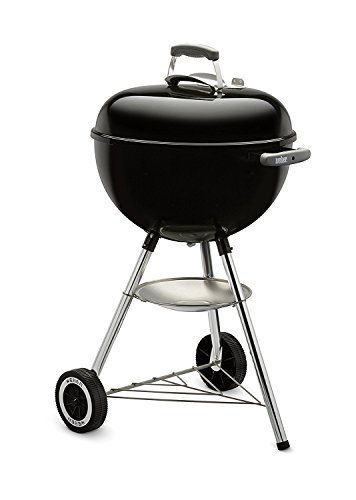
Weber Original Kettle Charcoal Grill, 18-Inch — Best for Small Spaces
For couples, small families, small patios and anyone whose grilling is measured in two to four portions, the 18-inch kettle is the under-$200 pick that fits both the space and the appetite. It heats faster than its big brother, burns less charcoal doing it, and stores in a fraction of the room — while keeping the same damper control and enamel build that make kettles worth owning.
| Cooking surface | 18-inch plated steel grate |
| Construction | Porcelain-enamelled steel, compact footprint |
| Ash management | One-Touch cleaning, ash catcher pan |
| Fuel use | Smaller bowl uses less charcoal per cook |
Strengths
- Right-sized and fuel-efficient for one to four people
- Same kettle control and enamel quality as the 22-inch
- Easy to move, store and clean
Trade-offs
- Indirect cooking space is limited for large cuts
- Open ash pan, no lid thermometer
- Will feel small the first time you host a crowd
Size is a feature when it matches the household. An 18-inch grate cooks four burgers with working room, six at a friendly squeeze, and a spatchcocked chicken beautifully with the coals banked to one side. The indirect zone is admittedly modest, so plan large items accordingly: rib racks, halved racks and a small water pan all help. Where the small kettle quietly wins is running cost and routine — a half chimney lights it fully, weeknight cooks stop feeling like an event, and the whole grill moves one-handed to wherever the evening sun is. Balcony cooks must check their building’s rules before buying any charcoal grill, but where charcoal is permitted, this is the footprint that respects the neighbours and the lease. As a second grill beside a larger smoker it is equally at home, handling sides and weeknight duties while the big cooker rests.
Best for: buyers who want best for small spaces within an under-$200 budget / Not suited for: cooks whose regular load exceeds what this format can handle
Check on Amazon — check price on Amazon to confirm it still sits within your under-$200 budget before ordering.
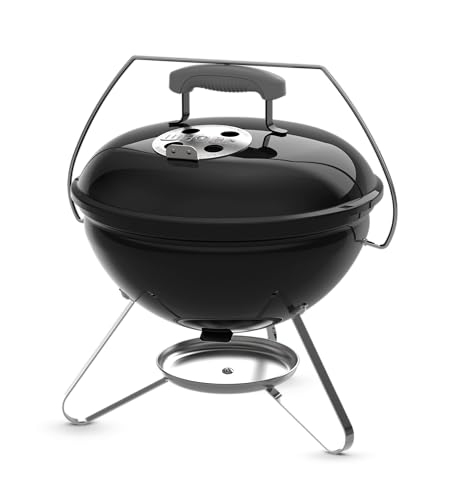
Weber Smokey Joe Portable Charcoal Grill, 14-Inch — Best Portable
The Smokey Joe is the kettle idea distilled to its portable essence: a 14-inch enamelled bowl, a lid that locks down for carrying, and dampers that still work like a real grill’s. It cooks for two properly — burgers, sausages, skewers, a pair of steaks — and it goes where grilling actually happens in summer: the campsite, the beach car park, the picnic bench.
| Cooking surface | 14-inch plated steel grate |
| Format | Tabletop portable kettle with carry handle |
| Construction | Porcelain-enamelled steel bowl and lid |
| Use case | Camping, picnics, tailgating, balconies where permitted |
Strengths
- Genuine kettle cooking in a carry-anywhere format
- Enamelled build lasts for years, unlike disposable portables
- Perfect size for two-person cooks and small spaces
Trade-offs
- Direct grilling only in practice; too small for roasting
- Batch cooking required for groups
- Tabletop format needs a stable, heat-safe surface
Portable grills are usually disposable in disguise; the Smokey Joe is not. The enamel, grate and dampers are Weber parts-bin items, so it cooks like a small kettle rather than a tin toy, and it lasts like one if the ash is emptied and the bowl kept dry. Technique adapts to size: use a modest amount of charcoal, cook in batches, and treat the whole grate as a direct zone with the lid as your flare-up control. It will not roast a chicken or smoke a shoulder, and pretending otherwise helps nobody — its job is excellent small-batch grilling away from home, plus balcony and tiny-patio duty where rules allow. Paired with a bag of lump charcoal and a small chimney, it is the cheapest complete route in this guide to real charcoal flavour, and the one most likely to be in the car when the opportunity for an impromptu cookout appears.
Best for: buyers who want best portable within an under-$200 budget / Not suited for: cooks whose regular load exceeds what this format can handle
Check on Amazon — check price on Amazon to confirm it still sits within your under-$200 budget before ordering.

Weber Jumbo Joe Charcoal Grill, 18-Inch — Best for Camping and Travel
The Jumbo Joe splits the difference between the tabletop Smokey Joe and a full kettle: an 18-inch grate that feeds four, a lid that locks to the bowl for carrying, and legs that fold the whole thing into the boot of a car. For campers and tailgaters it is the sweet spot — big enough to cook a real meal, small enough to travel without a negotiation.
| Cooking surface | 18-inch hinged plated steel grate |
| Format | Portable kettle with Tuck-N-Carry locking lid handle |
| Construction | Porcelain-enamelled steel, compact legs for transport |
| Use case | Car camping, tailgating, small-group portable cooking |
Strengths
- 18-inch capacity with a lid that locks for clean transport
- Hinged grate and real dampers, unlike most portables
- Doubles as a small-space home grill
Trade-offs
- Low working height without a table
- Ash pan rather than enclosed catcher
- Four-person ceiling on capacity
The locking lid is the detail that matters most in practice, because a portable grill’s worst moments happen in transit: ash spills, lids separate, grates wander. The Jumbo Joe arrives as one tidy unit, sets up in moments, and then cooks with the hinged grate and damper control of a proper kettle, including a workable two-zone fire for chicken pieces and thick steaks. At home it doubles as a small-patio grill that stores in a corner, which makes it a rational only-grill for small households who also travel. Its limits are the portable format’s limits — no ash catcher beyond the pan, a working height that means a low table or a crouch, and capacity that tops out around four hungry people. Within those limits it is the most complete portable charcoal grill under $200, and the one experienced campers recommend without caveats about build quality.
Best for: buyers who want best for camping and travel within an under-$200 budget / Not suited for: cooks whose regular load exceeds what this format can handle
Check on Amazon — check price on Amazon to confirm it still sits within your under-$200 budget before ordering.

Char-Griller Patio Pro Charcoal Grill and Smoker — Best Small Barrel
The Patio Pro is the under-$200 route to barrel-style cooking: a compact steel barrel with cast iron grates and an easy-dump ash drawer, sized for small patios and small households. It grills with the direct, radiant character barrel fans love, and its chamber shape lets you smoke a chicken or a small rack of ribs indirectly in a way a tabletop portable never will.
| Cooking area | Compact barrel chamber (250 sq in class per listing) |
| Format | Small barrel grill that can smoke small items |
| Grates | Cast iron cooking grates |
| Extras | Side firebox-style damper control, easy ash dump, wheels |
Strengths
- Barrel cooking character in a patio-friendly size
- Cast iron grates outperform typical budget wire racks
- Ash drawer makes cleanup genuinely easy
Trade-offs
- Light steel needs cover and paint touch-ups
- Temperature wanders in wind and cold
- Small chamber limits smoking to modest items
Barrel geometry gives a wide, shallow grate that suits batch grilling and puts food at a comfortable height, and the Patio Pro’s cast iron grates are a genuine step up from the wire racks typical at this budget — they hold heat, mark food properly and reward seasoning with years of service. The ash drawer is the other practical win: cleanup on small steel grills is where corners usually get cut, and here it is a thirty-second job. Honesty about the material is required: the steel is light, the finish will need touch-ups where the fire is hottest, and temperature stability in wind is a kettle-beating weakness. Kept covered and cleaned, it gives several seasons of characterful cooking and a flavour profile — direct, smoky, slightly wild — that gas cannot imitate at any price. Buy it for the barrel experience in a small footprint, and maintain it like the steel tool it is.
Best for: buyers who want best small barrel within an under-$200 budget / Not suited for: cooks whose regular load exceeds what this format can handle
Check on Amazon — check price on Amazon to confirm it still sits within your under-$200 budget before ordering.

Cuisinart Portable Charcoal Grill, 14-Inch (CCG-190RB) — Best Budget Portable
Sometimes the brief is simply this: real charcoal grilling, away from home, for as little money as possible without buying a disposable tray. The Cuisinart 14-inch portable answers it with an enamelled firebox, a locking lid, folding legs and dual vents that give it more fire control than anything else at the bottom of the budget — a proper little grill rather than a one-summer novelty.
| Cooking surface | 14-inch chrome-plated grate (150 sq in class) |
| Format | Tabletop portable with dual vents and lid locks |
| Construction | Enamelled steel firebox, folding legs |
| Use case | Picnics, camping, tailgating on a tight budget |
Strengths
- Lowest-cost route to real, controllable charcoal grilling
- Lid locks and legs fold for tidy transport
- Dual vents give unusual fire control at this level
Trade-offs
- Light construction; a seasons-long tool, not a decade-long one
- Small grate means batch cooking for groups
- Not suited to roasting or smoking
Expectations set correctly, it delights. The grate handles burgers, dogs and skewers for two to three people; the vents let you calm a flare or coax a fading fire; and the whole unit packs flat enough to live in a car boot or a cupboard. It is not built like the Weber portables — the steel and plating are lighter, the grate will not outlive the decade, and low-and-slow cooking is beyond its design. But as an under-$200 guide’s entry point it earns its badge honestly: it costs little enough to be an experiment, cooks well enough to convert sceptics to charcoal, and travels well enough to be used constantly, which is the real test of any portable. Buy it for picnics and first steps; upgrade later only if charcoal becomes a habit, at which point you will know exactly what you want.
Best for: buyers who want best budget portable within an under-$200 budget / Not suited for: cooks whose regular load exceeds what this format can handle
Check on Amazon — check price on Amazon to confirm it still sits within your under-$200 budget before ordering.
Comparison Table
| Pick | Badge | Key spec | Best for |
|---|---|---|---|
| Weber Original Kettle Charcoal Grill, 22-Inch | Best Overall Under $200 | 22-inch plated steel grate | Best Overall Under $200 buyers |
| Weber Original Kettle Charcoal Grill, 18-Inch | Best for Small Spaces | 18-inch plated steel grate | Best for Small Spaces buyers |
| Weber Smokey Joe Portable Charcoal Grill, 14-Inch | Best Portable | 14-inch plated steel grate | Best Portable buyers |
| Weber Jumbo Joe Charcoal Grill, 18-Inch | Best for Camping and Travel | 18-inch hinged plated steel grate | Best for Camping and Travel buyers |
| Char-Griller Patio Pro Charcoal Grill and Smoker | Best Small Barrel | Compact barrel chamber (250 sq in class per listing) | Best Small Barrel buyers |
| Cuisinart Portable Charcoal Grill, 14-Inch (CCG-190RB) | Best Budget Portable | 14-inch chrome-plated grate (150 sq in class) | Best Budget Portable buyers |
The table’s lesson is that “under $200” is three different purchases wearing one label: a full-size kettle for the home cook, portables for the travelling cook, and a small barrel for the flavour-first cook. Decide which cook you are before deciding which grill to buy.
How to Choose a Charcoal Grill on an Under-$200 Budget
Start by protecting the core purchase. At this level, every extra feature is paid for with thinner steel or a smaller grate, so rank your needs ruthlessly: cooking area first, damper quality second, grate material third, and everything else last. A thermometer in the lid is nice; a lid that seals is essential. A side shelf is pleasant; a bowl that will not rust through in two seasons is the difference between a bargain and a waste of the whole $200.
Home grill or portable grill — which does your life need?
If the grill will live in one garden and cook for a household, buy the home kettle and enjoy the capacity every single cook. If your grilling happens at campsites, beaches and other people’s gardens, a home kettle will be left behind and a portable will be loved. Households that genuinely do both should buy the portable with the largest grate their car accepts — the Jumbo Joe pattern — and accept its four-person ceiling at home.
What should you refuse to compromise on?
Three things. Dampers that move smoothly and hold position, because air control is charcoal cooking. A grate you can replace, because the grate is the first component to wear and a grill without parts support is a disposable with good marketing. And a base and legs that are stable with the lid open and a full fire lit — wobble in a charcoal grill is not an annoyance, it is a burn waiting for a windy day.
How do you make the rest of the budget work?
Reserve part of the $200 for the tools, even if it means the smaller kettle. A chimney starter, an instant-read thermometer and a bag of decent briquettes transform results more than any grill upgrade at this level. Buy the cover in the first month, not the first year: budget steel and enamel both live dramatically longer under one, and the cover is the cheapest lifespan extension in all of grilling.
What running costs should you expect after buying?
Charcoal is a consumable habit, and honesty about running costs belongs in a budget guide. A household grilling weekly will work through several bags of briquettes a season, plus lighter cubes and the occasional replacement grate or brush — a modest, entirely predictable outlay that still totals far less over five years than the purchase-price gap to a premium grill. Lump charcoal costs more per cook than briquettes and suits searing sessions; mixing the two across a season keeps costs sane. The other running cost is time: charcoal asks twenty minutes to light and a few minutes to clean, and no purchase at any price removes that. Budget buyers should therefore cost the hobby in evenings as well as money — and most find, as this guide’s authors did, that the ritual is the reward rather than the tax.
Are replacement parts easy to find for budget grills?
For the established makers in this guide, yes: kettles in particular enjoy a parts ecosystem closer to a car’s than a gadget’s, with grates, dampers, handles, ash catchers and legs all stocked for models decades old. This is a decisive, underrated reason to choose a known maker at this budget. A no-name grill with a failed damper is landfill; a kettle with a failed damper is a small parcel and ten minutes with a screwdriver. When comparing two similar budget grills, the one with a parts list on the manufacturer’s website is the cheaper five-year purchase almost every time.
Should a beginner start under $200 or save for more?
Start. Charcoal skill is built by cooking, and a season on a plain kettle teaches fire management, vent control and timing that transfer completely to any premium grill bought later — while a season spent saving teaches nothing and grills nothing. The beginner who starts under $200 also discovers their real preferences cheaply: whether they smoke enough to want a kamado, entertain enough to want a barrel, or travel enough to want a better portable. Those answers are worth more than any review, including this one, and they are only available at the price of a summer of cooking. The single exception is the beginner who already knows, from cooking on friends’ equipment, that low-and-slow smoking is their passion; that cook may reasonably save toward the format they love. Everyone else: buy the kettle, light it this weekend, and let the food make the argument.
How to Get Great Results From a Budget Charcoal Grill
Step 1: Light less charcoal than you think. Budget grills have smaller bowls and thinner steel; a mountain of coals overwhelms them and burns food. A three-quarter chimney is a full fire for most picks in this guide.
Step 2: Always build two zones. Bank the coals to one side. On a small grate this feels wasteful until the first flare-up, when the empty side saves the meal. It is the highest-value habit in charcoal cooking and it costs nothing.
Step 3: Preheat the grate properly. Ten minutes with the lid down over the lit fire brings a thin grate to searing temperature and burns off the last cook. Food on a cold budget grate sticks; food on a hot one releases.
Step 4: Work the vents, not the lid. Set the intake damper to steer temperature and leave the exhaust open. Every lid lift dumps the heat your thin-walled grill worked to build, so look less and trust a probe thermometer.
Step 5: Clean ash out religiously. Budget steel rusts fastest of all, and ash is the accelerant. Empty the catcher when cold, brush the bowl monthly, and store the grill dry and covered. This single routine doubles a budget grill’s life.
Common Buying Mistakes
Buying features instead of steel. At under $200, a side burner or a novelty thermometer is paid for in bowl thickness. Choose the plain grill from the serious maker over the loaded grill from the anonymous one.
Buying the giant bargain barrel. Enormous no-name barrels at this budget are enormous because the steel is thin. They rust, leak and cook unevenly. A smaller grill from a real maker is bigger where it counts: at the table.
Assuming portable means disposable. The enamelled portables in this guide last for years. The foil trays beside them at the checkout are not grills and should not be priced as competition.
Spending the whole budget on the grill. Without a chimney and a thermometer you own half a system. Leave room for the tools, as the buying guide above insists.
Ignoring the rules of your building or campsite. Many apartment blocks ban charcoal outright and many parks restrict it to provided grills. Check before you buy; a grill you cannot legally light is the worst value in this guide.
Final Recommendation
For a home cook, the answer is the Weber Original Kettle Charcoal Grill, 22-Inch — a complete charcoal education and a decade of dinners inside the budget. Small households should take the Weber Original Kettle Charcoal Grill, 18-Inch, travellers the Weber Jumbo Joe Charcoal Grill, 18-Inch, and campers on foot the Weber Smokey Joe Portable Charcoal Grill, 14-Inch. The Char-Griller Patio Pro serves barrel fans in small spaces, and the Cuisinart portable is the honest minimum spend for real charcoal flavour away from home.
Compare the neighbouring budgets and formats: Best Charcoal Barbecue Grills · Best Charcoal Bbq Grills · Best Charcoal Bbq Grills Under $500 · Best Portable Charcoal Grills · Best Charcoal Grills For Small Spaces
What Can You Realistically Cook on an Under-$200 Charcoal Grill?
More than the price suggests, provided you match the dish to the format. On the 22-inch kettle the full repertoire is open: burgers and steaks over direct heat; whole chickens, pork loins and trays of vegetables roasted with the lid down; ribs and small shoulders smoked by the snake method; even pizza, on a stone, with the fire built hot and the lid working as the oven roof. The 18-inch kettle cooks the same menu in smaller portions, with whole birds spatchcocked to fit the indirect zone. The portables are direct-heat specialists — skewers, sausages, burgers, thin steaks, corn and peppers — and they do that menu superbly anywhere on earth, which is their entire point.
The honest limits are capacity and duration. A budget grill will not cater a wedding, hold an overnight brisket cook untouched, or sear six thick steaks simultaneously. Batch cooking solves the first problem, an early start and the snake method solve most of the second, a warming oven indoors solves the holding problem that comes with both, and a heavy cast-iron pan preheated directly on the grate solves the third for two steaks at a time while the next pair waits its turn. Cooks who plan around these limits eat extremely well under $200; cooks who pretend the limits do not exist blame the grill. The other realistic note is weather: thin-walled budget grills feel wind and cold more than heavy cookers, so allow extra fuel and extra time in winter, and site the grill out of the wind whenever you can.
How Do You Make a Budget Grill Last Like an Expensive One?
The lifespan gap between budget and premium grills is mostly a maintenance gap wearing a price tag. Enamelled steel — the kettle picks — is genuinely durable material; what kills budget kettles is ash left sitting in the bowl through a wet winter, quietly converting a ten-year grill into a three-year one. The routine that prevents it takes minutes: empty ash when cold after every few cooks, brush the bowl out monthly, and never, ever hose out a hot grill and leave it wet.
For the light-steel picks, add two habits. Keep the grill covered whenever it is not in use, with the cover vented rather than sealed tight, because trapped condensation rusts steel as surely as rain. And treat the firebox and ash-contact areas to a light wipe of cooking oil at the season’s start and end — the same seasoning logic that protects cast iron grates protects thin steel from the inside. Grates themselves should be brushed hot after every cook and oiled lightly before the next; a grate cared for this way outlasts the grill around it. Wheels, handles and damper screws get a yearly check and tighten. Do all of this simple routine and the difference between your under-$200 grill and a premium one narrows to features, not years — which is exactly the bargain this guide set out to find.
Which Budget Charcoal Grill Suits Which Kind of Cook?
Personas are more useful than spec sheets at this budget, so here is the matching in plain terms. The weeknight family cook — burgers on Tuesday, chicken on Sunday, a crowd twice a summer — belongs on the 22-inch kettle, full stop; it is the only pick that never says no to a normal request. The minimalist couple in a small flat with a small terrace belongs on the 18-inch, where every cook is quick, fuel use is trivial and storage is a non-event. The camper, the festival-goer and the beach-picnic family belong on a portable, choosing between the Smokey Joe’s packability and the Jumbo Joe’s capacity by honestly counting the mouths they feed outdoors.
The experimenter — the cook who suspects they might love smoking and wants to find out cheaply — belongs on the Patio Pro or a kettle with the snake method, both of which teach fire management without a serious purchase. The sceptic, who is not sure charcoal is worth the fuss at all, belongs on the Cuisinart portable: the smallest possible commitment that still answers the question honestly and fairly, because it cooks well enough that a bad experience can be blamed on technique rather than equipment. And the upgrader-in-waiting — cooking on a borrowed or dying grill while saving for a kamado — should buy the plain kettle now and keep it forever as the second grill, because that is what every kamado owner eventually wishes they had done.
What is the smartest first accessory for each pick?
For the kettles: a chimney starter first, a probe thermometer second, and a hinged replacement grate only if you smoke often. For the portables: a small chimney sized to the bowl, a carry bag if you travel weekly, and a heat-safe trivet or mat for the surfaces you cook on. For the barrel: gasket tape for the lid seam and a second-hand cast-iron pan for searing small items over the coals. In every case the accessory budget should stay modest — the discipline of the under-$200 tier is that the cooking, not the kit, is the point.
How Does an Under-$200 Grill Compare With Spending More?
It is worth naming precisely what the next tier buys, so the saving is an informed one. Stepping up buys convenience first: enclosed ash systems, hinged grates, lid holders and thermometers — workflow upgrades that make every cook a little smoother without changing a single result. It buys formats second: kamados with their insulation and temperature range, offsets with real smoking capacity, and cart grills with working surfaces. It buys longevity third: thicker steel, better finishes and heavier grates that forgive neglected maintenance longer. What it does not buy is a different class of dinner. A burger seared over a properly managed fire tastes the same off a plain kettle as off a premium cart, because the fire, the meat and the cook are the same. That is the founding fact of this guide, and the reason the under-$200 tier deserves a serious guide rather than a dismissive one: spend more when you want the process easier or the formats wider, not because you believe the food requires it.
The upgrade path, when it comes, is also kinder than buyers expect. A kettle bought under $200 today becomes the permanent second grill in almost every serious backyard — the weeknight and overflow cooker beside a future kamado or smoker — so the money is rarely wasted even when ambitions grow. Buy once at this tier, buy honestly, and the purchase keeps paying long after the upgrade arrives.
Frequently Asked Questions
Can a charcoal grill under $200 really be any good?
Yes — the best-selling charcoal grill in history sits in this tier. What the budget removes is convenience and exotic formats, not cooking quality. A plain kettle grills, roasts and smokes superbly; you simply manage the fire and the ash more manually than premium owners do.
Why do prices in this tier change so much?
Grills are seasonal, bulky to ship and frequently promoted, so live prices swing. That is why this guide positions picks by their normal tier and tells you to check price on Amazon at purchase time, rather than printing figures that would be wrong within weeks.
Is an 18-inch or 22-inch kettle better under $200?
Match it to the household. One to three regular eaters are better served by the 18-inch, which heats faster and uses less fuel. Four or more, or anyone who roasts whole birds and racks of ribs regularly, should take the 22-inch and its far more useful indirect zone.
How long will a budget charcoal grill last?
An enamelled kettle kept covered and emptied of ash: a decade is normal. A light steel barrel or portable: several seasons with the same care, far fewer without it. Longevity at this budget is mostly a cleaning habit, not a purchase price.
What charcoal should I buy with a budget grill?
Quality briquettes for most cooking — they are consistent, long-burning and forgiving — and a bag of lump for fast, hot searing if you like. Avoid self-lighting charcoal, whose additives flavour food, and store whatever you buy dry; damp charcoal is the hidden cause of most “bad grill” complaints.
Can I smoke ribs on an under-$200 grill?
On the kettles, yes: the snake method with a water pan produces proper ribs. On the small barrel, small racks and chickens smoke well indirectly. On the 14-inch portables, no — they are direct grills, and this guide says so rather than pretending otherwise.
Is a used kettle a good way to stretch the budget further?
Often the best way. Kettles are simple, durable and easy to inspect: look for enamel chips at the rim, a bowl free of rust-through, dampers that move, and legs that stand firm. A used kettle plus a new cooking grate frequently delivers ninety percent of the new-grill experience for half the money, and it is the classic, proven route to owning both a home kettle and a portable inside this budget. Avoid used light-steel barrels unless the price is trivial, because firebox rust is structural. Whatever you buy used, clean it thoroughly, replace the grate if its history is unknown, and run one hot empty burn before food touches it.


