Disclosure: airfryerkitchensupply.com is reader-supported. When you buy through links on our site, we may earn an affiliate commission at no extra cost to you.
Where to buy
Shopping for the best 12 volt charger for dell latitude laptop models? Buy where the listing names Latitude models or states the connector and wattage plainly — Latitude spans barrel and USB-C generations, and the wrong standard is a wasted purchase. All six picks below were verified on Amazon through the Creators API, including Dell’s own car adapter and a third-party charger whose listing names its Latitude models outright, one by one, in full.
- Dell 65W USB-C Car and Airplane DC Power Adapter — Best Overall for Latitude: Check on Amazon
- USB-C Car Charger for Dell Latitude (UL Listed, Model-Specific) — Best Latitude-Specific Third-Party: Check on Amazon
- 100W USB-C Laptop Car Charger for Dell Latitude / XPS / Precision — Best High-Wattage USB-C: Check on Amazon
- HKY Laptop Car Charger for Dell 7.4mm Barrel — Best for Older Barrel Latitudes: Check on Amazon
- Anker 75W Fast Charging USB-C Car Charger — Best Mainstream Alternative: Check on Amazon
- BESTEK 300W Pure Sine Wave Power Inverter — Best Universal Backup: Check on Amazon
Introduction
The best 12 volt charger for dell latitude laptop depends on which Latitude you actually own, because Latitude is not one machine but a business line spanning two charging eras. The barrel generations — the long-serving fleet machines with round 7.4mm or smaller barrel ports — charge one way. The USB-C generations that followed charge over Power Delivery and behave like modern ultraportables. A guide that blurred that line would sell half its readers a charger their laptop cannot use.
This guide therefore opens with identification, then offers verified routes for both eras: Dell’s own 65W car adapter and two further USB-C options for current machines, a direct 7.4mm barrel adapter for the classic fleet generations, a mainstream alternative, and the universal inverter route that serves any Latitude ever made through its own wall adapter. Latitude’s working life — docked at desks, carried between sites, charged in vehicles — shapes every judgement that follows.
All six picks were verified against live Amazon listings through the Creators API, with compatibility and wattage taken from the listings themselves. Dell-specific searches were completed after spaced retries when the connection faltered mid-round, and the sources file documents that honestly. What the listings do not state, this guide does not claim.
In this guide
Quick Picks
Six verified picks split by Latitude generation. Identify your port first — the badges then point at your answer in seconds, whatever era your particular machine belongs to today.
- Dell 65W USB-C Car and Airplane DC Power Adapter — Best Overall for Latitude: Dell’s own 65-watt DC adapter — the factory answer for the USB-C Latitude generations, accepted by the laptop exactly as its wall adapter is. Check on Amazon
- USB-C Car Charger for Dell Latitude (UL Listed, Model-Specific) — Best Latitude-Specific Third-Party: A third-party USB-C car charger whose listing names the Latitude models it serves — 5420, 5520, 7410, 9520 and more — and carries UL listing. Check on Amazon
- 100W USB-C Laptop Car Charger for Dell Latitude / XPS / Precision — Best High-Wattage USB-C: One hundred watts of USB-C car charging naming Latitude, XPS and Precision — headroom for the hungriest USB-C Dell business machines. Check on Amazon
- HKY Laptop Car Charger for Dell 7.4mm Barrel — Best for Older Barrel Latitudes: The direct barrel answer for the 7.4mm Latitude generations, spanning their wattage classes and running from cars to 24-volt trucks. Check on Amazon
- Anker 75W Fast Charging USB-C Car Charger — Best Mainstream Alternative: Seventy-five watts and a retractable cable from a mainstream accessories brand — the tidy alternative when genuine Dell stock or pricing does not suit. Check on Amazon
- BESTEK 300W Pure Sine Wave Power Inverter — Best Universal Backup: The route that cannot be wrong: convert 12 volts to clean AC and plug in the Latitude’s own Dell adapter, whatever generation it is. Check on Amazon
How These Picks Were Chosen
Latitude-specificity was the selection filter, applied strictly. Generic laptop car chargers were admitted only where their listings name Latitude or Dell’s business families, or where — like the inverter — their route is generation-proof by construction. That filter is why this guide is shorter on novelty and longer on certainty than a general laptop list: a Latitude buyer is usually buying for work, often for a machine they did not choose, and always against a deadline.
Verification followed the programme standard through the Creators API on this site’s Amazon connection. The Dell car-charger search rounds initially failed on connection resets; spaced retries with the programme’s retry wrapper eventually returned the Dell-specific pool — including the genuine Dell adapter and the model-listing third-party charger — which was cached and used. Spec boxes state only listing-confirmed facts.
Wattage discipline runs through the picks: mainstream Latitudes live in the 65-watt class, and the guide’s centre of gravity sits there, with the 100-watt pick reserved for the high-draw minority and the barrel pick spanning the classic classes. No pick is recommended for a generation its connector cannot serve, and every review says which generations those are.
A final selection note on sources of truth: where a general pattern and your specific machine disagree, the machine wins. Latitude’s range is wide enough that any honest guide must deal in patterns — barrel era, USB-C era, mainstream class, high-draw minority — while your laptop bag contains a specific adapter with specific figures printed on it. This guide’s structure is designed to route you from the pattern to that label as quickly as possible, because the label, not the pattern, is what your purchase must match.
The 6 Best 12 Volt Charger for Dell Latitude Laptop

Dell 65W USB-C Car and Airplane DC Power Adapter — Best Overall for Latitude
Latitude is Dell’s business line, and business laptops live a double life: docked at a desk, then working from cars, sites and airports. For the USB-C Latitude generations — the 5000 and 7000 series machines that dominate current fleets — Dell’s own 65W car and air adapter is the correct travelling power source: genuine identification behaviour, the mainstream Latitude wattage class, and one unit that covers both the drive and the flight.
| Output | 65W USB-C (per listing title) |
|---|---|
| Input | Auto / air DC power (per listing title) |
| Maker | Dell — genuine adapter (per listing title) |
Strengths
- Genuine Dell — no adapter-recognition warnings or throttled charging
- 65W matches the mainstream Latitude adapter class
- Auto and air compatibility covers the whole business trip
Trade-offs
- No use to barrel-generation Latitudes
- 65W ceiling excludes Precision-class appetites
- Premium tier versus third-party USB-C chargers
Fleet managers standardise on genuine adapters for a reason that has nothing to do with loyalty: variance is the enemy. A genuine Dell DC adapter behaves identically in every car, for every user, on every Latitude it supports — which removes the entire support category of ‘my car charger sort of works’. For an individual Latitude owner the same logic applies at smaller scale: this is the adapter whose behaviour you never have to think about again.
Confirm the obvious before buying: your Latitude must be a USB-C charging generation, and its wall adapter should be in the 65-watt class this unit mirrors. Both facts take ten seconds with the machine’s own adapter label, and the FAQ below covers the generations that fall outside this pick’s reach.
Best for: USB-C Latitude owners and fleets wanting the factory solution / Not suited for: barrel-generation Latitudes and Precision workstations
Check on Amazon — check price on Amazon for the current listing details.
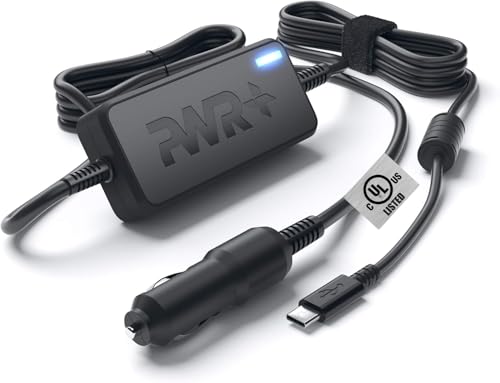
USB-C Car Charger for Dell Latitude (UL Listed, Model-Specific) — Best Latitude-Specific Third-Party
Most third-party chargers speak in vague universals; this one’s listing does the opposite, naming the Latitude models it targets across the 3000, 5000, 7000 and 9000 series plus the Rugged line. For a Latitude owner, that specificity is the feature: find your exact model in the list and the compatibility question is answered by the maker rather than guessed by you. The UL listing stated in the title adds the safety credential that anonymous car chargers conspicuously lack.
| Compatibility | Latitude 5420, 3520, 5520, 5510, 7320, 7520, 7410, 7420, 9520, 9510, Rugged and others listed (per listing title) |
|---|---|
| Certification | UL Listed (per listing title) |
| Connector | USB-C |
Strengths
- Model-specific Latitude compatibility stated in the listing
- UL Listed — a real safety credential in a category short on them
- Covers Rugged Latitudes used by field services
Trade-offs
- Model list is finite — newer Latitudes may not appear
- Third-party negotiation behaviour can vary by generation
- Wattage class should still be confirmed against your wall adapter
The Rugged mention deserves emphasis, because Rugged Latitude users — utilities, field engineering, emergency-adjacent services — are the people for whom vehicle charging is not a convenience but the operating model. A charger listing those machines explicitly, from a maker willing to be UL listed, is a materially different proposition from a generic unit that happens to share a connector.
Use the same discipline as with any third-party adapter: match your exact model number, confirm the wattage class against your wall adapter, and watch the first session for the laptop’s own verdict — Latitudes report adapter problems honestly, and a clean first charge that climbs steadily is the compatibility proof that matters.
Best for: Latitude owners whose exact model appears in its list / Not suited for: models outside the stated list — use the genuine Dell pick
Check on Amazon — check price on Amazon for the current listing details.

100W USB-C Laptop Car Charger for Dell Latitude / XPS / Precision — Best High-Wattage USB-C
Some Dell business machines outgrow 65 watts: larger Latitude configurations under full load and the USB-C-charging end of the Precision line want more than the mainstream class while working. This 100-watt car charger is the headroom answer, explicitly naming Dell’s Latitude, XPS and Precision families in its listing. It is the pick for users whose laptop must gain charge while it works — rendering, compiling, presenting — not merely while it naps.
| Output | 100W USB-C (per listing title) |
|---|---|
| Compatibility | Dell Latitude / XPS / Precision named (per listing title) |
| Input | 12V vehicle socket |
Strengths
- 100W output covers high-draw USB-C Dell models
- Latitude, XPS and Precision named in the listing
- Single-cable simplicity at workstation-adjacent wattage
Trade-offs
- Headroom is wasted on 45–65W Latitudes
- A 100W draw is a serious load for a small car’s socket — engine-running discipline applies
- Does not serve barrel-generation machines at any wattage
Wattage headroom has a subtle benefit beyond speed: a charger working well inside its capacity runs cooler and steadier than one at its ceiling, which matters across a four-hour drive. Owners who match charger to laptop exactly often discover the pairing works on paper and sulks in August traffic; the class above is the traditional cure, and this pick is that cure in USB-C form.
Respect the vehicle side as the wattage climbs: at 100 watts the socket, its fuse and the car’s battery are participants, not bystanders. Long sessions belong on a running engine, and the first session deserves the warmth check at the plug that our how-to prescribes for every route in this guide.
Best for: high-draw Latitude and Precision USB-C users who work while charging / Not suited for: mainstream 65W Latitudes — the genuine pick is tidier
Check on Amazon — check price on Amazon for the current listing details.

HKY Laptop Car Charger for Dell 7.4mm Barrel — Best for Older Barrel Latitudes
A large working population of Latitudes — the barrel generations that fleets ran for years and many still do — cannot use any USB-C pick in this guide. For them the HKY is the direct route: a 7.4mm barrel car charger whose listing names Latitude among its Dell series and spans the 65 to 150-watt classes those machines shipped with, on 12 to 24-volt vehicle power, which extends it from cars to the trucks and service vehicles barrel Latitudes often live in.
| Connector | 7.4mm Dell barrel (per listing title) |
|---|---|
| Output classes | 65W / 90W / 130W / 150W (per listing title) |
| Input | 12V–24V vehicle DC (per listing title) |
| Coverage | Latitude named among Dell series (per listing title) |
Strengths
- Serves the barrel Latitude generations USB-C cannot
- Wattage span covers the classic Latitude adapter classes
- 12–24V input suits service fleets and trucks
Trade-offs
- 7.4mm only — later small-barrel and USB-C machines excluded
- Confirm your exact Latitude against the listing’s coverage
- Third-party identification behaviour should be verified in the first session
Barrel Latitudes are disproportionately fleet machines, and fleet logic favours this pick’s simplicity: one dedicated cable per vehicle, no inverter to walk away, no negotiation beyond Dell’s pin. The identification caveat from our general Dell guide applies and is handled the same way — the laptop itself reports acceptance, and a machine that charges at full behaviour in session one has answered the question.
If your Latitude is the smaller-barrel variant, stop here and take the inverter pick below instead; forcing the barrel question has no upside when a universal route exists. Knowing which barrel you have is a ten-second measurement that decides between two good answers.
Best for: 7.4mm barrel Latitude owners, including fleet and field users / Not suited for: USB-C and small-barrel Latitudes
Check on Amazon — check price on Amazon for the current listing details.

Anker 75W Fast Charging USB-C Car Charger — Best Mainstream Alternative
Not every buyer can or wants to source the genuine adapter, and the Anker is the respectable alternative: 75 watts of USB-C — a class above the mainstream Latitude requirement — in a unit whose retractable cable suits the reality of a working car, where a loose cable migrates under seats and into door shuts. For a USB-C Latitude that splits its life between a Dell dock at the desk and this charger on the road, the pairing is seamless.
| Output | 75W USB-C fast charging (per listing title) |
|---|---|
| Cable | Retractable built-in cable (per listing title) |
| Input | 12V vehicle socket |
Strengths
- 75W gives headroom over the 65W Latitude class
- Retractable cable keeps a working car tidy
- Mainstream brand availability and support
Trade-offs
- Not Dell-genuine — negotiation is standard USB-C PD, which Latitudes accept but fleets may not standardise on
- Shared output drops when other ports are used
- No barrel support, as with all USB-C picks
The genuine-versus-Anker decision is the one real fork in this guide for USB-C owners, so here is the honest version: the Dell unit guarantees the machine’s own ecosystem behaviour; the Anker offers slightly more wattage, a better cable system and wider retail availability. Individual owners routinely choose either and are served well. Fleets choose genuine for uniformity — a defensible policy that says nothing against this unit’s quality.
One operational note for dock users: a Latitude that spends weekdays on a high-wattage dock may report this charger as lower-wattage by comparison. That is arithmetic, not malfunction — 75 watts charges the machine properly, merely without the dock’s surplus.
Best for: individual USB-C Latitude owners wanting a tidy mainstream unit / Not suited for: fleet standardisation programmes — take the genuine pick
Check on Amazon — check price on Amazon for the current listing details.

BESTEK 300W Pure Sine Wave Power Inverter — Best Universal Backup
Every Latitude ever shipped came with a wall adapter, and this inverter makes that adapter work in the car — barrel or USB-C, 45 watts or workstation class, no compatibility research required. As a primary solution it is bulkier than the direct picks; as the universal backup carried by field teams whose vehicle may host any generation of Latitude, it is unbeatable, because it converts the compatibility question into a socket question, and sockets are easy.
| Output | 300W pure sine wave AC (per listing title) |
|---|---|
| Input | 12V DC vehicle socket |
| Extras | PD30W USB-C port (per listing title) |
| Use | Runs the Latitude’s own AC adapter |
Strengths
- Works with every Latitude generation via its genuine adapter
- Pure sine wave is the laptop-safe inverter type
- Doubles as general vehicle AC for other kit
Trade-offs
- Bulkiest solution in the guide
- Conversion losses make it the least efficient route
- Requires the discipline of engine-running for long sessions
Field-service logic explains this pick’s badge. A technician whose day may involve a five-year-old barrel Latitude at one site and a new USB-C machine at the next cannot stock a charger per generation in the van — but one inverter plus the adapters already in the laptop bags covers the entire estate. Organisations quietly run on this pattern, and individual owners with two Latitudes of different generations should copy it.
The operating disciplines are the ones from our general Dell guide: inverter on first, adapter second, ventilation kept clear, engine running for real sessions, and warmth checked at the socket plug early. Observed, they make this the most predictable pick in the six — the one whose compatibility has never once depended on a model list.
Best for: mixed-generation owners, field teams and the cautious / Not suited for: single USB-C Latitude owners wanting the tidiest setup
Check on Amazon — check price on Amazon for the current listing details.
Comparison Table
| Pick | Badge | Key spec | Best for |
|---|---|---|---|
| Dell 65W USB-C Car and Airplane DC Power Adapter | Best Overall for Latitude | Genuine Dell 65W USB-C DC | Latitude fleets and travellers — Check on Amazon |
| USB-C Car Charger for Dell Latitude (UL Listed, Model-Specific) | Best Latitude-Specific Third-Party | USB-C, UL Listed, model list | Named Latitude models — Check on Amazon |
| 100W USB-C Laptop Car Charger for Dell Latitude / XPS / Precision | Best High-Wattage USB-C | 100W USB-C car charger | Working while charging — Check on Amazon |
| HKY Laptop Car Charger for Dell 7.4mm Barrel | Best for Older Barrel Latitudes | 7.4mm barrel, 12–24V | Barrel Latitude fleets — Check on Amazon |
| Anker 75W Fast Charging USB-C Car Charger | Best Mainstream Alternative | 75W USB-C, retractable | Individual travellers — Check on Amazon |
| BESTEK 300W Pure Sine Wave Power Inverter | Best Universal Backup | 300W pure sine wave inverter | Every Latitude, via its adapter — Check on Amazon |
Which Latitude generations charge which way?
The broad pattern, offered as a starting map rather than a substitute for checking your own machine: older Latitude generations charge through barrel ports, with the 7.4mm barrel the long-running fleet standard and a smaller barrel appearing on later slim models. The industry’s turn to USB-C then moved Latitude’s mainstream lines to Power Delivery charging, and current 3000, 5000 and 7000 series machines are predominantly USB-C — many retaining compatibility with Dell docks that deliver power over the same connector.
Your individual machine outranks any map. The decisive evidence is on your desk: the adapter in your bag has either a barrel plug or a USB-C connector, and its label states the wattage your car solution should match. Machines near the transition may carry both ports; on those, USB-C charging usually works but can be the slower path, a trade the laptop will report when you connect a lower-wattage source.
Rugged Latitudes deserve their own sentence because their users need vehicle power most: they exist in both eras, so the same port check applies, and the model-listing charger in this guide names Rugged coverage explicitly — one reason it earned its badge.
How much wattage does a Latitude need from a car charger?
Read the wall adapter. Mainstream Latitudes cluster in the 65-watt class, with smaller models below it and performance configurations above. For charging while working — the business use case, laptop open on a site visit or a passenger seat — match that figure. For charging closed between sites, a lower-wattage source still gains ground across a drive, which is how a fleet can rationally standardise on the 65-watt genuine unit even for its smaller machines.
Above the mainstream, be honest about the minority: high-draw Latitude configurations and anything Precision-adjacent that charges over USB-C belong with the 100-watt pick, and barrel workstations belong with the HKY’s upper classes or the inverter. Below it, do not let a phone-class car charger anywhere near the job — Latitudes negotiate politely and then charge at a pace that loses to a working day’s use.
Fleets should also note the dock effect: a Latitude accustomed to a high-output dock will judge car chargers against it. Set user expectations accordingly — car charging maintains a working day between desks; it is not a dock replacement, and the machines that understand that distinction stop generating support tickets about it.
Genuine Dell, third-party or inverter: the Latitude decision
Genuine Dell DC adapter
The fleet answer and the certainty answer. Identical behaviour in every vehicle, no negotiation surprises, one part number to stock. Its boundary is the 65-watt, USB-C-only envelope — inside that envelope it is the default recommendation of this guide.
Latitude-listed third-party chargers
The value and specificity answer, when the listing does the work of naming your model — as the UL-listed pick here does. The discipline is exact-model matching and a supervised first session. Outside a named listing, third-party claims about Latitude compatibility should be treated as advertising, not engineering.
Inverter plus the Latitude’s own adapter
The universality answer. It serves the machine in your bag today and the different machine issued to you next year, at the cost of bulk and conversion loss. For mixed estates and field teams it is not the backup plan; it is the plan, with direct chargers as the refinement for standardised vehicles.
How to set up car charging for a Dell Latitude
A ten-minute setup, done once, that makes Latitude car charging a routine rather than an experiment.
- Identify the machine. Read the wall adapter in the laptop bag: connector type and wattage. That label selects your route from this guide — USB-C direct, barrel direct, or inverter.
- Fit the charger to the vehicle. Seat the car charger or inverter fully in the 12-volt socket; a loose plug is the leading cause of intermittent charging on the move. Route the cable clear of the gear selector, handbrake and seat rails.
- Connect and read the laptop’s verdict. Latitudes report adapter status plainly. A clean charging indication with the percentage climbing across fifteen minutes is a proven setup; a low-wattage warning means the pairing suits closed-lid charging only, or wants the next class up.
- Run the engine for working sessions. Top-ups between nearby sites are fine on the car battery; a working charge at laptop wattage is an engine-running activity. Make it a habit and the car’s battery never enters the story.
- Leave the kit in the car. A Latitude car charger that lives in the laptop bag gets forgotten at the office; one that lives in the vehicle is simply part of the vehicle. Fleets should fit per-vehicle, not per-person.
- Re-verify after any change. New laptop issued, new vehicle, new cable — rerun the fifteen-minute check. Compatibility is a property of the whole chain, and the chain is what changed.
Done this way, the Latitude’s working geography expands quietly: the car becomes the third workplace, between desk and site, with power as a solved problem rather than a daily negotiation with a battery icon.
Latitude car charging for fleets: a short standardisation note
Organisations buying from this guide should standardise in layers: genuine 65W units for the USB-C estate’s vehicles, HKY barrel units where classic-generation vehicles are dedicated, and one inverter per field team as the universal fallback. That three-layer pattern covers every Latitude a fleet plausibly runs, with two part numbers doing nearly all the work.
Two policies complete the picture. First, label chargers with the vehicle, not the driver — the kit belongs to the car. Second, brief users on the engine-running rule and the low-wattage warning’s meaning, because most fleet charging complaints are expectation failures, not hardware failures, and a one-line brief is cheaper than a support queue.
Charging a Latitude between sites: the field worker’s pattern
The arithmetic of field work is forgiving if it is planned: a Latitude that leaves the depot full, tops up on every drive over twenty minutes, and docks at any site with a desk rarely sees its battery warning all week. The car charger’s job in that pattern is not heroics but housekeeping — small, frequent gains that keep the machine out of the danger zone where one long meeting can strand it.
Kit placement serves the pattern. The charger lives in the vehicle, the cable route is fixed, and connecting becomes part of the seatbelt routine rather than a decision. Field veterans of every trade converge on this: the tool that is already plugged in gets used; the tool in a bag in the boot is a rumour. Both the retractable-cable Anker and the fit-and-forget genuine unit serve that philosophy in different dialects.
Winter compresses the margins — cold batteries charge slower and cars crank harder — which is when the engine-running rule and the full-departure habit pay for themselves. The Latitude that starts January days full and tops up religiously is the one still working at the last site in the dark.
What about Latitude docking stations and car use?
Latitude’s desk ecosystem is dock-centric, and owners reasonably ask whether a dock belongs in the car. Generally, no: docks assume stable power and a stable desk, consume part of the power budget for their own electronics, and multiply connectors in the environment that shakes connectors loose. The car wants the opposite — the shortest possible power path, which every direct pick in this guide embodies.
The productive way to think about it is division of labour: the dock owns the desk, with its screens and peripherals; the car charger owns the road, with watts and nothing else. A Latitude moving between the two needs no translation layer, because USB-C is the common language — one of the genuine ergonomic victories of the current Latitude generations, and a reason the barrel era’s adapter archaeology is worth retiring where fleets can.
If a workflow truly demands in-car peripherals — a second display for presentations at client sites, say — power the laptop directly as this guide directs and run peripherals from their own supplies or the inverter pick, rather than stacking a dock between the car and the machine. Reliability in vehicles is subtraction, not addition.
Troubleshooting Latitude car charging
Problem: a warning that the adapter is undersized or unrecognised. On USB-C, step up a wattage class or charge closed; the machine is negotiating honestly. On a third-party barrel adapter, this is the identification issue — the genuine-adapter routes in this guide exist to end it.
Problem: charging stops when the engine stops. Many vehicles cut socket power with the ignition — a feature for the car battery, a surprise for the laptop plan. Learn your vehicle’s socket behaviour and schedule charging to driving time, which the field pattern in this guide assumes anyway.
Problem: the charger works in one vehicle and not another. Sockets differ in fit and fuse. Reseat firmly, check the vehicle’s socket fuse if the charger is dark in that car only, and suspect a worn socket before suspecting the charger — the isolation logic from our general chargers guide applies unchanged.
Problem: the Latitude charges at the office dock but crawls in the car. Compare wattages, not brands: the dock likely out-watts the car unit substantially. Crawling while working is the signature of an undersized pairing; the 100-watt pick is the cure for machines whose appetite justifies it.
Latitude generations this guide cannot serve — honestly
Completeness requires naming the gaps. Latitudes with the smaller barrel connector are not served by the HKY pick — their route here is the inverter. Precision mobile workstations, Dell’s neighbouring line, are served only at their USB-C-charging end by the 100-watt pick and otherwise by the inverter with their own large adapters. And any laptop, Latitude included, with a failing battery will charge badly from every source in this guide; car charging exposes weak batteries early, which is a diagnostic gift if recognised as one.
If your machine falls in a gap, the inverter pick is never the wrong purchase — it is the one route whose compatibility does not depend on your answer to any of these questions. That is why it closes this guide’s picks as deliberately as the genuine adapter opens them: certainty at both ends, specialisation in the middle.
Latitude car charging on long drives and road work
Long drives invert the usual problem: time is abundant, and the risks become thermal and organisational rather than electrical. A Latitude charging for six hours should sit ventilated, out of direct sun, with its own vents unobstructed by the seat or bag it rests on — laptop batteries charge best at the temperatures their owners also prefer, and a machine baking on a sunny parcel shelf will throttle its own charging in self-defence.
Cable routing graduates from tidiness to safety at motorway durations: nothing across the driver’s footwell, nothing where a passenger’s exit could snag it, and the charger seated so vibration across hours cannot walk it out of the socket. The fifteen-minute verification from the how-to should be repeated at the first fuel stop on a maiden long run, after which a proven setup can be trusted for the season.
For drivers who work from the car at stops — the laptop open at services and sites — the pattern that preserves both batteries is charge-while-driving, work-while-parked on the laptop’s own battery, and let the car’s battery rest whenever the engine does. It sounds austere; in practice it is simply how the professionals who live this pattern already behave, and their laptops and vehicles both survive to tell about it.
Buying for a Latitude you did not choose: the issued-machine guide
Many Latitude readers did not buy their laptop — an employer issued it, with a bag, a wall adapter and no opinion solicited. The car-charging decision for an issued machine has its own etiquette and logic. Etiquette: a personal car charger for a work laptop is normally the employee’s own small purchase, and choosing from this guide’s verified picks keeps it defensible if IT ever asks. Logic: the issued adapter in the bag is the specification sheet — its connector and wattage, read in ten seconds, select your route without any need to know the model’s biography.
Two issued-machine traps deserve naming. The first is assuming the desk dock’s wattage is the laptop’s requirement; docks commonly out-power the machine’s own adapter, and sizing a car charger to the dock overshoots the need. The second is borrowing a colleague’s charger across generations — Latitude’s two eras mean the borrowed unit may not even plug in, and the day it matters is the day that discovery gets made.
If your organisation issues Latitudes at scale and you influence its kit list, the standardisation note earlier in this guide is written for you: genuine units for the current estate, barrel units for dedicated classic vehicles, an inverter per field team. It is a short list because vehicle power, done right, is a short subject.
Common Buying Mistakes
Assuming every Latitude charges over USB-C. A generation check takes ten seconds at the adapter label. Barrel machines bought a USB-C charger are the most common wasted purchase in this category.
Buying a phone-class car charger for fleet Latitudes. Latitudes negotiate down and charge at a crawl, generating complaints that blame the laptop. Buy the wattage class the wall adapter states.
Issuing chargers to people instead of vehicles. Per-person kits get left in offices. Per-vehicle kits are present for every driver, every day — the entire point of car charging.
Ignoring the socket’s ignition behaviour. A charger in a socket that dies with the ignition charges nothing while parked. Know the vehicle before blaming the kit.
Forcing the barrel question. If the barrel size or model coverage is wrong, the inverter route serves the same machine today. Compatibility doubt should always resolve toward the universal route.
Final Recommendation
Current USB-C Latitude owners should standardise on Dell’s own 65W car adapter — fleets for its uniformity, individuals for its certainty — with the Anker 75W as the tidy mainstream alternative and the 100W unit reserved for high-draw machines. Barrel-generation owners should take the HKY for dedicated vehicles, and everyone with a mixed estate should carry the BESTEK inverter as the route that has never met a Latitude it cannot feed.
Identify the generation, match the wattage, fit the kit to the vehicle. Do those three things and a Dell Latitude in a car is simply a Dell Latitude at work.
If you take one sentence from this guide into the purchase, take the identification one: the adapter already in your laptop bag is the specification for everything the car needs to provide. Read it, buy its travelling counterpart from the verified picks above, verify the first session — and the battery icon stops being a participant in your working day.
Keep exploring the same cluster on this site: Best 12 Volt Charger For Dell Laptop Best 12 Volt Chargers Best 12 Volt Charger For Dead Batteries Best 12 Volt Circuit Tester Best 12 Volt Dc Charger
Frequently Asked Questions
What is the best 12 volt charger for a Dell Latitude?
For current USB-C Latitudes, Dell’s own 65W USB-C car and air adapter — genuine identification behaviour at the mainstream Latitude wattage. For barrel-generation Latitudes with the 7.4mm port, the HKY direct barrel adapter. Mixed estates and uncertain cases are best served by the pure sine wave inverter running the Latitude’s own wall adapter.
Does my Latitude charge over USB-C or a barrel plug?
Check the adapter in your laptop bag: a USB-C connector means Power Delivery charging; a round plug means barrel, in one of two sizes across the generations. Current 3000, 5000 and 7000 series Latitudes are predominantly USB-C, while older fleet generations are barrel. Some transition machines carry both ports, with USB-C usually the slower path.
How many watts does a Latitude need in a car?
Match the figure on its wall adapter — 65 watts is the mainstream Latitude class, with smaller models below and performance configurations above. Charging while closed between sites succeeds at lower wattage across a drive; charging while working wants the full class, and high-draw machines justify the 100-watt pick in this guide.
Why does my Latitude warn about the car adapter?
Latitudes verify their power source and report honestly. A low-wattage warning means the charger offers less than the machine wants for full-speed working charge — it will typically still charge when closed or idle. An unrecognised warning on a third-party barrel adapter is the identification system declining the pairing; genuine-adapter routes, direct or via inverter, end the argument.
Can I leave a Latitude charging in a parked car?
Briefly and knowingly. Many vehicles cut socket power with the ignition, ending the question; where the socket stays live, a laptop-class draw will flatten a car battery across hours. The working pattern in this guide — charge while driving, top up between sites — exists precisely to keep the car’s battery out of the transaction.
Is a third-party charger safe for a work Latitude?
A listed, model-matched one can be — the UL-listed pick here names its Latitude models outright, which is the standard to demand. Anonymous universal claims deserve scepticism on a work machine, and fleets are justified in standardising on the genuine Dell adapter for uniformity even where third-party units are individually sound.
Can one car charger serve two different Latitudes?
If both are USB-C machines, yes — a 65-watt-class unit serves the mainstream of both, and the 100-watt pick covers a mixed pair with a hungrier member. If one is barrel and one is USB-C, no single direct charger serves both; that household or fleet vehicle is exactly the inverter pick’s home ground, since each machine then uses its own wall adapter. Buy for the pair of machines, not the favourite one.