A home with both hardwood and area rugs needs a vacuum that can switch between the two. Strong brush roll agitation helps on a rug, but the same spinning bristles can scatter debris and scuff a bare floor. The best vacuum for hardwood floors and area rugs lets you turn the brush off, or uses a soft roller that suits both.
The six vacuums below include uprights, a canister, cordless sticks and a wet-dry floor machine, so you can match one to your space. We have not used these products ourselves, so confirm the exact model, attachments and battery details on the current listing before buying.
As an Amazon Associate we earn from qualifying purchases. Links below are affiliate links, and they do not change the product information we give.
What to Look For
| Feature | Why it matters |
|---|---|
| Brush control | An off switch or soft roller protects hard floors |
| Type | Uprights suit big rooms; cordless sticks suit quick passes; canisters suit stairs and mixed floors |
| Pile height | Shag and thick rugs need height adjustment and enough suction |
| Weight | A lighter machine is easier to carry between rooms |
| Fringe care | Rug fringe can tangle, so a brush off setting helps |
In this guide
Specs at a Glance
| Vacuum | Type | Power | Notes |
|---|---|---|---|
| Shark Navigator Lift-Away | Upright | Corded | Detachable pod for stairs |
| Bissell CrossWave | Wet-dry floor cleaner | Corded | Cleans and vacuums at once |
| Dyson V8 | Cordless stick | Battery | Convertible to a handheld |
| Miele Classic C1 | Canister | Corded | Quiet, long-lived build |
| Hoover ONEPWR Evolve Pet | Cordless stick | Battery | Pet-focused model |
| Shark Vertex | Cordless stick | Battery | Dual roller design |
The 6 Best Vacuums for Hardwood Floors and Area Rugs

Top pickBest for mixed floors and stairs
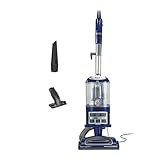
1. Shark Navigator Lift-Away
A popular corded upright with a detachable pod you can carry up the stairs. It is a common pick for the best vacuum for rugs on a budget, and the brush roll can be switched off when you move onto a hard floor.
Suits: mixed floors and stairs. Strengths: simple, widely available and the brush can be turned off. Weaknesses: a cord limits reach. Skip it if you want cordless freedom.
Best for sealed hard floors and low rugs
2. Bissell CrossWave
A multi-surface machine that vacuums and washes a floor in the same pass. It is sold for sealed hard floors and for area rugs, which makes it a distinctive choice among the best vacuums for wood floors if your finish is well sealed.
Suits: sealed hard floors and low rugs. Strengths: vacuums and mops together. Weaknesses: not meant for unsealed wood. Skip it if you need to vacuum deep shag.
View Bissell CrossWave on Amazon

Best for quick daily cleaning
3. Dyson V8 Cordless Vacuum
A long-running cordless stick from Dyson that converts to a handheld. It is a good fit for quick cleanups on a mix of bare floor and low-pile rugs, and the best cordless vacuum for rugs list often starts with a Dyson.
Suits: quick daily cleaning. Strengths: convenient and light to carry. Weaknesses: battery runtime is limited. Skip it if you have a very large home.


Best for hardwood and low rugs
4. Miele Classic C1 Canister Vacuum
A canister vacuum with a floor head that sits on hard floors and rugs without a spinning bristle bar. Canisters are kind to hardwood, and a straight-suction head avoids pulling at rug fringe.
Suits: hardwood and low rugs. Strengths: solid build and gentle on floors. Weaknesses: more to carry than a stick. Skip it if you have thick shag.

Best for homes with pets
5. Hoover ONEPWR Evolve Pet Cordless Vacuum
A cordless stick aimed at pet owners that uses Hoover’s interchangeable battery system. It copes with pet hair on rugs and can be used on hard floors, though check the brush control on the model you choose.
Suits: homes with pets. Strengths: pet-focused design and cordless use. Weaknesses: a battery system tied to one brand. Skip it if you prefer corded power.
View Hoover ONEPWR Evolve Pet on Amazon

Best for mixed floors
6. Shark Vertex Cordless Vacuum
A cordless stick from Shark with a dual roller head, designed to move across carpets and hard floors without much change in setup. It sits on the premium end of Shark’s cordless range.
Suits: mixed floors. Strengths: a head built for both surface types. Weaknesses: costs more than a basic stick. Skip it if you want the lowest price.

Care and Setup
- Empty the bin or canister before it is full.
- Cut hair from the brush roll every few weeks.
- Rinse or replace filters as the manual directs.
- Turn the brush off on hardwood and on fringe.
Mistakes to Avoid
- Running a hard bristle brush over bare wood.
- Vacuuming rug fringe with the brush on.
- Using a wet machine on unsealed floors.
- Forgetting to charge a cordless battery.
Questions to Ask Before You Buy
- How large is the area you clean, and how many rooms have rugs?
- Do you need to carry the machine up and down stairs?
- Where will you keep it, and does that spot have a wall outlet or room for a charging dock?
- Do you want a bag or a bin, and how do you feel about emptying it?
- Does the maker list the spare parts and filters you will need, and where to find them?
- Does anyone in your home have allergies or sensitivities that call for a particular filter?
Matching It to Your Floors
Every home mixes surfaces. Short, low-pile rugs behave differently from thick, fringed ones, and polished boards need a gentler touch than rough tile. Note the rug types you own and look at the maker’s listing and instructions to see how each model handles them, including whether the brush can be switched off.
Fringe, loose threads and tassels can wrap around a spinning brush, so check them before you run the machine. A quick walk through your home with a notepad helps you spot thresholds, steps and tight corners that matter.
Who Should Skip It
If you live in a small apartment with mostly bare floors, a full-size machine may be more than you need. Anyone with limited storage might prefer a slim stick design or a handheld. If you already own a machine that works well, a better brush or a new filter could be a smarter step.
Storage and Care Notes
Empty the bin often, rinse washable filters only as the maker directs and trim hair from the brush roll.
Why Hardwood and Rugs Need Different Settings
Hardwood and rugs ask opposite things of a vacuum. A rug holds dirt in its fibers, so it benefits from a spinning brush that agitates the pile and lifts debris. A hard floor has nothing to agitate, and a stiff, spinning brush can flick crumbs across the room or leave marks on the finish. The best machine for a mixed home is one that adapts, either by letting you switch the brush off or by using a soft roller that is gentle on bare boards.
Suction matters on both. On hard floors, enough airflow pulls in fine dust from the gaps between boards. On rugs, suction works with the brush to draw out grit. Some machines let you adjust power, which can help when you move from a thin rug to a thick one, or from a floor to a curtain edge. Check the manual for your model to see which settings it offers and which modes the maker recommends for each surface.
Wheels and base materials affect hardwood too. Hard plastic wheels can scuff a finish, while soft or rubberized wheels glide more gently. Look at the listing for details and check how the head sits on the floor, since a head that rides too low can drag on thick rugs and one that sits too high may miss fine dust.
Vacuum Types Compared
Each style has a role, and many homes end up using more than one. Uprights usually offer strong carpet cleaning and large bins, which suits big rooms and thick rugs, though they can be bulky on stairs. Canisters keep the motor and bin in a separate body, which makes the floor head light and low, handy for hardwood, stairs and under furniture. Cordless sticks are convenient for quick passes and light messes, but their battery limits how long they run.
Wet-dry floor machines combine vacuuming and washing in one pass. They suit sealed hard floors and low rugs, but the maker’s notes on surfaces matter, and they are not meant for every finish. Robot options exist as well, though they are outside the scope of this list.
- Uprights suit large homes with mixed rugs and carpet.
- Canisters suit hardwood, stairs and fringe.
- Cordless sticks suit small homes and quick pick-ups.
- Wet-dry machines suit sealed hard floors, with care.
Weigh storage as well as cleaning. A bulky upright needs a closet, while a stick may hang on a wall. Think about how you will actually use it day to day.
Handling Fringe, Tassels and Thick Pile
Rug edges are where vacuums cause the most damage. Fringe and tassels can wrap around a spinning brush and pull or tear, and long pile can clog a head or stall the roller. Before vacuuming a delicate rug, check the care label and take a close look at any loose threads. Turn the brush off near fringe, or use a hose attachment and clean the edges by hand.
Thick or shag rugs call for a lighter approach. Some people use a suction-only setting or a raised head height so the pile is not pulled. Others prefer to shake or beat the rug outdoors and then vacuum lightly. Whatever you choose, check the maker’s notes, since each machine and rug differs. If a rug sheds fibers at first, that is often normal for new rugs, but follow the rug maker’s advice.
Flat weaves and low-pile rugs are easier, and most mixed-floor machines handle them well. Run the vacuum in the direction of the weave when you can, and avoid overly aggressive passes that stretch the rug. Keep a small handheld or crevice tool nearby for fringe and corners, where a full head will not fit.
Cordless Battery and Runtime Checks
If you consider a cordless model, the battery deserves attention. Runtime is usually listed for the lowest power mode, and it drops when you use stronger settings or a motorized brush on rugs. Read the listing carefully for how runtime is described and under what conditions. If you have a large home, ask whether you can swap batteries or whether the pack is built in.
Charging habits affect battery life. Store the vacuum on its dock or in a spot where it can charge at a normal room temperature, and avoid leaving a battery in a very hot or cold place. When the runtime begins to shrink noticeably, check whether a replacement battery is available and how easy it is to fit. Interchangeable battery systems can be useful if you own other tools from the same maker, but they tie you to one brand.
Think about weight and balance. A stick that feels light on a hard floor may feel heavier when you use it overhead for cobwebs. Also check how loud it is, if the listing says. Finally, compare the bin size, since a small bin means more trips to empty it, especially on shedding rugs or in homes with pets.
Upkeep, Filters and Replacement Signs
A vacuum that is not kept up will lose suction no matter how good it was. Empty the bin before it is full, rinse or replace filters on the schedule in the manual, and clear hair from the brush roll and around the axles. Check hoses and nozzles for clogs if suction drops suddenly. A quick look at the brush bristles tells you whether they are worn flat, which reduces cleaning on rugs.
Know which parts you can wash and which you cannot. Some filters are washable and must be fully dry before reuse, while others should only be replaced. Using the wrong method can harm the motor or leave a musty smell. Keep the manual or a note of the model name so you can find parts later.
Signs it is time to replace the machine include persistent loss of suction after cleaning, a motor that grinds or smells hot, a battery that no longer holds a useful charge and cracked housings that let air leak. Weigh the cost of parts against a new purchase, and check the maker’s warranty terms before you decide.
A Quick Checklist for Mixed Floor Homes
Homes with both bare boards and area rugs ask more of a vacuum than most listings admit. Use this checklist to decide which features matter in your own rooms.
- List the rugs you own and note their pile height, fringe and backing.
- Decide whether you want one machine for everything or a lighter tool for hard floors.
- Think about how often you will carry the vacuum up and down stairs.
- Check whether the brush roll can be switched off or lifted for delicate surfaces.
- Look at the height of furniture in your home, and whether the machine can reach beneath it.
- Consider where you will keep the vacuum and its attachments between uses.
When you can name your rugs and your floors, the decision becomes far more concrete, and the specifications on a product page begin to mean something.
Weight, Cord and Maneuverability Compared
The physical feel of a vacuum is just as important as its suction. The table below sets out how common styles tend to behave, and the maker’s own descriptions will confirm specifics.
| Style | Tends to suit | Watch for |
|---|---|---|
| Upright corded | Big rugs and wide floor areas | Weight on stairs and the cord length |
| Cordless stick | Quick cleanups and flexible reach | Battery capacity for larger homes |
| Canister | Hard floors and tools for corners | Dragging the body behind you |
| Wet-dry floor cleaner | Sealed hard floors with sticky spills | Compatibility with your floor finish |
Many households end up with a main machine plus a small helper. That is perfectly reasonable if it keeps your floors in good shape and your rugs free of loose grit.
Protecting Floors and Rugs From Everyday Wear
A vacuum can help or harm depending on how you use it. Grit trapped under a rug acts like sandpaper on hardwood, so occasional cleaning beneath the rug is worthwhile. Wheels and brush bristles should be clean and free of debris, because stuck particles can mark a finish.
When you work on a rug, move slowly and in straight lines so the machine has time to lift what is buried. Avoid pulling at fringe, and keep a close eye on any loose threads. Check the rug maker’s care notes, since some wool and hand-knotted rugs call for gentler treatment than a rotating brush provides.
Who to Ask When You Are Unsure
If you have an expensive or antique rug, a floor finish you do not recognize, or a warranty to protect, consult the flooring maker or a specialist cleaner before choosing settings. The vacuum maker’s manual also lists which floors the machine is meant for and how to maintain the brush and filters.
Room-by-Room Planning for Cleaner Floors
A little structure makes vacuuming faster. In an entryway, grit arrives on shoes, so a doormat and a quick pass with the vacuum protect the floors deeper in the house. In living areas, rugs collect crumbs and pet hair, and they usually deserve a thorough pass. In bedrooms, soft rugs beside the bed trap lint and dust, and a gentle setting helps protect their fibers.
Hallways and kitchens are mostly hard floor, so a soft brush head is often the right choice there. If your machine offers several modes, write them on a card and keep it near the storage spot until the habit sticks.
Finally, empty the bin or bag before it is completely full, because a loaded container can reduce airflow. Check the manual for how often the maker suggests cleaning filters and brush rolls, and follow that schedule.
Choosing vacuums With Confidence: A Deeper Look
Start with the job, not the product. Before comparing any vacuums, write down what yours actually has to do in a normal week: who uses it, how often, for how long at a stretch, and what has frustrated you about the option you are replacing. That short list becomes the filter for everything else in this guide. Features that do not serve your list are decoration, while the two or three things on it deserve most of your attention and most of your budget. Readers who skip this step usually end up with an vacuum that is impressive on paper and slightly wrong in daily life, which is the most common reason good products get returned.
Next, audit the space and the routine it has to fit. Measure where the vacuum will live and where it will be stored, note the surfaces, light, moisture, heat or traffic it will face across mixed flooring, and think about who else will handle it. A choice that fits the room but fights the routine still fails, so picture the busiest, messiest, most rushed version of your day rather than the tidiest one. If other people in the household will use it, their habits count too: the best vacuum for homes split between rugs and hard floors is the one everyone can use correctly without a lesson every time.
Brush behaviour on hard floors
A spinning brush that flings crumbs across timber is worse than none. Look for a brush you can switch off or a soft roller made for hard floors, and a head that seals to the surface instead of skating over debris. The transition between rug and board is where dual-floor vacuums prove themselves.
Suction control for rugs
Deep rug pile needs strong pull; delicate or high-pile rugs can be grabbed, frayed or stalled by too much. Adjustable suction or height settings let one machine serve both. If your home mixes a shaggy rug with flatweaves, that adjustability moves from nice extra to the main event.
Weight and handling in real rooms
You will carry this machine around furniture, up steps and under tables. Published weight matters less than balance, handle comfort and how the head steers at ankle height. A slightly heavier vacuum that glides can tire you less than a light one you wrestle around chair legs.
Filtration and dust habits
Homes vacuum to remove dust, not redistribute it. Sealed filtration matters most for allergy-prone households, and a bin or bag system you can empty without a dust cloud matters for everyone. Judge the emptying process as carefully as the cleaning process, because you will do it weekly for years.
Corded stamina versus cordless freedom
Cordless suits quick daily passes and stairs; corded suits long whole-house sessions without watching a battery gauge. Be honest about your pattern: many mixed-floor homes do best with a cordless for the everyday crumbs and keep expectations of it realistic for the deep weekend clean.
Compatibility is the quiet deal-breaker. Check the requirements that sit around the vacuum itself: the fittings, power, mounting points, accessories, consumables or companion pieces it assumes, and whether your current setup already provides them. Confirming these details before ordering is dull and decisive in equal measure. It is far cheaper to discover a mismatch on a listing page than on the floor with the packaging open. Keep the product manual or listing open while you check, and measure twice wherever a dimension decides whether something fits, connects or closes properly.
Vacuums in Real Life: Common Situations
The weekly whole-house clean
Work from the quietest rooms outward, do rugs with slow overlapping passes, then switch settings for hard floors rather than forcing one mode everywhere. Empty the bin or check the bag before it is packed full, because suction fades long before the container looks completely full.
Daily crumbs in the kitchen and entry
High-traffic hard floors collect grit that scratches finishes when walked in. A quick daily pass in these zones protects the floor itself, not just its appearance. This is where a vacuum that starts fast, stores handy and handles edges well earns its keep over a more powerful machine kept in a distant cupboard.
Pet hair on rugs and boards
Pet hair clings to rug fibres and drifts into corners on hard floors. A brush designed to resist tangling, plus an upholstery tool for the sofa, covers most of it. Expect to clean the brush roll regularly; hair management is a maintenance routine, not a one-time purchase decision.
Stairs, landings and under furniture
Stairs expose every handling flaw. A lift-away canister, a compact handheld mode or a light stick format turns a dreaded job into a short one. Check how low the head goes under your beds and sofas, because the dustiest territory in most homes is exactly there.
How the Picks in This Guide Compare
Use the picks in this guide as a shortlist, not a ranking to obey blindly. Read the review of each option with your own list beside it, and notice which pick keeps answering your specific frustrations. The first pick in a list is rarely the right pick for every reader; it is simply a strong starting point. Cross off options that miss a requirement entirely, however appealing their other qualities are, then compare what remains on the two or three criteria you care about most. That process usually leaves one obvious candidate and one sensible runner-up, which is exactly where a buying decision should end up.
The shortlist above, Shark Navigator Lift-Away, Bissell CrossWave, Dyson V8 Cordless Vacuum, Miele Classic C1 Canister Vacuum, Hoover ONEPWR Evolve Pet Cordless Vacuum, and Shark Vertex Cordless Vacuum, covers the main directions a buyer in this category usually faces. Rather than treating them as a ladder from best to worst, treat them as answers to different priorities. Work through them in the order of your own list: find the pick whose review speaks to your biggest frustration first, then check whether its trade-offs touch anything you care about. A trade-off that lands on something you never do is free; a trade-off that lands on your daily routine is a reason to move to the next pick, whatever its position in the list.
Who should start with the Shark Navigator Lift-Away
Start with the Shark Navigator Lift-Away if its review above matches the way you actually live with vacuums: the setting it suits, the routine it fits and the compromises it makes. Read its limitations as carefully as its strengths, because every pick in this guide gives something up to be good at something else. If its limitation sits in an area you barely use, it may be your best value in the list. If its strength duplicates something you already own or never need, keep moving, since the right pick is the one whose strengths land on your week, not the one with the longest feature list.
Who should start with the Bissell CrossWave
Start with the Bissell CrossWave if its review above matches the way you actually live with vacuums: the setting it suits, the routine it fits and the compromises it makes. Read its limitations as carefully as its strengths, because every pick in this guide gives something up to be good at something else. If its limitation sits in an area you barely use, it may be your best value in the list. If its strength duplicates something you already own or never need, keep moving, since the right pick is the one whose strengths land on your week, not the one with the longest feature list.
Who should start with the Dyson V8 Cordless Vacuum
Start with the Dyson V8 Cordless Vacuum if its review above matches the way you actually live with vacuums: the setting it suits, the routine it fits and the compromises it makes. Read its limitations as carefully as its strengths, because every pick in this guide gives something up to be good at something else. If its limitation sits in an area you barely use, it may be your best value in the list. If its strength duplicates something you already own or never need, keep moving, since the right pick is the one whose strengths land on your week, not the one with the longest feature list.
Who should start with the Miele Classic C1 Canister Vacuum
Start with the Miele Classic C1 Canister Vacuum if its review above matches the way you actually live with vacuums: the setting it suits, the routine it fits and the compromises it makes. Read its limitations as carefully as its strengths, because every pick in this guide gives something up to be good at something else. If its limitation sits in an area you barely use, it may be your best value in the list. If its strength duplicates something you already own or never need, keep moving, since the right pick is the one whose strengths land on your week, not the one with the longest feature list.
Who should start with the Hoover ONEPWR Evolve Pet Cordless Vacuum
Start with the Hoover ONEPWR Evolve Pet Cordless Vacuum if its review above matches the way you actually live with vacuums: the setting it suits, the routine it fits and the compromises it makes. Read its limitations as carefully as its strengths, because every pick in this guide gives something up to be good at something else. If its limitation sits in an area you barely use, it may be your best value in the list. If its strength duplicates something you already own or never need, keep moving, since the right pick is the one whose strengths land on your week, not the one with the longest feature list.
Who should start with the Shark Vertex Cordless Vacuum
Start with the Shark Vertex Cordless Vacuum if its review above matches the way you actually live with vacuums: the setting it suits, the routine it fits and the compromises it makes. Read its limitations as carefully as its strengths, because every pick in this guide gives something up to be good at something else. If its limitation sits in an area you barely use, it may be your best value in the list. If its strength duplicates something you already own or never need, keep moving, since the right pick is the one whose strengths land on your week, not the one with the longest feature list.
Setup, First Use and Everyday Technique
The first days with a new vacuum tell you most of what you need to know, so treat them as a test period rather than a honeymoon. Set it up properly, use it for its real jobs instead of gentle trials, and notice where you hesitate, adjust or work around it. Small annoyances in week one rarely shrink with familiarity; they usually grow. If something feels wrong, check fit, setup and technique before blaming the product, because a surprising share of disappointments trace back to one skipped step in the instructions or one assumption carried over from the old one.
Care, Cleaning and Storage That Protect Your Vacuum
Empty and clean filters on rhythm
Suction problems are usually maintenance problems in disguise. Empty the bin before it passes the fill line, wash or replace filters as the maker directs, and let washable filters dry completely before refitting. A vacuum maintained monthly keeps the performance you paid for.
Free the brush roll regularly
Hair and thread wind around brush rolls until they strain the motor and scratch floors. Flip the head over regularly, cut windings away carefully and check the end caps spin freely. This five-minute habit is the cheapest insurance a vacuum owner can buy.
Inspect the head and seals
Worn wheels, cracked hoses and tired seals leak suction silently. Run your hand around joints while the machine runs and listen for whistling leaks. Replacing a small worn part restores a machine that felt ready for replacement.
Store it ready for the next use
Coil cords without tight kinks, park cordless models on their charger if the maker recommends it, and keep attachments with the machine rather than in a distant drawer. A vacuum that is ready in seconds gets used for small messes; one that needs assembly waits for Saturday.
Treat rugs gently on a schedule
Deep-clean passes do not need maximum aggression every time. Alternate thorough slow passes with lighter maintenance passes, and spot-clean spills promptly so grit does not grind into the pile under the brush. Your rugs will keep their texture longer.
Keep a simple ownership rhythm. A quick wipe, check or tidy after use, a slightly deeper clean on a regular cycle, and a periodic inspection for wear will keep most vacuums performing the way they did when they arrived. Problems caught early, a loose fitting, a fraying edge, a strange noise, a part that no longer moves freely, are almost always cheaper and easier to fix than the same problems discovered months later. Tie the routine to something you already do, like a weekly clean or a seasonal clear-out, so it actually happens instead of living on a list of good intentions.
Storage is part of ownership, not an afterthought. Where an vacuum rests between uses decides how fast it ages: damp, heat, crushing weight and direct sun quietly undo good materials, while a clean, dry, sensible spot preserves them. Keep the parts that belong together actually together, including the small accessories that vanish into junk drawers and are only missed mid-task. If the original packaging or a simple labelled container suits the shape, use it. Future you, searching at the moment of need, will be grateful for every boring storage decision you make now.
Mistakes That Quietly Ruin a Good Choice
Using one setting for every surface
The setting that deep-cleans a rug can scatter debris or stress a delicate floor finish. Learn the two or three modes your machine offers and switch deliberately at each threshold. Most dual-floor disappointment is a settings habit, not a machine flaw.
Pushing faster to finish sooner
Vacuum brushes and airflow need time over each patch, especially on rugs where dirt sits at the base of the pile. Slow passes clean in one visit what fast passes leave for next week. If cleaning feels endless, the answer is usually slower passes less often, not more frantic ones.
Ignoring edge and corner performance
Most household grit lives along skirting boards and under kick rails, exactly where a wide head seals worst. Use the crevice tool as part of the normal clean, not as an afterthought, and judge a new vacuum partly by how its head behaves against a wall.
Buying for the biggest room only
A machine perfect for open-plan spaces may be miserable on your stairs, in a small bathroom or around a cluttered study. List every surface it must handle, including the awkward ones, and let the hardest job shape the shortlist.
Problems, Safety and Getting Years of Use
When something goes wrong, troubleshoot in a ladder instead of jumping to replacement. First, check the obvious: correct setup, correct supplies, nothing blocked, worn or installed backwards. Second, return to the manual section for that symptom, because makers document the common failures for their own designs. Third, change one thing at a time so you know what fixed it. If a problem affects safety, involves damage you cannot explain, or keeps returning after honest troubleshooting, stop and get professional help or contact the maker rather than improvising around it.
Safety deserves a deliberate pass with any vacuum. Read the warnings that apply to your household, especially where children, older relatives, pets, water, heat or heights are involved, and set the vacuum up so the safe way is also the easy way. Store accessories and any sharp, hot or heavy parts out of casual reach, and never defeat a guard, lock or limit because it slows you down. Most accidents with household gear happen during rushed, familiar routines, not during careful first uses, so build the habit while you are still paying attention.
Finally, know what finished looks like. An vacuum has done its job when it fades into your routine: it works, it is maintained without drama, and it no longer asks for thought. Replace or upgrade when wear changes performance, when your needs genuinely change, or when repairs stop making sense, not simply because a newer version exists. Keeping notes on what you bought, when, and what you liked or disliked about it turns the next purchase into a five-minute decision instead of a fresh research project, and that, more than any single feature, is what a good guide is for.
One More Round of Practical Checks
A useful extra test is the two-week question: imagine living with this choice on an ordinary, slightly chaotic day a fortnight from now, not on the day it arrives. Novelty hides flaws; routine exposes them. Picture the cleaning, the storage, the other people involved and the moment something small goes wrong. If the choice still looks easy under those conditions, it is probably right. If your imagination keeps adding workarounds, believe it, and look again at the pick you crossed off earlier, because the runner-up often wins once daily reality gets a vote.
Budget thinking works better in reverse. Instead of asking what the cheapest acceptable version costs, ask what failure would cost you: a replacement within the year, a repair, damage to something the product touches, or simply a chore you stop doing because the tool makes it unpleasant. Spending a little more to avoid a likely failure is usually the economical move, while spending more on features your routine never touches is not. The picks in this guide sit at different levels for a reason, and matching the level to your actual frequency of use is the whole game.
If you are choosing for more than one person, gather the complaints before you gather opinions on products. Everyone describes the problem differently, and the shared frustration underneath is the real specification. A choice that answers the shared problem tends to satisfy the whole household, even where tastes differ on looks or extras. Where one person will use the item far more than anyone else, weight their experience heaviest, but do not ignore the person who cleans, stores or maintains it, because their friction decides whether the routine survives.
Reading individual reviews well matters as much as reading our picks. Look for reviewers whose situation resembles yours, in household size, space, experience and the job they bought for, and discount praise or complaints rooted in situations nothing like your own. Patterns repeated across many owners are signal; a single dramatic story is weather. Pay special attention to comments written after months of ownership rather than on delivery day, because durability, upkeep and the slow annoyances only appear with time, and those are exactly the qualities you are trying to predict.
Vacuum FAQ
Can one vacuum handle shag rugs and hardwood?
Some can, but shag is the hard case. Look for adjustable height and a brush that can be turned off, and avoid a head that clogs with long pile.
Is a cordless vacuum good enough for rugs?
For light cleaning it is fine. Deep cleaning of thick rugs usually works better with a corded upright.
Can a vacuum scratch hardwood floors?
It can if the brush is stiff, the wheels are hard or debris gets dragged along. Turn the brush off, use soft wheels or a soft roller, and check the maker's guidance for your floor.
How often should I vacuum a rug?
It depends on traffic and pets. Busy areas may need attention several times a week, while quiet rooms can go longer. Adjust to what you see.
Should I vacuum rug fringe?
Be careful, as fringe can tangle in a spinning brush. Turn the brush off or use a hose attachment, and follow the rug maker's care notes.
Is a bagless vacuum better than a bagged one?
Neither is better in every case. Bagless models save on bags but need emptying and filter care, while bagged ones keep dust contained. Pick based on how you feel about emptying.
Do I need a HEPA filter?
It can help if someone in your home has allergies, but look at the maker's description and ask a professional if needed. Filters also need regular care.
Why does my vacuum smell?
Common causes are a full bin, dirty filters or hair around the brush. Clean these parts as the manual directs, and replace filters that cannot be washed.
Are wet-dry machines safe on all hardwood?
No, they are intended for sealed floors, and unsealed or waxed wood can be damaged by moisture. Check the floor maker's guidance and the machine's listing before use.
How long should a cordless battery last?
It varies by model, use and care. Treat listed runtime as a guide for the lowest setting, and expect shorter runs on rugs and higher power.
Can one vacuum really suit both rugs and hardwood?
Yes, provided it can calm its brush action for hard floors and raise its effort for rugs. Machines that force one behaviour everywhere compromise somewhere. Try the transition in store if you can: a good dual-floor vacuum crosses from board to rug without scattering, grabbing or needing a wrestling match.
How often should mixed floors be vacuumed?
Traffic decides: entries and kitchens benefit from frequent quick passes, bedrooms from a weekly thorough clean. Grit on hard floors is worth removing promptly because it abrades finishes underfoot. Rugs hide dirt longer but hold more of it, so their weekly slow pass matters most.
Is a robot vacuum enough for both surfaces?
Robots maintain cleanliness between proper cleans and handle daily dust well, but most households still need a full vacuum for edges, stairs, upholstery and deep rug passes. Think of a robot as frequency and a conventional vacuum as depth; many mixed-floor homes are happiest with both roles covered.
Why does my vacuum scatter crumbs on hard floors?
Usually the brush is spinning when it should be still or soft, or the head is riding too high to seal. Switch the brush off or to the hard-floor mode, slow down, and approach crumbs from a slight angle. If scattering persists, check the head for worn wheels or a damaged seal.
Bagged or bagless for a dusty household?
Bagless is convenient and saves buying bags, but emptying can puff dust back into the air; bagged systems often suit allergy-sensitive homes because disposal is sealed and tidy. Either way, filtration quality and how faithfully you maintain it matter more than the category label.
How do I protect hardwood from vacuum damage?
Use a head made for hard floors with soft wheels and no aggressive brush action, keep grit out of the wheels, and never drag a powered head sideways across the finish. Check the underside of the head regularly for trapped stones or worn parts that could scratch.
The Short Version
For a budget upright, the Shark Navigator. For vacuuming and washing, the Bissell CrossWave. For a light stick, the Dyson V8. For hardwood care, the Miele C1. For pet hair, the Hoover ONEPWR. For a mixed-floor stick, the Shark Vertex.