Turkish towels come in two broad families. The flat-woven peshtemal, also sold as a fouta, is thin, light and quick drying, and it doubles as a beach wrap or a hammam cloth. The terry kind, made from long-staple Turkish cotton, is fluffier and closer to a regular bath towel.
We picked six towels that cover both families, including bath, hand and beach use. We have not used these products ourselves, and the notes come from general product knowledge. Look at the current listing to confirm size, weight and the cotton claim before ordering, since sellers vary in what they state.
As an Amazon Associate we earn from qualifying purchases. Links below are affiliate links, and they do not change the product information we give.
What to Look For
| Feature | Why it matters |
|---|---|
| Weave | Flat weave dries fast and packs small; terry is plusher and more absorbent |
| Cotton type | Long-staple Turkish cotton tends to be soft and durable |
| Size | Beach and bath use favors a larger wrap |
| Finish | Fringe or tassels add style but may fray |
In this guide
Specs at a Glance
| Towel | Weave | Best use | Notes |
|---|---|---|---|
| Cacala Pestemal | Flat weave | Beach and bath wrap | Fringed ends |
| Turkish-T Peshtemal | Flat weave | Bath and travel | Lightweight, quick drying |
| DEMMEX Organic Cotton Peshtemal | Flat weave | Bath, beach and hammam | Oversized, lightweight; 71×36 in per the title |
| Linum Home Textiles Denzi | Terry | Bath | Turkish cotton terry |
| Bare Cotton Luxury Hotel and Spa | Terry | Bath and hand | Turkish cotton; hotel style |
| Classic Turkish Towels | Terry | Bath, hand, wash | Sold in several set sizes |
The 6 Best Turkish Towels

Top pickBest for beach days and light bath use
1. Cacala Pestemal Turkish Towel
A well-known flat-woven peshtemal with hand-knotted fringe ends. It is thin enough to dry in a short time and large enough to wrap around the body.
Suits: beach days and light bath use. Strengths: a decorative edge and quick drying. Weaknesses: less plush than terry. Skip it if you want a thick towel.


Best for travel and spa trips
2. Turkish-T Peshtemal Towel
A lightweight flat-woven peshtemal from a brand that focuses on Turkish cotton towels. It folds small, which makes it handy for travel bags and weekend trips.
Suits: travel and spa trips. Strengths: small to pack and quick to dry. Weaknesses: a thin feel. Skip it if you prefer a fluffy texture.

Best for bath, beach and hammam use
3. DEMMEX Organic Cotton Turkish Peshtemal Towel
A flat-weave Turkish peshtemal from DEMMEX, listed at 71×36 in and described as oversized and lightweight. The title also cites certified organic and OEKO-TEX certified cotton, so check the current listing for the exact certification details.
Suits: bath, beach and hammam use. Strengths: generous size and a light feel. Weaknesses: details vary by listing. Skip it if you want a thick, plush terry.
View DEMMEX Organic Cotton Turkish Peshtemal Towel on Amazon

Best for a full bathroom set
4. Linum Home Textiles Denzi Turkish Cotton Towels
A terry towel line made from Turkish cotton, sold in sets with matching hand and wash sizes. It has a standard towel feel with a bit more softness than basic cotton.
Suits: a full bathroom set. Strengths: matching pieces. Weaknesses: terry takes longer to dry. Skip it if you want a thin wrap.
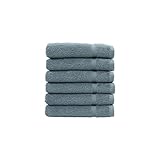

Best for a guest bathroom upgrade
5. Bare Cotton Luxury Hotel and Spa Turkish Cotton Towels
A hotel-style terry set that markets Turkish cotton. It is the kind of towel meant to look neat folded on a bathroom rack.
Suits: a guest bathroom upgrade. Strengths: a hotel look. Weaknesses: shedding lint on early washes is common with terry. Skip it if you want a flat weave.


Best for flexible set choices
6. Classic Turkish Towels Genuine Cotton Bath Towels
A line of terry towels in several set sizes, including bath, hand and wash. Confirm the exact set contents on the current listing.
Suits: flexible set choices. Strengths: several size combos. Weaknesses: details differ between listings. Skip it if you need exact dimensions up front.

Care and Setup
- Wash new towels once or twice before first use to remove loose lint.
- Use warm water and a mild detergent.
- Skip fabric softener, which can make cotton less absorbent.
- Shake out peshtemals before hanging; they dry fast on a hook.
Mistakes to Avoid
- Expecting a peshtemal to feel like thick terry.
- Washing bold colors with whites.
- Trusting the words Turkish cotton without checking the seller details.
- Drying on high heat, which can shrink and wear the weave.
Flat Weave or Terry: Deciding Which Suits Your Routine
The first decision is between a thin flat-woven towel and a looped terry towel. Flat weaves, often called peshtemal, have no pile. They are light, fold small and generally dry faster than terry, which makes them popular for travel, the gym, the beach and humid bathrooms with little airflow. They can feel less absorbent in one pass because there are no loops to hold water, though many people find that a wrap-style towel works well when used with a gentle blotting motion.
Terry towels have loops that trap water and create a plush feel. They suit people who want that familiar, soft, cushioned feel after a shower. They take longer to dry and are bulkier to pack, which matters in small bathrooms or on trips.
Think about where the towel will be used.
- Daily bath use at home: terry offers a plush feel, while a flat weave suits those who like a light towel that dries quickly.
- Beach and pool: flat weaves pack small and shake out sand easily, though a large terry offers more comfort to lie on.
- Travel and gym: lightweight, quick-drying wraps are usually easier to carry.
- Spa days and lounging: either type works as a wrap, depending on preference.
Some households keep both kinds. A terry set for daily use and a flat weave for guests, trips or the beach can cover most needs.
Reading Size, Weight and Fiber Details on a Listing
A listing’s details tell you much more than its photos. Start with the dimensions. A wrap that is too short will not stay secure around the body, while an oversized one is easier to use as a throw or beach blanket. Compare the numbers with a towel you already own so the size is not a surprise.
Weight is stated in different ways. Some listings give grams per square meter, while others give an overall weight per piece. A heavier terry generally feels thicker and takes longer to dry, and a lighter flat weave is easier to carry. Weight numbers are only meaningful if you compare like with like, and not all sellers state them, so treat missing information as a prompt to look closer.
Fiber claims need careful reading. Cotton is common, and the listing may state a blend that includes other fibers. Terms such as long-staple, organic or combed describe the cotton or its processing, but they are the seller’s claims unless backed by something you can check. If a listing mentions a certification, read what it covers and look for details from the seller. Do not assume that a Turkish label means a particular fiber quality.
Finally, check what is included. A set may contain different sizes, and the number of pieces and their dimensions should be clear. Colors in photos vary on screens, so read the color name carefully.
Washing and Breaking In New Towels
New towels often need washing before first use. Check the care label, and wash them separately the first time, because dye can bleed and loose fibers or lint may come off. Use a gentle detergent and avoid adding too much, since residue can leave a stiff feel and reduce absorbency. Cold or warm water is often suggested on labels, but follow the instructions that come with your towel.
Fabric softener is a debated topic. Many care guides advise against it for towels, since softeners can coat fibers and reduce absorbency over time. An occasional rinse with a small amount of white vinegar is sometimes suggested as an alternative, but check the care label and use common sense. Never mix vinegar with bleach or other cleaners.
Flat weaves may feel stiff or papery at first, and they usually soften with washing and use. Fringes can tangle in the wash, so put wraps with tassels in a mesh bag or tie the fringe loosely before washing. Terry towels may shed some lint in early washes, which tends to ease over time.
Dry on a low or medium setting, or hang to dry. High heat can shrink the weave and wear fibers faster. Shake or snap a towel out before drying to fluff the fibers, and remove it promptly so it does not stay damp in the hamper.
Choosing for Specific Uses: Beach, Hammam, Travel and Gifts
Each use puts different demands on the fabric. For the beach, size and sand release matter. A large flat weave can serve as a wrap, a cover-up or a light blanket, and it shakes out easily. If you want to lie down comfortably, check that the dimensions are large enough and consider a thicker piece or a mat beneath it.
For a hammam or spa visit, a light wrap is easy to wear and quick to dry between uses. Check that the size is generous enough to wrap securely, and that the fabric is soft against the skin. For the gym or yoga, a compact flat weave stores neatly in a bag and dries soon after use.
For travel, a flat weave reduces bulk and drying time, which helps when luggage space is limited. Keep a small bag for damp towels. Check airline or hotel rules only if you are bringing the towel for unusual purposes.
Towels also make popular gifts. Pick a neutral color if you do not know the recipient’s taste, and check whether the set arrives in packaging suitable for gifting. A set that contains several sizes can be useful for a new household. Ask whether the recipient prefers plush or light towels, because preference is personal.
When a seller lists a product for many uses, read the dimensions and fabric description to be sure it suits the task you have in mind.
Spotting Quality and Making Towels Last
Without touching the towel, you can still judge quality from the listing. Look for a clear description of the fiber, weave, size and weight. Be careful with listings that use vague superlatives and give few details. Read the reviews for notes on washing results, shedding, shrinkage and color fastness, bearing in mind that reviews reflect individual experiences.
When the towel arrives, inspect it. The weave should look even, with no gaps, loose threads or uneven edges. Hems should be straight and securely stitched. Fringes should be knotted firmly. Smell it for strong chemical odor, and wash before use. Check the size against the listing and contact the seller if it differs significantly.
To extend the life of your towels, rotate them so none is used constantly, avoid overloading the washer and wash them at a suitable temperature. Hang them to dry fully between uses to prevent musty smells. Avoid bleach on colors unless the care label allows it, and keep towels away from rough surfaces that can snag the weave.
Replace towels when they feel thin, no longer dry well, develop persistent odor after washing or show fraying that cannot be repaired. A towel that has lost its absorbency is more of a nuisance than a bargain, even if it looks fine.
Peshtemal Flat Weave Versus Terry-Style Turkish Towels
The towels in the list come in two main styles. Pestemal or peshtemal towels, such as the Cacala, Turkish-T and DEMMEX options, are flat-woven, thin and light. They dry quickly, fold small and suit beaches, gyms, spas and travel. Terry-style Turkish cotton towels, such as Linum Home Textiles, Bare Cotton and Classic Turkish Towels, have loops like a conventional bath towel but are often made from long-staple cotton and described as soft and absorbent. Each style fits different habits.
| Trait | Flat weave (peshtemal) | Terry-style Turkish cotton |
|---|---|---|
| Thickness | Thin and light | Thicker and plusher |
| Drying time | Usually quick | Slower than flat weave |
| Packability | Folds small for travel | Bulkier |
| Feel | Smooth, can soften with washing | Soft, loopy surface |
| Typical uses | Beach, spa, travel, bath | Daily bath use |
Choosing Size and Material Details
Check the dimensions on the listing, because sizes vary. A peshtemal is often around 35 by 70 inches, which is large enough to wrap around the body, but check the specific towel. Look at the fabric content, whether it is 100 percent cotton or a blend, and read about the weave and any certifications the maker mentions. Organic cotton options, such as DEMMEX, describe how the cotton is grown, but the maker’s page gives details.
Consider fringes and edges. Some towels have decorative tassels that can tangle in the wash, so check the care instructions. Color is another factor, since dark dyes may run in the first washes, and stripes or patterns can be more forgiving than solid light colors.
First Wash and Ongoing Care
- Wash new towels separately before first use, as the maker advises.
- Use a gentle detergent and avoid bleach unless the label allows it.
- Skip fabric softener, which can coat fibers and reduce absorbency.
- Dry on low to medium heat, or hang to dry, and shake towels out first.
- Expect some lint and loose threads in early washes.
- Fold or roll for storage, and keep towels fully dry between uses.
Softening and Longevity
Flat weave towels often become softer with repeated washing, as the fibers relax. A pinch of baking soda or a splash of white vinegar in the wash is a common household tip to keep towels fresh, though you should follow the care tag first. Avoid overloading the machine, which prevents proper rinsing. Hang towels so they dry quickly, which helps prevent odors.
Common Mistakes
The first mistake is expecting a flat weave towel to feel like a thick bath towel. The second is washing new towels with other items that can catch on fringes. The third is using too much detergent, which leaves residue. The fourth is storing damp towels. Think about how and where you will use the towel before you choose a style.
Beyond the Bathroom
Turkish towels are used as beach blankets, picnic throws, light shawls, yoga mat covers and sofa throws. Their light weight makes them convenient to pack, and many owners keep one in a gym bag or car. Match the towel to the uses you imagine.
Thread Counts, Weight and What the Labels Mean
Towel descriptions use terms that are easy to misread. Thread count is a measure used for sheets and does not apply the same way to terry towels. For towels, weight per square meter or ounces per square yard is a better indicator of thickness and density. Flat-woven peshtemal towels are intentionally lighter than terry, so a low weight is not a flaw. Long-staple cotton is described by makers as producing softer and stronger yarns, though the quality of the weave also matters.
Check the origin and certifications that the maker lists. Words like Turkish refer to a tradition and a region of production, but the listing should state where the towel was made if that matters to you. Certifications for organic or low-impact production appear on some products, and the maker’s page should explain them.
Finally, look at the size and the fringe or edge finish. A large towel wraps better, while a smaller towel is easier to launder. Edge stitching affects how well the towel holds up. Keep the tag with the care instructions, and choose colors that you will enjoy using.
Choosing Turkish towels With Confidence: A Deeper Look
Start with the job, not the product. Before comparing any Turkish towels, write down what yours actually has to do in a normal week: who uses it, how often, for how long at a stretch, and what has frustrated you about the option you are replacing. That short list becomes the filter for everything else in this guide. Features that do not serve your list are decoration, while the two or three things on it deserve most of your attention and most of your budget. Readers who skip this step usually end up with an Turkish towel that is impressive on paper and slightly wrong in daily life, which is the most common reason good products get returned.
Next, audit the space and the routine it has to fit. Measure where the Turkish towel will live and where it will be stored, note the surfaces, light, moisture, heat or traffic it will face in bathrooms, at the beach and on the road, and think about who else will handle it. A choice that fits the room but fights the routine still fails, so picture the busiest, messiest, most rushed version of your day rather than the tidiest one. If other people in the household will use it, their habits count too: the best Turkish towel for people who want towels that dry fast, pack small and feel better with age is the one everyone can use correctly without a lesson every time.
Weave style: peshtemal or terry
Flat-woven peshtemal towels are light, quick to dry and tiny to store, while looped terry Turkish cotton towels are plush and absorbent in the classic hotel sense. Neither is better in the abstract. Choose by your life: travel, gym and beach favour the flat weave; a long home bath ritual favours the loops.
Cotton quality and feel
Long-staple cotton is what gives Turkish towels their reputation for softness that survives washing. Judge a towel in person by how the fabric drapes and whether the loops or weave feel even. Very soft display towels sometimes owe their feel to coatings that wash away, so the second wash tells the truth.
Weight and thickness in daily use
Heavier towels feel luxurious and absorb a lot, but they also take longer to dry and fill a washing machine quickly. Lighter towels dry fast on the hook and suit humid bathrooms and travel. Match the weight to your laundry rhythm and drying space rather than chasing the plushest option.
Size for the job
A bath sheet wraps generously and suits tall people and post-shower lounging; a standard bath towel is easier to wash, dry and store. Hand towels and washcloths from the same range keep a bathroom feeling coordinated. Measure your current favourite towel and buy sizes by comparison instead of guessing from names.
Edges, tassels and finishing
Flat-woven towels often have hand-knotted tassels that look beautiful and need gentle handling in the wash, while terry towels rely on stitched edges that should be even and secure. Fraying edges are where towels die first, so inspect the finishing as carefully as the fabric itself.
Compatibility is the quiet deal-breaker. Check the requirements that sit around the Turkish towel itself: the fittings, power, mounting points, accessories, consumables or companion pieces it assumes, and whether your current setup already provides them. Confirming these details before ordering is dull and decisive in equal measure. It is far cheaper to discover a mismatch on a listing page than on the floor with the packaging open. Keep the product manual or listing open while you check, and measure twice wherever a dimension decides whether something fits, connects or closes properly.
Turkish towels in Real Life: Common Situations
Travel, gym and beach life
This is where flat-woven Turkish towels shine: they roll tiny, dry on a line or a car mirror, and double as a wrap, a picnic layer or a light blanket. One towel can serve a whole holiday. Choose colours that hide sand and sunscreen marks, and rinse salt and chlorine out promptly.
The home spa bathroom
For a bathroom that aims at calm, plush terry Turkish towels in a coordinated set deliver the hotel feeling. Warm them on a rail, keep a consistent colour palette, and store spares rolled where guests can find them. The ritual is mostly about everything being soft, warm and where you expect it.
Small homes and slow drying rooms
In apartments where towels dry on a door hook in a steamy room, lighter weaves are the practical luxury. They dry before they smell, wash in smaller loads and store in a fraction of the space. Owning fewer, better, faster-drying towels beats owning a cupboard of damp ones.
Guest-ready spares
Keep a dedicated set of Turkish towels for guests, stored separately from the daily rotation so they stay at their best. Flat-weave sets are easy to keep fresh in a drawer and quick to launder between visitors. A guest towel that is soft, clean and obviously theirs makes a spare room feel planned.
How the Picks in This Guide Compare
Use the picks in this guide as a shortlist, not a ranking to obey blindly. Read the review of each option with your own list beside it, and notice which pick keeps answering your specific frustrations. The first pick in a list is rarely the right pick for every reader; it is simply a strong starting point. Cross off options that miss a requirement entirely, however appealing their other qualities are, then compare what remains on the two or three criteria you care about most. That process usually leaves one obvious candidate and one sensible runner-up, which is exactly where a buying decision should end up.
The shortlist above, Cacala Pestemal Turkish Towel, Turkish-T Peshtemal Towel, DEMMEX Organic Cotton Turkish Peshtemal Towel, Linum Home Textiles Denzi Turkish Cotton Towels, Bare Cotton Luxury Hotel and Spa Turkish Cotton Towels, and Classic Turkish Towels Genuine Cotton Bath Towels, covers the main directions a buyer in this category usually faces. Rather than treating them as a ladder from best to worst, treat them as answers to different priorities. Work through them in the order of your own list: find the pick whose review speaks to your biggest frustration first, then check whether its trade-offs touch anything you care about. A trade-off that lands on something you never do is free; a trade-off that lands on your daily routine is a reason to move to the next pick, whatever its position in the list.
Who should start with the Cacala Pestemal Turkish Towel
Start with the Cacala Pestemal Turkish Towel if its review above matches the way you actually live with Turkish towels: the setting it suits, the routine it fits and the compromises it makes. Read its limitations as carefully as its strengths, because every pick in this guide gives something up to be good at something else. If its limitation sits in an area you barely use, it may be your best value in the list. If its strength duplicates something you already own or never need, keep moving, since the right pick is the one whose strengths land on your week, not the one with the longest feature list.
Who should start with the Turkish-T Peshtemal Towel
Start with the Turkish-T Peshtemal Towel if its review above matches the way you actually live with Turkish towels: the setting it suits, the routine it fits and the compromises it makes. Read its limitations as carefully as its strengths, because every pick in this guide gives something up to be good at something else. If its limitation sits in an area you barely use, it may be your best value in the list. If its strength duplicates something you already own or never need, keep moving, since the right pick is the one whose strengths land on your week, not the one with the longest feature list.
Who should start with the DEMMEX Organic Cotton Turkish Peshtemal Towel
Start with the DEMMEX Organic Cotton Turkish Peshtemal Towel if its review above matches the way you actually live with Turkish towels: the setting it suits, the routine it fits and the compromises it makes. Read its limitations as carefully as its strengths, because every pick in this guide gives something up to be good at something else. If its limitation sits in an area you barely use, it may be your best value in the list. If its strength duplicates something you already own or never need, keep moving, since the right pick is the one whose strengths land on your week, not the one with the longest feature list.
Who should start with the Linum Home Textiles Denzi Turkish Cotton Towels
Start with the Linum Home Textiles Denzi Turkish Cotton Towels if its review above matches the way you actually live with Turkish towels: the setting it suits, the routine it fits and the compromises it makes. Read its limitations as carefully as its strengths, because every pick in this guide gives something up to be good at something else. If its limitation sits in an area you barely use, it may be your best value in the list. If its strength duplicates something you already own or never need, keep moving, since the right pick is the one whose strengths land on your week, not the one with the longest feature list.
Who should start with the Bare Cotton Luxury Hotel and Spa Turkish Cotton Towels
Start with the Bare Cotton Luxury Hotel and Spa Turkish Cotton Towels if its review above matches the way you actually live with Turkish towels: the setting it suits, the routine it fits and the compromises it makes. Read its limitations as carefully as its strengths, because every pick in this guide gives something up to be good at something else. If its limitation sits in an area you barely use, it may be your best value in the list. If its strength duplicates something you already own or never need, keep moving, since the right pick is the one whose strengths land on your week, not the one with the longest feature list.
Who should start with the Classic Turkish Towels Genuine Cotton Bath Towels
Start with the Classic Turkish Towels Genuine Cotton Bath Towels if its review above matches the way you actually live with Turkish towels: the setting it suits, the routine it fits and the compromises it makes. Read its limitations as carefully as its strengths, because every pick in this guide gives something up to be good at something else. If its limitation sits in an area you barely use, it may be your best value in the list. If its strength duplicates something you already own or never need, keep moving, since the right pick is the one whose strengths land on your week, not the one with the longest feature list.
Setup, First Use and Everyday Technique
The first days with a new Turkish towel tell you most of what you need to know, so treat them as a test period rather than a honeymoon. Set it up properly, use it for its real jobs instead of gentle trials, and notice where you hesitate, adjust or work around it. Small annoyances in week one rarely shrink with familiarity; they usually grow. If something feels wrong, check fit, setup and technique before blaming the product, because a surprising share of disappointments trace back to one skipped step in the instructions or one assumption carried over from the old one.
Care, Cleaning and Storage That Protect Your Turkish towel
Wash before first use, gently
New towels shed lint and may carry finishes from making. A gentle first wash, on its own or with like colours, sets them up. Avoid fabric softener, which coats fibres and reduces absorbency over time; Turkish cotton softens naturally with washing and use.
Keep absorbency alive
If towels start repelling water, residue from detergents and softeners is the usual cause. Wash with a moderate amount of detergent, rinse well, and occasionally run a hot wash as the care label allows. Absorbency returns when the fibres are clean rather than coated.
Dry with air and patience
Line drying keeps fibres lively and saves energy, while a gentle tumble restores loft to terry loops. Shake towels out before drying to open the loops or smooth the weave. Avoid scorching heat, which makes cotton brittle and shortens the life of tassels and edges.
Care for tassels and edges
Tassels tangle and fray if they are wrung hard or caught in zips and hooks in the wash. A laundry bag for flat-weave towels is a small kindness. If a tassel unravels, re-twist and knot it early rather than letting it work loose across the edge.
Store dry and loosely folded
Never shelve a towel that is even slightly damp; the musty smell that follows is hard to evict. Store folded loosely so air can move, rotate the stack so the same towels are not always on top, and keep a small gap between bathroom spares and cleaning cloths to avoid mix-ups.
Keep a simple ownership rhythm. A quick wipe, check or tidy after use, a slightly deeper clean on a regular cycle, and a periodic inspection for wear will keep most Turkish towels performing the way they did when they arrived. Problems caught early, a loose fitting, a fraying edge, a strange noise, a part that no longer moves freely, are almost always cheaper and easier to fix than the same problems discovered months later. Tie the routine to something you already do, like a weekly clean or a seasonal clear-out, so it actually happens instead of living on a list of good intentions.
Storage is part of ownership, not an afterthought. Where an Turkish towel rests between uses decides how fast it ages: damp, heat, crushing weight and direct sun quietly undo good materials, while a clean, dry, sensible spot preserves them. Keep the parts that belong together actually together, including the small accessories that vanish into junk drawers and are only missed mid-task. If the original packaging or a simple labelled container suits the shape, use it. Future you, searching at the moment of need, will be grateful for every boring storage decision you make now.
Mistakes That Quietly Ruin a Good Choice
Using fabric softener out of habit
Softener is the classic Turkish towel mistake: it leaves towels feeling slick and drinking less water with every wash. If softness is the goal, proper washing and drying deliver it without coating the cotton. Towels that push water around instead of absorbing it have usually been softened, not worn out.
Judging only by plushness in the shop
The thickest towel is not automatically the best towel for a humid bathroom, a small washer or a traveller. Weight brings drying time and laundry bulk with it. Choose the weight your home can wash and dry comfortably, then enjoy it fully instead of resenting laundry day.
Mixing towels with rough laundry
Zips, hooks and coarse items snag loops and tassels in the wash. Wash towels as their own load where you can, or at least away from anything with hardware. Pulled loops should be snipped level, never pulled, which unravels the row.
Buying one perfect towel instead of a working set
A single luxury towel in a household rotation gets washed to death while others linger. A modest set of matching towels shares the work, looks calmer and lasts longer per towel. Sets also solve the guest problem without a special purchase later.
Problems, Safety and Getting Years of Use
When something goes wrong, troubleshoot in a ladder instead of jumping to replacement. First, check the obvious: correct setup, correct supplies, nothing blocked, worn or installed backwards. Second, return to the manual section for that symptom, because makers document the common failures for their own designs. Third, change one thing at a time so you know what fixed it. If a problem affects safety, involves damage you cannot explain, or keeps returning after honest troubleshooting, stop and get professional help or contact the maker rather than improvising around it.
Safety deserves a deliberate pass with any Turkish towel. Read the warnings that apply to your household, especially where children, older relatives, pets, water, heat or heights are involved, and set the Turkish towel up so the safe way is also the easy way. Store accessories and any sharp, hot or heavy parts out of casual reach, and never defeat a guard, lock or limit because it slows you down. Most accidents with household gear happen during rushed, familiar routines, not during careful first uses, so build the habit while you are still paying attention.
Finally, know what finished looks like. An Turkish towel has done its job when it fades into your routine: it works, it is maintained without drama, and it no longer asks for thought. Replace or upgrade when wear changes performance, when your needs genuinely change, or when repairs stop making sense, not simply because a newer version exists. Keeping notes on what you bought, when, and what you liked or disliked about it turns the next purchase into a five-minute decision instead of a fresh research project, and that, more than any single feature, is what a good guide is for.
One More Round of Practical Checks
A useful extra test is the two-week question: imagine living with this choice on an ordinary, slightly chaotic day a fortnight from now, not on the day it arrives. Novelty hides flaws; routine exposes them. Picture the cleaning, the storage, the other people involved and the moment something small goes wrong. If the choice still looks easy under those conditions, it is probably right. If your imagination keeps adding workarounds, believe it, and look again at the pick you crossed off earlier, because the runner-up often wins once daily reality gets a vote.
Budget thinking works better in reverse. Instead of asking what the cheapest acceptable version costs, ask what failure would cost you: a replacement within the year, a repair, damage to something the product touches, or simply a chore you stop doing because the tool makes it unpleasant. Spending a little more to avoid a likely failure is usually the economical move, while spending more on features your routine never touches is not. The picks in this guide sit at different levels for a reason, and matching the level to your actual frequency of use is the whole game.
Turkish Towel FAQ
What is a peshtemal?
It is a flat-woven Turkish towel used in baths and on the beach. It is thin, light and dries fast.
Are Turkish bath towels softer?
Many people find them soft, especially terry made from long-staple cotton. Feel varies by product.
Can Turkish towels work as beach towels?
Yes. Flat weaves are popular for the beach because they shed sand and pack small.
How do I tell if a Turkish towel is good quality?
Look for a clear fiber description, an even weave and a seller that lists size and weight. Reviews that mention washing results are useful. Be cautious with vague claims, since the Turkish label alone does not guarantee quality, and compare the details on each listing before you decide.
Do Turkish towels shrink?
Some can, especially in hot water or high dryer heat. Follow the care label, wash on a suitable setting and dry on low heat or hang to dry to limit shrinkage.
Why does my new flat-weave towel feel rough?
Flat weaves often feel crisp at first. Washing and regular use usually soften them, though the feel depends on the fiber and weave. Follow the care instructions.
Can I put Turkish towels in the dryer?
Often yes, but use a low or medium setting and check the label. Fringes can tangle, so shake the towel out first and avoid overdrying.
How many towels should I buy?
It depends on your household. Many people keep at least two per person so one can be used while the other is washed or drying. Add extras for guests and the beach.
What does OEKO-TEX or organic on a listing mean?
These are claims about materials or processing. Read the listing and the certifying body's information for what is covered, and ask the seller if the details are unclear.
Are flat-weave towels absorbent enough for daily use?
Many people use them every day because they dry quickly, but they feel different from terry. If you prefer a plush, thick feel, a terry towel may suit you better.
How do I stop the fringe from tangling?
Put the towel in a mesh laundry bag or gather and loosely tie the fringe before washing. Comb out small tangles gently when dry.
How should I store Turkish towels?
Make sure they are fully dry, then fold them in a dry, ventilated place. Flat weaves fold small, so they take little storage space.
Why is my Turkish towel not absorbing water?
Almost always residue: softener, excess detergent or body products coating the fibres. Wash it with a modest amount of detergent, rinse thoroughly and skip the softener, and absorbency usually returns within a wash or two. Brand-new towels can also need a few washes before the cotton reaches full absorbency.
Are flat-woven towels warm enough after a bath?
They feel different from terry: less plush, more like a light woven wrap, and many people prefer them in warm climates and summer. In a cold bathroom in winter, a heavy terry towel feels more cocooning. Plenty of households keep flat-weave for travel and summer, terry for winter bathing.
How many bath towels should one person own?
Enough to rotate while laundry happens without urgency: for most people that means a few in rotation plus a spare. The exact number matters less than the rhythm: towels washed regularly and dried fully last longer and smell better than a large stock that sits damp.
Do Turkish towels get softer over time?
Good cotton does, provided it is washed without softener build-up and dried sensibly. The fibres relax and the weave settles, which is why owners often prefer a year-old towel to a new one. Harsh heat and overloaded detergent work in the opposite direction, making cotton feel scratchy.
Can I use a peshtemal as a beach towel?
It is one of its best uses: sand shakes off a flat weave far more easily than terry loops, it dries between swims, and it packs to almost nothing for the walk home. Rinse it after salt water and dry it in shade to keep colours true.
How do I keep white Turkish towels white?
Wash whites separately, treat stains before washing, and dry in sunlight when you can, which naturally brightens cotton. Avoid chlorine-heavy products unless the care label allows them, since they weaken fibres over time. A towel that is washed promptly never needs heroic rescue later.
The Short Version
For a fringed wrap, the Cacala. For travel, the Turkish-T. For patterns, the Hammamas. For a terry set, the Linum Home Denzi. For a hotel look, the Bare Cotton. For flexible set sizes, the Classic Turkish Towels.