A good robe turns the short dash from a hot tub back to the house from a cold shock into a comfortable walk. The best ones soak up water quickly, hold some warmth and do not weigh a ton when damp. Terry cloth and waffle weaves are the usual choices, with hoods an option for cold nights.
The six robes below mix terry, plush, waffle and hooded styles in men’s, women’s and unisex cuts. We have not worn or tested them ourselves, so check the current listing for fabric details, sizing and care instructions before you buy.
As an Amazon Associate we earn from qualifying purchases. Links below are affiliate links, and they do not change the product information we give.
What to Look For
| Feature | Why it matters |
|---|---|
| Fabric | Terry cloth absorbs well; waffle dries faster; plush feels softer but holds water longer |
| Hood | A hood adds warmth outdoors in cool weather |
| Length | Longer robes cover wet legs; shorter ones are lighter |
| Pockets and belt | Useful for a phone, key or towel-free walk to the door |
| Care | Check the label for washing and drying advice |
In this guide
Specs at a Glance
| Robe | Fabric style | Cut | Notes |
|---|---|---|---|
| Alpine Swiss Terry Cloth Robe | Cotton terry | Men’s and women’s versions | Classic shawl collar |
| Amazon Essentials Terry Robe | Cotton-blend terry | Men’s and women’s versions | Value pick |
| Pavilia Hooded Terry Robe | Terry | Hooded | Extra warmth outdoors |
| Brooklinen Super-Plush Robe | Plush cotton | Unisex | Heavier and softer |
| Parachute Classic Bath Robe | Cotton | Unisex | Spa-style cut |
| Chakir Turkish Linen Waffle Robe | Waffle weave | Unisex | Light and quick to dry |
The 6 Best Hot Tub Robes
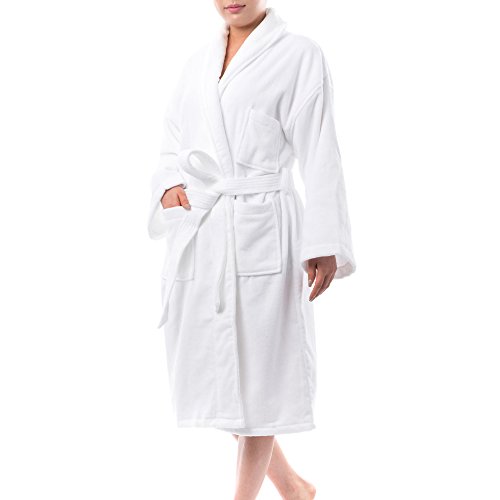
Top pickBest for a classic, plain look
1. Alpine Swiss Terry Cloth Robe
A traditional shawl-collar robe in terry cloth. It is the kind of everyday robe that works well after a soak and is offered in men’s and women’s cuts.
Suits: a classic, plain look. Strengths: absorbent terry. Weaknesses: bulky when wet. Skip it if you want something light.

Best for budget buyers
2. Amazon Essentials Terry Robe
The house-brand option, meant for people who want a plain terry robe without a premium price. Look at the listing for fabric content and fit notes.
Suits: budget buyers. Strengths: simple and affordable. Weaknesses: thinner feel. Skip it if you want a heavy spa robe.
View Amazon Essentials Terry Robe on Amazon
Best for cold-weather soaks
3. Pavilia Hooded Terry Robe
A terry robe with a hood, which is useful when the walk to the door is chilly or the evening is breezy.
Suits: cold-weather soaks. Strengths: a hood for the head and neck. Weaknesses: hoods can feel bulky. Skip it if you dislike hoods.
View Pavilia Hooded Terry Robe on Amazon
Best for a luxury feel
4. Brooklinen Super-Plush Robe
A heavier, softer robe from a bedding brand known for plush cotton. It leans toward comfort over speed of drying.
Suits: a luxury feel. Strengths: a soft, thick hand. Weaknesses: slow to dry. Skip it if you want travel-light.
View Brooklinen Super-Plush Robe on Amazon

Best for a refined style
5. Parachute Classic Bath Robe
A spa-style cotton robe aimed at people who want a polished look. It is a better fit for a nicer set of linens than a casual patio.
Suits: a refined style. Strengths: clean design. Weaknesses: a higher price. Skip it if you want a rough-and-ready robe.

Best for quick drying
6. Chakir Turkish Linen Waffle Robe
A waffle-weave robe that is lighter than terry and tends to dry faster, which makes it practical for frequent soaks.
Suits: quick drying. Strengths: airy weave. Weaknesses: less plush warmth. Skip it if you want a thick feel.
View Chakir Turkish Linen Waffle Robe on Amazon
Care and Setup
- Hang the robe on a hook near the tub so it stays dry until you need it.
- Wash new robes before first use to cut down on lint.
- Shake out any chlorine or bromine residue and launder regularly.
- Dry fully before folding to avoid mildew.
Mistakes to Avoid
- Buying a plush robe if you soak often and want it dry in time.
- Ignoring the wash label.
- Sizing too small to layer over a swimsuit.
- Leaving it outside overnight.
Fabrics Compared for Different Weather and Habits
Robe fabric decides how it behaves after a soak, so match it to your climate and how often you use the tub. Terry cloth has looped cotton fibers that soak up water well and feel warm, which makes it a classic choice. It is heavier when wet and takes longer to dry, so it suits cooler weather and cooks who do not mind a damp robe on the hook. Cotton-blend terry can dry a little faster and may resist wear, though it can feel less absorbent than full cotton, so check the fabric content on the listing.
Waffle weave has a honeycomb texture that is lighter and dries more quickly. It is a sensible choice for warm climates, frequent soaks and people who find thick terry overheating. Plush or fleece-style robes are very soft and cozy, but they can hold dampness and take a long time to dry, and some synthetic plush fabrics do not absorb water well. Check whether a robe is made for drying off or just for lounging.
Linen and Turkish cotton blends are light, durable and become softer with washing. They suit hot evenings and travel. Microfiber is thin and fast drying but can feel less cozy. If you soak in winter, a thick hooded terry gives the most warmth. If you soak year-round, consider two robes, one light and one heavy. Think about how wet you are when you step out. Drying quickly with a towel first and then putting on a robe keeps the robe usable longer.
Fit, Length and Layering Over a Swimsuit
A robe for a hot tub is worn over a wet swimsuit, so fit matters more than for a bedroom robe. Choose a size that closes comfortably over damp swimwear and does not twist or bunch. Many people size up for easier layering and a looser feel. Check the size chart on the listing, and notice whether the maker lists chest, length and sleeve measurements. Cuts differ between brands, and men’s, women’s and unisex robes do not fit alike.
Length affects warmth and practicality. A mid-calf or longer robe covers wet legs on a cold walk to the house, but can drag in wet grass and trip you on stairs. A shorter robe is lighter and easier to move in, though it leaves legs exposed. Consider your path from the tub: a short flat walk to a back door allows a shorter robe, while a longer route through a garden may call for more coverage.
Pay attention to sleeves and neck. Long sleeves that fall over your hands are annoying when you are holding a drink, and rolled-up sleeves can get wet. A shawl collar gives a snug neck, and a hood adds more warmth. A belt with loops keeps the robe closed, and a sewn-in tie helps avoid losing it. Pockets are useful for a phone, a key or lip balm, but keep electronics away from damp fabric. If two people share, choose a size that fits both or buy separate robes.
Chlorine, Bromine and Fabric Wear
Robes spend time near treated water, and sanitizer residue builds up on fabric over time. Wet swimsuits, splashes and sweaty skin all carry chemicals and body oils into the robe. Over months, these can fade colors, stiffen fibers and leave a lingering smell. A simple habit helps: rinse off briefly, if you can, before pulling on the robe, or towel off first.
Wash robes regularly. Follow the care label for temperature and detergent, and use a mild detergent that rinses clean. Washing every few uses, or sooner if the robe smells of chemicals, reduces buildup. Avoid fabric softener on terry, since it can reduce absorbency. If a robe has developed residue and feels stiff, a wash with a small amount of white vinegar, if the care label allows, may help soften it. Do not mix cleaning products, and never combine bleach with other chemicals.
Light-colored robes show stains, while dark robes show lint and may fade. Bleach can damage fabric and weaken fibers, so avoid it unless the label allows. Dry fully before storing, since damp robes can develop mildew, especially if kept in a closed cabinet or a humid room. If you store the robe outdoors near the tub, hang it in a covered, ventilated spot so sun and weather do not wear it out. Replace a robe when the fabric thins, seams fray or odors persist after washing.
Hooks, Storage and Drying Spots Near the Tub
Where the robe lives is part of how well it works. A hook on a wall, a fence post or a freestanding rack close to the tub keeps the robe within reach and off wet surfaces. Choose a spot sheltered from rain and splashes, ideally under a roof or inside a screened area. A hook inside the door of a nearby room works well if the path is short, and it keeps the robe dry until you need it.
Plan for drying. After a soak, hang the robe open or turn it inside out so air reaches the fabric. In humid climates or cold weather, bring it inside and hang it where air circulates, as a damp robe in a closed space will smell. If you use the tub often, a second robe lets one dry fully while the other is in use. A hook with a sturdy peg is better than a thin loop, since heavy wet terry can pull a weak hook off the wall.
Consider guests. A few extra hooks or a small rack gives people somewhere to put robes and towels without dropping them on the ground. A slip-resistant mat at the tub exit makes the walk safer. If the robe lives outdoors, store it in a lidded outdoor bin during the off season. Check the robe before each season for mildew or musty smells, and wash it before first use. A hook, a mat and a spare robe cost little and make the whole soak more comfortable.
Choosing by Household and Budget
Match the robe to the people using it. For a couple, two robes in matching or different styles avoid arguments about sizing. For a family, consider whether children need smaller robes and whether they will actually wear them. For guests, a couple of spare robes in a roomy, one-size-fits-most cut are handy, though a single size will never fit everyone.
Think about budget in tiers. Basic robes use plain terry with simple finishing and suit occasional use. Mid-range robes tend to offer heavier fabric, better stitching and more size options. Premium robes emphasize softer fibers, refined cuts and longer-lasting construction. More expense does not always mean better drying, so a thick luxury robe may be less practical for frequent soaks. Check fabric content and any maker statements about care instead of relying on the price.
Before you buy, ask a few questions. Does the fabric dry quickly enough for how often I soak? Does the size chart suit my build, and can I return it if the fit is wrong? Does the robe have a hood, pockets and a belt that suit my needs? Is it machine washable? Do reviews mention shedding, shrinking or color bleeding? Finally, consider your climate and the walk back to the house. A light waffle robe is plenty in a warm region, while a heavy hooded terry is the right choice for a winter soak under open sky.
Robe Terms You May See on a Listing
Robe descriptions use fabric words that can be confusing. Here is a plain guide.
- Terry cloth: a looped cotton fabric known for absorbing moisture.
- Waffle weave: a textured, lightweight fabric with a honeycomb pattern.
- Plush or fleece: soft, fuzzy fabrics that feel cozy but may take longer to dry.
- Microfiber: a fine synthetic fabric that is often light and quick to dry.
- Shawl collar: a rolled collar that wraps around the neck without a defined point.
- Belt loops: small loops that keep the belt in place.
- Hood: an attached hood for added coverage outdoors.
Check the maker’s product description for fabric content, weight and care instructions, since two robes with the same name can feel quite different.
Which Robe Fits Which Routine
| Your routine | Robe style to consider | Reason |
|---|---|---|
| Short dips on warm evenings | Lightweight waffle or microfiber | Dries quickly and packs easily |
| Cold-weather soaks | Thick terry or plush with a hood | Extra warmth when stepping out |
| Shared household use | One-size-fits-most with adjustable belt | Works for multiple people |
| Travel or camping | Compact, light fabric | Easy to pack |
| Spa gift | Soft, giftable set with a bag | Looks nice on arrival |
Think about the weather, the walk from the tub to the door and how quickly you want the robe to dry between uses.
A Short Fit and Comfort Checklist
- Check the length and sleeve measurements against your height and arm length.
- Look at the size chart and think about whether you will wear anything underneath.
- See whether the robe has pockets and how deep they are.
- Look at the belt and whether it is sewn in or removable.
- Find the care label details for washing and drying.
- Consider the weight of the fabric and how it will feel when damp.
- Think about how and where you will hang it near the tub.
Going through this list can help you avoid a robe that is too short, too heavy or too bulky for your needs.
Caring for a Robe That Meets Pool Chemicals
Hot tub and pool chemicals can affect fabric and color over time. Rinse the robe in fresh water if it gets splashed, and wash it according to the care label. Follow the maker’s instructions on detergent, temperature and drying, and avoid heavy fabric softeners if the maker advises against them, because they can reduce absorbency.
Hang the robe to dry fully between uses so it does not develop odors. A hook in a ventilated spot near the tub keeps it close but off wet surfaces. Rotate between two robes if you use the tub often.
Reading a Robe Listing With a Critical Eye
Marketing photos often show robes on models in perfect poses. Look at the size chart, fabric weight and any notes about shrinkage after washing. Consider how long the robe is meant to be, since a knee-length style feels very different from an ankle-length one when you walk across a patio. Look at whether the sleeves have extra room for layering over a swimsuit.
Check the stitching described in the listing, along with the belt and loops, which are common weak points. Find out whether the robe is machine washable and how it should be dried. If you are buying for someone else, look for a flexible, one-size style or confirm the size with them.
A hooded robe can keep your head warm outdoors, while a hood-free style is simpler and often lighter. Think about which suits the weather where you live and how you use the tub, whether year-round or only in fine weather.
Keeping Things Safe Around the Tub
Wet floors around a tub are slippery, so wear non-slip footwear and move carefully. Keep robes and towels away from heaters and electrical equipment. Follow the hot tub maker’s instructions and general guidance on soak length and temperature, and speak with a health professional if you have medical concerns. Do not leave children or pets unattended near the water.
Choosing With More Care: The Details That Decide Satisfaction
The first decision with hot tub robes is matching the fabric to the job it actually has to do, rather than buying on softness alone. A towel that feels wonderful in a shop can still disappoint if it dries slowly, sheds lint or loses its absorbency after a few washes. Think about how the towel will be used most days: wiped, wrapped, hung in a damp room, thrown into a sports bag or spread out outdoors. That everyday pattern matters more than any single impressive feature, because a towel earns its keep through hundreds of ordinary uses, not through its first impression.
Size and weight deserve the same honest look. A larger towel covers more and can feel generous, but it also takes longer to dry, fills a washing machine faster and needs more storage space. A lighter towel is easy to carry and quick to hang, yet it may feel thin if you expected something plush. Picture the exact spot where the towel will live and be used, measure if you are unsure, and choose the size that fits that space comfortably instead of assuming that bigger is always better.
Matching Your Choice to Real Life
Consider the busiest moment in your routine and shop for that moment. If several people share one bathroom, towels that dry quickly between uses and can be told apart at a glance save daily friction. If the towel travels with you, how it packs, how it smells after being folded damp for a few hours and how fast it dries on a hook become the deciding factors. Writing down your own busiest scenario before ordering sounds simple, but it stops most disappointing purchases.
Guests and occasional use call for a slightly different judgement. A towel kept for visitors should look tidy after long storage, wash without fuss and suit different preferences, while your everyday towel can be chosen purely around your own habits. Many households end up happiest with a small rotation: a dependable everyday set, one or two spares for guests or laundry days, and nothing kept ‘for best’ that never actually gets used and slowly turns musty in a cupboard.
Using It Well From the First Day
How you use a towel in its first weeks sets how it performs for the rest of its life. New towels often carry a finish from manufacturing that can make them feel smooth but absorb less, so a wash before first use is a sensible habit unless the maker says otherwise. During use, press and pat rather than dragging roughly across skin or hair, and hang the towel fully open afterwards instead of leaving it bunched on a hook, because airflow between the folds is what actually dries it.
Where a towel dries matters as much as how it was made. A steamy, closed bathroom slows drying and invites stale smells, while a ventilated spot with the towel spread wide keeps it fresher between washes. If you share a home, agree on simple habits: one towel per person, a regular wash day, and a rule that damp towels never stay sealed in a bag or hamper. These small routines do more for freshness than any scented product.
Care, Cleaning and Keeping It at Its Best
Washing is where most towels are quietly ruined. Very hot water, heavy doses of detergent and fabric softener can leave residue that coats the fibres and makes the towel push water around instead of soaking it up. A moderate amount of detergent, a proper rinse and an occasional wash without softener usually keep absorbency closer to how the towel performed when new. Always follow the care label on your specific towel, since blends and finishes differ.
Drying and storage finish the job. Shake the towel out before hanging or machine drying so the loops stand up rather than matting flat, and make sure it is completely dry before folding it away. Storing a slightly damp towel in a closed cupboard is the fastest route to a stale smell that then needs extra washing to remove. Store folded towels loosely, rotate the stack so the same towel is not always on top, and keep spares somewhere airy rather than sealed in plastic.
How the Picks in This Guide Compare
The picks in this guide, Alpine Swiss Terry Cloth Robe, Amazon Essentials Terry Robe, Pavilia Hooded Terry Robe, Brooklinen Super-Plush Robe, Parachute Classic Bath Robe and Chakir Turkish Linen Waffle Robe, were chosen to cover the situations most buyers actually face rather than to repeat the same idea several times over. Read their individual reviews above side by side and you will notice that each one leans towards a different strength: a different balance of comfort, practicality, ease of care and suitability for a particular setting. That spread is deliberate, and it means the best choice for you depends less on which pick is strongest in the abstract and more on which strength matches the job waiting for it in your home.
A useful way to compare them is to hold your main scenario steady and test each pick against it. Picture the same ordinary day, the same room, the same people and the same weather, and ask of each option in turn how it would cope. The pick that handles your ordinary day gracefully will almost always serve you better than the one that shines only in an ideal scenario. Where two picks seem close, let the care routine decide: the one whose cleaning, storage and upkeep fit your real habits is the one that will still please you in a year.
It also helps to decide in advance what would make you return or replace a purchase, because that reveals your real priorities. If the answer is about fit, measure twice and order once. If it is about upkeep, re-read the care sections of the reviews above before choosing. If it is about how the pick suits a particular person, involve that person in the decision now rather than after delivery. Clear priorities turn a long shortlist into a short decision, and they protect you from being swayed by whichever listing you happened to read last.
Reading Listings and Product Pages Critically
Reading a listing for hot tub robes rewards a sceptical eye. Look for the plain facts first: the fabric, the dimensions and the care instructions. Vague words about luxury or hotel quality tell you very little, while a clear statement of material and size lets you compare two options fairly. Photos can flatter thickness and colour, so treat the written details as the real description and the pictures as a rough guide to style.
It also helps to separate what the towel is from how it is sold. Sets can look like great value while mixing sizes you will never use, and a single premium towel can be the smarter buy if it matches your routine exactly. Count what you will genuinely use each week, check the return terms before ordering more than one, and start with a small quantity when trying a new style. You can always add matching pieces later once the first one has survived a few washes.
Mistakes That Only Appear After a Few Weeks
One common mistake is judging a towel only by how thick it feels on day one. Thickness can come from long loops that dry slowly and feel heavy when wet, which is a poor trade in a humid bathroom or a travel bag. The opposite mistake is choosing the thinnest, fastest option and then feeling short-changed every time you use it. The right answer sits in the middle for most people and depends entirely on where the towel will dry and how often it will be washed.
Another mistake is washing every towel the same way regardless of fabric or colour. Dark towels can fade with harsh washing, light towels show stains that need prompt attention, and delicate finishes suffer in crowded, overloaded loads. Sorting laundry with even a little care, washing similar items together and not overloading the machine so water can circulate all extend the useful life of the whole set without adding real effort to laundry day.
Building a Routine That Lasts
A simple rotation routine keeps hot tub robes performing well without any special effort. Keep enough towels in circulation that none is used again while still damp from last time, hang each one open after use, and wash on a regular rhythm rather than waiting for smells to force the issue. If a towel starts to feel less absorbent, check for detergent build-up first: an extra rinse or a wash with less detergent often restores performance before you conclude the towel itself has worn out.
Every few months, take a honest look at the whole collection. Towels that have gone thin, developed holes, lost their edges or kept a stale smell through several careful washes are telling you they are done. Retire them to cleaning duty rather than letting them linger in the main rotation, and replace one or two at a time so the set stays consistent. This gradual approach spreads the effort and means you are never forced into replacing everything at once.
When to Repair, Replace or Rethink
Knowing when to replace a towel is mostly about function, not appearance. A towel that still looks fine but leaves you damp, feels scratchy after washing or dries so slowly that it smells between uses has stopped doing its job. Fading alone is cosmetic and no reason to throw a working towel away, but persistent odour, thinning fabric and frayed edges that catch and tear are practical signs that replacement will genuinely improve daily life.
When you do replace, buy for the routine you have now, not the one you had years ago. Households change: children grow, sports start or stop, bathrooms are renovated and laundry habits shift. A short list of what the new towel must do, checked against the guidance in this article, will serve you better than simply reordering whatever you bought last time. Keep one retired towel for messy jobs and let the new set start its life doing the work it was chosen for.
A Practical Decision Worksheet
Start by writing your requirements down before you look at another listing. Divide a page into three short lists: what the purchase must do, what would be nice, and what you know you do not need. Be specific in the first list, because vague wishes produce vague purchases. Include the room or situation, the people involved, the surfaces and conditions it will face, and the care effort you can honestly sustain. Then read the reviews in this guide once more, scoring each pick only against your first list. Picks that fail a must-have leave the shortlist immediately, however appealing their extras, and what remains is usually a choice between two or three genuinely suitable options.
Now test that shortlist against the least convenient day, not the best one. Imagine the purchase in use when you are tired, rushed, short of space or dealing with guests, bad weather or a spill, because that is when design weaknesses stop being theoretical. Ask where it will be stored on that day, who else will handle it, and what could go wrong that a little planning would prevent. This unglamorous exercise is where experienced buyers earn their reputation: they do not buy for the photograph, they buy for the Tuesday evening when everything else is going wrong as well.
Planning Around Seasons and Household Changes
Seasons change what a home asks of its contents, and a wise purchase anticipates the change rather than discovering it. Think about the wettest, hottest, busiest and quietest times of your year and how this choice behaves in each. Some purchases work hardest in one season and rest in another, which is fine as long as storage and care for the resting months are planned. Others are asked to perform identically all year, which raises the bar for durability and for a care routine you can keep up when motivation dips in the middle of winter.
Households change too, sometimes gradually and sometimes overnight. Children grow, relatives visit or move in, pets arrive, jobs change the shape of the day, and a purchase that fits this year may be tested by next year circumstances. You cannot plan for everything, and you should not try, but favouring adaptable, forgiving choices over narrow, precious ones gives your home room to evolve. When you read the picks above, give a quiet bonus to the option that would still make sense if your household looked a little different in two years time.
Troubleshooting and the Long View
When something disappoints after purchase, troubleshoot before you replace. Most disappointments have a simple layer underneath: the wrong position, the wrong routine, the wrong pairing with another item, or expectations set by a photograph rather than by the job at hand. Change one variable at a time and live with the change for a few days before judging it, because several changes at once teach you nothing. Keep notes if the problem is subtle. A surprising share of purchases are rescued by a mat, a hook, a different wash, a moved shelf or a clearer house rule.
Finally, keep the long view. The purchases that serve a home best are rarely the most exciting ones; they are the ones still quietly working years later, maintained by habits so small they feel like nothing. Judge your shortlist by asking which option you would be happiest to clean, repair, store and rely on in three years, with its novelty long gone and its usefulness proven daily. That question cuts through presentation faster than any other, and it is the question this guide was written to help you answer well.
Hot Tub Robe FAQ
What fabric dries fastest?
Waffle weaves generally dry faster than thick terry or plush.
Do chemicals hurt a robe?
Wet swimwear and chemicals can wear fabric over time, so rinse and wash it regularly.
Is a hooded robe better outdoors?
In cool weather, yes. In mild weather, a hood is a matter of taste.
How many robes should a household own?
Two is a sensible number. One can be drying on a hook while the other is in use, and a spare is handy for guests who join a soak. Since robes spend a lot of time damp, rotating them also keeps each one fresher and extends its life between washes.
Should I buy a robe sized up?
Many people go one size up so the robe closes comfortably over a damp swimsuit. Check the listing size chart and the maker’s sizing notes, because cuts differ between brands and between men’s and women’s versions.
Can I wear a robe over a wet swimsuit?
Yes, that is the usual way, and a robe sized to close over damp fabric works best. Dry off with a towel first if you want to keep the robe drier.
How often should I wash a hot tub robe?
Wash it every few uses, or sooner if it smells of chemicals or sweat. Follow the care label for temperature and detergent.
Why does my robe smell musty?
It was probably put away damp or left in a humid space. Wash it, dry it completely and hang it where air can circulate.
Will a new robe shed lint?
Many terry robes shed some lint at first. Washing before first use usually reduces it, and washing separately keeps lint off other clothes.
Is microfiber a good choice?
It dries fast and packs small, but it can feel less cozy and absorb less than cotton. Check the listing for fabric content and care.
Are hoods worth having?
In cool or windy weather a hood adds real warmth. In mild climates it is mostly a personal preference.
Can I leave my robe outside?
It is better to store it under cover or bring it inside, since rain, sun and cold slow drying and wear out fabric. Hang it on a hook in a ventilated spot.
One More Consideration Before You Decide
The value question deserves a calm answer, because the most expensive option is rarely the one with the highest ticket and the cheapest is rarely the one bought twice. Think in terms of cost per year of good service: how long this purchase will realistically last in your home, how much effort it asks of you each week, and how likely you are to still be pleased with it once the novelty has gone. A choice that fits your routine so well that you stop thinking about it has usually earned whatever it cost, while a bargain that fights your habits charges you a small toll of annoyance every single day.
Accessibility is easy to overlook until it matters. Consider everyone who will use this purchase, including visitors, older relatives and anyone recovering from an injury or managing tired joints, and ask whether the choice works for them as well as for you. Height, weight, grip, balance and the amount of bending or reaching involved all change the experience for different bodies. A purchase that the whole household can use confidently is worth more than a slightly finer one that quietly excludes somebody.
Keep the paperwork and the proof. Save the maker instructions, the care guidance and your order details somewhere you can find them in a year, because the moment you need them is never the moment you expect. A note of when you bought the item, what you chose it for and any lesson from the first weeks turns future decisions, replacements, spare parts, cleaning questions and warranty conversations into simple lookups instead of guesswork. Households that keep this small record rarely repeat a buying mistake, because the evidence of the last one is sitting in the drawer.
Share what you learn with the people who share your home. A purchase used by several people succeeds when everyone knows the simple rules around it: where it lives, how it is cleaned, what it should never be asked to do and who to tell when something seems wrong. Two minutes of explanation at the start prevents the slow damage done by well-meaning misuse, and it turns care from one person burden into a household habit. Write the essentials on a card kept nearby if the routine has more than a couple of steps.
Give the decision a night to settle if you can. A shortlist that still looks right the next morning, checked once more against your must-have list and your least convenient day, is very unlikely to disappoint you. Urgency is usually a property of the listing, not of your life, and the few purchases that genuinely cannot wait are obvious. Calm, measured choosing is the whole method behind this guide, and it works just as well for the next purchase as it does for this one.
Finally, think about the footprint of the choice in your home and beyond it. Prefer the option you will keep for years over the one you will replace quickly, keep packaging only until you are sure the purchase is right, and pass on or recycle what you retire where you can. Durable, well-matched purchases are the simplest form of sustainability available to a household: fewer deliveries, fewer returns, less clutter, and a home filled with things that were chosen once and chosen well.
More Questions Buyers Ask
How many should I own to start with?
Enough that a clean, dry one is always ready while others are in the wash. For most people that means a small rotation rather than a single towel, with the exact number set by how often you do laundry and how many people are sharing the set. Start modestly, live with the rotation for a few weeks, and add pieces only if you keep running short.
Why does my towel feel less absorbent than when it was new?
Residue is the usual suspect. Detergent, fabric softener and minerals from the water can coat the fibres over time, so the towel slides over moisture instead of taking it up. Try washing with a smaller amount of detergent, skip the softener and add an extra rinse. If absorbency returns, build-up was the problem rather than the towel itself.
Is it better to air dry or machine dry?
Either can work well when it is done properly. Air drying is gentle and cheap, but the towel needs space and airflow so it dries fully rather than stiffening in a damp room. Machine drying is convenient and can leave towels feeling softer, provided you follow the care label and do not leave them sitting damp in the drum afterwards. Fully dry is the rule that matters most.
Can I wash different colours together?
It is safer to wash similar colours together, especially for the first few washes when dye is most likely to move. Whites stay brighter washed separately, and dark towels keep their depth for longer away from harsh treatment meant for lighter loads. Sorting adds a minute to laundry and saves the slow fading and greying that otherwise creeps in unnoticed.
How should I store spares so they stay fresh?
Store them clean, completely dry and somewhere air can circulate. A ventilated shelf or cupboard works well, while sealed bags and damp cupboards invite stale smells. Rotating the stack, using the towel at the bottom as often as the one at the top, keeps the whole set evenly used and prevents one forgotten towel sitting untouched for months.
What should I check first if a new towel disappoints me?
Check the fit with your routine before blaming the towel. Was it washed before use, is it drying fully between uses, and is it the right size and weight for the job you gave it? Many disappointments trace back to one of those simple mismatches, and they are cheaper to fix than replacing the towel and repeating the same pattern.
The Short Version
For classic terry, the Alpine Swiss. For value, the Amazon Essentials. For a hood, the Pavilia. For plush comfort, the Brooklinen. For a polished look, the Parachute. For quick drying, the Chakir waffle.