Disclosure: airfryerkitchensupply.com is reader-supported. When you buy through links on our site, we may earn an affiliate commission at no extra cost to you.
Where to buy
Finding the best choice meat grinders for your kitchen means separating the genuine processing-world brands from the appliance-aisle pretenders, and the six machines below were each verified against live catalog data before being linked — motor ratings, head sizes, and included plates and attachments all match their listings.
Buy through a channel with a real returns policy, and if you process game, time the purchase before the season rather than during it: grinders are seasonal products, stock thins exactly when everyone needs one, and a machine you can test on a pork shoulder in September is a machine you can genuinely trust with a deer in November.
- LEM Products BigBite Dual Grind #22 Meat Grinder, 1.0 HP — Best Overall: check price on Amazon.
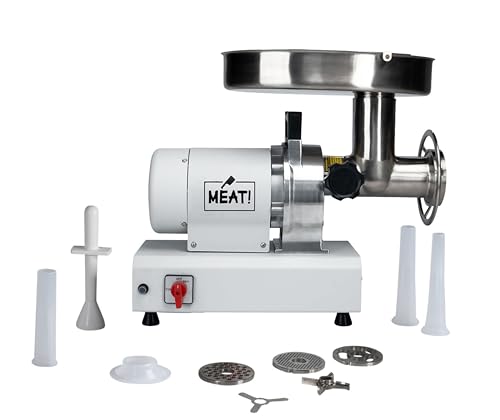
- MEAT! 1 HP Pro-Grade Meat Grinder #22 — Best Pro-Grade Alternative: check price on Amazon.
- Weston #12 Electric Meat Grinder & Sausage Stuffer, 750 Watt — Best Mid-Range: check price on Amazon.
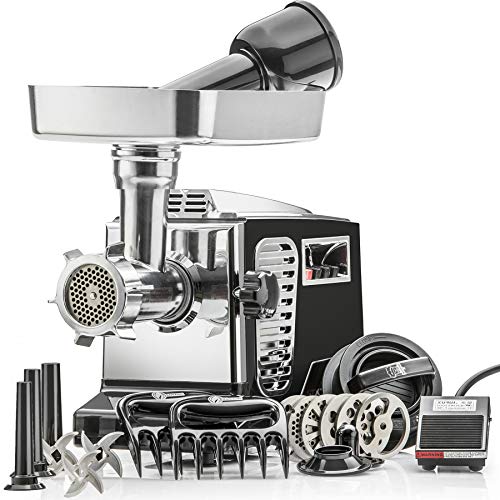
- STX International Turboforce 3000 Series 6-in-1 Electric Meat Grinder — Best Accessory Bundle: check price on Amazon.
- Sunmile SM-G50 ETL Electric Meat Grinder — Best Budget Electric: check price on Amazon.
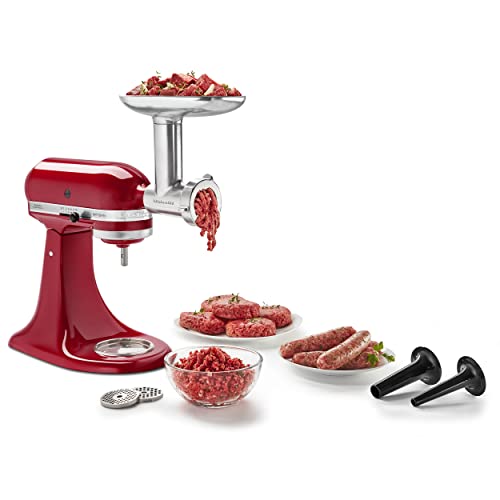
- KitchenAid KSMMGA Metal Food Grinder Attachment — Best for Stand Mixer Owners: check price on Amazon.
Ask ten cooks for the best choice meat grinders and you will hear the same confusion repeated: machines advertised in thousands of watts that stall on a pork shoulder, bargain grinders with plastic gears that strip in a season, and — at the other end — commercial iron that a home cook will never feed enough to justify. The honest market has a shape, and this guide maps it.
Grinders divide by head size and motor honesty. The #22 flagships (LEM, MEAT!) process in volume; the #12 mid-range (Weston) covers regular home grinding with pace; the accessory-rich STX trades throughput for versatility; the Sunmile marks the floor of respectable budget electrics; and the KitchenAid attachment turns a mixer you own into the grinder you need. Six machines, six genuinely different answers to the question of the best choice, each one verified against live catalog data before earning its place here.
There is a reason home grinding keeps growing even though every supermarket sells ground meat: control. Grinding your own means choosing the cut (chuck for burgers, shoulder for sausage), the fat ratio, the texture, and the freshness — ground minutes before cooking rather than days before purchase. It also means knowing exactly what is in the grind, which for many households is the entire argument. The machine is a means to that control, and the right machine is the one whose class matches how much control you actually intend to exercise.
What this guide will not do is rank by wattage headlines. Peak-watt marketing is this category’s original sin, and the sections below teach you to read past it — to head size, gear material, plate quality, and the unglamorous features (reverse, breakers, parts availability) that decide whether a grinder is still working in five years.
In this guide
Quick Picks
Six grinders, six genuinely different definitions of the right choice for different kitchens:
- Best Overall — LEM Products BigBite Dual Grind #22 Meat Grinder, 1.0 HP. A 1.0 HP #22 grinder whose dual-grind design does coarse and fine in one pass. The serious home processor’s benchmark — and the choice that ends upgrade cycles.
- Best Pro-Grade Alternative — MEAT! 1 HP Pro-Grade Meat Grinder #22. Another true 1 HP #22 in stainless, with coarse and fine plates in the box. The direct rival to the LEM for buyers who process in volume.
- Best Mid-Range — Weston #12 Electric Meat Grinder & Sausage Stuffer, 750 Watt. A 750W #12 that grinds a rated 4 lbs per minute, with stainless plates and a stuffing kit. The balanced choice for regular home grinding.
- Best Accessory Bundle — STX International Turboforce 3000 Series 6-in-1 Electric Meat Grinder. Five grinding dies, three blades, three speeds, plus stuffer, kubbe, and juicer attachments. The maximum-versatility pick for experimenters.
- Best Budget Electric — Sunmile SM-G50 ETL Electric Meat Grinder. Metal gears, a reverse function, a circuit breaker, and stainless blade and plates at the budget end of electric grinding. The starter machine that is not a toy.
- Best for Stand Mixer Owners — KitchenAid KSMMGA Metal Food Grinder Attachment. A metal grinder head that runs off the KitchenAid you already own — tray, pusher, plates, and stuffer tubes included. Zero new counter footprint.
How These Picks Were Chosen
We built this list from the grinders actually sold to home processors through major US channels, then verified every model against live catalog data: head size, motor rating as the manufacturer states it, construction, and the plates and attachments in the box. Machines whose listings could not confirm those basics were excluded.
Judging weighted grinding fundamentals — head size, honest power, metal drive components, plate and knife quality — then the ownership factors: parts availability, cleaning burden, storage footprint, and whether the machine’s class matches a real household’s volume. A grinder is a decade-scale purchase used in intense bursts; both the burst and the decade were scored.
- Head size matched to volume: #22 for processing days, #12 for regular home use, attachment class for occasional grinding.
- Honest power: continuous ratings in horsepower or working watts, not locked-rotor peak numbers.
- Metal where it matters: metal gears, stainless plates and knives — plastic drive parts are a countdown timer.
- Jam management: reverse function and motor protection, because sinew happens to everyone.
- Parts ecosystem: replacement plates, knives, and tubes that will still be sold in ten years.
The 6 Best Choice Meat Grinders

LEM Products BigBite Dual Grind #22 Meat Grinder, 1.0 HP — Best Overall
If ‘best choice’ means the grinder you buy once and stop thinking about, it is the LEM BigBite #22. LEM builds for the home-processing world — hunters, homesteaders, and sausage makers — and the BigBite line is its flagship: a 1.0 HP motor driving a #22 grinding head in stainless steel, with a dual-grind system that passes meat through coarse and fine plates in a single run.
That dual grind is the feature that matters most in practice. Standard grinders make you choose: grind coarse, swap plates, grind again — doubling the time the meat spends warming up. The BigBite’s two-stage pass produces a finished grind in one go, which keeps meat colder, texture cleaner, and processing day shorter.
Strengths
- Dual-grind system finishes in one pass, keeping meat colder and texture noticeably cleaner.
- 1.0 HP motor and #22 head handle big batches — whole deer, bulk pork shoulders — without bogging down.
- LEM’s parts and accessory ecosystem (plates, knives, tubes, bags) is deep and long-lived.
Trade-offs
- Premium tier: this is the most expensive class of home grinder in the roundup.
- Size and weight are substantial; it wants a permanent counter spot or a strong shelf.
- Overkill for a household grinding a pound of beef twice a month.
| Grinder size | #22 head |
| Motor | 1.0 HP |
| Construction | Stainless steel |
| System | Dual grind (coarse + fine in one pass) |
| Use | Grinding, sausage stuffing |
Grinder sizing is the vocabulary to learn: the number (#8, #12, #22, #32) describes the head and plate diameter, and bigger heads move meat faster with less effort per pound. A #22 is the sweet spot for serious home use — commercial-adjacent throughput without commercial footprint. Paired with a true 1.0 HP motor (LEM rates honestly, unlike the ‘peak watts’ marketing elsewhere in this category), it grinds as fast as you can feed it.
The ownership case is the ecosystem. Grinder plates dull, knives chip, stuffing tubes crack — usually mid-season. LEM parts are stocked widely and the company has supported home processors for decades, so a ten-year-old BigBite is a maintained tool, not an orphan. For equipment bought by the decade, that matters as much as the spec sheet.
Best for: hunters, homesteaders, and sausage makers processing large batches who want to buy once / Not suited for: occasional users grinding small amounts, or kitchens with no storage for a large machine
Check the current price on Amazon
MEAT! 1 HP Pro-Grade Meat Grinder #22 — Best Pro-Grade Alternative
MEAT! is the challenger brand in home processing, and its 1 HP Pro-Grade #22 is aimed squarely at the same buyer as the LEM: stainless construction, a #22 head, a full-horsepower motor, and coarse and fine grinding plates included for grinding and sausage stuffing.
Where the LEM wins on its one-pass dual grind and ecosystem depth, the MEAT! counters with a straightforward, heavy-duty build and a brand that has built its reputation quickly among hunters by standing behind its machines. If your processing days involve multiple animals or bulk-buy pork by the case, this is the other grinder to price against the LEM.
Strengths
- True 1 HP motor and #22 head: volume-class throughput for home processing days.
- Stainless steel construction with coarse and fine plates included from the start.
- Built and marketed for processing — grinding and stuffing — rather than occasional kitchen use.
Trade-offs
- Single-stage grinding: fine textures mean a second pass, with the meat warming as it goes.
- A younger brand than LEM; the long-term parts ecosystem is still being proven.
- Same storage reality as any #22: big, heavy, and not a casual countertop resident.
| Grinder size | #22 head |
| Motor | 1 HP |
| Construction | Stainless steel |
| Included plates | Coarse and fine grinding plates |
| Use | Grinding, sausage stuffing, processing |
Choosing between this and the LEM is the classic flagship decision. The LEM’s dual grind is a genuine workflow advantage on big days; the MEAT! is the more conventional machine whose appeal is build and value within the pro-grade class. Either will out-grind every #8 and #12 in this roundup by a wide margin; the question is whether your processing volume justifies this class at all.
A note on rated power, because this category abuses it: a true 1 HP motor is roughly 750 watts of continuous output. Machines advertising several thousand ‘watts’ are quoting locked-rotor peak numbers that say little about grinding. Both grinders at the top of this list rate in honest horsepower — one of the quieter signs you are shopping in the serious aisle.
Best for: high-volume home processors who want pro-grade #22 power and shop the LEM against a real rival / Not suited for: first-time grinders who have not yet learned whether they process enough to justify the class
Check the current price on Amazon

Weston #12 Electric Meat Grinder & Sausage Stuffer, 750 Watt — Best Mid-Range
Most households that grind regularly do not need a #22 — they need a #12 that shows up, works hard, and cleans up without drama. The Weston #12 is that machine: a 750 watt (1 HP) motor, a manufacturer-rated throughput of 4 lbs per minute, stainless steel grinding plates, and sausage stuffing gear in the box.
Weston is another processing-world brand, and this model (33-1301-W) sits in the range’s sensible middle: die-cast aluminum body, real plates, and enough pace that a 10-pound batch of burger is a few minutes of feeding, not a project. For weekly grinding and seasonal sausage, it is the roundup’s value-for-capability sweet spot.
Strengths
- Rated 4 lbs per minute: fast enough that home batches feel effortless.
- Stainless grinding plates included, plus sausage stuffer functionality out of the box.
- A processing brand’s mid-range machine — parts and support behind it.
Trade-offs
- Die-cast aluminum body rather than full stainless; fine for the duty, less heirloom than the #22 pair.
- #12 head is the ceiling: whole-animal processing days will feel its limits.
- Single-stage grind, so fine textures need a second pass with chilled meat.
| Grinder size | #12 head |
| Motor | 750 watt / 1 HP |
| Throughput | 4 lbs per minute (manufacturer rating) |
| Body | Die-cast aluminum |
| Included | Stainless steel grinding plates; sausage stuffer kit |
The #12 class is where grinder economics turn sensible for most homes. You give up the #22’s bulk throughput and gain a machine that stores reasonably, costs a fraction of the flagships, and still grinds faster than a family eats. Weston’s rating of 4 lbs per minute is the honest kind of spec — a working pace with real meat, not a theoretical maximum.
Stuffing deserves a word: a grinder with a stuffing kit is a stuffer of convenience, adequate for occasional links and snack sticks. Households that fall in love with sausage-making usually graduate to a dedicated vertical stuffer for control — but the Weston’s kit lets you learn that about yourself without a second purchase.
Best for: regular home grinders — weekly burgers, seasonal sausage — who want pace without flagship size or price tier / Not suited for: whole-animal processors or anyone planning commercial-adjacent volume
Check the current price on Amazon

STX International Turboforce 3000 Series 6-in-1 Electric Meat Grinder — Best Accessory Bundle
The STX Turboforce 3000 sells a different promise: not the biggest head or the strongest motor story, but the most complete box. It is a 6-in-1 system — grinder with five grinding dies and three stainless blades across three speeds, plus a sausage stuffer, a kubbe maker, and a juicer attachment.
That bundle suits the curious cook: the one who wants to try kubbe, grind for burgers on Friday, stuff sausage on Saturday, and not buy three appliances to find out which hobbies stick. STX has sold this formula for years, and the accessory depth is genuinely unmatched at its tier.
Strengths
- Five grinding dies and three blades: the widest texture range in the roundup without buying extras.
- Kubbe maker and juicer attachments extend it beyond grinding into real second and third jobs.
- Three speeds give control with softer meats and stuffing that single-speed machines lack.
Trade-offs
- The ‘3000W’ figure is a peak/max rating, not continuous output — judge it by its work, not the number.
- Accessory-rich means part-rich: more pieces to wash, store, and keep track of.
- Not the choice for high-volume processing days; it is a versatility tool, not a throughput tool.
| System | 6-in-1 electric grinder |
| Power rating | 3000W max (peak rating) |
| Speeds | 3-speed |
| Included | 5 grinding dies, 3 stainless blades, sausage stuffer, kubbe maker, juicer |
Read the power claim the way this guide reads all of them: ‘3000W max’ describes a momentary peak, and the honest comparison is against the continuous ratings of the LEM, MEAT!, and Weston. In real use the STX grinds household batches perfectly well — the point is simply that its headline number is marketing dialect, and buyers comparing across this page should translate before they judge.
Where the STX earns its slot is texture range. Five dies from coarse chili grind to fine pâté-style, swapped in seconds, teach a new grinder-owner more about grind craft in a month than a single-plate machine teaches in a year. If your interest in grinding is culinary exploration rather than bulk processing, this is your machine.
Best for: curious cooks who want maximum textures and attachments — kubbe, sausage, even juicing — in one box / Not suited for: high-volume processors, or minimalists who will resent washing a dozen parts
Check the current price on Amazon

Sunmile SM-G50 ETL Electric Meat Grinder — Best Budget Electric
Every category has a floor below which the products stop working; in electric grinders, the Sunmile SM-G50 sits right at the honest side of that floor. It is an ETL-listed machine with metal gears (not plastic), a reverse function for clearing jams, a circuit breaker protecting the motor, and a stainless cutting blade and plates.
The ‘Max 1.3 HP / 1000W’ headline is peak-rating dialect again — treat it as a household-class motor — but the hardware choices underneath are the right ones. For a first grinder, or a small household grinding a few pounds at a time, the SM-G50 is the budget choice that respects the buyer.
Strengths
- Metal gears and a circuit breaker: durability and protection features budget grinders usually skip.
- Reverse function clears the inevitable jam without disassembly.
- ETL listing and stainless blade/plates give it credibility the no-name tier lacks.
Trade-offs
- Household-class power: steady small batches, not processing days.
- One sausage stuffing tube included; serious stuffing wants more sizes.
- Longevity is measured in years of light use, not decades of service.
| Certification | ETL listed |
| Power rating | Max 1.3 HP / 1000W (peak rating) |
| Gears | Metal gears |
| Features | Reverse function, circuit breaker |
| Blade/plates | Stainless steel |
The features Sunmile chose to include tell you the company understands grinders. Jams happen when a piece of sinew wraps the knife; reverse is how you clear it without opening a meat-filled head. Motors die when a jam goes unnoticed; the breaker is how the machine survives its owner. Metal gears are how the drive survives all of it. These are not glamorous specs, and they are exactly the right ones.
Set expectations by batch size and the SM-G50 will meet them: chill the meat, cut it into strips the throat accepts, feed steadily rather than forcing, and rest the machine between large batches. Treated that way, a budget grinder is a perfectly rational purchase — the mistake is asking it to be a #22.
Best for: first-time buyers and small households grinding a few pounds at a time on a budget / Not suited for: anyone processing game or bulk meat regularly
Check the current price on Amazon
KitchenAid KSMMGA Metal Food Grinder Attachment — Best for Stand Mixer Owners
The best choice is sometimes the machine you already own plus one attachment. KitchenAid’s KSMMGA is the metal food grinder for all KitchenAid stand mixers: it locks onto the mixer’s power hub and turns a appliance most kitchens already store into a capable grinder, with a food tray, pusher, grinding plates, and sausage stuffer tubes and plate in the box.
The metal construction matters — KitchenAid’s older plastic grinder attachment was the weak version of this idea. The KSMMGA’s metal head handles chilled meat properly, and when the grinding is done it stores in a fraction of the space a standalone grinder demands. For mixer owners who grind occasionally to regularly, it is the smartest money in this entire roundup for that large group of owners.
Strengths
- Uses the mixer’s motor you already paid for; no second appliance to store or maintain.
- Metal grinder head — the durable version of the attachment concept.
- Complete kit: tray, pusher, plates, and stuffer tubes included.
Trade-offs
- Throughput is bounded by the mixer’s motor and the attachment head size; not a processing-day tool.
- Only a choice if you own (or will buy) a KitchenAid stand mixer.
- The mixer must be counter-stable and you grind at mixer height, which some users find awkward.
| Type | Stand mixer attachment (all KitchenAid stand mixers) |
| Construction | Metal grinder head |
| Included | Food tray, pusher, grinding plates, sausage stuffer tubes and plate |
Attachment grinders live or die on duty cycle honesty. For burgers from a chuck roast, meatloaf blends, and a few pounds of sausage, the KSMMGA is genuinely excellent — and it frees the budget and the shelf that a standalone #12 would take. For a deer season’s worth of grinding, the mixer’s motor and the small head become the bottleneck, and the LEM or MEAT! earn their existence.
One practical note: chill the attachment head along with the meat. A cold metal head is the attachment version of the pro habit of freezing grinder parts, and it noticeably improves the cut — clean particles instead of smeared fat — especially on warm kitchen days.
Best for: KitchenAid owners who grind occasionally to regularly and value storage space / Not suited for: non-mixer households or high-volume processors
Check the current price on Amazon
Comparison Table
| Pick | Badge | Key spec | Best for |
|---|---|---|---|
| LEM Products BigBite Dual Grind #22 Meat Grinder, 1.0 HP | Best Overall | #22 head, 1.0 HP, dual-grind one-pass system, stainless | hunters, homesteaders, and sausage makers processing large batches who want to buy once |
| MEAT! 1 HP Pro-Grade Meat Grinder #22 | Best Pro-Grade Alternative | #22 head, 1 HP, stainless, coarse + fine plates included | high-volume home processors who want pro-grade #22 power and shop the LEM against a real rival |
| Weston #12 Electric Meat Grinder & Sausage Stuffer, 750 Watt | Best Mid-Range | #12 head, 750W, 4 lbs/min rated, stainless plates + stuffer | regular home grinders — weekly burgers, seasonal sausage — who want pace without flagship size or price tier |
| STX International Turboforce 3000 Series 6-in-1 Electric Meat Grinder | Best Accessory Bundle | 6-in-1, 5 dies, 3 blades, 3 speeds, stuffer + kubbe + juicer | curious cooks who want maximum textures and attachments — kubbe, sausage, even juicing — in one box |
| Sunmile SM-G50 ETL Electric Meat Grinder | Best Budget Electric | ETL listed, metal gears, reverse + circuit breaker, stainless blade/plates | first-time buyers and small households grinding a few pounds at a time on a budget |
| KitchenAid KSMMGA Metal Food Grinder Attachment | Best for Stand Mixer Owners | Metal attachment for all KitchenAid stand mixers, full kit included | KitchenAid owners who grind occasionally to regularly and value storage space |
Read the table by volume first. If your biggest day is 5 pounds, the bottom half of this table serves you for a fraction of the flagship tier. If your biggest day is 50 pounds, only the top two rows are honest answers — and buying smaller is the most expensive mistake in the category, because you will buy twice.
How to Choose a Meat Grinder
Start with volume, stated honestly. Count your biggest realistic grinding day, not your average one. A household grinding a few pounds weekly for burgers and meatloaf lives happily in #12 or attachment territory. A hunter processing one deer a year is moving 40–60 pounds in a weekend — that is #22 territory, and a smaller machine will make the weekend miserable and the meat warm. Buy for the peak day, because that is the day the machine earns its money; the average day takes care of itself on any machine in this roundup, from the attachment to the flagship.
Learn the size numbers: the # refers to the grinding head and plate diameter — #8 is compact/household, #12 is the versatile middle, #22 is serious home processing, #32 is small-commercial. Bigger heads pass meat faster and work less per pound, which keeps meat colder. Cold is quality in grinding: fat smears when warm, and smeared fat ruins sausage texture and burger crumb.
Then interrogate the power claim. Continuous horsepower (or watts in the 500–1000 range for home machines) is a real rating; ‘watts max’ in the thousands is a locked-rotor peak — the power drawn in the instant before the motor stalls, sustained for zero seconds of grinding. Both kinds of numbers appear in this roundup’s listings, and the reviews above translate each one. As a rule: trust HP, translate watts, ignore the biggest number on the box.
- Gears: metal, or walk away for anything beyond the lightest use.
- Plates and knife: stainless, with replacements easy to buy; a dull plate is the top cause of ‘bad grinder’ complaints.
- Reverse: the difference between clearing a jam in five seconds and disassembling a loaded head.
- Throat and tray: a wide tray and a pusher you can lean on speed feeding more than motor specs do.
Grind Craft: Plates, Temperatures, and the Two-Pass Question
Grinding is cutting, not mashing, and the craft is mostly temperature and sharpness. Chill cubed meat until it is firm at the edges — nearly crunchy with cold — and chill the grinder head, plates, and knife too (the freezer is standard practice among processors). Cold fat cuts into distinct particles; warm fat smears into a paste that cooks up dense and greasy. This single habit improves results more than any machine upgrade.
Plate choice sets texture: coarse plates for chili grind and rustic sausage, medium for everyday burgers, fine for emulsified sausages and smooth pâtés. Many recipes want a split — most of the meat coarse, a portion fine to bind. Two-pass grinding (coarse, then finer) is the classic method, and it is where single-stage machines spend their extra time; the LEM’s dual-grind exists to compress exactly this into one pass.
Keep the knife and plate paired and sharp. The knife cuts against the plate’s face; a worn pair tears instead of slicing, which reads as a weak motor but is really dull tooling. Replace or sharpen them together, keep the set matched, and never run the grinder dry ‘to clean it’ — a few seconds of metal-on-metal with no meat is how edges die.
Sausage, Kubbe, and Attachments: What the Extras Are Worth
Most grinders above the budget tier include stuffing tubes, and the honest assessment is: good for learning, limiting for production. Grinder-stuffers push meat with the auger, which is slower and warms the meat more than a dedicated piston stuffer. Make your first batches on the grinder; if sausage becomes a hobby, a small vertical stuffer is the upgrade that changes everything — and the grinder goes back to doing only its best job.
Kubbe (kibbeh) attachments, like the one in the STX bundle, shape the hollow bulgur shells of the Levantine classic — a niche tool that is either useless or indispensable depending on your kitchen’s heritage. Juicer attachments on grinders are similar: clever, adequate, and nobody’s first choice for daily juicing. Value bundles by the attachments you will actually use twice, not by the count on the box.
The attachment that deserves universal respect is the mixer grinder head, represented here by KitchenAid’s metal KSMMGA. For the large population of mixer owners who grind monthly, it converts sunk cost into capability. Attachments fail when they are asked to be flagships; judged as what they are, the good metal ones are the value play of the whole category.
What About Manual Grinders? The Hand-Crank Question
Every grinder roundup owes the hand-crank machine an honest paragraph, because it is the original ‘best choice’ and still the right one for a narrow set of cooks. A clamp-on or bolt-down manual grinder has no motor to burn out, no gears worth the name to strip, and a working life measured in generations. For a few pounds of meat at a time — a sausage-making traditionalist, an off-grid cabin, a cook who grinds weekly in small amounts — it is simple, silent, and effectively immortal.
The costs are equally real: throughput is your arm, and your arm is slower than any motor in this roundup. Ten pounds is a workout; fifty is a day. Manual grinding also ties up both the meat’s temperature clock and your patience, which is why processing culture electrified the moment it could. Judge the manual option by batch size alone: under five pounds and infrequent, it is a defensible, even charming choice; above that, it is a chore wearing a heritage costume.
Build quality divides the manual market sharply. Heavy cast-iron or cast-steel bodies with machined plates grind well for decades; the featherweight stamped versions in bargain bins wobble, bind, and tear meat rather than cutting it. If you go manual, buy the heavy one from a processing brand — the same rule as electric, minus the motor questions.
For most readers of a ‘best choice’ guide, the practical answer remains electric in the class that matches your volume. But the manual machine earns its mention as the category’s conscience: it proves that grinding is a simple mechanical act, and that everything the electrics add is speed and mercy on your shoulder — which, on processing day, is worth a great deal.
How to Use a Meat Grinder (Cold Meat, Clean Cuts, Easy Cleanup)
Whether your machine is a #22 flagship or a mixer attachment, the method is the same — and the method, more than the machine, decides the texture of everything you grind. This is the processor’s routine, start to finish.
- Chill everything. Cube the meat, spread it on a tray, and chill until firm at the edges. Put the grinder head, plate, and knife in the freezer alongside. Cold, in short, is the whole game from the very start to the finish.
- Trim honestly. Remove heavy silverskin and sinew — the stringy connective tissue that wraps knives and causes jams. Gristle that a knife would reject does not improve in a grinder.
- Assemble and test. Fit the knife flat-side correctly against the plate per your manual, snug the ring hand-tight plus a fraction, and run a slice of bread through at the end of the session (not the start) to push out the last meat.
- Feed steadily, never force. Drop cubes in a rhythm the auger accepts, using the pusher — never fingers — and let the machine set the pace. Forcing heats the grind and strains the drive.
- Mind the texture as it falls. Good grind falls as distinct, separate particles with fat visibly distributed. If it emerges as a smeared paste, stop: re-chill the meat and check the knife and plate for dullness.
- Grind twice only with a plan. For two-pass textures, re-chill between passes. Season after grinding for burgers; for sausage, mix seasonings with the cubed meat before a single pass to distribute them through the grind.
- Clean immediately and dry completely. Disassemble, wash hot and soapy, and dry every part fully before storage — plates and knives left damp will spot with rust even in stainless-adjacent steels. A light food-safe oil film protects carbon-steel parts in humid kitchens.
One storage habit separates owners from ex-owners: never store the head assembled and damp ‘just for tonight’. Bacteria and corrosion both work overnight. Five minutes of drying buys years of service, and it is the cheapest maintenance in this entire guide.
Store plates and knives as matched pairs, and keep a note of which plate sizes you own before ordering more — the category’s sizes look alike and are not interchangeable across head numbers. Treat the machine this way and the difference between a budget grinder and a flagship narrows to speed, which is exactly how it should be.
Common Buying Mistakes
Buying by peak watts
The ‘3000W’ style headline is a locked-rotor peak, not working power. Compare head size and continuous ratings (horsepower, or realistic working watts) instead. A 1 HP #22 will out-grind a ‘3000W max’ household machine all day, because the number that matters is the one sustained under load.
Grinding warm meat
Room-temperature meat smears: fat coats the plate, texture turns pasty, burgers cook dense. Chill the meat to near-crisp and freeze the head parts. This one habit fixes more ‘bad grinder’ complaints than any warranty claim.
Undersizing for processing day
A #8 or attachment asked to process a deer will take hours, overheat, and warm the meat into the danger zone for texture and safety alike. Size for your biggest day; if that day is truly annual and huge, the #22 is not extravagance, it is the tool.
Forcing the feed
Leaning on the pusher to speed things up strains gears, heats the grind, and is how plastic-geared budget machines die. Feed at the auger’s pace. If the pace is too slow for your volume, the answer is a bigger head, not a heavier hand.
Letting the grinder live dirty
Meat residue in a warm head is a hygiene problem within hours, and dried residue becomes next session’s contamination and this session’s rust spot. Grinders come apart in a minute by design; wash, dry fully, and store dry. The machines in this roundup are built to be stripped fast — use that design every single time.
Neglecting the knife and plate
Dull tooling masquerades as a weak motor: tearing, smearing, jamming. Sharpen or replace knife and plate as a pair, keep them matched, and never run the machine dry. Half of all ‘my grinder went bad’ stories end at a ten-minute tooling check.
Final Recommendation
The best choice for most serious home processors is the LEM BigBite #22: one-pass dual grinding, honest horsepower, and a parts ecosystem measured in decades. The MEAT! #22 is its legitimate rival for buyers who shop the class and prefer its build and value proposition.
Regular home grinders should take the Weston #12 and never look back — it is the roundup’s balance point of pace, price tier, physical size, and all-round everyday usability for the typical home kitchen. Experimenters get the STX’s unmatched accessory bench; first-timers get the Sunmile’s honest budget hardware; and KitchenAid owners get the roundup’s smartest spend in the KSMMGA attachment, which turns a stored appliance into a grinder.
Whichever machine you choose, run it cold, feed it steady, and keep its knife and plate sharp. Do those three simple things consistently and any grinder on this page will serve you well for years; skip them, and even the flagship will disappoint you in exactly the same way a budget machine would.
Keep researching the cluster: Best Meat Grinders Best Electric Meat Grinders Best Meat Grinders For Deer Best Meat Grinders For Home Use Best Sausage Stuffers
Related guides
Frequently Asked Questions
What size meat grinder do I need for home use?
Match the head size to your biggest day. Occasional small batches: an attachment or #8 class machine is fine. Regular weekly grinding: #12 is the versatile sweet spot. Processing game or bulk meat in volume: #22, because throughput keeps meat cold and the day short. Buying one class too small is the most common and most expensive mistake in the category.
Why do some grinders advertise 3000 watts but grind slower than a 1 HP model?
Because the numbers measure different things. ‘Watts max’ is a locked-rotor peak — the draw in the instant a stalled motor stops — while horsepower ratings describe continuous working output. A true 1 HP motor (about 750W continuous) sustains its power through a whole batch; a peak-rated household motor sustains far less. Judge by head size and continuous ratings.
Can I stuff sausage with a meat grinder?
Yes — most machines here include stuffing tubes, and they work well for learning and small batches. Grinder stuffing is slower and warms meat more than a dedicated stuffer, so if sausage-making becomes a regular hobby, a small vertical stuffer is the natural next purchase. The grinder still does the grinding either way.
Why does my ground meat come out mushy?
Almost always temperature or tooling. Warm meat smears instead of cutting — chill the meat until firm and freeze the head, plate, and knife before grinding. If cold meat still smears, the knife and plate are dull or mismatched; sharpen or replace them as a pair. A genuinely underpowered machine is the third cause, and the least common.
Is a stand mixer grinder attachment worth it?
For KitchenAid owners who grind occasionally to regularly, the metal KSMMGA is one of the best values in grinding: no second appliance, a proper metal head, and a full kit of plates and stuffer tubes. It is not a processing-day tool — high volume belongs to a standalone #22 — but for burgers, meatloaf, and small sausage batches it is genuinely capable.
Do I need to freeze the grinder parts before grinding?
It is the single highest-value habit in grinding. A frozen head, plate, and knife keep fat cold through the cut, so the grind falls as clean, separate particles instead of smearing. Fifteen to thirty minutes in the freezer while you cube and chill the meat is enough. Every pick in this roundup benefits; none of them can compensate for warm meat and a warm head.
How long should a meat grinder last?
A metal-geared machine with available parts should last a decade or more of home use; the flagship #22 models are effectively buy-it-for-life with plate and knife replacements. Budget machines with plastic drive parts are the exception — their lifespan is set by the gears, which is why this roundup’s budget pick was chosen for its metal gears and circuit protection.