Disclosure: airfryerkitchensupply.com is reader-supported. When you buy through links on our site, we may earn an affiliate commission at no extra cost to you.
Where to buy
Every pick in this guide is sold through Amazon, and classic models often run alongside newer generations under similar names, so use the links below to confirm the exact model code and jar in the listing title before you order. With long-running products especially, the listing title is the only reliable identity the machine has. The verified picks in this guide are: Vitamix 5200 Professional-Grade Blender, 64 oz, Black; Blendtec Classic 575 Blender (Black), WildSide+ Jar; Ninja Professional Blender BL610, 1000W, 72 oz; KitchenAid K400 Variable Speed Blender with Tamper, Contour Silver; Ninja Kitchen System Pro BL770, 1500W, 72 oz + 8-Cup Processor; Blendtec Total Blender Classic, FourSide Jar. When you are ready, check the current price on Amazon from any of these links rather than trusting a price quoted elsewhere, because listings in this category are repriced constantly.
The best blenders all time are not the newest blenders, and they are not necessarily the most powerful ones on sale today. They are the machines that changed what buyers expect a blender to do, and then kept doing it for years after the trends that surrounded them moved on. This guide applies that stricter test. Every pick below has a long production history, a verified identity, and a specific, arguable claim to a permanent place in the category — as a benchmark, an icon, a system, or a design classic.
An all-time list also has to survive an obvious objection: why buy a classic when newer models exist? The honest answer is that blenders are unusually conservative machines. Motor, jar geometry, and blade design were essentially solved by the products in this guide, and most later innovation has been interfaces, programs, and ecosystems layered over those solved foundations. For buyers who blend daily, the solved foundation is the purchase; the layers are preference. That is why this list mixes a manual benchmark, two programmed icons, a value disruptor, a design classic, and the defining kitchen system — the six shapes the modern category actually takes.
One methodological note: all-time status here is argued from production longevity, category influence, and continued verified availability — not from any rating or sales figure, which this guide does not print. Where a pick’s claim is influence rather than supremacy, the review says so plainly.
Expect disagreement, and welcome it. All-time lists are arguments, and this one is written to be argued with: a Blendtec household will promote its icon to first place, a Ninja household will ask why the value revolution is ranked as a title rather than the title, and both will have evidence. What should not be in dispute is the membership test — longevity, influence, and present merit — because a list built on those three gates will always look roughly like this one, whatever order the badges are dealt in.
In this guide
Quick Picks
Short on time? These six machines are the category’s permanent residents, each holding a different title — benchmark, icon, value disruptor, design classic, system, and elder statesman. The detailed reviews below argue each claim carefully and name each compromise honestly.
- Vitamix 5200 Professional-Grade Blender, 64 oz, Black — Best Overall of All Time: The all-time benchmark: a 64 oz container, variable speed, stainless blades, and a self-cleaning routine in a design that has outlasted every trend the category has produced. — Check on Amazon
- Blendtec Classic 575 Blender (Black), WildSide+ Jar — Best Self-Cleaning Icon: The program-driven icon: a 90 oz WildSide+ jar, five speeds, four preprogrammed cycles, and a self-cleaning design that made Blendtec the other name in the all-time debate. — Check on Amazon
- Ninja Professional Blender BL610, 1000W, 72 oz — Best Value Icon: The value icon that reset expectations: 1000W of Total Crushing power and a 72 oz pitcher brought high-performance ice crushing to the mainstream tier for good. — Check on Amazon
- KitchenAid K400 Variable Speed Blender with Tamper, Contour Silver — Best Design Classic: The design-led classic: preset recipe programs for ice crush, icy drinks, and smoothies, a five-speed variable dial, Intelli-Speed motor control, and a tamper in the box. — Check on Amazon
- Ninja Kitchen System Pro BL770, 1500W, 72 oz + 8-Cup Processor — Best System of All Time: The system icon: a 1500W base driving a 72 oz pitcher, an 8-cup food processor bowl, and two 16 oz cups — the all-in-one that defined its category. — Check on Amazon
- Blendtec Total Blender Classic, FourSide Jar — Best Long-Running Classic: The endurance classic: ten speeds with pulse and six preprogrammed cycles in the original Total Blender formula that has served households and cafes for decades. — Check on Amazon
How These Picks Were Chosen
Picks were chosen by verifying each model: search by brand and model, match the listed title, and take the ASIN from the listing response. Only listing-confirmed models carry Amazon links. For an all-time list, verification does double duty: it confirms the classic you are reading about is the classic still sold under that title today, rather than a tribute product trading on a famous name.
The selection test had three gates. First, longevity: the model or its direct platform must have served buyers across many years, not a single product cycle. Second, influence: the machine must have changed expectations — for power, for programming, for price, for design, or for what one box contains. Third, present-tense merit: the machine must still be a rational purchase today for the household it suits, because an all-time list that recommends museum pieces has failed its readers. Several famous names failed the third gate and were left out; the six that remain pass all three.
Spec boxes in the reviews below contain only facts stated in the listed titles, which is why some famous specifications you may know from decades of coverage do not appear. An all-time guide trades in reputations, and reputations attract embellishment; the discipline of printing only verified specifications is what keeps this list an argument instead of a mythology. Where the Amazon title is silent — a wattage a brand does not publish, a jar dimension — the review discusses the quality in words rather than borrowing a number from an unverifiable source.
The 6 Best Blenders All Time: Full Reviews

Vitamix 5200 Professional-Grade Blender, 64 oz, Black — Best Overall of All Time
Any honest list of the best blenders all time starts with the Vitamix 5200, because it is the machine that redefined what a home blender could be judged on. Before the high-performance era, blenders were smoothie-and-milkshake appliances that strained at ice and surrendered to kale. The 5200’s formula — a powerful motor, a tall 64 oz container that forms a true vortex, variable speed under the cook’s hand, stainless blades, and friction heat enough to take soup from raw to steaming — moved the blender from the drinks counter to the centre of the kitchen, and it has stayed there across a production run measured in decades rather than model years.
Who it suits: cooks who blend daily and seriously — green smoothies that must be truly smooth, nut butters, hot soups, frozen desserts — and who buy appliances the way they buy knives, expecting a decade or more of service. The manual dial is the point: it gives the cook continuous control that presets approximate, and it removes the electronics that age first in rival machines. The self-cleaning routine keeps the daily habit frictionless, which is why so many 5200s are still blending long after trendier machines have been replaced.
Its all-time status does not exempt it from its known trade-offs. The tall container challenges low cabinets, full speed is loud, and there are no walk-away programs. Later Vitamix generations added those comforts, and one of them appears in this guide too. But the 5200 remains the reference because its recipe was right first and has needed the least correction since — the definition of an all-time pick.
Strengths
- Set the high-performance standard the entire category is still judged against
- Manual variable speed gives continuous control and removes ageing electronics
- Decades-long production run with a deep replacement-parts pipeline
Trade-offs
- Tall container can clash with low under-cabinet clearance
- No preset programs — the cook drives every blend
- Loud at full speed, like every machine in its power class
| Spec | Detail (verified) |
|---|---|
| Container | 64 oz |
| Controls | Variable speed, high-speed switch |
| Blades | Stainless steel |
| Cleaning | Self-cleaning |
Best for: serious daily blenders who buy for a decade or more / Not suited for: cooks who want one-touch walk-away programs
Check on Amazon — check the current price on Amazon for the exact model named here.

Blendtec Classic 575 Blender (Black), WildSide+ Jar — Best Self-Cleaning Icon
The best blenders all time conversation has two poles, and the Blendtec Classic 575 is the other one. Where Vitamix built its legend on the manual dial, Blendtec built its own on programmed cycles and jar geometry: the WildSide+ jar, with its extra side and wide base, is designed to pull ingredients into the blade path without a tamper, and the four preprogrammed cycles run smoothies, dips, and whole-juice style blends to a timed, repeatable finish. The Classic 575 packages that philosophy with five speeds and the self-cleaning design that made cleanup a button press in households that had been hand-washing jars for years.
Who it suits: households that blend on autopilot and entertain — the 90 oz WildSide+ jar is the biggest batch in this guide, built for party frozen drinks and family rounds — and cooks who prefer pressing a cycle to standing over a dial. The wide jar also stores and pours differently from tall containers, and its blunt safety blade design has a loyal following among owners who clean by hand and dislike sharp blade assemblies.
The all-time caveats are real. Programmed cycles mean electronics, and the Classic line’s interface era shows its age next to modern touch panels. The wide jar’s vortex behaves differently with very small loads, which prefer a smaller container. And Blendtec versus Vitamix remains a genuine philosophy split — tamper-and-dial versus jar-and-cycle — on which reasonable cooks disagree permanently. The 575 earns its all-time place not by settling that argument but by being its strongest other side.
Strengths
- WildSide+ jar geometry blends without a tamper and holds the biggest batch here
- Four preprogrammed cycles deliver repeatable results for shared households
- Self-cleaning design made cleanup a button press for a generation of owners
Trade-offs
- Programmed electronics are the component most likely to age first
- Wide jar is less happy with very small single-serving loads
- Interface design reflects its era next to current touch panels
| Spec | Detail (verified) |
|---|---|
| Jar | 90 oz WildSide+ jar |
| Controls | 5 speeds |
| Programs | 4 preprogrammed blending cycles |
| Cleaning | Self-cleaning |
Best for: program lovers and entertainers blending large batches / Not suited for: small-load blenders or manual-control purists
Check on Amazon — check the current price on Amazon for the exact model named here.
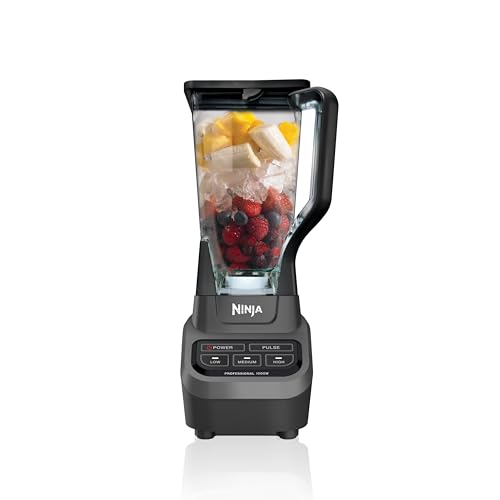
Ninja Professional Blender BL610, 1000W, 72 oz — Best Value Icon
The Ninja BL610 changed the blender market’s centre of gravity, and its all-time place is earned on influence as much as performance. Its proposition was blunt: 1000 watts, a stacked-blade Total Crushing system, and a family-size 72 oz pitcher, at a tier the premium high-performance brands did not contest. Frozen fruit and ice that had been premium-party tricks became mainstream weeknight capabilities, and a generation of households learned from this machine that their old blender — not their recipes — had been the problem all along.
Who it suits: smoothie and frozen-drink households that want proven ice-crushing power without entering the premium tier, and buyers who value a vast ownership base — the BL610’s long production run means parts, pitchers, and advice are everywhere. The stacked blade tower processes a full pitcher evenly for drinks, and dishwasher-safe parts keep the family smoothie routine sustainable on school mornings.
Its limits define the premium tier’s reason to exist. Stacked blades excel at drinks but are less suited to the vortex work of nut butters and truly silky green blends, where the premium picks pull ahead; hot soup is not this machine’s home ground either. The BL610 is a drinks specialist that happens to be very good, rather than an all-purpose culinary blender — and as a specialist, it may be the most influential blender of its era. All-time lists reward exactly that kind of category-shifting honesty of purpose.
There is a cultural footnote worth recording: the BL610 is the machine that made the morning smoothie a default habit in households that would never have bought a premium blender. Category historians can argue about blade geometry indefinitely, but the blender that actually changed how millions of kitchens start the day has a claim no spec sheet can outrank. If your household’s blending is drinks, this is not the budget compromise on the list — it is the protagonist of its own all-time story.
Strengths
- Brought genuine ice-crushing power to the mainstream tier
- 72 oz pitcher and Total Crushing blades excel at family drink batches
- Enormous ownership base means parts and pitchers are easy to find
Trade-offs
- Stacked-blade design trails vortex machines on nut butters and silkiest greens
- Not the pick for hot soups or heavy culinary blending
- Drink-specialist focus rather than all-purpose performance
| Spec | Detail (verified) |
|---|---|
| Power | 1000W |
| Technology | Total Crushing technology |
| Pitcher | 72 oz |
| Cleaning | Dishwasher-safe parts |
Best for: smoothie and frozen-drink households wanting proven power at a mainstream tier / Not suited for: nut-butter makers and hot-soup cooks who need vortex performance
Check on Amazon — check the current price on Amazon for the exact model named here.

KitchenAid K400 Variable Speed Blender with Tamper, Contour Silver — Best Design Classic
KitchenAid’s place among the best blenders all time rests on a different virtue from raw power: integration. The K400 is designed as a kitchen citizen — a variable speed blender with preset recipe programs for ice crush, icy drinks, and smoothies, a five-speed dial for manual control, Intelli-Speed motor control that senses contents and holds blade speed under load, and, in this KSB4028 configuration, the tamper that serious blending sometimes needs, included rather than sold as an apology later. In Contour Silver it also looks like what it is: a considered appliance from a brand whose design language kitchens have trusted for generations.
Who it suits: cooks who blend widely but not brutally — daily smoothies, sauces, soups, and icy drinks — and who care that the machine on the counter belongs to the kitchen rather than to a laboratory. Intelli-Speed is the quietly excellent feature here: instead of the blade slowing audibly as a thick load bites, the motor holds its speed, which produces more consistent textures on the medium jobs that make up most real blending. The preset trio covers the three drink jobs households actually program.
The K400 does not chase the extreme end. Dedicated nut-butter production and the hardest fibrous loads remain Vitamix and Blendtec territory, and power-first buyers will always read this machine as the civilised option. That is precisely its all-time argument: for the large middle of real cooking, the K400’s blend of control, sensing, design, and included tamper represents the balanced blender better than any spec-sheet champion — the machine for cooks, from the brand for cooks.
Its colour and finish programme is part of the same argument and should not be dismissed as decoration. KitchenAid built its century by treating counter appliances as permanent furniture rather than disposable gadgets, and a blender bought in a finish that matches a stand mixer bought a decade earlier is a blender that stays on the counter, visible and used, instead of being exiled for visual noise. Use is the first determinant of value in this category, and design that guarantees use is a performance feature by any honest accounting.
Strengths
- Intelli-Speed motor control holds blade speed under load for consistent textures
- Preset programs for the three drink jobs households actually use, plus a 5-speed dial
- Tamper included and design that belongs on a kitchen counter
Trade-offs
- Extreme jobs like production nut butter belong to the high-performance picks
- Power-first buyers will read it as the balanced rather than maximal choice
- Jar capacity is a mid-size format rather than the largest batch here
| Spec | Detail (verified) |
|---|---|
| Programs | Preset recipe programs: Ice Crush, Icy Drinks, Smoothie |
| Controls | 5-speed variable speed dial |
| Motor | Intelli-Speed Motor Control |
| Extras | Tamper included (KSB4028) |
Best for: cooks who blend widely and value design, control, and consistency / Not suited for: maximum-power seekers focused on the hardest fibrous and nut jobs
Check on Amazon — check the current price on Amazon for the exact model named here.

Ninja Kitchen System Pro BL770, 1500W, 72 oz + 8-Cup Processor — Best System of All Time
The Ninja BL770 earns its all-time place by inventing the mainstream version of an idea every kitchen wants: one powerful base, every prep job. Its verified configuration says it plainly — a 1500W motor, a 72 oz pitcher for blending, an 8-cup food processor bowl for chopping, salsa, and dough, and two 16 oz cups for single servings. Before systems like this, that workload meant a blender, a food processor, and a personal blender on three shelves. The BL770 collapsed them into one purchase and one footprint, and the category has never gone back.
Who it suits: households equipping a kitchen from near-zero, meal-preppers who swing between smoothies and salsa and pizza dough in the same afternoon, and anyone whose counter and budget both say one machine. The processor bowl is a genuine processor for its size class — it chops, slices the workload of weeknight prep, and mixes dough — not a token attachment, and the 1500W base gives the blender side full Total Crushing drink performance. As a first serious kitchen purchase, few products in this guide cover more ground.
The system compromise is the classic one: a dedicated premium blender out-blends it on the hardest silky jobs, and a dedicated large processor out-processes it on volume. Owners also store more attachments than single-machine households. But all-time lists are about what products changed, and the BL770 changed the default expectation of what one box should contain. For households that need the whole prep spectrum, it remains the reference system — the pick against which every later kitchen system is compared.
Its dough capability deserves a specific mention because it is the feature rival systems most often imitate badly. A processor bowl that can mix pizza and bread dough credibly turns the system from a drinks-plus-chopping station into a genuine baking partner, and it is the reason many BL770 owners report their stand mixer gathering dust. Systems are judged by their weakest attachment; the BL770’s weakest attachment is still useful, which is rarer in this category than advertising suggests.
Strengths
- One 1500W base covers blending, food processing, and single-serve cups
- 8-cup processor bowl handles salsa, chopping, and dough credibly
- Defined the all-in-one kitchen system category for the mainstream
Trade-offs
- Dedicated premium blenders beat it on the silkiest, hardest blends
- Multiple attachments need storage space
- Processor bowl is mid-size — very large prep batches still favour a standalone processor
| Spec | Detail (verified) |
|---|---|
| Power | 1500W |
| Pitcher | 72 oz |
| Processor | 8-cup food processor bowl |
| Cups | (2) 16 oz cups |
| Jobs | Smoothies, salsa, dough |
Best for: households that need blending and processing in one footprint / Not suited for: single-job purists who want the absolute best blender or processor alone
Check on Amazon — check the current price on Amazon for the exact model named here.

Blendtec Total Blender Classic, FourSide Jar — Best Long-Running Classic
The Blendtec Total Blender Classic is the elder statesman of this best blenders all time list — the original formula of ten speeds with pulse and six preprogrammed cycles behind a FourSide jar, sold for so long that its owners measure it in life stages rather than years. Its listing’s own words are “powerful and reliable,” and for once the marketing undersells the reputation: this is the machine that demonstrated, in home kitchens and small cafes alike, that programmed high-performance blending could be a decades-long appliance rather than a gadget cycle.
Who it suits: buyers who value a proven platform over a current interface, households that run the classic Blendtec cycles daily, and anyone who has used one at a juice bar and wants that exact machine at home. The six cycles cover the established repertoire — smoothies, whole juice, hot soup by friction, ice cream, and more — with the one-touch consistency that made the brand, and ten manual speeds plus pulse keep the cook in charge when a recipe goes off-script.
Age is both its credential and its caveat. The control interface belongs to an earlier design era, the FourSide jar has largely been succeeded by the WildSide geometry in the brand’s own line, and new buyers should compare this classic against the Classic 575 above before choosing which Blendtec era suits them. But an all-time guide that omitted the Total Blender would be historically illiterate: it is one of the two or three products that created the modern high-performance category, and it is still here, still blending, which is the strongest sentence any appliance can earn.
There is a practical buying angle inside the nostalgia: because the platform is old and ubiquitous, the Total Blender is one of the easiest premium machines to support in the second decade — jars, lids, and drive parts circulate widely, and repair knowledge is common. Buyers who keep appliances until they genuinely wear out, rather than until fashion moves, will find that ecosystem worth as much as any cycle on its panel. Longevity is not only how the machine was built; it is how the world around the machine lets it keep being built back up.
Strengths
- One of the founding products of the high-performance blender category
- Ten speeds plus six preprogrammed cycles cover the classic repertoire
- A reliability reputation built over an exceptionally long production life
Trade-offs
- Interface and jar design reflect an earlier era than the Classic 575
- FourSide geometry is succeeded by WildSide in the brand’s current thinking
- New buyers should compare both Blendtec picks here before deciding
| Spec | Detail (verified) |
|---|---|
| Jar | 75 oz FourSide jar |
| Controls | 10 speeds with pulse |
| Programs | 6 preprogrammed cycles |
| Profile | Powerful and reliable kitchen blender |
Best for: buyers who want the proven original platform and its classic cycles / Not suited for: shoppers who want the newest interface and jar design
Check on Amazon — check the current price on Amazon for the exact model named here.
Comparison Table
All-time picks cannot be compared on specifications alone, so this table pairs each machine’s verified key specification with the title it holds. Use it to find your philosophy first — manual, programmed, value, design, or system — then read that review in full before deciding anything.
| Pick | Badge | Key spec | Best for |
|---|---|---|---|
| Vitamix 5200 Professional-Grade Blender, 64 oz, Black | Best Overall of All Time | 64 oz container, variable speed, self-cleaning, stainless blades | serious daily blenders who buy for a decade or more |
| Blendtec Classic 575 Blender (Black), WildSide+ Jar | Best Self-Cleaning Icon | 90 oz WildSide+ jar, 5 speeds, 4 preprogrammed cycles, self-cleaning | program lovers and entertainers blending large batches |
| Ninja Professional Blender BL610, 1000W, 72 oz | Best Value Icon | 1000W, Total Crushing technology, 72 oz pitcher | smoothie and frozen-drink households wanting proven power at a mainstream tier |
| KitchenAid K400 Variable Speed Blender with Tamper, Contour Silver | Best Design Classic | Preset recipe programs, 5-speed dial, Intelli-Speed control, tamper included | cooks who blend widely and value design, control, and consistency |
| Ninja Kitchen System Pro BL770, 1500W, 72 oz + 8-Cup Processor | Best System of All Time | 1500W, 72 oz pitcher, 8-cup processor bowl, (2) 16 oz cups | households that need blending and processing in one footprint |
| Blendtec Total Blender Classic, FourSide Jar | Best Long-Running Classic | 75 oz FourSide jar, 10 speeds, pulse, 6 preprogrammed cycles | buyers who want the proven original platform and its classic cycles |
How to Choose Among the Best Blenders All Time
Choose your philosophy before you choose your blender, because this list is really six philosophies wearing aprons. The manual philosophy (Vitamix 5200) says the cook is the program: continuous control, minimal electronics, maximum lifespan. The programmed philosophy (both Blendtecs) says consistency is the product: the same cycle, the same texture, whoever presses the button. The value philosophy (Ninja BL610) says drinks performance should not require a premium tier. The design philosophy (KitchenAid K400) says the machine should belong to the kitchen and sense its load intelligently. The system philosophy (Ninja BL770) says one base should cover the whole prep spectrum. None of these is refuted by the others; each is the right answer for a different kitchen.
Then apply the two practical filters. Filter one is your hardest regular job: nut butters and silkiest greens point to the vortex machines; family drink rounds point to Ninja; hot soups point to the friction-capable premium platforms and glass or vented discipline; mixed prep points to the system. Filter two is your time horizon. Buyers replacing a blender every few years can weight features and tier heavily; buyers purchasing a decade-long appliance should weight simplicity, parts pipelines, and production longevity — the exact qualities this list was built to surface.
- Pick a philosophy first: manual, programmed, value, design, or system.
- Test it against your hardest regular job, not your easiest.
- Weight longevity and parts support more heavily the longer you plan to keep it.
- Confirm the exact model and jar in the listing title — classics share names with newer generations.
- Treat interface novelty as a preference, never as a performance claim.
A final, unfashionable piece of advice: if a machine in this guide matches your philosophy and your hardest job, stop researching. The all-time tier exists because these products converged on solved designs; the remaining differences are smaller than the cost of another month of smoothie disappointment with the blender you already own.
How These Machines Earned Their Places: A Short History of the Modern Blender
The modern blender was born twice. Its first birth was the mid-century drinks era, when brands like Oster and Waring made the blender a bar and soda-fountain tool — a lineage the KitchenAid design classic quietly continues. Its second birth was the high-performance era, when Vitamix and Blendtec proved a home machine could pulverise fibrous greens, mill grains, and heat soup by friction, and the blender moved from the drinks tray to the centre of serious cooking. The two Blendtec picks and the Vitamix in this guide are that era’s founding documents, still in production because the physics they exploit has not changed.
The third act belonged to access. Ninja’s BL610 and the BL770 system took the two premium ideas — crushing power and multi-function prep — and rebuilt them at mainstream tiers, which is why a value machine and a system share this list with the founders. Understanding that history is practically useful: it tells you that newer badges mostly remix these six ideas, and that choosing among the originals is not nostalgia. It is buying the reference implementations of the only blender concepts that have ever mattered.
A fourth act is now visible — smart platforms, app-linked programs, and self-detecting containers — and this guide takes no position against it. Some of those machines will earn all-time places in twenty years if they pass the same three gates applied here. But the burden of proof in an all-time argument sits with the newcomer, and twenty years of production is the one credential that cannot be accelerated, discounted, or marketed into existence. That asymmetry is the whole reason this list exists.
How to Use a Classic Blender Like Its Designers Intended
Each philosophy has a technique, and using the wrong one is why owners misjudge great machines. Manual machines reward ramp discipline: start low, let the vortex form, then climb to high — the 5200’s dial is an instrument, not a switch. Programmed machines reward trust: load in the maker’s order, press the cycle, and do not intervene, because the cycle’s pauses and ramps are the recipe. Stacked-blade drink machines reward full, cold loads and short, decisive runs. Systems reward batching your prep — smoothie in the pitcher, salsa in the processor — while the base is already on the counter.
Universal habits complete the picture. Load liquids before solids so the vortex can form. Use the tamper, where one is provided, with the lid on and only as directed — it is a designed tool, not a stirring spoon. Self-clean immediately after use with warm water and a drop of soap at high speed, whatever the badge, because a jar cleaned in thirty seconds never becomes a jar that needs scrubbing. And respect hot-liquid headroom in every jar ever made. The classics in this guide have survived decades in other people’s kitchens largely because those owners blended the way the machines were designed to be used.
Keeping a Classic Alive: Parts, Jars, and the Second Decade
The practical difference between an all-time machine and a merely good one appears in year six, when something small wears: a drive socket rounds off, a jar lid loses its seal, a blade assembly dulls. On the platforms in this guide, those are orderable parts on mature pipelines — the Vitamix and Blendtec ecosystems especially treat containers, lids, tampers, and sockets as consumables with part numbers, not as obituaries for the whole machine. Before buying any classic, spend two minutes confirming that its jar and drive parts are listed and available; that small check predicts your tenth year better than any first-week smoothie test.
Ownership habits decide the rest. Store the jar off the base or with the lid ajar so seals rest uncompressed and no moisture is trapped. Run the self-cleaning cycle after sticky or oily blends rather than letting residue bake on through a sunny afternoon. Keep the base vents clear of the flour dust that kitchens generate, because every motor here cools itself with kitchen air. And blend at the speeds the job needs — a machine run at maximum for every task, including ones a low speed finishes better, ages its bearings for no benefit. None of this is specialised knowledge; it is the accumulated practice of owners whose classics are still working, and it is the cheapest performance upgrade in this entire guide.
Common Buying Mistakes
Mistake 1: Assuming newest means best in this category. Blender fundamentals were solved by the machines in this guide. Later models add interfaces and ecosystems; they rarely add blending. Judge any newcomer against these references before paying for novelty.
Mistake 2: Buying a famous name without checking the exact model. Classic families span generations and jar sizes under one surname. Verify the model code and jar in the listing title — as done through the API for every pick here — or you may buy the tribute act instead of the headliner.
Mistake 3: Choosing a philosophy you will fight daily. A manual-dial benchmark in the hands of a household that wants one-touch cycles becomes a daily irritation, and vice versa. The best blender all time for your kitchen is the one whose control philosophy matches your mornings.
Mistake 4: Judging an all-time machine on its first smoothie alone. These products justify themselves across years: parts availability, consistent texture, and survival. A first-week tie on smoothies does not predict a tenth-year result.
Mistake 5: Using a tamper or cycle against its design. Tampers are used with lids on and only on machines designed for them; programmed cycles are trusted, not interrupted. Fighting the design is the fastest route to concluding a classic is overrated.
Mistake 6: Ignoring jar format for your cabinets. Tall benchmark containers and wide icon jars fit different kitchens. Measure under-cabinet clearance carefully before choosing, or the greatest blender of all time will live in a cupboard and quietly lose to an ordinary one left out on the counter.
Final Recommendation
If one machine must hold the title, it is the Vitamix 5200: the benchmark that defined high-performance blending and still defines it, in the simplest durable form. Households that blend by program should take the Blendtec Classic 575 with a clear conscience — it is the other legitimate answer to the all-time question, not a runner-up.
The remaining picks hold their own titles outright and without apology. The Ninja BL610 is the value icon, the KitchenAid K400 the design classic, the Ninja BL770 the system every later system is measured against, and the Blendtec Total Classic the elder statesman still on duty after all these years. An all-time list is a map of what mattered most; whichever territory matches your kitchen, you are buying a machine with a genuine past — and, on the evidence of its long production run, a real future as well.
Related guides in this series: Best Blenders; Best Blenders 8 Cup; Best 1000 Watt Blenders; Best Affordable Blenders.
Frequently Asked Questions
What makes a blender an all-time great rather than just a good current model?
Three things together: longevity across many years of production, influence on what buyers expect from the category, and present-tense merit — it must still be a rational purchase today. A machine can be historically important and still fail the third test, which is why several famous names are not in this guide. The six picks pass all three gates.
Vitamix or Blendtec — which is the true all-time winner?
It is a philosophy split, not a settled contest. Vitamix built its legend on manual control, a tamper, and a vortex container; Blendtec built its own on programmed cycles and jar geometry that blends without a tamper. Cooks who like to drive choose the first; households that want repeatable one-touch results choose the second. This guide crowns the 5200 as benchmark while treating the Blendtecs as co-founders, which is where the evidence lands.
Are classic blenders still worth buying over newer models?
For daily blending, usually yes. The fundamentals — motor, jar geometry, blades — were solved by these platforms, and newer models mostly add interfaces and connected features. If those layers matter to you, buy newer within the same brand families. If blending itself is the purchase, the classics deliver it with longer track records and deeper parts support.
Which all-time pick is best for a first serious blender?
It depends on the kitchen you are building. A blending-only household should start with the Vitamix 5200 or the Blendtec Classic 575 by control preference. A household equipping from scratch, needing processing as well, gets more from the Ninja BL770 system. A drinks-focused household on a mainstream tier is best served by the Ninja BL610.
How long do these classic blenders actually last?
With sensible loading and prompt self-cleaning, the premium manual machines are routinely kept for a decade or more, supported by mature replacement-parts pipelines. Programmed models carry electronics that can age sooner, and value models trade some longevity for tier. In every case, lifespan depends more on use habits — no dry-running, no overfilling with hot liquid, prompt cleaning — than on the badge.
Why is there no personal or bullet blender on an all-time list?
Because the all-time test here is influence on the full-size category plus present merit as a household’s main blender. Personal blenders are excellent second machines, and the nutribullet Combo appears in this site’s 8-cup guide in that role, but no bullet format has displaced the full-size platforms as the centre of a kitchen’s blending. If your blending is exclusively single-serve smoothies, a personal machine may still be your right purchase — it simply is not this list’s subject.

