Disclosure: airfryerkitchensupply.com is reader-supported. When you buy through links on our site, we may earn an affiliate commission at no extra cost to you.
Where to buy
Asian rice cookers means the brands that built the category in Japan and Korea — Zojirushi, Tiger, Panasonic, Toshiba and CUCKOO — where rice is a daily staple and cooker engineering is a serious discipline. The six picks below are current models from those makers, verified, from a tiny 3-cup steamer-cooker to fuzzy-logic machines.
- Zojirushi 3 Cup Rice Cooker/Steamer (Best Overall): Check the current price on Amazon
- CUCKOO CR-0375FW Micom Rice Cooker, 3-Cup Uncooked (Best Fuzzy Logic, Small Size): Check the current price on Amazon
- Tiger JNP-S55U 3 Cup Rice Cooker (Best Simple Alternative): Check the current price on Amazon
- Toshiba Mini Rice Cooker, 3 Cups Uncooked (Best with Delay Timer): Check the current price on Amazon
- Panasonic SR-G06FGL Rice Cooker, 3-Cups (Uncooked) (Best Value Japanese Pick): Check the current price on Amazon
- Zojirushi 6-Cup Rice Cooker (Best for Families): Check the current price on Amazon
The best Asian rice cookers come from a different engineering culture than the basic pot cookers most American kitchens grew up with. In Japan and Korea, where rice may be cooked twice a day and judged critically at every meal, makers like Zojirushi, Tiger, Panasonic, Toshiba and CUCKOO have spent decades refining how a cooker heats, soaks, steams and rests grain — and the results show in the bowl.
What you are buying at this tier is control. Fuzzy logic models sense and adjust through the cook instead of simply switching off when the water boils away. Quality inner pots distribute heat evenly and release rice cleanly. Keep-warm systems hold rice for hours without drying the surface or sogging the bottom. Even the simple models from these brands are built to a standard that assumes daily, years-long use.
The six picks below span that range deliberately: two simple, durable cookers for purists and small households, fuzzy-logic models from Toshiba and CUCKOO for texture chasers, and Panasonic’s dependable middle ground. Sizes concentrate on the 3-cup class, the classic Asian household format, with a 6-cup option for families.
In this guide
Quick Picks
Zojirushi 3 Cup Rice Cooker/Steamer — Best Overall. The definitive simple Asian rice cooker: Zojirushi build quality, a steamer function alongside the rice, and a 3-cup format sized for one to three people. The cooker people buy once and use for a decade. — Check on Amazon
CUCKOO CR-0375FW Micom Rice Cooker, 3-Cup Uncooked — Best Fuzzy Logic, Small Size. Korea’s CUCKOO brings real fuzzy logic to the small format: 9 cooking modes, a nonstick inner pot, auto clean, and a quick white rice cycle — the texture-control pick for one to three people. — Check on Amazon
Tiger JNP-S55U 3 Cup Rice Cooker — Best Simple Alternative. Tiger’s classic 3-cup: non-stick inner pot, retractable cord, and keep warm for up to 12 hours. The other great Japanese simple cooker, with thoughtful details for small kitchens. — Check on Amazon
Toshiba Mini Rice Cooker, 3 Cups Uncooked — Best with Delay Timer. Fuzzy logic plus the feature small cookers usually lack: a 24-hour delay timer. Set rice in the morning, eat it at night — Toshiba’s mini is the planner’s pick for one to three people. — Check on Amazon
Panasonic SR-G06FGL Rice Cooker, 3-Cups (Uncooked) — Best Value Japanese Pick. Panasonic’s straightforward cooker-steamer: 6 cups cooked, multi-cooker flexibility, and the reliability of a major Japanese maker at the accessible end of the brand tier. — Check on Amazon
Zojirushi 6-Cup Rice Cooker — Best for Families. The family-size version of the classic Zojirushi formula: 6 cups, the same simple reliability, and keep warm that holds rice moist for hours — the family staple of the Asian simple-cooker school. — Check on Amazon
How These Picks Were Chosen
Picks were restricted to established Asian manufacturers — Zojirushi, Tiger, Panasonic and Toshiba of Japan, and CUCKOO of Korea — and every model was verified before inclusion. Western-brand imitations and unverifiable imports were excluded.
Within that field, models were chosen to represent the real branches of the category: the simple switch-operated cookers (Zojirushi, Tiger, Panasonic) that prioritise durability, and the fuzzy-logic micom models (Toshiba, CUCKOO) that prioritise texture control, across the 3-cup and 6-cup sizes most households need. No prices or fixed ratings are used anywhere in the evaluation.
The 6 Best Asian Rice Cookers
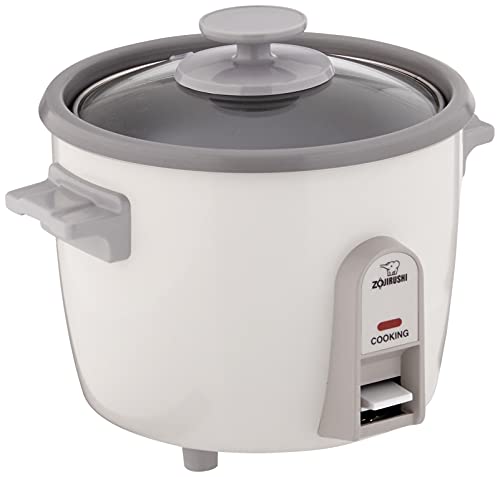
Zojirushi 3 Cup Rice Cooker/Steamer — Best Overall
Zojirushi is the name most associated with Japanese rice cookers, and this unassuming 3-cup model is why: it does the simple thing — cook rice, steam above it, keep it warm — with a build quality that assumes daily use for years. No screen, no menus, nothing to fail.
Strengths
- Zojirushi durability and even, reliable cooking
- Steamer function cooks vegetables or dumplings with the rice
- Compact 3-cup size suits small households perfectly
Trade-offs
- No fuzzy logic or brown rice program
- Small capacity only; families need the 6-cup sibling
- Simple controls mean no delay timer
| Capacity | 3 cups |
| Functions | Rice cooker and steamer |
| Brand origin | Japan (Zojirushi) |
| Controls | Simple one-touch |
The case for this cooker is the case for the whole simple end of the Asian market: the heating is even, the pot is good, the keep-warm is gentle, and the mechanism has nothing in it to confuse or break. Texture from a well-made simple cooker beats texture from a cheap complicated one, every time. Buyers who later fall in love with rice cookery can graduate to fuzzy logic; many owners of this model simply never feel the need.
Best for: One to three people wanting a buy-once simple cooker / Not suited for: Brown rice specialists or large families
Check on Amazon to see the current listing, configuration options and delivery details.

CUCKOO CR-0375FW Micom Rice Cooker, 3-Cup Uncooked — Best Fuzzy Logic, Small Size
CUCKOO is Korea’s rice cooker giant, and the CR-0375FW is its small fuzzy-logic machine: a micom controller running 9 cooking modes in a 3-cup-uncooked body. It is the pick for small households that refuse to accept small-household rice quality.
Strengths
- Fuzzy logic control adjusts the cook for better texture
- 9 modes cover white, quick, and mixed grains
- Auto clean function eases the least-loved chore
Trade-offs
- More expensive tier than simple 3-cup rivals
- Panel and modes are overkill for plain-rice-only cooks
- Small capacity is a hard limit for entertaining
| Capacity | 3 cups uncooked / 6 cups cooked |
| Control | Micom fuzzy logic |
| Modes | 9 cooking modes |
| Extras | Auto clean, quick white rice cycle |
Fuzzy logic earns its premium in the soak and the finish: the controller holds the grain at soaking temperature before cooking and fine-tunes the final steam, which is where the difference between good rice and the rice people talk about is made. The quick mode, delivering white rice in under half an hour per the maker’s specification, covers the rushed weeknight without surrendering the pot to a lesser method. For texture-focused small households, this is the class leader here.
Best for: Texture-focused small households and Korean cuisine fans / Not suited for: Minimalists or anyone needing family capacity
Check on Amazon to see the current listing, configuration options and delivery details.

Tiger JNP-S55U 3 Cup Rice Cooker — Best Simple Alternative
Tiger Corporation is Zojirushi’s great domestic rival in Japan, and the JNP-S55U is its classic small cooker. The details show a brand that thinks about small kitchens: a retractable power cord that disappears into the body, a non-stick pot, and keep warm rated for up to 12 hours for households whose dinners run late.
Strengths
- Retractable cord keeps small counters tidy
- Keep warm up to 12 hours suits staggered schedules
- Tiger build quality and non-stick inner pot
Trade-offs
- Simple control set; no fuzzy logic programs
- 3-cup ceiling, like the Zojirushi
- Black finish shows rice dust and fingerprints more than white
| Capacity | 3 cups |
| Inner pot | Non-stick |
| Keep warm | Up to 12 hours |
| Cord | Retractable |
Choosing between the Tiger and the Zojirushi at this size is choosing between two excellent answers to the same question; the Tiger wins specific households on specific details. The retractable cord genuinely matters in a small kitchen where the cooker is moved daily, and the long keep-warm suits shift workers and late dinners. If those details match your life, the Tiger is not the runner-up — it is the pick.
Best for: Small kitchens, tidy counters and late-dinner households / Not suited for: Cooks wanting programs, timers or bigger capacity
Check on Amazon to see the current listing, configuration options and delivery details.
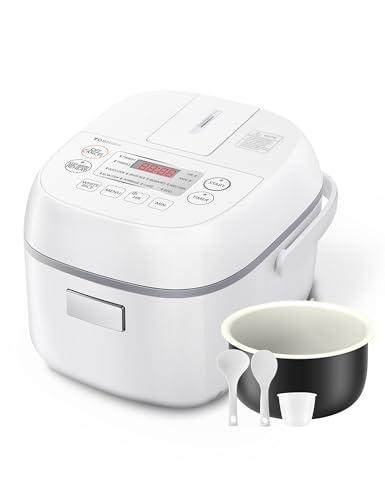
Toshiba Mini Rice Cooker, 3 Cups Uncooked — Best with Delay Timer
Toshiba’s mini cooker targets a specific frustration: small households are offered simple cookers, but small households also work late. Its answer is a fuzzy-logic 3-cup machine with one-touch cooking and a 24-hour delay timer, so rice can be loaded in the morning and land fresh at dinner.
Strengths
- 24-hour delay timer, rare at this size
- Fuzzy logic texture control
- One-touch cooking keeps daily use simple
Trade-offs
- Delay cooking suits white rice best; mixed grains vary
- Timer discipline requires realistic serving plans
- Premium tier over the simple Japanese models
| Capacity | 3 cups uncooked |
| Control | Fuzzy logic |
| Timer | 24-hour delay timer |
| Serves | 1–3 people |
The delay timer changes how a rice cooker fits a life: instead of the cooker waiting for you, it works to your schedule, and the fuzzy logic ensures the delayed batch still gets its proper soak-and-steam arc. Used with white rice and realistic timing, results are indistinguishable from a fresh start. For single professionals and couples with long days, that is a more valuable feature than any number of extra menu modes.
Best for: Working singles and couples who plan meals ahead / Not suited for: Cooks who always cook rice on demand
Check on Amazon to see the current listing, configuration options and delivery details.

Panasonic SR-G06FGL Rice Cooker, 3-Cups (Uncooked) — Best Value Japanese Pick
Panasonic’s SR-G06FGL is the pragmatic Japanese pick: a cooker, steamer and multi-cooker in a silver 3-cup-uncooked body, without the premium positioning of its Zojirushi and Tiger rivals. It covers rice, steaming and simple one-pot cooking in one dependable machine.
Strengths
- Cooker, steamer and multi-cooker in one
- Major Japanese brand reliability at an accessible tier
- 6 cups cooked suits one to three people with leftovers
Trade-offs
- Simple controls; no fuzzy logic refinement
- Less specialised than the texture-focused picks
- Styling is functional rather than premium
| Capacity | 3 cups uncooked / 6 cups cooked |
| Functions | Rice cooker, steamer, multi-cooker |
| Brand origin | Japan (Panasonic) |
| Model | SR-G06FGL |
Not every buyer needs the flagship texture story; many need a cooker from a maker they trust that also steams dumplings and handles a simple soup. The Panasonic is that machine, and its multi-cooker flexibility quietly extends its working week beyond rice nights. As the entry point into Japanese brands, it is the easiest recommendation in this guide to defend.
Best for: Value-minded buyers wanting a trusted Japanese brand / Not suited for: Texture perfectionists chasing fuzzy-logic results
Check on Amazon to see the current listing, configuration options and delivery details.

Zojirushi 6-Cup Rice Cooker — Best for Families
Everything said about the 3-cup Zojirushi applies here at family scale. The 6-cup model keeps the simple, durable formula — cook, steam, keep warm — and sizes it for households of three to five, with keep warm engineered to hold rice moist through long, staggered family dinners.
Strengths
- Family capacity with Zojirushi reliability
- Keep warm holds rice moist for hours
- Same simple, durable formula as the 3-cup classic
Trade-offs
- No fuzzy logic or specialty grain programs
- Simple format means no delay timer
- Bigger footprint than the mini models
| Capacity | 6 cups |
| Functions | Rice cooker with keep warm |
| Brand origin | Japan (Zojirushi) |
| Controls | Simple one-touch |
Family rice cooking is a volume and timing game: enough rice, ready when the first person sits down, still good when the last one arrives. This cooker’s keep warm is the feature families actually live on, and Zojirushi’s version of it — gentle, sealed, moisture-aware — is the benchmark the simple category is judged by. For a family that eats rice daily and cooks it plainly, there is no need to shop further up the technology ladder.
Best for: Families of three to five eating rice daily / Not suited for: Small households or program-hunting enthusiasts
Check on Amazon to see the current listing, configuration options and delivery details.
Comparison Table
| Pick | Badge | Key spec | Best for |
|---|---|---|---|
| Zojirushi 3 Cup Rice Cooker/Steamer | Best Overall | 3 cups, cooker/steamer, Zojirushi build | One to three people wanting a buy-once simple cooker |
| CUCKOO CR-0375FW Micom Rice Cooker, 3-Cup Uncooked | Best Fuzzy Logic, Small Size | 3-cup uncooked, fuzzy logic, 9 modes | Texture-focused small households and Korean cuisine fans |
| Tiger JNP-S55U 3 Cup Rice Cooker | Best Simple Alternative | 3 cups, retractable cord, 12-hour keep warm | Small kitchens, tidy counters and late-dinner households |
| Toshiba Mini Rice Cooker, 3 Cups Uncooked | Best with Delay Timer | 3-cup uncooked, fuzzy logic, 24h delay timer | Working singles and couples who plan meals ahead |
| Panasonic SR-G06FGL Rice Cooker, 3-Cups (Uncooked) | Best Value Japanese Pick | 6 cups cooked, cooker/steamer/multi-cooker | Value-minded buyers wanting a trusted Japanese brand |
| Zojirushi 6-Cup Rice Cooker | Best for Families | 6 cups, family size, long moist keep warm | Families of three to five eating rice daily |
How to Choose the Best Asian Rice Cooker
The first decision is philosophy: simple or smart. Simple cookers from Zojirushi, Tiger and Panasonic use the time-tested mechanical switch — water absorbed, temperature rises, cooker clicks to warm. They are durable, fast and honest, and in good implementations like these, the rice is genuinely good. Fuzzy-logic micom cookers — the CUCKOO and Toshiba here — manage soak, heat ramp and finishing steam electronically, and produce a measurably finer texture, especially across mixed and premium grains.
Second, size by uncooked cups and be realistic: 3 cups uncooked (about 6 cooked) is the classic format for one to three people; the 6-cup class serves families. Asian households tend to size for the daily batch and cook fresh often, rather than batching huge pots for the week — the quality difference is why.
- Choose simple if you cook white rice most days, value durability over features, and want the cooker to disappear into your routine.
- Choose fuzzy logic if you cook varied grains, premium short-grain rice, or care about texture enough to taste the difference a controlled soak makes.
- Choose the delay timer (Toshiba) if your schedule, not your palate, is the binding constraint.
- Choose Korean (CUCKOO) if your cooking leans Korean — the modes and texture targets are tuned to that kitchen.
Budget tiers follow the technology: simple Japanese cookers in the accessible-to-mid tier, fuzzy logic above them. None of these brands competes on being cheapest; they compete on the rice and on still working in ten years.
Rice, Water and the Asian Method
Technique matters as much as the machine. Wash the rice with several changes of water until it runs mostly clear — this is standard practice in Japanese and Korean kitchens and the foundation of distinct, non-gummy grains. Let the rice soak in its cooking water for 20–30 minutes before starting a simple cooker; fuzzy-logic models build the soak into the program.
Use the water lines in the pot for the rice type you are cooking, and after the cooker finishes, rest the rice closed for ten minutes, then cut and fold with a paddle rather than stirring. Serve from the top layer down. These small disciplines, applied to any pick in this guide, close most of the remaining gap between home rice and restaurant rice.
How to Cook Rice the Asian Way in a Rice Cooker
A step-by-step routine tuned to the Japanese and Korean machines in this guide.
- Measure rice with the cup supplied with the cooker and wash it in several changes of water until the water runs mostly clear.
- Drain, add to the inner pot, and fill to the correct water line for the amount and type of rice.
- Rest the rice in its water for 20–30 minutes before cooking (skip this on fuzzy-logic models, which soak automatically).
- Start the cooker and do not lift the lid during the cook.
- When it switches to warm or the program ends, rest a further ten minutes with the lid closed.
- Open, then cut and fold the rice with a paddle to release steam and even the moisture; serve promptly.
For mixed grains and brown rice, use the dedicated mode on micom models and expect a longer cycle — the grain needs the soak and the slower ramp. On simple cookers, soak brown rice for an hour before cooking and add slightly more water than the white rice line suggests.
Fuzzy Logic, Explained Without the Marketing
A simple cooker knows one fact: the temperature at the bottom of the pot. While water remains, that temperature holds near boiling; when the water is absorbed, it climbs, and the switch trips. It is elegant and limited — the cooker cannot soak deliberately, ramp gently, or adjust for a batch that is behaving unusually.
A fuzzy-logic (micom) cooker watches the whole curve of the cook and adjusts power in response, which buys three concrete things: a programmed soak before heating, compensation for small measuring errors or unusual batches, and a controlled finishing steam. The result is not magic; it is consistency — the same texture on a rushed Tuesday as on a careful Sunday, and better results with grains beyond basic white rice. Whether that consistency is worth the step up in tier is the real buying question, and for daily rice eaters it usually is.
Japanese vs Korean Rice Cookers
The two traditions aim at slightly different bowls. Japanese cookers, even the simple ones here, are tuned for short-grain rice with a glossy, tender, slightly cohesive texture — rice that holds together for the table and for sushi-adjacent uses. Korean cookers like the CUCKOO target a similarly short grain but are famous at home for pressure-cooked chewiness and for modes built around multigrain and scorched-rice dishes.
Neither is better; they are calibrated to their cuisines. Match the cooker to the rice you actually buy and the dishes you actually make, and either tradition will serve you well for years. What both share — and what defines this category against budget Western pot cookers — is build quality aimed at daily, long-term service.
The Inner Pot: Where Asian Cookers Win or Lose
Ask engineers at the Japanese and Korean makers where rice quality is decided and they will point at the inner pot before the electronics. The pot is the interface between heat and grain: its thickness sets how evenly heat spreads, its material sets how it responds, and its coating or finish sets how the rice releases and how the bottom layer forms. The cookers in this guide, even the simple ones, carry pots noticeably heavier and better finished than budget Western equivalents — and the rice shows it.
Heavy pots buffer the heating plate’s cycles, smoothing the temperature the grain experiences. That smoothing is most of the difference between rice that is cooked and rice that is composed: distinct grains, an even gradient from top to bottom, no scorched base under a wet middle. It is also why the simple Zojirushi and Tiger outperform complicated cheap cookers — their budgets went into the pot and the plate, not the display.
Care follows from the same logic. The inner pot is the component to protect: wash it with a soft sponge, cook with the paddle provided, and never use the pot as a mixing bowl with metal tools. Owners who treat the pot as the instrument it is get the decade of service these brands are famous for; the pot is where that decade is won or lost.
Keep Warm: The Quiet Technology
Western buyers shop for the cook; Asian households live on the warm. In Japan and Korea, rice is commonly cooked once and held for the next meal, which makes keep-warm quality a headline engineering problem: hold cooked rice for hours without drying the top layer, condensing water onto the surface, or cooking the bottom into porridge. The brands in this guide have spent decades on exactly this, with sealed lids, gentle even heat and condensation management.
The Tiger’s 12-hour keep warm specification and the Zojirushi 6-cup’s promise of rice that “stays warm and moist for hours” are not filler copy — they are the category’s core claims, and they are why these cookers anchor households that eat rice at staggered hours. Shift workers, school-age children, late trains: the cooker absorbs the schedule so the rice does not have to be recooked.
There are limits, and honesty requires them. Warm-held rice is best within the first several hours and should be refrigerated rather than held indefinitely, both for texture and for food safety. But within a normal family day, a good Asian cooker’s keep warm is the difference between rice as a project and rice as a utility — always there, always right.
Short Grain, Long Grain and the Rest: Matching Rice to Machine
These cookers were born for short-grain rice, and that is where their calibration shines: Japanese short grain and Korean medium grain cook to their intended glossy, tender standard on the default settings of every pick here. Jasmine and basmati — the long grains — cook well too, with slightly less water than the short-grain lines suggest, because long grains drink less and prize separation over cohesion.
Brown rice is the honest divider. Its bran layer needs a long soak and a patient cook, which is precisely what the fuzzy-logic CUCKOO and Toshiba automate and what simple cookers ask you to manage manually with a pre-soak and extra water. Mixed grains, barley and the Korean multigrain blends sit in the same territory: entirely achievable, best on the micom models, and the reason grain enthusiasts should buy the control, not just the brand.
The practical rule: match the machine to the grain you buy most. A household living on Japanese short grain is perfectly served by the simplest Zojirushi. A household rotating brown rice, multigrain and quinoa should step directly to fuzzy logic and never look back. The rice decides; the cooker follows.
A Short History of the Electric Rice Cooker
The electric rice cooker is a postwar Japanese invention, commercialised in the 1950s when Toshiba brought the first successful automatic model to market — a pot, a heating element, and a thermostat that knew when the water was gone. It liberated the household’s most repetitive task at the exact moment Japan’s kitchens were modernising, and it spread across Asia with the speed of an idea whose time had plainly come.
The decades since have been refinement along two axes. Materials and pots improved first — better nonstick surfaces, heavier multi-layer pots, induction heating in the flagship classes beyond this guide’s scope. Then control improved: the micom chip arrived, and with it fuzzy logic, programmed soaking, and the fine-grained temperature curves the CUCKOO and Toshiba in this guide use to manage texture deliberately rather than approximately.
Korea’s chapter runs parallel with its own accent: CUCKOO and its rivals built a culture of pressure rice cookers and multigrain mastery tuned to Korean tables. What unites the traditions — and what this category means when it says “Asian rice cooker” — is the premise that rice deserves an engineered appliance of its own. Every pick here, from the simplest Zojirushi to the smartest CUCKOO, is an expression of that premise at a different level of investment.
What to Cook Besides Rice in an Asian Rice Cooker
The steamer function on the Zojirushi and Panasonic picks is not a garnish. Dumplings are the obvious first use — they steam perfectly in the time the rice cooks, arriving at the table together — but the basket also handles fish fillets with ginger, eggs for a protein that cooks itself, and vegetables that benefit from gentle, enclosed steam. The cooker becomes a two-course machine without a second pan.
The pot itself handles the wet dishes of the same cuisines: congee and jook, which are practically designed for a cooker’s keep-warm; takikomi gohan and other seasoned mixed rices, where the ingredients cook into the grains; and the Korean multigrain and bean rices the CUCKOO’s modes anticipate. Oatmeal and other breakfast grains run happily on the plain cycle in the simple models, with the caveat that foaming grains want a half-full pot at most.
The honest boundary is that these are rice cookers, not general multi-cookers: no pressure, no searing, no slow-cook pretensions beyond what the warm cycle offers. Households that want one machine for everything should read the Aroma digital guide alongside this one. Households that want rice and its natural companions done properly will find the Asian machines’ narrower focus a virtue rather than a lack.
Buying an Asian Rice Cooker from Abroad: A Cautionary Note
Enthusiasts sometimes import domestic-market Japanese or Korean models directly, chasing flagship features unavailable abroad. This guide’s picks are the models sold for the North American market, and the distinction matters for reasons beyond warranty paperwork. Voltage and frequency differ between markets, and a cooker engineered for Japan’s grid can behave badly — cooking unevenly or failing early — on North American power even when the plug is adapted.
Menus, manuals and voice prompts on domestic models are in Japanese or Korean, which ranges from charming to genuinely obstructive depending on the buyer. Parts and service networks for grey imports are effectively absent; the inner pot that is a routine purchase for a domestic-market model becomes an international shipping exercise for an import.
None of this makes the flagship technology less impressive — induction heating and pressure rice cooking at the top of the Japanese and Korean ranges are remarkable. It makes the channel matter. Buy the models built and supported for your market, as this guide has selected, and the ownership experience matches the engineering. The exotic import is a hobby in itself, and should be bought as one, with open eyes.
The Rice Itself: Buying and Storing Well
No cooker in this guide can rescue stale rice, so the ingredient deserves its paragraph. Buy rice in quantities the household will finish within a few months; brown rice, with its oily bran, has the shortest patience and rewards smaller bags and cool storage. White rice keeps longer but still absorbs the cupboard’s odours and loses its fresh aroma across a year — the new-crop difference that Japanese shoppers pay for is real, and it is tasted in the plainest bowl.
Store rice sealed, cool and dry, away from the spice shelf’s perfumes. In humid climates, the freezer is a legitimate rice store, and it doubles as protection against pantry pests — the weevil is the traditional enemy, and cold is its traditional answer. Rinse before cooking regardless; the wash in this guide’s method is about surface starch, but it is also the cook’s last inspection of the grain.
Water is the other ingredient, and the only one besides rice in the pot. In most kitchens, tap water is entirely adequate; heavily chlorinated water can perfume a plain bowl, and cooks who notice it should let the water stand or use filtered. The point is proportionate attention: rice, water, pot, heat — the Asian cooker tradition is the discipline of doing four simple things without a single careless one.
Two-Cooker Households and the Small-Cooker Strategy
Serious rice households across Asia commonly run more than one cooker, and the strategy translates. The pattern is a small cooker for the daily batch — sized to one meal, cooked fresh, at its best — and the keep-warm of that same small cooker bridging to the next meal. Freshness is the argument: rice cooked in small batches often, rather than large batches held long, is simply better rice, and the 3-cup class exists at the centre of this guide because it is that strategy’s instrument.
The second cooker, where households add one, covers the other scale: guests, gatherings, and the big seasoned-rice dishes that need volume. A family might pair the Zojirushi 3-cup for the week with the 6-cup for the weekend, or run a fuzzy-logic mini for daily texture and keep a simple larger pot for crowds. The total investment across two well-chosen Asian cookers routinely undercuts one flagship — and the household gains a spare when one pot is soaking.
This is also the answer to the capacity dilemma that runs through every rice guide: do not size one cooker for both Tuesday and the festival. Size the daily cooker for Tuesday, exactly, and let a second, simpler machine carry the festivals. The picks in this guide were chosen to compose into those pairs without a wasted feature between them.
Maintaining an Asian Rice Cooker for Its Second Decade
The decade-scale service these brands are famous for is not automatic; it is the product of four small habits. The first is the pot discipline already described — soft sponge, paddle only, no metal — because the inner pot is the wear component that decides the cooker’s working life. The second is the lid: the inner lid plate and steam vent collect starch film that, left alone, flavours fresh rice with old and eventually obstructs the vent the cooker breathes through. A weekly rinse of the removable parts is the whole cost.
The third habit is the condensation path. Asian cookers manage the water that condenses during cooking and warming through collectors and channels that need emptying and an occasional wipe; neglected, they are the source of the sour note that owners misattribute to the rice. The fourth is storage: lid ajar or a cloth in the seal for long rests, so gaskets rest uncompressed and the interior airs — the same advice this site gives pressure cooker owners, because elastomers everywhere share one enemy, which is time under squeeze.
Parts support completes the picture and separates these brands from disposable appliances. Inner pots, lids and accessories for the models in this guide are ordinary purchases through normal channels, which means a worn pot at year eight is a renewal, not a funeral. Buy the cooker whose parts you can get; maintain it with the four habits; and the machine’s second decade becomes a plan rather than a hope.
It is worth closing on what this longevity does to the buying maths. A cooker that serves ten years at a mid tier costs less per year than a bargain cooker replaced three times — before counting the rice each of them ruins along the way. The Asian brands’ premium is, in that light, not a premium at all. It is the discount, paid in advance.
The Sound of a Kitchen That Cooks Rice Daily
There is a small cultural observation buried in this category’s engineering, and it explains the products better than any specification. In the households these cookers were designed for, the rice cooker is not stored. It lives on the counter, plugged in, often warm, as permanent as the kettle in a British kitchen — because rice is not an event in those kitchens but a utility, like hot water. Every design decision in this guide flows from that permanence: the durability, the keep warm, the compact footprints that assume a dedicated patch of counter, the retractable cord on the Tiger that tidies a machine which is never put away.
Western kitchens adopting these cookers adopt the utility too, usually within a month. The cooker that lives out gets used; the cooker that gets used justifies its counter; and rice graduates from a side dish requiring a decision to a foundation that is simply there. Buyers should plan the counter space as part of the purchase — a permanent home, near the rice and the water — because that placement, more than any feature, is what converts an Asian rice cooker from an appliance into the thing it was designed to be.
One Last Distinction: Cooker, Warmer and the Combination
A final piece of category literacy: the Asian market distinguishes rice cookers from rice warmers — dedicated holding units that only keep cooked rice at serving temperature — and from the combination machines in this guide that do both. Restaurants run the two-box system at volume; households are served by the combination, and every pick here is one. When a listing’s language leans heavily on warming, read it twice: the Zojirushi and Tiger in this guide cook fully and warm well, which is the combination a home needs, in the order a home needs it.
Common Buying Mistakes
Skipping the wash. Unwashed rice cooks up gummy and dull in even the finest cooker. The wash is not optional in this tradition.
Using a US cup to measure. These cookers are calibrated to the 180ml rice cup in the box and the lines in the pot. Substituting a US cup breaks every ratio.
Buying fuzzy logic for instant-oatmeal lives. If rice is a twice-a-month side, the simple Zojirushi or Panasonic delivers nearly everything you will taste, at a friendlier tier.
Ignoring capacity class. A 3-cup cooker cannot stretch to a dinner party, and a family cooker cooks a solo batch poorly. Size for the daily reality.
Stirring instead of folding. Stirring breaks grains and turns the surface starchy. Cut and fold with the paddle after the rest.
Final Recommendation
For most people, the Zojirushi 3 Cup is the Asian rice cooker to buy: simple, durable, and right-sized for small households, with the 6-Cup version serving families on the same formula. Texture chasers should take the CUCKOO CR-0375FW and its fuzzy logic; planners should take the Toshiba Mini and its delay timer; the Tiger JNP-S55U suits small kitchens that value its cord and long keep warm; and the Panasonic SR-G06FGL is the value door into Japanese brands.
Whichever you choose, wash the rice, respect the soak, and let the cooker rest the grains before serving. The machine provides the consistency; the method provides the rest.
The shortlist: Zojirushi 3 Cup Rice Cooker/Steamer · CUCKOO CR-0375FW Micom Rice Cooker, 3-Cup Uncooked · Tiger JNP-S55U 3 Cup Rice Cooker · Toshiba Mini Rice Cooker, 3 Cups Uncooked · Panasonic SR-G06FGL Rice Cooker, 3-Cups (Uncooked) · Zojirushi 6-Cup Rice Cooker
Keep exploring the cluster: Best 3 Cup Rice Cookers Best 4 Cup Rice Cookers Best Aroma Housewares Rice Cookers Best Antique Pressure Cookers
Frequently Asked Questions
What makes an Asian rice cooker different from a regular one?
Heritage and engineering focus: Japanese and Korean makers build for daily rice cookery, with better pots, gentler keep-warm systems and, in micom models, fuzzy-logic control of soaking and steaming. The result is more consistent texture, especially with short-grain rice.
Is fuzzy logic worth it?
If you cook rice several times a week or use varied grains, yes — the controlled soak and adaptive heating deliver visibly better, more consistent texture. For occasional plain white rice, a good simple cooker like the Zojirushi is nearly as satisfying.
How long do Zojirushi and Tiger cookers last?
These simple models are famous for decade-scale service lives, because there is little in them to fail: a heating plate, a switch, a good pot. Treat the inner pot kindly and the cooker will outlast most appliances in the kitchen.
Which size should a couple buy?
A 3-cup-uncooked model (about 6 cups cooked) is the classic couple size, with room for guests’ portions or next-day fried rice. Solo cooks who rarely entertain can go smaller still, but 3 cups is the flexible standard.
Can these cookers handle brown rice and mixed grains?
The fuzzy-logic models (CUCKOO, Toshiba) have modes for them and do it well. Simple cookers manage brown rice with a pre-soak and extra water, with good but less consistent results.
Japanese or Korean — which should I choose?
Match the cuisine: Japanese models for Japanese-style short-grain texture and simplicity, CUCKOO for Korean cooking and multigrain modes. Both traditions offer excellent build quality; the bowl you are aiming for decides.


