Disclosure: airfryerkitchensupply.com is reader-supported. When you buy through links on our site, we may earn an affiliate commission at no extra cost to you.
Where to buy
Every verified pick in this guide to the best 12 volt batteries for solar off grid is sold through Amazon, where stock, configuration and seller details are shown on the live listing. Use the links in the Quick Picks, in each review and in the comparison table to check the current price on Amazon before you buy, because configurations, pack counts and included accessories change more often than product names do. If a pick in this guide is marked prose-only, that is deliberate: we could not confirm that exact product through the verification process described below, so we describe its tier and role honestly instead of inventing a link for it.
Choosing the best 12 volt batteries for solar off grid is choosing the heart of a system that has no backup: when the bank is empty, the lights go out, and there is no grid quietly waiting behind the meter. Off-grid batteries cycle every single day, charge in whatever window the weather allows, and live in sheds, cabins and outbuildings that freeze in winter and bake in summer. This guide picks for that reality, not for a showroom.
The central fact of off-grid storage is that the sun pays in a few hours and the house spends across twenty-four. Batteries must therefore accept charge quickly when it is offered — lithium’s great structural advantage — and deliver nearly all of what they stored, night after night, for years. Lead-acid can serve off-grid honestly at smaller scales and tighter budgets, but it demands generous oversizing and forgiving loads, and this guide says plainly where that bargain works and where it collapses.
The six picks cover the off-grid spectrum: the expandable lithium foundation most systems should build on, a self-heating lithium for cold cabins, a monitored lithium for actively managed systems, a value lithium for budget builds, and the two big Renogy AGMs for small and standby-weighted systems. The sizing method after the reviews turns your load list into a bank size without optimism — do that arithmetic first and the shortlist reads itself.
The verified shortlist, for convenience:
- LiTime 12V 100Ah Group 31 LiFePO4 Deep Cycle Battery
- Renogy 12V 100Ah Self-Heating LiFePO4 Battery
- ECO-WORTHY 12V 100Ah LiFePO4 Battery with Bluetooth
- Dumfume 12V 100Ah LiFePO4 Lithium Battery (Group 31)
- Renogy 12V 200Ah Deep Cycle AGM Battery
- Renogy 12V 100Ah Deep Cycle AGM Battery
In this guide
Quick Picks
LiTime 12V 100Ah Group 31 LiFePO4 Deep Cycle Battery — Best Overall Off-Grid. The off-grid foundation pick: full usable capacity, fast charge acceptance and 4P4S expansion from a cabin starter bank to a serious homestead store. Check the current price on Amazon.
Renogy 12V 100Ah Self-Heating LiFePO4 Battery — Best for Cold Cabins. Self-heating LiFePO4 for off-grid banks in unheated spaces — the winter-morning charging problem, solved at the battery. Check the current price on Amazon.
ECO-WORTHY 12V 100Ah LiFePO4 Battery with Bluetooth — Best Monitored Off-Grid Pick. Bluetooth monitoring and an on-case SOC display for owners who run their off-grid system by numbers, not by hope. Check the current price on Amazon.
Dumfume 12V 100Ah LiFePO4 Lithium Battery (Group 31) — Best Value Off-Grid Lithium. A Group 31 LiFePO4 at a value position — the budget build’s lithium, best deployed in matched multiples with quality wiring and one good monitor. Check the current price on Amazon.
Renogy 12V 200Ah Deep Cycle AGM Battery — Best Small-System AGM. For genuinely small off-grid loads — a hunting cabin’s lights and phones — one 200Ah AGM remains an honest, simple answer. Check the current price on Amazon.
Renogy 12V 100Ah Deep Cycle AGM Battery — Best Starter AGM. The 100Ah AGM building block for owners starting small on lead-acid with plans to learn their loads before committing to lithium. Check the current price on Amazon.
How These Picks Were Chosen
Every pick was verified by brand and model through Amazon’s catalogue data before any link was written: the returned listing title was matched to the product, its ASIN recorded, and specifications quoted only from that verified title. For solar duty, expansion limits and BMS ratings were treated as first-order facts, because a solar bank is a growing system more often than a finished one, and a battery that cannot expand becomes the ceiling on the whole array.
Selection balanced the solar calendar. Daily cycling depth and charge acceptance during short solar windows favour lithium; standby-heavy and budget-led systems can still justify AGM honestly. Low-temperature behaviour was weighed for the unheated spaces solar banks inhabit, and monitoring was credited because a solar system without visibility is a system managed by superstition.
No static prices and no fixed ratings appear in this guide. Solar battery pricing moves with multi-pack promotions constantly, so linked picks direct you to check the current price on Amazon — priced per usable kilowatt-hour using the method in the buying guide, which is the only comparison that survives contact with reality.
The 6 Best 12 Volt Batteries for Solar Off Grid, Reviewed
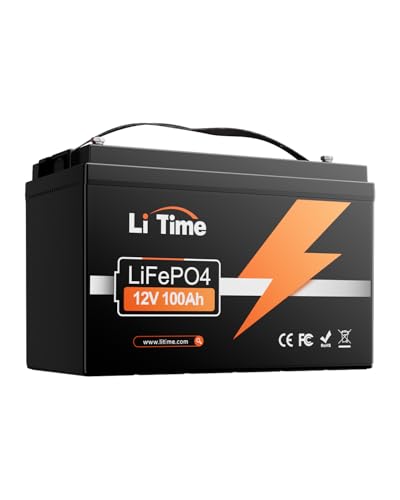
LiTime 12V 100Ah Group 31 LiFePO4 Deep Cycle Battery — Best Overall Off-Grid
Most off-grid systems that succeed are built on boring, expandable lithium, and this is the benchmark unit: a Group 31 LiFePO4 with a 100A management system, near-full usable capacity, and a stated expansion allowance to 4P4S that lets the bank grow with the array and the household. It is the pick against which off-grid value is measured.
| Specification | Detail (from verified listing title) |
|---|---|
| Chemistry | LiFePO4 lithium |
| Capacity | 100Ah, 1280Wh (per verified title) |
| BMS | 100A built-in (per verified title) |
| Expansion | Up to 4P4S (per verified title) |
| Protection | IP65 waterproof (per verified title) |
Strengths
- Accepts charge at full rate through the short solar window — the off-grid decisive trait
- Expansion headroom to a genuinely large bank without changing product lines
- Deep daily cycling is its design case, not its abuse case
Trade-offs
- Cold-climate charging needs low-temperature discipline or a heated space
- System cost includes a properly sized lithium-capable charge controller
- A single unit is a starter, not a system — budget the bank, not the battery
The off-grid case for this battery is made at dawn. After a night’s discharge, a lead-acid bank spends its solar morning refilling slowly through its taper phase and may never reach full on a short winter day — a chronic deficit that compounds. This lithium bank takes everything the array offers until it is full, banks it, and returns nearly all of it after dark. Across a winter, that behaviour is the difference between a system and a generator habit.
Build it as the guide directs: size the bank to the load audit with winter margin, wire parallel units with equal-length cables, fit a shunt monitor, and let the array and bank grow together in matched steps. Owners who follow that pattern report the highest compliment an off-grid system can earn — they stop thinking about it.
Best for: cabins, homesteads and tiny homes building a daily-cycling off-grid bank meant to grow / Not suited for: grid-tied backup that cycles a few times a year (see the solar storage guide)
Check the current price on Amazon — check price on Amazon for the exact configuration, terminal type and pack count before ordering.

Renogy 12V 100Ah Self-Heating LiFePO4 Battery — Best for Cold Cabins
Off-grid banks live where the heating is not, and lithium’s refusal to charge below freezing collides with the season when off-grid power matters most. Renogy’s self-heating 100Ah unit — with DuoHeat technology and low-temperature protection stated in its verified listing — is the pick engineered for that collision.
| Specification | Detail (from verified listing title) |
|---|---|
| Chemistry | LiFePO4 lithium, self-heating |
| Capacity | 100Ah, 1280Wh (per verified title) |
| BMS | 100A (per verified title) |
| Heating | DuoHeat tech, low-temp protection (per verified title) |
| Protection | IP65 (per verified title) |
Strengths
- Heats itself to accept charge on frozen mornings when standard lithium cannot
- Full lithium usable capacity and cycle life for daily off-grid duty
- Sealed case suits sheds, outbuildings and cabin battery boxes
Trade-offs
- Heating energy comes from the system — a fair winter tax, honestly counted
- Premium position within the 100Ah lithium class
- Mild-climate systems pay for a capability they will seldom use
Judge this battery by your coldest week. If the bank’s room freezes and the household depends on the system, a battery that wakes, warms and accepts the morning’s solar charge is not a feature — it is the system working as designed while a standard lithium bank waits for a thaw that the forecast keeps postponing. Cabins visited on winter weekends benefit most of all: the bank maintains itself between visits and greets you ready.
Install with the same discipline as any lithium bank — matched units, correct controller profile, shunt monitoring — and resist disconnecting the array ‘to rest’ the bank in winter. The heating system needs the array connected to do its work; isolation is how cold banks die.
Best for: off-grid cabins and homesteads in freezing climates with unheated battery spaces / Not suited for: mild-climate or indoor installations
Check the current price on Amazon — check price on Amazon for the exact configuration, terminal type and pack count before ordering.

ECO-WORTHY 12V 100Ah LiFePO4 Battery with Bluetooth — Best Monitored Off-Grid Pick
Off-grid living rewards the owner who knows today’s state of charge the way a pilot knows fuel. ECO-WORTHY’s 100Ah LiFePO4 builds that knowledge into the battery — Bluetooth monitoring plus a state-of-charge display — making it the pick for actively managed systems where decisions about laundry, pumping and heating are made against the bank’s real condition.
| Specification | Detail (from verified listing title) |
|---|---|
| Chemistry | LiFePO4 lithium |
| Capacity | 100Ah (12V) |
| BMS | 100A with low-temp protection (per verified title) |
| Monitoring | Built-in Bluetooth, SOC display (per verified title) |
Strengths
- Per-battery visibility exposes imbalance and teaches real consumption fast
- SOC display at the case serves quick checks without a phone
- Low-temperature protection included for outbuilding installations
Trade-offs
- Monitoring informs discipline; it does not replace bank sizing
- App quality varies — verify readings against behaviour until trust is earned
- Single-unit current ceiling applies until paralleled, as with its class
The educational value surprises new off-gridders most: within a fortnight of visible data, households learn their true load profile — which appliance is the secret glutton, what a cloudy day really costs, when the bank’s comfort zone actually ends. Systems managed on that knowledge routinely outperform larger systems managed blind, because the cheapest kilowatt-hour is always the one not wasted.
As a bank component it follows the class rules: matched units, equal-length parallel cabling, a controller with a true lithium profile. Add one shunt monitor for whole-bank truth alongside the per-battery view and the system’s instrumentation is complete at any scale.
Best for: actively managed off-grid homes that schedule loads around the bank / Not suited for: owners who want the system invisible and checked twice a year
Check the current price on Amazon — check price on Amazon for the exact configuration, terminal type and pack count before ordering.
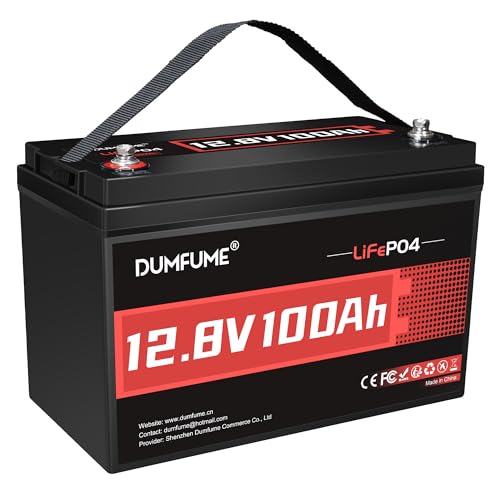
Dumfume 12V 100Ah LiFePO4 Lithium Battery (Group 31) — Best Value Off-Grid Lithium
Off-grid budgets are real, and they are spent across panels, controller, inverter and batteries at once. Dumfume’s Group 31 lithium keeps the core specification — 100Ah, 1280Wh, 100A BMS — at a position that lets a budget build afford lithium’s daily-cycling advantages instead of defaulting to lead-acid it will replace twice.
| Specification | Detail (from verified listing title) |
|---|---|
| Chemistry | LiFePO4 lithium |
| Capacity | 100Ah, 1280Wh (per verified title) |
| BMS | 100A built-in (per verified title) |
| Form factor | Group 31 (per verified title) |
Strengths
- Value position makes multi-unit daily-cycling banks attainable
- Core specification matches the class leaders where it counts
- Standard Group 31 case simplifies racks and boxes
Trade-offs
- Documentation and support depth trail the premium brands
- No built-in monitoring — budget one shunt monitor for the bank
- Confirm expansion limits in writing before designing beyond a few units
The value build done right looks like this: matched Dumfume units bought together, cables and fusing bought without compromise, a reputable charge controller, and a single quality shunt monitor watching the whole bank. That system delivers the overwhelming majority of a premium build’s lived experience, because off-grid satisfaction is mostly sizing and wiring, not badge.
The value build done wrong saves on the wiring and controller too — and fails like any badly built system, with the batteries blamed. Spend the saving where this guide directs: on the balance of system and on one more unit of capacity than the optimistic estimate suggested.
Best for: budget off-grid builds that refuse to compromise on daily-cycling chemistry / Not suited for: buyers who need premium support and per-battery monitoring included
Check the current price on Amazon — check price on Amazon for the exact configuration, terminal type and pack count before ordering.

Renogy 12V 200Ah Deep Cycle AGM Battery — Best Small-System AGM
Scale decides everything. A cabin used on weekends, running lights, device charging and a small fan, asks little of a bank, and a single 200Ah AGM answers it with total charger simplicity and a low entry cost. Renogy’s big AGM is the lead-acid pick for off-grid at its smallest honest scale.
| Specification | Detail (from verified listing title) |
|---|---|
| Chemistry | AGM lead-acid, deep cycle |
| Capacity | 200Ah (12V) |
| Self-discharge | 3% rate (per verified title) |
| Max discharge current | 2000A (per verified title) |
Strengths
- One case, one simple charger, no lithium profile questions
- Low self-discharge suits cabins that wait between visits
- Substantial capacity for genuinely light load lists
Trade-offs
- Plan on half the nameplate as daily usable energy — the audit must fit inside it
- Daily deep cycling to support heavy loads will consume it quickly
- Effectively a fixed installation at this weight
The discipline that makes this pick succeed is load honesty. Lights, phones, a radio, a small efficient fan: the bank idles through weekends for years. Add a fridge, an inverter habit and winter furnace fans, and the same battery becomes a lesson in undersizing. The load audit in this guide is the gate — if your audited daily use fits inside roughly 100 amp-hours with margin, this battery is a rational, economical heart for the system.
Maintain the standby side faithfully: a small panel and controller keeping it full between visits, terminals checked each season, and replacement planned on test results rather than discovered on the first night of a holiday.
Best for: weekend cabins and tiny systems with genuinely light, audited loads / Not suited for: full-time off-grid homes or any system with refrigeration and heavy inverter use
Check the current price on Amazon — check price on Amazon for the exact configuration, terminal type and pack count before ordering.

Renogy 12V 100Ah Deep Cycle AGM Battery — Best Starter AGM
Some off-gridders wisely start by measuring their life before electrifying it. Renogy’s 100Ah AGM is the starter block for that approach: inexpensive enough to learn on, standard enough to resell or demote to secondary duty, and honest about its limits from the first day.
| Specification | Detail (from verified listing title) |
|---|---|
| Chemistry | AGM lead-acid, deep cycle |
| Capacity | 100Ah (12V) |
| Self-discharge | 3% rate (per verified title) |
| Max discharge current | 1100A (per verified title) |
Strengths
- Lowest-commitment way to learn a property’s real load profile
- Works with the simplest solar charge controllers on an AGM profile
- Useful afterwards as a secondary or workshop battery if you upgrade
Trade-offs
- A learning battery, not a destination: daily off-grid life will outgrow or consume it
- Half-capacity planning rule and lead-acid charge taper apply in full
- Paralleling aged units later is poor practice — growth means a fresh matched bank
The starter strategy works when it is a strategy: run a season, log consumption with a cheap monitor, discover the real load list — it is never the imagined one — and then size the permanent lithium bank from evidence. Owners who skip the learning year routinely buy the permanent bank twice; owners who take it buy once, and this battery’s modest cost is the tuition.
What the strategy forbids is pretending the starter is the destination. If your audit already shows full-time loads, skip this step and build the lithium bank first — tuition is only cheap when the lesson is actually needed.
Best for: first-season off-gridders measuring real loads before the permanent build / Not suited for: established off-grid homes with known, substantial daily loads
Check the current price on Amazon — check price on Amazon for the exact configuration, terminal type and pack count before ordering.
Comparison Table
| Pick | Badge | Key spec | Best for |
|---|---|---|---|
| LiTime 12V 100Ah Group 31 LiFePO4 Deep Cycle Battery | Best Overall Off-Grid | 100Ah LiFePO4, 100A BMS, 4P4S expansion | cabins, homesteads and tiny homes building a daily-cycling off-grid bank meant to grow |
| Renogy 12V 100Ah Self-Heating LiFePO4 Battery | Best for Cold Cabins | 100Ah LiFePO4 self-heating, 100A BMS | off-grid cabins and homesteads in freezing climates with unheated battery spaces |
| ECO-WORTHY 12V 100Ah LiFePO4 Battery with Bluetooth | Best Monitored Off-Grid Pick | 100Ah LiFePO4, Bluetooth + SOC display | actively managed off-grid homes that schedule loads around the bank |
| Dumfume 12V 100Ah LiFePO4 Lithium Battery (Group 31) | Best Value Off-Grid Lithium | 100Ah LiFePO4 Group 31, value tier | budget off-grid builds that refuse to compromise on daily-cycling chemistry |
| Renogy 12V 200Ah Deep Cycle AGM Battery | Best Small-System AGM | 200Ah AGM, small-system off-grid | weekend cabins and tiny systems with genuinely light, audited loads |
| Renogy 12V 100Ah Deep Cycle AGM Battery | Best Starter AGM | 100Ah AGM deep cycle, starter systems | first-season off-gridders measuring real loads before the permanent build |
Compare solar batteries per usable kilowatt-hour delivered over their life, not per case. Lithium’s near-full usable fraction and long cycle life routinely invert the shelf-price ranking, while AGM’s lower entry cost remains genuinely right for standby-weighted and budget-capped systems. The table’s job is to show the building blocks; the guide’s arithmetic decides the build.
Expansion headroom is the second comparison that matters. A bank that can grow from two units to eight without changing product lines protects the array investment as panels are added — the most common solar story there is. Check the stated series and parallel limits before the first purchase, not at the third.
A closing comparison discipline: price the bank you actually need, not the unit on the shelf. Multiply by the unit count your audit demands, add the controller capacity to charge it and the monitor to see it, and compare systems whole. Off-grid history is littered with cheap batteries inside expensive failures and premium batteries inside systems that never needed them — the audit, honoured, prevents both.
A closing comparison discipline: price the system you actually need — the unit count your evening audit demands, the inverter compatibility to run it, the monitoring to manage it — and compare wholes, not cases. Storage history is littered with premium banks on guessed sizing and budget banks on excellent data; the second household is happier, and it is not close.
The Off-Grid Sizing Method: Audit, Days of Autonomy, Winter Margin
Size from the load audit outward. List every load with watts and honest daily hours; convert to watt-hours; add inverter and system losses. That daily total, divided by the chemistry’s usable fraction, is one day of bank. Multiply by your chosen days of autonomy — the consecutive grey days the system must survive without generator help, typically two to three for homes, one to two for cabins — and you have the bank. Every shortcut in this paragraph has a name in the off-grid world: a disappointed owner.
Winter is the design season, not summer. December’s solar day may deliver a third of June’s, while heating loads peak — so size the array for winter production against winter loads, and let summer’s surplus be a pleasant irrelevance. Batteries sized on summer arithmetic fail in the season when failure matters most, which is why experienced off-gridders speak of their ‘December system’ with respect.
Generators belong in the design as a component, not a confession. A system sized for average winter with a generator for the worst week is usually cheaper and more reliable than a system sized for the worst week alone. Count generator hours honestly in the running costs, maintain the machine like the appliance it is, and the hybrid design beats both purist extremes for most real properties.
Charge Controllers and Array Matching: Feeding the Bank Properly
The controller is the bank’s gatekeeper, and its profile must match the chemistry exactly: lithium banks need a controller with a genuine lithium profile or fully adjustable voltages, set to the battery maker’s specification. An AGM-profile controller on a lithium bank undercharges it chronically — the off-grid version of the RV converter mistake — and quietly converts an excellent bank into a mediocre one.
Array sizing follows the bank: enough panel to refill a typical day’s use during the shortest design month’s solar window, with the controller’s current rating matched to the array and its voltage rating respected with cold-weather margin. MPPT controllers earn their premium in exactly this service, harvesting meaningfully more in the cold, bright, low-sun conditions where off-grid systems live or die.
Monitor the marriage, not just the parts. A shunt-based battery monitor plus the controller’s own harvest log tell you weekly whether the array is keeping its promises. Off-grid systems drift — a shaded panel, a failing connection, a new load nobody logged — and the monitored system announces drift as data while the unmonitored one announces it as darkness.
Living Off-Grid With the Bank: Daily Rhythms That Extend Its Life
Successful off-grid households develop a rhythm the bank can set its watch by: heavy loads — laundry, pumping, power tools, baking — scheduled into the solar surplus hours, evenings run lean on stored energy, and the monitor glanced at the way previous generations glanced at a woodpile. None of this is hardship; it is the ordinary literacy of living on harvested energy, and it routinely doubles the effective size of a bank without spending anything.
Depth discipline is the rhythm’s foundation. Lithium tolerates deep discharge, but a household that treats eighty percent as its working ceiling rather than its emergency floor will own the same bank for far longer. Lead-acid demands the stricter version of the same habit. Either way, the monitor’s number — not optimism — decides whether tonight’s extra load runs.
Seasons change the rhythm and the wise system changes with them: summer surplus invites the freezer and the projects; winter scarcity invites conservation and the generator’s scheduled hours. The bank does not care which season it is, as long as somebody is paying attention — attention, in the end, is the renewable resource the whole system runs on.
Fire, Fusing and the Safety Culture of a Remote System
Off-grid systems concentrate energy far from help, which raises the standard of care rather than lowering it. Every cable protected by a fuse sized to it, every connection torqued and rechecked after the first month, clear space around the bank, and no storage of fuel or solvents in the battery space — these are the culture, and they are cheaper than any insurance. Lithium’s management systems and AGM’s sealed cases each remove certain risks; neither removes the owner’s.
Teach the household the system’s two emergency acts: where the disconnect is and what it does, and what a battery that is hot, swollen or hissing requires — distance first, then help. A laminated card at the bank with those two acts and the system’s basic facts serves guests, housesitters and future owners, and turns a frightening moment into a procedure.
Finally, respect the chemistry’s end of life in advance. A bank declining unevenly, a unit running warm, a monitor telling a story that changed — these are retirements announcing themselves. Off-grid owners who replace on evidence keep their lights; the system’s whole purpose is reliability, and reliability is a maintenance culture before it is a product choice.
Water, Waste and the Loads Nobody Audits
The loads that break off-grid designs are rarely the glamorous ones. Water pumping concentrates real energy into short, vital bursts; refrigeration runs all day and all night; device charging multiplies quietly across a household; and standby draws — the entertainment stack, the router, the chargers — tax the bank for twenty-four hours in exchange for nothing anyone remembers choosing. The audit that catches these is a meter and a week, not an afternoon with a spreadsheet of intentions.
Efficiency work on these loads outperforms battery purchases almost every time. A modern efficient fridge can halve refrigeration energy; moving pumping into solar hours removes it from the bank entirely; a switched power strip deletes the standby tax at a stroke. Off-gridders who audit annually find their systems growing more capable while their neighbours’ battery banks merely grow — the cheapest kilowatt-hour remains the one never needed.
Choosing the Inverter to Match an Off-Grid Bank
The inverter and the bank are one decision viewed from two sides, and the inverter guide in this series covers the battery side in depth. For off-grid purposes the essentials are these: the inverter’s continuous rating must sit inside the bank’s continuous current with margin, its surge must match the largest motor it will start, and its idle draw — paid every hour of every day from the bank — belongs in the load audit as a line item with its own row. An oversized inverter idling hungrily can consume a small cabin’s margin more surely than any appliance.
Pure sine output is the off-grid default for anything beyond lights: motors, chargers, medical equipment and modern electronics all assume it, and the savings from modified sine evaporate at the first unhappy appliance. Size for the loads you audited, in the season you designed for, and let the bank and inverter grow together in the matched steps this guide keeps recommending.
A First Year Off-Grid: What the Seasons Teach
The first year is the real commissioning. Spring teaches surplus management — more energy than the household can use, and the discipline not to mistake it for the system’s character. Summer teaches heat: batteries ageing faster in a hot shed, refrigeration working harder, and the value of shade and ventilation for the bank as much as for the panels. Autumn teaches the slope — each week the margin narrows, and the households that adjust early, shifting habits before the bank forces the lesson, arrive at winter already fluent.
Winter teaches the truth the system was designed around, and a well-sized bank turns that lesson into a non-event: short days, generator hours logged without resentment, evenings run lean by rhythm rather than by emergency. Owners who keep the notebook through all four seasons own something no catalogue sells — a calibrated knowledge of their own energy life, which makes every future decision about panels, batteries and appliances startlingly easy. That, more than any single product in this guide, is what a successful first year buys.
The Notebook by the Bank: Records That Outperform Gadgets
Every durable off-grid system in this guide’s research shares one artefact: a notebook — paper or digital — living with the bank. Install date and settings on page one; monthly monitor readings after that; every load added, every fault, every generator hour, in a line each. The notebook converts the system’s history from folklore into evidence, and evidence is what good decisions, warranty conversations and eventual upgrades are made from. Gadgets measure the present; the notebook remembers, and off-grid reliability is mostly memory.
How to Choose the Best 12 Volt Batteries for Solar Off Grid
Run the sizing method above before shopping: audited daily watt-hours, days of autonomy, winter margin. The result names your bank size in usable kilowatt-hours, and this shortlist then resolves by circumstance — lithium for daily cycling at any serious scale, self-heating lithium where the bank freezes, monitored lithium where the household manages actively, value lithium where the budget binds, and AGM only where the audit is genuinely small or the system is a deliberate starter.
Then verify the system fits together: controller profile and current rating, inverter size against the bank’s continuous current, expansion limits against next year’s array plans, and a monitor in the budget from day one. Off-grid failures are system failures wearing a battery’s name; the buyers who internalise that sentence buy once.
How to Install an Off-Grid Battery Bank Step by Step
1. Build the bank space first. A dry, ventilated, temperature-moderated location, with the bank restrained, terminals accessible for inspection, and cable runs to controller and inverter kept short. Fit the main fuse and disconnect before any battery is connected.
2. Assemble the bank unpowered. Set matched units in place, connect parallel or series links with equal-length cables where paralleling, and torque every terminal. Verify total bank voltage with a meter at the disconnect before anything downstream is connected.
3. Configure every charger before first charge. Set the solar controller — and any generator or mains charger — to the bank’s chemistry profile and the maker’s voltages. This configuration step decides the bank’s lifespan more than any other single act in the installation.
4. Commission the monitor. Charge the bank fully by its charger’s definition, synchronise the shunt monitor at that verified full point, and record the date and settings in the system notebook kept with the bank.
5. Prove the system under load. Run the household’s real evening load set, watch state of charge and voltages behave as the audit predicted, and correct discrepancies now — in wiring, settings or expectations — while the grid of your patience is still connected.
Safety note: off-grid banks store serious energy and feed inverters that produce mains voltage. Insulated tools, correct fusing, and professional help for any household-wiring connection are the standing rules; a remote property is the worst place to learn them by accident.
Common Buying Mistakes
Sizing on summer sun and average loads. Off-grid systems are designed for December and for the worst week, or they are designed to fail then. Winter margin is not pessimism; it is the product.
Chronic undercharging of lead-acid. An AGM bank that rarely reaches full sulfates steadily. If the array cannot fill the bank regularly, the bank is too big, the array too small, or the chemistry wrong — fix the mismatch, not the symptom.
Skipping the battery monitor. Voltage guessing manages off-grid systems the way guessing manages fuel on a long road. A shunt monitor is a small price for the system’s only truthful gauge.
Letting loads grow without re-auditing. The freezer, the bigger TV, the workshop tools — each addition spends the bank’s margin silently. Re-run the audit at every significant addition.
Buying batteries before the load list exists. The catalogue is not the design process. Audit, autonomy, winter — then the shortlist, in that order, every time.
Final Recommendation
Build a serious off-grid system on the LiTime lithium, choose the Renogy self-heating unit where the bank lives in the cold, the ECO-WORTHY where the household manages by data, and the Dumfume where the budget must stretch across a whole system. Keep AGM honest and small with the Renogy 200Ah, or deliberate and educational with the 100Ah starter. Above all, let the audit and the winter decide — the batteries are merely where those decisions become physical.
Best 12 Volt Batteries For Solar Storage
Best 12 Volt Batteries For Inverters
Best 12 Volt Batteries For An Rv
The verified picks, one last time for convenience:
- LiTime 12V 100Ah Group 31 LiFePO4 Deep Cycle Battery — Best Overall Off-Grid
- Renogy 12V 100Ah Self-Heating LiFePO4 Battery — Best for Cold Cabins
- ECO-WORTHY 12V 100Ah LiFePO4 Battery with Bluetooth — Best Monitored Off-Grid Pick
- Dumfume 12V 100Ah LiFePO4 Lithium Battery (Group 31) — Best Value Off-Grid Lithium
- Renogy 12V 200Ah Deep Cycle AGM Battery — Best Small-System AGM
- Renogy 12V 100Ah Deep Cycle AGM Battery — Best Starter AGM
Best 12 Volt Batteries For Solar Storage
Best 12 Volt Batteries For Inverters
Best 12 Volt Batteries For An Rv
Frequently Asked Questions
How many batteries does an off-grid home need?
It is a watt-hour answer, not a battery count: audit the daily load, multiply by days of autonomy, divide by the chemistry’s usable fraction. A modest cabin might land on two 100Ah lithium units; a full-time home commonly lands on four to eight. Any answer given before the audit is a guess wearing a number’s clothing.
Can I run a fridge off-grid on 12 volt batteries?
Yes — efficient modern fridges are standard off-grid loads, provided the bank and array were sized with the fridge in the audit from the start. It is the unplanned fridge, added to a system sized without it, that breaks off-grid budgets and banks.
Why does my off-grid bank never seem full in winter?
Short days, low sun and peak loads coincide: the array harvests a fraction of its summer yield while the house spends its most. If the pattern is seasonal and recovers in spring, the system is undersized for winter rather than broken — the cures are array, autonomy or generator hours, decided by the sizing method in this guide.
Is lithium worth it for off-grid?
For daily cycling, the arithmetic is usually decisive: near-full usable capacity, fast charge acceptance in short solar windows, and cycle life several times lead-acid’s. Standby-weighted systems are the exception where AGM’s lower entry cost can still win honestly.
Can I add batteries to my off-grid bank later?
Yes, within the maker’s stated expansion limits and with matched units — easiest with lithium, whose per-unit management tolerates staged growth better in practice. Keep units identical in model, add while the existing bank is young, and recheck controller and charger capacity for the larger bank.
Do I still need a generator off-grid?
Most well-designed systems keep one for the worst winter week and for maintenance windows. Sized as a component rather than a crutch, a generator reduces the battery and array capacity you must buy for rare extremes — usually the cheapest reliability in the whole design.
Can I start off-grid with a generator and add batteries later?
Yes, and many sound systems began that way — but design the electrical heart once: choose the inverter-charger and controller family with the eventual battery bank in mind, so the later addition is a connection rather than a replacement. Running a property on a generator alone while planning is honest; buying incompatible components twice is not.
How do I keep an off-grid bank healthy while the property sits empty?
Leave the array connected through its controller on the correct profile — solar float is the bank’s best caretaker — with all discretionary loads off at the disconnect. Lithium banks additionally prefer a partial state of charge for long vacancy, which many controllers can be set to maintain. What empties properties of healthy banks is total isolation: no charge, parasitic draws, and months of silence.
What maintenance does an off-grid battery bank actually need?
Less than folklore says, performed more reliably than folklore manages: terminals checked and re-torqued seasonally, the monitor’s story reviewed monthly, charger and controller settings verified after any system change, and the bank space kept dry, clear and ventilated. Lithium asks nothing more; lead-acid adds electrolyte-era habits only in flooded form, which this guide’s sealed AGM picks avoid. The common thread is inspection — systems that are looked at rarely fail by surprise.
Is 12 volts the right voltage for an off-grid system?
For small and mid-size systems, yes: components are plentiful, vehicle compatibility is free, and the batteries in this guide are its native building blocks. As continuous loads climb into the multi-kilowatt range, 24V and 48V banks built from the same units cut current and cable cost — the step-up logic covered in the inverter guide in this series. Start at 12 volts with a growth path, and the system can climb when the loads honestly demand it.


