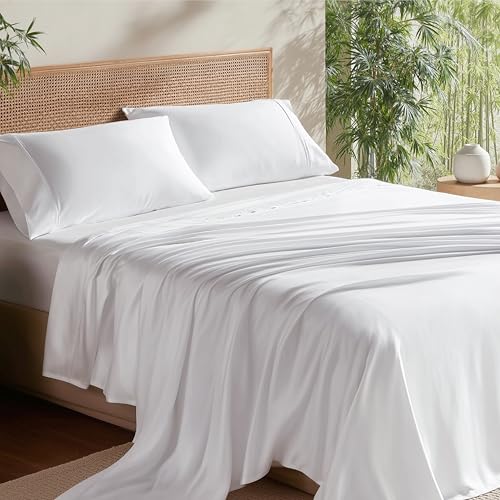
Disclosure: As an Amazon Associate, airfryerkitchensupply.com earns from qualifying purchases. Links to Amazon on this page are affiliate links; they cost you nothing extra. Listing details such as price and availability change often, so check the current Amazon listing before you buy.
A twin bed is the workhorse of the house. It sits in a child’s room, a spare room, a bunk, a daybed or a studio corner, and it gets stripped and remade far more often than a main bedroom mattress. That makes the sheet set you pick more important than its small size suggests. If you are hunting for the best twin sheet sets, the real questions are how the fabric feels, how well the fitted sheet stays on the corners, and how the set copes with frequent washing.
This guide is written for parents outfitting a first big-kid bed, hosts who want a tidy guest room, and anyone replacing worn sheets on a single bed. We look at five sets that are widely sold in the United States, compare the fabrics and cuts that their makers list, and explain where each one makes sense. You will also find a short buying guide, care advice and answers to common questions about twin fitted sheets, thread count and cotton versus microfiber.


Quick Comparison
| Product | Best for | Main point | Link |
|---|---|---|---|
| Mellanni Brushed Microfiber Twin Sheet Set | Everyday kids’ beds | Soft brushed microfiber, many colors | Check on Amazon |
| Amazon Basics Lightweight Super Soft Easy Care Microfiber Twin Sheet Set | Guest rooms and spare beds | Simple, light, easy care | Check on Amazon |
| Utopia Bedding Twin Bed Sheet Set | Bunk beds and bulk buying | Brushed microfiber in many shades | Utopia Bedding Twin Bed Sheet Set Brushed Microfiber |
| Pizuna 400 Thread Count Cotton Twin Sheet Set | Cotton fans | Cotton fabric with a smooth finish | Check on Amazon |
| California Design Den 400 Thread Count Cotton Twin Sheet Set | Teens and adult single beds | Cotton set with deep pockets | Check on Amazon |
In this guide
How These Options Were Chosen
We chose these sets from manufacturer listings and published specifications. We have not used these products ourselves, so nothing here is a claim about long-term wear. Instead we looked at the fabric type, the pocket depth and piece count the maker lists, the range of available colors, and how consistently each brand shows up as a regular twin-size option in US catalogs.
We also tried to cover different needs: two easy-care microfiber sets, one bulk-friendly microfiber brand, and two cotton sets for people who prefer a natural fiber. Before you buy, always open the current listing and confirm the size, the piece count and the pocket depth, because makers update their products from time to time.
The Best Twin Sheet Sets for Single Beds
Mellanni Brushed Microfiber Twin Sheet Set
Mellanni is one of the better-known names in microfiber bedding, and its brushed microfiber set is a common pick for children’s rooms. The listing describes a soft, brushed finish, and the set comes in a long list of colors, which helps when you want a plain white for a guest room or a bolder shade for a kid.
The set includes a flat sheet, a fitted sheet and a pillowcase for a twin bed. Polyester microfiber dries quickly and does not wrinkle much, which suits families who wash sheets weekly. The trade-off is that synthetic fabric does not feel like cotton, and some people find it warmer in summer. If you dislike the slick feel of polyester, look at the cotton options below.
Who should skip it: anyone who wants a natural fiber, or who plans a hot-climate guest room and would rather have a crisp percale. Everyone else gets a dependable all-rounder for a single bed.

Amazon Basics Lightweight Super Soft Easy Care Microfiber Bed Sheet Set Twin
The store’s own brand keeps things simple. The name tells you the intent: lightweight microfiber that is meant to be easy to wash and quick to dry. It is a sensible choice when a bed is used only now and then, such as a guest room or a cabin bunk, because you can keep a second set in the closet without much fuss.
The fitted sheet is described with deep pockets, so it should suit most standard twin mattresses, though you should still measure if you use a thick topper. The color choices are fairly neutral, which makes it easy to match existing bedding. Because the line is so widely sold, replacing a lost pillowcase or buying a matching second set later is usually straightforward.
The compromise is that it is a plain, no-frills set. It is not marketed as a luxury fabric, and a buyer who wants a heavier hand-feel will be happier with cotton. It is best viewed as a practical spare, not a showpiece.

Utopia Bedding Twin Bed Sheet Set Brushed Microfiber
Utopia Bedding sells a large range of bedding through Amazon, and this brushed microfiber sheet set is one of its core products. It is a good fit for families who need several twin sets at once, for example for bunk beds, a dormitory-style kids’ room or a rental property where beds are turned over regularly.
The maker lists a flat sheet, a fitted sheet with deep pockets and a pillowcase, in a range of solid colors. Picking one color for every bunk makes laundry simple, because any fitted sheet fits any mattress of the same size. Brushed microfiber is generally a low-wrinkle fabric, so it looks tidy straight from the dryer.
As with other polyester sets, it will not feel the same as cotton, and it can hold onto static in dry rooms. Check the listing for the pocket depth before you use it on a thicker mattress or a pillow-top twin. Skip it if natural fibers matter more to you than convenience.
Utopia Bedding Twin Bed Sheet Set Brushed Microfiber
Pizuna 400 Thread Count Cotton Twin Sheet Set
Pizuna is a brand that focuses on cotton sheets, and its 400 thread count set is aimed at people who want a smooth natural-fiber feel on a single bed. The listing describes long-staple cotton, which is the type of fiber usually chosen for a finer yarn, and a set with a flat sheet, fitted sheet and pillowcase for the twin size.
This is a good option for a teenager’s room or an adult who lives in a small space and wants their one bed to feel proper. Cotton tends to soften as it is washed, and it does not carry the static of some synthetics. Many buyers prefer the look of a cotton weave, which is a little more matte than microfiber.
Cotton wrinkles more and needs a bit more care than microfiber, so expect to pull sheets from the dryer promptly. Thread count is only one clue to quality, so do not assume a larger number is always better. Skip this set if you want the least fuss or a bright patterned look.

California Design Den 400 Thread Count Cotton Twin Sheet Set
California Design Den is another cotton-focused brand, and its 400 thread count set is listed with deep pockets for the fitted sheet. That detail matters on a twin bed, because many people use a mattress topper or a pillow-top mattress in a guest room or a young adult’s room.
This set is worth a look if you like a crisp, bedding-store feel and a neat look when made up with a duvet. The color range leans toward classic whites, creams and soft shades, which blend into most rooms. Cotton also pairs well with a quilt or a comforter that you wash less often.
The trade-off is the usual one for cotton: it can wrinkle, it may shrink slightly if washed hot, and it takes longer to dry than microfiber. Follow the care label on the packaging. It is not the best pick for a child’s bed that will see frequent accidents, where a quick-dry fabric is more forgiving.

Best for Kids’ Rooms
Choose the Mellanni set. It comes in many colors, the microfiber is easy to wash, and a second set can sit in the linen closet for accident nights. Brushed polyester also tends to look neat with little ironing, which helps when you make the bed several times a week.
Best for Guest Rooms
The Amazon Basics microfiber set is a sound spare-room choice. Neutral tones suit most decor, and the fabric is light enough to fold into a small stack. Because guest beds sit unused for long stretches, a plain fabric matters less than a tidy fit.
Best for Bunk Beds
Utopia Bedding is the logical pick when you need several matching sets. Using one color across both bunks makes laundry easy, and the fitted sheets are interchangeable. Remember that bunk mattresses are often thin, so a deep-pocket sheet may need a gentle tuck.
Best for Teens and Adults
Pizuna and California Design Den both suit an older sleeper who wants cotton. If you add a topper, lean toward the deep-pocket California Design Den set, and use Pizuna when the mattress is standard height and you prefer a smoother finish.
How to Choose Twin Sheet Sets
Begin with the mattress. A twin mattress measures about 38 by 75 inches, but the height varies a lot. A thin bunk mattress and a pillow-top twin need very different fitted sheets. Measure the mattress thickness with a tape, include any topper, and compare the number with the pocket depth in the listing. A deeper pocket is more forgiving, though a pocket that is too deep for a thin mattress can bunch at the corners.
Next, think about fabric. Microfiber is polyester, it is soft to the touch, dries fast and holds color well. Cotton is a natural fiber that many people find more familiar, but it needs more attention to drying and ironing. Neither is better in every case. If the bed is used by a child who wets the bed or spills drinks, speed of drying counts for a lot. If the bed is for a teenager who wants a grown-up look, cotton may win.
Pay attention to what is in the box. Most twin sets include a flat sheet, a fitted sheet and one pillowcase, since a single bed usually takes one pillow. If you use two pillows, you may need an extra case. Check the listing for the piece count so you are not surprised.
Thread count deserves a sensible reading. In cotton, a figure in the few hundreds is common for a decent sheet, but yarn quality and weave matter just as much. Treat very high numbers on microfiber with caution, since they are often a marketing label rather than a measure of feel.
Finally, plan for a spare. Twin beds are remade often, so owning two sets saves you from a laundry crisis. Buying the same brand twice also makes replacement pillowcases easier. Common mistakes include ordering the wrong size such as twin XL, forgetting about a topper, and picking a color that shows every stain in a child’s room.
Fit, Safety and Care Notes
Follow the maker’s care label for water temperature and drying settings, since shrinkage rules differ between cotton and microfiber. Do not iron microfiber on a high setting, because polyester can melt. If a child has sensitive skin, wash new sheets once before the first use and check the listing for any fabric certification the maker states.
Use a licensed professional for anything involving the bed frame, such as mounting a loft bed or fixing a wobbly bunk ladder. Fitted sheets on a high bunk should be snug so they do not slide, and loose bedding should be kept away from areas a young child can reach. Check local rules or the bed maker’s guidance on age limits for upper bunks.
Care and Troubleshooting
A few simple habits keep twin sheets looking good. Wash colors separately for the first few washes, close any zippers on nearby clothes, and avoid fabric softener on microfiber, which can leave a film. Remove sheets from the dryer as soon as they stop and fold them straight away.
| Problem | Likely cause | What to try |
|---|---|---|
| Fitted sheet pops off a corner | Pocket too shallow or mattress too thick | Check the pocket depth, or use sheet clips |
| Pilling on the surface | Friction in the wash | Wash inside out on a gentle cycle |
| Stiff cotton after washing | Over-drying | Dry on a lower heat and remove promptly |
| Static cling | Dry air and synthetic fibers | Use dryer balls and skip the hottest setting |
A Checklist Before You Order Twin Sheets
Twin sheets seem simple, yet a mismatch in size or depth can leave a corner popping off the mattress. Use this checklist while looking at the five sets above, and measure the mattress first.
- Measure the mattress thickness, including any topper, and compare it with the pocket depth in the listing.
- Confirm that the set is the right size, since twin, twin XL and full look similar in a thumbnail.
- Check which pieces are included: a fitted sheet, a flat sheet and pillowcases.
- Read about the fabric and the weave, and what the maker says about care.
- Look at the color choices and whether the set comes in several shades.
- Think about how many sets you want, so one is always clean.
Pocket depth deserves a second look. A thick mattress with a topper may need deep pocket sheets, and a corner that slips off at night is an annoyance that a few minutes of measuring prevents.
Microfiber and Cotton Sheets Compared in Daily Life
The sets in this guide use two common materials. The table compares how they tend to behave.
| Material | Feel | Care | Good for |
|---|---|---|---|
| Brushed microfiber | Soft and smooth, often warm | Usually easy care, follow the label | Kids rooms, guest rooms, quick laundry |
| Cotton percale or sateen | Crisp or silky, breathable | May need a lower dryer heat | Adults and teens who like a classic feel |
Neither material is better for everyone. Some people prefer the cozy feel of microfiber, while others like cotton for its cooler, crisper hand. If a set comes with a thread count, remember that it is only one clue about quality, and fiber and weave matter as well.
Steps for Making a Twin Bed Neatly
A neat bed begins with a good routine. These steps help you get a smooth finish.
- Pull the fitted sheet over each corner of the mattress, checking that the pockets sit square.
- Smooth the surface to remove wrinkles before adding the next layer.
- Lay the flat sheet with its wider hem at the head of the bed.
- Tuck the foot and sides if you like a tidy look, leaving room to move.
- Add the pillowcase and any blanket or comforter.
Fresh sheets fit better when the mattress is clean and level, so check the surface when you change them. Wash new sets before first use according to the care label, which also softens the fabric.
Choosing Sets for Kids, Guests, Bunks and Teens
The same size can suit very different beds. For children, easy care and fun colors matter, and a spare set is handy for accidents. Guest rooms benefit from neutral colors and a crisp finish, so the bed looks fresh whenever visitors arrive. Bunk beds are awkward to reach, so look for sheets with a secure fit and a thin profile that make changing them easier.
Teenagers and adults on twin beds, such as in dorms, often want a softer feel and sturdier stitching for daily use. Whatever the room, store a second set nearby, wash according to the label and replace sheets when they thin or tear. A good routine keeps the bed comfortable and the laundry manageable.
Pay attention to how the set is packaged and described. Some listings show a flat sheet that is narrower than you expect, or pillowcases sized for a standard pillow that may differ from your own. Photographs of the folded set can hide how thick or thin the fabric is, so read the written details. Keeping the care label from your first set helps you wash later sets the same way.
Choosing Twin sheet sets: A Deeper Look at What Actually Matters
Twin beds serve children, teenagers, guests and plenty of adults, often in rooms where the bed is also the daytime furniture. Twin sets are bought in multiples more often than any other size — for bunk beds, siblings, sleepovers and laundry-day spares — so value, durability and an easy wash routine weigh heavily here. A twin set also has to survive being chosen by one person and used by another, which argues for broadly likeable colours and fabrics.
Judge the fabric by the job it has to do in your room rather than by reputation. Think about how the bed feels across a whole night: whether you prefer a smooth, close surface or a looser, airier one, whether the room runs warm or cool, and how much bedding you layer on top. The sets in this guide cover different fibres and finishes, and none of them is best in the abstract. The right question is which hand-feel you still enjoy on the third night of a busy week, when the bed is made quickly and the duvet ends up half on and half off.
Weave matters because it changes both the surface and the laundry routine. A smoother weave tends to show a gentle sheen and slide more easily against a duvet cover, while a plainer, matte weave usually feels crisper and more straightforward. Neither is a quality mark on its own. What counts is whether the weave suits the way you sleep and wash: a finish you love but dread ironing, folding or drying will slowly push a set to the back of the cupboard, while an easy-care weave you like slightly less on day one often becomes the set you reach for every week.
Check what is actually in the set before you fall for the headline piece count. A typical set combines a fitted sheet, a flat sheet and pillowcases, but the number and size of the cases vary, and households with extra pillows for reading or for guests can run short quickly. If you use larger or fuller pillows, confirm the case style and size the maker lists, and think about whether an envelope closure or an open end suits how often you wash them. Buying a second set of matching cases at the same time is often easier than hunting for a match later.
Colour deserves a practical minute, not just a taste-based one. Pale shades show the room as calm and make it easy to spot a mark that needs attention before washing, while deeper shades are more forgiving between washes but can show lint, dust and pet hair more readily. Patterns can hide everyday creasing and minor marks, which is useful on a bed that gets made in a hurry. Whatever you choose, hold it mentally against the blankets, throws and curtains already in the room, because the sheet is the largest single block of colour on the bed.
Twin sheet sets in Real Homes: Matching the Pick to the Situation
A guest bed asks for something slightly different. It is used in bursts, often by people whose preferences you do not know, so a broadly comfortable fabric, a colour that looks fresh after storage, and a fit that tolerates a topper added for visitors all matter more than a distinctive texture. Wash and air guest sheets before visitors arrive even if they were clean when stored, because fabric that has sat folded for months picks up a cupboard smell. A spare set kept with the guest towels turns a last-minute visit from a scramble into a routine.
As a gift, a sheet set succeeds when it is generous without being presumptuous. Stick to the size the household actually has, choose a colour that suits most rooms, and favour the sets in this guide whose presentation and packaging are described as gift-friendly. If you are unsure about fabric preferences, a classic, broadly liked option beats an adventurous one. Include the care basics in a note rather than assuming the recipient will study the label, and remember that a second pair of pillowcases is a small addition that makes the gift feel considered rather than merely expensive.
Second homes, cabins and spare rooms in family houses share one trait: the bedding sits unused for long stretches and then has to perform immediately. For those beds, choose sets that store well, wash easily after storage, and do not demand special handling from whoever opens the house up. A simple routine helps: strip and wash everything at the end of a stay rather than the start of the next one, store sets in a breathable bag with the pillowcases tucked inside the folded fitted sheet, and keep one complete spare set on site for surprises.
For the main bedroom, where the same bed is used every single night, consistency beats novelty. This is the bed where a sheet set earns its keep: it has to feel right on tired evenings and ordinary mornings alike, survive frequent washing, and be easy to change when you are short of time. If you are choosing twin sheet sets for your own bed, weight your decision towards the fabric and fit you are most confident about, and treat interesting colours or finishes as a bonus. The set you remake the bed with at midnight without thinking is the set that was chosen well.
Getting the Most From Your Purchase: Set-Up, Care and Storage
Store bedding somewhere dry, dark and unremarkable. Airtight plastic in a warm space can trap residual moisture and leave a set smelling stale, while a breathable cotton bag or an open shelf in a linen cupboard keeps fabric fresh. Rotate which set goes back on the bed rather than always using the one on top of the pile; even wear is what makes a whole rotation last. If you store seasonal sets away for months, wash them first, dry them completely, and add nothing scented directly against the fabric.
Wash a new set before its first night, following the maker’s label. This first wash removes loose surface fibres and the finish left from manufacturing, and it gives you an early, honest read on how the fabric behaves in your machine and your water. It is also the moment to check the fit properly: make the whole bed, tuck the corners the way you normally would, and lie on it. A set that is going to ride up or twist usually shows it on the first night, while returns and exchanges are still straightforward.
If the surface starts to feel rougher over time, look at the wash routine before the fabric. Detergent residue from over-dosing, very hard water, and repeated high-heat drying are the usual culprits, and they build up gradually. An occasional rinse-focused cycle without extra product can help clear residue, and washing sheets separately from lint-heavy towels keeps the surface cleaner. Small bobbles tend to appear first where feet and heels move most; that is wear, not a defect, and it is one of the honest signals that a hard-working set is approaching retirement.
When a fitted sheet starts slipping, work through the simple causes before blaming the set. Check whether a topper or protector has shifted and made the stack deeper on one side, whether the elastic has been heat-damaged in drying, and whether the sheet is simply on the wrong way round, with a short side stretched along the length. Making the bed with the corners fully pulled down and under, rather than hooked at the top edge, fixes more cases than any gadget. Persistent slipping on a smooth mattress can also be eased by putting the protector’s grippiest side where the maker intends it.
How the Picks in This Guide Compare With Each Other
Readers often ask why these particular twin sheet sets made the guide when the category is so crowded, and the honest answer is that they were chosen to be different from one another, not to be five versions of the same thing. The comparison below restates what each pick is for, drawing only on how it is presented in its own section above, so you can shortlist by the job you need done rather than by the order the products happen to appear in. Start with the two picks closest to your situation, read their full sections again, and let the deciding factor be the detail that affects your daily routine most.
The Mellanni Brushed Microfiber Twin Sheet Set is presented in this guide as the pick for everyday kids’ beds, with soft brushed microfiber, many colors as its defining point. That positioning tells you how to test it against the others: if that use case is yours, this is the set whose full section deserves your closest reading, and the questions to carry into the listing are the practical ones from this guide — fit, contents, care and the details the maker states. If the use case is not yours, its strengths are largely irrelevant, however good it is at its own job.
The Amazon Basics Lightweight Super Soft Easy Care Microfiber Twin Sheet Set is presented in this guide as the pick for guest rooms and spare beds, with simple, light, easy care as its defining point. That positioning tells you how to test it against the others: if that use case is yours, this is the set whose full section deserves your closest reading, and the questions to carry into the listing are the practical ones from this guide — fit, contents, care and the details the maker states. If the use case is not yours, its strengths are largely irrelevant, however good it is at its own job.
The Utopia Bedding Twin Bed Sheet Set is presented in this guide as the pick for bunk beds and bulk buying, with brushed microfiber in many shades as its defining point. That positioning tells you how to test it against the others: if that use case is yours, this is the set whose full section deserves your closest reading, and the questions to carry into the listing are the practical ones from this guide — fit, contents, care and the details the maker states. If the use case is not yours, its strengths are largely irrelevant, however good it is at its own job.
The Pizuna 400 Thread Count Cotton Twin Sheet Set is presented in this guide as the pick for cotton fans, with cotton fabric with a smooth finish as its defining point. That positioning tells you how to test it against the others: if that use case is yours, this is the set whose full section deserves your closest reading, and the questions to carry into the listing are the practical ones from this guide — fit, contents, care and the details the maker states. If the use case is not yours, its strengths are largely irrelevant, however good it is at its own job.
The California Design Den 400 Thread Count Cotton Twin Sheet Set is presented in this guide as the pick for teens and adult single beds, with cotton set with deep pockets as its defining point. That positioning tells you how to test it against the others: if that use case is yours, this is the set whose full section deserves your closest reading, and the questions to carry into the listing are the practical ones from this guide — fit, contents, care and the details the maker states. If the use case is not yours, its strengths are largely irrelevant, however good it is at its own job.
Two patterns are worth noticing across the whole line-up. First, no pick wins on every criterion, and the guide has not pretended otherwise: each set trades something — a quality, a convenience or a style — for what it does best. Second, the differences that matter most in a year of ownership are rarely the headline ones. They are the fit on your specific bed or in your specific room, the wash or wipe routine on an ordinary week, and whether the set suits the people who use it most. Rank the picks by those measures and the right choice usually becomes obvious.
Common Mistakes to Avoid With Twin sheet sets
Owning exactly one set is a mistake that only reveals itself at the worst moment: a spill at midnight, a guest arriving early, a washing machine breaking down. A single set also wears faster, because it never rests between uses and is often put back on the bed before it is fully dry. Two sets is the practical minimum for a bed in daily use, and three makes laundry leisurely rather than urgent. When you choose from this guide, consider choosing the set you can imagine buying twice.
The most common mistake is buying by a single headline number or word and ignoring everything else on the listing. A big number cannot tell you how a set fits your mattress, how it feels after ten washes, or whether the pillowcases suit your pillows. The buyers who end up happiest treat the headline as an invitation to read further: fibre content, dimensions, pocket depth, set contents and care instructions, in that order. If a listing is vague about the basics, that vagueness is itself information about how much thought went into the product.
Another quiet mistake is mixing care needs in one purchase. A household sheet drawer works best when everything in it can go through roughly the same wash routine; one diva set that needs special handling will either be washed wrong or not washed at all. Before buying, read the care label summary in the listing and picture it inside your actual week. If the honest answer is that the set would wait three weeks for a special wash day, choose a different pick from the guide and enjoy it weekly instead.
A Longer View: Building a Bedding Routine Around Your Set
Guests notice bedding basics more than bedding luxury. A bed that is clean, fully made with a sheet that fits, and layered so a visitor can add or remove warmth without instructions will always impress more than an elaborate set used carelessly. If you host often, keep the guest rotation simple and consistent, wash everything after each stay, and check the fitted sheet corners for the slow elastic failure that only shows when a bed is remade in a hurry. The picks in this guide that suit guest use are the ones that forgive exactly this kind of cheerful, irregular workload.
Finally, give a new set a fair trial before judging it. Many fabrics change noticeably over the first few washes, settling into the feel they will keep, and a bed made with a new combination of layers takes a few nights to evaluate honestly. Sleep on it for a week, wash it once more, and then decide. If it still is not right, that is useful information about your preferences — note what exactly missed, whether fit, feel, warmth or care, and use it to read the next listing better. Every household eventually lands on its own house standard; these notes are how you find yours.
Reading listing photographs well is an underrated skill. Look past the styled bed to the details the photos reveal: how the fabric drapes at the corner, whether the surface has a sheen or a matte finish, how the pillowcases close, and how deep the fitted sheet looks against a real mattress. Lifestyle images show aspiration; the plainer product shots show construction. Comparing those plainer shots across the picks in this guide often tells you more about which set suits your bed than any paragraph of marketing copy, including, we freely admit, our own.
There is also a quiet sustainability argument for choosing carefully and caring properly. A set that fits, suits your routine and is washed sensibly stays in service for years, while a poor match is discarded quickly whatever its label claims. Washing full loads, drying without excessive heat and repairing a small seam early all extend useful life. None of this requires perfection; it simply means treating the purchase as a household staple rather than a disposable. The most responsible set in this guide is the one you will still be using, happily, long after the novelty has worn off.
Night-time comfort is a system, not a fabric. Room temperature, the weight of the covers, what you wear to bed and even how late you eat all shape how warm the bed feels, and the sheet is one adjustable part of that system. If you wake too warm, lighten the layers above the sheet before blaming the sheet; if you wake cold, add a blanket at the foot of the bed where it can be pulled up as needed. Choosing twin sheet sets with this in mind — as the base layer of a flexible system — leads to better decisions than hunting for a single miracle material.
Frequently Asked Questions
Do twin sheets fit a twin XL mattress?
No. A twin XL mattress is longer by about five inches, so a standard twin fitted sheet will be too short and may pull off. Buy a sheet set labeled for twin XL if you have a dorm-style mattress.
How many sets should I own for one single bed?
Two is the usual answer. One set is on the bed while the other is clean and ready, which makes weekly washing painless. Three sets are useful for a child who has frequent accidents.
Which are the best cotton twin sheet sets, and are they better for a child?
It depends on your priorities. Microfiber dries fast and resists wrinkles, which helps with frequent laundering. Cotton is a natural fiber that some families prefer, but it takes longer to dry and wrinkles more.
What does thread count tell me?
It counts threads in a square inch of fabric, but it does not tell you the fiber quality or the weave. Use it as one clue alongside the fabric type, the maker’s description and the reviews of fit.
Will a twin fitted sheet fit a mattress with a topper?
Only if the pocket is deep enough. Measure the mattress and topper together, then compare the total with the pocket depth in the listing. When in doubt, choose a set that advertises deep pockets.
Should I wash sheets before first use?
Yes, a first wash removes any factory residue and helps the fabric relax. Follow the care label, and use a mild detergent if the bed belongs to a child with sensitive skin.
How can I tell which way round a large fitted sheet goes?
Check for a care or size label, which many makers place at the centre of one short end, and use it as your marker for the head or foot of the bed. If there is no label, hold the sheet up by two corners: the longer drop belongs on the longer side of the mattress. Some sets include small side tags for exactly this purpose. Once you find the orientation that works, a tiny laundry-safe mark inside one corner seam — or simply always folding the sheet the same way — makes every future bed change faster.
When should a sheet set be retired?
Retire a set when it stops doing its job rather than by a fixed calendar date. Honest signals include elastic that no longer grips after a wash, fabric thinning at the centre or foot where movement concentrates, seams opening at the corners, persistent odours that survive proper washing, and a surface that feels rough despite a sensible routine. Demote worn sets in stages — main bed to guest bed to spare — and finally to household rags. A set that has been rotated and cared for should give long service before any of these signs appear together.
How do I choose a sheet colour that works with bedding I already own?
Start from the largest fixed colours in the room — the duvet cover or blanket you use most, the curtains and the wall colour — and choose sheets that sit comfortably with all three. Neutrals and soft mid-tones are the most flexible, because they accept patterned covers and coloured throws without argument. If you love a strong colour, let the sheets carry it and keep the top layer calmer, or the other way round. When in doubt, buy pillowcases in the candidate colour first and live with them for a week before committing to the whole set.
What should I check first if a sheet set feels different after washing?
Check the routine before the fabric. Over-dosed detergent leaves residue that dulls softness, a very full machine rinses poorly, and high drying heat roughens surfaces over time. Compare how the set feels after a simpler wash: bedding-only load, moderate detergent, thorough rinse, gentler drying. Also check whether it was washed with lint-shedding items like towels, which can coat smoother fabrics. If the feel recovers, the set was fine and the routine needed adjusting. If it does not, note when the change began and contact the maker with that history.
Should I wash a new sheet set before sleeping on it?
Yes, as a rule. A first wash following the maker’s label removes manufacturing finishes and loose surface fibres, softens the fabric towards its true feel, and reveals any fit or quality problem while returning the set is still simple. Use a moderate amount of detergent, wash the set on its own or with similar bedding, and dry it the way you intend to dry it every time. Then make the full bed and check the corners under tension. That single cycle tells you more about the set than any amount of handling it in the packaging.
Bottom Line
The best twin sheet set is the one that fits your mattress and your laundry routine. For kids and busy households, the Mellanni and Utopia microfiber sets keep life simple, while the Amazon Basics set is a sensible spare for a guest room. If you want cotton, Pizuna and California Design Den are both worth comparing, with the latter leaning toward thicker mattresses. Measure first, confirm the pocket depth in the listing, and buy a second set so the bed is never left bare on laundry day.