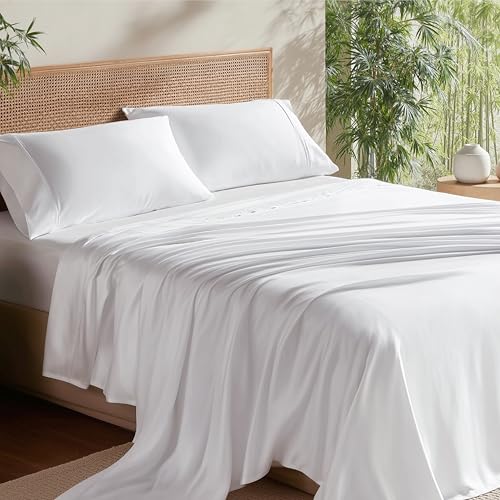
Disclosure: As an Amazon Associate, airfryerkitchensupply.com earns from qualifying purchases. Links to Amazon on this page are affiliate links; they cost you nothing extra. Listing details such as price and availability change often, so check the current Amazon listing before you buy.
If you are the person who kicks the blanket off at midnight and flips the pillow over to find a cooler side, the sheets on your bed matter more than you might expect. This guide looks at the best sheet sets for hot sleepers, meaning sets whose makers describe the fabric as breathable, light or built for warm rooms. Some of them keep the comparison simple with cotton percale, while others rely on bamboo viscose, eucalyptus lyocell or a performance knit.
It is written for couples who disagree about the thermostat, for people in upstairs bedrooms, and for anyone shopping for the best sheet sets for summer who wants more than a thread count number. You will find a side-by-side table, five full write-ups, a few short use-case picks, and a plain-language section on weave, fibre and fit. Nothing here promises a particular sleep result. We simply report what each maker lists and where each set has limits.

Quick Comparison
| Product | Best for | Main point | Link |
|---|---|---|---|
| SHEEX Original Performance Sheet Set | Active, warm sleepers | Performance knit fabric, stretchy feel | Check on Amazon |
| Buffy Breeze Sheet Set | Smooth, lightweight feel | Eucalyptus lyocell fabric | Check on Amazon |
| Cariloha Resort Bamboo Sheet Set | Silky drape | Viscose from bamboo | Check on Amazon |
| Cozy Earth Bamboo Sheet Set | Couples sharing a bed | Bamboo viscose, deep fit | Check on Amazon |
| Brooklinen Classic Percale Core Sheet Set | Crisp, airy cotton fans | Long-staple cotton percale | Check on Amazon |
In this guide
How These Options Were Chosen
We built this list from manufacturer listings, published specifications and the way each fabric is normally described by its maker. We have not used these products ourselves, so you will not find claims about how they feel after a hundred washes or how many degrees cooler they run.
The selection leans on variety. Hot sleepers disagree about what feels cool, so we included a crisp cotton weave, two bamboo-based fabrics, a lyocell option and one performance knit. Each set is a real, currently listed product from a recognised bedding brand. Check the live listing for sizes, colours and what is included in the box.
The Best Sheet Sets for Hot Sleepers
SHEEX Original Performance Sheet Set
SHEEX started out by building sheets from the same kind of performance fabric used in athletic clothing, and that origin shows. The Original Performance set uses a stretchy knit instead of a woven cotton, so it feels closer to a soft sports shirt than a hotel sheet. The maker positions it for people who tend to run warm, and it is one of the few mainstream sets built around that exact idea.
The stretch also helps the fitted sheet stay on a thick mattress, which is useful if you move around a lot. Because the material is knitted, it has a slightly clingy surface that some people love and others find unusual on first touch.
The trade-off is character. If you want the crisp snap of cotton percale, this is not that. Knit fabrics can also be more sensitive to high dryer heat, so follow the care label closely. Skip it if you prefer a traditional woven feel.
Buffy Breeze Sheet Set
Buffy is known for its comforters, and the Breeze set carries the same soft, plant-fibre approach into sheets. The maker lists the fabric as eucalyptus lyocell, a cellulose fibre produced from wood pulp in a closed-loop process. It has a smooth, slightly cool-looking surface and a flowing drape that settles over the mattress rather than standing stiff.
This is a sensible pick for someone who finds cotton too crisp but does not want the shimmer of sateen. It generally suits people who like a fabric that feels soft right out of the package.
Lyocell tends to wrinkle less than linen, though it will not stay perfectly flat if you leave it in the dryer. Check the listing for the exact weave, pocket depth and what the set includes in your size. If you want a traditional cotton heritage or the lowest possible running cost, look at the percale option below instead.
Cariloha Resort Bamboo Sheet Set
Cariloha built its business around bamboo products, and the Resort set is its best-known bed linen. The maker describes the fabric as viscose made from bamboo, with a smooth, silky hand and a soft drape that people often compare with sateen. If your idea of a pleasant summer bed is a sheet that slides rather than grips, this is the type of fabric to try.
It pairs well with a lightweight blanket in warm months, and the set is often chosen by shoppers who want a polished guest-room look without ironing. Pillowcases are included, and the fitted sheet is listed for deeper mattresses.
The honest limits are about handling. Bamboo viscose can feel more delicate than cotton, and the care label usually asks for gentler washing than a basic cotton set. The smooth surface also means pillows and light blankets can slip. If you want a firm, textured fabric, skip this one.

Cozy Earth Bamboo Sheet Set
Cozy Earth is a premium bedding and loungewear brand, and its bamboo sheets are one of its signature products. The listing describes viscose made from bamboo, finished to feel soft and light. We would point this one toward couples, because the maker pitches it as a comfortable all-season sheet for shared beds, and the generous fit suits a mattress with a topper.
It is easy to imagine this set in a warm bedroom with a ceiling fan overhead. The fabric drapes rather than clings, so it does not trap the body in the way a heavier woven sheet might feel to some sleepers.
Consider the downsides. It sits in the upper tier of bedding spending, and the fabric asks for careful laundering. If you share a bed with someone who prefers cotton, you may end up debating the slippery feel. Compare it with the Cariloha set above before choosing between two similar bamboo fabrics.
Brooklinen Classic Percale Core Sheet Set
Not every hot sleeper wants a silky fabric. Many prefer the dry, airy hand of cotton percale, a plain one-over-one weave that feels crisp and light, much like a freshly pressed shirt. The Brooklinen Classic Percale Core set uses long-staple cotton in that weave, and it is one of the better-known percale sets sold online.
Percale has a reputation among hotel guests for feeling light on the skin, and the maker lists it as a breathable choice for warm sleepers. The matte finish also looks tidy on a made bed.
The flip side is that percale does not offer the buttery softness of sateen, and it creases easily if you do not smooth it after drying. It can also feel stiff on the first few washes. If you want a drapey, glossy surface, choose one of the bamboo or lyocell sets. Otherwise this is a dependable cotton starting point.
Best for Summer Weeks
For a bedroom that stays warm from June to September, the Brooklinen Classic Percale Core Sheet Set is the simplest recommendation. Plain-weave cotton is the traditional answer to summer bedding, and it works well under a single fan without needing special care instructions.
Best for Couples Who Run Warm
When two people share one bed, a roomy fit and a forgiving fabric make life easier. The Cozy Earth Bamboo Sheet Set suits this situation, since its deep fit handles a topper and its drape does not bunch when two people shift through the night.
Best for Active Sleepers
If you roll, twist and kick, a stretchy knit like the SHEEX Original Performance Sheet Set keeps the corners anchored more readily than a rigid woven sheet. That makes it the one to consider if your fitted sheet usually pops off by morning.
Best for a Soft First Touch
Shoppers who want a gentle feel straight from the package could start with the Buffy Breeze Sheet Set. Lyocell fabrics usually feel smooth immediately, whereas percale often needs a few washes before it relaxes.
How to Choose Sheets When You Sleep Warm
Begin with the weave, because it shapes how a sheet feels more than any printed number. Percale is a plain weave with a crisp, matte finish. Sateen uses a different pattern that floats more thread on the surface, giving a glossy, heavier feel. Knits stretch and cling slightly. For a warm room, many shoppers lean toward percale or a lightweight lyocell or bamboo viscose, but your own taste decides what actually feels pleasant.
Next, think about fibre. Cotton is the most familiar and easy to wash. Viscose from bamboo and lyocell are produced from plant cellulose and are known for a smooth drape. Polyester blends can feel warmer to some people, so read the content label rather than assuming a sheet is natural because of its name.
Thread count is easy to misread. Very high numbers on a package can come from thick, plied yarns and do not automatically mean a lighter sheet. For warm sleepers, a moderate count in a good weave is usually more comfortable than a very dense one. If a listing does not give a count, that is not a red flag, because lyocell and knit sets are often sold without one.
Check the fit before you buy. Measure your mattress depth including any topper, then compare it with the pocket depth in the listing. A fitted sheet that is too shallow will creep up at the corners and leave you with a bare mattress edge by morning.
Finally, look at laundry rules. Percale and many cotton sets tolerate regular home washing. Bamboo viscose and lyocell often ask for cooler water and lower dryer heat. A sheet you do not wash properly will not keep the feel that made you buy it.
- Match weave to your taste: crisp, silky or stretchy.
- Read the fibre label, not only the product name.
- Measure mattress depth with any topper.
- Pair the sheets with a light blanket and a fan, not extra layers.
Fit, Fabric Labels and Care Notes
Follow each maker’s care instructions exactly, since laundering rules differ between cotton, viscose and knit fabrics. If you want a specific certification such as an Oeko-Tex label, confirm it on the live listing, because certifications can differ by product line. The same advice applies if you have sensitive skin or a mattress with a special surface treatment: read the label, and ask the seller if the listing is vague. Sheets sold for hot sleepers describe fabric behaviour, not medical results, so treat the wording as a description of material and not a promise.
Care and Troubleshooting
| Problem | Likely cause | What to try |
|---|---|---|
| Fitted sheet slips off | Mattress deeper than pocket | Measure with topper, use sheet straps |
| Fabric pills | Friction or hot dryer | Wash inside out, lower heat |
| Percale feels stiff | New fibres not yet relaxed | Wash a few times before judging |
| Bamboo looks creased | Left in a warm dryer | Remove promptly, smooth by hand |
Wash new sheets before the first night, separate them from towels, and avoid heavy fabric softener, which can coat fibres and dull the feel the maker intended.
A Checklist for Buying Sheets When You Run Warm
Sheet fabrics feel different in warm rooms, and the label can say a lot. Before choosing from the guide, work through this list. This is shopping advice about fabric and construction, not health advice.
- Check the fiber content on the listing. Cotton, bamboo-derived viscose, linen, microfiber and blends all feel different against the skin.
- Look at the weave. Percale has a crisp, matte feel, while sateen is smoother and tends to drape closer to the body.
- Check the bed size and the mattress depth, and compare them with the pocket depth of the fitted sheet.
- Read about the finish, such as brushed, which feels softer, or unbrushed, which feels lighter.
- Look at the number of pieces in the set and what is included, such as pillowcases.
- Check the care instructions for washing temperature and drying.
- Look at any certifications the maker lists for fabric or dyes, and read what they cover.
- Read the return policy in case the fabric is not to your taste.
Weaves and Fibers Compared
The table below summarizes how common sheet types usually feel. Individual products vary, so use it as a rough guide.
| Type | Typical feel | Drape | Care note |
|---|---|---|---|
| Cotton percale | Crisp, light, airy | Looser | Softens with washing |
| Cotton sateen | Smooth, silky | Closer to the body | May need gentler washing |
| Bamboo-derived viscose | Soft, smooth | Fluid | Follow the cold or gentle cycle on the label |
| Performance or technical blends | Slick, stretchy, light | Stretchy | Check detergent and heat limits |
| Linen | Textured, breathable | Relaxed | Softens, wrinkles easily |
Some people like the crispness of percale, while others prefer the silkier feel of sateen or bamboo-derived fabrics. Your own preference matters more than any chart.
Bedding Words Explained
- Thread count: the number of threads per square inch, which is not the only sign of quality.
- Percale: a plain one-over-one-under weave.
- Sateen: a weave with more threads on the surface, making a smooth face.
- Long-staple cotton: cotton with longer fibers, often used for smoother yarn.
- Pocket depth: how deep a mattress the fitted sheet can fit.
- Pilling: small balls of fiber that can form on the surface.
- Brushed finish: a treatment that raises the surface for softness.
- Pre-washed: fabric washed at the factory to reduce shrinkage.
Mistakes When Shopping for Sheets
- Choosing by thread count alone.
- Forgetting to measure the mattress depth, especially with a topper.
- Ignoring the care label and washing at too high a temperature.
- Overloading the washing machine, which can leave detergent in the fabric.
- Using fabric softener that the maker advises against.
- Buying a single set with no spare for laundry days.
Choosing by Situation
Summer weeks
A lighter, more open weave such as percale or linen feels airy in warm rooms for many people.
Couples who run warm
Look for a set that comes in your size with a deep pocket, and consider separate sheets for each side if your preferences differ.
Active sleepers
A fabric with a little stretch and a secure fit can stay in place better.
A soft first touch
Sateen, brushed cotton and bamboo-derived fabrics have a softer first feel, though you should check the care label.
Always wash new sheets before first use and follow the maker’s instructions. If you have skin sensitivities, check the fabric labels and ask a professional for advice.
Mattress Depth and Reading the Label
A good sheet fits the bed as well as it feels. Measure the mattress from top to bottom, including any topper, and compare with the pocket depth the maker lists. A sheet that is too shallow will pop off the corners, while one that is too deep can bunch up. Read the fabric label for the fiber content and the weave, since terms like cooling and breathable are marketing descriptions and not measurements. Look for care instructions covering water temperature, detergent, drying heat and ironing.
- Wash new sheets before first use, following the label.
- Avoid overloading the machine so the fabric can move freely.
- Use the dryer setting that the maker recommends, and remove sheets promptly to limit wrinkling.
- Rotate between two sets to extend the life of each.
Troubleshooting Pilling, Shrinkage and Stains
Small balls of fiber, called pilling, usually come from friction in the wash and in use. Washing sheets separately from rough items like towels and zippers can help. Shrinkage varies by fiber, so follow the label and avoid hot water if it advises against it. For stains, treat them early with a gentle, fabric-safe product and test on a hidden area first. If a set arrives with defects, such as uneven seams or the wrong size, contact the seller and read the return terms before you wash it.
Choosing Sheet sets for hot sleepers: A Deeper Look at What Actually Matters
For hot sleepers, a sheet is one part of a whole sleep-temperature system, and honesty about that produces better purchases than any single fabric promise. What a sheet can genuinely offer is a surface that feels cool or neutral at first touch, a weave that does not trap a layer of still air against the skin, and a weight that does not add insulation. Judge the picks here on those terms, and then tune the rest of the system — covers, room, nightwear — around the set you choose.
Weave matters because it changes both the surface and the laundry routine. A smoother weave tends to show a gentle sheen and slide more easily against a duvet cover, while a plainer, matte weave usually feels crisper and more straightforward. Neither is a quality mark on its own. What counts is whether the weave suits the way you sleep and wash: a finish you love but dread ironing, folding or drying will slowly push a set to the back of the cupboard, while an easy-care weave you like slightly less on day one often becomes the set you reach for every week.
Colour deserves a practical minute, not just a taste-based one. Pale shades show the room as calm and make it easy to spot a mark that needs attention before washing, while deeper shades are more forgiving between washes but can show lint, dust and pet hair more readily. Patterns can hide everyday creasing and minor marks, which is useful on a bed that gets made in a hurry. Whatever you choose, hold it mentally against the blankets, throws and curtains already in the room, because the sheet is the largest single block of colour on the bed.
Think in seasons rather than searching for one perfect set for the whole year. Many households end up happiest with a small rotation: a lighter-feeling set for warm months, something with more substance for cold nights, and the set from this guide chosen for the season when the bed gets the most use. Layering does the rest of the work. A flat sheet under a blanket, or a throw folded at the foot of the bed, lets you adjust night by night without changing the whole bed, which is far easier than expecting one fabric to solve every temperature the year delivers.
Start with the bed itself, not with the marketing words at the top of a listing. Before you compare any sheet sets for hot sleepers, measure the mattress the way it is actually slept on: length, width and, most importantly, total depth once any topper, protector or pad you use every night is in place. A fitted sheet has to clear that full stack and still tuck underneath, so a set that looks generous on paper can feel tight in practice if the corners are shallow or the elastic only runs part of the way around. Write the measurements down and keep them beside you while you shop; guessing from the size name alone is how most disappointing purchases happen.
Sheet sets for hot sleepers in Real Homes: Matching the Pick to the Situation
Second homes, cabins and spare rooms in family houses share one trait: the bedding sits unused for long stretches and then has to perform immediately. For those beds, choose sets that store well, wash easily after storage, and do not demand special handling from whoever opens the house up. A simple routine helps: strip and wash everything at the end of a stay rather than the start of the next one, store sets in a breathable bag with the pillowcases tucked inside the folded fitted sheet, and keep one complete spare set on site for surprises.
A guest bed asks for something slightly different. It is used in bursts, often by people whose preferences you do not know, so a broadly comfortable fabric, a colour that looks fresh after storage, and a fit that tolerates a topper added for visitors all matter more than a distinctive texture. Wash and air guest sheets before visitors arrive even if they were clean when stored, because fabric that has sat folded for months picks up a cupboard smell. A spare set kept with the guest towels turns a last-minute visit from a scramble into a routine.
For a teenager’s room or a first rented room, the priorities shift again: the bed is also a sofa, a desk and a place to sit with friends, so the sheet set is on show and in use all day. A colour that works with posters, cushions and a thrown-over blanket matters, and so does a fabric that tolerates being sat on in outdoor clothes and washed often. This is also where a second set quietly pays off, because laundry in shared houses rarely happens on the schedule the bed needs.
For the main bedroom, where the same bed is used every single night, consistency beats novelty. This is the bed where a sheet set earns its keep: it has to feel right on tired evenings and ordinary mornings alike, survive frequent washing, and be easy to change when you are short of time. If you are choosing sheet sets for hot sleepers for your own bed, weight your decision towards the fabric and fit you are most confident about, and treat interesting colours or finishes as a bonus. The set you remake the bed with at midnight without thinking is the set that was chosen well.
Getting the Most From Your Purchase: Set-Up, Care and Storage
For routine washing, sheets do best with room to move. A machine packed tight with towels and heavy items twists fitted sheets into ropes, traps pillowcases inside the corners, and leaves detergent unevenly rinsed. Wash bedding as its own load where you can, use a moderate amount of detergent rather than a heavy pour, and untangle everything before drying. Buttons, zips and hooks from other laundry are small vandals in a shared load, so keep duvet covers fastened and wash delicate-feeling sets away from anything with hardware.
Drying is where many good sets are quietly damaged. Excessive heat and over-drying leave fabric feeling harsher than it needs to, while taking sheets out slightly cool and smoothing them by hand as you fold keeps the surface pleasant and reduces creasing. If you line-dry, a breezy spot out of harsh midday sun preserves colour better; if you tumble-dry, a clean lint filter is not housekeeping pedantry, it is what lets bulky bedding dry evenly instead of stewing. However you dry, do not leave finished sheets sitting in a warm machine, where creases set and a stale smell develops.
Store bedding somewhere dry, dark and unremarkable. Airtight plastic in a warm space can trap residual moisture and leave a set smelling stale, while a breathable cotton bag or an open shelf in a linen cupboard keeps fabric fresh. Rotate which set goes back on the bed rather than always using the one on top of the pile; even wear is what makes a whole rotation last. If you store seasonal sets away for months, wash them first, dry them completely, and add nothing scented directly against the fabric.
Wrinkles are mostly a timing problem. Sheets removed promptly, shaken out and either folded or put straight back on the bed stay presentable with almost no effort, while sheets left in a heap crease deeply enough to need real work. If a smooth bed matters to you, make the bed while the set is still very slightly cool from drying and run your hands flat over the surface as you tuck; gravity and tension do most of the smoothing. Save perfection for the guest room, and let the everyday bed be neat rather than showroom flat.
How the Picks in This Guide Compare With Each Other
Readers often ask why these particular sheet sets for hot sleepers made the guide when the category is so crowded, and the honest answer is that they were chosen to be different from one another, not to be five versions of the same thing. The comparison below restates what each pick is for, drawing only on how it is presented in its own section above, so you can shortlist by the job you need done rather than by the order the products happen to appear in. Start with the two picks closest to your situation, read their full sections again, and let the deciding factor be the detail that affects your daily routine most.
The SHEEX Original Performance Sheet Set is presented in this guide as the pick for active, warm sleepers, with performance knit fabric, stretchy feel as its defining point. That positioning tells you how to test it against the others: if that use case is yours, this is the set whose full section deserves your closest reading, and the questions to carry into the listing are the practical ones from this guide — fit, contents, care and the details the maker states. If the use case is not yours, its strengths are largely irrelevant, however good it is at its own job.
The Buffy Breeze Sheet Set is presented in this guide as the pick for smooth, lightweight feel, with eucalyptus lyocell fabric as its defining point. That positioning tells you how to test it against the others: if that use case is yours, this is the set whose full section deserves your closest reading, and the questions to carry into the listing are the practical ones from this guide — fit, contents, care and the details the maker states. If the use case is not yours, its strengths are largely irrelevant, however good it is at its own job.
The Cariloha Resort Bamboo Sheet Set is presented in this guide as the pick for silky drape, with viscose from bamboo as its defining point. That positioning tells you how to test it against the others: if that use case is yours, this is the set whose full section deserves your closest reading, and the questions to carry into the listing are the practical ones from this guide — fit, contents, care and the details the maker states. If the use case is not yours, its strengths are largely irrelevant, however good it is at its own job.
The Cozy Earth Bamboo Sheet Set is presented in this guide as the pick for couples sharing a bed, with bamboo viscose, deep fit as its defining point. That positioning tells you how to test it against the others: if that use case is yours, this is the set whose full section deserves your closest reading, and the questions to carry into the listing are the practical ones from this guide — fit, contents, care and the details the maker states. If the use case is not yours, its strengths are largely irrelevant, however good it is at its own job.
The Brooklinen Classic Percale Core Sheet Set is presented in this guide as the pick for crisp, airy cotton fans, with long-staple cotton percale as its defining point. That positioning tells you how to test it against the others: if that use case is yours, this is the set whose full section deserves your closest reading, and the questions to carry into the listing are the practical ones from this guide — fit, contents, care and the details the maker states. If the use case is not yours, its strengths are largely irrelevant, however good it is at its own job.
Two patterns are worth noticing across the whole line-up. First, no pick wins on every criterion, and the guide has not pretended otherwise: each set trades something — a quality, a convenience or a style — for what it does best. Second, the differences that matter most in a year of ownership are rarely the headline ones. They are the fit on your specific bed or in your specific room, the wash or wipe routine on an ordinary week, and whether the set suits the people who use it most. Rank the picks by those measures and the right choice usually becomes obvious.
Common Mistakes to Avoid With Sheet sets for hot sleepers
Another quiet mistake is mixing care needs in one purchase. A household sheet drawer works best when everything in it can go through roughly the same wash routine; one diva set that needs special handling will either be washed wrong or not washed at all. Before buying, read the care label summary in the listing and picture it inside your actual week. If the honest answer is that the set would wait three weeks for a special wash day, choose a different pick from the guide and enjoy it weekly instead.
The most common mistake is buying by a single headline number or word and ignoring everything else on the listing. A big number cannot tell you how a set fits your mattress, how it feels after ten washes, or whether the pillowcases suit your pillows. The buyers who end up happiest treat the headline as an invitation to read further: fibre content, dimensions, pocket depth, set contents and care instructions, in that order. If a listing is vague about the basics, that vagueness is itself information about how much thought went into the product.
Owning exactly one set is a mistake that only reveals itself at the worst moment: a spill at midnight, a guest arriving early, a washing machine breaking down. A single set also wears faster, because it never rests between uses and is often put back on the bed before it is fully dry. Two sets is the practical minimum for a bed in daily use, and three makes laundry leisurely rather than urgent. When you choose from this guide, consider choosing the set you can imagine buying twice.
A Longer View: Building a Bedding Routine Around Your Set
Building a small bedding wardrobe, rather than chasing a single perfect set, changes how the whole bedroom feels. Two or three sets in related colours let you vary the bed’s look with the seasons and the laundry cycle, and they mean the bed never has to be dressed in whatever happened to be clean. Start with the set from this guide that best fits your everyday preferences, then add contrast later: a lighter colour for summer brightness, a deeper one for winter evenings. Related rather than matching shades keep the room coherent even when pillowcases and flat sheets occasionally cross between sets.
It is worth deciding in advance what would make you exchange a set. A fit problem that shows on the first night, a colour that clashes badly with the room, or a surface feel that is simply not to your taste are all easier to act on within a returns window than after months of use. Keep the packaging until the set has been washed once and slept on, note how it behaved, and be honest about the result. A guide can narrow the field to sensible candidates, but your own bed, machine and preferences cast the deciding vote.
There is also a quiet sustainability argument for choosing carefully and caring properly. A set that fits, suits your routine and is washed sensibly stays in service for years, while a poor match is discarded quickly whatever its label claims. Washing full loads, drying without excessive heat and repairing a small seam early all extend useful life. None of this requires perfection; it simply means treating the purchase as a household staple rather than a disposable. The most responsible set in this guide is the one you will still be using, happily, long after the novelty has worn off.
Finally, give a new set a fair trial before judging it. Many fabrics change noticeably over the first few washes, settling into the feel they will keep, and a bed made with a new combination of layers takes a few nights to evaluate honestly. Sleep on it for a week, wash it once more, and then decide. If it still is not right, that is useful information about your preferences — note what exactly missed, whether fit, feel, warmth or care, and use it to read the next listing better. Every household eventually lands on its own house standard; these notes are how you find yours.
Pillowcases wear out faster than sheets, because they take concentrated friction, skin oils and the most frequent washing. Planning for that fact keeps a set looking whole: buy spare cases while the colour is current, rotate two pairs per pillow if you wash weekly, and launder cases inside out to protect the surface that shows. When a case finally thins or tears, retire it to cleaning duty rather than letting a shabby case make a still-good sheet set feel finished. Judged this way, a set’s life is measured in stages, not in a single date.
Guests notice bedding basics more than bedding luxury. A bed that is clean, fully made with a sheet that fits, and layered so a visitor can add or remove warmth without instructions will always impress more than an elaborate set used carelessly. If you host often, keep the guest rotation simple and consistent, wash everything after each stay, and check the fitted sheet corners for the slow elastic failure that only shows when a bed is remade in a hurry. The picks in this guide that suit guest use are the ones that forgive exactly this kind of cheerful, irregular workload.
Frequently Asked Questions
What are the best sheet sets for hot sleepers?
There is no single winner. Cotton percale, bamboo viscose, lyocell and performance knit are all marketed to people who run warm. Pick the one whose feel you like and whose care routine you will follow.
Are bamboo sheets cooler than cotton?
Makers describe bamboo viscose as smooth and breathable, but how it feels to you is personal. Percale cotton is just as popular among warm sleepers, so try to judge by weave and your own preference.
Which sheet sets are best for summer?
Lightweight fabrics such as percale, lyocell or bamboo viscose are common summer picks. Pair them with a thin cover, because heavy bedding can undo the benefit of the sheets.
Which sheet sets keep you cool, and which bed sheet sets are good for staying cool?
No sheet can change the temperature of your room. What the listings describe are fabrics that feel light and breathable, which is why percale, lyocell and bamboo viscose appear on most shortlists for staying cool.
Does a higher thread count feel cooler?
Not necessarily. A very dense weave can feel heavier. A moderate count in an airy weave is often more comfortable in warm weather.
Can I wash these sets together with towels?
It is better not to. Towel lint and rough fibres can snag delicate fabrics like bamboo viscose and lyocell, so wash sheets with similar items.
How many sets should I own?
Two is a practical number. One stays on the bed while the other is in the laundry, and rotating them spreads out the wear.
How can I tell which way round a large fitted sheet goes?
Check for a care or size label, which many makers place at the centre of one short end, and use it as your marker for the head or foot of the bed. If there is no label, hold the sheet up by two corners: the longer drop belongs on the longer side of the mattress. Some sets include small side tags for exactly this purpose. Once you find the orientation that works, a tiny laundry-safe mark inside one corner seam — or simply always folding the sheet the same way — makes every future bed change faster.
Should I wash a new sheet set before sleeping on it?
Yes, as a rule. A first wash following the maker’s label removes manufacturing finishes and loose surface fibres, softens the fabric towards its true feel, and reveals any fit or quality problem while returning the set is still simple. Use a moderate amount of detergent, wash the set on its own or with similar bedding, and dry it the way you intend to dry it every time. Then make the full bed and check the corners under tension. That single cycle tells you more about the set than any amount of handling it in the packaging.
Can I mix pieces from different sheet sets?
You can, and many households do it happily, especially with a flat sheet used as a light cover in warm weather or a spare fitted sheet standing in during laundry day. The practical checks are size and depth: the fitted sheet must match the mattress properly, whatever set it came from. Colours rarely need to match exactly; related tones look deliberate, particularly when the visible top layer ties them together. Keep one fully matched set aside if a perfectly dressed bed matters for guests, and let everyday mixing save wear on your favourites.
How many pillowcases does a household actually need?
At least one per pillow in use, plus one spare per pillow for laundry day, is the baseline that keeps bed-making calm. Households that change cases mid-week for skin or allergy routines, or that host guests often, benefit from more. Remember that cases wear faster than sheets, so spares bought with the set, while the colour is current, save a later mismatch. If a set in this guide includes extra cases, count that as a genuine practical advantage rather than a marketing extra, particularly for beds dressed with several pillows.
What should I check first if a sheet set feels different after washing?
Check the routine before the fabric. Over-dosed detergent leaves residue that dulls softness, a very full machine rinses poorly, and high drying heat roughens surfaces over time. Compare how the set feels after a simpler wash: bedding-only load, moderate detergent, thorough rinse, gentler drying. Also check whether it was washed with lint-shedding items like towels, which can coat smoother fabrics. If the feel recovers, the set was fine and the routine needed adjusting. If it does not, note when the change began and contact the maker with that history.
Bottom Line
Choose crisp cotton if you want the traditional summer feel, choose bamboo viscose or lyocell if you like a smooth drape, and choose the SHEEX knit if you want stretch and a secure fit. Whatever you pick, check the mattress depth, read the care label and keep expectations realistic. A good sheet set is a comfortable layer, and the rest depends on your room, your blanket and your own habits.