Disclosure: airfryerkitchensupply.com is reader-supported. When you buy through links on our site, we may earn an affiliate commission at no extra cost to you.
Where to buy
Every welder in this guide is sold through Amazon, where you can check the current price on Amazon and confirm the exact variant before ordering — several of these machines are sold in multiple amperage and kit configurations under one model family, and the listing is the specification of record. Pay particular attention to what the kit includes: some picks bundle rods, gloves, and accessory sets, while others are the machine alone, and that difference is real money in a first purchase.
- YESWELDER 205Amp Stick Welder — Check on Amazon
- ARCCAPTAIN Stick Welder 200A — Check on Amazon
- TOOLIOM 135A Mini Stick Welder — Check on Amazon
- HONE Stick Welder 140Amp — Check on Amazon
- HGNVGZ 250A Stick Welder Mini ARC — Check on Amazon
- FEIFANKE 250A Stick Welder — Check on Amazon
The best 115 volt stick welder is the simplest serious welding machine money can buy: a power source, a stinger, a ground clamp, and a box of rods, running on the ordinary household circuit — 115 volt being the conventional label for the same supply sold as 110V or 120V. Stick (shielded metal arc) welding remains the repair process of record for a reason no newer technology has repealed: it welds thick steel, dirty steel, rusty steel, and outdoor steel in the wind, with no gas bottle to empty and no wire drive to jam. Fences, gates, trailers, farm implements, structural brackets, and every cracked thing made of steel on a property are its natural prey, and the modern inverter versions in this guide do that work from a machine that hangs on one hand.
The inverter revolution is the story of this class. A generation ago a stick welder was a transformer the size of a suitcase and the weight of a man; the IGBT inverter machines below deliver their amperage from packages of a few pounds, with electronic manners their ancestors lacked — hot start that strikes the arc eagerly, arc force that digs the puddle through imperfect technique, and anti-stick protection that releases a frozen rod instead of cooking it. Those three features, named in listing after listing in this guide, are not marketing garnish: they are precisely the assists that make stick welding learnable by a beginner and forgiving for a rusty veteran.
An honesty note on amperage claims, because this tier needs one. Several picks headline 200 or 250 amps while running on 110V — and a household circuit cannot deliver the input power those outputs would require at full song. Treat headline amperage on a 110V stick welder as the machine’s ceiling across its voltage range, and its practical household envelope as the 90-140 amp territory where 3/32-inch and 1/8-inch rods — the sizes home and farm work actually uses — run beautifully. Every review below reads its machine that way: judged on the work it verifiably does on the circuit you verifiably have.
In this guide
Quick Picks
YESWELDER 205Amp Stick Welder — Best Overall. The most complete household stick package in the guide: dual-voltage IGBT power, a large LED display, and the full hot start / arc force assist suite. The machine to buy when one stick welder must cover a property for years. Check on Amazon.
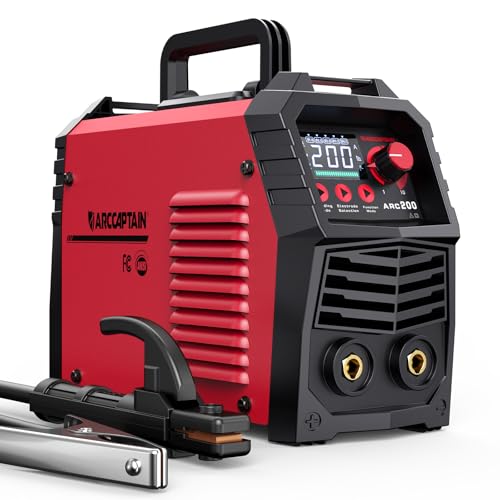
ARCCAPTAIN Stick Welder 200A — Best with Lift TIG. Stick plus lift TIG in one dual-voltage inverter, with synergic control and the complete assist trio — hot start, arc force, anti-stick. The versatility pick for owners whose work spans repair and precision. Check on Amazon.
TOOLIOM 135A Mini Stick Welder — Best Portable for Beginners. A 4.4-pound, 135-amp mini that still finds room for lift TIG and ships with gloves and rods. The portability champion of the guide, and the friendliest first stick welder here for small work. Check on Amazon.
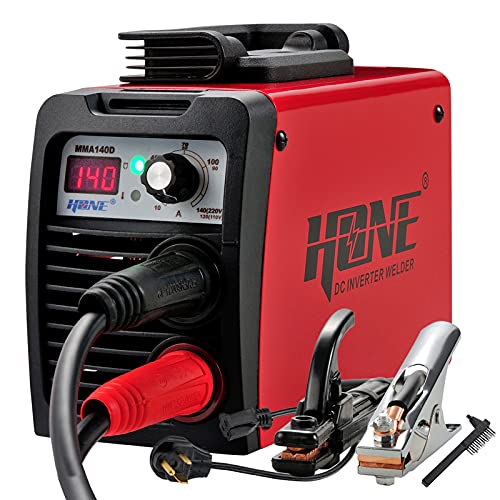
HONE Stick Welder 140Amp — Best Display Value. The listing says ‘actual 140Amp’ — a refreshingly honest headline in this tier — with dual voltage, an LCD display, the full assist suite, and a stated rod range of 1/16 to 1/8 inch. The straight-talking value pick. Check on Amazon.
HGNVGZ 250A Stick Welder Mini ARC — Best Beginner Kit. A 3.5-pound mini sold as a complete beginner system: machine, 10 rods, and a full kit, positioned by its own maker for home DIY, garage and fence repair. The one-box start — bought for the kit, not the headline. Check on Amazon.
FEIFANKE 250A Stick Welder — Best Budget Kit. The budget door into stick welding: a mini IGBT machine with the assist suite, a stated 1/16 to 1/8-inch rod range, and 20 rods in the box — the most practice material included with any pick here. Check on Amazon.
How These Picks Were Chosen
Each welder was verified against the Amazon Creators API on this site’s own installation: brand and model were searched, the returned listing title was matched to the exact machine described, and only then was the ASIN recorded and linked. That discipline matters in a tier where the same seller page may host several amperage variants and kit levels; the reviews describe the variant whose title was verified, and kit contents are claimed only where the listing states them. Features named in spec boxes — hot start, arc force, anti-stick, lift TIG capability, dual voltage — come from the verified titles.
Selection weighted what predicts satisfaction in household stick welding: arc-starting and arc-holding behavior as described by the control features fitted, rod-size coverage for the standard home rod box (1/16-inch through 1/8-inch, per the listings), dual-voltage headroom for users who may add a 220V circuit, genuine portability for property-scale work, and kit completeness for first-time buyers. The set spans the class from a 135-amp mini to the dual-voltage 200-amp-class machines, because the right stick welder is a match between a property’s work list and a machine’s honest envelope — not a contest for the largest number on the box.
The 6 Best 115 Volt Stick Welders

YESWELDER 205Amp Stick Welder — Best Overall
The YESWELDER 205Amp takes Best Overall by assembling the class’s whole argument in one machine. Dual 110V/220V voltage means it runs today on the garage outlet and steps up the day a 220V circuit arrives; the IGBT inverter platform keeps it portable at property scale; the large LED display makes amperage a settable, repeatable number instead of a dial guess; and hot start with arc force covers the two moments stick welding frustrates people — striking, and keeping the arc alive at imperfect angles. For a property owner whose list spans gates, implements, brackets, and the occasional structural repair, this is the complete answer.
Strengths
- Dual voltage removes the household ceiling when a 220V circuit becomes available
- Large LED display gives precise, repeatable amperage settings
- Hot start and arc force assists fitted as standard
Trade-offs
- On 110V alone, physics caps usable output well below the 205 headline — plan rods accordingly
- Larger capability than genuinely light users need
- Stick only — no wire process for sheet-metal fabrication
| Specification | Detail |
|---|---|
| Output class | 205 amp (per listing) |
| Voltage | 110V/220V dual voltage |
| Display | Large LED display |
| Assists | Hot start, arc force |
Read the dual-voltage design as this machine’s thesis. Stick welding’s household ceiling is not the machine’s fault — it is the circuit’s arithmetic — and YESWELDER’s answer is to sell you the machine once and let the building catch up. On 110V it is a full member of this guide’s class, running the standard home rod sizes with inverter manners. On 220V it becomes the welder for the heavier end of farm and fabrication work without a second purchase. Owners planning a shop circuit, or who already have a dryer or range receptacle in the right place, should weight that heavily; it is the same growth argument this program’s MIG guide makes for its dual-voltage pick, executed here at stick-welder scale.
The display deserves its sentence too. Stick technique is a conversation between amperage, rod, and material, and beginners learn it faster when the first variable is a number they can write down, repeat, and adjust deliberately — ‘the gate hinge liked 105 on a 1/8-inch 6011’ is knowledge; ‘about a third of the dial’ is folklore. Combined with the assist suite, the YESWELDER is the easiest machine here to grow on, and the hardest to outgrow. That is what Best Overall means in a class of honest tools.
Best for: property owners who want the most complete household stick machine with growth headroom / Not suited for: users who will never leave 110V and want the smallest possible package
Check on Amazon — check the current price on Amazon and confirm the exact variant before ordering.
ARCCAPTAIN Stick Welder 200A — Best with Lift TIG
The ARCCAPTAIN’s proposition is range. As a stick machine it carries the full modern assist suite — hot start, arc force, and anti-stick, all named in its listing — behind a large LED display with synergic control to suggest settings. As a lift TIG machine it adds the precision process for steel and stainless: exhaust work, thin fabrication, furniture, and any joint too visible or too thin for a stick rod’s manners. Dual voltage completes the picture. For the owner whose work genuinely spans the fence line and the fabrication bench, one machine covering both is a rational consolidation.
Strengths
- ARC plus lift TIG covers repair and precision steel in one purchase
- Complete assist suite: hot start, arc force, anti-stick
- Synergic control shortens setup for both processes
Trade-offs
- Lift TIG needs its own torch, gas and consumables — a second budget line, not a free feature
- DC TIG physics: no aluminum TIG
- Dual-process machines reward owners who actually use both processes
| Specification | Detail |
|---|---|
| Output class | 200 amp (per listing) |
| Processes | ARC / Lift TIG |
| Voltage | 110V/220V |
| Assists | Hot start, arc force, anti-stick |
| Control | Synergic control, large LED display |
The honest framing of lift TIG applies here as in the MIG guide: it is an apprenticeship and a capability, not a dedicated TIG station. Lift start is a legitimate, widely used arc-initiation method; what you forgo versus a full TIG machine is high-frequency start convenience, pedal-based amperage control, and AC output for aluminum. What you gain is puddle control and precision on steel at a fraction of a dedicated machine’s commitment — enough to discover whether TIG belongs in your life, and to do real work while discovering it. Buyers certain about TIG should buy a TIG machine; buyers curious about it should buy this ARCCAPTAIN and a torch kit.
As a pure stick welder it concedes nothing to the guide’s leader: the assist suite is complete, the display is large, the dual-voltage growth path is present, and ARCCAPTAIN’s synergic suggestions give beginners a sane starting amperage per rod. The badge decision between this and the YESWELDER is therefore purely about the second process. If lift TIG will be used, this is the pick; if it will not, the YESWELDER’s focus is the cleaner purchase.
Best for: users who want stick for repairs plus a lift-TIG path for precision steel work / Not suited for: aluminum TIG ambitions — lift TIG here is a DC steel process
Check on Amazon — check the current price on Amazon and confirm the exact variant before ordering.

TOOLIOM 135A Mini Stick Welder — Best Portable for Beginners
The TOOLIOM’s verified numbers tell its story in one line: 135 amps, 110V, 4.4 pounds. That is a stick welder you carry to the work in one hand with the rod box in the other — up the ladder to the gate hinge, out to the fence corner, onto the trailer deck — and for property maintenance, that portability is not a convenience, it is the feature that decides whether the repair happens today or next month. The inclusion of lift TIG and a starter kit with gloves and rods makes it the guide’s most beginner-complete small package.
Strengths
- 4.4-pound inverter — true carry-to-the-work portability
- MMA plus lift TIG in a mini format
- Starter kit includes gloves and rods per the listing
Trade-offs
- 135-amp class on 110V is the light end of the guide — 1/8-inch rods are its ceiling, not its home
- Mini machines shed heat slower work demands; respect its pace on long joints
- Kit accessories are starter grade — plan upgrades as skill grows
| Specification | Detail |
|---|---|
| Output | 135 amp (per listing) |
| Voltage | 110V |
| Weight | 4.4 lb portable design |
| Processes | MMA / Lift TIG 2-in-1 |
Mini stick welders live or die on arc quality, because a small machine that strikes reluctantly and drops its arc teaches beginners to hate a good process. The TOOLIOM’s listing language — a smooth IGBT inverter aimed at beginner fabricators — points at the right priority, and the machine’s positioning in the category is consistent: an easy-striking, forgiving small arc. Paired with 3/32-inch rods, which suit its output honestly, it covers the enormous class of light repairs and small fabrication that constitutes most household stick work, and it does so at a size that invites use instead of dreading setup.
Buy it as what it is: the portable specialist. Owners with a workshop-centered, heavier list should step up to the dual-voltage machines; owners whose work is scattered across a property, light in section, and frequent in occurrence will find the TOOLIOM is the welder that is always already where the work is. Its lift TIG mode, like the ARCCAPTAIN’s, is a genuine second skill in embryo — remarkable at 4.4 pounds, and a fair summary of how far the inverter era has carried this old process.
Best for: beginners and mobile users who prize genuine one-hand portability / Not suited for: heavy structural work beyond the household rod range
Check on Amazon — check the current price on Amazon and confirm the exact variant before ordering.
HONE Stick Welder 140Amp — Best Display Value
In a category where headline amperages inflate like auction bids, the HONE’s listing does something worth rewarding: it says ‘Actual 140Amp.’ That is the honest center of household stick welding — enough for the full standard rod range the same listing specifies, 1/16-inch through 1/8-inch, on dual voltage with an LCD display and the complete hot start / arc force / anti-stick suite. It suits the value buyer who reads specifications skeptically and wants the machine whose claims survive arithmetic.
Strengths
- Honest 140-amp rating matched to a stated 1/16-1/8 in rod range
- Dual voltage with digital LCD display
- Full assist suite at a value tier
Trade-offs
- Stick only — no TIG path in this box
- Value-tier brand support depth versus the guide’s leaders
- 140 amps is a ceiling for occasional thick work, not a routine
| Specification | Detail |
|---|---|
| Output | 140 amp actual (per listing) |
| Voltage | 110V/220V |
| Rod range | 1/16 inch to 1/8 inch |
| Assists | Hot start, arc force, anti-stick |
The rod range in the listing is the specification to plan around, because it describes the machine’s real working life. A 1/16-inch rod handles sheet-adjacent repairs and thin tube with delicacy; 3/32-inch is the household default for general work; 1/8-inch covers the structural end of home and farm steel in single and multi-pass work. A machine honestly specified across exactly that span, with dual voltage for the day the shop grows, is not a compromise purchase — it is the class’s center of gravity wearing a value badge, and the LCD display makes its amperage a repeatable setting rather than a dial estimate.
Choose the HONE when the buying rule is verified substance per purchase: real amps, real assists, real display, no second process you will not use and no headline you cannot cash. Buyers who want lift TIG should take the ARCCAPTAIN or TOOLIOM; buyers who want maximum dual-voltage headroom should take the YESWELDER. Buyers who want the honest middle, well executed, have found it.
Best for: value buyers who want an honest amperage claim and a digital readout / Not suited for: users wanting lift TIG in the same box
Check on Amazon — check the current price on Amazon and confirm the exact variant before ordering.

HGNVGZ 250A Stick Welder Mini ARC — Best Beginner Kit
The HGNVGZ is best understood as a starter system that happens to contain a welder. Its listing leads with the beginner brief — mini ARC format at 3.5 pounds, hot start, arc force and anti-stick fitted, 10 rods and a full kit in the box, and named applications of home DIY, garage and fence repair. For the first-time buyer whose real obstacle is assembling the whole practice — machine, rods, protection, leads — a kit that removes every errand has genuine value, and this is the guide’s most complete version of that idea.
Strengths
- Full kit in the box: rods and accessories for a same-day start
- 3.5 lb mini format maximizes portability
- Assist suite fitted — hot start, arc force, anti-stick
Trade-offs
- The 250A headline is not deliverable on a 110V household circuit — judge it as a household-class mini
- Kit accessories are starter grade by design
- Single-voltage 110V — no growth path in this box
| Specification | Detail |
|---|---|
| Format | Mini ARC, 3.5 lb (per listing) |
| Voltage | 110V |
| Adjustment | 20-250A adjustable (per listing) |
| Kit | 10 pcs rods and full kit |
The headline requires the guide’s standard translation, applied without malice: on a household circuit this is a household-class mini welder, and its working life will be lived with 3/32-inch and light 1/8-inch rods on the repairs its maker names — fences, gates, garage steel, DIY fabrication. Judged there, the package coheres: the assists make first arcs easier, the weight makes the machine welcome anywhere on a property, and the kit makes the first weekend a welding weekend instead of a shopping weekend. Judged by its largest printed number, it would disappoint; this guide declines to judge any machine in the tier that way, and says so in the review rather than the fine print.
As skills grow, the HGNVGZ’s role naturally becomes the portable second machine — the one that lives with the fence kit or rides in the truck — while a dual-voltage unit takes the bench. That is not a failure trajectory; it is how most multi-welder shops actually formed. First-time buyers who want one box, honestly briefed, and a same-week start will find this the most accommodating door into the process.
Best for: first-time buyers who want everything in one box for home DIY and fence repair / Not suited for: users who will judge it by the 250A headline on a 110V circuit
Check on Amazon — check the current price on Amazon and confirm the exact variant before ordering.

FEIFANKE 250A Stick Welder — Best Budget Kit
The FEIFANKE competes on the most practical axis a beginner kit can: practice material. Twenty rods in the box is twenty chances to strike, run, ruin, and learn — and since this guide’s standing advice is that the first rods are tuition, a kit that front-loads the tuition understands its customer. The machine around them is the class’s standard mini formula — IGBT inverter, 110V, hot start, arc force, anti-stick — with an honestly stated rod range of 1/16 to 1/8 inch that tells you exactly the work it is for: beginner and home DIY, in its maker’s own words.
Strengths
- 20 rods included — the guide’s largest starter bundle
- Stated rod range matches the household work envelope
- Full assist suite at the budget tier
Trade-offs
- 250A headline subject to the same 110V translation as its sibling kit
- Budget tier fit, finish and support expectations apply
- Single voltage, mini format — a starter and portable, not a shop anchor
| Specification | Detail |
|---|---|
| Voltage | 110V (per listing) |
| Rod range | 1/16 inch to 1/8 inch |
| Kit | 20 pcs welding rods |
| Assists | Hot start, arc force, anti-stick |
Compare it directly with the HGNVGZ above, because they are the guide’s natural pair. Both are mini, single-voltage, assist-equipped beginner kits; the FEIFANKE trades a fuller accessory kit for a larger rod bundle and a plainly stated rod range. Which matters more depends on what the buyer already owns: a user with gloves and a helmet in the garage should take the rods; a user starting from an empty shelf should take the fuller kit. Either way, the working envelope is the same household territory, and both machines will teach the same first semester of stick welding at the same forgiving pace.
The budget tier’s standing caveat closes the review: fit, finish, and long-horizon support are where accessible pricing is earned, and a buyer should hold this machine to a starter’s standard — judged on whether it strikes, runs the stated rods, and survives its first year of learning. On the evidence of its specification and positioning, it is built to exactly that standard. For the reader whose decision is ‘stick welding, this month, without a second mortgage,’ this is the door.
Best for: budget-first beginners who want the largest rod bundle in the guide / Not suited for: any work beyond the household rod range
Check on Amazon — check the current price on Amazon and confirm the exact variant before ordering.
Comparison Table
| Pick | Badge | Key spec | Best for |
|---|---|---|---|
| YESWELDER 205Amp Stick Welder (Check on Amazon) | Best Overall | 205A class, dual voltage 110/220V, large LED display, hot start + arc force | property owners who want the most complete household stick machine with growth headroom |
| ARCCAPTAIN Stick Welder 200A (Check on Amazon) | Best with Lift TIG | 200A class, ARC/Lift TIG, synergic control, full assist suite | users who want stick for repairs plus a lift-TIG path for precision steel work |
| TOOLIOM 135A Mini Stick Welder (Check on Amazon) | Best Portable for Beginners | 135A, 110V, 4.4 lb, MMA/Lift TIG, kit with gloves and rods | beginners and mobile users who prize genuine one-hand portability |
| HONE Stick Welder 140Amp (Check on Amazon) | Best Display Value | Actual 140A, dual voltage, LCD display, full assists, rods 1/16-1/8 in | value buyers who want an honest amperage claim and a digital readout |
| HGNVGZ 250A Stick Welder Mini ARC (Check on Amazon) | Best Beginner Kit | Mini 3.5 lb, full kit with 10 rods, assists fitted, beginner positioning | first-time buyers who want everything in one box for home DIY and fence repair |
| FEIFANKE 250A Stick Welder (Check on Amazon) | Best Budget Kit | Mini, 20 rods included, assists fitted, rod range 1/16-1/8 in | budget-first beginners who want the largest rod bundle in the guide |
One methodological note before the rows: every claim in this table traces to a listing verified through the Creators API for that exact model and variant, and kit contents are stated only where the verified listing states them. Read the table with the guide’s translation applied: headline amperage is a cross-voltage ceiling, and the honest household comparison is rod range, assists, display, and voltage flexibility. On those measures the rows genuinely differ — dual-voltage machines grow, minis travel, kits start you today — and the right row is the one whose strength matches your work’s geography.
How to Choose a 115 Volt Stick Welder
Start with your rod box, because it defines the machine you need more honestly than any amperage headline. Household and farm stick work runs overwhelmingly on two rod sizes: 3/32-inch for general work and 1/8-inch for the structural end, with 1/16-inch for thin material. A machine that runs those sizes well on your circuit — which is every pick in this guide — covers the work. Amperage beyond that envelope buys headroom you will use only with larger rods on thicker steel, and on a 110V circuit the input power is not there to cash the largest claims anyway. The specification that does predict daily satisfaction is the assist suite: hot start for painless strikes, arc force for a puddle that survives imperfect rod angles, anti-stick for the inevitable frozen rod. Insist on all three; every pick here has them, and no beginner should learn without them.
Then decide the two structural questions. Voltage: single-voltage 110V machines are smaller, simpler, and sufficient forever for household-envelope work; dual-voltage machines (YESWELDER, ARCCAPTAIN, HONE) cost and weigh a little more and repay it the day a 220V circuit exists, by unlocking the output the circuit was starving. Process: pure stick machines are the focused tool; the two lift-TIG picks (ARCCAPTAIN, TOOLIOM) add a precision-steel apprenticeship in the same box for buyers whose curiosity or work list genuinely includes it. Finally, kit versus machine: first-time buyers without gloves, helmet, and rods in the garage should price the kits as the systems they are, while equipped owners should buy the bare machine class that fits and spend the difference on quality rods.
- **General property repair** → any pick; choose by portability and kit needs.
- **Thick or structural ambitions plus a wiring plan** → dual-voltage (YESWELDER first).
- **Precision steel curiosity** → a lift-TIG pick (ARCCAPTAIN, TOOLIOM).
- **Maximum portability** → the minis (TOOLIOM 4.4 lb, HGNVGZ 3.5 lb).
- **Empty-shelf first purchase** → a kit (HGNVGZ full kit, FEIFANKE rod bundle).
- **Skeptical spec-reader** → the HONE’s actual-140A honesty.
Rods: The Other Half of the Machine
A stick welder is only ever half the system; the rod is the other half, and rod selection decides more welds than machine selection does. The household rod box needs three citizens. 6011 is the repair rod: deep-penetrating, tolerant of rust, paint, and imperfect surfaces, rough in appearance and strong in fact — the fence and farm rod. 6013 is the fabrication rod: smooth, pretty, easy-running beads on clean steel, the sheet and general-purpose choice, and the kindest rod for a beginner’s first month. 7018 is the structural rod: low-hydrogen, ductile, code-grade strength for the joints that must not fail — trailer tongues, load-bearing brackets — demanding dry storage and better technique, and worth both. Diameter follows thickness: 1/16-inch for the thinnest work, 3/32-inch as the default, 1/8-inch for the heavy end of household steel.
Storage is the rod rule nobody teaches. Rods absorb atmospheric moisture, and damp rods weld porous, spattery, and weak — 7018 most sensitively of all. A sealed rod tube or a dry cabinet is not fussiness; it is the difference between the rod on the label and the rod in your hand. Buy rods in quantities your work consumes within a season, keep them sealed until use, and treat any rod that has lived open in a damp garage as a practice rod. The machines in this guide will all run a good rod well; none of them can rescue a ruined one, and many a ‘bad welder’ verdict in this category is a damp-rod story wearing a disguise.
How to Strike and Run a Stick Bead: A First Session
Setup precedes sparks. Clamp the ground to clean metal on the work itself — grind a bright spot if the steel is rusty or painted, because the arc circuit begins there and a lazy ground makes a lazy arc. Set amperage from the rod maker’s range for your diameter, starting mid-range; the assists will forgive the rest. Fit the rod, check your stance and cable slack, and rehearse the motion dry: stick welding is a controlled drag, rod angled back slightly in the direction of travel, arc length held to roughly the rod’s core diameter — close enough that the arc sounds like a steady tear, not a sputter or a hiss.
Strike like striking a match — a brisk scratch across the surface and lift to arc length — or tap and lift, if your machine’s hot start makes tapping reliable, as the picks here are designed to do. Then travel: watch the puddle, not the arc; keep the puddle’s width consistent by holding a steady pace; let the puddle wash to both edges of the joint. When the rod sticks — it will — a firm twist frees it on an anti-stick machine without drama; switch off before wrestling. Run your first session on flat scrap plate, stringer beads in a row, until the row looks like corduroy. Section one bead to see penetration. That single afternoon of discipline is the entire foundation of the process, and every machine in this guide was chosen to make it a pleasant one.
Stick vs MIG vs TIG on Household Power: Choosing Your Process
The three arc processes divide the household work list by temperament. Stick is the repair process: thick, dirty, outdoor, and structural work, minimal equipment, maximal tolerance, at the cost of slag cleanup and the roughest cosmetics of the three. MIG is the fabrication process: fast, clean, and kind to sheet and visible work indoors, at the cost of gas logistics or flux-core compromises and a wire drive to maintain. TIG is the precision process: the finest control and finish on thin and visible work, at the cost of speed, gas, and the steepest learning curve. A property with all three needs is not being greedy — it is describing most real properties — which is why this program’s guides treat the processes as complements and why two picks here carry a TIG apprenticeship inside a stick box.
Sequencing advice for the new shop follows from that division. Buy first for the work that is waiting: the broken gate and the cracked implement argue stick; the fabrication project argues MIG; the restoration argues TIG eventually. The stick welder’s argument for first place is its ratio of capability to total system cost — machine, rods, and protective gear, with no gas contract and no consumable ecosystem — and its habit of remaining useful forever as the repair tool even after fancier processes arrive. Whichever order you choose, the household circuit runs all three happily within their envelopes, and the skills transfer: puddle reading learned on stick is puddle reading everywhere.
Common Buying Mistakes
- **Judging by headline amps on 110V.** The circuit sets the ceiling; judge by rod range and assists.
- **Learning on 7018 with damp rods.** Start on dry 6013, graduate to structural rods stored dry.
- **A ground clamp on paint or rust.** Grind a bright spot; the arc begins at the ground.
- **Long arc length.** A wandering, spattery arc is usually a too-long arc. Keep it at the core diameter.
- **No practice plate.** The first session belongs on scrap, sectioned and inspected.
- **Welding galvanized steel without ventilation.** The fumes are a genuine hazard — outdoors, upwind, or with extraction.
Stick welding’s mistakes are unusually honest ones: the process shows you its problems in the bead, immediately, and every fault on this list has a visible signature and a mechanical fix. That feedback loop is why the process has taught more welders than any classroom. Buy a machine with the assists to forgive your first month, feed it dry rods matched to the work, and the loop will teach you the rest — as it has taught farmers, shipwrights, and fabricators for a century.
Final Recommendation
For the single purchase that covers a property’s stick welding for years, the YESWELDER 205Amp is the recommendation: dual-voltage growth, a real display, the full assist suite, and the strongest all-round specification in the guide. If a lift-TIG path matters — or might — the ARCCAPTAIN matches it feature for feature and adds the second process, making it the versatility winner. The HONE is the value center: honest amps, dual voltage, full assists, no distractions.
The smaller picks serve mobility and beginnings. The TOOLIOM is the carry-anywhere specialist with a beginner-friendly kit; the HGNVGZ is the fullest one-box start; the FEIFANKE is the budget door with the most practice rods in the box. None of them is a lesser welder for household work — they are the same process at different geographies. For the companion processes, see our other household-voltage guides: Best 115 Volt Stick Welders for the comparative roundup of this same class, Best 115 Volt Mig Welder for the fabrication process, and Best 115 Volt Plasma Cutter for cutting what stick joins.
- YESWELDER 205Amp Stick Welder — Check on Amazon
- ARCCAPTAIN Stick Welder 200A — Check on Amazon
- TOOLIOM 135A Mini Stick Welder — Check on Amazon
- HONE Stick Welder 140Amp — Check on Amazon
- HGNVGZ 250A Stick Welder Mini ARC — Check on Amazon
- FEIFANKE 250A Stick Welder — Check on Amazon
Frequently Asked Questions
How thick can a 115 volt stick welder weld?
With the standard household rod range, comfortably through the common structural thicknesses of home and farm steel — 1/4-inch work is routine with a 1/8-inch rod and correct technique, and thicker sections yield to multi-pass welding with proper joint preparation. The limit is rarely the machine’s nameplate; it is the circuit’s input power and the operator’s patience for multiple passes. Dual-voltage picks remove the question entirely once a 220V circuit exists.
Which rod should a beginner start with?
A dry 3/32-inch 6013. It strikes easily, runs a smooth and forgiving bead on clean steel, and operates in the heart of every machine’s range in this guide — the ideal tuition rod. Add 6011 when repair work on imperfect steel appears, and 7018, stored scrupulously dry, when a joint’s strength genuinely matters. Rod diameter and type teach more in the first month than any machine upgrade.
What do hot start, arc force and anti-stick actually do?
Hot start briefly boosts current at the strike so the rod lights eagerly instead of sticking cold. Arc force senses the arc shortening — usually a technique wobble — and adds current to keep the puddle alive and digging rather than snuffing out. Anti-stick detects a rod fused to the work and cuts output so it can be twisted free instead of overheating. Together they forgive the three classic beginner failures, which is why every pick in this guide fits all three.
Can a stick welder run on a normal household outlet?
Yes — every pick here is designed for it, with one practical caution: give the welder the circuit’s attention while welding. A 110V stick machine at working amperages plus a compressor, heater, or other heavy load on the same 15 or 20-amp circuit is a breaker trip waiting for the worst moment. A short, heavy extension cord rated for the load is acceptable when the work is far from the outlet; a long light one starves the arc.
Is stick welding good for thin sheet metal?
It is the hardest of the three common processes on thin material, and honesty requires saying so: the arc’s heat input makes burn-through a constant negotiation below roughly 16-gauge. Skilled hands with a 1/16-inch rod at low amperage do credible thin work, and stitch technique extends the range. But a project list dominated by sheet and auto body belongs to the MIG process — see this program’s MIG guide — while stick owns everything thicker, dirtier, and further from the shop.
What protective gear does stick welding require?
A welding helmet with the correct shade for your amperage, leather welding gloves, natural-fiber clothing covering arms and legs, and closed leather footwear — stick’s arc is intensely ultraviolet, and its slag and spatter are hot and plentiful compared with MIG. Chip slag only with eye protection on and the helmet raised but glasses in place; more eye injuries in stick welding happen at the chipping hammer than at the arc. Weld galvanized or painted steel outdoors or with extraction, and treat fume discipline as part of the gear, not an extra.
Why does my rod keep sticking to the work?
Work the short list: arc length too long at the strike, amperage too low for the rod, a damp or damaged rod coating, or a hesitant strike motion. The assists in these machines forgive much of it — hot start especially — but the durable fixes are a brisk scratch-strike, amperage in the rod maker’s stated range, and dry rods. Sticking is the process’s first lesson, and every welder who ever lived has taken it.


