Disclosure: airfryerkitchensupply.com is reader-supported. When you buy through links on our site, we may earn an affiliate commission at no extra cost to you.
Where to buy
An electrical smoker is a heating appliance that happens to cook, so this list judges the best and worst electrical smokers the way an electrician would: element sized to the cabinet, control that cycles power intelligently, and a setup that respects the household circuit. Two picks state their wattage in the listing itself, which is the kind of honesty the worst listings — silent on power, loud on promises — never offer. Every model below is a current verified listing; check price on Amazon, and read the power guidance in the guide sections before your first cook.
- Masterbuilt 30-Inch Digital Electric Smoker (MB20071117) — check price on Amazon; choose the listing sold or shipped by Amazon or the brand’s own store, and confirm the exact model number before you order
- Pit Boss 3-Series Electric Vertical Smoker — check price on Amazon; choose the listing sold or shipped by Amazon or the brand’s own store, and confirm the exact model number before you order
- EAST OAK 30-Inch Electric Smoker with Wheels — check price on Amazon; choose the listing sold or shipped by Amazon or the brand’s own store, and confirm the exact model number before you order
- Masterbuilt 40-Inch Digital Electric Smoker with Leg Kit (MB20070122) — check price on Amazon; choose the listing sold or shipped by Amazon or the brand’s own store, and confirm the exact model number before you order
- BLATOMIC 30-Inch Electric Smoker with Double-Layer Windows — check price on Amazon; choose the listing sold or shipped by Amazon or the brand’s own store, and confirm the exact model number before you order
- Royal Gourmet SE2805 28-Inch Electric Smoker — check price on Amazon; choose the listing sold or shipped by Amazon or the brand’s own store, and confirm the exact model number before you order
Type the phrase into a search bar and best and worst electrical smokers sounds like a typo of the electric list — but the electrical angle is a genuinely different way to shop, because it starts at the breaker panel instead of the brisket. The best electrical smokers share a trait the worst ones lack: their heating element, cabinet volume and controller were designed as one system, sized for an ordinary household circuit. The worst are mismatches — weak elements in big leaky boxes, or strong draws recommended for cords and circuits that cannot carry them.
This guide works through six verified current models with that lens on: what each draws, how each controls it, and what your home needs to supply. Where a listing states wattage, the review says so and uses it; where it does not, the review judges the power-to-cabinet fit by design instead of inventing a number. The payoff for shopping this way is a smoker that never trips a breaker mid-cook, never cooks through a hot extension cord, and recovers the way its brochure implied.
In this guide
Quick Picks
Two stated-wattage picks, two proven cabinets, one big analog, one mobility play — six different electrical philosophies, each defensible for the right home.
- Best Overall: Masterbuilt 30-Inch Digital Electric Smoker (MB20071117) — the benchmark cabinet electrically as well as culinarily: a properly sized element, digital control, and a side chip loader, on an ordinary household circuit.
- Best Large Analog: Pit Boss 3-Series Electric Vertical Smoker — 880 square inches over four racks with an analog controller and a listed 100°F to 325°F range — big capacity on simple, repairable electrics.
- Best for Moving to Power: EAST OAK 30-Inch Electric Smoker with Wheels — 725 square inches, digital control with a meat probe, a long-stretch chip loader — and wheels, which matter when the good outlet is across the patio.
- Best Big Cabinet: Masterbuilt 40-Inch Digital Electric Smoker with Leg Kit (MB20070122) — 970 square inches on a leg kit with digital control — the step-up cabinet whose element still keeps pace with the volume.
- Best Stated Wattage: BLATOMIC 30-Inch Electric Smoker with Double-Layer Windows — one of the few listings that states its power outright — 1500W digital, 735 square inches, double-layer windows, probe and water tray included.
- Best Compact Budget: Royal Gourmet SE2805 28-Inch Electric Smoker — a stated 1350W element in a compact 454-square-inch analog cabinet with three racks — small, honest numbers for small cooks.
How These Picks Were Chosen
Verification came first, as on every list for this site: each model was confirmed through Amazon listing data on 2026-11-20, and every specification quoted in a review — cooking area, rack count, temperature range, stated wattage — is taken from that verified listing title. No wattage figure appears in this guide for a model whose listing does not state one.
Selection then applied the electrical criteria. Power-to-volume fit: does the element plausibly run the cabinet through a windy recovery? Control quality: does a digital board cycle the element intelligently, or does an analog design at least keep swings gentle through cabinet mass? Circuit realism: can an ordinary exterior GFCI outlet feed it without heroics? And setup honesty: does the design help you connect it properly — wheels to reach the outlet, loaders that limit door-open recovery — or does it quietly assume a perfect patio nobody owns? The six picks are the models that answered those questions best, across sizes and budgets.
The 6 Best Electrical Smokers, Judged on Power and Control

Masterbuilt 30-Inch Digital Electric Smoker (MB20071117) — Best Overall
Start the electrical conversation with the cabinet that gets the whole equation right. This Masterbuilt pairs a heating element sized for a 710-square-inch cabinet with digital control that cycles it intelligently, so the unit draws household power without drama and still recovers after loading. It suits the buyer whose patio outlet is an ordinary exterior receptacle and who wants the smoker to be the least interesting part of the electrical picture. It is less suited to a home where the same circuit already runs a hot tub or a freezer farm — no smoker fixes a crowded panel.
Strengths
- Element and cabinet are sized for each other, so recovery is brisk without oversizing the draw
- Digital control cycles the element smoothly instead of slamming it on and off
- Runs on a standard household circuit with no special wiring for most homes
Trade-offs
- Like any heating appliance, it wants a circuit that is not already heavily loaded
- Digital board is an electronic part living outdoors; a cover and dry storage extend its life
- No WiFi layer for buyers who want remote electrical monitoring
| Detail | Verified listing information |
|---|---|
| Cooking area | 710 square inches (per Amazon listing title) |
| Control | Digital |
| Loading | Side wood chip loader |
The worst electrical smokers announce themselves at the breaker box: nuisance trips mid-cook, cords warm to the touch, or elements so undersized for the cabinet that the unit runs flat-out for hours and still loses ground in wind. This Masterbuilt avoids the whole genre. Its element is matched to an insulated 30-inch cabinet, the controller meters power instead of guessing, and the side loader means the element is not asked to reheat a cabinet you just emptied of heat to add chips. Electrical competence and cooking competence turn out to be the same competence.
In the home, treat it like any serious heating appliance: plug it directly into a GFCI-protected exterior outlet, skip the bargain extension cord entirely, and if you must use one, choose a short, heavy-gauge outdoor cord rated for appliance loads. Those three habits will do more for your results than any accessory. This is the pick for buyers who want the electrical side of smoking to disappear into the background, which is exactly where it belongs.
Best for: buyers who want balanced power draw and proven control / Not suited for: homes where the only outdoor circuit is already overloaded
Check on Amazon — check the current price on Amazon and confirm the exact model name on the listing before ordering.
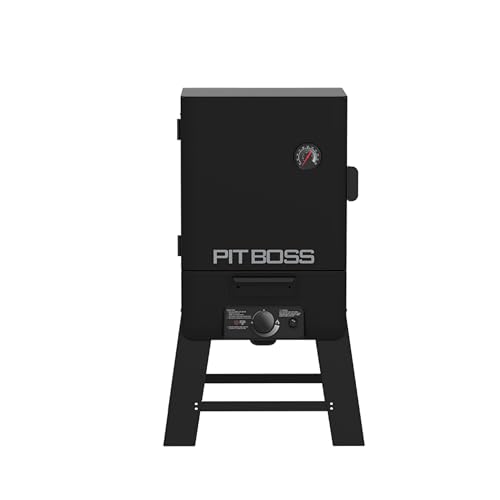
Pit Boss 3-Series Electric Vertical Smoker — Best Large Analog
Pit Boss took the opposite electrical bet from the smart cabinets: a large 880-square-inch, four-rack cabinet run by an analog controller, with a listed temperature range from 100°F to 325°F. Fewer electronics means fewer things for weather and time to kill, and the porcelain-coated steel cabinet gives the element a fair fight. It suits the high-volume cook who values capacity and mechanical simplicity. It does not suit the set-and-forget cook, because an analog controller asks you to be the feedback loop on long sessions.
Strengths
- 880 square inches across four racks is the largest capacity in this guide
- Analog controller keeps the electrical design simple and field-repairable
- Listed 100°F to 325°F range covers low smoking through hot finishing
Trade-offs
- Analog control means you, not a board, correct for wind and weather
- A big cabinet asks more of its element on cold, windy days
- No digital probe integration, so bring your own thermometer setup
| Detail | Verified listing information |
|---|---|
| Cooking space | 880 square inches, 4 racks (per Amazon listing title) |
| Range | 100°F to 325°F (per Amazon listing title) |
| Control | Analog controller |
There is a real electrical argument for analog at this size. A controller board for a large cabinet is a specialized part; a dial and an element are commodities. Owners who keep smokers for a decade tend to end up in this camp, and Pit Boss built the cabinet to deserve the loyalty: porcelain-coated steel, a proper chip tray, and rack spacing that uses the volume honestly. The listed low end of the range is genuinely useful for fish and cheese-adjacent work that smaller cabinets overshoot.
The discipline it demands is attention. Check the cabinet thermometer against a probe you trust, learn the dial positions for your two or three working temperatures, and expect to nudge on windy days. In exchange you get capacity that embarrasses digital cabinets at similar money and an electrical system any appliance repair shop understands. On a best-and-worst scale of electrical design, simple-and-honest beats smart-and-fragile for a large share of owners, and this is the strongest expression of that philosophy here.
Best for: high-volume cooks who prefer simple, repairable electrics / Not suited for: hands-off cooks who want a board to hold temperature for them
Check on Amazon — check the current price on Amazon and confirm the exact model name on the listing before ordering.

EAST OAK 30-Inch Electric Smoker with Wheels — Best for Moving to Power
Here is an electrical consideration nobody puts in the brochure: where the outlet is. This EAST OAK rides on wheels, carries 725 square inches under digital control with a meat probe, and loads chips from the side for long uninterrupted stretches. That mobility lets you roll the smoker to the circuit instead of dragging power to the smoker on a long cord — a genuine safety and performance advantage. It suits patios where the GFCI outlet lives inconveniently far from the ideal smoking spot. It is less suited to a buyer who will park it permanently, since wheels you never use are just a feature you carried.
Strengths
- Wheels let you position the smoker near the outlet instead of stretching cords
- Digital control with a meat probe covers both cabinet and food temperature
- Side chip loader is built for long intervals between refills, protecting recovery
Trade-offs
- Wheeled cabinets must be leveled and chocked on sloped patios
- Digital electronics still want a cover and dry storage between cooks
- Window-free door gives no visual check; you cook by probe, which some beginners resist
| Detail | Verified listing information |
|---|---|
| Cooking area | 725 square inches (per Amazon listing title) |
| Control | Digital with meat probe |
| Mobility | Wheeled cabinet with side chip loader |
Cord discipline is where home smoking setups quietly go wrong. A long, light extension cord under a heating appliance’s load loses voltage, and a smoker at the end of it runs weaker, recovers slower, and heats the cord instead of the cabinet. The wheeled format attacks the problem at the source: bring the appliance to a short, direct connection. Add digital control that cycles the element properly and a probe that keeps the door shut, and the whole electrical chain — outlet, cord, element, cabinet — works the way the designer assumed it would.
As a cooker it is thoroughly competitive with the fixed cabinets: generous rack space, long chip intervals, and temperatures that stay where you set them. Judge it as the mobility pick rather than a compromise pick. If your patio layout forces a choice between a long cord and a bad location, this is the model that dissolves the dilemma, and that earns it a best-side place in any electrical ranking.
Best for: patios where the outlet and the smoking spot are not the same place / Not suited for: permanent installations that will never roll anywhere
Check on Amazon — check the current price on Amazon and confirm the exact model name on the listing before ordering.

Masterbuilt 40-Inch Digital Electric Smoker with Leg Kit (MB20070122) — Best Big Cabinet
Scaling an electric smoker is an electrical problem before it is a cooking one: double the air volume and the element’s job grows with it. This 40-inch Masterbuilt answers with 970 square inches, a leg kit that gets the cabinet to working height, digital control, and the side chip loader that keeps recovery losses small. It suits the cook feeding crowds — holidays, church picnics, freezer-filling weekends. It does not suit a small household, because heating a mostly empty 40-inch cabinet for two chicken breasts is waste wearing a badge of honor.
Strengths
- 970 square inches handles crowd cooking in a single load
- Digital control and side loading protect recovery in a big cabinet
- Leg kit raises the cabinet to a comfortable, safer working height
Trade-offs
- Large volume is slower to preheat and hungrier on a cold day
- Needs a patio footprint and storage space to match its size
- Overkill running costs in time and chips for small everyday cooks
| Detail | Verified listing information |
|---|---|
| Cooking area | 970 square inches (per Amazon listing title) |
| Format | 40-inch cabinet with leg kit |
| Loading | Side wood chip loader |
The worst big electrical smokers are 30-inch elements wearing 40-inch sheet metal, and the symptom is always the same: the cabinet that cannot get back to temperature after the door opens for a crowd-sized load. Masterbuilt sized this one as a system. The controller holds the set point across the full rack stack, the loader avoids the worst recovery events, and the leg kit is a quiet ergonomic win when you are moving heavy pans at arm’s length for hours.
Electrically, give it the respect its size earns: a direct connection to a sound exterior outlet, a circuit without another major load running during the cook, and a dry, covered parking spot. Do that and it behaves like the 30-inch benchmark, just with more of everything. This is the correct way to go big in electric — more cabinet with the power and control to run it, rather than more cabinet alone.
Best for: crowd cooks and holiday-volume smokers / Not suited for: small households cooking a few portions at a time
Check on Amazon — check the current price on Amazon and confirm the exact model name on the listing before ordering.

BLATOMIC 30-Inch Electric Smoker with Double-Layer Windows — Best Stated Wattage
Most electric smoker listings hide the wattage; this BLATOMIC prints it: 1500W driving a digital vertical cabinet with 735 square inches, double-layer windows, a temperature probe and a water tray. That transparency is itself a best-side trait, because wattage is how you judge whether an element can run its cabinet. The double-layer window is the thoughtful answer to the usual window objection — two panes insulate better than one. It suits the specification-driven buyer who reads numbers before narratives. It is a weaker fit for brand loyalists, since its support network is younger than the legacy names here.
Strengths
- Stated 1500W element lets you judge power-to-cabinet fit before buying
- Double-layer windows address the heat-loss problem of single-pane doors
- Probe and water tray included, with 735 square inches of cooking area
Trade-offs
- Younger brand means a thinner long-term parts track record than Masterbuilt or Pit Boss
- A 1500W draw wants a healthy circuit; marginal wiring will show itself
- Window care still applies — two panes fog as surely as one if never wiped
| Detail | Verified listing information |
|---|---|
| Power | 1500W (per Amazon listing title) |
| Cooking area | 735 square inches (per Amazon listing title) |
| Door | Double-layer windows; probe and water tray included |
Use this listing as a ruler for the whole category. Around 1500 watts is the working ceiling of a standard household circuit once you leave headroom, and it is ample for an insulated 30-inch-class cabinet. When a rival listing will not state wattage at all, or states a figure that looks thin for its claimed volume, you have learned something the seller hoped you would skip. The BLATOMIC’s number, cabinet size and digital control form a coherent specification, and coherence is what separates engineered products from assembled ones.
In use, the double-layer window is the feature you will feel: a view of the cook with a smaller thermal penalty than the single-pane designs, plus a probe for the moments when the view is not enough. Keep the circuit honest — direct outlet connection, no daisy-chained strips — and this cabinet delivers the modern window-smoker experience with its electrical homework done in public.
Best for: specification readers who want wattage stated and windows done properly / Not suited for: buyers who rank decades-long brand parts support above all else
Check on Amazon — check the current price on Amazon and confirm the exact model name on the listing before ordering.

Royal Gourmet SE2805 28-Inch Electric Smoker — Best Compact Budget
The compact end of the electrical market is where the worst mismatches breed: tiny elements in leaky boxes, sold on rack counts. The Royal Gourmet SE2805 states its figures plainly instead — 1350W, 454 square inches, three racks, analog control — and those numbers describe a coherent small smoker rather than a shrunken big one. It suits apartment-adjacent patios, couples, and side-dish smoking duty. It does not suit brisket ambitions; the cabinet is sized for ribs, chicken and smaller cuts, and pretending otherwise is how good small smokers get bad reviews.
Strengths
- Stated 1350W element is properly matched to the compact cabinet
- 454 square inches and three racks suit small households without waste
- Analog control keeps the electrics simple and the price of entry low
Trade-offs
- Compact cabinet excludes whole packer briskets and large party loads
- Analog dial requires the usual learn-your-unit temperature discipline
- Small water and chip capacity means more frequent tending on long cooks
| Detail | Verified listing information |
|---|---|
| Power | 1350W (per Amazon listing title) |
| Cooking area | 454 square inches, 3 racks (per Amazon listing title) |
| Control | Analog temperature control |
Judge a small smoker by recovery, not by first impressions. Load this cabinet with cold chicken and the element has a modest volume to bring back, which is precisely why the pairing works: the wattage that would disgrace a 40-inch box is generous here. Analog control is the honest partner at this size — the cabinet is small enough that swings stay gentle, and there is no board to fail in a unit many owners will store in a garage and roll out monthly.
Its place on the best side of an electrical list is about truth in sizing. The worst compact smokers promise family capacity from a lunchbox cabinet and a feeble element, then collect furious reviews from buyers who believed them. This one publishes modest numbers and delivers them. If your cooks are genuinely small, it is not a compromise at all — it is the correctly sized tool, drawing correctly sized power.
Best for: small households and compact patios with small cooks / Not suited for: brisket and party-volume cooking
Check on Amazon — check the current price on Amazon and confirm the exact model name on the listing before ordering.
Comparison Table
The key-spec column is the electrical story at a glance: stated wattage where the listing provides it, control type and capacity everywhere.
| Pick | Badge | Key spec | Best for |
|---|---|---|---|
| Masterbuilt 30-Inch Digital Electric Smoker (MB20071117) | Best Overall | 710 sq in, digital, matched element | buyers who want balanced power draw and proven control |
| Pit Boss 3-Series Electric Vertical Smoker | Best Large Analog | 880 sq in, analog, 100–325°F listed range | high-volume cooks who prefer simple, repairable electrics |
| EAST OAK 30-Inch Electric Smoker with Wheels | Best for Moving to Power | 725 sq in, digital + probe, wheeled | patios where the outlet and the smoking spot are not the same place |
| Masterbuilt 40-Inch Digital Electric Smoker with Leg Kit (MB20070122) | Best Big Cabinet | 970 sq in, digital, leg kit | crowd cooks and holiday-volume smokers |
| BLATOMIC 30-Inch Electric Smoker with Double-Layer Windows | Best Stated Wattage | 1500W stated, 735 sq in, double-layer windows | specification readers who want wattage stated and windows done properly |
| Royal Gourmet SE2805 28-Inch Electric Smoker | Best Compact Budget | 1350W stated, 454 sq in, analog | small households and compact patios with small cooks |
How to Choose an Electrical Smoker Without Tripping a Breaker
Begin at the circuit, not the smoker. An exterior outlet on a typical household circuit can feed one serious heating appliance comfortably; it cannot feed a smoker, a patio heater and a freezer at once. Before ordering, learn which breaker serves your smoking spot and what else lives on it. Then match the smoker to that reality: mid-size digital cabinets are the natural citizens of ordinary circuits, while the largest cabinets deserve a circuit with headroom and nothing else ambitious running during the cook.
Then interrogate the listing. A stated wattage is a green flag — it lets you sanity-check the element against the claimed cabinet volume. Silence on wattage paired with a huge claimed capacity is the classic worst-listing pattern. Prefer loaders that keep the door shut, insulation you can feel in the shipping weight, and a controller type that fits your temperament. Finally, plan the physical connection: direct to a GFCI outlet wherever possible, and if a cord is unavoidable, one short heavy-gauge outdoor cord rated for appliances — never a power strip, never a lamp cord, never two cords joined.
Extension Cords, GFCI and Other Unromantic Essentials
Ground-fault protection is non-negotiable outdoors: a smoker is a metal box full of heating elements used around water pans and weather, and the exterior outlet feeding it should be GFCI-protected and in good repair. Test the outlet’s trip button at the start of the season. If your only outlet is not protected, that is a small electrician visit that outranks any smoker accessory you were considering.
On cords, physics is unforgiving. Voltage drops along a cord in proportion to its length and thinness, and a starved element both cooks worse and heats the cord. The wheeled EAST OAK in this guide exists partly to dissolve this problem by moving the smoker to the power. Whatever model you choose, route the cord where it cannot sit in a puddle, cross a walkway as a trip line, or rest against the hot cabinet wall. None of this is exciting, and all of it is the difference between the best and worst electrical outcomes.
How to Set Up an Electrical Smoker Safely on Cook Day
Position first, power second. Set the smoker on a level, non-combustible surface with clearance from siding and overhangs, chock the wheels if it has them, and only then connect it — directly to the GFCI outlet, or through your single heavy-gauge cord with the connection points kept dry and off the ground. Run the empty cabinet up to temperature once before loading, and watch the house: if a breaker complains during a preheat with nothing else running, stop and rethink the circuit before food is involved.
During the cook, treat the electrical side as settled and keep it that way: no plugging in extra appliances on the same circuit mid-session, no moving the smoker while it is hot and connected, and no opening the cabinet to admire progress when a probe can tell you more. At the end, switch off, unplug once the unit is cool enough to handle safely, coil the cord dry, and cover the smoker. The owners who follow this dull routine are the ones whose smokers are still boringly reliable five seasons later.
The Electrical Future of Smoking: Where the Category Is Going
The electrical smoker’s next decade is visible in this guide’s own picks. Controllers are absorbing the PID logic that pellet grills proved, which will make the analog-versus-digital argument of this list read quaintly within a few product cycles. Connectivity is moving from novelty to expectation, and with it comes the genuinely useful electrical feature nobody markets: consumption awareness — a smoker that knows what it drew, what the cook cost in energy, and whether its element is aging by the signature of its own current. The best listings of the next generation will state those numbers the way the BLATOMIC in this guide already states its wattage.
Battery and hybrid designs will nibble at the edges — small smokers that sip from power stations for camping and tailgating, cabinets with thermal mass that coast through brief outages the way a cast-iron pan coasts through a burner cycle. None of it changes the fundamentals this guide is built on: an element honestly sized to its cabinet, a controller that cycles it intelligently, and a household circuit treated with respect. Those were the criteria when the category was a dial and a coil, and they will be the criteria when the coil has an app and an opinion.
For today’s buyer, the future argues for the present’s supported brands. A smoker is a decade appliance; the makers most likely to publish the firmware, stock the element and answer the phone in year seven are the ones whose names recur through this list. Buy the electrical present from a company that will still be there for the electrical future.
Matching the Smoker to the House: Three Real Kitchens
Consider three real electrical situations, because the best-and-worst question is always local. The first is the new-build patio: a dedicated exterior circuit, a GFCI outlet within a cord-free reach of the smoking spot, and nothing else ambitious on the line. That house can run any pick in this guide, and its correct purchase is decided by cooking alone — the benchmark Masterbuilt for most, the 40-inch for the crowd cook. The second is the older home: an exterior outlet of uncertain vintage on a circuit shared with a garage freezer and a string of patio lights. That house should buy mid-size, connect directly, inspect the outlet the way this guide’s earlier section describes, and schedule its cooks so the smoker is the circuit’s only serious tenant. Its correct purchase is the same Masterbuilt — with the discipline doing the work the new-build’s wiring does for free.
The third is the balcony and the rental: an outlet whose circuit the renter cannot map, a landlord whose rules mention grills, and a space where every watt is borrowed. That household’s correct purchase is the compact Royal Gourmet class — a stated, modest draw, a small cabinet that preheats quickly, and a footprint that respects the lease — run with the cover-and-clean rhythm that keeps a small appliance welcome. Three houses, three different best electrical smokers, and not one of them is a mystery once the circuit is treated as part of the product. The worst purchase in each house is the same, though: the oversized, undisclosed, cord-stretched mismatch. Electricity is local. Shop locally.
Common Buying Mistakes
The worst electrical mistake is the bargain extension cord. A thin indoor cord under a heating appliance’s sustained load is a fire conversation nobody wants; it also starves the element, so cooks run long and owners blame the smoker. One short, heavy, outdoor-rated cord — or better, no cord at all — is the cheapest performance upgrade in this entire category.
Second, overloading the circuit and then reviewing the smoker for it. A breaker trip at hour nine of a brisket is a household wiring outcome, not a product defect, yet it fills worst-smoker lists every season. Know your circuit’s other tenants before the cook, and give a big cabinet a circuit with room to breathe.
Third, storing electronics like they are patio furniture. Digital boards and analog dials alike suffer when a smoker winters uncovered in the rain. A cover and a dry spot are electrical maintenance, and skipping them manufactures the failures that land decent smokers on worst lists.
Final Recommendation
For most homes the Masterbuilt 30-inch digital remains the electrical benchmark: matched power, intelligent control, no circuit drama. The BLATOMIC earns attention for stating its 1500W openly and doing windows properly; the wheeled EAST OAK solves the outlet-distance problem outright; the Pit Boss and the compact Royal Gourmet prove analog can be an electrical virtue at both size extremes; and the 40-inch Masterbuilt shows how to scale without underpowering. Pick by your circuit and your cook size, then check the current price on Amazon.
Related reading in the same cluster: Best And Worst Electric Smokers, Best 30 Inch Electric Smokers, Best 40 Inch Electric Smokers, Best Auto Feed Smokers, Best Pellet Smokers, Best Apple Wood For Smokers.
Reading a Smoker Listing Like an Electrician
A product listing is an electrical document if you read it that way, and learning the reading takes one pass. Find the wattage: stated plainly, it tells you the element’s appetite and lets you judge it against the cabinet’s volume — the pairings in this guide, 1500W for a mid-size cabinet and 1350W for a compact, are the shape of coherence. Absent entirely, wattage is a question the seller declined to answer, and in a heating appliance that silence is itself information. Find the control type next, and check that the photographs agree with the words; a listing that says digital while showing a bare dial has told you how it treats the truth generally.
Then read for the recovery story. Side chip loaders, insulated walls and latched doors are electrical features in disguise: every door opening is a reheating bill the element must pay, and designs that minimize openings minimize the draw’s hardest work. Rack counts and square inches, the numbers listings shout, matter less to the circuit than how often the cabinet will be opened and how honestly it seals. Finally, read the physical story: wheels, cord routing and control placement decide whether the smoker can live where your good outlet is, which decides whether it runs direct or through a cord — the single largest electrical variable in home smoking.
Applied across a shopping session, this reading separates the category in minutes. The best electrical smokers disclose their numbers, pair them coherently, and design around the realities of a patio circuit. The worst hide the numbers, mismatch the pairing, and assume a perfect installation nobody owns. You now know which questions embarrass a bad listing; ask them every time.
When the Breaker Trips: A Calm Troubleshooting Order
A breaker trip during a cook feels like a catastrophe and is usually a diagnosis waiting to be read calmly. First, note the timing: a trip in the first minutes, as the element draws hard to preheat, points to a circuit already near its limit from other loads. A trip hours in, on a circuit that held the preheat, points instead to a developing fault — moisture in an outlet, a cord connection heating up, a breaker aging out of its rating. The two timings are different problems wearing the same symptom, and the fix follows the timing, not the panic.
Work the order that isolates variables. Run the smoker alone on the circuit, connected directly, and preheat: if it holds, the household load was the story, and the answer is scheduling, not service. If it trips alone, move it to a different circuit with the same direct connection: holding there convicts the first circuit or its outlet. Tripping everywhere, on sound circuits, with a direct connection, is the one pattern that belongs to the appliance itself — and that is a warranty and service conversation, with your notes from these tests as the evidence that makes it short.
What not to do matters equally. Never defeat the protection — no oversized breaker swaps, no bypassed GFCI, no cord arrangement designed to hide a fault. The breaker is the cheapest safety device in your home, and a smoker cook is never the occasion to outvote it. The best electrical outcomes in this category are boring ones, and boring is achieved by respecting what the protection is telling you.
To close the decision: Masterbuilt 30-Inch Digital Electric Smoker (MB20071117) for the balanced benchmark, BLATOMIC 30-Inch Electric Smoker with Double-Layer Windows when stated wattage and windows matter, and EAST OAK 30-Inch Electric Smoker with Wheels when the outlet and the smoking spot refuse to coincide. Confirm the model on the listing and check the price on Amazon. — check price on Amazon.
One more household reality deserves its line: exterior outlets age. A receptacle that has weathered a decade of seasons can develop the looseness and corrosion that turn a heating appliance’s steady draw into heat at the plug — the one place heat is never wanted. Before a new smoker’s first season, the two-minute inspection of its outlet — firm plug fit, no discoloration, GFCI test button working — is the cheapest insurance in this entire guide, and the one most often skipped because the outlet worked fine for the Christmas lights.
Frequently Asked Questions
How many watts should an electric smoker have?
Enough for its cabinet, which is why context beats a single number. The verified listings in this guide that state wattage show 1500W for a 735-square-inch cabinet and 1350W for a 454-square-inch compact — both coherent pairings. Be suspicious of large claimed capacities with no stated wattage, or with figures far below those pairings.
Can I run an electric smoker on an extension cord?
Only a short, heavy-gauge outdoor cord rated for appliance loads, as a compromise — direct connection to the outlet is always better. Voltage drop on a long or thin cord weakens the element and heats the cord. Never use a power strip or join two cords. Wheeled smokers exist partly so you can move the appliance to the outlet instead.
Does an electric smoker need a dedicated circuit?
Not usually, but it needs a circuit with headroom. A mid-size cabinet on an ordinary exterior circuit is fine alone; the same circuit simultaneously running another heating appliance invites a trip mid-cook. Large 40-inch cabinets deserve the most headroom you can give them.
Why does my smoker trip the breaker?
Usually one of three causes: the circuit is shared with another heavy load, the outlet or breaker is aging, or a cord in the chain is undersized and heating up. Test the smoker alone on the circuit first. If it trips alone on a sound outlet, the appliance itself needs service — that is a genuine defect, unlike the shared-circuit case.
Is a GFCI outlet really necessary for a smoker?
Yes. It is a metal heating appliance used outdoors around water, and ground-fault protection is the standard safeguard for exactly that combination. Test the outlet’s protection at the start of each season, and treat a non-protected exterior outlet as a fix-before-cooking item.
Do digital smokers use more electricity than analog ones?
The controller’s own draw is negligible; what matters is how intelligently it cycles the element. A digital board holding a steady temperature can waste less energy than an analog cabinet overshooting and recovering. Total consumption follows cabinet size, insulation and weather far more than control type.
Can I run an electric smoker from a generator or power station?
Portable power sources can run a smoker if their continuous output comfortably exceeds the smoker’s draw — which is why stated wattage, where the listing provides it, matters for this use. Heating appliances are among the heaviest loads a small generator carries, so size with real headroom and expect runtime to be measured in hours, not days. For most homes, the household circuit remains the right answer.
Why do some listings hide the wattage?
Sometimes because the number is unflattering for the cabinet’s size, sometimes because the listing was written for search engines instead of buyers. Either way, treat silence as a prompt to look at the coherent listings — several picks in this guide state their power outright — rather than as a mystery to solve in the seller’s favor.


