Disclosure: airfryerkitchensupply.com is reader-supported. When you buy through links on our site, we may earn an affiliate commission at no extra cost to you.
Where to buy
If you are shopping for the best analog and hybrid mixers, start with the shortlist below. Every model here is a current listing sold through Amazon, which is where we recommend buying in this category: the difference between an analog board and a true hybrid lives in the USB specification on the listing, and returns are painless if the board that arrives is the wrong variant. Start with the Allen & Heath ZEDi-10FX if you want the clearest example of the hybrid idea, and check the current price on Amazon under the full model name.
- Allen & Heath ZEDi-10FX — check the current price on Amazon and confirm the exact configuration on the listing before you order.
- Soundcraft Signature Plus 12 — check the current price on Amazon and confirm the exact configuration on the listing before you order.
- Mackie ProFX12v3+ — check the current price on Amazon and confirm the exact configuration on the listing before you order.
- Allen & Heath CQ-18T — check the current price on Amazon and confirm the exact configuration on the listing before you order.
- Soundcraft Ui12 — check the current price on Amazon and confirm the exact configuration on the listing before you order.
- Behringer XENYX QX1204USB — check the current price on Amazon and confirm the exact configuration on the listing before you order.
The best analog and hybrid mixers answer the same question two ways: how do you keep the speed and feel of a physical mixing surface while living in a world that records, streams and saves everything digitally? A pure analog mixer keeps the entire signal path electrical — knobs, faders, no menus, no boot-up — and increasingly adds a simple USB socket for stereo capture. A hybrid keeps that analog surface but builds a real digital interface inside it, streaming separate channels to a computer while your hands stay on physical controls. Neither is a compromise version of the other; they are different tools that happen to share a silhouette.
This guide treats the category as one shortlist because most buyers are choosing between the two, often without the vocabulary to say so. Each review states plainly which side of the line a board sits on: true hybrid with multitrack USB, analog with stereo USB, or — at the category’s digital edge — a remote-controlled digital mixer included deliberately so you can see what you gain and give up by leaving the analog surface behind entirely. Two of the six picks are digital-leaning reference points; the other four keep physical faders and knobs at the centre of the experience.
The short version of the buying logic: if you perform live and record occasionally, analog with good preamps is the rational buy. If you record as seriously as you perform, a true hybrid earns its premium every session. If your mixing happens from a tablet at the back of the room, you do not want a surface at all — and one pick here shows you that world honestly, so the rest of the list can be judged against it.
Hybrid is the most abused word in this category’s marketing, so this guide uses it strictly: a hybrid must stream more than a stereo mix to a computer, or it is called analog-with-USB, however the box copy phrases it.
In this guide
Quick Picks
Allen & Heath ZEDi-10FX — Best True Hybrid. The hybrid idea in its purest compact form: an analog ZED surface with a 4×4 USB interface inside, guitar DI inputs and a deep effects library.
Soundcraft Signature Plus 12 — Best Hybrid for Studio Work. A studio-grade hybrid: Ghost preamps, Sapphyre EQ, dbx compression, Lexicon effects and a 4×4 USB-C interface running up to 192 kHz.
Mackie ProFX12v3+ — Best Analog-Leaning Hybrid for Creators. An analog board that bends toward the creator workflow: Onyx preamps, multi-mode USB recording, Bluetooth playback and the GigFX+ engine.
Allen & Heath CQ-18T — Best Digital-Leaning Hybrid. The category’s digital edge, included on purpose: a compact digital mixer with a 7-inch touchscreen, WiFi and Bluetooth, full recall and processing an analog board cannot match.
Soundcraft Ui12 — Best Remote-Controlled Alternative. No surface at all: a stagebox mixer controlled from any phone, tablet or computer browser, with Soundcraft, Lexicon, dbx and DigiTech processing inside.
Behringer XENYX QX1204USB — Best Budget Analog-with-USB. The entry point of the category: a full-featured analog board — compressors, Klark Teknik effects, subgroups, stereo USB — at a budget tier.
How These Picks Were Chosen
The shortlist was assembled to span the category’s real spectrum rather than to crown one architecture: two true multitrack hybrids, two analog boards with stereo USB at different tiers, one creator-focused analog board with flexible USB modes, and one remote-controlled digital mixer as the reference point. Every model was verified as a live, correctly matched Amazon listing before inclusion.
Scoring weighted the analog fundamentals first — preamp quality, EQ, build, layout — because a hybrid with a weak front end is a recording of a weak front end, preserved forever. Interface capability came second, stated in exact channel terms. Control experience came third: how fast can a human being fix a problem mid-show on this surface? Effects, wireless extras and app ecosystems were scored last, as the conveniences they are.
- Architecture stated honestly for every pick: analog, true hybrid, or digital reference point
- USB capability in exact terms — multitrack channel count or stereo-only
- Preamp quality and gain, because both live sound and recordings depend on it
- Surface immediacy: dedicated controls versus menus, apps and touchscreens
- Monitoring flexibility for recording, streaming and live work
- Build quality and transport reality for boards that move between roles
- Upgrade path: whether the board stays useful as your setup grows
The 6 Best Analog and Hybrid Mixers
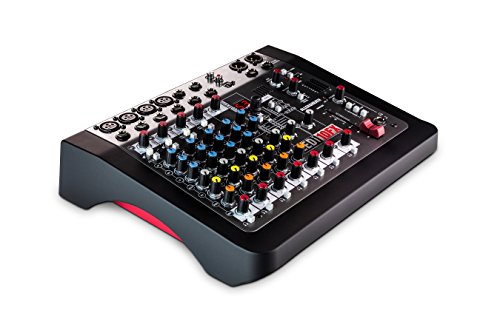
Allen & Heath ZEDi-10FX — Best True Hybrid
The ZEDi-10FX suits the musician who genuinely lives in both worlds — small gigs on the weekend, multitrack demos all week — and wants one compact board that does both without an adapter, an extra interface or an apology.
Strengths
- True 4×4 multitrack USB inside a fully analog-feeling surface
- Guitar DI inputs that serve both the stage and the recording chain
- Allen & Heath preamp and EQ quality carried over from the ZED family
Trade-offs
- Four preamps and four USB channels cap ensemble recording
- Compact surface shares some controls to save space
- Effects library tempts overuse; best treated as monitoring polish
| Architecture | Analog mixer with multitrack USB interface (hybrid) |
| USB | 4×4 USB audio interface |
| Inputs | Mic/line with guitar DI stages plus stereo inputs |
| Effects | Onboard library, 61 presets |
Most products calling themselves hybrid are analog mixers with a stereo USB socket and ambitious copywriting. The ZEDi-10FX is the real architecture: the same four channels that feed its analog mix also stream independently to a computer, so a live duo can record a multitrack of the gig, or a songwriter can track voice and guitar separately while monitoring through hardware with effects. The surface never stops feeling like a mixer — that is the entire point of the hybrid idea, executed properly.
The ZED family’s analog virtues come with it: DuoPre-style clean gain, musical EQ, and those guitar DI inputs that make direct recording and direct-to-PA guitar sound like the instrument rather than a sketch of it. For the singer-guitarist who is statistically the centre of this market, the combination is close to perfect: plug in, set gains, and both the room and the recorder are served.
Its limits are the compact class’s limits — four preamps, a small surface, stereo playback duties shared with recording. Buyers who need to multitrack a band should step up in interface count or accept a separate interface. Buyers whose world is one or two performers will find this the most honest hybrid their money buys.
One practical hybrid habit worth adopting from day one: treat the multitrack recording as your soundcheck witness. Play the room, record it, then walk the audience area with the playback running through the PA while you stand where listeners stand. Analog-only engineers do this with a stereo recorder; the hybrid owner gets every channel separately, which makes the rehearsal archive a genuine mixing lesson over time.
Best for: solo acts and duos who gig live and record multitrack with one board / Not suited for: multitracking ensembles larger than four simultaneous sources
Check on Amazon — check the current price on Amazon for the exact variant described here.

Soundcraft Signature Plus 12 — Best Hybrid for Studio Work
The Signature Plus 12 is for the buyer whose hybrid will live mainly in a studio or a serious rehearsal space, tracking small combinations of sources at high quality, with live use as the second job rather than the first.
Strengths
- 4×4 USB-C multitrack at up to 192 kHz — the strongest interface in this list
- Ghost preamps with up to 65dB of gain for demanding microphones
- dbx compressors and Lexicon effects complete a tracking channel in one box
Trade-offs
- Premium tier of this shortlist, justified only if the interface gets used
- Four-track ceiling still applies to simultaneous recording
- More board than a pure live act needs
| Architecture | Analog mixer with multitrack USB-C interface (hybrid) |
| USB | 4×4 USB-C, up to 192 kHz |
| Preamps | Ghost, up to +65dB gain |
| Channel tools | Sapphyre EQ, dbx one-knob compressors, Lexicon FX |
Where the ZEDi is the hybrid as a compact tool, the Signature Plus 12 is the hybrid as a studio centrepiece. The interface specification leads the class — USB-C, four channels each way, sample rates up to 192 kHz — but the analog channel is what you will remember: Ghost preamps with the gain to drive any microphone in a home studio, Sapphyre EQ that shapes rather than merely adjusts, and a dbx compressor per key channel to keep a tracked vocal out of trouble.
That combination changes session behaviour. Instead of recording everything flat and apologetic, you can track with intent — a little compression, a gentle EQ curve — knowing the quality holds up, while still keeping individual tracks separate for the mix. It is the closest a single box in this price region comes to the classic console workflow.
Live, it behaves as a well-specified 12-channel analog board with excellent effects, which is to say the hybrid premium is never wasted even when the laptop stays home. If your buying decision is primarily about recording quality with a physical surface, this is the top of the category in this guide.
Studio owners weighing this board against a similarly priced interface should count the whole chain: the Signature Plus replaces the interface, the monitor controller, the DI boxes for its guitar-friendly inputs’ rivals, and a small rack of channel processing for tracking. Line-item comparisons flatter the interface; system comparisons flatter the hybrid, and systems are what actually get bought.
Best for: project studios wanting console-style tracking with a physical surface / Not suited for: buyers who will never use multitrack recording
Check on Amazon — check the current price on Amazon for the exact variant described here.

Mackie ProFX12v3+ — Best Analog-Leaning Hybrid for Creators
The ProFX12v3+ fits the hybrid buyer whose digital life is streaming and content rather than multitrack studio sessions: a small band or solo creator who needs the board to feed a PA, a stream and a recorder in the same evening.
Strengths
- Multi-mode USB recording adapts to streams, captures and basic tracking
- Onyx preamps feed gain-hungry streaming microphones cleanly
- Bluetooth playback integrates phones and backing tracks without cables
Trade-offs
- USB flexibility is mode-based rather than full per-channel multitrack of the leaders
- Menu-driven depth slows the first weeks of ownership
- Physically the largest of the creator-class picks here
| Architecture | Analog mixer with flexible USB recording modes |
| Preamps | Onyx mic preamps |
| USB / wireless | Multi-mode USB recording; Bluetooth playback |
| Effects | GigFX+ engine |
Mackie’s interpretation of hybrid is pragmatic: most owners do not need four discrete USB channels; they need the board to send the right thing to the computer for the job at hand — a stream mix tonight, a rehearsal capture tomorrow, backing playback throughout. The v3+ builds those modes around a proper analog board with Onyx preamps, so the sound foundation never feels like a streaming accessory.
The result is the most adaptable board in this list for the modern small act. Bluetooth sounds like a bullet point until the third rehearsal, when the singer’s phone becomes the setlist’s backing-track library with no cable ritual. GigFX+ gives the live side editable, storable effects rather than one fixed reverb, which matters when the same board serves an acoustic duo one night and a rock trio the next.
Purists tracking multitrack should buy the Soundcraft or the ZEDi above. Everyone whose digital workflow is measured in streams, captures and content — a larger group every year — will find this board’s version of hybrid matches their actual week more closely.
The creator case has one more layer: resilience. A streamer whose computer reboots mid-broadcast on an analog-leaning board like this keeps a live microphone path and a room mix; the audience hears a pause, not a collapse. Architectures that route everything through the computer cannot make that promise, and for live content the promise matters.
Best for: creators and small bands streaming and capturing from one board / Not suited for: multitrack purists needing per-channel USB on every input
Check on Amazon — check the current price on Amazon for the exact variant described here.

Allen & Heath CQ-18T — Best Digital-Leaning Hybrid
The CQ-18T is for the buyer tempted by hybrid who actually wants digital: scene recall for repeat shows, deep per-channel processing, remote control, and a compact box that replaces a rack of analog outboard. It keeps a physical touchscreen surface rather than hiding in a stagebox.
Strengths
- Full digital processing and recall — a different league of per-channel control
- Touchscreen plus WiFi control suits fixed installations and repeat gigs
- 18-input capacity dwarfs the analog picks for ensemble work
Trade-offs
- No analog signal path or knob-per-function surface — the hybrid feel is gone
- Every function lives behind the screen; mid-show fixes are taps, not grabs
- Digital generations age faster than analog boards
| Architecture | Digital mixer (reference point for the category) |
| Control | 7-inch touchscreen, WiFi, Bluetooth |
| Inputs | 18-input class digital mixing |
| Processing | Full per-channel digital processing with recall |
This pick exists to make the rest of the guide honest. Everything a hybrid promises digitally — multitrack thinking, recall, processing depth, remote control — a compact digital mixer like the CQ-18T simply does, at greater scale, with eighteen inputs and a touchscreen workflow refined by a company that builds flagship consoles. If your real requirements list reads ‘save my settings, control it from the room, process every channel deeply’, you do not want a hybrid. You want this.
What you surrender is the analog bargain: instant, visible, grabbable control and a signal path with no conversion, no menus and no boot sequence. Experienced live engineers split honestly on that trade. Volunteers, house technicians running the same show weekly, and bands whose engineer mixes from the audience tend to choose digital and never look back. Performer-operators who adjust their own sound mid-song tend to choose the surface.
Read the rest of this list with the CQ-18T in mind as the price of full digital at this level. If the analog and hybrid picks still appeal after that comparison, they appeal for the right reasons — feel, simplicity and longevity — and you can buy one with confidence.
Venue managers should read this pick as the standardisation play: a digital board with recall ends the era of every visiting engineer rebuilding the house mix from memory. The same show file loads, the same service or set starts from the same place, and adjustments become refinements instead of archaeology — an operational advantage no analog board can answer.
Best for: repeat-show acts and venues wanting recall and deep processing / Not suited for: buyers who specifically want an analog surface and signal path
Check on Amazon — check the current price on Amazon for the exact variant described here.

Soundcraft Ui12 — Best Remote-Controlled Alternative
The Ui12 suits the band that mixes itself from the stage or the audience, the venue that wants the mixer rack-mounted and forgotten, and any buyer whose priority is walking the room with the mix in their hand rather than standing behind a desk.
Strengths
- Control from any device with a browser — no app dependency, no surface to protect
- Professional processing heritage: Lexicon, dbx and DigiTech inside
- Stagebox format mounts anywhere and removes the desk footprint entirely
Trade-offs
- Zero physical controls — a dead tablet or network issue is a real failure mode
- Mixing by touchscreen slider is slower for simultaneous multi-fader moves
- Not an analog or hybrid product; included as the category’s other pole
| Architecture | Remote-controlled digital mixer (stagebox) |
| Control | Browser-based, any device, WiFi |
| Inputs | 12-input digital mixing |
| Processing | Lexicon effects, dbx dynamics, DigiTech amp modelling |
The Ui12 takes the digital logic one step further than the CQ: if the processing is software, why keep the desk at all? The mixer becomes a small box near the stage, and the surface becomes whatever screen you already own. For a self-mixing band, the practical effect is liberation — the bassist adjusts the monitor mix from a phone, the singer checks the house balance from the audience during soundcheck, and the whole PA travels in a rack case.
Soundcraft’s processing pedigree keeps it respectable: Lexicon reverbs, dbx compression and feedback suppression, and DigiTech modelling for direct guitars. This is not a toy that happens to mix; it is a small professional system whose only surface is borrowed.
The failure modes are equally real and worth stating in an analog-leaning guide: you are dependent on a network connection and a charged screen, and there is no knob to grab when feedback starts. Engineers who trust their infrastructure choose it happily. Everyone else should let it define, by contrast, why they are buying a physical surface — which is a legitimate and common conclusion.
For self-mixing bands, rehearse the failure drill once: tablet asleep, network hiccup, app frozen. Know which physical actions remain available (on this design, essentially none at the box itself) and stage a second control device accordingly. Ten minutes of paranoia in rehearsal is the entire cost of the format’s one real weakness.
Best for: self-mixing bands and installations wanting control from anywhere / Not suited for: anyone who wants physical faders as a non-negotiable
Check on Amazon — check the current price on Amazon for the exact variant described here.

Behringer XENYX QX1204USB — Best Budget Analog-with-USB
The QX1204USB is for the buyer at the start of the curve: first rehearsal room, first streaming desk, first church PA. It is analog-with-USB rather than a true hybrid, and it is recommended in those honest terms.
Strengths
- The most complete analog feature set at the budget tier
- Channel compressors and Klark Teknik effects, rare together at this level
- Stereo USB covers capture, playback and streaming duties
Trade-offs
- Stereo USB only — it is not a multitrack hybrid, whatever the shelf talk says
- Preamp noise and build feel reflect the tier
- Outgrown quickly if recording ambitions grow
| Architecture | Analog mixer with stereo USB interface |
| Preamps | XENYX with one-knob compressors |
| Effects | Klark Teknik multi-effects processor |
| Buses | 2 subgroups plus main mix |
Every category needs an honest floor, and this is it: the cheapest way to own the complete analog mixer experience — preamps with compression, a respected effects engine, subgroups, and a USB connection for streaming and stereo capture. For a rehearsal space or a first desk, the feature completeness matters more than refinement, because it lets a beginner learn every core technique on one board.
Call it by its right name, though. With stereo USB it is an analog mixer that talks to a computer, not a hybrid that records through one. The distinction decides real purchases: streamers and rehearsal archivists lose nothing; aspiring multitrack producers lose the one feature they came for. This guide would rather sell you the right category slowly than the wrong one quickly.
Within its category, the value is difficult to argue with, and its compromises — noise at extreme gain, lighter build — are the predictable ones. As a first board or a fixed installation, it is the sensible floor of this entire shortlist.
A note for the budget buyer comparing this board with the true hybrids: the price gap between them is, almost exactly, the price of a separate multitrack interface. That is not a coincidence — it is the market working correctly — and it means the decision is purely about recording intent, never about value trickery.
Best for: first-time buyers needing the full analog feature set on a budget / Not suited for: anyone whose plan requires multitrack USB recording
Check on Amazon — check the current price on Amazon for the exact variant described here.
Comparison Table
The architecture column is the one to read first: it separates the two true hybrids from the analog-with-USB boards and the two digital reference points, which is the decision this whole category turns on. Badges then point you to the review that matches your workflow.
| Pick | Badge | Key spec | Best for |
|---|---|---|---|
| Allen & Heath ZEDi-10FX | Best True Hybrid | True hybrid: 4×4 USB, guitar DI, 61 FX | The reference hybrid for small acts |
| Soundcraft Signature Plus 12 | Best Hybrid for Studio Work | 4×4 USB-C 192 kHz, Ghost preamps, dbx + Lexicon | Studio-first hybrid tracking |
| Mackie ProFX12v3+ | Best Analog-Leaning Hybrid for Creators | Onyx preamps, multi-mode USB, Bluetooth | Creator workflow flexibility |
| Allen & Heath CQ-18T | Best Digital-Leaning Hybrid | Digital: touchscreen, WiFi, 18-input class | Full digital control and recall |
| Soundcraft Ui12 | Best Remote-Controlled Alternative | Browser-controlled digital stagebox, 12 inputs | Remote mixing without a desk |
| Behringer XENYX QX1204USB | Best Budget Analog-with-USB | Analog + stereo USB, compressors, subgroups | Budget entry to the category |
How to Choose Between Analog, Hybrid and Digital Mixers
Ask three questions in order. First: do you record separate tracks, or only finished mixes? Separate tracks require a true hybrid or a digital mixer; finished mixes are served by any analog board with USB. Second: who operates the board, and from where? A performer adjusting their own sound needs physical controls within reach; an engineer mixing a repeat show from the audience is better served by digital recall and remote control. Third: how long will you keep it? Analog surfaces age the slowest, hybrids split the difference, and app-dependent digital products age with their software.
Notice that sound quality is not among the first questions. At the level of this shortlist, every architecture can sound clean; the differences that will actually shape your years with the product are workflow differences. Buyers routinely choose by specification and regret by workflow, which is why this guide scores control experience alongside preamps.
Budget follows the same logic. A hybrid’s premium over its analog sibling is the price of an interface you would otherwise buy separately — compare it that way, not as a mixer surcharge. A digital mixer’s price buys processing and recall that would cost far more as analog outboard. Framed correctly, none of the three architectures is the expensive one; each is expensive only when bought for a job it does not fit.
What ‘Hybrid’ Actually Means — and How to Spot the Imitations
A true hybrid mixer keeps an analog mixing surface and signal path for its channels, and adds a digital interface that streams those channels individually to a computer. The test is a single number: how many separate channels arrive in the recording software? Four or more, independently assignable, means hybrid. Two — a stereo copy of the main mix — means analog-with-USB, a fine thing that is simply a different thing.
Imitations rely on blur: ‘USB recording’ without a channel count, photographs of laptops beside stereo boards, and the word ‘interface’ applied to a stereo connection. The defence is to read the specification for the USB line and count. Manufacturers of true hybrids state the count proudly — 4×4 appears in the very product names in this guide — because it is the feature that justifies the price.
There is a second, looser use of ‘hybrid’ for mixers combining analog channels with digital effects or app control. Effects have been digital inside analog boards for decades without making them hybrids in any useful sense, and app control without multitrack audio is a convenience, not an architecture. This guide reserves the word for multitrack capability and says so in every review, so comparisons stay honest.
Living with a Hybrid: The Workflow in Practice
A hybrid earns its keep in the seams between live and recorded work. Soundcheck becomes a multitrack recording with one extra cable. A rehearsal becomes an archive you can actually remix. A livestream takes its feed from the same gains and EQ you set for the room, instead of from a separate, neglected chain. Owners consistently report that the recording stops being a project and becomes a habit, because the friction disappeared.
The discipline hybrids demand is gain awareness in two domains at once: the analog mix for the room and the digital levels for the recorder are related but not identical. Set preamp gains for clean capture first — healthy, unclipped — and build the room mix with faders. That order of operations, learned once, is the whole craft of hybrid work.
Finally, keep the computer boring. A hybrid setup should treat the laptop as a tape machine: one job, a tested cable, a known-good session template. The more the computer is asked to do live — effects, streaming, recording, backing tracks — the more a single glitch becomes a show problem. The analog surface is your insurance; keep the show runnable with the lid closed, and the hybrid becomes all upside.
Analog Longevity versus Digital Generations
An analog mixer bought today will work identically in fifteen years; its failure points are mechanical and repairable. A hybrid’s analog half shares that lifespan, while its USB half will eventually meet a computer that no longer speaks its language — at which point it continues as a fine analog board. A fully digital mixer concentrates both the capability and the obsolescence: unmatched power now, total dependence on its software ecosystem over time.
None of this argues against digital — for repeat shows and installations, recall alone can justify a shorter horizon. It argues for buying with the horizon in view. A community venue keeping a board for a decade, a school, a church: analog or hybrid. A touring act rebuilding its show each season: digital’s recall may outweigh longevity. The picks in this guide are arranged so that either conclusion leads to a specific, verified product.
Resale, Repair and the Second Life of a Mixer
Analog and hybrid boards hold a second life that digital products rarely enjoy. A quality analog surface with worn faders is a repair bill, not a write-off: pots, jacks and faders are standard components, and the second-hand market prices used analog boards by condition rather than by software compatibility. When you buy the premium picks in this guide, part of what the tier purchases is that durable resale and repair path.
Hybrids inherit most of it. A hybrid whose USB generation has aged still sells — and serves — as an analog mixer, which is why this guide keeps insisting on judging hybrids by their analog side first. The interface is the depreciating asset; the surface is the durable one. Digital mixers invert the equation: their value tracks their software support, so buy them for the years of service in front of you rather than as permanent infrastructure, and they too are honest purchases.
How to Set Up a Hybrid Mixer for a Gig You Also Record
The hybrid promise — one setup serving the room and the recorder — takes fifteen disciplined minutes. This routine assumes a true hybrid from the top of this list and a small act; the same logic scales to any board here with a USB feed.
- Connect the PA and set the analog mix first, with the computer closed. If the show cannot sound right without the laptop, the setup is wrong — fix the room mix before any recording thought.
- Set preamp gains for capture: with each source at performance level, aim for strong, clean signal with clear headroom below clipping, since the multitrack feed follows the gain stage.
- Connect USB, open your recording template, and assign each DAW track to its mixer channel. Confirm by tapping each source and watching exactly one track respond.
- Build the monitor and headphone picture: performers hear themselves through the analog path, with effects for confidence; the recorder receives the dry, separate channels.
- Record the soundcheck song. Play it back through the board and listen on the room’s speakers — this checks the recording, the return path and your file management in one pass.
- Label the session with date, venue and setlist before the show, and start the performance recording early. Storage is cheap; the intro you missed is gone forever.
- At the end of the night, stop the recording before powering anything down, and copy the session to a second location within twenty-four hours. A hybrid makes recording effortless; backups make it permanent.
Notice what did not happen: no separate interface, no splitter, no second set of gains. That absence is the hybrid value proposition in practice — and the reason the category, defined strictly, deserves to exist between its analog and digital neighbours.
Troubleshooting
Problem: The room mix sounds great but the recording is distorted → the preamp gains were set for the room’s comfort rather than the converters’ headroom. Digital capture needs margin: lower the gains, rebuild the room level with faders and amplifier volume, and re-check the recording of the loudest song.
Problem: The recording is clean but the room sounds thin → the opposite imbalance — gains were babied for the recorder and the board is starved. The fix is the same discipline from the other side: healthy gains first, then honest fader and amplifier levels for the room.
Problem: Only a stereo mix appears in the DAW from a hybrid board → track inputs in the software are still assigned to the stereo pair, or the board’s USB mode is set to stereo. Assign each track its own USB channel and check the board’s interface mode in its settings or manual.
Problem: The tablet controlling a digital pick loses connection mid-show → keep a wired or directly connected backup control path where the product allows one, place the router or access point near the stage rather than behind the bar, and never let the only control device also be the singer’s phone.
Problem: Effects differ between the room and the recording → by design, usually: onboard effects feed the analog mix while multitrack feeds are tapped dry. That is the correct default — add effects in the mix later, where they can be auditioned properly.
Common Buying Mistakes
Paying the hybrid premium for a stereo USB board. The category’s defining rip-off, usually self-inflicted through unclear listings. Count the USB channels in the specification before money moves; the true hybrids in this guide state theirs in the product name itself.
Buying digital recall for a show that never repeats. Recall pays when the same mix returns nightly. A band that soundchecks fresh every gig gains little and gives up surface immediacy — match the architecture to the calendar, not the brochure.
Treating the hybrid’s interface as future-proof. USB generations and drivers age. Buy the hybrid whose analog side you would happily keep when the interface side retires, and the purchase cannot really go wrong.
Letting the computer become a single point of failure. If a laptop crash can silence the room, the setup is wrong. On any hybrid or analog board here, the live mix must survive a closed lid; on digital systems, keep a backup control device charged and connected.
Ignoring monitor mixing in the comparison. Hybrids and digital boards differ hugely in monitor flexibility — number of mixes, remote adjustment, per-performer control. Bands hear themselves through monitors; weigh that path as heavily as the main mix.
Final Recommendation
Choose the ZEDi-10FX if you want the hybrid idea without excess: a real 4×4 interface inside a compact analog surface that serves gigs and multitrack demos equally. Choose the Soundcraft Signature Plus 12 if the studio side leads your life — its preamps, compression and USB-C interface make it the strongest recording tool in this guide — and the Mackie ProFX12v3+ if your digital work is streams and content rather than multitrack sessions.
The two digital picks are there to be chosen with open eyes: the CQ-18T when recall and processing depth are the real requirements, the Ui12 when the surface itself is the problem. And if the budget is the decision, the Behringer QX1204USB remains the honest floor — analog-with-USB, named correctly, complete for its tier. The category rewards buyers who name their workflow precisely; every pick here matches one.
Start here: Allen & Heath ZEDi-10FX, Soundcraft Signature Plus 12, Mackie ProFX12v3+ — check the current price on Amazon for each before you decide.
Related guides in this series: Best Analog Mixers; Best Analog Mixers For Daw; Best Analog Mixers With Usb; Best Audio Mixers; Best 12 Channel Audio Mixers; Best Alternative Windows Audio Mixers.
Frequently Asked Questions
What is the difference between an analog and a hybrid mixer?
An analog mixer mixes entirely in the electrical domain and may add a stereo USB feed of the finished mix. A hybrid keeps the analog surface and signal path but adds a multitrack USB interface, so individual channels record separately to a computer while you mix with physical controls. The USB channel count in the specification is the reliable test.
Is a hybrid mixer better than a separate mixer and interface?
For small source counts, it is simpler: one box, one gain structure, no analogue-digital hand-off to configure, and a surface that works with the computer off. A separate interface scales further — more inputs, upgradeable converters — and suits studios that record large ensembles. Most solo and duo recordists are better served by the hybrid’s simplicity.
Can a hybrid mixer work without a computer?
Yes — that is one of its defining advantages. The analog surface mixes live sound exactly like a pure analog board; the computer is a passenger that records. If the laptop crashes mid-show, the gig continues, which is not true of setups that route live sound through software.
Do digital mixers sound better than analog and hybrid boards?
They sound different in capability rather than clearly better in raw quality: digital offers precise, recallable processing on every channel, while analog offers a direct path and surface. At the level of this shortlist, competent examples of each sound clean and professional. Choose on workflow — recall and remote control versus immediacy and longevity.
How many USB channels do I need from a hybrid?
Match it to your largest simultaneous recording, not your largest fantasy. Four channels cover the dominant real-world cases: a duo with a stereo source, a vocal with guitar and keys, a small podcast panel. If your honest answer is a full drum kit, skip the hybrid tier and buy a larger interface, using an analog board as its front end if you want one.
Will a hybrid mixer become obsolete like other digital gear?
Its interface half will age; its analog half will not. The graceful path is built in: when the USB generation moves on, a good hybrid continues as a good analog mixer, and a separate interface can take over recording. Buying a hybrid with a strong analog side — the pattern of both multitrack picks here — is the hedge.


