Disclosure: airfryerkitchensupply.com is reader-supported. When you buy through links on our site, we may earn an affiliate commission at no extra cost to you.
Where to buy
If you are shopping for the best alternative mixers, start with the shortlist below. In this category ‘alternative’ has a specific meaning: stand mixers that are not the default market-leading brand, plus one hand-mixer detour for cooks who may not need a stand mixer at all. Every pick is a current model sold through Amazon, where we recommend buying: bowl sizes, included attachments and motor configurations are stated on the listing, and returns are painless if the machine’s footprint surprises you. Check the current price on Amazon under the full model name before you order.
- Bosch Universal Plus Stand Mixer — check the current price on Amazon and confirm the exact configuration on the listing before you order.
- Ankarsrum Original Stand Mixer AKM6230 — check the current price on Amazon and confirm the exact configuration on the listing before you order.
- Cuisinart Stand Mixer SM-50 — check the current price on Amazon and confirm the exact configuration on the listing before you order.
- Hamilton Beach 4 Qt Electric Stand Mixer — check the current price on Amazon and confirm the exact configuration on the listing before you order.
- Breville Handy Mixer BHM800SIL — check the current price on Amazon and confirm the exact configuration on the listing before you order.
- KitchenAid 5.5-Qt Bowl-Lift Stand Mixer KSM55 — check the current price on Amazon and confirm the exact configuration on the listing before you order.
The best alternative mixers exist because the default choice in this category — one famous tilt-head stand mixer brand — is genuinely good but genuinely specific. It is heavy, it is happiest with cakes and frostings, its bowl capacity suits one household size, and its price sits in a tier that makes many cooks pause. Alternatives win real kitchens every day: a bottom-drive design that kneads bread dough better, a rotating-bowl machine that handles double batches, a lighter head that an older cook can lift, a budget model that covers the two jobs a household actually does, or no stand mixer at all.
This guide compares the alternatives on the work, not the logo. Each review covers the three jobs that decide stand-mixer satisfaction — dough, batters and whipping — plus the ownership realities the showroom never mentions: weight, counter footprint, how the bowl and tools wash, and whether the attachment ecosystem you are buying into is deep or a dead end. One pick is deliberately the incumbent itself, included at the end so the alternatives can be judged against the real benchmark rather than a straw man.
Two honest notes before the list. First, capacity numbers are bowl volumes, not working capacities: a bowl rated at six quarts may handle half that in stiff dough, and every review here talks in batches and loaves rather than marketing quarts. Second, this site does not print static prices, so each pick is positioned by tier in words — budget, mid-range, premium — and the linked listing is where the current figure lives.
Finally, a note about who this guide is not for: the collector. Stand mixers have become countertop décor, sold in seasonal colours to kitchens that bake twice a year. Every pick below was chosen as a tool first — for the dough it develops, the batches it survives, the cupboard it fits — and the colours can look after themselves. If a machine in this list happens to be beautiful in your kitchen, treat that as a bonus on top of the engineering, never as the reason it earned its place here.
In this guide
Quick Picks
Bosch Universal Plus Stand Mixer — Best Overall Alternative. The bottom-drive institution: a 500-watt motor under a 6.5-quart bowl, a dough hook system bread bakers swear by, and a design that has outlasted several generations of rivals.
Ankarsrum Original Stand Mixer AKM6230 — Best for Serious Bread Bakers. The Swedish rotating-bowl original: the bowl turns, a roller and scraper knead the dough gently and thoroughly, and the machine is built like it intends to be inherited.
Cuisinart Stand Mixer SM-50 — Best Familiar-Style Alternative. The alternative that changes nothing about how you cook: a classic tilt-head layout, 12 speeds, a 5.5-quart bowl and the full beater-hook-whisk kit in the box.
Hamilton Beach 4 Qt Electric Stand Mixer — Best Budget Alternative. The budget benchmark: planetary mixing, seven speeds, a 4-quart bowl, the three essential tools and a carry handle, at the lowest tier in this guide.
Breville Handy Mixer BHM800SIL — Best Alternative to Owning a Stand Mixer. The lateral move: a premium hand mixer with scraper beaters and real low-speed control that covers most home baking and then goes back in a drawer.
KitchenAid 5.5-Qt Bowl-Lift Stand Mixer KSM55 — Best If You Choose the Benchmark After All. The incumbent, included for honest comparison: an 11-speed bowl-lift machine with the deepest attachment ecosystem in the category.
How These Picks Were Chosen
Models that could not be matched confidently were excluded rather than linked on a guess.
The evaluation framework weights dough performance first, because dough is where stand mixers genuinely separate: torque at low speed, how the dough is worked (hook against bowl, roller against mass, planetary beater), and whether the motor and drivetrain are built for resistance or merely for motion. Whipping and batter work come next — nearly every competent machine does both well — followed by ergonomics: weight, head clearance, bowl handling, and the cleaning reality of beaters, bowls and splash guards after a weeknight bake.
- Dough handling tested by design: drive type, torque delivery and working capacity in loaves
- Whipping and batter performance, including small quantities at the bottom of a big bowl
- Real working capacity stated in batches, not just rated bowl volume
- Weight, footprint and head or bowl-lift ergonomics for the cooks who will move it
- Attachment ecosystem depth — pasta, grinding, milling — and its ongoing cost in money terms (tier, not figures)
- Cleaning reality: dishwasher-safe parts, crevices, and bowl handling when full
- Motor and drivetrain construction suited to the workload claimed
The 6 Best Alternative Mixers
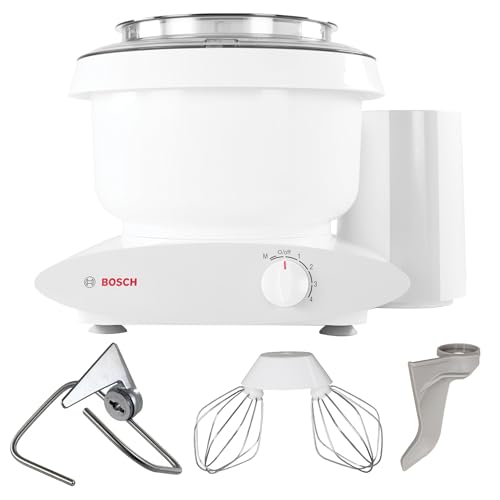
Bosch Universal Plus Stand Mixer — Best Overall Alternative
The Bosch Universal Plus suits the household whose mixer exists primarily for bread and big batches — weekly loaves, pizza dough for a family, cookie dough by the double batch — and secondarily for everything else. If your baking leans to dough, this is the alternative most likely to end your search.
Strengths
- Bottom-drive torque that kneads stiff dough without the head-rocking of tilt-head designs
- Large 6.5-quart bowl with a working capacity that suits double batches
- A decades-deep attachment ecosystem, from milling to meat grinding
Trade-offs
- The open bowl and drive column take a session to learn; it does not feel familiar on day one
- Whipping small quantities is less its party trick than dough is
- The aesthetic is functional German appliance, not countertop jewellery
| Drive | Bottom-drive, 500 watt motor |
| Bowl | 6.5 quart, open-top design |
| Included | Wire whips, dough hook, dough hook extender (bundle listing) |
| Best workload | Bread dough and large batches |
The Bosch inverts the usual stand-mixer layout: the motor sits below and drives the bowl’s centre column, so the dough hook works the mass against the bowl with the full weight of the machine resisting, rather than a head straining against a hinge. For bread, the difference is not subtle. Stiff doughs that make tilt-head mixers walk across the counter are kneaded calmly, and the open bowl lets you add flour while running without the ingredient chute gymnastics other designs demand.
Capacity is the second argument. The 6.5-quart bowl is genuinely usable for double batches — the cookie dough for a school fair, two loaves’ worth of dough — because the drive does not fade as the load rises. The bundle listing verified for this guide includes the dough hook extender, a small part that improves how smaller dough quantities are gathered, which answers the usual criticism that big bottom-drive bowls ignore small jobs.
Judge it as a dough-first machine that also whips and mixes competently, rather than an all-rounder with a dough hobby, and its decades-long production run makes sense. Bakers who knead weekly tend to keep these for a very long time.
Ownership economics favour the Bosch in a way spec sheets miss: because the design has been in production so long, bowls, tools and attachments circulate widely, fit across generations, and hold their value. A machine bought for dough today can gain a mill, a grater or a pasta set across the years without a platform change — the ecosystem argument usually made for the benchmark applies here too, aimed at a different kitchen.
Best for: bread bakers and big-batch households wanting a dough-first machine / Not suited for: cooks who mostly whip small quantities and value countertop looks
Check on Amazon — check the current price on Amazon for the exact variant described here.
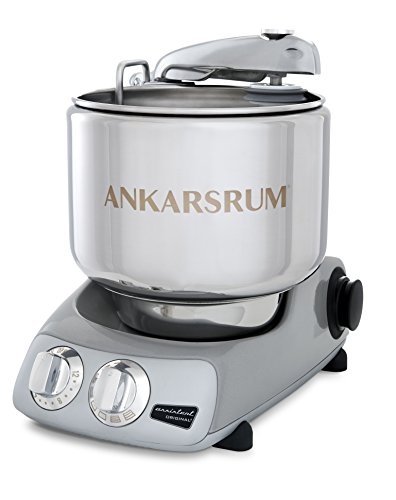
Ankarsrum Original Stand Mixer AKM6230 — Best for Serious Bread Bakers
The Ankarsrum suits the dedicated baker — sourdough schedules, enriched doughs, big hydrated masses — who wants the gentlest, most thorough knead available in a home machine and is willing to learn a different technique to get it.
Strengths
- Rotating bowl with roller-and-scraper kneading that develops dough without tearing it
- Large capacity handled calmly, including high-hydration doughs
- Exceptional build quality and a famously long service life
Trade-offs
- Premium tier — the most expensive philosophy in this list
- The technique is different: a learning curve of several bakes is real
- Whipping and creaming use a separate bowl and tools, a two-system workflow
| Drive | Rotating bowl, roller and scraper kneading |
| Construction | Swedish-built, metal construction |
| Systems | Stainless bowl for dough; separate bowl for whipping/creaming |
| Best workload | Serious bread and large dough batches |
Every other mixer in this guide pushes a tool through the dough. The Ankarsrum turns the bowl and lets a roller press the dough against the side while a scraper keeps the mass moving — closer to how hands and a bench work, and visibly gentler on delicate, highly hydrated doughs. Bakers chasing open-crumb sourdough and enriched holiday breads are the natural audience, and they tend to become evangelists, which in this category is data.
The machine’s second personality is as a whisking and creaming station with its separate bowl and twin whisks, which handles meringue and buttercream with real finesse. The two-system design is the trade for the dough excellence: more parts, more washing, and a workflow to learn. Nothing about the Ankarsrum is difficult, but almost everything about it is different, and buyers who want their first stand mixer to feel instantly familiar should look at the Cuisinart below instead.
Position it honestly: a premium-tier, buy-it-for-decades machine for people whose baking identity is dough. For that buyer it is not the alternative to the default — it is simply the best tool, full stop.
There is a learning dividend as well. The Ankarsrum’s roller gives feedback through the dough itself — you watch the mass smooth, tighten and clear the bowl — and bakers report understanding dough better after a season with it than after years of hook work. A tool that teaches is worth a premium to the serious hobbyist in a way no specification captures.
Best for: serious bread bakers wanting the gentlest thorough knead / Not suited for: first-time buyers wanting instant familiarity on a budget
Check on Amazon — check the current price on Amazon for the exact variant described here.

Cuisinart Stand Mixer SM-50 — Best Familiar-Style Alternative
The SM-50 suits the cook who likes the classic stand-mixer format — tilt head, planetary action, tools in the box — and simply wants a different badge, a different tier, or a lighter relationship with the category’s default brand.
Strengths
- Familiar tilt-head, planetary format with zero learning curve
- 12 speeds give finer low-speed control than most rivals for delicate work
- Complete kit included: whisk, paddle, dough hook and splash guard with pour spout
Trade-offs
- Dough capacity is honest mid-size — single loaves and standard batches, not doubles
- Tilt-head physics apply: very stiff dough will test the hinge like any rival’s
- Attachment ecosystem is shallower than the two leaders in this list
| Format | Tilt-head, planetary mixing action |
| Speeds | 12 speeds |
| Bowl | 5.5 quart stainless steel |
| Included | Chef’s whisk, mixing paddle, dough hook, splash guard |
There is a large, sensible market for an alternative that is alternative in name only, and the SM-50 owns it. The layout is the classic one, refined: twelve speeds with a genuinely gentle bottom end for folding and starting flour without a countertop snowstorm, a 5.5-quart bowl sized for the standard American recipe ecosystem, and every core tool in the box rather than in a follow-up purchase.
In daily work it behaves like the competent all-rounder it is: creaming, whipping and batter work are excellent, dough work is good within single-batch limits, and the splash guard with its pour spout earns its storage space the first time you add powdered sugar to a running frosting. Cuisinart’s long presence in the category also means parts, bowls and service are unremarkable to obtain — an ownership virtue buyers underrate until year four.
Choose it when the default brand’s tier or styling is the obstacle, not its format. Choose the Bosch or Ankarsrum when dough ambition is the obstacle. The distinction is the whole guide in one sentence.
Service and support deserve a line in any alternative’s favour here: Cuisinart’s national service network and long model runs mean the SM-50 is a low-drama appliance to own, with bowls and tools orderable years later. Alternatives live or die on this unglamorous infrastructure, and it is a genuine reason this model anchors the familiar-format slot.
Best for: all-round bakers wanting the classic format from a different brand / Not suited for: double-batch dough bakers
Check on Amazon — check the current price on Amazon for the exact variant described here.

Hamilton Beach 4 Qt Electric Stand Mixer — Best Budget Alternative
This Hamilton Beach suits the occasional baker, the small household, the first apartment — anyone whose mixer work is cakes, cookies, mashed potatoes and the odd single loaf, and whose budget is the first specification.
Strengths
- Planetary mixing action at a budget tier — full bowl coverage, not a fixed beater
- Light enough to move and store, with a carry handle that admits the truth about small kitchens
- The three essential tools included: whisk, flat beater, dough hook
Trade-offs
- 300 watts and a 4-quart bowl set firm limits: standard batches, not doubles
- Stiff dough is an occasional job here, not a weekly identity
- Build and finish are honest budget grade
| Motor | 300 watts, 7 speeds |
| Bowl | 4 quart |
| Action | Planetary mixing for full bowl coverage |
| Included | Whisk, flat beater, dough hook, splash guard |
Budget stand mixers divide into toys and tools, and the dividing line is the mixing action. This Hamilton Beach has genuine planetary action — the beater orbits while spinning, covering the bowl the way the premium machines do — which is why its results on batters, frostings and whipped cream are legitimately good rather than approximately good. For the jobs most households actually run weekly, it is not a compromise at all.
The limits are equally legible: a 4-quart bowl and a 300-watt motor define a standard-batch machine. One loaf, one cake, one batch of cookies, mashed potatoes for the family — yes, all day. Double batches and stiff wholegrain dough as a lifestyle — no, and the machine will tell you so by labouring. Bakers honest about their real workload save a full tier of money here and never miss it.
Storage is its quiet superpower. Light, handled, and sized for a cupboard rather than a countertop shrine, it suits the small kitchens where a premium mixer would become an obstacle. The best mixer is the one that gets used; for small households, that is often this one.
For apartment bakers, add noise to the storage argument: a smaller motor working standard batches in a planetary design is a kinder neighbour at weekend-morning hours than a premium machine labouring through dough it was not sized for. Matching machine to workload is also matching noise to life.
Best for: small households and occasional bakers on a firm budget / Not suited for: frequent bread bakers or double-batch workloads
Check on Amazon — check the current price on Amazon for the exact variant described here.

Breville Handy Mixer BHM800SIL — Best Alternative to Owning a Stand Mixer
The Handy Mixer suits the cook who bakes weekly but lightly — cakes, brownies, whipped cream, the occasional dough-adjacent job — and whose kitchen cannot spare a stand mixer’s footprint, or whose budget would rather go elsewhere.
Strengths
- Scraper beaters that work the bowl sides as they mix, reducing stops and spatula work
- Genuine low-speed finesse for starting dry ingredients without mess
- Stores in a drawer; the ultimate footprint alternative
Trade-offs
- Your arm is the stand: long or stiff mixes are physical work
- Serious bread dough is beyond any hand mixer’s honest remit
- Batch size is limited by your largest mixing bowl and your patience
| Format | Hand mixer with scraper beaters |
| Tools | Scraper beaters, whisks and dough hooks included in the range |
| Storage | Drawer-sized, snap-on storage case on the model line |
| Best workload | Batters, creams, frostings, light doughs |
Every ‘alternative mixer’ conversation should include the possibility that the alternative is not a different stand mixer but the admission that a stand mixer is the wrong tool. For a large share of home baking — batters, frostings, whipped cream, cookie dough in standard batches — a good hand mixer does the work, and Breville’s Handy Mixer is the premium expression of that idea, with scraper beaters that genuinely reduce bowl-scraping stops and a low gear that starts flour like it means to stay in the bowl.
The honest boundaries are strength and stamina: yours. A hand mixer hands the resistance back to your arm, so stiff doughs and long kneads are out, and big batches become a workout. Within its remit, though, the results are not a downgrade — whisking and creaming are arguably more controllable by hand-feel than by any stand.
Consider it the alternative for renters, small kitchens, second homes, and bakers whose stand mixer would spend fifty weeks a year as sculpture. A drawer-sized tool used weekly beats a countertop monument used monthly, every time.
The hand mixer’s other hidden advantage is control at the end of a mix: folding the last flour into a batter, or stopping whipped cream at the exact peak, is a wrist movement rather than a switch decision. Skilled bakers exploit that granularity constantly, which is why so many own both formats and reach for this one first.
Best for: light-to-moderate bakers short on space or budget / Not suited for: bread dough and large-batch work
Check on Amazon — check the current price on Amazon for the exact variant described here.
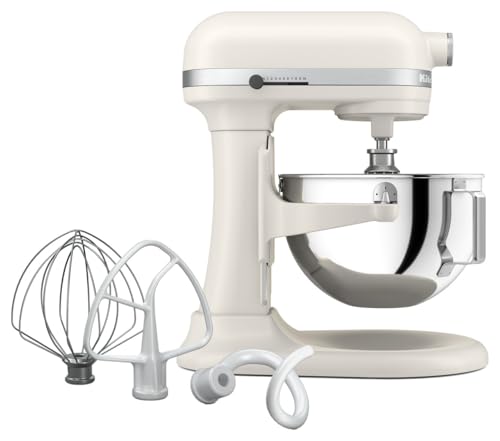
KitchenAid 5.5-Qt Bowl-Lift Stand Mixer KSM55 — Best If You Choose the Benchmark After All
The KSM55 suits the buyer who compared the alternatives and concluded the default ecosystem — attachments, bowls, parts, recipes written for the machine — is itself the feature they value most, in the more stable bowl-lift format.
Strengths
- Bowl-lift design is steadier under dough load than the brand’s tilt-head models
- 11 speeds including a gentle fold setting for delicate work
- The deepest attachment and accessory ecosystem available anywhere in this category
Trade-offs
- It is the benchmark the alternatives beat on specific jobs — dough specialists outperform it at dough
- Bowl-lift height needs under-cabinet clearance planning
- Premium tier, with attachments adding ongoing cost
| Format | Bowl-lift stand mixer |
| Speeds | 11, including a half-speed fold |
| Bowl | 5.5 quart stainless steel |
| Included | Flat beater, dough hook, wire whip |
An alternatives guide that refuses to name the benchmark is selling something. This bowl-lift KitchenAid is the strongest form of the default choice: steadier than the tilt-head under load, with a fold-speed that handles delicate work gracefully and an accessory ecosystem — pasta, grain milling, ice cream, food processing — that no rival in this list fully matches. For cooks who will actually buy into that ecosystem, it remains a rational first choice.
Measured job by job, though, the alternatives earn their places: the Bosch and Ankarsrum knead bread with less strain, the Cuisinart matches the all-round brief at a different tier, and the Hamilton Beach covers standard batches for far less commitment. The benchmark’s advantage is breadth and ecosystem, not supremacy at every task.
Buy it with eyes open and it will serve superbly. Buy it by default without the comparison and you may own the wrong excellence — a magnificent all-rounder where your baking life actually needed a dough specialist.
And a closing benchmark note: the ecosystem’s recipes matter. Thousands of recipes are written and tested against this brand’s speeds and bowl geometry, which quietly de-risks new bakes. Alternatives close that gap with experience, but the head start is real, and acknowledging it makes the case for the alternatives above more credible, not less.
Best for: cooks valuing the deepest attachment ecosystem and all-round polish / Not suited for: dough specialists better served by the Bosch or Ankarsrum
Check on Amazon — check the current price on Amazon for the exact variant described here.
Comparison Table
Read the drive column first — bottom-drive, rotating bowl, tilt-head, bowl-lift and hand-held designs behave like different species at dough work, which is where this category is decided. Capacity is stated as bowl size; the reviews translate it into batches.
| Pick | Badge | Key spec | Best for |
|---|---|---|---|
| Bosch Universal Plus Stand Mixer | Best Overall Alternative | Bottom-drive 500W, 6.5 qt bowl, dough system | Dough-first baking at family scale |
| Ankarsrum Original Stand Mixer AKM6230 | Best for Serious Bread Bakers | Rotating bowl, roller kneading, premium build | Dedicated dough work, buy-for-decades |
| Cuisinart Stand Mixer SM-50 | Best Familiar-Style Alternative | Tilt-head, 12 speeds, 5.5 qt, full tool kit | Familiar format, complete in the box |
| Hamilton Beach 4 Qt Electric Stand Mixer | Best Budget Alternative | Planetary action, 4 qt, 300W, carry handle | Budget standard-batch baking |
| Breville Handy Mixer BHM800SIL | Best Alternative to Owning a Stand Mixer | Hand mixer, scraper beaters, drawer storage | Skipping the stand mixer entirely |
| KitchenAid 5.5-Qt Bowl-Lift Stand Mixer KSM55 | Best If You Choose the Benchmark After All | Bowl-lift, 11 speeds, 5.5 qt, full ecosystem | The benchmark, chosen deliberately |
How to Choose an Alternative Stand Mixer
Start from the job you repeat, not the job you imagine. Write down your last ten bakes: if seven were dough, buy a dough machine (Bosch or Ankarsrum here); if they were cakes, cookies and frostings, any competent all-rounder serves you, and the decision moves to budget and ergonomics; if they were whipped cream and the odd batter, the hand-mixer alternative deserves a serious hour of your consideration before any stand mixer gets your money.
Second, working capacity. Bowl volume is the size of the container; working capacity is how much dough the drive can develop before it strains, walks or overheats. As a working rule, stiff dough should fill no more than half the rated bowl on a tilt-head, while the bottom-drive and rotating-bowl designs here use more of their volume honestly. Match the machine to your standard batch, with headroom for the holiday double batch if that is genuinely your pattern — or accept single batches and buy smaller and cheaper.
Third, the ownership triangle: weight, footprint, clearance. A mixer that lives on the counter gets used; one that must be hauled from a cupboard gets used less, and a heavy bowl-lift needs its cabinet clearance measured before purchase, not discovered after. Alternatives differ hugely here — from the drawer-sized Breville to the Ankarsrum’s permanent-residence presence — and for many households this decides more happiness than any specification.
Drive Designs Explained: Why Alternatives Feel So Different
Tilt-head planetary designs (the Cuisinart here, and the default brand’s most famous models) swing a head carrying the tool over a fixed bowl. They are intuitive and excellent at batters and whipping, and their hinge is the honest limit under heavy dough. Bowl-lift designs (the KitchenAid KSM55) keep the head fixed and raise the bowl into the tool, gaining stability under load at the cost of height and price.
Bottom-drive (the Bosch) puts the motor under the bowl and drives tools from the centre column: torque arrives where dough resistance lives, the bowl is open for adding ingredients, and the machine’s mass works for you instead of against a hinge. Rotating-bowl (the Ankarsrum) turns the bowl itself against a stationary roller — the gentlest, most hand-like knead, and the furthest from familiar technique.
None of these is ‘the best design’ in the abstract; each is a bet on which job matters most. The alternatives market exists precisely because the default bet — tilt-head planetary — is wrong for dough-led bakers, and this guide’s top two picks are the two designs that bet the other way.
The Total Cost of a Mixer Is a System, Not a Machine
Price the platform, not the product. A stand mixer’s lifetime cost includes the second bowl you will want by the second holiday season, the attachments your cooking actually grows into, replacement tools, and — on the alternatives side — the occasional adapter or brand-specific part. Two machines a tier apart at purchase can swap positions across five years of system costs, in either direction.
This is also where alternatives quietly win households: a budget machine plus the hand mixer you already own covers more real baking than a premium machine alone, for less total commitment. Conversely, the premium specialists here — Bosch and Ankarsrum — justify themselves by ending the upgrade cycle: bakers who buy their final dough machine buy it once. Decide which strategy your kitchen is running — cover the jobs cheaply, or close the question permanently — and the shortlist sorts itself.
Speeds, Watts and Other Numbers That Mislead Mixer Buyers
Wattage is the most quoted and least useful number on a stand mixer. It describes electrical consumption at the wall, not torque at the tool, and drivetrain design decides how much of that power becomes kneading. The bottom-drive Bosch in this guide develops dough that defeats nominally stronger tilt-head machines, because its power arrives through a short, direct path with the machine’s mass behind it. Judge dough ability by design and by working-capacity reports, and let wattage be the last number you read, if you read it at all.
Speed counts mislead more gently. Ten speeds versus twelve matters far less than the quality of the slowest speed — the gentle fold that starts flour without a cloud and folds egg whites without wrecking them — and the honesty of the top speed for whipping. Two of this guide’s picks advertise a dedicated fold or half-speed setting; in practice that single thoughtful gear is worth more than three extra notches at the top of the dial.
Finally, weight cuts both ways and listings present it as neither virtue nor vice. Heavy machines stay planted under dough load and discourage being put away; light machines store easily and wander under load. There is no correct weight, only a correct match to your counter, your cupboards and your arms — measure all three before the box arrives.
How to Get the Best from a Stand Mixer, Whichever Design You Choose
Technique rescues more bakes than torque does. These habits apply across every design in this guide and will make a budget alternative outperform a premium machine used carelessly.
- Start every dry-ingredient mix at the lowest speed until the flour is wetted — the ‘flour shower’ is a technique failure, not a machine specification, on every mixer ever made.
- For dough, mix to the windowpane test, not to the clock: stretch a small piece thin enough to see light through without tearing. Under-kneaded dough is the commonest cause of dense loaves blamed on mixers.
- Respect the rest: after the first minutes of kneading, let the dough rest ten minutes before finishing. Hydration does work the motor does not have to, and every design here benefits.
- Add ingredients in the order of resistance: liquids and eggs first for batters, flour last and gradually for doughs, butter in pieces for enriched doughs once the base is developed.
- Scrape deliberately: stop once mid-mix on any design, run a spatula around the bowl and under the mass, and restart. Planetary action reduces scraping; it does not abolish it.
- Clean tools immediately: dried dough on a hook is concrete. A soak while the loaf proofs turns a chore into a rinse, on every machine in this list.
Keep a simple log for your first month with a new design — batch size, speed, time, result. Alternatives feel strange for three bakes and obvious by the tenth, and the log turns that learning curve into recipes you can repeat. The bakers who love their alternative mixers are, without exception, the ones who learned their specific machine rather than fighting it like the one it replaced.
Troubleshooting
Problem: The mixer walks across the counter on dough → the load exceeds the design’s comfortable capacity or the dough is too dry. Reduce batch size, add liquid a spoonful at a time, and place the machine on a damp towel or mat for grip — and if walking is your weekly experience, your workload belongs to the Bosch or Ankarsrum class.
Problem: Flour ends up everywhere except the dough → speed discipline: start at the lowest setting with the splash guard on, add flour in two or three additions, and let each incorporate before the next. Every design in this guide can do this cleanly when asked properly.
Problem: Dough climbs the hook and stalls progress → the mass is too large or too developed for the hook geometry. Stop, pull the dough down, and finish in two smaller batches — or use the rest-and-return method: five minutes of rest relaxes the gluten and the hook regains its grip.
Problem: Whipped cream turns grainy → it was whipped past its peak — a power problem in reverse. Chill the bowl and whisk, watch from the soft-peak stage continuously, and finish the last moments by hand if your machine’s lowest speed is still vigorous.
Problem: The bottom of the bowl never gets mixed → tool clearance needs adjustment on designs that allow it, or a deliberate scrape stop on designs that do not. A coin-thickness gap between tool and bowl is the target on adjustable machines; check your manual for the specific procedure.
Common Buying Mistakes
Buying capacity by the quart number. Rated volume is the bowl’s size, not the dough it can develop. Buy by your standard batch with headroom, and treat holiday doubles as two singles unless you choose a genuine big-batch design.
Assuming the default brand is best at everything. It is best at breadth and ecosystem. At dough specifically, two alternatives in this guide outperform it by design. Match the machine to your dominant job.
Ignoring the attachment economy. The mixer is the first purchase, not the last. Pasta rollers, mills and grinders differ in availability and tier between brands; price your intended ecosystem, not just the machine.
Choosing by countertop appearance. A mixer is a tool you will move, wash and listen to for a decade. Weight, clearance and cleaning decide daily satisfaction; colour decides the first photograph.
Skipping the hand-mixer question. Many households buy a stand mixer for jobs a good hand mixer does in a drawer. Ask the question honestly before spending stand-mixer money and counter space.
Final Recommendation
For most alternative-seekers, the Bosch Universal Plus is the answer: a dough-capable, big-batch, decades-proven design that does the default brand’s weakest job best. Serious bread bakers should stretch to the Ankarsrum and never think about mixers again, while cooks who simply want the classic format under a different badge should take the Cuisinart SM-50 and bake happily.
The edges of the list are equally deliberate: the Hamilton Beach for honest budget baking, the Breville hand mixer for kitchens where a stand mixer is the wrong purchase entirely, and the bowl-lift KitchenAid for buyers who weighed the alternatives and chose the ecosystem on purpose. Any of the six, matched to the right kitchen, is a better buy than the default chosen by default.
One last piece of advice for alternative-shoppers: buy from a listing that states the exact model, bowl and tool set, and keep the box until the machine has survived its first dough. Alternatives are long-term relationships with unfamiliar designs, and the first month — not the first unboxing — is when you learn whether yours fits your kitchen. Every pick in this guide rewards that patience.
That patience pays compound interest: a mixer matched to your real baking life in month one is still, a decade later, the machine your household recipes are written around, trusted daily, and never once regretted by anyone.
Start here: Bosch Universal Plus Stand Mixer, Ankarsrum Original Stand Mixer AKM6230, Cuisinart Stand Mixer SM-50 — check the current price on Amazon for each before you decide.
Related guides in this series: Best Asian Stand Mixers; Best 6 Qt Standing Mixers; Best 10 Quart Mixers; Best 20qt Dough Mixers; Best Audio Mixers; Best Alternative Audio Mixers.
Frequently Asked Questions
What is the best alternative to a KitchenAid stand mixer?
It depends on the job the KitchenAid was not doing for you. For bread dough and big batches, the Bosch Universal Plus and Ankarsrum Original outperform the default by design. For the same classic all-round format under a different brand, the Cuisinart SM-50 is the closest match. For a smaller budget or smaller kitchen, the Hamilton Beach stand mixer and Breville hand mixer cover standard baking without the commitment.
Are alternative stand mixers as durable as the leading brand?
The best of them are more durable for their specialities: the Bosch and Ankarsrum have production histories measured in decades and reputations built on dough workloads that strain generalist machines. Durability follows design honesty — a machine used within its intended workload, from any brand in this guide, should serve for many years.
How much capacity do I need in a stand mixer?
For standard recipes — one cake, one batch of cookies, one loaf — a 4 to 5.5 quart bowl suffices. Regular double batches and family bread baking point to the 6.5-quart class and, more importantly, to a drive design that can use the volume. Judge by your standard batch rather than your largest imaginable one.
Can a hand mixer really replace a stand mixer?
For batters, frostings, whipped cream and standard cookie dough, yes — a premium hand mixer like the Breville in this guide handles them well and stores in a drawer. For bread dough, large batches and hands-free mixing during long tasks, no. The honest dividing line is dough and volume.
Which alternative is best for bread dough specifically?
The Ankarsrum’s rotating bowl gives the gentlest, most thorough knead for serious and high-hydration doughs, and the Bosch Universal Plus is the big-batch workhorse close behind. Tilt-head designs, including the benchmark, knead single loaves competently but are working nearer their limits with stiff or double batches.
Do alternative mixers have the same attachments available?
No — ecosystems differ. The benchmark brand offers the deepest range; Bosch’s system is also extensive, covering milling, grinding and more; Cuisinart and Hamilton Beach cover the essentials. If a specific attachment is central to your plans, verify it exists for your chosen alternative before buying the machine.


