Disclosure: airfryerkitchensupply.com is reader-supported. When you buy through links on our site, we may earn an affiliate commission at no extra cost to you.
Where to buy
Start with the shortlist itself: the best 7 1 programmable pressure cookers compared in this guide are the six models we verified for it. Five of the six picks below are linked to their Amazon listings; the sixth is covered as guidance only, for reasons its review explains. Prices are not printed in this article, since they shift constantly, and each linked pick points you to its live listing instead.
- Instant Pot Duo 6 Qt 7-in-1 Electric Pressure Cooker — check price on Amazon
- Instant Pot Rio 6 Qt 7-in-1 Electric Pressure Cooker — check price on Amazon
- Instant Pot RIO 6QT 7-in-1 Multi-Cooker, Sea Salt — check price on Amazon
- Instant Pot Duo 7-in-1 Mini Electric Pressure Cooker 3 Quart — check price on Amazon
- Instant Pot Rio Mini 4 Qt 7-in-1 Electric Pressure Cooker — check price on Amazon
- First-Generation 8-Quart 7-in-1 Models (Duo 8 Quart class) — covered below as a pick without a link (no verified listing at review time)
Surveying the best 7 1 programmable pressure cookers is an exercise in appreciating a formula that the market tested and kept. Six entries are covered below, five of them verified in current listings and one classic included as clearly-labelled guidance, so you can choose your size and generation with the whole picture in view.
Seven in one is the formula that built the modern pressure cooker market: pressure cook, slow cook, rice cooker, steamer, sauté pan, yogurt maker and warmer in a single programmable pot. It endures because those seven functions map almost perfectly onto what home cooks actually do in a week, without the novelty modes that inflate longer lists.
This guide is honest about the landscape: the verified 7-in-1 field is dominated by one family of machines in several sizes and generations, plus a classic large model that could not be verified in stock and is therefore covered without a link. Every linked pick below was confirmed through Amazon listing for this site.
There is a reason the seven-function formula outlived the race to ever-longer lists. Each added mode beyond the core seven tends to serve a narrower slice of cooking, while the seven themselves cover the centre of home cooking almost completely. This guide treats that focus as a virtue and judges the machines on how well they execute the core, not on how much they promise beyond it.
In this guide
Quick Picks
- Best Overall 7-in-1 — Instant Pot Duo 6 Qt 7-in-1 Electric Pressure Cooker: The original and still the reference: seven proven functions in the size every recipe assumes.
- Best Modern 7-in-1 — Instant Pot Rio 6 Qt 7-in-1 Electric Pressure Cooker: The 7-in-1 formula modernised: same seven functions, wider body and easier sauté ergonomics.
- Best Style Option — Instant Pot RIO 6QT 7-in-1 Multi-Cooker, Sea Salt: The same modern 7-in-1 in Sea Salt: proof that a workhorse cooker can suit a bright kitchen.
- Best Compact 7-in-1 — Instant Pot Duo 7-in-1 Mini Electric Pressure Cooker 3 Quart: Seven functions at half the size: the compact 7-in-1 for small households and side dishes.
- Best Small Family 7-in-1 — Instant Pot Rio Mini 4 Qt 7-in-1 Electric Pressure Cooker: The in-between 7-in-1: four quarts of complete functionality for small households.
- Best Large 7-in-1 — Unlinked — First-Generation 8-Quart 7-in-1 Models (Duo 8 Quart class): The classic large 7-in-1, covered honestly without a link because no current listing verified at review time.
The picks here share a surname more often than not, and this guide treats that as information rather than embarrassment. The strict 7-in-1 programmable category, verified against current listings, is a family business. What separates the picks is size, generation and finish, and for a category this mature, those are exactly the differences that decide a happy purchase.
How These Picks Were Chosen
Each model was checked through Amazon listing to confirm it genuinely offers the seven-function programmable brief, and its true capacity. We weighted fidelity to the 7-in-1 formula first, then programmability in the practical sense of pressure levels, timing and keep-warm behaviour, then pot quality and support. A model that could not be verified in a current listing was included only as a entry without a link, never with an invented link.
Editorially, the guide follows the standing rules of the series: no printed prices anywhere, because they expire, and no fixed ratings or review totals quoted as fact, because they expire too. The substance is verified product data and an honest account of what owning each size and generation feels like.
The 6 Best 7 1 Programmable Pressure Cookers

Instant Pot Duo 6 Qt 7-in-1 Electric Pressure Cooker — Best Overall 7-in-1
The Duo is not just a 7-in-1 programmable pressure cooker; it is the reason the phrase exists. Its seven functions, pressure cook, slow cook, rice, steam, sauté, yogurt and warm, defined what a multicooker should be, and the 6-quart version remains the size the entire recipe world writes for.
Strengths
- The original 7-in-1 formula, refined over years into the category’s reference design
- Every recipe in the genre assumes its seven functions and pressure behaviour
- Stainless pot and a mountain of compatible accessories keep ownership easy for years
Trade-offs
- Slow mode runs gentler than a dedicated crock and prefers the higher setting
- Sealing ring absorbs strong flavours, so most owners add a second ring
- Newer rivals add modes beyond seven, though few add ones owners use weekly
Key specs
- Capacity: 6 quart
- Functions: 7-in-1 (per Amazon listing)
- Pot: Stainless steel
- Modes: Pressure, slow, rice, steam, sauté, yogurt, warm
Programmability here means practical control rather than novelty: set pressure level and time, let the machine manage the cycle, and trust keep-warm to hold dinner. Because so many cooks own this exact model, its behaviour is the most documented in the category, which quietly removes the trial and error that makes a first pressure cooker intimidating.
If you want the canonical 7-in-1 experience with the fewest unknowns, this is it. Later models in this guide add colour, quieter steam release or different sizes, but the original formula at 6 quarts is still the one most kitchens should start from.
The Duo’s control layout, once memorised, becomes invisible, and that invisibility is a feature in a cooker used four times a week. Owners stop reading the panel and start cooking by feel, which is the surest sign an appliance has been absorbed into a kitchen’s life.
Who should skip it: only the buyer whose household size clearly points elsewhere in this guide, to the minis below or the large format discussed at the end. For the household in the broad middle, the Duo 6 Qt is the recommendation this guide would defend in any kitchen, including its own, which is the strongest sentence a roundup like this can honestly print.
Best for: Anyone buying their first 7-in-1 who wants the canonical, best-supported model / Not suited for: Owners who specifically want the newest quiet-release designs or a compact size
Check on Amazon — check the current price on Amazon.
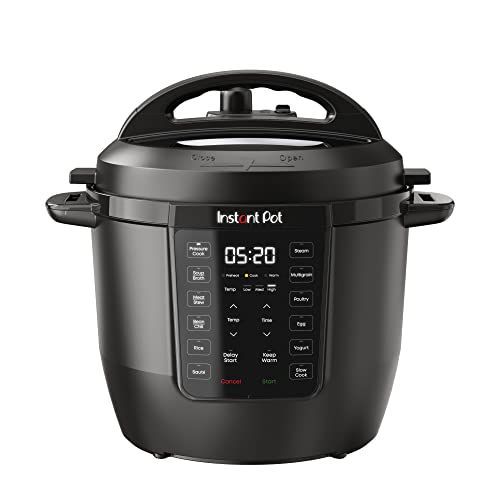
Instant Pot Rio 6 Qt 7-in-1 Electric Pressure Cooker — Best Modern 7-in-1
The Rio takes the same seven functions and rethinks the body around them. Its wider profile sits more comfortably on the counter, gives sautéing a broader stage and makes the whole machine feel like the current generation of the idea rather than a reissue of the original.
Strengths
- A wider, more modern take on the 7-in-1 formula with easier handling around the stove
- Seven core functions keep the panel honest and approachable
- Anti-spin inner pot design in this line steadies the pot while you stir and sauté
Trade-offs
- A newer line means a smaller pool of model-specific accessories than the Duo
- Wide shape takes a different cupboard footprint than classic tall models
- Colour and style options vary by listing, so check the exact variant
Key specs
- Capacity: 6 quart
- Functions: 7-in-1 (per Amazon listing)
- Design: RIO wide-base design, black
- Modes: Pressure, slow, sauté, steam, rice, yogurt, warm
Functionally you lose nothing: pressure cooking, slow cooking, rice, steaming, sautéing, yogurt and warming all carry over, and general Instant Pot timings apply directly. What changes is ergonomics. Stirring a sauté without the pot rotating, serving from a wider vessel and storing a shorter body are small daily improvements that owners notice every single cook.
Choose the Rio if you like the 7-in-1 brief but want the fresher design language. It is the same promise as the Duo, modernised, and for new buyers choosing between the two, the deciding factor is honestly which shape suits your kitchen better.
RIO ownership has one more quiet benefit: the wider pot makes serving at the table more graceful, because a ladle moves in a wide vessel the way it does in a serving bowl. It is a small thing at every meal, and small things at every meal are what ownership actually is.
Who should skip it: the Duo loyalist with a drawer of original-line accessories, and the buyer who finds the wider body harder to store than a tall one. New buyers choosing fresh should not skip it; the RIO is the same trusted formula wearing the shape the category has grown into, and ergonomics compound across thousands of cooks.
Best for: New buyers who want the classic seven functions in a wider, modern design / Not suited for: Duo loyalists who want exact accessory compatibility with the original line
Check on Amazon — check the current price on Amazon.
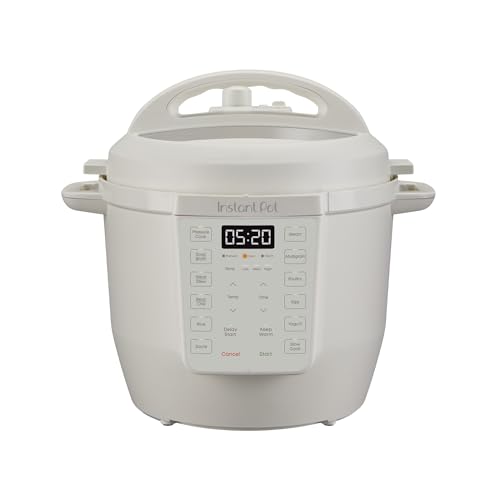
Instant Pot RIO 6QT 7-in-1 Multi-Cooker, Sea Salt — Best Style Option
Countertop appliances are furniture you use, and the Sea Salt RIO exists for the kitchens where black plastic jars. It is the full 7-in-1, 6-quart RIO platform in a pale finish that sits comfortably in bright, Scandinavian-leaning spaces, with no functional sacrifice for the aesthetics.
Strengths
- All seven functions in a soft Sea Salt finish that suits light, modern kitchens
- Full 6-quart capacity, so the style choice costs nothing in usefulness
- Same RIO platform, so general timings and techniques transfer directly
Trade-offs
- Colour finishes can show scuffs and turmeric with more honesty than black
- Variant listings come and go, so availability is less predictable
- Purely a style distinction from the black RIO, with identical cooking
Key specs
- Capacity: 6 quarts
- Functions: 7-in-1 multi-cooker (per Amazon listing)
- Finish: Sea Salt
- Modes: Pressure, slow, sauté, steam, rice, yogurt, warmer
Cooking is identical to its black sibling: the same seven functions, the same wide body and the same pressure behaviour, so every word of general RIO and Instant Pot guidance applies. The decision here is honestly about what you want to look at every day for years, and there is nothing shallow about choosing the version that pleases you in your own kitchen.
If your appliances live permanently on the counter, as a 6-quart cooker tends to, finish is a legitimate feature. The Sea Salt RIO is the style-conscious route into the 7-in-1 category without leaving the proven platform.
A care note for the Sea Salt finish: wipe turmeric and tomato splashes promptly, as pale finishes show them longer, and the cooker will keep its bright-kitchen looks for years. In every other respect, treat it exactly as its black sibling, including the spare-ring habit for strong dishes.
Who should skip it: anyone for whom a cooker is invisible infrastructure, better in black and forgotten. Buyers who keep their cooker out, and whose kitchens are light and considered, should not skip it; an appliance you see daily should be one you enjoy seeing, and the Sea Salt RIO is the rare workhorse that understands the assignment.
Best for: Design-conscious buyers who keep their cooker on the counter permanently / Not suited for: Anyone indifferent to finish, who should simply take the best available RIO listing
Check on Amazon — check the current price on Amazon.

Instant Pot Duo 7-in-1 Mini Electric Pressure Cooker 3 Quart — Best Compact 7-in-1
Not every 7-in-1 buyer cooks for six. The Duo Mini carries the same seven functions into a 3-quart body built for singles, couples and side dishes, and it does so without stripping the programmability that makes the category worthwhile.
Strengths
- The full seven-function idea scaled honestly to 3 quarts for one or two people
- Reaches pressure quickly on small batches, saving time and energy
- Ideal second cooker for rice, grains and sides while the main dish cooks elsewhere
Trade-offs
- Too small for a whole chicken or large batch cooking
- Accessories are sized for the mini, so they do not swap with 6-quart models
- Per-quart value favours the bigger models if you have the space
Key specs
- Capacity: 3 quart
- Functions: 7-in-1 (per Amazon listing)
- Pot: Stainless steel
- Modes: Pressure, slow, rice, steam, sauté, yogurt, warmer and sterilizer per listing
Small size changes the experience in useful ways. The Mini pressurises fast, cooks a couple of portions of rice or beans without a cavernous pot, and earns a permanent counter spot in small kitchens where a 6-quart machine would live in a cupboard and die of inconvenience. As a second cooker beside a main 6-quart, it is the classic rice-and-sides partner during big meals.
Be clear about the ceiling: this is not the batch-cooking or whole-chicken size. Within its brief, though, it is the most capable compact 7-in-1 we verified, and for small households it will be used more in a month than a big cooker would be in a year.
The Duo Mini has a cult second life as a travel and small-space cooker: motorhomes, dorm-adjacent studios and office kitchens all run one, because its footprint asks so little. If your main kitchen later adds a 6-quart, the Mini rarely gets sold; it gets promoted to sides and grains, where it is arguably the best in the family.
Who should skip it: anyone who regularly cooks for more than two, because its ceiling will announce itself within a month. Singles, couples, small-space dwellers and owners of a big cooker seeking a partner should not skip it; the Mini is the most-used size in more real kitchens than the sales charts of big models would ever suggest.
Best for: Singles, couples, small kitchens and owners wanting a second cooker for sides / Not suited for: Families and batch cooks who need 6-quart capacity
Check on Amazon — check the current price on Amazon.

Instant Pot Rio Mini 4 Qt 7-in-1 Electric Pressure Cooker — Best Small Family 7-in-1
The Rio Mini at 4 quarts is the size for the household that found 3 quarts tight and 6 quarts theatrical: two to three people, regular weeknight cooking, and a kitchen where counter space is genuinely contested. It keeps all seven functions, so nothing about the 7-in-1 promise is diluted.
Strengths
- Four quarts splits the difference between the mini and the full size for small families
- RIO line ergonomics in a footprint modest kitchens can actually house
- Seven functions keep it a complete cooker rather than a cut-down appliance
Trade-offs
- Still too small for large roasts or serious batch cooking
- A newer line, so accessory choice is growing rather than complete
- Households that regularly host will outgrow it and buy twice
Key specs
- Capacity: 4 quart
- Functions: 7-in-1 (per Amazon listing)
- Design: RIO Mini, black
- Modes: Slow cook, rice, steam, sauté, yogurt, warm plus pressure
In practice it covers the category’s daily work, rice, grains, soups, small stews, yogurt and steamed vegetables, with the RIO line’s friendlier ergonomics. It pressurises quickly, stores easily and comes out for jobs a big cooker makes feel oversized, which is exactly the behaviour that keeps an appliance in weekly rotation.
Size it against your real table. If dinner is usually two or three and batch cooking is rare, the Rio Mini is the most honest 7-in-1 in this guide. If Sunday means a crowd, step up to the 6-quart models and let this size go.
The Rio Mini’s four quarts also suit the way small households actually batch: a soup for tonight and tomorrow’s lunch, not a freezer empire. That honesty about scale is why its owners tend to use it more, not less, than the big cooker it replaced on their counter.
Who should skip it: hosts and freezer-stockers, for whom four quarts is a appetiser. Small families should not skip it; it is the size that matches their actual dinners, and a cooker matched to actual dinners is used constantly while an oversized one is used apologetically. That usage gap is the whole ballgame in small appliances.
Best for: Small families and couples who cook regular weeknight meals / Not suited for: Hosts and batch cooks who need full 6-quart or larger capacity
Check on Amazon — check the current price on Amazon.
First-Generation 8-Quart 7-in-1 Models (Duo 8 Quart class) — Best Large 7-in-1 — no link
The large end of the classic 7-in-1 family deserves an honest mention. The original 8-quart generation took the seven functions to crowd scale, and for households cooking for eight or freezing in bulk, it remains the size that makes sense. We could not verify a current listing for it through the API at review time, so it appears here without a purchase link rather than with an invented one.
Strengths
- Eight quarts is the true batch and crowd size in the 7-in-1 format
- The original large Duo generation proved the formula at family scale
- Used and refurbished examples circulate widely for informed buyers
Trade-offs
- No current listing could be verified through the API for this guide, so it carries no purchase link here
- Older generation controls lack newer refinements such as quieter steam release
- A cooker this size needs real storage space and longer pressurising times
Key specs
- Capacity: 8 quart
- Functions: 7-in-1 (original generation)
- Status: Unlinked: no current verified listing matched at review time
Treat this entry as buying guidance instead. If you shop for this class, verify the exact model name, capacity and function list on the listing itself, and favour sellers with clear returns, because generation details vary. The cooking guidance for the 6-quart Duo in this guide scales directly; allow extra minutes for the larger pot to pressurise and respect the half-fill rule for beans and grains even more strictly at this volume.
Many large households will be better served by the verified 8-quart models in our 8-quart electric pressure cooker guide, which trade the strict seven-function brief for newer designs that are actually in stock. This unlinked pick stays in the roundup because the search asks about 7-in-1 machines specifically, and pretending the large classic does not exist would be its own kind of inaccuracy.
For shoppers hunting the classic 8-quart 7-in-1 second-hand, inspect the sealing ring, the float valve and the lid’s locking action before anything else, and run a water test before the first real meal. A sound example will serve for years; a neglected one is a project, and the price should say which you are buying.
Who should act on it: the large household that has read this far should treat this entry as a fork in the road. Either hunt the classic format through reputable refurbished channels with the inspection steps above, or take the verified modern 8-quart models in the companion guide and accept nine or eleven functions in place of seven. Both are good answers; an unverified impulse buy is the only bad one.
Best for: Large households set on the classic 7-in-1 format at 8 quarts / Not suited for: Buyers who want a verified, in-stock listing today, who should use the 8-quart guide instead
Unlinked pick: no verified listing was available at review time, so no purchase link is attached.
Comparison Table
| Pick | Badge | Key spec | Best for |
|---|---|---|---|
| Instant Pot Duo 6 Qt 7-in-1 Electric Pressure Cooker | Best Overall 7-in-1 | 6 quart | Anyone buying their first 7-in-1 who wants the canonical, best-supported model |
| Instant Pot Rio 6 Qt 7-in-1 Electric Pressure Cooker | Best Modern 7-in-1 | 6 quart | New buyers who want the classic seven functions in a wider, modern design |
| Instant Pot RIO 6QT 7-in-1 Multi-Cooker, Sea Salt | Best Style Option | 6 quarts | Design-conscious buyers who keep their cooker on the counter permanently |
| Instant Pot Duo 7-in-1 Mini Electric Pressure Cooker 3 Quart | Best Compact 7-in-1 | 3 quart | Singles, couples, small kitchens and owners wanting a second cooker for sides |
| Instant Pot Rio Mini 4 Qt 7-in-1 Electric Pressure Cooker | Best Small Family 7-in-1 | 4 quart | Small families and couples who cook regular weeknight meals |
| First-Generation 8-Quart 7-in-1 Models (Duo 8 Quart class) | Best Large 7-in-1 — no link | 8 quart | Large households set on the classic 7-in-1 format at 8 quarts |
The table shows a family more than a field: one formula at four sizes, in two design generations and two finishes, plus the classic large model covered without a link. That concentration is the honest state of the strict 7-in-1 market today, and the reviews above treat it as such rather than dressing up near-misses as alternatives.
Care Routine for a Programmable Cooker
Wash the inner pot and lid after every use, and the sealing ring whenever it carries a strong dish’s aroma into the next day. Check the float valve and anti-block shield weekly if you cook often; a pinhead of starch in the wrong place is the cause of most mysterious failures to pressurise.
Monthly, run a short steam cycle with water and lemon or vinegar, then dry everything thoroughly before reassembly. Ten minutes a month is the entire maintenance budget of a modern 7-in-1, and owners who spend it get years of uneventful service, which is the highest praise any pressure appliance can earn.
How to Choose: A Best 7 1 Programmable Pressure Cookers Buying Guide
Below sits the buying-guide layer: what the seven functions really are, what programmability means when it matters, and how to choose a size inside one product family. With those settled, the model decision becomes the easy part.
What the Seven Functions Actually Are, and Why Seven Works
The canonical seven are pressure cooking, slow cooking, rice cooking, steaming, sautéing, yogurt making and keeping warm. Read that list against a real week and its logic appears: grains and mains under pressure, a slow stew on Sunday, steamed vegetables beside either, a sauté to start almost everything, and warm holding it all together. Yogurt is the only occasional guest, and even it earns its place in households that make it.
Longer function lists mostly subdivide these seven. A soup mode is pressure cooking with a preset time; a bean mode is the same. Seven is not a limitation but a description of the actual methods, with presets layered on top for convenience.
Programmable, in the Ways That Matter
Useful programmability in a pressure cooker means three things: control of pressure level and time, a delay start for planned cooking, and an automatic keep-warm that holds food safely after the cycle. Screens, apps and voice control are optional garnish on that foundation.
When comparing models, check whether custom time and pressure survive as a manual mode you can return to, because experienced owners quickly graduate from presets to their own timings. A machine that remembers your last manual setting quietly becomes faster to use every week.
Choosing Your Size Within the 7-in-1 Family
Three quarts serves one or two and shines at sides and grains. Four quarts covers small families’ weeknights. Six quarts is the default the recipe world assumes, handling whole chickens and weekly batches. Eight quarts is for crowds and freezer stocking, with longer pressurising times as the toll.
Buy the size your table needs most weeks, not the size your biggest annual meal needs. An oversized cooker used daily for small meals is slower and more awkward than a right-sized one, and the holiday bird can always be cooked in two batches or the oven.
Generations of the Formula: What Actually Changed
Across the generations represented here, the cooking core barely moved: same methods, same pressure logic, same timings. What changed is everything around the core. Bodies grew wider and easier to stir in, finishes multiplied, steam release grew quieter in the wider market, and panels became clearer about what the machine is doing and when.
That pattern tells a buyer something useful. You are not choosing between a good generation and a bad one; you are choosing the ergonomics and size that fit your kitchen, secure in the knowledge that the food will be the same. It is a comfortable category to buy in, once the size question is settled.
The Accessory Shelf, Sized to Reality
Because the 7-in-1 family is so widely owned, its accessory shelf is the deepest in pressure cooking: spare rings in multipacks, steamer baskets, egg racks, springform pans, extra pots and glass lids, all sized precisely for the 6-quart standard and most for the minis too. That depth is a genuine ownership advantage that spec sheets never capture.
Buy in the order of need: a spare ring first, a steamer basket second, a glass lid third if you slow cook or serve from the pot. Everything beyond that should be purchased by a recipe, not by a browsing session, or the cupboard fills with good intentions in stainless steel.
Programming for Altitude and Other Local Truths
If you cook at altitude, a programmable cooker rewards a small adjustment: add a few percent to pressure times and favour natural release, because the pressure differential that does the cooking is smaller in thin air. The programmability that defines this category is exactly what makes the adjustment trivial; set your corrected time once and the machine remembers the pattern of your cooking.
Local water, local beans and local cuts all leave similar fingerprints. The owners who get famous results from ordinary machines are not using secret models; they are using the manual mode and a notebook, which is why this guide mentions both in nearly every article of the series.
What to Do When a Cook Goes Wrong
A programmable cooker makes mistakes unusually recoverable. Undercooked beans get ten more minutes at pressure, not a ruined dinner. A stew that finished thin reduces on sauté in the same pot. Food that overcooked slightly becomes the base of tomorrow’s soup rather than a loss, because the pot that made it can transform it.
The one mistake to treat seriously is a cooker that will not pressurise: check the ring’s seating, the valve’s position and the liquid level, in that order, and you will find the cause almost every time. Everything else in pressure cooking is seasoning, and seasoning can always be adjusted at the end.
Presets vs Manual Programming: How Owners Actually Cook
New owners live on presets, and presets are genuinely useful while the machine is unfamiliar: they encode sensible times for rice, beans, meat and soup. Within a few months, most owners migrate to manual pressure with their own timings, because their recipes, their altitude and their beans differ from the preset designer’s assumptions.
Judge a 7-in-1 therefore by its manual mode as much as its preset bench: how quickly can you set pressure and time, and does it remember your last setting? The machines in this guide all pass that test, which is one reason the formula has survived its own imitators.
Altitude, Beans and Other Variables the Manual Mentions Once
Pressure cooking times lengthen with altitude, because the pressure inside is relative to the air outside; high-altitude cooks add a small percentage and lean on natural release. Dried beans vary with age more than with brand, so the same setting can give firm beans from an old bag and perfect ones from a fresh bag.
These variables are why the notebook habit appears throughout this batch of guides. A programmable cooker is consistent; your ingredients are not, and the cook who notes the difference becomes the cook whose 7-in-1 seems mysteriously better than everyone else’s.
How to Program a 7-in-1 Pressure Cooker for a Weeknight Dinner
Programming a 7-in-1 well is a sequence, not a setting: the order of sauté, load, seal, program and release is the same for a Tuesday soup and a Sunday roast. Learn the sequence once, on a forgiving dish, and every recipe in the category becomes an variation on a theme you already know.
- Use sauté first for aromatics and browning, then press cancel before adding the remaining ingredients and liquid. This order builds flavour and resets the panel for programming.
- Add at least the minimum liquid for your size, about a cup in a 6-quart, and keep the pot under two-thirds full, or half for beans and grains.
- Lock the lid, confirm the steam valve is set to sealing, and select the pressure function with your time. The display counts down only once pressure is reached.
- Let meats and beans release naturally for at least ten minutes after the cycle, then vent any remaining pressure before opening.
- Switch to keep-warm if dinner needs to wait, and note the total time the dish took, pressurising included, in the recipe margin for next time.
- Finish with fresh seasoning after opening. Programmable cooking is precise about time and temperature, but salt and acid always belong at the end.
Write the total time, including pressurising and release, beside the recipe the first time you make it. Headline cooking times in this category omit both, and your own totals are the ones that will plan your evenings accurately from the second cook onward.
Common Buying Mistakes
- Treating presets as mandatory. Presets are starting points. The manual pressure mode with your own timing is where a 7-in-1 becomes truly yours.
- Forgetting the valve position. A cooker left venting will boil away its liquid and never pressurise. Make the sealing check a physical habit, every cook.
- Quick-releasing everything. Meats and beans need natural release to stay tender and calm. Save the fast vent for vegetables and seafood.
- Buying the biggest size by default. Oversized pots pressurise slowly and cook small meals awkwardly. Size to your weekly table.
- Ignoring the sealing ring’s memory. Yesterday’s curry will haunt today’s yogurt. Wash the ring after strong dishes and keep a second for mild ones.
Final Recommendation
Start with the Duo 6 Qt for the canonical 7-in-1, or the RIO 6 Qt if you prefer the wider modern body, in black or Sea Salt. Small households should take the Rio Mini 4 Qt or the Duo Mini 3 Quart without feeling they settled. Large households set on this exact format should read the unlinked guidance on the classic 8-quart, then compare the verified models in our 8-quart guide before deciding.
If you are upgrading from an older cooker rather than buying your first, the honest gains in this generation are ergonomics and consistency, not a revolution in the food itself. Choose on size and design, keep your notebook of timings, and the new machine will feel familiar by the second meal and better by the fifth.
Settle the purchase with the size question and the rest resolves itself. The 7-in-1 formula is proven to the point of boredom, which is a compliment in appliance terms: whichever verified model in this guide you bring home, the cooking will work, the recipes will fit, and the machine will disappear into your routine exactly as a good tool should.
A closing perspective on buying into a mature category. There is a particular pleasure in purchasing the settled version of a technology: the formula proven, the accessories everywhere, the recipes written for exactly what you own, and the failure modes so well documented that every question has an answer waiting. That is the 7-in-1 programmable pressure cooker today, and it is why this guide can be short on hedging even where it is long on detail. Whichever size and generation you choose from the verified picks above, you are buying into the most supported cooking platform in its class, with a decade of other people’s dinners standing behind your first one. Learn the sequence, keep the small notebook, respect the ring and the valve, and the machine will repay you in the currency this category trades in: weeknight dinners that used to be impossible, made ordinary.
Keep exploring the cluster: Best 6 Quart Pressure Cookers Best 6qt Multi Function Slow Cookers Best 8 Qt Electric Pressure Cookers Best 6 Slow Cookers And Pressure Cookers Best 6 Quart Slow Cookers
Frequently Asked Questions
What are the seven functions in a 7-in-1 pressure cooker?
Pressure cooking, slow cooking, rice cooking, steaming, sautéing, yogurt making and keeping warm. Together they cover the great majority of what a home cook asks a single pot to do.
Is 7-in-1 enough, or should I buy a 9 or 10-in-1 model?
For most kitchens, seven is enough, because the extra modes are mostly presets of the same methods. Buy more functions only if a specific one, such as sous vide or air frying with a second lid, matches how you cook.
Which size 7-in-1 should I buy?
Six quarts for most households, 3 or 4 quarts for small homes, and 8 quarts for crowds and batch cooking. The 6-quart is the size recipes assume, which makes it the easiest to learn on.
Can a 7-in-1 replace my rice cooker and slow cooker?
For most households, yes. Its rice function is genuinely good and its slow function works well on the higher setting, which is why these machines cleared so many counters. Dedicated enthusiasts may keep a favourite specialist.
How programmable are these cookers, really?
You control pressure level and time, can delay the start on most models, and get automatic keep-warm at the end. That covers the programming that changes outcomes; the rest is interface preference.
Why does one pick in this guide have no buy link?
The classic large 7-in-1 could not be verified in a current listing through the API when this guide was prepared, so it is covered as buying guidance only. We never attach links we cannot verify.
Does a 7-in-1 pressure cooker use much electricity?
Very little compared with an oven. The element works hard briefly to build pressure, then sips to maintain it, and the insulated body holds heat efficiently. For beans, grains and stews it is among the cheapest cooking methods in the house per meal.
How long should a 7-in-1 pressure cooker last?
With the ring replaced as needed and the valves kept clean, the pot and body are built for years of regular use, and the platform’s accessory availability extends that life further. The most common end-of-life cause is neglect of the sealing ring and vents, not failure of the cooker itself.
Can a 7-in-1 cook frozen meat safely?
Yes, with added time, because the cooker brings food through the temperature range under pressure rather than leaving it to thaw-cook slowly. Add roughly half again to the pressure time for frozen cuts and always verify the centre is thoroughly cooked before serving.
Are 7-in-1 cookers being replaced by newer models with more functions?
Newer models add functions at the edges, but the seven-function core remains the centre of the market and of recipe writing, because it maps to how people actually cook. Buying a 7-in-1 today is buying the standard, not a leftover, and standards are supported for a long time.
What should I do if my cooker shows a burn notice?
Cancel, release any pressure carefully, and open the lid to inspect. The usual causes are too little thin liquid, a starchy layer settled on the base, or the inner pot not seated cleanly. Scrape the base gently, add a splash more liquid, stir layered ingredients like tomato sauce into the top rather than the bottom, and restart with a slightly shorter time, since the food is already part-cooked.
Do I need to register or set up anything before the first cook?
No accounts or setup are required on the classic models in this guide; wash the pot, run a water test, and cook. The water test is worth its ten minutes because it teaches the sounds and timings of your exact machine with nothing at stake but water.


