Disclosure: airfryerkitchensupply.com is reader-supported. When you buy through links on our site, we may earn an affiliate commission at no extra cost to you.
Where to buy
Start with the shortlist itself: the best 6 slow cookers and pressure cookers compared in this guide are the six models we verified for it. The six cookers compared here are all sold on Amazon, and the links below lead directly to them. In keeping with the rest of the guide, no prices are printed in the text; they change too often, so check each listing for the figure that applies today.
- Instant Pot Duo 6 Qt 7-in-1 Electric Pressure Cooker — check price on Amazon
- Crock-Pot 6 Quart Cook & Carry Programmable Slow Cooker — check price on Amazon
- Presto 02141 6-Quart Electric Pressure Cooker — check price on Amazon
- Cosori Pressure Cooker 6QT 9-in-1 — check price on Amazon
- Hamilton Beach 6 Quart Slow Cooker 33665G — check price on Amazon
- COMFEE 12-in-1 Electric Pressure Cooker 6 Quarts — check price on Amazon
Comparing the best 6 slow cookers and pressure cookers starts with a confession: the two methods are not enemies, and this guide will not pretend otherwise for the sake of a ranking. Six verified cookers are assessed below as a system of options, so you can buy one pot that does both jobs or two that each do one perfectly.
This search hides the most practical question in small appliances: should your 6-quart cooker slow cook, pressure cook, or somehow do both? The honest answer depends on your week. Slow cooking rewards planning and forgives absence; pressure cooking rescues the day the plan failed. Many households, given the choice, want access to both tempos.
So this roundup compares the two methods head-on at the same 6-quart size: dedicated slow cookers, a dedicated electric pressure cooker, and combined multicookers that promise both in one pot. Every pick was verified, and the reviews are blunt about where the combined machines compromise.
The comparison also has a sensory dimension worth naming. Slow cooking fills a house with anticipation for hours, which is either a pleasure or a torment depending on your day. Pressure cooking keeps its secrets behind a sealed lid and delivers the aroma all at once at the end. Kitchens develop loyalties to one rhythm or the other, and the wisest purchase follows the rhythm your household already loves.
In this guide
Quick Picks
- Best Overall Combined Cooker — Instant Pot Duo 6 Qt 7-in-1 Electric Pressure Cooker: The combined-cooking default: full-strength pressure cooking and credible slow cooking in one pot.
- Best Dedicated Slow Cooker — Crock-Pot 6 Quart Cook & Carry Programmable Slow Cooker: The slow specialist: stoneware, a timer and a travel lid, against which combined machines are measured.
- Best Dedicated Electric Pressure Cooker — Presto 02141 6-Quart Electric Pressure Cooker: The pressure specialist for two-appliance kitchens: presets, proven engineering and no multicooker clutter.
- Best Modern Combined Cooker — Cosori Pressure Cooker 6QT 9-in-1: The modern combined option: nine functions, sous vide curiosity and a ceramic pot that rinses clean.
- Best Budget Slow Cooker — Hamilton Beach 6 Quart Slow Cooker 33665G: The budget slow half: stoneware quality at a dial-and-done price, ready to pair with any pressure cooker.
- Best Value Combined Cooker — COMFEE 12-in-1 Electric Pressure Cooker 6 Quarts: The value combined play: both methods, twelve functions and a delay timer without the flagship price.
This is the only roundup in the batch where the picks are meant to be read as a system rather than as rivals. Some readers will buy one combined machine and close the question. Others will buy a slow specialist now and a pressure specialist later, or the reverse. The badges are written for both readers, and the buying guide below exists to help you decide which reader you are.
How These Picks Were Chosen
We verified all six models against their Amazon listing for capacity, method and functions, then judged them by a combined standard: how well each covers slow cooking, how well each covers pressure cooking, and how honestly the compromises are priced. Dedicated specialists were credited for doing one method perfectly; combined machines were credited for flexibility and marked down where their slow modes run gentler than stoneware.
For the record, this comparison prints no prices and quotes no fixed ratings, because both kinds of number rot quickly and mislead late readers. The comparisons rest instead on verified capacities and functions, and on the accumulated practical knowledge of how these two methods behave in real kitchens.
The 6 Best 6 Slow Cookers and Pressure Cookers

Instant Pot Duo 6 Qt 7-in-1 Electric Pressure Cooker — Best Overall Combined Cooker
If the question is whether one cooker can do both jobs, the Duo is the answer the market settled on. It pressure cooks at full conviction and slow cooks credibly in the same stainless pot, and for a household choosing between a slow cooker and a pressure cooker, it makes the choice unnecessary.
Strengths
- One appliance genuinely covers both cooking methods, so a small kitchen needs a single big pot
- Sauté mode builds the base of a slow-cooked stew in the same vessel before either method begins
- The largest recipe ecosystem in the category writes for this machine’s buttons by default
Trade-offs
- Slow mode runs gentler than stoneware, so low-and-slow recipes need the higher setting
- Switching between methods means managing one lid, one ring and one learning curve
- Round pot is less roast-friendly than an oval dedicated slow cooker
Key specs
- Capacity: 6 quart
- Functions: Pressure cook and slow cook in one 7-in-1 unit
- Pot: Stainless steel
- Modes: Pressure, slow, rice, steam, sauté, yogurt, warm
The working pattern it enables is the real prize. Brown meat with sauté in the morning and set it to slow cook for dinner, or come home and pressure cook the same stew in under an hour when the morning plan collapsed. No other single appliance in this guide covers both the planned day and the rescued day, and that flexibility is what combined cooking actually means in practice.
Its slow mode remains the compromise to understand: base-only heat and gentle temperatures mean adapted recipes want the higher setting and a little more time. Accept that, and you own the most versatile 6-quart cooker in this roundup, backed by more recipes and accessories than everything else here combined.
Judged purely as a household system, the Duo also simplifies shopping and storage: one pot, one lid drawer, one set of accessories. Kitchens are ecosystems, and the combined cooker that gets used for both methods every week justifies itself in a way two dusty specialists never will.
Who should skip it: the household that slow cooks four times a week and pressure cooks twice a year is buying the wrong emphasis, and the Crock-Pot below exists for them. The household that genuinely splits its cooking, or does not yet know its ratio, should start with the Duo and let a year of dinners reveal which specialist, if any, deserves to join it.
Best for: Households choosing one cooker to cover both slow and pressure cooking / Not suited for: Slow-cooking traditionalists who cook low and slow several times a week and want stoneware
Check on Amazon — check the current price on Amazon.
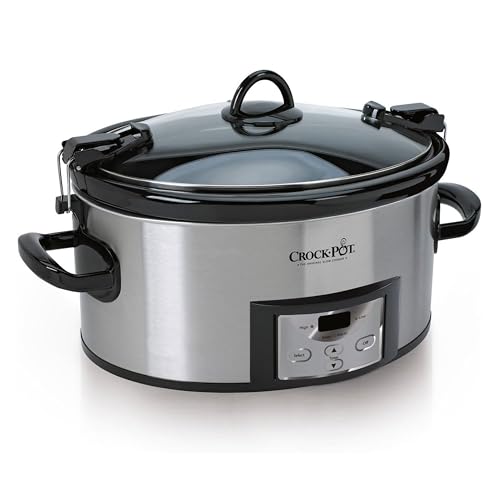
Crock-Pot 6 Quart Cook & Carry Programmable Slow Cooker — Best Dedicated Slow Cooker
In a combined comparison, the dedicated slow cooker still wins at slow cooking. Stoneware surrounds the food with even, gentle heat, the oval shape takes roasts and whole chickens gracefully, and the programmable timer with a locking lid makes this Crock-Pot the most complete pure slow cooker in the group.
Strengths
- Stoneware slow cooking remains the gentlest, most forgiving version of the method
- Programmable timer protects all-day cooks on unpredictable schedules
- Locking lid makes it the combined- line-up’s best traveller for gatherings
Trade-offs
- It only slow cooks, so there is no pressure rescue when dinner is late
- Stoneware is the heaviest crock in this guide when full
- No sauté function, so browning happens in a separate pan
Key specs
- Capacity: 6 quart
- Controls: Programmable digital timer
- Lid: Locking Cook & Carry lid
- Crock: Oval stoneware
Its role in a two-method kitchen is to be the specialist. Where the multicookers compromise slow cooking to fit everything in, this machine compromises nothing about the method itself: load it in the morning, trust the timer, and carry the finished dish to the table or across town in the same crock. For households whose cooking leans slow most weeks, that specialism beats versatility.
Pair it mentally with the pressure picks in this guide if you cook both ways often and have the cupboard space. Own it alone if your pressure cooking needs are rare. Either way, it is the benchmark the combined machines are trying to imitate on their slow settings.
If you do pair the Crock-Pot with a pressure cooker later, keep its role pure: it is the planned-day machine. Its stoneware also doubles as a serving dish and an oven vessel within its limits, which gives it a second life on the table that no multicooker pot quite matches.
Who should skip it: anyone for whom the pressure rescue is a weekly event rather than an occasional one, because this machine cannot perform it. Slow-first households should not skip it at all; in a combined comparison it is the reminder that a specialist, honestly matched to a household’s habits, beats versatility every time.
Best for: Slow-first households that want the method done properly with a timer / Not suited for: Anyone who needs pressure cooking in the same purchase
Check on Amazon — check the current price on Amazon.

Presto 02141 6-Quart Electric Pressure Cooker — Best Dedicated Electric Pressure Cooker
For the pressure half of the combined question, the Presto 02141 is the straightforward specialist: an electric pressure cooker that does pressure cooking with presets and skips the multicooker theatre. Households that already own a slow cooker they love will find this the cleanest way to add the fast method.
Strengths
- A dedicated pressure appliance without multicooker modes you may never open
- Preset controls keep the learning curve short for first-time pressure cooks
- Backed by a brand with generations of pressure-cooking history
Trade-offs
- No slow cook function, so it covers only half of this guide’s brief on its own
- Smaller recipe ecosystem than the combined category leader
- Inner pot finish reflects its value positioning
Key specs
- Capacity: 6 quart
- Type: Electric pressure cooker
- Controls: Preset-based
- Brand: Presto
That pairing logic is how many real kitchens are built: a beloved stoneware crock for Sundays, and this on the counter for the weeknight beans, grains and stews that pressure turns from projects into options. The presets keep the technique approachable, and Presto’s long history with pressure vessels makes the engineering easy to trust.
It will not slow cook, steam a pudding into yogurt or connect to anything, and that is precisely its charm. If your combined strategy is two honest specialists rather than one compromise, this is the pressure half of the pair.
Paired kitchens often discover a rhythm the single-appliance homes miss: the Presto handles the urgent and the Crock-Pot handles the planned, and a big cooking day can run both at once. Holiday meals, freezer days and preserving projects are where the two-specialist strategy stops looking like duplication and starts looking like capacity.
Who should skip it: the one-appliance shopper, obviously, and the mode collector. The household completing a pair should not skip it; it is the pressure half with the least to learn and the least to maintain, which is exactly what a second appliance should be. Nobody wants two complicated machines; one simple specialist beside a beloved crock is a kitchen in balance.
Best for: Homes that already own a slow cooker and want to add pressure cooking cleanly / Not suited for: One-appliance shoppers who need both methods in a single unit
Check on Amazon — check the current price on Amazon.
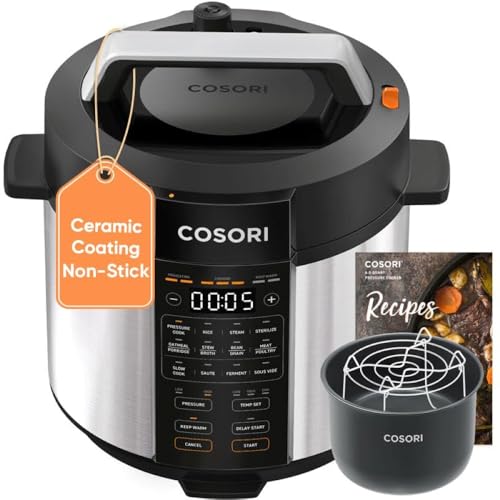
Cosori Pressure Cooker 6QT 9-in-1 — Best Modern Combined Cooker
The Cosori approaches the combined brief from the modern end: one 6-quart cooker whose nine functions span pressure cooking, slow cooking and sous vide, wrapped around a ceramic pot that cleans in moments. For buyers who want the two-method promise plus a little experimentation room, it is the most forward-looking pick here.
Strengths
- Nine functions give it the widest combined brief here, extending even to sous vide
- Ceramic pot makes the saucy slow cooks and sticky pressure dishes easy to clean up
- A long built-in safety list suits households new to pressure cooking
Trade-offs
- Ceramic coating needs gentle utensils to reach its full lifespan
- Recipe library is thinner than the category leader’s, though timings transfer
- Sous vide portions are limited by the sealed pot format
Key specs
- Capacity: 6 quart / 6QT
- Functions: 9-in-1 with pressure, slow cook and sous vide
- Pot: Ceramic-coated
- Power: 1100W
Daily life with it is defined by the pot. Slow-cooked sauces release, pressure-cooked rice rinses away, and the cleanup tax that quietly kills appliance usage stays low. The slow mode, like all multicookers, runs gentler than stoneware, so plan the higher setting for all-day recipes; the pressure side needs no such asterisk and performs with modern speed.
Choose it over the category default if the easier-cleaning pot and the longer function list matter more to you than the bigger recipe library. Choose it over the specialists if your kitchen votes for one appliance. It is the combined cooker for the cook who likes new tricks.
Cosori’s slow mode tip bears repeating in a combined context: because the pot is sealed and base-heated, give slow recipes the higher setting and check tenderness rather than the clock. Cooks who internalise that one adjustment report that the gap between this and their old stoneware crock mostly disappears.
Who should skip it: cooks loyal to model-specific recipe ecosystems, who will feel the smaller library within a month. Cooks who work from general timings and prize an easy-cleaning pot should not skip it; the Cosori is where the combined category’s centre of gravity is visibly moving.
Best for: Experimenters who want pressure, slow and sous vide in one easy-clean cooker / Not suited for: Cooks who rely on model-specific recipe collections
Check on Amazon — check the current price on Amazon.

Hamilton Beach 6 Quart Slow Cooker 33665G — Best Budget Slow Cooker
Every combined roundup needs its reality check, and this is it: for the price of a takeaway dinner, the Hamilton Beach slow cooks as well as machines several times its price, because stoneware and a heating element are a solved technology. Households building a two-method kitchen on a budget should start here and spend the savings on the pressure half.
Strengths
- The cheapest credible way to own the slow half of this comparison
- Stoneware cooking quality matches far pricier slow cookers once the dial is set
- Dishwasher-safe crock and lid keep ownership effortless
Trade-offs
- No timer, so it suits home days rather than long commutes
- No pressure function, obviously, at a slow-only price
- Plain styling and a basic dial are the whole interface
Key specs
- Capacity: 6 quart
- Controls: 3 settings: low, high, warm
- Crock: Dishwasher-safe stoneware
- Finish: Silver
Its limits are scheduling limits. Without a timer it belongs to home-based days, weekend batches and events where someone is around. Within those bounds it is flawless at its job: low and slow, hour after hour, with a crock that goes in the dishwasher when the house is fed.
Paired with the Presto electric pressure cooker in this guide, it completes a full slow-plus-pressure kitchen for less than many single flagship multicookers, with each appliance doing its own method at full strength. That is the budget strategist’s version of combined cooking, and it is a genuinely good one.
The Hamilton Beach also makes an unusually good gift and first-apartment cooker for the same reason it anchors this guide’s budget end: there is nothing to configure and nothing to break. In a combined strategy it is the appliance you hand to a nervous new cook and say, truthfully, that dinner is now handled.
Who should skip it: commuters, who need the timer its price omits, and who should take the programmable Crock-Pot above instead. Budget builders pairing methods should not skip it; paired with the Presto it completes the two-method kitchen for less than most single flagships, with neither method compromised in the pairing.
Best for: Budget builders assembling a slow-plus-pressure kitchen from two specialists / Not suited for: Commuters who need a slow cooker with a timer
Check on Amazon — check the current price on Amazon.

COMFEE 12-in-1 Electric Pressure Cooker 6 Quarts — Best Value Combined Cooker
The COMFEE closes the combined argument with value: twelve functions that include both pressure and slow cooking, a 24-hour delay timer and a ceramic pot, at the friendly end of the price range. For a household that wants one appliance to cover both methods without a flagship bill, this is the arithmetic winner.
Strengths
- Twelve functions including both headline methods at a value-tier price
- Delay timer lets a combined cooker start itself, rare in this price band
- Ceramic pot keeps both pressure and slow dishes easy to serve and clean
Trade-offs
- Value-tier materials and a lighter build than premium rivals
- Accessory and recipe support is modest compared with big brands
- Panel offers many modes, which can overwhelm cooks who want two buttons
Key specs
- Capacity: 6 quarts
- Functions: 12-in-1 including pressure and slow cook
- Timer: 24-hour delay
- Pot: Ceramic inner pot
The delay timer is its quiet superpower in a combined cooker. Slow cooking is about starting early; pressure cooking is about finishing fast; a timer that can start either method while you are out multiplies the value of both. Morning loading becomes dinner insurance in a way that manual rivals at this price simply cannot match.
Set expectations at the tier: lighter materials, a smaller support ecosystem and a busier panel than the premium names. The cooking itself, pressure-sealed or slow and gentle, does the job the category promises. If one affordable cooker must do everything, this is the everything it should be.
COMFEE owners should explore its gentler modes with the same systematic curiosity: the machine that pressure cooks on Monday can slow cook on Wednesday and steam on Friday, and the household that learns all three rhythms owns the combined brief in full, at a price the flagship pair cannot approach.
Who should skip it: premium buyers, who will feel the tier in the plastics and the support. Value buyers should not skip it; it is the only pick here that offers both methods, a delay timer and an easy-clean pot in a single affordable appliance, and that combination is the combined brief answered at a budget.
Best for: Value-focused households wanting both methods plus a timer in one cooker / Not suited for: Buyers who prefer premium build and a deep accessory shelf
Check on Amazon — check the current price on Amazon.
Comparison Table
| Pick | Badge | Key spec | Best for |
|---|---|---|---|
| Instant Pot Duo 6 Qt 7-in-1 Electric Pressure Cooker | Best Overall Combined Cooker | 6 quart | Households choosing one cooker to cover both slow and pressure cooking |
| Crock-Pot 6 Quart Cook & Carry Programmable Slow Cooker | Best Dedicated Slow Cooker | 6 quart | Slow-first households that want the method done properly with a timer |
| Presto 02141 6-Quart Electric Pressure Cooker | Best Dedicated Electric Pressure Cooker | 6 quart | Homes that already own a slow cooker and want to add pressure cooking cleanly |
| Cosori Pressure Cooker 6QT 9-in-1 | Best Modern Combined Cooker | 6 quart / 6QT | Experimenters who want pressure, slow and sous vide in one easy-clean cooker |
| Hamilton Beach 6 Quart Slow Cooker 33665G | Best Budget Slow Cooker | 6 quart | Budget builders assembling a slow-plus-pressure kitchen from two specialists |
| COMFEE 12-in-1 Electric Pressure Cooker 6 Quarts | Best Value Combined Cooker | 6 quarts | Value-focused households wanting both methods plus a timer in one cooker |
Read across the table and the strategies separate cleanly: two combined machines that do everything in one pot, two slow specialists, one pressure specialist and one value combined option. There is no wrong strategy in the table, only strategies matched or mismatched to a household’s calendar. That calendar, not the feature lists, is the judge.
The Hybrid Dishes That Justify Owning Both Methods
Some dishes are arguments for the pair all by themselves. Beans pressure cooked on Monday become a slow-cooked chili on Wednesday. A pressure-cooked stock becomes the liquid a slow braise spends all day marrying. Pulled pork can start under pressure for speed and finish slow for texture, or the reverse on a lazy Sunday.
Keep a short list of your household’s hybrid dishes on the fridge. It sounds like a small thing, but that list is what turns two appliances from a duplication into a system, and systems get used while gadgets gather dust.
How to Choose: A Best 6 Slow Cookers And Pressure Cookers Buying Guide
What follows is the buying-guide layer, where the two methods are compared on the axes that matter in a real kitchen rather than in a showroom. Read it with your own calendar in mind, because the calendar is the judge in this category.
Slow Cooking vs Pressure Cooking: What Each Method Actually Does
Slow cooking holds food just below a simmer for many hours. Collagen melts, flavours marry and dinner waits for you, but nothing can be hurried and browning must happen in another pan. It is the method of Sundays, workdays and dishes that improve by being ignored.
Pressure cooking seals steam inside the pot, raising the boiling point so food cooks at a higher temperature. Beans that take all day take under an hour; a stew that needs an afternoon needs forty minutes. The trade is attention at the start, precise timing, and no peeking, because the lid stays locked until the pressure falls. Most cooks who own both methods use slow for planned days and pressure for real life.
One Combined Cooker or Two Specialists?
A combined multicooker saves a cupboard, a socket and a purchase, and its sauté mode browns in the pot before either method. Its slow cooking, however, heats from the base and runs gentle, so it imitates stoneware rather than equalling it. Two specialists cost more and store bigger, but each method runs at full strength and either appliance can be replaced alone.
The deciding factor is frequency. Cook both ways weekly and the pair earns its space. Cook one way weekly and the other monthly, and the combined machine’s compromise disappears into the monthly dish. Most households, honestly assessed, land in the second camp.
Reading the 6-Quart Capacity Across Both Methods
Six quarts means different working volumes per method. A slow cooker can be filled to about two-thirds for even heating, while a pressure cooker must stay under two-thirds generally and under half for foaming beans and grains. In practice both give you four working quarts: a family stew, a whole chicken or a week of beans.
Shape matters as much as volume. Oval slow cookers take roasts and ribs; round multicookers take soups, grains and round chickens. When a single combined cooker must serve both methods, expect the round shape and plan your roast cuts accordingly.
What a Month With Both Methods Looks Like
Week one usually belongs to novelty: pressure beans, a pressure stew, the machine showing off. By week two the slow cooker reclaims the planned days, because its rhythm fits workdays better, and pressure settles into its true role as the rescuer and the accelerator. By the end of the first month, most households stop thinking in methods and start thinking in dishes, which is the sign the system has bedded in.
The households that struggle are the ones that bought both methods for the same job and feel obliged to justify each appliance weekly. Let the ratio be uneven. A pressure cooker used twice a month to save two evenings has paid for its shelf space; it does not need a quota.
Energy, Noise and the Household Peace Index
Slow cookers are silent and patient, and they scent the house for hours, which households either love or schedule around. Electric pressure cookers hiss, beep and vent steam in short, dramatic bursts, usually at the exact moment of serving chaos. Neither is a problem, but both are household facts worth picturing before purchase.
Steam placement matters too. A pressure cooker venting under low cabinets will wet them weekly; pull it forward for the release, or choose its home with the vent’s geography in mind. These tiny domestic negotiations, made early, are what separate appliances that integrate from appliances that irritate.
Teaching the Next Cook: Passing Down Two Methods
Households that cook both ways tend to produce confident young cooks, because the two methods teach complementary instincts. Slow cooking teaches planning, patience and the layering of flavours in advance. Pressure cooking teaches precision, sequence and respect for a process that cannot be interrupted halfway.
If you are equipping a first kitchen for someone leaving home, the combined machine in this guide is the single most educational appliance you can give: one pot that teaches both tempos, with a sauté function standing in for half the stove’s work. Add a knife and a board and the curriculum is complete.
What to Cook First in Each Method
For slow, begin with a pulled pork shoulder or a bean soup, dishes so forgiving that success is nearly guaranteed and the house smells like competence by lunchtime. For pressure, begin with dried beans or a simple stew, where the time saving is theatrical and the technique is fully on display.
Those four dishes teach everything essential: fill levels, layering, browning, natural release and finishing. A household that can cook them owns both methods in every way that matters, and the rest of the repertoire is variation rather than new learning.
A Tale of Two Dinners: The Same Stew Both Ways
Take a beef stew. Slow cooked, the meat goes in at breakfast, the house smells like dinner by noon, and by evening the sauce has the deep, married flavour that only hours produce. Pressure cooked, the same ingredients are browned at six and on the table before seven, brighter and more distinct, each vegetable still itself.
Neither plate is the correct one. They are different dinners from the same shopping bag, and that is the real argument for owning both methods in some form. Choose per day, not per ideology: the calendar, the cut of meat and your appetite for aroma at noon will make the decision for you.
Running Costs, Counter Space and Other Practicalities
Both methods are inexpensive to run beside an oven, and pressure cooking’s shorter cycles usually make it the thriftier of the two per meal. The real costs are space and attention. A combined cooker spends one footprint and asks for a learning curve; two specialists spend two footprints and ask for none.
There is also a resilience argument for two appliances that owners mention after the first breakdown: when one cooker fails before a big meal, the other method covers dinner. Households that host often quietly value that redundancy more than any single feature in this guide.
How to Use One Kitchen for Both Methods: A Week of Slow and Pressure Cooking
The weekly system below is how owners of both methods actually live, as opposed to how the brochures imagine it. It treats slow and pressure not as rivals but as shifts in the same kitchen, each covering the days the other cannot.
- Plan the week by tempo: assign slow cooking to the days you can load a pot in the morning, and pressure cooking to the days dinner must start when you get home.
- Batch the shared prep. Brown onions, garlic and spices once on the weekend; the mixture starts a slow stew on Tuesday and a pressure curry on Thursday.
- Use pressure for the building blocks: beans, grains, stock and tough cuts cooked fast, then finished or reheated gently on serving day.
- Use slow for the dishes that improve with time: pulled meats, braises and sauces that benefit from hours of marrying flavours.
- Keep the safety habits of each method separate and automatic: fill limits and natural release for pressure, half-to-two-thirds full and no lid-lifting for slow.
- Finish both methods the same way: taste at the end, add salt, acid and fresh herbs after cooking, because both techniques mute seasoning as they work.
After a month of this rhythm, most households find their natural ratio, often three slow days to two pressure rescues, or the reverse. Let the ratio emerge from your calendar rather than forcing it, and stock the freezer from whichever method had a good week.
Common Buying Mistakes
- Expecting a multicooker’s slow mode to behave exactly like stoneware. It runs gentler and heats from the base. Use the higher slow setting, allow more time, and your adapted recipes will land properly.
- Pressure cooking on a slow cooker’s schedule. Pressure is fast but hands-on at the start and end. Do not load it and leave for the day; that is the slow cooker’s job description.
- Buying two specialists for a one-method kitchen. If you slow cook twice a year, a combined machine covers it. Audit your real habits before giving up the cupboard space.
- Using the same fill level for both methods. Beans under pressure need the pot half full at most. Carrying slow-cooker fill habits into pressure cooking risks a blocked valve.
- Skipping the browning step in both methods. Neither gentle heat nor steam creates browned flavour. Sauté first, in the pot or a pan, whenever the dish deserves depth.
Final Recommendation
If one cooker must do everything, buy the Instant Pot Duo and learn its slow setting’s habits. If slow cooking is your main method, the programmable Crock-Pot remains the specialist to beat, and the Hamilton Beach covers it on a budget. The Presto is the clean pressure-only addition, the Cosori the modern combined alternative, and the COMFEE the value route to owning both methods at once.
If you remain torn after all of this, the tiebreaker is your worst recurring day. Picture the evening everything goes wrong and ask which method saves it. For most households that is pressure. Then picture your best recurring day, the slow Sunday, and ask what it deserves. Buy for both pictures if you can; buy for the worst day if you must choose one.
The deepest truth in this comparison is that methods do not compete; evenings do. Every household has planned evenings and collapsed ones, and the winner of this roundup is whichever arrangement covers both kinds in your house. Buy that arrangement, in one pot or two, and the slow-versus-pressure debate will quietly never occur to you again.
A closing perspective on the comparison itself. Slow cooking and pressure cooking are often marketed as rivals because appliances must be sold one at a time, but in the kitchen they are colleagues with opposite gifts: one gives you back your evening by taking your morning’s ten minutes, the other gives you back the dishes your schedule had deleted. A household equipped with both, whether in one pot or two, is equipped for the full range of real life, the planned Sunday and the ambushed Wednesday alike. That is why this guide refuses to crown a single winner across the methods and instead crowns winners within each strategy. Read your own calendar one last time, count its planned days against its ambushed ones, and let that count choose between the combined machines and the specialist pairs above. It is the only statistic in this entire comparison that was ever going to matter.
Keep exploring the cluster: Best 6 Quart Slow Cookers Best 6 Quart Pressure Cookers Best 6qt Multi Function Slow Cookers Best 7 1 Programmable Pressure Cookers Best 8 Qt Electric Pressure Cookers
Frequently Asked Questions
Can one cooker really replace both a slow cooker and a pressure cooker?
For most households, yes. Combined machines pressure cook at full strength and slow cook well enough for the majority of recipes, with the higher slow setting. Dedicated slow-cooking enthusiasts cooking low and slow several times a week will still prefer stoneware.
Which method is better for tough cuts of meat?
Both turn tough cuts tender by different routes. Slow cooking melts collagen over hours for pull-apart texture; pressure cooking does it in under an hour with a slightly different, more braised character. Time available usually decides.
Is pressure cooking or slow cooking cheaper to run?
Both are efficient compared with an oven. Pressure cooking usually wins on total energy because the cook is so much shorter, while slow cookers sip power over many hours. The difference per meal is small either way.
What size should I buy if I cook for two?
Six quarts still makes sense for batch cooking and entertaining, and both methods handle smaller amounts if minimum liquid and fill rules are respected. Chronic small-batch cooks may prefer a smaller cooker for daily use.
Can I slow cook in any pressure cooker?
Only models with a dedicated slow cook function, which all the combined picks in this guide have. Use the higher setting for most recipes and consider a glass lid if your model offers one as an accessory.
Which method is safer to leave unattended?
Slow cookers are designed for unattended all-day cooking. Electric pressure cookers are safe appliances but are meant to be used while you are home, since the cook is short and the release step needs you.
Do combined cookers slow cook as safely as dedicated slow cookers?
Yes. Their slow modes are designed for unattended cooking like any slow cooker, holding food at safe temperatures for the duration. Follow the same fill and thawing guidance you would with a stoneware crock and the method is equally dependable.
Which method keeps more nutrients in food?
Both are gentle compared with long boiling, and pressure cooking’s short times can preserve heat-sensitive nutrients well, while slow cooking’s liquid keeps what leaches out in the sauce you serve. In practice the difference is small beside the benefit of cooking real food at home more often.
Can I convert a pressure cooker recipe to a slow cooker and back?
Yes, with judgement. Slow versions need more time at gentle heat and slightly less liquid added at the start; pressure versions need enough liquid to build steam and a fraction of the time. Flavours concentrate differently, so season at the end in both directions.
Which method is better for meal prep?
Pressure cooking wins for components, beans, grains and proteins cooked fast in sequence on a prep day. Slow cooking wins for finished dishes that improve across a day of gentle heat. Serious meal preppers use both, which is why the combined and paired options dominate this guide.
If I can only afford one method this year, which should come first?
Buy for your most common failure. If dinners fail because nobody started them in the morning, pressure cooking rescues more evenings and should come first. If dinners fail because evenings are chaos and mornings are calm, a slow cooker fits your shape of day. Add the second method when the budget allows, starting with the budget specialists in this guide, and the pair will cost less than most single flagship purchases.
Do the two methods need different ingredients or pantry staples?
Almost entirely the same pantry serves both: dried beans and grains, tinned tomatoes, onions, garlic, spices and sturdy vegetables. The only real difference is liquid management and timing, which is why households that stock for one method find the second costs almost nothing to adopt in ingredients, only in the appliance itself.
Is it worth registering a warranty or keeping receipts for these cookers?
Yes, briefly and boringly. Keep the receipt and model details somewhere findable, because the parts most likely to be replaced, rings, lids and crocks, are far easier to source when you can name the exact model. It takes two minutes on the day the cooker arrives and saves a frustrating search years later.


