Disclosure: airfryerkitchensupply.com is reader-supported. When you buy through links on our site, we may earn an affiliate commission at no extra cost to you.
Where to buy
If you are shopping for the best 2 burner infrared grills, read this first, because this guide will not pretend the category is bigger than it is: as of this writing, exactly one true two-burner infrared grill is sold new through a verified Amazon listing — the Charbroil Pro Series Amplifire 2-Burner. The two-burner TRU-Infrared models that defined this category for a decade are discontinued and survive mainly as replacement-part listings. So the shortlist below pairs that one current pick with the two discontinued models worth knowing about (listed honestly, without purchase links), and three clearly labeled infrared alternatives that bend the two-burner rule in disclosed ways. Every linked product was verified against a live Amazon listing. Check the current price on Amazon for the linked picks.
- Charbroil Pro Series Amplifire 2-Burner Gas Grill and Griddle Cabinet (Best Overall — the current two-burner infrared grill) — Check the current price on Amazon
- Char-Broil Performance TRU-Infrared 2-Burner (463633316) (Discontinued — know it before buying used) — no link, no verified new listing
- Char-Broil Commercial TRU-Infrared 2-Burner (463642316) (Discontinued — know it before buying used) — no link, no verified new listing
- Charbroil Grill2Go X200 Portable Gas Grill (Best Portable Infrared — single burner, disclosed) — Check the current price on Amazon
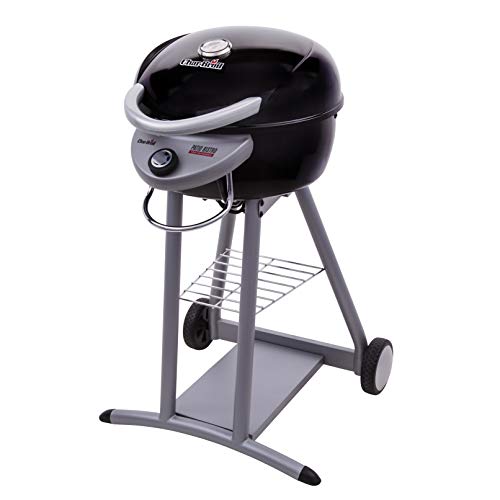
- Char-Broil Patio Bistro TRU-Infrared Electric Grill (Best Electric Infrared — apartment-legal, disclosed) — Check the current price on Amazon
- Charbroil The Big Easy TRU-Infrared 3-in-1 Smoker, Roaster & Gas Grill (Best Infrared Alternative Format, disclosed) — Check the current price on Amazon
The Honest State of the 2 Burner Infrared Grill Market
Shoppers searching for the best 2 burner infrared grills usually arrive with a clear picture in mind: a compact two-burner cart whose infrared emitters deliver steakhouse searing, fewer flare-ups, and juicier food. That picture was accurate for years. Char-Broil’s TRU-Infrared system — a perforated emitter plate between the burners and the food, which converts convective heat into radiant heat and blocks dripping fat from ever reaching an open flame — powered a whole family of two-burner Performance, Commercial, and Signature models that sold in large numbers.
The market has since moved. Char-Broil consolidated its infrared line upward into the Amplifire system and larger formats, and the classic two-burner TRU-Infrared carts quietly left production. What remains on Amazon tells the story precisely: Amazon listing data searches for two-burner infrared grills returned page after page of emitter plates, grates, and burner kits for those discontinued models — a thriving parts ecosystem orbiting grills you can no longer buy new — and exactly one current two-burner infrared grill, the Amplifire cabinet model reviewed below.
That is not a reason to abandon the idea. Infrared cooking’s advantages are real, the Amplifire is a genuinely strong grill, the discontinued models are worth understanding if you are offered one used, and the infrared alternatives — a portable, an electric, and an oil-less roaster format — serve real households well. This guide covers all of it without inventing a crowded category that does not currently exist. Any site showing you a tidy list of six current two-burner infrared grills is showing you discontinued products, four-burner grills, or fiction.
In this guide
Quick Picks
- Best Overall: Charbroil Pro Series Amplifire 2-Burner — the one true two-burner infrared grill sold new today, with a grill-plus-griddle cabinet layout. Check the current price on Amazon
- Discontinued, Worth Knowing: Char-Broil Performance TRU-Infrared 2-Burner (463633316) — the category’s former mainstream pick; buy only used, with eyes open. Unlinked.
- Discontinued, Worth Knowing: Char-Broil Commercial TRU-Infrared 2-Burner (463642316) — the heavier-built sibling; same used-only status. Unlinked.
- Best Portable Infrared: Charbroil Grill2Go X200 — a TRU-Infrared portable; it is a single-burner design, disclosed plainly, and the only infrared grill that travels. Check the current price on Amazon
- Best Electric Infrared: Char-Broil Patio Bistro TRU-Infrared Electric — infrared cooking where gas is banned; electric, and not a two-burner gas grill, disclosed plainly. Check the current price on Amazon
- Best Alternative Format: Charbroil The Big Easy TRU-Infrared 3-in-1 — infrared as a smoker, roaster, and grill chamber rather than a cart; a different tool for a different job. Check the current price on Amazon
How These Picks Were Chosen
The method here had to differ from a normal roundup, because the category demanded verification before enthusiasm. We searched Amazon listing data — through this site’s own account — for two-burner infrared grills under every naming the technology has used: TRU-Infrared, Amplifire, Performance, Commercial, Signature. We then separated the results into three piles: complete grills sold new, replacement parts for discontinued grills, and infrared products that are not two-burner gas grills at all.
The first pile contained one grill. That fact drives this entire article. Rather than pad the list with four-burner models wearing two-burner keywords — the standard trick in this category — we built the guide around the truth: the one current pick gets a full review; the two discontinued two-burner models get honest unlinked entries so used-market shoppers can identify them and price the risk; and the three alternatives are included only with their deviations from the search stated in their badges, their reviews, and this methodology. Every linked ASIN was verified against its live listing on 2026-11-20, and specs in the mini boxes come from those listings or, for the discontinued models, from the model designations confirmed across the API’s own parts listings.
The 6 Best 2 Burner Infrared Grills (One Current, Two Discontinued, Three Disclosed Alternatives)

Charbroil Pro Series Amplifire 2-Burner Gas Grill and Griddle Cabinet — Best Overall
The Amplifire 2-Burner is not merely the only current pick in this guide; it is a strong grill on its own merits, which makes the category’s thinness easier to accept. Char-Broil’s Amplifire system is the successor to TRU-Infrared: an emitter plate design that delivers the same radiant-heat, flare-up-free cooking with easier cleaning. This cabinet model pairs the infrared grill with a side griddle surface in a two-burner propane layout. It suits buyers who want infrared searing as their primary grill and value the griddle’s versatility. It does not suit bargain hunters — it sits at a premium position — or anyone who needs a large primary grate.
Strengths
- Genuine two-burner infrared cooking, sold new, with manufacturer support behind it
- Amplifire emitter design addresses the old TRU-Infrared plates’ cleaning burden
- Grill-plus-griddle cabinet layout covers searing and flat-top cooking in one unit
Trade-offs
- Premium-tier position — the cost of being the only game in its category
- Cabinet footprint is larger than the classic two-burner carts it replaces
- Infrared cooking has a learning curve: food cooks faster than conventional-grill instincts suggest
Key specs (from the verified listing): 2 burners; Amplifire infrared technology; propane gas grill and griddle cabinet; model 463676724; black finish.
What infrared actually does for your cooking shows up in the first week. Steaks sear at temperatures conventional two-burner grills reach only in their hottest corner, and they do it across the whole grate, because the emitter plate radiates evenly rather than channeling hot air unevenly around heat tents. Chicken skin renders without the flare-up fires that dripping fat causes on open-flame grills — the emitter plate physically intercepts drippings and vaporizes them below the food, which also returns a surprising amount of smoky flavor for a gas grill. Burgers stay juicier for the same reason: less hot air blasting past the food means less moisture stripped away.
The griddle half of this cabinet is not a gimmick. It makes the grill a two-surface station — infrared grate for the proteins, flat top for onions, peppers, and finishing vegetables — and it is the configuration Char-Broil chose to carry the two-burner infrared idea forward. If you want infrared and you want it new, with a warranty and a parts pipeline, this is the grill, and it is good enough that the category’s lack of rivals is a footnote rather than a deal-breaker.
Best for: buyers who want true two-burner infrared cooking, new and supported / Not suited for: bargain hunters or maximum-grate shoppers — Check the current price on Amazon
Char-Broil Performance TRU-Infrared 2-Burner (463633316) — Discontinued, Know It Before Buying Used
For years this was the default answer to the two-burner infrared question: a compact cart with the TRU-Infrared emitter system, sold everywhere, at a mainstream position. It is included here unlinked because it is no longer sold new through a verified listing — our API searches returned its emitter plates, grates, and parts kits in abundance, but not the grill. It suits a used-market shopper who finds one in sound condition. It does not suit anyone who needs a warranty or a guaranteed parts future.
Strengths
- The classic TRU-Infrared cooking experience in a compact two-burner cart
- A vast installed base means parts listings remain widely available
- Used examples surface regularly as owners upgrade
Trade-offs
- Discontinued — no new purchase, no manufacturer warranty
- Emitter plates are a wear item; a used example may need a set immediately
- Condition varies enormously; the firebox and burners decide everything
Key specs (model identification): 2 burners; TRU-Infrared emitter system; model 463633316 (and close siblings in the 463632xxx–463672xxx family).
If you are offered one, inspect it like a mechanic. The emitter plates should be intact without rust-through or warping that lifts them off the burners; replacement plate sets are exactly the parts our searches kept returning, so budget for them if the originals are tired. Check the burners for even blue flame across both tubes, the firebox floor for corrosion, and the igniter for a strong click. A sound example at a used price is a genuinely good grill — the cooking system was always the strong part. A tired example is a project, and projects should be priced like projects.
Best for: used-market shoppers who can inspect before buying / Not suited for: anyone needing new-with-warranty — unlinked pick: no verified new listing exists, so no purchase link is offered.
Char-Broil Commercial TRU-Infrared 2-Burner (463642316) — Discontinued, the Heavier Sibling
The Commercial-series two-burner was the step-up version of the same idea: heavier construction than the Performance line, sold through hardware channels, and built around the same TRU-Infrared emitter system. Its status matches its sibling’s — discontinued, parts-rich, grill-poor in current listings — so it is covered without a link for the used shopper’s benefit.
Strengths
- Heavier build than the Performance line — the used example most likely to have aged well
- Same proven TRU-Infrared cooking system and parts ecosystem
- Model-specific emitter and grate sets remain listed and identifiable
Trade-offs
- Discontinued, with the same warranty and inspection caveats as its sibling
- Heavier also means less portable and a bigger used-market asking price
- Parts listings confirm the model’s identity but say nothing about any individual used grill’s condition
Key specs (model identification): 2 burners; TRU-Infrared emitter system; model 463642316 (family includes 463644220 and related Commercial two-burner variants).
The Commercial is the used pick we would hunt first, for one reason: build weight is destiny in a used grill. Thicker materials corrode slower, lids warp less, and a Commercial that was kept covered can be a better grill in year eight than a Performance was in year three. Apply the same inspection discipline — emitters, burners, firebox, igniter — and add the grate condition to the list, since the Commercial’s heavier grates are a real part of its value and the most expensive piece to replace.
Best for: patient used-market hunters wanting the best-aged example / Not suited for: buyers who want to order new today — unlinked pick: no verified new listing exists, so no purchase link is offered.

Charbroil Grill2Go X200 Portable Gas Grill — Best Portable Infrared (Single Burner, Disclosed)
The X200 is the infrared grill that goes places: a rugged portable built on Char-Broil’s TRU-Infrared system — a fact confirmed across the API’s own listings for its model-specific accessories, which name the X200’s TRU-Infrared design directly. The disclosure, stated plainly: it is a single-burner grill, not a two-burner. It earns its place because it is the only portable infrared option in the current market, and many two-burner infrared shoppers are really shopping for infrared cooking they can take camping. It does not suit anyone for whom two burners are a hard requirement.
Strengths
- True TRU-Infrared cooking in a portable, travel-hardened body
- No flare-ups over the emitter — a genuine virtue around campsite cooking
- Compact and self-contained; the tailgating infrared answer
Trade-offs
- Single burner — no two-zone cooking, full stop
- Portable cooking area serves two to three people
- Infrared heat at this size is intense; delicate food needs attention
Key specs (from the verified listing): TRU-Infrared portable gas grill; model 25409200; dark grey; single-burner design (disclosed).
Within its honest limits, the X200 is excellent. The infrared system that defines the big carts works even better at portable scale, where flare-ups over a small open-flame grill are at their worst and where the emitter’s even radiation turns a tiny grate into a surprisingly capable steak cooker. Burgers and chops for two or three come off it with the juiciness infrared owners talk about, and the body shrugs off trunk duty in a way cart grills never will.
What it cannot do is zones. One burner means one temperature across the grate, managed by moving food and by lid discipline rather than by a cool side. If your portable cooking is direct-heat food — and most of it is — that limitation rarely bites. If two-zone technique is why you wanted two burners, stay with the Amplifire and accept that it stays home.
Best for: campers and tailgaters who want infrared cooking anywhere / Not suited for: two-zone cooking or groups — Check the current price on Amazon
Char-Broil Patio Bistro TRU-Infrared Electric Grill — Best Electric Infrared (Disclosed)
The Patio Bistro applies the TRU-Infrared idea to an electric element, and it is here for a specific reader: the apartment or condo griller whose building bans gas and charcoal outright. The disclosure: it is electric, with a single heating zone — not a two-burner gas grill in any sense. Within the world where gas is forbidden, it is the closest legal relative of the grill this article is about, and it cooks far better than electric’s reputation suggests.
Strengths
- TRU-Infrared emitter cooking from a standard outlet — permitted where gas is banned
- No tanks, no charcoal, no fuel storage — balcony logistics solved
- Compact cart format sized for patios and balconies
Trade-offs
- Electric heat recovery is slower than gas after the lid opens
- Single zone — no two-burner technique available
- Requires an outdoor outlet within cord reach
Key specs (from the verified listing): TRU-Infrared electric grill; model 20602107; black; cart format.
Judge the Bistro against its actual competition — other electrics and the prospect of not grilling at all — and it wins easily. The emitter plate does the same work it does over gas: evening out the heat, blocking drips from the element, and returning vaporized juices as flavor. Steaks and chicken come off it recognizably grilled rather than baked, which is more than most balcony electrics manage.
The electric caveats are physics, not flaws: the element cannot replace heat as fast as a gas burner once cold food lands and the lid cycles, so batch discipline and full preheats matter. If your lease allows gas, buy gas. If it does not, this is the infrared answer, and it is a good one.
Best for: apartment and condo grillers under gas bans / Not suited for: anyone whose building allows a real gas grill — Check the current price on Amazon

Charbroil The Big Easy TRU-Infrared 3-in-1 Smoker, Roaster & Gas Grill — Best Alternative Format (Disclosed)
The Big Easy is infrared thinking applied to a different shape: a propane-fired infrared chamber that roasts, smokes, and grills — famous in its oil-less-fryer form for whole turkeys and roasts. The disclosure: it is not a two-burner cart grill; it is a vertical infrared cooker with a single chamber. It belongs in this guide because infrared shoppers are often really shopping for the infrared result — juicy, evenly cooked food without flare-ups — and the Big Easy delivers that result for roasts and poultry better than any cart in this article.
Strengths
- Infrared chamber roasts whole birds and large cuts with remarkable juiciness
- Smoker and roaster functions in the same unit — three tools, one footprint
- No oil, no open flame contact — flare-ups are structurally impossible
Trade-offs
- Not a grate-and-lid cart: burgers and steaks are not its home turf
- Single chamber, single zone — a different cooking grammar to learn
- Round footprint and chamber shape limit what fits compared to a rectangular grate
Key specs (from the verified listing): TRU-Infrared 3-in-1 smoker, roaster & gas grill; model 14101550; black; propane.
Where the Big Easy shines is the cook that defeats small cart grills: the whole chicken, the turkey breast, the pork loin. Infrared radiation wraps the chamber evenly, the drippings fall away from the heat entirely, and the result is roasted food with a juiciness that makes owners evangelical. Add wood chips and it smokes credibly; the learning curve is shorter than an offset smoker’s by weeks.
Buy it as a complement to a conventional grill, or as your main cooker if your menu is roasts rather than burgers. Do not buy it as a two-burner grill substitute — it is included here as an infrared alternative with its nature stated, and on those terms it is one of the most satisfying products in this article.
Best for: roast-and-poultry cooks who want the infrared result in chamber form / Not suited for: burger-and-steak cart-grill shoppers — Check the current price on Amazon
Comparison Table
| Pick | Badge | Key spec | Best for |
|---|---|---|---|
| Charbroil Amplifire 2-Burner | Best Overall | True 2-burner infrared, grill + griddle cabinet | New two-burner infrared, fully supported |
| Char-Broil Performance TRU-Infrared 2-Burner (463633316) | Discontinued — no link | Classic 2-burner TRU-Infrared cart | Used buyers who can inspect first |
| Char-Broil Commercial TRU-Infrared 2-Burner (463642316) | Discontinued — no link | Heavier-build 2-burner TRU-Infrared cart | Used buyers wanting the best-aged example |
| Charbroil Grill2Go X200 | Best Portable Infrared | TRU-Infrared portable, single burner | Camping and tailgating |
| Char-Broil Patio Bistro Electric | Best Electric Infrared | TRU-Infrared electric, model 20602107 | Apartments under gas bans |
| Charbroil Big Easy 3-in-1 | Best Alternative Format | TRU-Infrared smoker/roaster/grill chamber | Roasts, poultry, oil-less frying |
How Infrared Grilling Actually Works (and Why It Cooks Differently)
A conventional gas grill cooks mostly by convection: burners heat air, and the hot air — channeled around heat tents — cooks the food. It works, but it has two costs: the moving air dries food out, and any fat that drips onto a hot surface or flame flares up and chars what it touches. Infrared systems insert an emitter plate between burner and food. The plate absorbs the burners’ energy and re-radiates it as intense, even infrared heat directly at the food, while physically blocking the path between dripping fat and open flame.
The practical consequences are the ones owners report. Searing is faster and more uniform, because radiant heat does not care about the cold corner that convection leaves behind. Flare-ups effectively disappear. Food retains more moisture, because it is cooked by radiation rather than by a stream of hot dry air. And the vaporized drippings on the emitter plate return flavor to the food — the infrared version of the sizzle a charcoal grill gets from fat hitting coals.
The costs are equally real. Infrared surfaces run hot — hotter than most new owners expect — and the line between seared and scorched on sugary marinades is genuinely short. Emitter plates are also a maintenance surface: their perforations clog with carbonized residue over time and need periodic cleaning or, eventually, replacement, which is precisely why the parts ecosystem for the discontinued models is so large. Go in understanding both sides and infrared is a delight; go in expecting a conventional grill that is simply “better” and the first burnt chicken skin will confuse you.
How to Choose in a One-Grill Category
One more consideration belongs in this section because it decides real purchases: household size. Infrared’s even radiation makes a two-burner grate cook like a slightly larger conventional one — food can use the corners that convection leaves cold — but it does not repeal geometry. Two to five people eat comfortably from the Amplifire’s layout, especially with the griddle absorbing the vegetable and side workload. Regular cooks for six or more should be honest that they are shopping the wrong category size entirely, and that a larger conventional or four-burner infrared format will serve them better than any pick in this guide, however much we admire the Amplifire.
The decision tree here is refreshingly short. If you want a true two-burner infrared grill, new, with support: the Amplifire is the answer, and the only remaining questions are whether its cabinet format fits your space and whether its premium position fits your budget. If it does not fit the budget, your honest options are the used market — where the Performance and Commercial entries above tell you what to hunt and how to inspect it — or a change of format.
Changing format means asking what you actually wanted from infrared. Portability: the X200. Permission: the Patio Bistro. The infrared result on roasts: the Big Easy. Or — the option nobody in this category likes to mention — a conventional two-burner grill with cast iron grates, which delivers most of the searing satisfaction with none of the emitter maintenance, at a wide range of budgets; our propane and under-$200 guides cover that field in full. Infrared is a means to juicy, flare-up-free food, not a religion, and a shopper who keeps the end in view will choose well from a short list.
How to Cook on Infrared Without Burning Everything
Infrared technique adjusts three instincts. First, preheat shorter and cook cooler than your gas-grill habits say: the emitter’s radiant output at medium will out-sear a conventional grill at high, so start every new food one dial setting below your instinct and calibrate upward. Second, respect sugar. Marinades and glazes with sugar scorch fast under radiant heat; apply them in the final minutes, or cook sauced items on the gentler edges of the grate. Third, use the lid as a tool rather than a default — infrared sears beautifully with the lid up, and closing it turns the grill into a very hot oven that can overshoot delicate food.
A reliable first session on an infrared grill: steaks at medium-high for a hard sear, two to three minutes a side, then rested; chicken thighs at medium, skin down first, watched for the first attempt rather than timed from a chart; vegetables in a single layer with space between pieces so the radiation reaches them. Take notes on your first three cooks. Infrared rewards cooks who calibrate once and then cook with confidence for years — the learning curve is short, but it is real, and pretending it does not exist is how the first chicken gets burnt.
Emitter Plate Care: The Maintenance That Decides an Infrared Grill’s Life
Every infrared grill lives or dies by its emitter plates, and the care routine is simple but not optional. After cooks, while the plates are still warm, brush the surface to clear loose residue. Periodically — monthly in heavy season — run the grill hot with the lid closed to carbonize buildup, let it cool, and brush or vacuum the ash from the perforations; several manufacturers of the classic TRU-Infrared plates designed them to be burned clean exactly this way. Clogged perforations are the main cause of the uneven heat owners blame on burners.
Inspect the plates each season for warping and rust-through, and treat them as the wear item they are: a fresh set of emitters restores an older infrared grill to something very close to new performance, which is why the used-market advice in this guide keeps returning to them. Keep the burners beneath them brushed and their ports clear, keep the grill covered, and an infrared grill’s cooking quality holds for years. Neglect the plates and no burner power can save the cook — the radiation is only as even as the surface producing it.
Infrared vs Conventional, Food by Food
Abstract comparisons settle nothing, so here is the honest food-by-food accounting. Steaks: infrared wins — a faster, more even crust with less moisture loss, provided you calibrate the dial down from your instincts. Burgers: infrared wins narrowly, on juiciness and the absence of flare-up char, though a cast-iron-grate conventional grill is close. Chicken with skin: infrared wins clearly — rendered, crisp skin without the fat-fire drama is the technology’s signature trick. Fish and delicate vegetables: a draw leaning conventional for beginners, because infrared’s intensity punishes inattention, though experienced infrared cooks exploit the even radiation beautifully with a well-oiled grate. Sugary-glazed anything: conventional wins for forgiveness; infrared will scorch a sweet glaze in the time a conventional grill browns it, so glazed food goes on late and low. Sausages: infrared wins — no flare-ups means no split, blackened casings.
Add it up and the pattern is clear: infrared’s advantages concentrate exactly where home grilling most often disappoints — flare-ups, dry burgers, burnt chicken skin — while its disadvantages concentrate in foods that need gentleness or sugar management. A household whose menu matches the first list will love the technology. A household living on glazed ribs and delicate fish should weigh the learning curve honestly before paying the infrared premium.
The Used-Market Inspection Checklist for a Discontinued TRU-Infrared
Because two of this guide’s six entries are used-only, the inspection deserves a checklist you can run in a seller’s driveway in ten minutes. Bring a flashlight, a lighter, and this order of operations. First, the rating label: confirm the model number matches the 463633316 or 463642316 families so the parts ecosystem actually applies to the grill in front of you. Second, the firebox: open it, remove the grates and emitters, and look at the floor and back wall — surface rust is cosmetic, but flaking, holes, or a floor that flexes under a thumb press ends the negotiation.
Third, the emitters: hold each plate up and check the perforations against the light. Plates should be flat, intact, and mostly open; a plate with rust-through or heavy warping is a replacement cost to subtract from the price, using the parts listings as your price guide. Fourth, the burners: connect a tank if the seller allows, light both burners, and look for an even row of blue flames — yellow, lazy, or gapped flames mean clogged ports (cleanable) or corroded tubes (replaceable, and priced accordingly). Fifth, the igniter and valves: every knob should turn smoothly and light its burner within a few clicks. Pass all five checks and a used TRU-Infrared is one of the best-value grills in this entire category. Fail the firebox check and walk away at any price — everything else is a part, but the firebox is the grill.
Infrared in Wind and Cold: The Quiet Advantage
One underreported infrared virtue matters to northern and coastal grillers: wind resistance. A conventional grill’s convective heat can be stripped by a crosswind, leaving one side of the grate cooking and the other sulking. An emitter plate, heated by the burners beneath it and radiating directly upward, keeps delivering its heat in weather that humbles open-flame designs, and the enclosed emitter layout loses less of its preheat when the lid opens. Cold-weather cooks still run longer — physics collects its tax from every grill — but infrared owners consistently report the smallest seasonal drop-off in performance. If your grilling season includes November and a sea breeze, that is a genuine, if unglamorous, point in the technology’s favor, and one more reason the Amplifire earns its position as this category’s standard-bearer.
A Short History of TRU-Infrared, for Shoppers Wondering Where It Went
Infrared grilling began in high-end and commercial equipment, where ceramic infrared burners delivered steakhouse heat at steakhouse prices. Char-Broil’s contribution — the one that matters to this category — was democratizing it: the TRU-Infrared system replaced exotic ceramic burners with a stainless emitter plate over conventional burners, bringing radiant cooking to mainstream carts. Through the 2010s the system spread across the Performance, Commercial, and Signature lines, and the two-burner versions became the default recommendation for small households that seared seriously.
Two pressures shrank the category. First, emitter plates are a maintenance surface, and a generation of owners who never cleaned them concluded — wrongly but understandably — that the grills lost performance, denting the technology’s word of mouth. Second, the market’s center of gravity moved to larger grills and to griddles, and Char-Broil followed it, folding its infrared development into the Amplifire system and bigger formats. The two-burner infrared cart was not defeated; it was deprioritized. That is why the parts bins are full, the used market is active, and the new shelf holds exactly one grill — a market outcome this guide reports rather than celebrates or mourns.
Accessories That Matter for Infrared Owners (and the One That Does Not)
Three accessories genuinely serve an infrared grill. A soft-bristle brush matched to the emitter surface is the first — aggressive wire brushing is how perforations get damaged, and the gentle, frequent clean in this guide’s maintenance section is the whole strategy. A fitted cover is the second, with extra weight here because the emitter plates are the grill’s precision surface and the component most harmed by standing water and debris. The third is a set of replacement emitter plates bought before you need them, at least for owners of the discontinued models: parts are plentiful today, and a shelf spare turns a mid-season failure into a ten-minute swap instead of a research project.
The accessory that does not earn its money is the infrared thermometer gun, however satisfying it feels to own. Emitter surfaces are deliberately uneven in emissivity, so spot readings mislead more than they inform; your calibration notes from the first three cooks — dial setting, food, result — are a better instrument than any number the gun reports. Spend on the brush, the cover, and the spare plates, and let the gadget budget go toward a second propane tank, which prevents the one failure no accessory can fix after the fact.
Common Buying Mistakes
The first mistake is believing a crowded category exists: buyers who comparison-shop six “current” two-burner infrared grills from roundup sites are comparing discontinued products and mislabeled four-burners, and may order a grill whose listing turns out to be a parts kit. The second mistake is buying a discontinued model used without inspecting the emitter plates and firebox — the two components that decide whether the purchase is a bargain or a rebuild. The third is cooking on infrared with conventional instincts and concluding the technology burns food; it does not — uncalibrated dial settings do, and one careful first week fixes it. The fourth is ignoring the electric and portable alternatives out of purism when a lease or a lifestyle makes them the only infrared you will actually use.
Final Recommendation
Buy the Charbroil Amplifire 2-Burner if you want the genuine article — the one current, supported, two-burner infrared grill — and buy it knowing the category’s thinness is the market’s fact, not this grill’s flaw. Hunt the discontinued Performance or Commercial two-burners used if the budget demands it, inspecting emitters and firebox before money changes hands. Take the X200 for the road, the Patio Bistro for the balcony, and the Big Easy for the roasts. And if infrared turns out to be a preference rather than a requirement, our companion guides cover the wider two-burner field: Best 2 Burner Grills, Best 2 Burner Propane Grills, Best 2 Burner Grills Weber Vs Char Broil, Best 2 Burner Hybrid Grills, and Best 2 Burner Grills Under $200.
Frequently Asked Questions
Why is there only one new 2 burner infrared grill?
Because Char-Broil — effectively the only maker of mainstream two-burner infrared grills — consolidated the technology into its Amplifire line and larger formats, and discontinued the classic two-burner TRU-Infrared carts. Other brands’ infrared efforts concentrated on high-end built-ins and ceramic sear burners rather than the mainstream two-burner cart, so no rival stepped into the space Char-Broil vacated — a gap a future product cycle may yet fill, but has not as of this writing. The evidence is visible in the marketplace itself: searches return deep stocks of parts for the old models and exactly one current grill.
Is infrared really better than a conventional gas grill?
It is different in ways many cooks genuinely prefer: more even searing, virtually no flare-ups at all, and juicier results because food is cooked by radiation rather than hot moving air. It is not universally better — it demands emitter maintenance, cooks hot enough to punish sugary marinades, and costs more. Cooks who sear often and hate flare-ups tend to convert permanently.
Can I convert my regular two-burner grill to infrared?
Not properly. Infrared is a system — burners, emitter geometry, and airflow designed together from the firebox up — and drop-in plates sold as conversions deliver, at best, a partial effect with real hot-spot risks and no support when they disappoint. If infrared matters to you, buy a grill designed for it; the Amplifire above is the current two-burner route.
Are replacement emitter plates easy to find for the discontinued models?
Yes — they are among the most-listed and most consistently stocked grill parts on all of Amazon, sized by model number (463633316, 463642316, and their siblings appear across many parts listings, as our API research confirmed). Match the model number on your grill’s rating label exactly; plates are not interchangeable across the family just because the grills look alike.
Does infrared use more propane?
No. Infrared grills typically reach cooking temperature faster and often cook at lower dial settings once calibrated, so fuel use is comparable to or better than a conventional grill of the same size. The emitter converts the same burner output more directly; it does not demand more of it. The practical fuel saving shows up most in winter and wind, where a conventional grill burns extra propane fighting the weather and the infrared grill, for the reasons covered above, largely does not.
How long do emitter plates last?
With the cleaning routine in this guide, several seasons of regular use is a fair expectation; neglected plates clog within a season or two and eventually rust through, especially in coastal air. Treat them as a wear item with a known replacement path — for the discontinued models, the parts listings are plentiful and model-numbered — and their lifespan stops being a risk and becomes a schedule.
Can I grill with the lid open on an infrared grill?
Yes — noticeably better than on most conventional grills, and many owners make it their default style. Because the heat is radiant and generated at the emitter surface rather than carried by air, opening the lid does not dump your cooking temperature the way it does on a convection-dependent grill. Many infrared owners sear entirely lid-up and close the lid only to finish thick cuts or melt cheese, a workflow the technology genuinely supports.
Is the electric Patio Bistro really infrared?
Yes, in the meaningful sense: its element heats a TRU-Infrared emitter that cooks the food radiantly and blocks drips, exactly as the gas system does. What changes is the heat source and its recovery speed, not the cooking principle — which is why it earns its disclosed place in this guide. Balcony owners should still confirm their building’s rules cover electric grills specifically, since a small number of properties restrict all outdoor cooking appliances regardless of fuel; the Bistro solves the gas ban, but no product can solve a blanket ban.


