Disclosure: airfryerkitchensupply.com is reader-supported. When you buy through links on our site, we may earn an affiliate commission at no extra cost to you.
Where to buy
Every candidate for the best 4 mixers for cocktails below was checked against live Amazon listings on the day this guide was written, and all six picks carry confirmed listings so you can check the current price on Amazon from each review. These are non-alcoholic mixers — the tonic waters, ginger beers and ready-to-use drink mixes that pair with spirits or stand alone as mocktails — sold through Amazon grocery and pantry channels. Pack sizes change and multipacks rotate, so use the listing to confirm the current format before ordering for an event.
- Fever-Tree Premium Indian Tonic Water (Best Overall): Check the current price on Amazon
- Q Ginger Beer (Best for Mules): Check the current price on Amazon
- Master of Mixes Margarita Mix (Best for Margaritas): Check the current price on Amazon
- Zing Zang Bloody Mary Mix (Best for Bloody Marys): Check the current price on Amazon
- Fever-Tree Mediterranean Tonic (Best for Vodka Tonics): Check the current price on Amazon
- Owen’s Margarita Mix Cans (Best for Parties): Check the current price on Amazon
If you are searching for the best 4 mixers for cocktails, you are really asking a home-bar question: which few bottles and cans should I stock so that almost any drink a guest asks for is ninety seconds away? The honest answer is four mixer families — a great tonic, a great ginger beer, a margarita mix and a Bloody Mary mix — and this guide picks the strongest product in each family, plus two extra bottles that cover the drinks the core four miss.
That is why a guide titled four mixers reviews six products. The four families are the framework; within tonic, the two styles — a classic Indian tonic and a Mediterranean tonic — behave so differently in a glass that stocking both is the real-world answer for anyone who serves gin and vodka drinkers at the same party. Think of it as four jobs, six bottles, and a home bar that can handle a gin and tonic, a mule, a margarita, a Bloody Mary, a Paloma-style highball and every mocktail variation of them.
Every pick was verified against its live listing, and each review covers flavor honestly — including who will find a pick too bitter, too sweet or too spicy. No prices are printed, because grocery pricing and pack formats move constantly; each pick links to its listing so you can check the current price on Amazon and the current pack size in one place.
In this guide
Quick Picks
Fever-Tree Premium Indian Tonic Water — Best Overall. The reference tonic: real quinine bitterness balanced with subtle citrus, in single-serve glass bottles sized for one proper gin and tonic each. Check price on Amazon.
Q Ginger Beer — Best for Mules. A ginger beer built for cocktails rather than soda drinking: real ginger heat, organic agave sweetness kept deliberately low, and firm carbonation in single-serve cans. Check price on Amazon.
Master of Mixes Margarita Mix — Best for Margaritas. The party margarita answer: a ready-to-use mix built on Persian lime and agave character, in large-format bottles that make consistent margaritas a pouring exercise instead of a juicing project. Check price on Amazon.
Zing Zang Bloody Mary Mix — Best for Bloody Marys. The brunch institution: a fully seasoned, ready-to-use Bloody Mary mix with the savory depth and heat that make it the default bottle for home Bloody Marys and Michelada-style serves. Check price on Amazon.
Fever-Tree Mediterranean Tonic — Best for Vodka Tonics. The softer, herbaceous tonic: rosemary and Mediterranean botanical character over quinine, made for vodka tonics, lighter gins and drinkers who find classic tonic too austere. Check price on Amazon.
Owen’s Margarita Mix Cans — Best for Parties. The canned margarita mixer: sparkling, built on real agave and lime juice, portioned per drink — the picnic, boat and party format that bottled mixes cannot match. Check price on Amazon.
How These Picks Were Chosen
We defined the four mixer jobs first, from the drinks home hosts actually serve: the gin and tonic family, the mule and ginger family, the margarita family and the Bloody Mary family. For each job we shortlisted the products with the strongest claim — established mixer brands whose entire business is mixers, rather than soda brands with a mixer side line — and verified each against its live Amazon listing, matching brand, product and format.
Flavor scoring used the criteria that decide whether a mixer earns repeat purchases: balance between sweetness and bitterness or heat, whether the mixer supports the spirit instead of burying it, carbonation quality for the sparkling picks, and ingredient credibility — real quinine in tonic, real ginger in ginger beer, real lime and agave character in margarita mix. Convenience counted too: ready-to-use formats and sensible pack sizes matter for parties, which is when most home mixers get used.
We also scored mocktail performance deliberately. A modern home bar serves drinkers and non-drinkers from the same shelf, and every pick here is non-alcoholic and capable of carrying a zero-proof drink with soda, citrus and ice. A mixer that only works as a supporting actor for spirits scored lower than one that can hold a glass on its own.
We deliberately excluded soda brands sold primarily as soft drinks, even where they appear in cocktail searches. A mixer guide should compare products designed for the job — bittering, seasoning and balancing a drink — and the shortlist reflects that boundary: every pick here comes from a maker whose core business is mixers or from a line built specifically for cocktails and mocktails.
A final verification note: pack formats on grocery listings rotate more often than on any other category in this program, so every review describes the format confirmed on the day of writing and the listings themselves are the authority at the moment you order.
The 6 Best Mixers for Cocktails

Fever-Tree Premium Indian Tonic Water — Best Overall
Fever-Tree built its name on a simple argument — that the mixer is most of the drink, so it should be made like it matters — and the Premium Indian Tonic is the product that proved it. The bitterness comes from real quinine, the citrus is subtle rather than lemonaded, and the finish is dry enough to let a good gin taste like itself.
It suits gin drinkers first, vodka tonic drinkers second, and anyone building a home bar around quality over quantity. Sweet-tooth drinkers and anyone mixing with strongly flavored budget spirits may find its dryness demanding; the Mediterranean pick below is the gentler door into the brand.
Strengths
- Real quinine gives authentic tonic bitterness rather than sugary imitation
- Single-serve 6.8 oz bottles mean every drink gets fresh carbonation
- Dry, balanced profile flatters good gin instead of masking it
Trade-offs
- Premium tier pricing makes it a considered buy for large parties
- Glass bottles are heavier and less casual than cans for outdoor events
- Its dryness can taste austere to drinkers used to sweet soda-style tonic
| Format | 24 pack, 6.8 fl oz bottles |
| Verified feature | Real quinine; citrus and fruit notes balanced by quinine bitterness (per Amazon listing title) |
| Best serve | Gin and tonic, vodka tonic |
The single-serve bottle format is a bigger advantage than it looks. Tonic dies by the glass in a large opened bottle; in 6.8 oz bottles, the last drink of the evening fizzes like the first. For home bars, where a bottle might otherwise sit open for weeks, that format discipline is the difference between a mixer collection and a shelf of flat regrets.
In the glass, the balance is the story. The quinine bitterness arrives, the citrus lifts it, and neither overstays, so the drink stays refreshing through a full serving instead of turning cloying at the halfway point. If you buy one tonic after reading this guide, this is the one that will satisfy the widest range of serious drinkers.
Best for: Gin and tonic drinkers and home bars that want one reference-quality tonic / Not suited for: Sweet-tonic drinkers and bulk party buying on a tight tier
Check on Amazon to see the current listing for the Fever-Tree Premium Indian Tonic Water.

Q Ginger Beer — Best for Mules
Most ginger beers are sodas that wandered into a bar; Q Ginger Beer is the reverse, a mixer engineered for the mule. The ginger has genuine heat, the sweetness is restrained so the spirit and lime stay in charge, and the carbonation is assertive enough to survive ice, dilution and a full copper mug.
It suits mule drinkers — Moscow, Kentucky, Mexican and every variation — plus Dark and Stormy fans and anyone who drinks ginger beer straight over ice. Drinkers who prefer a soft, sweet ginger ale style will find its heat assertive; it is a mixer with a point of view.
Strengths
- Real ginger delivers the heat a proper mule requires
- Less-sweet profile keeps cocktails balanced instead of dessert-like
- Single-serve cans keep carbonation perfect for every drink
Trade-offs
- The ginger bite is too much for drinkers who prefer mild ginger ale
- Premium mixer tier, like the other specialist picks here
- Cans suit home bars better than bars wanting a bottle presentation
| Format | 24 pack, 7.5 fl oz cans |
| Verified features | Real ginger and organic agave; less sweet profile (per Amazon listing title) |
The mule is a three-ingredient drink, which means the ginger beer is effectively a co-star, and Q plays the role with unusual discipline. Its heat builds rather than stings, the agave sweetness reads as roundness rather than sugar, and the lime you add stays bright because the mixer is not fighting it with its own sweetness. In blind home-bar terms, this is the ginger beer most likely to make a guest ask what you used.
It also moonlights well: over ice with lime it is a complete zero-proof drink, with rum it makes a decisive Dark and Stormy, and with whiskey it gives a Kentucky mule real structure. Versatility plus discipline is why it takes the ginger slot in the core four.
Best for: Mule drinkers and home bars that want one serious ginger beer / Not suited for: Drinkers who prefer sweet, mild ginger ale in their cocktails
Check on Amazon to see the current listing for the Q Ginger Beer.

Master of Mixes Margarita Mix — Best for Margaritas
Fresh margaritas are wonderful and, for a party of twelve, a genuine workload. Master of Mixes exists for that math. Its margarita mix is built around Persian lime and agave flavor, pours ready to use, and produces the same drink every time — which, at a party, matters more than the theoretical peak of a single hand-squeezed round.
It suits hosts, party margaritas, frozen margarita batches and anyone who wants a reliable house margarita without stocking three citrus products. Purists who juice limes per drink will always prefer their own; this mix is the honest shortcut for everyone else, and it doubles as a mocktail base with soda and salt.
Strengths
- Ready-to-use format makes party margaritas fast and consistent
- Lime and agave profile tastes like a margarita, not like lime candy
- Large 1.75L format suits batches, frozen drinks and events
Trade-offs
- No bottled mix fully matches fresh-squeezed lime for a single perfect drink
- Large bottles need refrigerator space once opened
- Sweetness is fixed; very dry palates may add fresh lime to taste
| Format | 1.75L bottles, 3 pack |
| Verified features | Persian lime and agave flavor profile; ready to use (per Amazon listing title) |
| Uses | Cocktail and mocktail recipes |
The test of a margarita mix is whether the third drink tastes like the first, and whether the drink still tastes like lime after ice and dilution have had their say. This mix passes both: the lime character is assertive enough to survive a frozen batch, and the agave framing keeps the sweetness in a margarita register rather than a soda register. Add a fresh lime wedge per glass and most guests will never suspect a mix was involved.
For home bars it also solves the waste problem. Fresh limes for a spontaneous two-person margarita night means buying fruit that may not survive the week; a bottle in the fridge means margaritas are always available. That availability, more than any tasting note, is why a good mix earns a permanent slot in the core four.
Best for: Hosts and party margaritas, and home bars that want margaritas on demand / Not suited for: Single-drink purists who always juice fresh limes
Check on Amazon to see the current listing for the Master of Mixes Margarita Mix.

Zing Zang Bloody Mary Mix — Best for Bloody Marys
The Bloody Mary is the most labor-intensive drink in the home repertoire — tomato, spice, heat, acid, salt and savory depth, all balanced in one glass. Zing Zang built its reputation by bottling that balance properly, producing a mix with genuine body and a heat level that reads as seasoning rather than punishment.
It suits brunch hosts, tailgates, Bloody Mary bars where guests customize their own, and anyone who drinks the mix Virgin-style with garnishes. Drinkers who like a thin, mild tomato juice style will find it bold; that boldness is precisely its following.
Strengths
- Complete, seasoned flavor removes the ten-ingredient Bloody Mary problem
- Body and heat hold up to ice, vodka and heavy garnishing
- Excellent zero-proof serve with soda, citrus and garnish
Trade-offs
- Bold seasoning will be too much for mild-palate drinkers
- Large bottle format needs fridge space and suits regular brunch use
- Fixed heat level; very high-heat drinkers will still add hot sauce
| Format | 1.75 liter bottle |
| Style | Ready-to-use seasoned Bloody Mary mix |
A Bloody Mary mix earns its shelf space at a Bloody Mary bar, where the bottle is the base and guests build outward with hot sauce, horseradish, citrus and garnishes. Zing Zang works as that base because its own balance is complete but not closed — there is room to personalize without the drink collapsing into salt or heat. That is a harder trick than simply making a spicy tomato juice.
It also anchors the brunch mocktail better than any other pick here: poured over ice with a salted rim, a squeeze of lime and whatever garnish the fridge offers, it is a drink with genuine presence that happens to contain no spirit. For mixed-drinker gatherings, that dual citizenship is worth a core-four slot on its own.
Best for: Brunch hosts, Bloody Mary bars and savory-drink fans / Not suited for: Mild-palate drinkers who prefer a light tomato style
Check on Amazon to see the current listing for the Zing Zang Bloody Mary Mix.
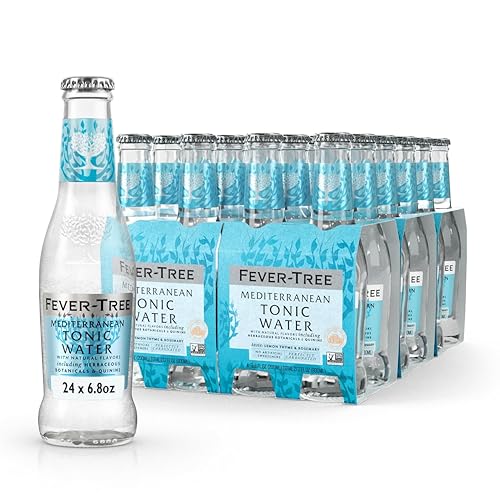
Fever-Tree Mediterranean Tonic — Best for Vodka Tonics
If the Premium Indian Tonic is the classicist, the Mediterranean Tonic is the diplomat. It keeps real quinine structure but softens the bitterness with herbaceous, rosemary-led character, producing a tonic that flatters vodka, lighter contemporary gins and anyone who found classic tonic water harsh.
It suits vodka tonic drinkers, summer highballs, and hosts whose guests span the full range from gin devotees to tonic skeptics. In a strongly juniper-led classic gin drink, the Indian tonic remains the more traditional partner; this bottle is the second tonic a thoughtful home bar stocks, not a replacement for the first.
Strengths
- Herbaceous profile makes tonic drinks approachable for more drinkers
- Pairs beautifully with vodka and lighter, citrus-led gins
- Same single-serve bottle discipline as the classic pick
Trade-offs
- Less bitter backbone for drinkers who want the classic tonic bite
- Stocking two tonics is a deliberate home-bar luxury, not a necessity
- Premium tier, like the rest of the Fever-Tree line
| Format | 24 pack, 6.8 fl oz bottles |
| Verified features | Rosemary essential oils with quinine; subtly herbaceous flavor (per Amazon listing title) |
The practical case for a second tonic is the guest list. At any real gathering, some drinkers love quinine bitterness and some merely tolerate it, and the Mediterranean style converts the tolerators: the drink still reads as a tonic serve, but the herbal softness makes it refreshing rather than challenging. Hosts who stock both tonics stop hearing that tonic is an acquired taste.
It also opens drinks the classic cannot: a vodka tonic with genuine character, a gin serve built on citrus and herbs rather than juniper, and a zero-proof highball with soda and a rosemary sprig that tastes designed rather than improvised. In the core-four framework it is the luxury slot — the first bottle to cut on a budget, and the one regular hosts miss most when it is gone.
Best for: Vodka tonic drinkers and hosts serving mixed tonic palates / Not suited for: Classic gin drinkers who want maximum quinine bite from a single tonic
Check on Amazon to see the current listing for the Fever-Tree Mediterranean Tonic.

Owen’s Margarita Mix Cans — Best for Parties
Owen’s takes the margarita in the opposite direction from the big bottle: single-serve cans, a sparkling profile, and real agave and lime juice as the foundation. A can plus tequila over ice is a margarita with bubbles and brightness, and a can alone over ice is a credible sparkling mocktail margarita.
It suits parties away from the kitchen — picnics, boats, poolside, tailgates — and hosts who value portion control and zero leftover bottles. Drinkers who want the classic still margarita in volume should take the Master of Mixes bottle; the cans are the mobile and sparkling expression of the same idea.
Strengths
- Single-serve cans travel anywhere and leave no opened leftovers
- Real agave and lime juice give it ingredient credibility
- Sparkling style makes an excellent standalone mocktail
Trade-offs
- Sparkling margaritas are a style choice traditionalists may not want
- Per-drink cost in cans runs above big-bottle formats
- Fizz fades once poured, so drinks are best built to order
| Format | 24 pack, 8.2 oz cans |
| Verified features | Real agave and lime juice; sparkling margarita mixer for cocktails and mocktails (per Amazon listing title) |
Format is flavor at a party. The bottled mix wins on volume and consistency at home; the cans win everywhere the home bar is not — no bottle to re-chill, no flat remainder, no measuring, and a sparkling lift that suits hot weather drinking remarkably well. For hosts who entertain outdoors, that is not a minor variation, it is the difference between serving margaritas and not bothering.
The mocktail performance seals its place in this guide. A sparkling agave-lime can over ice with a salted rim is a finished drink a non-drinker can hold with genuine pleasure, and building a home bar where the zero-proof option is this good is the modern hosting standard the other picks were also judged against.
Best for: Outdoor parties, portable bars and sparkling margarita fans / Not suited for: High-volume home margarita making, where the big bottle wins
Check on Amazon to see the current listing for the Owen’s Margarita Mix Cans.
Comparison Table
The core four jobs run down the middle of this table — tonic, ginger beer, margarita and Bloody Mary — with the Mediterranean tonic and the canned margarita as the two flexibility picks. If you stock only four bottles, take one from each job; the extras earn their place when your guest list or your venue demands them.
| Pick | Badge | Key spec | Best for |
|---|---|---|---|
| Fever-Tree Premium Indian Tonic Water | Best Overall | Real quinine tonic in 6.8 fl oz bottles, 24 pack | Gin and tonic drinkers and home bars that want one reference-quality tonic |
| Q Ginger Beer | Best for Mules | Real ginger and organic agave in 7.5 fl oz cans, 24 pack | Mule drinkers and home bars that want one serious ginger beer |
| Master of Mixes Margarita Mix | Best for Margaritas | Ready-to-use 1.75L bottles, 3 pack, lime and agave profile | Hosts and party margaritas, and home bars that want margaritas on demand |
| Zing Zang Bloody Mary Mix | Best for Bloody Marys | Ready-to-use Bloody Mary mix, 1.75 liter bottle | Brunch hosts, Bloody Mary bars and savory-drink fans |
| Fever-Tree Mediterranean Tonic | Best for Vodka Tonics | Herbaceous tonic with rosemary character, 6.8 fl oz bottles, 24 pack | Vodka tonic drinkers and hosts serving mixed tonic palates |
| Owen’s Margarita Mix Cans | Best for Parties | Sparkling margarita mixer with real agave and lime, 8.2 oz cans, 24 pack | Outdoor parties, portable bars and sparkling margarita fans |
How to Choose Mixers for Cocktails: Stock Jobs, Not Bottles
The mistake most home bars make is buying mixers by brand curiosity instead of by drink coverage. Start with the drinks your household and guests actually order. For most homes that list is short: something with tonic, something with ginger, margaritas, and a brunch drink. Four mixer families cover all of it, and a fifth and sixth bottle only make sense when a specific drink in your rotation demands them.
Within each family, judge the mixer by what it contributes. Tonic contributes bitterness and structure, so real quinine and restrained sugar matter. Ginger beer contributes heat and carbonation, so real ginger and firm fizz matter. Margarita and Bloody Mary mixes contribute an entire seasoning system, so balance and ingredient credibility matter more than novelty flavors. A mixer that merely tastes sweet is borrowing its appeal from sugar, and sugar is the one ingredient your bar already has.
Format is the third criterion, and it is practical rather than romantic. Single-serve bottles and cans protect carbonation and portioning, which is why most picks here use them. Large bottles win on cost per drink and batch consistency, which is why the party workhorses use them. Match the format to your serving pattern: a couple of drinks a week argues for small formats; a monthly party argues for the big bottles with small formats for quiet weeks.
Finally, test any mixer zero-proof before committing to a case. Pour it over ice with a squeeze of citrus and a pinch of salt where appropriate. A mixer that tastes complete on its own will behave beautifully with a spirit; a mixer that tastes thin alone is relying on the spirit to rescue it, and spirits are the expensive half of the drink to be doing rescue work.
Tonic and Ginger: The Two Sparkling Mixers That Carry a Home Bar
Tonic water is the most misunderstood mixer in the cabinet. It is not a soda; it is a bittering system, invented to make quinine palatable, and its job in a drink is structure. The divide in the category is between soda-style tonics, which lead with sugar, and mixer-grade tonics like the Fever-Tree picks, which lead with quinine and let sweetness support. In a gin and tonic — a drink that is mostly tonic — that divide is the whole drink, which is why tonic is the family where upgrading pays the highest return.
Ginger beer divides differently: by heat. Ginger ale is a sweet soda with a ginger accent; ginger beer, properly, is a mixer with real ginger bite, brewed or built to stand up to spirits, citrus and ice. Q represents the cocktail-first school: less sugar, more heat, strong carbonation. When a recipe says ginger beer, it means this style, and substituting a sweet soda is the most common reason home mules taste like candy instead of cocktails.
Both families reward the same serving discipline: cold mixer, plenty of ice, and the mixer poured last, gently, over the spirit and citrus. Carbonation is an ingredient with a lifespan measured in minutes once poured, and the hosts who internalize that serve noticeably better drinks from exactly the same bottles.
Margarita and Bloody Mary Mixes: When a Bottle Beats From-Scratch
The case for these two mixes is workload and consistency, and it is stronger than purists admit. A margarita needs lime, sweetener and balance in exact proportion, repeated identically for every guest; a Bloody Mary needs a spice cabinet. A good mix industrializes the repetition while keeping the flavor honest, and frees the host to actually attend the party — which, for most home entertaining, is the entire point.
The quality tells are consistent across both families. The ingredient list should read like the drink: lime and agave for margarita, tomato and recognizable seasonings for Bloody Mary. The flavor should survive dilution, because both drinks are served over generous ice. And the mix should accept adjustment gracefully — a squeeze of fresh lime in the margarita, hot sauce in the Bloody Mary — because a mix that forbids personalization will eventually bore the household that bought it.
Where from-scratch still wins is the single showcase drink: one margarita, made slowly, with fresh lime, for someone who will notice. A well-stocked bar keeps both options alive — fresh citrus for the showcase, a trusted mix for the crowd — and this guide picks are chosen to be the crowd option you do not have to apologize for.
Building the Zero-Proof Bar: Mixers That Work Without Spirits
Every pick in this guide is non-alcoholic, which is not a footnote but a design standard for modern hosting. The test each one passed is simple: poured over ice with citrus, salt or soda as appropriate, does it taste like a finished drink? The tonics pass with a wedge of citrus and a botanical garnish. Q Ginger Beer passes almost aggressively — its heat and low sweetness make it a complete drink on its own. The margarita and Bloody Mary mixes pass because their seasoning systems were always the flavor of the drink.
The practical method is to build the zero-proof version first when you are learning a drink. If the base tastes balanced without the spirit, the alcoholic version is a variation rather than a rescue. Hosts who adopt that order find their whole bar improves, because mixers stop hiding behind spirits and start being chosen on merit.
Stocking for both audiences also changes quantities. A household that once bought one tonic for gin drinkers now buys for everyone at the table, which argues for the multipack formats most picks here use, and for the canned sparkling options that let a non-drinker open a fresh, personal serve rather than a shared flat bottle.
Storage, Freshness and the Economics of a Working Home Bar
Mixers are groceries, and they reward grocery discipline. Unopened bottles and cans belong in a cool, dark pantry, not on a sunny bar cart where heat and light flatten flavors and fade labels into decor. Sparkling mixers in particular lose their edge with heat cycling, so the case you bought for the season should live somewhere boring and temperate, with only the current bottles and cans earning display space.
Rotation is the second discipline. Home bars accumulate partial bottles the way kitchens accumulate condiments, and the fix is the same: buy formats matched to your serving rhythm, and schedule drinks around what is open. A household that drinks two gin and tonics a week should live on single-serve bottles; a household that hosts monthly should let the big bottles do the party and the small formats do the quiet weeks, rather than opening a large bottle for two drinks and watching it fade.
The economics follow from the same logic. The cheapest mixer per ounce is the one in the largest container, and the most expensive is the one poured flat down the sink. Judged by drinks actually served rather than ounces purchased, single-serve formats are often the honest bargain for small households, while the big bottles win decisively for regular hosts. Price per finished drink — the only unit a home bar truly buys — is the number to optimize, and it is calculated in your kitchen, not on a shelf tag.
How to Build Four Classic Drinks From These Mixers
Four builds, one per mixer family, using proportions that suit the picks in this guide. Each build assumes plenty of fresh ice — the silent ingredient in every one of these drinks — and a chilled glass where the style calls for it.
Step 1: The gin and tonic: build cold, pour gently
Fill a highball or copa glass completely with ice. Add your gin over the ice, then pour a full single-serve bottle of tonic slowly down the side of the glass to keep the carbonation alive. Stir once, briefly, garnish with a wedge of citrus or a botanical that matches your gin, and serve immediately. The drink should hiss faintly when the tonic lands; if it does not, the ice or the tonic was not cold enough.
Step 2: The mule: lime first, ginger beer last
Add vodka and fresh lime juice over ice in a mug or highball, then top with a full can of ginger beer, poured steadily to keep the fizz. Give it one gentle stir, taste for lime — the mixer is deliberately less sweet, so the citrus should be assertive — and garnish with the spent lime wedge. The ginger heat should arrive after the lime, not before it.
Step 3: The margarita: salt, ice, mix, spirit
Run a lime wedge around a rocks glass rim and dip it in salt if you like a salted rim. Fill the glass with fresh ice, add tequila, then the margarita mix, and stir or shake briefly to chill and integrate. Taste and adjust: a squeeze of fresh lime sharpens a bottled mix beautifully, and a small extra pinch of salt wakes up the agave character. For the canned sparkling version, build the same way and pour the can last.
Step 4: The Bloody Mary: season the glass, not just the drink
Start with ice in a tall glass, add vodka if using, then the Bloody Mary mix. Roll the drink between two glasses or stir thoroughly — shaking bruises the tomato body. Taste for salt and heat and adjust with hot sauce or citrus rather than more mix. Garnish with intent: celery, citrus and something pickled give the drink its brunch architecture.
Step 5: The zero-proof versions: same ritual, no shortcuts
Build each drink identically, replacing the spirit with extra mixer, a splash of soda or a double measure of citrus as the style demands. Serve in the same glassware with the same garnish. The ritual is the hospitality; a zero-proof drink served with full ceremony tastes better than one apologized for, every time.
Step 6: Batching for a party: the pitcher rules
For margaritas and Bloody Marys, batch the mix and spirit together in a pitcher without ice, refrigerate, and pour over fresh ice per glass — never batch over ice, which dilutes unevenly. Keep sparkling mixers out of the pitcher entirely: tonic and ginger beer are added per glass at the moment of serving, or the fizz that defines them will be gone before the second round.
Keep a small notebook or phone note of proportions your household prefers. Mixer brands differ in sweetness and heat, and the two minutes spent recording that this tonic wants a bigger wedge or this mix wants extra lime will save a mediocre round at every future party.
Chill everything you can before guests arrive — mixers, glasses if there is freezer room, and the pitcher for batched drinks. Cold is the cheapest quality upgrade in this entire category, and it is the one guests notice without ever naming it.
Common Buying Mistakes
Buying mixers by flavor novelty instead of drink coverage
A cabinet of exotic one-drink mixers still cannot make a gin and tonic. Stock the four core jobs first; novelty flavors are the seventh bottle, never the second.
Serving sparkling mixers warm or over too little ice
Warm tonic and scant ice destroy carbonation and dilute the drink simultaneously — the worst of both worlds. Chill the mixers, fill the glass with ice, and the same bottles taste like a different, better product.
Judging a mixer sweet and stopping there
Sweetness is the easiest flavor to add and the hardest to remove. A balanced or dry mixer can be sweetened per drink; an over-sweet one cannot be un-sweetened. When in doubt, buy the drier mixer and keep simple syrup or agave in the bar.
Letting opened big bottles die in the fridge
Large-format mixes are party tools. Once opened, plan to use them within the following weeks — schedule the brunch, make the batch — rather than discovering a tired bottle at the next event and serving it anyway.
Treating the zero-proof serve as an afterthought
Non-drinking guests judge the bar by their glass. A mixer chosen only for how it hides behind spirits will fail them. Every pick here was tested as a standalone drink for exactly this reason.
Skipping the garnish and the salt
A salted rim, a citrus wedge, a celery stalk: these are not decoration, they are seasoning, and they change the balance of the drink. The two minutes garnishes take are the highest-return minutes in home bartending.
Final Recommendation
Stock the core four and most home bars are done: Fever-Tree Premium Indian Tonic for the gin drinkers, Q Ginger Beer for the mule crowd, Master of Mixes Margarita Mix for party margaritas, and Zing Zang for brunch. Add the Mediterranean Tonic when your guest list includes vodka tonic drinkers and tonic skeptics, and the Owen’s cans when the party leaves the kitchen.
The deeper principle is the one Fever-Tree built a company on: in most mixed drinks the mixer is the majority of the glass, so its quality is the drink quality. Buy the mixer with the same care you buy the spirit, serve it cold with plenty of ice, and four bottles will outperform a cabinet of careless ones.
One last hosting note: the best home bar is not the largest one, it is the one whose bottles are fresh, cold and actually opened. Four mixer families, bought in formats matched to your rhythm and replaced before they fade, will serve a year of gatherings better than a museum of mixers ever will.
Keep exploring the cluster: Best 3 Channel Dj Mixers Best 4 Channel Mixers Best 5 Channel Mixers Best 4 Channel Dj Mixers Best 5 Pro Sound Tablet Mixers
Frequently Asked Questions
What are the four essential mixers for a home bar?
A quality tonic water, a real ginger beer, a margarita mix and a Bloody Mary mix. Those four cover the gin and tonic family, the mule family, margaritas and brunch drinks, which together account for the large majority of drinks home hosts are asked to make.
Is tonic water alcoholic?
No. Tonic water is a non-alcoholic mixer containing quinine, which gives it its bitterness. The same is true of every pick in this guide: ginger beer in this style is also non-alcoholic, and the margarita and Bloody Mary mixes contain no spirits — the alcohol in a finished cocktail comes only from what you add.
Can these mixers be used for mocktails?
Yes, and they were chosen partly for that. Poured over ice with citrus, salt or soda as appropriate, each pick makes a complete zero-proof drink. The ginger beer and the sparkling margarita cans are particularly strong standalone serves.
How long do mixers keep after opening?
Unopened bottles and cans keep for months in a cool pantry. Once opened, large-format mixes should be refrigerated and used within the following few weeks for best flavor, and sparkling mixers lose carbonation quickly after opening — which is why most picks here use single-serve formats.
Why do premium tonics cost more than soda brands?
The difference is in the bittering and sweetening: real quinine, restrained sugar and botanical ingredients cost more than the soda formula of high sweetness and flavoring. In a drink that is mostly tonic, that difference is the majority of what you taste.
Should I buy bottles or cans?
Bottles suit home bars that value presentation and the ritual of pouring; cans suit portability, portion control and outdoor events. For carbonation freshness both beat large opened containers, because each serve is opened fresh. Choose by where you actually drink, not by which looks better on the shelf.


