Disclosure: airfryerkitchensupply.com is reader-supported. When you buy through links on our site, we may earn an affiliate commission at no extra cost to you.
Where to buy
Every pick below for the best affordable food processors is a verified, live Amazon listing in the budget tier of its size class. Prices in this tier move often, so check the current price on Amazon before ordering — and check whether a listing bundles discs or a scraper, since budget bundles vary.
- Hamilton Beach 10-Cup Food Processor (70730) — full-size capacity with a bowl scraper, at a budget tier.
- BLACK+DECKER 8-Cup Food Processor, Easy Assembly — 450 watts and discs without the flagship bill.
- Hamilton Beach Stack & Snap 4-Cup Mini (70510) — the mini that slices and shreds.
- Cuisinart Mini-Prep Plus 3-Cup (DLC-2A) — the proven name-brand mini chopper.
- Hamilton Beach 3-Cup Stack & Press Chopper — 350 watts and the simplest operation in this guide.
- Ninja Express Chop (NJ100GR) — one-touch pulsing for garlic, herbs, and nuts.
The best affordable food processors answer a fair question: how much processing can you get before the money stops buying capability and starts buying finish? The honest answer, after verifying the current budget market model by model, is “almost all of the capability.” The six machines below — all in the budget tier of their classes — collectively cover chopping, slicing, shredding, pureeing, and grinding for households from one person to five. What the budget tier does not buy is equally concrete: flagship disc precision on delicate foods, decade-grade motors, dough authority, and accessory ecosystems. This guide is organized around that trade, because an affordable processor chosen with open eyes is a bargain, and one chosen expecting flagship manners is a disappointment with a receipt.
Two structural notes before the picks. First, “affordable” here means the budget tier relative to each machine’s class — a full-size Hamilton Beach and a mini Cuisinart can both be affordable answers to different kitchens, and comparing them by sticker alone is how people buy the wrong size. Second, every pick was verified against live listing data; in a tier crowded with look-alike no-name models, the six below are the ones whose specifications, brands, and support stories we could actually confirm. Where a pick cuts a corner, the review says which corner, in plain language.
In this guide
Quick Picks

Best Overall Value — Hamilton Beach 10-Cup (70730)
A genuine full-size processor — 10-cup bowl, slicing and shredding, and a built-in bowl scraper that keeps food moving — at a budget tier. The most complete affordable machine here.

Best Budget Full-Size Alternative — BLACK+DECKER 8-Cup Easy Assembly
450 watts, an 8-cup bowl, and shred/slice/chop/puree coverage with assembly designed for beginners. The pick if the Hamilton Beach’s size is more than your counter wants.

Best Affordable Mini with Discs — Hamilton Beach Stack & Snap 4-Cup (70510)
The only mini in this guide with real slicing and shredding discs, plus a quad blade and a leak-proof bowl. Small kitchens that shred cheese weekly start here.

Best Affordable Name-Brand Mini — Cuisinart Mini-Prep Plus 3-Cup (DLC-2A)
The classic mini: a reversible blade for chopping and grinding, a 3-cup bowl, and the most proven design in the budget mini class. For one- and two-person kitchens, it is the default.
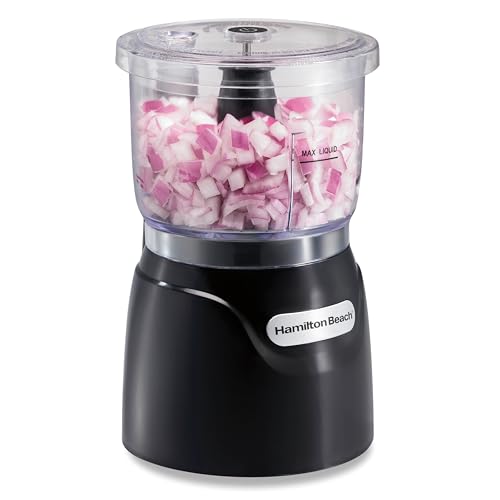
Best Ultra-Budget Chopper — Hamilton Beach 3-Cup Stack & Press
350 watts — real power for a mini — behind the simplest control scheme in food processing: stack it, press the lid, done. The least intimidating machine in this guide.
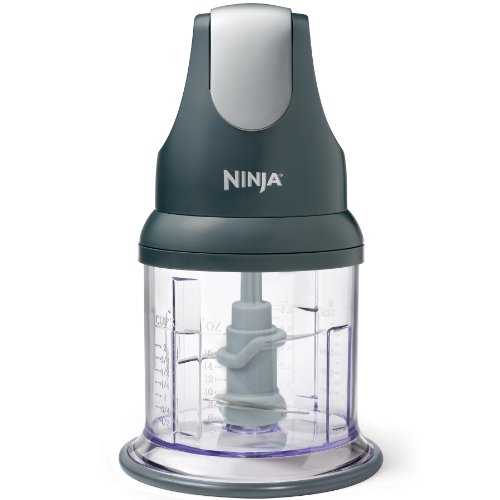
Best for Garlic, Herbs, and Nuts — Ninja Express Chop (NJ100GR)
A compact one-touch chopper built for the small, hard, frequent jobs: garlic by the head, herbs by the bunch, nuts by the handful. Dishwasher-safe and drawer-sized.
How These Picks Were Chosen
Candidates were verified against live Amazon listing data — brand, model, capacity, wattage, and included attachments all confirmed — before any could appear here. The budget tier is where unverifiable listings breed fastest, so this filter removed more candidates than any other in this series: any model whose specifications we could not confirm, whose brand had no traceable support presence, or whose listing made claims its own photos contradicted was excluded, however attractive its tier position looked.
Scoring then weighted capability per tier first: what fraction of the full processing curriculum — chop, slice, shred, puree, grind — does this machine honestly cover at its price position? The Hamilton Beach 10-cup and the BLACK+DECKER lead because they cover all of it. Second, motor adequacy: budget machines die by underpowered motors meeting full bowls, so we favored models whose wattage matches their bowl size (the 350-watt 3-cup and 450-watt 8-cup are both healthy ratios). Third, cleanup — dishwasher-safe parts are non-negotiable at any tier, and all six picks clear that bar. Fourth, brand accountability: Hamilton Beach, BLACK+DECKER, Cuisinart, and Ninja all maintain real parts and support channels, which is the budget tier’s hidden dividing line. Fifth, honest limitations: each review names what its machine cannot do, because in this tier the limitations are the product information.
Safety recalls excluded candidates outright, as throughout this series. And a framing rule: no pick is described as “cheap.” These are budget-tier machines with specific, stated compromises — several of them will outlast fancier appliances in real kitchens, because their owners chose them for jobs they actually do.
The Best Affordable Food Processors: Full Reviews
Hamilton Beach 10-Cup Food Processor (70730) — Best Overall Value
The 70730 is the machine that makes shoppers ask what, exactly, the expensive ones are for. A 10-cup bowl, slicing and shredding capability, and Hamilton Beach’s signature bowl scraper — a built-in paddle that sweeps the bowl wall as you process — at a firm budget tier. It suits families, first-time full-size buyers, and anyone furnishing a kitchen in one pass. It does not suit dough devotees or buyers who can feel a fit-and-finish difference and care; this machine spends its budget on function.
Strengths
- The bowl scraper is a genuine innovation at this tier: it keeps food circulating into the blade, cutting scrape-down stops and improving evenness.
- Full-size 10-cup capacity handles family batches — soup bases, big slaws, double dips — in one load.
- Complete core repertoire: slice, shred, mince, and puree, from a brand with real parts support.
Trade-offs
- Disc precision on delicate items trails the flagship brands — ripe tomatoes and soft cheeses slice less cleanly.
- Dough is a light-batch courtesy, not a capability to plan a bread habit around.
- The scraper is one more part to wash, and the plastics feel budget-grade because they are.
Key specs (verified): Capacity: 10 cups · Model: 70730 · Feature: Easy Clean bowl scraper included · Functions: slice, shred, mince, puree
The scraper deserves its headline. The classic mid-bowl problem — food plastered to the wall, blade spinning in a cleared center, cook stopping to scrape — is the main reason budget processors chop unevenly, and Hamilton Beach engineered it away with a paddle that does the scraping continuously. Combined with a bowl honestly sized for family work, the result is the most even chopping and the fewest interruptions of any budget machine here. Salsa, slaw, chopped salads, and soup bases all come out at a standard that makes the tier feel like a rounding error.
Where the flagship money actually goes becomes clear only at the edges: marathon shredding sessions, perfect brunoise-adjacent slicing, weekly dough. If your cooking lives in the center — and most cooking does — this is the best value in food processing, full stop.
Best for: families and first-time buyers wanting complete full-size capability on a budget / Not suited for: heavy dough or flagship disc precision
Check the current price on Amazon
BLACK+DECKER 8-Cup Food Processor, Easy Assembly — Best Budget Full-Size Alternative
If the Hamilton Beach is the value ceiling, this BLACK+DECKER is the value floor for full-size processing: 450 watts, an 8-cup bowl, and shred/slice/chop/puree attachments in a package whose “Easy Assembly” billing targets the beginners this tier serves. It suits smaller families, renters, and second-kitchen setups. It does not suit heavy users — the tier’s limits on longevity and dough apply in full.
Strengths
- 450 watts behind an 8-cup bowl is a healthy power ratio that many mid-tier machines do not beat.
- Easy-assembly design removes the twist-lock fumbling that makes beginners avoid processors.
- Stainless steel S-blade and a complete attachment set cover the standard curriculum.
Trade-offs
- Disc work is serviceable rather than precise; soft foods are the first to show it.
- Light-duty dough only — this is a vegetable, cheese, and sauce machine.
- Budget plastics and a support horizon measured in years, not decades.
Key specs (verified): Capacity: 8 cups · Motor: 450 watts · Blade: stainless steel S-blade · Functions: shred, slice, chop, puree · Assembly: easy-assembly design
The right mental model for this machine is “the complete curriculum, competently.” Cheese shreds, cucumbers slice, onions vanish by the bowlful, dips puree — every standard job completes at a standard a weeknight cook accepts without comment, and the assembly genuinely is the easiest in this guide, which matters more than spec sheets admit: a processor that takes ten seconds to set up gets used on Tuesday, not just Sunday. The 450-watt motor keeps its composure through full bowls that would slow lesser budget rivals.
Its ceilings are the tier’s ceilings: finesse and lifespan. Buy it as a capable appliance for the next several years of ordinary cooking, and it will not disappoint. Buy it as a lifetime flagship substitute, and the discs will eventually explain the difference.
Best for: smaller families and beginners wanting full-size processing at the floor tier / Not suited for: heavy daily use or dough
Check the current price on Amazon
Hamilton Beach Stack & Snap 4-Cup Mini (70510) — Best Affordable Mini with Discs
Most budget minis are choppers wearing a processor’s name. The 70510 is the exception that proves the rule’s cost: real slicing and shredding discs and a feed tube, on a 4-cup mini, at a budget tier. It suits small households whose prep includes cheese, slaw, and sliced vegetables weekly, and who have neither the counter nor the budget for a full-size machine. It does not suit minimalists — discs mean parts, and parts mean washing.
Strengths
- Genuine slicing and shredding discs — capability no other mini in this guide offers at any tier.
- Quad blade chops more evenly than two-blade minis by pulling the top of the load down.
- Stack & Snap assembly and a leak-proof bowl remove the two classic mini frustrations.
Trade-offs
- 250 watts and a mini feed tube mean trimmed pieces and light disc loads.
- The parts count (discs, pusher, lid) is full-size thinking in a mini body.
- Disc finesse is good for the class, not flagship-grade on soft items.
Key specs (verified): Capacity: 4 cups · Model: 70510 · Motor: 250 watts · Blade: stainless steel quad blade · Functions: slice, shred, puree, chop · Bowl: leak-proof, easy-assembly
The use case writes itself: a two-person household that shreds cheese for tacos on Friday, slices salad vegetables nightly, and purees a sauce on Sunday gets all three from one small base that stores like a chopper. The quad blade’s extra arms fix the mini class’s signature flaw — the untouched top layer — and the sealed bowl means the puree job does not end with a counter wipedown. Nothing else at this size and tier attempts the full brief.
If your prep is chop-only, the simpler minis below are less to wash and less to store. If discs appear in your week, this is the most affordable honest way to own them in a small kitchen.
Best for: small households that slice and shred weekly / Not suited for: chop-only cooks who want the fewest parts
Check the current price on Amazon
Cuisinart Mini-Prep Plus 3-Cup (DLC-2A) — Best Affordable Name-Brand Mini
The DLC-2A is the mini chopper as a mature product: a 3-cup bowl, a reversible stainless blade that chops in one direction and grinds in the other, and a design that has been refined across more years than most competitors have existed. It suits one- and two-person kitchens and anyone who wants the safest possible budget mini purchase. It does not suit families or disc shoppers — it is a chopper, proudly and only.
Strengths
- Reversible blade covers grinding — nuts, spices, hard cheese — that single-direction budget minis cannot do.
- The most proven design in its class, from the brand that created the category, with real parts support.
- Compact, simple, and quick to clean — the mini formula with nothing extraneous.
Trade-offs
- 3 cups is a one-to-two-person bowl; family batches split into loads.
- Chop and grind only — no discs, no whisk, no exceptions.
- Liquid capacity is roughly half the bowl, like every mini.
Key specs (verified): Capacity: 3 cups · Model: DLC-2A · Blade: reversible stainless steel · Jobs: herbs, vegetables, hard cheese
The reversing blade is why this mini, alone among the budget choppers here, handles the full small-jobs curriculum. Garlic and herbs chop cleanly with pulses; switch direction and the blade’s other edge grinds the quarter-cup of nuts, the spoonful of spices, the wedge of parmesan. That two-in-one character is what makes a mini a daily tool instead of a single-trick gadget, and Cuisinart’s execution — bowl geometry, blade sharpness, motor tuning — remains the class reference despite the design’s age.
Buy it as the default small chopper and it will simply work, for years, at the jobs it claims. The shoppers who outgrow it are the ones whose households grow — at which point it retires gracefully to garlic-and-herb duty beside its full-size replacement, which is where most of them end up anyway.
Best for: one- and two-person kitchens wanting a proven chop-and-grind mini / Not suited for: families, batches, or any disc work
Check the current price on Amazon
Hamilton Beach 3-Cup Stack & Press Chopper — Best Ultra-Budget Chopper
The simplest machine in this guide: a 3-cup bowl, a 350-watt motor, and a control scheme consisting of pressing the lid. It suits the genuinely budget-constrained, the technology-averse, dorms and first kitchens, and cooks who want chopping help without a learning curve of any kind. It does not suit texture perfectionists — press-duration is the only control you get — or anyone processing for more than two.
Strengths
- 350 watts is serious power for a 3-cup mini — it does not stall on onions, nuts, or firm vegetables the way weaker ultra-budget choppers do.
- Stack & Press operation: no buttons, no settings, nothing to misconfigure, and the lid-press doubles as a safety interlock.
- Dishwasher-safe parts and a footprint that fits anywhere, including a dorm shelf.
Trade-offs
- One speed and no pulse button: texture control is entirely in your press timing, which takes a weekend to learn.
- Chop, dice, mince, and puree are the repertoire — no grinding finesse, no discs.
- 3-cup ceiling, firmly enforced by physics.
Key specs (verified): Capacity: 3 cups · Motor: 350 watts · Blades: stainless steel · Design: Stack & Press · Care: dishwasher safe
There is a real design intelligence in removing the controls. Every budget chopper’s failure mode is a user holding a button too long and making soup; the Stack & Press makes that the explicit technique — press in short bursts for a chop, hold for a puree — and pairs it with a motor strong enough that the bursts actually cut instead of shoving food around. Onions, peppers, nuts, and cooked vegetables for baby food all process quickly and adequately, and the whole machine washes in the dishwasher and stores in a corner.
It will not win a texture contest against the Cuisinart mini, and it does not try to. It is the floor of the category executed honestly: maximum simplicity, adequate power, no pretending. For its buyers, that is not a compromise — it is the product.
Best for: ultra-budget buyers, beginners, and small households wanting zero learning curve / Not suited for: texture control or family batches
Check the current price on Amazon
Ninja Express Chop (NJ100GR) — Best for Garlic, Herbs, and Nuts
The Express Chop is a specialist for the smallest, most frequent jobs in cooking: a compact bowl, one-touch pulsing, and Ninja’s stacked-blade approach shrunk to drawer size. It suits cooks who reach for garlic, herbs, nuts, and breadcrumbs daily and want them done in ten seconds, and anyone whose kitchen has no counter to spare. It does not suit batch cooks or onion-heavy prep for a family; its bowl is a small-batch instrument by design.
Strengths
- One-touch pulse operation is genuinely one-handed and instant — the lowest-friction chopping in this guide.
- Stacked stainless blades chop small, hard loads (garlic, nuts) evenly, where single low blades skate over them.
- Dishwasher-safe parts and a footprint that lives in a drawer, not on the counter.
Trade-offs
- Small capacity: this is a by-the-handful machine, and family prep means many loads.
- Chop, grind, and puree only, with texture control limited to your pulse timing.
- The compact bowl’s liquid ceiling is low — dressings in small batches only.
Key specs (verified): Model: NJ100GR · Bowl: 16 oz (listing also states 3-cup capacity) · Operation: one-touch pulse · Blades: stainless steel · Care: dishwasher safe
One honesty note, because this guide prints capacities carefully: Ninja’s own listing describes this model with both a 16-ounce bowl and a 3-cup capacity figure, which do not reconcile — plan around the smaller, physical bowl size and treat it as a small-batch chopper, and you will never be surprised. Within that role it excels. Garlic by the head, a bunch of herbs, a handful of nuts for a salad, breadcrumbs from a heel of bread: the stacked blades grab small loads that bigger bowls lose under the blade, and the one-touch top makes the whole job a ten-second interruption rather than a production.
Think of it as the mini’s mini — the tool for the jobs that happen between recipes. Households that cook with aromatics daily will use it more than any other pick here; households that cook in batches should buy its bigger siblings instead.
Best for: daily garlic, herb, and nut jobs in small batches / Not suited for: family-volume prep or liquid batches
Check the current price on Amazon
Comparison Table
| Pick | Badge | Key spec | Best for |
|---|---|---|---|
| Hamilton Beach 70730 | Best Overall Value | 10-cup, bowl scraper | Complete family processing |
| BLACK+DECKER 8-Cup | Best Budget Full-Size Alternative | 8-cup, 450W, easy assembly | Smaller families, beginners |
| Hamilton Beach 70510 | Best Affordable Mini with Discs | 4-cup, 250W, discs + quad blade | Small kitchens that shred |
| Cuisinart DLC-2A | Best Affordable Name-Brand Mini | 3-cup, reversible blade | Chop and grind for 1–2 people |
| Hamilton Beach Stack & Press | Best Ultra-Budget Chopper | 3-cup, 350W, press operation | Zero learning curve |
| Ninja Express Chop NJ100GR | Best for Garlic, Herbs, and Nuts | Compact bowl, one-touch pulse | Small daily jobs |
How to Choose an Affordable Food Processor Without Buying Twice
The budget tier punishes exactly one mistake: buying the wrong size cheaply, then buying the right size properly. So size first. One to two people, mostly aromatics and small jobs: a mini (the Cuisinart DLC-2A, the Stack & Press, or the Ninja for the smallest jobs) is not a compromise — it is the correct tool, and the full-size machines would serve you worse. Three to five people, standard family prep: go straight to the Hamilton Beach 70730 or the BLACK+DECKER 8-cup; a mini will split every batch and sour you on processing entirely. Small kitchen, disc needs: the Hamilton Beach 70510 is the only affordable answer that slices and shreds without a full-size footprint.
Second, learn what the budget tier actually trades away, so you can decide whether you care. It trades disc finesse (flagships slice ripe tomatoes and soft cheese cleanly; budget discs prefer firmer food), motor longevity (budget motors are built for years of ordinary use, not decades of daily use), dough authority (light batches only, everywhere in this guide), and accessory depth (the core discs are included; specialty cuts are not available at any price for most budget platforms). It does not trade away basic competence: every pick here chops evenly, purees adequately, and survives its dishwasher. If your cooking is weeknight-standard, the trades are theoretical. If you are a daily, heavy, precision cook, they are your biography, and the mid-tier guides linked below are your address.
Third, apply the wattage sanity check: motor watts should scale with bowl size. The healthy ratios in this guide — 350 watts for 3 cups, 450 for 8 — are what adequate looks like. A large bowl on a tiny motor is the budget tier’s classic trap, producing a machine that purees the bottom layer and bullies the rest. Fourth, insist on the unglamorous basics at any tier: dishwasher-safe parts, a brand with a parts channel, and a lid that seals. A budget machine missing any of those is not affordable; it is a future replacement purchase wearing a discount.
Finally, think in cost per year of service, not sticker. A budget machine used three times a week for four years costs less per use than the knife-and-board time it replaces within its first month. The tier is not a waiting room for a “real” processor — for most households, these machines are the real processor, correctly sized to real cooking.
Where the Budget Tier Cuts Corners — and Where It Does Not
Understanding the corners helps you shop the whole tier, not just this list. Plastics: budget bowls and housings use lighter polymers that cloud faster in dishwashers and feel less dense in hand; functionally they seal and spin the same. Discs: thinner steel and fixed geometries — one slice thickness, one shred size — where flagships offer adjustable or multiple discs. Motors: universal motors tuned for intermittent duty; they ask for rest between marathon batches and reward it with long life. Controls: fewer speeds, simpler switches — which, honestly, many cooks prefer. Warranty and parts: shorter coverage, thinner accessory catalogs.
Where the tier does not cut: blade steel is stainless everywhere here; safety interlocks are universal; dishwasher-safe ratings are genuine; and the core physics of a spinning blade in a bowl does not check your receipt. A budget machine’s chop is a real chop. The gap between these picks and the flagships is measured in finesse, volume, and years — not in whether dinner gets made.
How to Use a Budget Food Processor: Setup, Technique, and Getting Years Out of It
Setup. Wash all parts before first use. Bowl seated and locked, blade on the post (or disc fitted for disc models), lid closed until the interlock clicks. On the minis, confirm the blade sits fully on its post — a half-seated blade is the one assembly error that makes a good machine chop badly.
Technique that protects the machine. Budget motors reward good habits and punish bad ones faster than flagship motors do. Cut food into even, one-to-two-inch pieces so the blade finishes rather than demolishes. Pulse for chopping — one-second bursts, a scrape-down halfway — and reserve continuous running for purees with liquid added gradually. Chill cheese before shredding. Never force the pusher; let the disc cut. And observe the two-thirds rule for chopping loads and the half-bowl rule for liquids, which at this tier are not suggestions but the difference between a tool and a warranty claim.
Getting years out of it. Rest the motor a minute between back-to-back heavy batches — heat is the budget motor’s only real enemy. Hand-wash discs and blades when you can (dishwasher detergent is what clouds budget plastics fastest), and always store blades and discs sheathed or in the bowl, never loose in a drawer. Rinse parts immediately after use; a budget bowl’s seams are less forgiving of dried-on food. Wipe the base with a damp cloth, never submerge it, and keep the cord loosely coiled rather than kinked. Treated this way, the machines in this guide routinely outlive their price tier’s reputation.
The Two-Machine Budget Strategy: A Mini Plus a Full-Size
Here is the budget insight that experienced cooks arrive at and beginners resist: at this tier, two specialized machines often beat one generalist — and cost less than a single flagship. The pairing that covers nearly all home processing is one pick from this guide’s full-size end (the Hamilton Beach 70730 or the BLACK+DECKER 8-cup) for family batches and disc work, plus one mini (the Cuisinart DLC-2A or the Hamilton Beach Stack & Press) for the daily garlic, herb, onion, and small-sauce jobs. The full-size machine stops being dragged out for a single onion — the misuse that makes owners hate their processors — and the mini stops being overloaded past its ceiling, which is the misuse that kills budget motors.
The strategy has a second, quieter benefit: redundancy. When one machine is in the dishwasher, the other works. When one eventually wears out — budget machines are mortal — the kitchen still processes while you replace it, and you replace only the half that died, at half the cost of a flagship funeral. The counterargument is storage: two machines need two homes. In a small kitchen, the Hamilton Beach 70510 mini-with-discs collapses the strategy into a single machine, which is exactly why it holds its badge in this guide. But where the shelf space exists, the pair is the budget tier’s smartest configuration, and it is the setup most of the cooks we know actually run.
There is also a gifting corollary worth knowing: the two-machine strategy is why a budget mini is the safest kitchen gift in this entire category. Given alone, it is immediately useful in any household, including ones that already own a full-size processor — it fills the small-jobs half of the strategy rather than duplicating the big half. Given to a first apartment, it becomes the founding machine that a later full-size purchase complements instead of replaces. Few appliances at this tier can be bought for another person’s kitchen with that little risk of redundancy.
Sequencing matters if you cannot buy both at once. Buy the size that matches your most frequent job first — minis win that contest in most households, because daily small jobs outnumber weekly big ones — and add the second machine when the first one’s ceiling starts costing you real time. Bought in that order, each purchase is justified by a diary of actual overflow, not by a spec sheet’s promises.
Spec Traps: Reading a Budget Listing Like an Engineer
The budget tier’s listings reward a skeptical reader. Five traps account for most disappointed purchases. Peak wattage: some listings quote a motor’s momentary peak rather than its working output; compare models by their rated watts where stated — every wattage printed in this guide is the manufacturer’s rated figure from its verified listing — and treat any listing that will not state a number as answering your question. Cup inflation: bowl volume measured to the brim with dry goods is the industry convention, not a lie, but plan your batches at two-thirds of it for chopping and half for liquids, and be wary of no-name listings whose “cups” shrink against a measuring cup at home. Function verbs: “slice” requires a disc and a feed tube; a blade-only machine that lists slicing among its talents is describing what its marketing department did to the truth. Check the parts photo: if there is no disc, there is no slicing. Blade counts: “4D blades” and similar phrases describe stacked blade tiers, which genuinely help mincing — but the number is a geometry claim, not a quality grade. Stainless everything: a stainless blade is standard at every tier; a stainless bowl is a different, rarer feature (the Ganiza in our 8-cup guide offers one) and listings blur the two deliberately.
The defenses are boring and total: buy brands with traceable support, confirm the parts in the box against the parts in the photos, read the capacity as a ceiling rather than a batch size, and let guides like this one do the verification pass before your money does. Every pick in this article survived that reading; the ones that did not are not in this article, which is the point of it.
A Realistic Budget: What the Full Setup Actually Costs You in Space and Time
“Affordable” deserves one more dimension beyond the sticker: the ownership footprint. A budget full-size processor asks for a cabinet shelf roughly a foot square, a drawer corner for its discs, and two to four minutes of washing after a full session — figures the flagship tier does not improve enough to matter. A budget mini asks for a drawer or a half-shelf and under a minute of washing. The time economics run the other way and dominate: the Hamilton Beach 70730 returns its entire purchase tier in saved knife time within a few months of ordinary family cooking, and the minis do it within weeks. The genuinely expensive processor, at any tier, is the one that does not fit your kitchen’s storage or your cooking’s size and therefore processes nothing.
There is one more budget line item nobody lists: the replacement horizon. Plan a budget full-size machine as a four-to-seven-year appliance and a budget mini as a three-to-six-year one, with the care habits in this guide pushing both toward the top of their ranges. Against that horizon, even the fullest setup in this article — a full-size pick plus a mini, bought together — annualizes to a modest figure that most households will not feel, and it covers more of the processing curriculum than a single mid-tier machine. Affordability, properly measured, is cost per year of dinners improved; by that measure this tier is not the compromise corner of the category. It is, for most kitchens, the rational one.
When to Upgrade: The Honest Signs a Budget Machine Has Done Its Job
A budget processor is not a failed flagship; it is a successful first chapter, and it ends in one of two legitimate ways. The first is wear: a bowl cracked beyond sealing, a motor that smells hot on ordinary loads, a disc dulled past usefulness with no replacement sold. When a wear item cannot be replaced — check the brand’s parts channel before concluding it cannot — the machine has finished, and it owes you nothing. The second ending is outgrowth, and its signs are a diary, not a feeling: you split batches most times you cook; your recipes have acquired a weekly dough; your slicing has become precise enough that budget discs are the visible flaw in finished dishes; or a second household’s worth of eaters has moved in. Any two signs, sustained for a season, mean the upgrade will be used at the level it costs — which is the only justification an upgrade ever needs.
When that day comes, the budget machine’s last service is information: you know your size, your disc habits, your motor needs, and your storage reality from years of evidence, which makes the flagship purchase the most informed appliance decision in your kitchen. Retire the old machine to a second kitchen, a family member’s first apartment, or backup duty — budget processors that still run have a long tradition of second lives — and buy its successor from the size guides in this series with the confidence this one taught you.
And one small-print habit that protects every purchase in this tier: screenshot or save the listing’s stated contents — capacity, wattage, and included parts — when you order. Budget listings are revised more often than flagship ones, bundles rotate, and if a box arrives missing a disc the listing promised, that saved page is the whole conversation with customer service. It takes ten seconds, it costs nothing, and in the budget tier it is the difference between a shrug and a replacement part in the mail. Pair it with the model number noted in your phone, and you own the two pieces of paper a budget appliance ever asks you to keep.
Common Buying Mistakes
- Buying a mini for a family, or a full-size for one person. The most expensive budget mistake is the wrong size at a great price. Size to your household first; tier second.
- Chasing the biggest bowl on the smallest motor. Wattage must scale with capacity. A huge bowl on a weak motor purees the bottom and ignores the top.
- Expecting dough. Every machine here kneads lightly at best. Weekly bread belongs to a high-wattage flagship or a stand mixer — budget for that separately if it is your life.
- Judging by the attachment count. Ten listed functions on a weak platform lose to four honest functions on an adequate one. The verb list matters only behind a motor that can perform it.
- Skipping the brand check. In this tier, a traceable brand with a parts channel (all six picks qualify) is the difference between a repairable appliance and a disposable one.
- Holding the button to chop. Continuous running is puree mode. On budget machines it also heats the motor — pulse, both for texture and for the machine’s lifespan.
Final Recommendation
Forced to name one: the Hamilton Beach 70730 is the affordable buy for most households: full-size capacity, the full core repertoire, and a bowl scraper that fixes budget chopping’s oldest flaw. Smaller families should take the BLACK+DECKER 8-Cup; small kitchens that shred should take the Hamilton Beach 70510; and one- to two-person kitchens should skip full-size entirely for the Cuisinart DLC-2A — the most proven budget mini in the category. Every one of those is a complete answer at its size; the only wrong affordable processor is the one sized for somebody else’s kitchen. Buy for the household at your table tonight, not the one in a catalog photograph.
Comparing sizes before you commit? The companion guides cover each class in depth: Best 4 Cup Food Processors, Best 5 Food Processors, Best 7 Cup Food Processors, and Best 8 Cup Food Processors.
Frequently Asked Questions
Are affordable food processors worth it, or should I save for a flagship?
For weeknight-standard cooking — chopping, slicing firm vegetables, shredding cheese, pureeing dips and sauces — the picks here do the complete job, and saving longer buys finesse and longevity rather than capability. Save for a flagship if you process daily and heavily, knead dough weekly, or slice delicate foods where disc precision shows.
What size should a family buy on a budget?
The Hamilton Beach 70730’s 10-cup bowl is the family answer in this tier — it clears soup bases, slaws, and double dips in one load. Smaller families of two to three do well with the 8-cup BLACK+DECKER. Liquids stay near half the bowl at any size.
Can budget food processors shred cheese and slice vegetables?
Yes — the three disc models here (Hamilton Beach 70730, BLACK+DECKER 8-cup, Hamilton Beach 70510 mini) all slice and shred credibly, with the honest caveat that soft and delicate foods come out less even than on flagship discs. Chill cheese before shredding for the cleanest results.
Can any affordable processor knead dough?
Only light, small batches, and without enthusiasm. Dough is where the budget tier’s motor limits are real. If bread and pizza are weekly habits, put the dough budget toward a high-wattage mid-size processor or a stand mixer and let an affordable machine handle everything else.
How long do budget food processors last?
With the care habits in this guide — pulsing instead of sustained strain, resting the motor between heavy batches, prompt washing — the name-brand budget machines here typically serve for years of regular use. Abuse, not price, is the main lifespan variable at this tier.
Are the parts dishwasher-safe?
Yes — bowls, lids, and blades for all six picks are manufacturer-rated dishwasher-safe. Hand-washing blades and discs, and hand-drying them, extends their edge and keeps budget plastics clearer for longer. Motor bases are wipe-clean only.


