Disclosure: airfryerkitchensupply.com is reader-supported. When you buy through links on our site, we may earn an affiliate commission at no extra cost to you.
Where to buy
Every pick below for the best 7 cup food processors is a verified, live Amazon listing. Check the listing for the exact color and included accessories before ordering — both 7-cup flagships are sold in several finishes under the same model number.
- Cuisinart Pro Classic 7-Cup Food Processor (DLC-10SYP1) — 600 watts of old-school processing muscle.
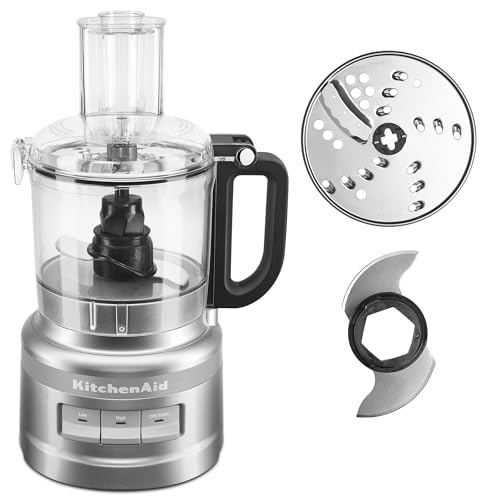
- KitchenAid 7-Cup Food Processor (KFP0718) — the modern, storage-smart 7-cup design.
- Cuisinart Elemental 8-Cup Food Processor (FP-8SV) — one cup up, the value step-up.
- BLACK+DECKER 8-Cup Food Processor — the budget step-up with a full attachment set.
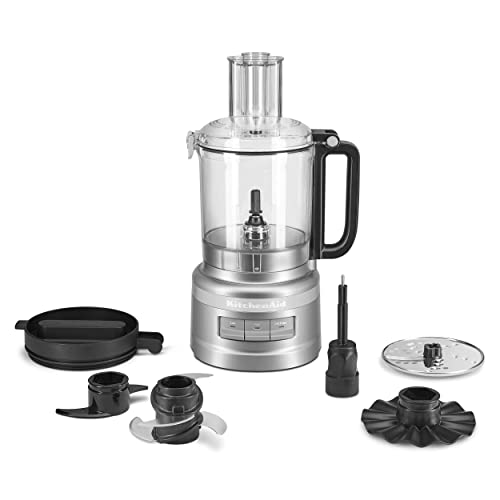
- KitchenAid 9-Cup Food Processor (KFP0921) — two cups up, adds a whisk and dough capability.
- Cuisinart Core Custom 10-Cup Food Processor (FP-110) — the larger modern alternative for growing households.
The best 7 cup food processors occupy the most honest middle ground in the entire category — big enough to knead a small dough, shred a family block of cheese, and puree a soup base in one load, small enough to live on the counter of a normal kitchen. It is the size experienced cooks recommend when someone asks for “a food processor” without qualifiers. So the first thing this guide owes you is the truth about the class: it is a duopoly. On Amazon’s current US catalog, exactly two major-brand machines are genuinely 7-cup — Cuisinart’s Pro Classic DLC-10SYP1 and KitchenAid’s KFP0718 — and they embody opposite philosophies. The Cuisinart is a 600-watt descendant of the machine that created this category, built around power and a wide feed tube. The KitchenAid is a ground-up modern design built around storage, sealing, and everyday ease.
Because two picks do not make a buyer’s guide, this roundup does what real shoppers do: it covers both true 7-cup machines in depth, then the four nearest step-ups — an 8-cup Cuisinart, a budget 8-cup BLACK+DECKER, a 9-cup KitchenAid, and a 10-cup Cuisinart — each labeled with its real capacity, because “almost 7 cups” shopping is how most 7-cup purchases actually end. If your heart is set on exactly 7 cups, the first two reviews are your whole decision. If you are 7-cup-curious but flexible, the step-ups include the best value in this entire guide.
In this guide
Quick Picks

Best Overall — Cuisinart Pro Classic 7-Cup (DLC-10SYP1)
A 600-watt motor — the strongest in the true 7-cup class — behind the classic Cuisinart formula of a wide tube, serious discs, and dough capability. The performance pick, full stop.
Best for Everyday Ease — KitchenAid 7-Cup (KFP0718)
All blades and discs store inside the bowl, the bowl seals and pours cleanly, and three speeds handle everything from salsa to dough. The 7-cup most people will enjoy using most.

Best Value Step-Up — Cuisinart Elemental 8-Cup (FP-8SV)
One cup larger than the class and frequently the value play of the group: 350 watts, slicing discs, and Cuisinart build at a mid-range tier. If the badge on the box matters less than the result, start here.

Best Budget Step-Up — BLACK+DECKER 8-Cup
450 watts and a full shred/slice/chop/puree attachment set at a budget tier. The cheapest legitimate route to full-size processing in this guide.
Best Step-Up for Bakers — KitchenAid 9-Cup (KFP0921)
Two cups up buys a whisk accessory and confident dough handling on top of the 7-cup formula, with the same in-bowl storage. For households that bake weekly, the step is worth it.

Best Larger Alternative — Cuisinart Core Custom 10-Cup (FP-110)
The modern Cuisinart platform at family size. If your “7-cup” shopping is really “smallest machine that never says no,” this is the honest endpoint of that search.
How These Picks Were Chosen
Every model here was verified against live Amazon listing data before inclusion — capacities, wattages, model numbers, and included accessories are as the listings and manufacturers state them, and unverifiable models were dropped rather than guessed at. That verification confirmed the class’s shape: two true 7-cup flagships, then a ring of 8- to 10-cup machines that 7-cup shoppers genuinely cross-shop.
Scoring ran on six criteria. Motor stamina led, because at 7 cups a processor meets dough, hard cheese, and full bowls of root vegetables — jobs that expose weak motors immediately. Disc quality followed: slice consistency and shred texture at family volumes. Third, feed tube size, which decides how much pre-cutting a “time-saving” appliance demands. Fourth, dough capability — a real divider at this size, since 7 cups is where kneading becomes legitimate. Fifth, storage design: a machine whose discs live in a separate box loses parts; a machine that stores everything in its bowl does not. Sixth, cleanup — sealed bowls, dishwasher-safe parts, and lids that do not trap food in a hollow handle.
As with every guide in this series, products with safety recall concerns were excluded outright, and every alternative’s true capacity is printed wherever it appears. No 8-cup machine in this guide is allowed to pretend it is a 7-cup machine; the step-up framing is the honest description of how these products are actually bought.
The Best 7 Cup Food Processors: Full Reviews
Cuisinart Pro Classic 7-Cup Food Processor (DLC-10SYP1) — Best Overall
The DLC-10SYP1 is the direct descendant of the original Cuisinart formula, and its headline number tells the story: 600 watts in a 7-cup machine is power density nothing else in this class matches. It suits serious home cooks — the ones who knead pizza dough on Fridays, shred cabbage by the head, and puree soup bases weekly — and anyone who buys appliances on a decade horizon. It does not suit shoppers who prioritize compact storage or whisper-simple controls; this is a workhorse, with a workhorse’s manners.
Strengths
- 600-watt motor powers through dough, hard cheese, and dense full bowls without the bogging that stalls lesser machines.
- The classic wide feed tube swallows halved onions and large cheese blocks with minimal pre-cutting.
- A complete processor repertoire — chop, slice, shred, puree, and knead — executed at a level the step-up budget models do not reach.
Trade-offs
- The design is proudly traditional: controls and storage are functional rather than clever, and accessories need a drawer or box of their own.
- Power and build put it in a premium tier relative to the step-up picks.
- The bowl and lid are full-size parts to wash even for small jobs — overkill for a single onion.
Key specs (verified): Capacity: 7 cups · Model: DLC-10SYP1 · Motor: 600 watts · Functions: mince, dice, shred, puree, knead dough
What 600 watts buys, concretely, is indifference. A full bowl of carrots for shredding, a stiff batch of pizza dough, a block of cold cheddar — loads that make mid-tier processors slow, whine, and heat up simply proceed. The disc work is the other half of the case: slices come off at an even thickness that holds up in a gratin, and shreds are dry and distinct rather than bruised and wet, because the blade speed stays up under load instead of sagging. Dough is the capability that justifies the class, and this machine kneads a standard one-pound batch to a smooth, elastic ball without walking across the counter.
The compromises are about daily friction, not capability. Nothing stores in the bowl, the footprint is honest full-size, and using it for one garlic clove feels like chartering a truck to move a chair. Pair it with a mini chopper for small jobs — as most of its owners do — and it is the most capable pound-for-pound processor in this guide.
Best for: serious cooks who knead, shred, and process at full family volume / Not suited for: storage-starved kitchens or shoppers wanting the simplest modern design
Check the current price on Amazon
KitchenAid 7-Cup Food Processor (KFP0718) — Best for Everyday Ease
If the Cuisinart is the class’s muscle, the KFP0718 is its manners. KitchenAid redesigned the 7-cup machine around the two reasons processors gather dust — parts scattered across drawers, and bowls that leak and dribble — and fixed both. It suits everyday family cooks who process several times a week and value a machine that sets up in seconds and stores as one object. It does not suit power maximalists; its motor is tuned for its bowl, not for showing off.
Strengths
- All-in-one storage: blades and discs live inside the work bowl, so the machine stores as a single unit and no part is ever “somewhere.”
- Three speed controls plus a well-sealed, easy-clean bowl that pours without the dribble down the side.
- 2-in-1 feed tube handles both large items and slim ones like carrots and celery without extra attachments.
Trade-offs
- Motor output is adequate rather than abundant — very stiff doughs and marathon shredding sessions are the Cuisinart’s home turf.
- In-bowl storage means the bowl is occupied; you cannot leave last night’s salsa stored in it and process this morning’s onions.
- The modern aesthetic and feature set sit at a mid-to-premium tier.
Key specs (verified): Capacity: 7 cups · Model: KFP0718 · Controls: 3 speeds · Feed tube: 2-in-1 · Storage: all accessories store in bowl · Bowl: easy-clean design
The storage system sounds like a footnote and behaves like the headline. A processor whose slicing disc lives in the bowl gets used for slicing; a processor whose disc lives in a box in the pantry gets used for chopping while the owner reaches for a knife for everything else. The KFP0718’s setup time — base, bowl, part, lid — is under thirty seconds, and its teardown is the same in reverse, which is precisely the friction equation that decides whether a processor becomes a habit. The 2-in-1 tube is the other daily pleasure: the narrow inner tube guides carrots and celery upright for even rounds, while the wide outer tube takes tomatoes and onions.
On capability, it covers the class brief completely — chopping, slicing, shredding, pureeing, and standard doughs — with results a half-step behind the Cuisinart on the heaviest jobs and equal everywhere else. For the majority of family cooking, that trade buys the machine people actually use daily, and usage beats spec sheets every time.
Best for: everyday family cooks who value fast setup and single-unit storage / Not suited for: power-first buyers and very heavy dough work
Check the current price on Amazon
Cuisinart Elemental 8-Cup Food Processor (FP-8SV) — Best Value Step-Up
One cup above the class, the FP-8SV is the pick for shoppers who care about the work rather than the number. It suits families of three to five who want Cuisinart processing quality at a mid-range tier and will happily take an extra cup of bowl as compensation for missing the 7-cup badge. It does not suit precision shoppers with a hard 7-cup storage constraint — it is, measurably, a slightly bigger machine.
Strengths
- 350-watt motor and medium-to-fine slicing discs deliver proper full-size processing results.
- The 8-cup bowl swallows family batches that make a 7-cup owner load twice — a whole cabbage, a double dip, a big soup base.
- Cuisinart’s parts ecosystem and build consistency at a tier below the Pro Classic.
Trade-offs
- 350 watts is half the Pro Classic’s output; dough is limited to lighter, smaller batches.
- It is an 8-cup machine in a 7-cup guide — the footprint and wash-up grow accordingly.
- Disc set is focused rather than exhaustive; specialty cuts belong to bigger platforms.
Key specs (verified): Capacity: 8 cups · Model: FP-8SV · Motor: 350 watts · Discs: medium-to-fine slicing discs · Functions: chop, slice, shred, puree
The FP-8SV’s case is arithmetic. Most cooks who shop “7-cup” are really shopping “not a mini, not a monster,” and by that definition the Elemental 8-cup is the center of the market: big enough for every standard family job, priced a tier below the flagship, and built by the brand that defined the category. Its slicing discs produce the even, medium-to-fine cuts that salads, scalloped potatoes, and stir-fry prep actually call for, and the bowl’s extra cup quietly removes the most common mid-size annoyance — the batch that almost fits.
Its limit is torque. Pizza dough in modest batches is fine; stiff, low-hydration doughs and marathon cheese sessions will remind you this is the 350-watt model. Cooks whose identity includes weekly bread should step to the DLC-10SYP1. Everyone else gets more usable machine per dollar here than anywhere else in this guide.
Best for: families wanting full-size results at a mid-range tier / Not suited for: strict 7-cup shoppers or heavy dough routines
Check the current price on Amazon
BLACK+DECKER 8-Cup Food Processor — Best Budget Step-Up
The budget door into full-size processing. This 450-watt, 8-cup machine with a complete attachment set suits first-time processor owners, students and renters furnishing a kitchen, and anyone who wants slicing and shredding capability without a flagship commitment. It does not suit decade-horizon buyers or heavy users; the tier buys capability, not longevity theater.
Strengths
- 450 watts — more than the Cuisinart step-up above — behind an 8-cup bowl.
- Attachments cover the full verb list: shred, slice, mince, grind, and puree.
- Budget-tier positioning makes it the cheapest legitimate full-size processor in this guide.
Trade-offs
- Fit, finish, and disc precision are a tier below the Cuisinart and KitchenAid machines — expect slightly less even slices on soft foods.
- Dough is a light-duty proposition at best; this is a vegetable-and-cheese machine.
- Long-term parts availability for budget models is historically thinner than for flagship lines.
Key specs (verified): Capacity: 8 cups · Motor: 450 watts · Blade: stainless steel · Attachments: shred, slice, mince, grind, puree
Set expectations correctly and this machine is a small triumph. It shreds a block of cheese without drama, slices cucumbers and carrots evenly enough for any salad, chops onions by the bowlful, and purees dips and sauces to a respectable smoothness — the complete weeknight curriculum — at a price tier that makes it nearly disposable compared to the flagships. For a first processor, that is exactly the right proposition: learn which jobs you actually do before paying for the machine that does them beautifully.
The honest caveats are about ceilings. Dough strains it, marathon prep heats it, and the discs will not win a knife-skills contest on ripe tomatoes. Owners who discover they process daily will upgrade within a couple of years — and will do so knowing exactly what they need, which makes this machine tuition as much as appliance.
Best for: first-time owners and budget kitchens needing full-size capability / Not suited for: heavy dough work or decade-horizon buying
Check the current price on Amazon
KitchenAid 9-Cup Food Processor (KFP0921) — Best Step-Up for Bakers
Two cups above the class, the KFP0921 exists for the household that outgrew 7 cups at the dough hook. It suits bakers and batch cooks — weekly bread and pizza, double pie crusts, big slaws — who want KitchenAid’s storage-smart design at a size that stops saying “load it twice.” It does not suit small kitchens or small households; it is a full-size commitment.
Strengths
- Adds a whisk accessory to the processor repertoire — whipped cream and emulsions join chopping, slicing, shredding, and dough.
- Four-blade multipurpose design and confident dough kneading at family batch sizes.
- The same all-in-one storage and easy-clean bowl as the 7-cup, scaled up.
Trade-offs
- It is a 9-cup machine: footprint, part size, and wash-up all grow past the 7-cup brief.
- Premium tier — the step up in size and accessories is priced accordingly.
- For chop-only households, the extra capacity and whisk are pure overhead.
Key specs (verified): Capacity: 9 cups · Model: KFP0921 · Blade: four-blade multipurpose design · Accessories: whisk · Storage: all-in-one in-bowl · Bowl: easy-clean
The whisk is the feature that sounds decorative and turns out structural. A processor that also whips cream and builds emulsions replaces the hand mixer for a surprising share of baking prep, and at 9 cups the bowl takes double batches that make the whisk genuinely useful rather than cute. Dough is the other headline: the platform kneads family-size pizza and bread batches with the bowl capacity to let dough move, which is where 7-cup machines begin to feel tight.
Buy it when your cooking has measurably outgrown 7 cups — you have the double-load diary to prove it — or when baking is a weekly practice rather than a monthly event. Otherwise its smaller sibling does the same design, cheaper, in less space.
Best for: bakers and batch cooks who outgrew 7 cups / Not suited for: small households or chop-only kitchens
Check the current price on Amazon
Cuisinart Core Custom 10-Cup Food Processor (FP-110) — Best Larger Alternative
The FP-110 closes the guide as the modern-platform answer: Cuisinart’s current Core Custom design at a 10-cup size, for the shopper whose “7-cup” search is really a search for the smallest machine that never forces a compromise. It suits growing families, entertainers, and meal preppers who process in volume. It does not suit anyone with a genuine size constraint — this is the biggest machine here by a clear margin.
Strengths
- 10-cup capacity ends batch-splitting for family and entertaining volumes.
- The current Cuisinart platform brings modern controls and accessory design to the brand’s traditional strengths.
- Multifunctional brief covers the full processor repertoire at full scale.
Trade-offs
- Largest footprint and wash-up in the guide — the anti-mini in every respect.
- Premium tier; you are buying headroom many households will use twice a year.
- Small jobs are genuinely awkward in a bowl this size; minis exist for a reason.
Key specs (verified): Capacity: 10 cups · Model: FP-110 · Platform: Core Custom · Functions: multifunctional processing
The case for the FP-110 is the holiday test: the week where the processor runs daily, batches double, and every other machine in this guide would have you processing in shifts. If your cooking includes regular entertaining, freezer-batch weekends, or a family of five-plus, the headroom is not luxury — it is the difference between a tool and a bottleneck. The Core Custom platform keeps that capacity in a design that feels current rather than inherited, with the accessory ecosystem to match.
The counter-case is the other fifty weeks. A 10-cup bowl washed after chopping one onion is how processors end up in the garage. Be honest about which kitchen is yours; if it is the high-volume one, this is your machine, and the 7-cup class was a waystation.
Best for: large families, entertainers, and volume meal prep / Not suited for: small households or anyone with a real size limit
Check the current price on Amazon
Comparison Table
| Pick | Badge | Key spec | Best for |
|---|---|---|---|
| Cuisinart DLC-10SYP1 | Best Overall | True 7-cup, 600W | Power, dough, heavy discs |
| KitchenAid KFP0718 | Best for Everyday Ease | True 7-cup, in-bowl storage, 3 speeds | Daily family processing |
| Cuisinart FP-8SV | Best Value Step-Up | 8-cup, 350W, slicing discs | Full-size results, mid tier |
| BLACK+DECKER 8-Cup | Best Budget Step-Up | 8-cup, 450W, full attachments | First full-size processor |
| KitchenAid KFP0921 | Best Step-Up for Bakers | 9-cup, whisk, dough-capable | Baking and batch cooking |
| Cuisinart FP-110 | Best Larger Alternative | 10-cup, modern platform | Volume and entertaining |
How to Choose a 7-Cup Food Processor
The decision tree in this class is unusually short, because the class is unusually small. If you want exactly 7 cups, choose your philosophy. The Cuisinart DLC-10SYP1 is the performance philosophy: maximum motor, classic layout, decade-horizon build, accessories stored separately. The KitchenAid KFP0718 is the livability philosophy: everything stores in the bowl, setup takes seconds, power is matched to the bowl rather than maximized. Cooks who knead weekly and shred by the head lean Cuisinart; cooks who process daily in ordinary family quantities lean KitchenAid and rarely regret it.
If you are flexible on size, choose your constraint. Budget-constrained shoppers get the most machine per dollar from the BLACK+DECKER 8-cup or the Cuisinart FP-8SV, in that order of price and refinement. Volume-constrained shoppers — the ones splitting batches — should skip a class entirely and take the 9-cup KitchenAid or 10-cup Cuisinart, because an 8-cup step-up buys only one extra cup of relief. Baking-led shoppers should weight the whisk and dough record (KitchenAid 9-cup) above raw capacity.
Three specifications deserve skepticism wherever you shop. First, cup ratings describe the bowl brim-full of dry goods; your working ceilings are about two-thirds of that for chopping and half for liquids, so a “7-cup” machine is honestly a 4.5-cup chopper and a 3.5-cup liquid processor — still the right size for family work, as long as you plan batches with real numbers. Second, wattage is a ceiling, not a result: the 600-watt Cuisinart genuinely out-powers this field, but the 450-watt BLACK+DECKER and 350-watt FP-8SV both handle their intended jobs; match watts to your hardest weekly job, not your hardest imaginable one. Third, disc counts impress on boxes and matter in drawers — one reversible shred/slice disc that you use weekly beats a five-disc library you store. Buy the discs your recipes call for: shred and slice for most kitchens, a whisk if you bake, a dicing kit only if your knife work truly demands it (and that lives in bigger machines than these).
Finally, budget by tier rather than by number. This class runs in three honest tiers: a budget tier (the BLACK+DECKER) that buys capability, a mid tier (FP-8SV, KFP0718) that buys capability plus daily livability, and a premium tier (DLC-10SYP1, KFP0921, FP-110) that buys power, capacity, or both. Every pick here is defensible within its tier; the mistake is expecting one tier’s virtues at another tier’s price.
One last check before you order either flagship: confirm what is in the box on the listing itself. Both machines are sold in multiple colors and, occasionally, in bundles that add or omit a disc; the model number is the constant, the bundle is the variable. A two-minute listing check at purchase is the difference between the machine this guide reviewed and a near relative of it — and in a class with exactly two true members, near relatives are the step-up picks, which deserve their own deliberate decision rather than an accidental one.
Dough in a 7-Cup Bowl: What This Size Can and Cannot Knead
Seven cups is where food processors start kneading credibly, so the rules matter. A 7-cup bowl handles a standard single batch: roughly two to three cups of flour — one small loaf, one pizza for two to three people, a single pie crust with room to spare. The technique is consistent across machines: dry ingredients in, pulse to combine, then add liquid through the tube in a steady stream while running, and stop the moment the dough forms a ball that cleans the bowl’s sides — typically well under a minute. Keep running past that point and friction heat starts cooking your yeast’s ambitions and straining the motor.
What this size cannot do: double batches (split them; two one-minute kneads beat one stalled one), very stiff low-hydration doughs at full volume (bagel dough is the classic processor-killer), and enriched doughs with heavy butter worked in cold (add butter soft, in pieces, after the ball forms). The Cuisinart DLC-10SYP1’s 600 watts widen these margins noticeably; the step-up budget machines narrow them to “light doughs only,” which is why their reviews say so plainly. Respect the flour ceiling in your manual, let the dough rest ten minutes before shaping — processor kneading is fast but the gluten still needs its pause — and a 7-cup machine will quietly replace a stand mixer for most small households’ weekly bread.
How to Use a 7-Cup Food Processor: Setup, Core Techniques, and Care
Setup. Wash all parts before first use. Base on a dry, level counter; bowl seated and locked; blade or disc stem on the center post; lid fitted until the interlock engages. For disc work, the disc goes on the stem before the lid, and food is loaded only through the tube with the pusher — never by hand near a spinning disc.
Chopping. Even, one-to-two-inch pieces; fill to two-thirds of the bowl at most; pulse in one-second bursts and check every three or four. Scrape once mid-job. Continuous running is for purees, and purees want liquid added gradually until a vortex forms and holds.
Slicing and shredding. Pack the tube snugly — loose items tilt and slice unevenly. Use steady, moderate pusher pressure and let the disc do the cutting; forcing soft food smears it, and starving the tube makes wafers. Chill cheese for twenty minutes before shredding and it will shred dry and distinct instead of clumping. Alternate hard and soft items in mixed loads to keep the disc clear.
Kneading. Follow the dough section above: flour ceiling respected, liquid streamed in, stop at the ball. Give the motor a rest between back-to-back batches.
Care. Rinse the bowl and blade immediately after use; dried dough and cheese are the two substances that turn a one-minute wash into a ten-minute excavation. Bowls, lids, blades, and discs across this guide are dishwasher-safe — top rack for blades and discs, always handled by hub or rim. The lid’s feed-tube assembly traps food if ignored; a bottle brush through the tube after puree days keeps it honest. Motor bases get a damp cloth, never a faucet. Store discs in the bowl where the design allows (the KitchenAids) or in a case or box — a loose shredding disc in a drawer is an injury waiting for a reaching hand.
The Disc Library, Decoded: Which Discs Actually Matter
Processor marketing counts discs the way camera marketing counts megapixels, so here is the honest hierarchy. The reversible shred/slice disc is the only disc most kitchens need: coarse shred on one face, a standard slice on the other, covering cheese, carrots, cabbage, cucumbers, and potatoes — roughly 90% of all disc work ever done. A second, finer slicing disc earns its place if you make gratins, scalloped potatoes, or salads where slice thickness is the dish; the Cuisinart step-ups in this guide include medium-to-fine slicing for exactly this reason. An adjustable slicing disc — one disc, many thicknesses — is the connoisseur’s version, found on larger KitchenAid and Cuisinart platforms rather than in this class. The whisk (KitchenAid 9-cup here) is not a disc at all but changes the machine’s category for bakers. And dicing kits, beloved of advertising, live in 9-cup-and-up platforms and serve a narrower need than their footage suggests: most home cooks dice three onions a week, and a blade chop at coarse pulse gets them there.
The practical rule: buy the machine whose included discs match your weekly list, and treat every additional disc as a separate purchase decision with its own storage cost. A disc you use weekly is equipment; a disc you use at Thanksgiving is clutter with an edge. Both 7-cup flagships in this guide ship with the core library — shred and slice — which is precisely the set that survives this audit.
A Week With a 7-Cup Processor: The Job Diary
Capacity arguments settle faster against a calendar. Monday: a mirepoix for soup — two onions, three carrots, three celery stalks — chopped in one load with room to pulse; a mini splits this into three loads. Tuesday: a block of cheddar shredded for the week’s tacos, mac, and salads — under two minutes through the disc, versus ten at a box grater with the traditional knuckle donation. Wednesday: pizza dough, one batch, kneaded to a smooth ball in the Cuisinart in under a minute of machine time; the KitchenAid handles the same batch with a touch more patience. Thursday: a double batch of hummus, at a volume where the 7-cup bowl’s liquid ceiling is the binding constraint and is not hit. Friday: pie crust, pulsed to pea-size crumbs with cold butter — the job where a processor’s speed genuinely changes the result, because the butter stays cold. Saturday: a whole cabbage and a bag of carrots shredded for slaw for six people, the largest single load of the week, cleared without splitting. Sunday: breadcrumbs from the week’s stale ends, ground and frozen for the month.
Read the diary as a sizing instrument. Every job on it fits the class in one load; the mini-class jobs (a single onion, a handful of herbs) are conspicuously absent, because at 7 cups those go to a mini or a knife. If your week looks like this diary, 7 cups is your size and the only remaining question is Cuisinart power or KitchenAid ease. If your week is half this volume, the 5-cup guide will serve you better; if it is double, skip to 9 and 10 cups without a pang.
Counter Space and Storage: The 7-Cup Reality Check
A 7-cup processor is a countertop citizen, and it deserves a citizen’s planning. The footprint is roughly that of a stand mixer’s base, the height fits under standard upper cabinets for both flagships, and the cord is long enough to reach from a back-counter outlet without drama. The real storage question is not the base — it is the entourage. The Cuisinart’s discs, blades, and stem need a drawer section or a storage box, and they will migrate if not given one; the KitchenAid’s in-bowl storage collapses the entourage into the machine itself, at the price of a bowl that is spoken for. Neither answer is wrong, but they suit different kitchens: the drawer-rich kitchen takes the Cuisinart without noticing, and the drawer-poor kitchen — the apartment, the galley, the shared house — feels the KitchenAid’s design as a daily mercy.
Two smaller realities complete the picture. First, weight: these are appliances you will move between counter and cabinet if you do not grant them permanent counter space, and the move should be a one-hand decision, not a two-hand commitment — test your own tolerance honestly, because a processor stored in a low cabinet behind the roasting pans is a processor in early retirement. Second, the wash footprint: a 7-cup bowl, lid, and disc fill one side of a standard sink. Households that hand-wash should picture that sink realistically; households with dishwashers should confirm the bowl fits their lower rack’s height, which for both flagships it does in standard machines. None of this appears on a spec sheet, and all of it decides whether the machine is used weekly in year three.
If, after this audit, your kitchen votes no on 7-cup storage, the correct response is not to force it — it is to buy the 5-cup class proudly and add a knife-skills video to your evenings. The best processor is the one your kitchen can house.
Motor Heat and Duty Cycles: Running a Mid-Size Processor Hard Without Hurting It
A food processor motor converts electricity into torque and heat in roughly equal enthusiasm, and the 7-cup class — powerful enough to attempt hard work, small enough to be pushed — is where duty discipline matters most. The rules are simple and universal. Continuous running is measured in minutes, not sessions: a puree or knead of one to two minutes is normal work; five unbroken minutes under load is a stress test. Back-to-back batches need a pause: after two consecutive heavy loads — doughs, full-bowl shredding — give the motor a few minutes with the machine off; the housing should feel warm at most, never hot, and a hot housing is the machine asking, clearly, for a rest. Load is a choice: the same cheese shreds kindly in two half-bowl passes and cruelly in one overpacked tube, and the motor keeps the ledger even when the cook does not.
Two sounds are diagnostic. A healthy loaded motor drops in pitch and holds; a straining motor oscillates — surging and sagging as the load fights the blade — and oscillation is your cue to stop, reduce the load, or add the liquid the job was missing. The 600-watt Cuisinart buys the widest margin here, which is the least glamorous and most honest reason it tops this guide: it spends its working life further from its limits. Treat any of these machines within their rhythm and the motors will outlast the bowls, the lids, and possibly the kitchen’s next renovation.
Common Buying Mistakes
- Paying for 7 cups and processing for one. If your loads are a single onion and a handful of herbs, a 7-cup bowl does them badly — food hides under the blade — and washes like a bathtub. Pair a mini with this class, or buy the mini alone.
- Reading “7-cup” as the liquid capacity. Plan on roughly half the bowl for soups and sauces. A soup base for the family fits; a full pot of soup does not, and the lid seal will explain this to your counter.
- Overfilling for dough. Past the flour ceiling, the motor strains, the knead fails, and the warranty conversation gets awkward. Split batches.
- Ignoring where the discs will live. Accessory storage decides whether slicing happens weekly or never. In-bowl storage (KitchenAid) or a dedicated box — choose one on purpose.
- Forcing food through the disc. Heavy pusher pressure smears soft food and dulls results on hard food. The disc cuts; the pusher guides.
- Buying the step-up for one cup. If batches overflow at 7 cups, 8 cups buys a single onion of relief. Jump to 9 or 10, or split the batch — the middle step is the worst value in sizing.
Final Recommendation
Forced to name one: the Cuisinart DLC-10SYP1 is the best 7-cup food processor — the most powerful, the most capable across dough and discs, and the safest decade-long buy in the class. But the machine we expect most households to be happiest with is the KitchenAid KFP0718, because storage and setup decide whether a processor becomes a daily habit, and it wins both. On a budget, take the Cuisinart FP-8SV step-up and pocket the tier difference; if your batches have already outgrown this class, skip to the KitchenAid 9-cup and do not look back.
Still deciding on size? The neighboring guides cover the rest of the family: Best 4 Cup Food Processors, Best 5 Food Processors, Best 8 Cup Food Processors, and Best Affordable Food Processors.
Frequently Asked Questions
How many true 7-cup food processors are there?
Two from major brands on the current US market: the Cuisinart Pro Classic DLC-10SYP1 (600 watts) and the KitchenAid KFP0718. That is why this guide also covers the 8-, 9-, and 10-cup machines that 7-cup shoppers actually cross-shop, each labeled with its real capacity.
Can a 7-cup food processor knead dough?
Yes — it is the smallest class that kneads credibly. Plan on a single batch of roughly two to three cups of flour: one small loaf, one pizza, or a pie crust. Add liquid through the tube while running and stop as soon as the dough forms a ball; split double batches rather than overloading the bowl.
Is 7 cups big enough for a family of four?
For most jobs, yes: a full soup base, a family slaw, a block of cheese, and standard dips all fit in one load, with liquids capped near half the bowl. Weekly bulk meal preppers and families of five-plus will split batches often enough that a 9- or 10-cup machine earns its footprint.
Cuisinart or KitchenAid at 7 cups?
Cuisinart if power and heavy work lead your list — its 600-watt motor is the class benchmark for dough and discs. KitchenAid if daily ease leads — in-bowl storage, faster setup, and a sealed easy-clean bowl make it the machine most owners use most. Both are legitimate; the deciding factor is your hardest weekly job versus your daily friction tolerance.
What is the liquid limit in a 7-cup bowl?
Roughly three to three and a half cups — about half the bowl — for soups, sauces, and purees with liquid. Beyond that, the vortex defeats the lid seal. Process the solids, then combine with the remaining liquid in the pot.
Are the parts dishwasher-safe?
The bowls, lids, blades, and discs of every pick in this guide are manufacturer-rated dishwasher-safe; top rack is recommended for blades and discs, and they should always be handled by the hub or rim. Motor bases are wipe-clean only.


