Disclosure: airfryerkitchensupply.com is reader-supported. When you buy through links on our site, we may earn an affiliate commission at no extra cost to you.
Where to buy
Every machine below is sold on Amazon, and each pick links to its verified listing so you can check the current price on Amazon. We never print prices — they change too often to stay honest — and every model was matched against Amazon’s product data feed for this site before earning its link.
- KitchenAid KCM1208 Drip Coffee Maker — check the current price on Amazon
- Ninja CE251 Programmable Brewer — check the current price on Amazon
- Cuisinart PerfecTemp Thermal DCC-3400 — check the current price on Amazon
- Breville Precision Brewer Glass BDC400 — check the current price on Amazon
- BLACK+DECKER 12-Cup Vortex Coffee Maker — check the current price on Amazon
- Mr. Coffee Easy Measure 12-Cup — check the current price on Amazon
The best 12 cup electric coffee makers all do the same fundamental job — heat 60 ounces of water, distribute it over ground coffee, and hold the result — yet the pots they produce range from diner-grade to genuinely excellent. The difference is electrical: heating-element power and control, pump and showerhead design, and how the machine manages temperature across a long brew cycle. This guide reads the category through that lens, picking the six electric brewers whose engineering earns their place.
‘Electric’ deserves one clarification, because shoppers arrive at this search from two directions. Some are comparing against stovetop and manual methods — percolators, pour over, French press — and want to know what plugging in buys you. Others simply mean a standard countertop drip machine and want the best of them. This guide serves both: the picks are the strongest electric drip brewers at 12 cups, and the buying guide explains honestly where electric wins (temperature consistency, automation, timers) and where manual methods still hold their ground (control, simplicity, nothing to descale but a kettle).
All six machines were verified product feed attached to this site, matched brand-and-model against live Amazon listings. They span programmable household duty, thermal carafes, precision temperature control and a budget machine whose one engineering idea is better than rivals costing more.
In this guide
Quick Picks
Six electric brewers judged on their engineering: heat, distribution and control. The badges name each machine’s electrical personality.
- KitchenAid KCM1208 Drip Coffee Maker — Best Overall Electric: A 29-hole spiral showerhead and a properly powered heater in a beautifully built body — the most complete electric brewing package in this guide. — Check on Amazon
- Ninja CE251 Programmable Brewer — Best Programmable Electric: The electronics done right: 24-hour auto-start, Classic and Rich extraction profiles, a small-batch function and a removable reservoir — family duty without friction. — Check on Amazon
- Cuisinart PerfecTemp Thermal DCC-3400 — Best Thermal Electric: Electric brewing with a thermal exit strategy: a fully programmable 12-cup machine that brews into a double-wall stainless carafe, so no plate ever cooks the pot. — Check on Amazon
- Breville Precision Brewer Glass BDC400 — Best Precision Electric: The control freak’s electric brewer: adjustable temperature, bloom time and flow rate, a Gold preset tuned to specialty standards, and modes from strong to cold brew. — Check on Amazon
- BLACK+DECKER 12-Cup Vortex Coffee Maker — Best Budget Electric: One good electrical idea at a budget price: the Vortex showerhead swirls water through the basket, fixing the uneven extraction that makes cheap brewers taste cheap. — Check on Amazon
- Mr. Coffee Easy Measure 12-Cup — Best Electric for Beginners: Programmable electric brewing with a teacher built in: color-coded marks align water level and coffee scoops, so a beginner’s pots come out consistent from day one. — Check on Amazon
How These Picks Were Chosen
We shortlisted the 12-cup electric drip machines leading this category on Amazon and verified each feed, linking only where brand and model matched a live listing with certainty.
Because this guide’s angle is the electrical craft, criteria weighted accordingly: (1) heating system — power, temperature stability across the full brew, and resistance to the late-pot temperature sag that plagues weak machines; (2) water distribution — showerhead coverage of a wide 12-cup basket; (3) control electronics — programming, brew-strength logic, small-batch handling, and whether the controls will still make sense in five years; (4) carafe and holding strategy; and (5) serviceability — descaling access, replaceable carafes, parts support. Badges reflect each machine’s engineering identity, not just its price tier.
The 6 Best 12 Cup Electric Coffee Makers

KitchenAid KCM1208 Drip Coffee Maker — Best Overall Electric
The KCM1208 is for households that want their electric brewer engineered, not just assembled: even saturation, a programmable warming plate, and design that earns its counter space. It suits daily family brewing with an eye for quality. It does not suit budget shoppers, and its plate-programming settings reward one careful read of the manual.
Strengths
- Spiral showerhead saturates the whole 12-cup basket evenly
- Programmable warming plate adapts holding to your schedule
- Build and finish a class above the mainstream
Trade-offs
- Premium-for-mainstream pricing
- Glass carafe: held coffee still degrades past the hour
- Settings take initial setup attention
| Capacity | 12-cup |
| Showerhead | Spiral, 29-hole |
| Warming | Programmable plate |
| Design | KitchenAid countertop line |
Electric brewing quality is mostly water management, and the KCM1208 manages water better than its mainstream rivals. The spiral showerhead’s 29 holes distribute the flow across the full width of a 12-cup basket — the geometry where cheap machines fail, drilling the center and leaving a dry, wasted ring of grounds at the edges. Even saturation means the whole dose works, which tastes like a stronger, sweeter pot from the same coffee. The heater behind it has the power to hold temperature across a full 60-ounce brew rather than sagging as the reservoir empties. Around that core, KitchenAid adds the touches of a mature appliance: strength selection, a warming plate whose temperature and duration you can program to your household’s drinking window, and a body with genuine fit and finish. It is not the cheapest way to make a pot, and design-led buyers are its natural audience — but unlike purely cosmetic premiums, this one’s money is visible in the cup as well as on the counter.
Electrical ownership note: the programmable plate is also an energy feature. Setting the hold window to your household’s real drinking span — instead of the default maximum — keeps coffee better and the plate off for the hours nobody drinks. Small configurations like that are the difference between a smart appliance and a merely powered one.
Best for: households wanting engineered distribution and design in one machine / Not suited for: budget buyers or thermal-carafe loyalists

Ninja CE251 Programmable Brewer — Best Programmable Electric
The CE251 is the programmable pick for households run by the clock: school mornings, shift starts, coffee that must exist at a specific minute. Its Rich profile is a real extraction change, not a label. It does not suit thermal households or anyone wanting a manual, electronics-free machine — its value is precisely in its well-judged electronics.
Strengths
- Dependable 24-hour programming with a legible interface
- Rich mode slows extraction for a fuller pot
- Removable reservoir simplifies filling and washing
Trade-offs
- Glass carafe on a warming plate — the standard holding compromise
- Full-size footprint
- No thermal or specialty variants in this model
| Capacity | 12-cup glass carafe |
| Programming | 24-hour programmable |
| Profiles | Classic and Rich |
| Reservoir | Removable |
Programmable machines fail in two ways: timers that are miserable to set, and ‘strength’ buttons that change nothing but the label. The CE251 avoids both. Its clock and delay-start are set-once simple, and the Rich profile genuinely alters the brew’s flow profile, giving the water more contact time so a standard dose produces a fuller cup — the setting milk drinkers and strong-coffee households actually live on. The mid-size batch function extends the same intelligence to half pots. Around the electronics, the hardware is thoughtfully ordinary: a removable reservoir that fills at the sink, a carafe that pours cleanly, a warming plate with sensible auto behavior, and a clean-cycle prompt that appears before scale has ruined a month of mornings. In an electric-focused guide, the CE251 is the reminder that the best electronics are the ones you stop noticing — the machine simply has coffee ready when the household’s schedule says coffee should exist.
Set the auto-start with fresh water and grounds the night before, never earlier: grounds loaded a full day ahead stale in the basket’s ambient air, and the finest timer in the category cannot brew freshness into yesterday’s dose.
Best for: scheduled families wanting dependable auto-start and strength control / Not suited for: manual-machine minimalists or thermal households

Cuisinart PerfecTemp Thermal DCC-3400 — Best Thermal Electric
The DCC-3400 suits households that want programming and patience: coffee ready at seven, still tasting right at nine, because the thermal carafe holds it without power or stewing. It fits slow-morning and staggered households. It does not suit anyone who wants to see the coffee level through glass, and the thermal carafe asks for hand washing.
Strengths
- Thermal carafe ends the warming-plate flavor tax
- Full programmability including brew-strength control
- PerfecTemp heating aims at proper extraction temperature
Trade-offs
- Steel carafe hides the coffee level
- Carafe and lid need hand care and a rinse routine
- Thermal performance is hours, not all day
| Capacity | 12-cup |
| Carafe | Double-wall stainless thermal |
| Programming | Fully programmable |
| Heating | PerfecTemp system |
The DCC-3400’s design is an argument about where a pot’s life goes wrong: not in the brewing, but in the holding. Cuisinart pairs a temperature-focused heater — the PerfecTemp name refers to brewing hotter and more accurately than the brand’s basic lines — with a double-wall stainless carafe that keeps the finished coffee at serving temperature by insulation alone. The practical consequence is a machine that serves two different mornings equally well: the programmed rush pot, and the slow weekend pot that gets poured across hours without turning into plate-cooked bitterness. Controls are the brand’s mature programmable pattern: auto-start, strength selection, a 1–4 cup adjustment for small pots. The ownership notes are thermal’s usual ones — you judge remaining coffee by the carafe’s heft, the lid’s brew-through channels want rinsing after each pot, and the carafe should be hand-washed and occasionally tablet-soaked to keep stainless bright and neutral. For households whose coffee must wait gracefully, this is the electric brewer designed around that fact.
Preheating the thermal carafe with hot water while the machine warms up is the owner’s trick that separates ‘good for an hour’ from ‘good for three.’ Cold steel steals the first pot’s heat; warmed steel guards it.
Best for: households wanting programmed coffee that holds gracefully for hours / Not suited for: glass-carafe traditionalists or all-day holding expectations
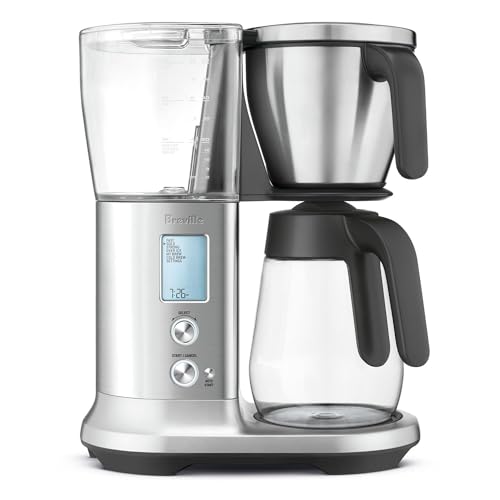
Breville Precision Brewer Glass BDC400 — Best Precision Electric
The Precision Brewer is for the electric-brewing enthusiast who wants the variables a manual method offers — temperature, bloom, flow — with a machine’s repeatability. It suits tinkerers and households with multiple brew styles. It does not suit set-and-forget buyers, and this glass-carafe version holds coffee on a plate like any mainstream machine.
Strengths
- My Brew mode: adjustable temperature, bloom and flow rate
- Gold preset automates specialty-standard parameters
- Multiple presets including strong, iced and cold-brew ecosystem
Trade-offs
- Most complex interface in this guide
- Premium pricing for drip
- Glass version’s holding is plate-based
| Capacity | 12-cup class (60 oz) |
| Control | Adjustable temp, bloom, flow |
| Presets | Gold, Strong, My Brew and more |
| Carafe | Glass (this version) |
Every other machine in this guide made its key electrical decisions at the factory. The Precision Brewer hands them to you. Its My Brew mode exposes the three variables that define extraction — water temperature, bloom time, flow rate — and lets you save the combination that flatters the coffee you actually buy. Its Gold mode does the opposite: one press, and the machine runs specialty-standard parameters with a precision home brewers otherwise need a scale, a kettle and a stopwatch to match. That dual personality is the machine’s whole appeal: autopilot on weekdays, laboratory on weekends. The supporting cast is strong — a capable heater, even distribution, and an accessory ecosystem extending to pour over and cold brew. The costs are interface complexity, physical size and price; and this glass-carafe configuration leaves finished coffee on a warming plate, though a thermal sibling exists in Breville’s line. For the household that reads about extraction for pleasure, no other electric brewer at this size speaks its language.
A sensible way to live with it: spend one weekend dialing My Brew to your house coffee, save it, and then use Gold or your preset exclusively. Owners who re-tune daily are hobbyists; owners who tune once get the hobbyist’s results with a normal person’s mornings.
Best for: enthusiasts wanting machine repeatability with manual-method variables / Not suited for: set-and-forget households or plate skeptics (in this version)

BLACK+DECKER 12-Cup Vortex Coffee Maker — Best Budget Electric
The Vortex is for households that need a full electric pot on a strict budget — first homes, rentals, offices — and would rather the money go to one engineering improvement than to a screen. It suits undemanding daily duty. It does not suit longevity maximalists or anyone wanting programming depth; its controls and materials are honestly basic.
Strengths
- Vortex distribution beats basic budget showerheads clearly
- Full 12-cup capacity at a budget tier
- Simple controls anyone can run
Trade-offs
- Budget build and finish
- Basic feature set — this is a brewer, not a system
- Heater is adequate rather than powerful
| Capacity | 12-cup |
| Distribution | Vortex brewing showerhead |
| Tier | Budget |
| Carafe | Glass |
There is a hierarchy of budget-machine sins, and the worst is not plastic — it is a showerhead that cannot wet its own basket. The Vortex exists to not commit that sin: its showerhead design spins and spreads the water path so the grounds saturate across the basket instead of channeling down the middle. In the cup, that single decision lifts the machine out of the weak-and-bitter budget trap into honestly drinkable territory. The rest of the electrical story is modest — a heater sized for the price, simple controls, a glass carafe and plate — and buyers should expect exactly that: a machine that brews a decent pot now, with longevity that will depend on descaling discipline more than on its build. For the budget household, the advice that matters most is free: descale it quarterly and it will outserve its price; neglect it and no budget machine survives its own scale. As a first electric brewer or an office workhorse, the Vortex is the rational floor of this category.
Pair it with the guide’s dosing discipline — a consistent scoop count, written down — and the gap between this machine and mid-tier rivals narrows to materials and features, not to the coffee in the mug. That is the budget buyer’s whole strategy, and this machine enables it.
Best for: strict budgets needing a full, honest electric pot / Not suited for: decade-long ownership plans or feature seekers
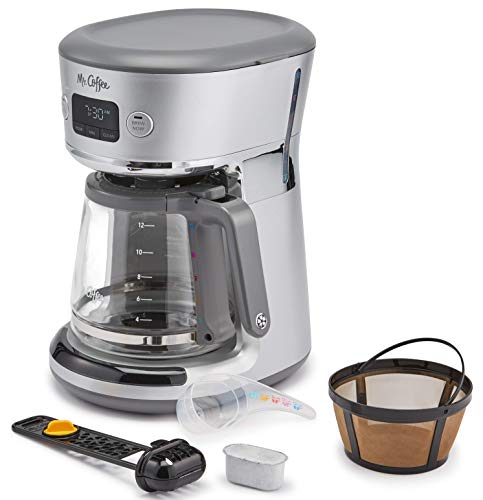
Mr. Coffee Easy Measure 12-Cup — Best Electric for Beginners
The Easy Measure suits households learning electric drip — or households where four different people brew and the pot’s quality depends on who woke first. Its dosing system enforces the ratio that beginners get wrong. It does not suit experienced brewers (the guidance becomes invisible) and its build is mainstream rather than premium.
Strengths
- Color-coded dosing removes the beginner’s biggest error
- Reusable gold-tone filter included
- Full programming at a mainstream tier
Trade-offs
- Guidance system is wasted on experienced brewers
- Mainstream heater and materials
- Reusable filter adds a rinse to each pot
| Capacity | 12-cup |
| Dosing | Easy Measure color-coded system |
| Filter | Gold-tone reusable, included |
| Programming | Programmable |
Electric machines automate heat and water; they cannot automate the human’s scoop. Mr. Coffee’s Easy Measure is the rare machine that tries: the reservoir’s fill lines carry colors matched to scoop counts, turning the coffee-to-water ratio into a matching exercise that any household member can repeat exactly. The result is the thing beginners actually need — the same pot every day — from which all later refinement becomes possible. The machine itself is a competent mainstream programmable: auto-start for scheduled mornings, a reusable gold-tone filter that ends the paper errand, and brew performance in the honest middle of the category. It will not out-extract the KitchenAid or out-tune the Breville, and it is not trying to. Its thesis is that in real kitchens, process consistency beats equipment peaks — and after watching households blame brewers for dosing chaos, we find the thesis persuasive. Buy it for a first home, a shared house, or any kitchen where ‘who made this pot?’ is a recurring question with a disappointed tone.
Once the household’s standard pot is dialed in, write the scoop count on the machine’s lid with a label maker. It sounds trivial; it is the difference between a system and a hope, especially for guests and new household members.
Best for: beginners and shared households needing consistent pots / Not suited for: experienced brewers with an established dosing routine
Comparison Table
| Pick | Badge | Key spec | Best for |
|---|---|---|---|
| KitchenAid KCM1208 Drip Coffee Maker | Best Overall Electric | 12-cup, 29-hole spiral showerhead | households wanting engineered distribution and design in one machine |
| Ninja CE251 Programmable Brewer | Best Programmable Electric | 12-cup programmable, Classic/Rich profiles | scheduled families wanting dependable auto-start and strength control |
| Cuisinart PerfecTemp Thermal DCC-3400 | Best Thermal Electric | 12-cup programmable thermal carafe | households wanting programmed coffee that holds gracefully for hours |
| Breville Precision Brewer Glass BDC400 | Best Precision Electric | Adjustable temp/bloom/flow, Gold preset | enthusiasts wanting machine repeatability with manual-method variables |
| BLACK+DECKER 12-Cup Vortex Coffee Maker | Best Budget Electric | 12-cup Vortex showerhead, budget tier | strict budgets needing a full, honest electric pot |
| Mr. Coffee Easy Measure 12-Cup | Best Electric for Beginners | 12-cup, color-coded dosing system | beginners and shared households needing consistent pots |
Use the table to compare roles at a glance, then read the full review of any pick you are seriously considering — the trade-offs matter more than the headline spec.
How to Choose a 12 Cup Electric Coffee Maker
Judge electric brewers the way an engineer would: power in, water managed, coffee out. The three systems below decide everything; features merely decorate them.
The Heating System: Power and Stability
A 12-cup machine must heat 60 ounces of water and hold it in the proper brewing window for the whole cycle. Underpowered heaters sag — the last water through the basket arrives cooler than the first, and the pot tastes uneven no matter what beans you used. Look for machines with a reputation for hot brewing, named temperature systems, or specialty certification; be wary of full-size machines with suspiciously low wattage. And remember that scale is the enemy of every heater: a descaled budget machine out-brews a neglected premium one.
Distribution: The Showerhead Decides
After heat, distribution. A 12-cup basket is wide, and water prefers the path of least resistance — usually a channel down the middle. Good electric brewers fight this with engineered showerheads: many holes, spiral patterns (KitchenAid), vortex designs (BLACK+DECKER), or wide rain patterns. When comparing machines, the showerhead photograph in the listing tells you more than the feature list does. Even saturation is the cheapest quality in coffee: it makes the whole dose work.
Controls: Electronics That Earn Their Keep
The valuable electronics are boring: a dependable timer, a strength control that changes flow rather than a label, a small-batch mode, a descale prompt. The decorative electronics are menus you will open twice. Breville’s Precision Brewer is the exception that proves the rule — its deep controls exist for enthusiasts who will genuinely use them. Everyone else should buy the machine whose controls they can operate half-awake, because that is the state in which coffee machines are actually operated.
Electric vs Manual Methods: An Honest Comparison
Since ‘electric’ brought some readers here, the honest comparison: electric drip wins on automation (coffee that exists before you are awake), on consistency (the same temperature profile every pot), and on capacity (a 12-cup pot with no kettle choreography). Manual methods win on control (pour over exposes every variable), on simplicity (a dripper has no element to scale and no board to fail), and on per-cup cost at small volumes. French press and percolator occupy their own niches of body and tradition. None of this makes one category ‘better’ — it makes them answers to different mornings. The households happiest with an electric 12-cup machine are the ones whose mornings are scheduled, shared and volume-driven; the ritualists keep a dripper for Sundays, and both camps are right.
Power, Counters and Kitchen Practicalities
A full-size electric brewer is one of the larger loads on a kitchen circuit while it brews — run it on a circuit that is not simultaneously carrying a microwave or toaster oven at full blast if your kitchen wiring is elderly. Placement matters electrically too: steam rises from the basket, so avoid parking the machine directly under cabinet faces you care about, and give the cord a route that does not cross the sink. Finally, surge protection is cheap insurance for machines with control boards (the programmable and precision picks here) in storm-prone areas — a brewer is a small computer that makes coffee, and it appreciates being treated like one at the outlet.
Brew Speed: What the Clock Actually Tells You
Shoppers compare brew times as if faster were simply better, but in electric drip, speed is a diagnostic, not a virtue. A healthy full-size machine brews its pot in a window set by physics: water must contact grounds long enough to extract, at a temperature high enough to matter. A machine that finishes suspiciously fast is usually rushing water through under-extracted coffee; a machine that slows month by month is telling you about scale in its heating path. The useful comparison is consistency: a good electric brewer takes about the same time for the same pot in month twelve as in week one, because its heater output and flow path are stable. When you read owner complaints that a machine ‘got slow and the coffee got weak,’ you are reading one complaint, not two — the slowing is the weakening. This is why this guide treats descaling as performance maintenance rather than hygiene: it is literally how an electric brewer keeps its speed, its temperature and its flavor.
For households in a genuine hurry, the honest accelerants are structural, not mechanical: program the machine to brew before you wake, or choose a smaller weekday pot with a small-batch mode. Chasing minutes inside the brew cycle itself only buys under-extracted coffee faster.
There is one legitimate speed feature to look for: a brew-pause that lets you pour the first cup mid-cycle without dripping. It does not shorten the pot, but it shortens the wait for the person whose need is most urgent — which, in most households, is the entire point of measuring speed at all.
The Warming Plate Problem, Revisited Electrically
The warming plate is the oldest compromise in electric coffee: a low-wattage heater that keeps a glass carafe at serving temperature by continuously adding heat to finished coffee. It works, and it cooks. The chemistry is unforgiving — held coffee loses its aromatics and gains bitterness on a curve that steepens after about half an hour. Electric design has produced three answers, all represented in this guide. The first is programming the plate: KitchenAid’s approach, letting the household set hold temperature and duration to match its real window. The second is abolishing the plate: Cuisinart’s thermal carafe in this guide, which spends no electricity on holding and loses no flavor to it. The third is behavioral: brew quantities matched to the window, which costs nothing and which we recommend regardless of machine. What no plate can do is rewind time — coffee held past its window is a new, worse beverage. Choose the answer that matches your household’s mornings rather than pretending the problem away.
Safety and Build: The Electrical Basics Worth Checking
Coffee makers are water-plus-electricity appliances that live beside sinks, so a few build checks matter more than cosmetic ones. Look for a carafe that seats positively on the plate — a machine that can brew with the carafe misaligned will eventually brew onto the counter. Check that the reservoir’s maximum line is legible and that overfilling is physically awkward; most ‘leaks’ in owner reviews are overfills finding the overflow path. Auto shut-off, present on the programmable picks here, is worth having in households that leave for work with the plate on. And inspect the cord’s route in your kitchen before buying: a cord stretched across a walkway or draped near a burner is a hazard no brew quality justifies. None of these checks requires expertise — they require ten unhurried minutes with the machine’s listing photos and your own counter, which is time this category’s buyers routinely skip and occasionally regret.
What Electric Brewers Still Cannot Do
Honesty about the format’s ceiling helps every buyer. An electric drip machine, however good, brews drip coffee: it cannot make espresso, cannot steam milk (specialty hybrids with frothers aside), and cannot match a skilled pour over’s clarity on a delicate light roast. Its temperature profile, while consistent, is fixed by its design — the Breville in this guide is the exception that exposes adjustments, and even it operates within a drip envelope. It also cannot rescue bad inputs: stale beans and chlorinated water come out of an electric machine exactly as diminished as they went in. What it can do — and what justifies its place as the default home format — is produce a full pot of good coffee, at the right temperature, on a schedule, with a minute of human effort. Households that need more than that should buy the additional tool for the additional job rather than expecting one appliance to be a café.
Reservoir Design: The Feature Your Hands Vote On
Ask owners what they love about a machine after a year and the reservoir comes up more than any brew statistic. The designs divide into three camps. Removable reservoirs (the Ninja here) lift out and fill at the sink — the most forgiving design for under-cabinet kitchens and for washing, since the whole tank can be properly scrubbed. Top-fill fixed reservoirs are filled by pouring from the carafe, which demands headroom and a steady hand and leaves the tank rinsed rather than washed. Rear and side tanks on some designs compromise between the two. The reservoir also decides the machine’s stale-water behavior: a tank you can empty in one motion gets emptied; a tank that requires sponging gets topped up forever, with the flavor consequences described in this guide’s mistakes section. When two machines tie on brewing, choose the reservoir your kitchen and your habits prefer — it is the component you will physically handle twice a day for the machine’s whole life.
Noise, Steam and Other Household Realities
Electric brewers are not silent partners. Pumps gurgle, heaters tick, and the final minutes of a brew cycle vent steam that will find the underside of whatever is above the machine. In a household where the first riser brews at 5 a.m. outside a bedroom door, those sounds are a selection criterion nobody lists: thermal-carafe machines end their noise when the brew ends, while plate machines add the occasional tick of the heating element cycling. Steam management is the other reality — a machine parked under a low cabinet will, over years, dull the cabinet’s finish with daily steam baths. Slide the machine forward for brewing if the placement is tight, or choose a spot with open air above it. These are not reasons to avoid any pick here; they are the difference between a machine that fits a household’s life and one that merely fits its counter dimensions.
The Case for Keeping It Simple
A pattern worth naming after seven guides’ worth of machines: the owners most satisfied with electric brewers are usually the ones whose machines do fewer things well. Every control board is a future failure point, every mode a decision at 6 a.m., every proprietary part a dependency. The picks in this guide were chosen partly on that principle — even the Breville, the most complex machine here, concentrates its complexity in the service of the brew itself rather than in entertainment features. When you stand between a simpler machine and a richer one at similar money, ask the only question that predicts satisfaction: which of these will still be making my household’s exact morning coffee, without complaint, in five years? Buy that one, descale it quarterly, and let the category’s feature race pass you by.
Simplicity has one more dividend: guests can use it. A machine a visiting grandparent or a new housemate can operate without a briefing is a machine that serves the household rather than being served by it — a small, real, underrated household virtue that never once appears on any manufacturer’s glossy printed product spec sheet.
Upgrading From an Old Electric Brewer: What Actually Improves
If you are replacing a working machine, calibrate expectations: the upgrade you will taste comes from three places. A better heater and showerhead will make the same coffee taste more completely itself — sweeter, less thin, less bitter at the edges. A better carafe strategy will make the second hour’s cup taste like the first hour’s. And better controls will remove frictions you had stopped noticing — the reservoir you no longer have to fill with a jug, the timer that simply works. What will not improve is anything upstream of the machine: the beans, the water, the dose. Owners who upgrade the machine and the coffee simultaneously often credit the machine for the whole difference; owners who upgrade only the machine sometimes conclude the category is a scam. Sequence honestly — coffee and water first, machine second — and an upgrade to any pick in this guide will show its real, worthwhile margin.
How to Set Up a 12 Cup Electric Coffee Maker
Electric brewers reward a correct first setup for years. Do it in this order:
- Flush before the first pot. Run two full water-only cycles to clear manufacturing residues from the heater and lines. The first real pot should taste like coffee, not like the factory.
- Check your water. If tap water tastes of chlorine, use filtered water from the start — the machine cannot remove flavors that arrive in its reservoir, and filtered water also slows scale.
- Calibrate the household dose. Brew one full pot at a standard ratio (roughly 1–2 tablespoons per 6 ounces), taste, adjust once, and record the winning dose where everyone can see it.
- Program deliberately. Set the clock, then the auto-start, then any plate or strength preferences — in daylight, with the manual, once. Machines programmed half-asleep get blamed for their owners’ 2 a.m. arithmetic.
- Test the small-batch mode. Brew a half pot with the mode on and off, taste both, and settle the household rule. This experiment takes ten minutes and improves every weekday pot that follows.
- Start the descale calendar now. Note the date of first use and set a quarterly rhythm. Scale prevention is a calendar habit, not a repair.
Maintaining an Electric Brewer’s Performance
An electric brewer’s performance is a maintenance outcome. The heater’s enemy is scale: descale quarterly (monthly on very hard water), using the machine’s clean cycle where fitted. The showerhead’s enemy is oil and fines: wipe it monthly and check the spray pattern by running water through an empty basket — blocked holes show up as dry spots in the spray, and they translate directly into uneven pots. The carafe’s enemy is film: wash weekly with soap and a brush, soak thermal carafes with a cleaning tablet when a fingertip inside comes away slick. Electronics want two kindnesses: a surge protector, and a reservoir that is washed rather than endlessly topped up. Troubleshooting in one breath: slow brew → scale; weak pot → dose or a clogged showerhead; bitter pot → plate time or over-extraction; grounds in the cup → filter fit. Nearly every ‘broken’ electric brewer that reaches a repair bench needs cleaning, not parts.
Common Buying Mistakes
Electric-brewer regrets are remarkably consistent:
- Buying the feature list, ignoring the heater. A machine that cannot hold brew temperature cannot make good coffee, whatever its screen displays.
- Judging by the first pot. New machines need flushing, and households need a week to calibrate dose. Judge at pot ten, not pot one.
- Leaving the reservoir to top-up culture. Endlessly adding fresh water to old water makes stale coffee and a slimy tank. Empty, rinse, refill.
- Running the brewer on a strained circuit. Nuisance breaker trips during a brew ruin pots and tempers. Give the machine a sane circuit.
- Skipping descaling because ‘it still works’. It works cooler and slower every month. By the time the coffee complains, the scale is heavy.
- Parking it under the cabinets it steams. Daily steam damages cabinet finishes over time. Placement is part of the purchase.
None of the six machines here will punish a household that avoids those six — they separate on engineering philosophy and fit, not on traps.
Final Recommendation
The KitchenAid KCM1208 is our best overall electric pick for its distribution engineering and complete package. The Ninja CE251 owns programmable family duty; the Cuisinart DCC-3400 owns the slow morning with its thermal carafe; the Breville Precision Brewer owns the enthusiast’s counter. The BLACK+DECKER Vortex is the budget floor done right, and the Mr. Coffee Easy Measure is the beginner’s consistency machine.
For the neighboring formats and sizes, continue with these guides:
- Best Overall Electric: KitchenAid KCM1208 Drip Coffee Maker
- Best Programmable Electric: Ninja CE251 Programmable Brewer
- Best Thermal Electric: Cuisinart PerfecTemp Thermal DCC-3400
- Best Precision Electric: Breville Precision Brewer Glass BDC400
- Best Budget Electric: BLACK+DECKER 12-Cup Vortex Coffee Maker
- Best Electric for Beginners: Mr. Coffee Easy Measure 12-Cup
Best 12 Cup Coffee Makers Best 12 Cup Thermal Coffee Makers Best 12 Cup Programmable Drip Coffee Makers Best 10 12 Cup Coffee Makers Best 1 Cup Pour Over Coffee Makers
Frequently Asked Questions
What makes an electric coffee maker better than a stovetop or manual one?
Consistency and automation. An electric brewer holds its temperature profile pot after pot and can have coffee ready before you wake. Manual methods offer more control and simplicity, but the result depends on your technique every single time.
How much power does a 12-cup electric coffee maker use?
Full-size brewers draw substantial power while brewing — comparable to other heating appliances — but only for the minutes of the brew cycle. A warming plate sipping power for hours can rival the brew itself over a morning, which is one more argument for thermal carafes or programmed plate windows.
Why does my electric coffee maker brew slowly?
Almost always scale in the heating path. Descale with the machine’s clean cycle or the maker’s recommended solution. If speed does not return after a thorough descale, the element itself may be aging.
Do electric coffee makers need special outlets?
No — standard kitchen outlets are fine. Just avoid running another heavy heating appliance on the same circuit at the same moment, and consider a surge protector for programmable models with control boards.
What temperature should an electric coffee maker brew at?
The widely accepted window for drip extraction is roughly 195–205°F at the grounds. Machines that brew cooler produce sour, thin coffee; that is why heater quality and descaling dominate this guide’s advice.
Can an electric coffee maker make just one cup?
A 12-cup machine can brew a small batch — especially with a small-batch mode — but a household of one is better served by a single-serve machine. See our 1 cup coffee makers guide for the solo options.

