Disclosure: airfryerkitchensupply.com is reader-supported. When you buy through links on our site, we may earn an affiliate commission at no extra cost to you.
Where to buy
Each blender below was verified against Amazon’s live catalog data before earning its place and its link, so the model in the review is the model behind the click. Affordable lineups change bundles and jar sizes between seasons — check the current price on Amazon and confirm the model number on the listing matches the one reviewed here.
- Oster Pro 1200 Blender — Check on Amazon
- Hamilton Beach Power Elite Blender 58148AG — Check on Amazon
- Ninja Professional Blender BL610 — Check on Amazon
- Oster Vortex Plus Glass Blender — Check on Amazon
- Hamilton Beach Wave Crusher Blender 54221 — Check on Amazon
- nutribullet Personal Blender NB30150 — Check on Amazon
Introduction
Every search for the best afforadble blenders — the misspelled twin of the affordable-blender hunt, typed by thousands of shoppers a month — is really a question about cheating the price ladder: how much of a premium blender’s performance can you capture while staying in the budget tier? The answer, in 2026, is most of it. The affordable class now includes a 1,200-watt-class Oster with a dual-direction blade, a Ninja with a true 1,000-watt motor and a 72-ounce pitcher, and glass-jar machines with automatic programs that would have been flagship features not long ago. What the tier still cannot give you is the professional class’s torque for nut butters, its quiet, or its decade-deep refinement — and this guide is honest about those borders. Inside them, though, the six verified picks below are the machines that punch furthest above their tier, each chosen for a different kind of value: power value, batch value, everyday value, and personal-format value.
A note on how “value” is judged here, because it decides the whole list: a blender’s value is its performance on your most frequent job, divided by the friction of owning it — the washing, the storing, the part replacing, the technique it demands. A slightly stronger machine that is annoying to clean is worse value than a slightly weaker one that disappears into your routine. The reviews below score both halves of that equation.
One more promise before the picks: this guide does not print prices, because affordable-tier pricing shifts with sales, seasons, and stock, and a printed figure would mislead you within weeks. What does not shift is the engineering — the motors, jars, blades, and drives assessed below will be the same whenever you read this. Use the links to see today’s number, and use the reviews to decide whether the machine deserves it.
In this guide
Quick Picks
- Best Overall: Oster Pro 1200 — a glass-jar blender with seven speeds, a dual-direction blade that pulls food through the cutting zone, and a 24-ounce smoothie cup in the box. Check on Amazon
- Best for Everyday Smoothies: Hamilton Beach Power Elite 58148AG — the 700-watt, Wave Action workhorse that makes the daily smoothie with the least fuss in the tier. Check on Amazon
- Best Power for the Money: Ninja Professional Blender BL610 — a true 1,000 watts and a 72-ounce pitcher with stacked Total Crushing blades, at the friendliest end of its power class. Check on Amazon
- Best for Big Batches: Oster Vortex Plus — a 76-ounce glass jar, four iBlend auto programs, and a Blend-N-Go cup, built for households that blend in volume. Check on Amazon
- Best for Frozen Drinks: Hamilton Beach Wave Crusher 54221 — Ice Sabre blades and a circulation jar tuned for margaritas and slush-style drinks. Check on Amazon
- Best Personal Option: nutribullet Personal Blender NB30150 — a 700-watt personal blender with a 21-ounce tumbler and an 18-ounce cup, for one-person blending with almost no cleanup. Check on Amazon
How These Picks Were Chosen
This list was built with a value filter rather than a price filter. First, every candidate had to be a current, verifiable model from an established brand — ASIN and model confirmed against live catalog data — because a value pick you cannot buy parts for is a future expense wearing a bargain costume. Second, each pick had to outperform its tier on at least one measurable axis: motor class, jar capacity, blade design, automation, or format convenience. Third, the six had to disagree with each other — different jars, different formats, different strengths — because a value guide that recommends six versions of the same machine has not actually helped anyone choose.
The research also deliberately hunted for the tier’s traps. Affordable blenders fail in predictable places: plastic couplings, gaskets with no replacements, jars that cloud, and motors rated by fantasy. Models with those reputations were excluded regardless of their headline numbers. What survived is a short list of machines with known internals, known parts, and performance that owners consistently describe as better than the tier promises — which is the only definition of value that survives contact with a real kitchen.
Two strong categories were deliberately left out, and the reasoning is worth recording. Immersion (stick) blenders are wonderful tools, but they answer a different question — blending in the pot — and they have their own guide in this series. High-speed professional machines were excluded by the search itself: the moment a blender needs a tamper and costs like a countertop appliance flagship, it has left the affordable conversation, however excellent it is. Keeping a guide inside its brief is part of respecting the reader’s budget.
The Best Afforadble Blenders for Performance Per Dollar
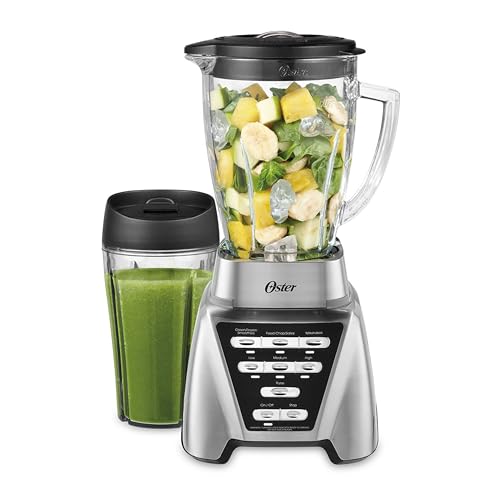
Oster Pro 1200 Blender — Best Overall
The Oster Pro 1200 is the affordable class’s most complete machine, and its signature is a blade that works in both directions. Standard budget blades spin one way and rely on the vortex; when a load packs or floats, the vortex fails and the blend stalls into layers. The Pro 1200’s dual-direction blade technology alternates the cutting direction to keep pulling ingredients through the blade zone, which is why it handles the awkward middle loads — thick smoothies, chunky salsas you want to stop at chunky, frozen fruit with modest liquid — better than anything else at its level. The glass jar keeps it honest for cooking work, the seven speeds give real control, and the included 24-ounce smoothie cup covers the single-serving job without washing the jar. It suits households that blend widely: smoothies, drinks, sauces, batters. It does not suit buyers who need a 72-ounce party pitcher or a whisper-quiet machine.
Strengths
- Dual-direction blade keeps difficult loads moving, reducing stalls and unblended layers.
- Glass jar plus seven speeds make it a genuine cook’s blender, not just a drink machine.
- The 24-ounce smoothie cup in the box covers solo servings and saves the jar wash.
Trade-offs
- The jar is mid-sized; big families will run second cycles for a full round.
- No stacked-blade ice theater — frozen drinks are good, not class-leading.
- The control panel’s preset labels take a week to learn by feel.
| Spec | Detail |
|---|---|
| Jar | Glass jar |
| Controls | 7 speeds |
| Blade | Dual-direction blade technology |
| Extras | 24 oz smoothie cup included |
Living with the Pro 1200, the dual-direction blade stops being a bullet point and becomes the reason other budget blenders feel broken by comparison. Loads that would ride above a normal blade get folded back in; the machine needs fewer spatula interventions, and the results — especially with frozen fruit at modest liquid levels — come out noticeably more even. It is not a premium blender: the fit and finish are working-grade, and it is not quiet. But as the one affordable machine that behaves as if it cost meaningfully more, it earns the top badge in a value guide without much argument.
Best for: households that blend everything and want one machine that punches above its tier. / Not suited for: party-scale batches or silence seekers.
Check the current price on Amazon

Hamilton Beach Power Elite Blender 58148AG — Best for Everyday Smoothies
If the Pro 1200 is the value ceiling, the Power Elite is the value floor done right — the least you can spend while still buying a blender that behaves properly every single day. Its Wave Action jar is the trick: the jar’s internal shape continuously folds the top of the load into the blades, so a frozen-strawberry smoothie blends evenly without the stop-and-stir ritual that makes cheap blenders feel cheap. The 700-watt motor, 40-ounce glass jar, and 12 functions cover the standard map of home blending without strain or theater. It suits daily smoothie households, first apartments, and anyone replacing a failed blender under time pressure. It does not suit large batches or thick, dry loads.
Strengths
- Wave Action circulation produces even smoothies with zero technique.
- Glass jar resists stains and odors and survives daily dishwashing.
- Compact footprint and simple controls suit small kitchens and new users.
Trade-offs
- 40 ounces is a two-to-three-serving ceiling.
- Ice work is drink-grade, not snow-grade.
- No personal cup included for solo servings.
| Spec | Detail |
|---|---|
| Motor | 700 watts |
| Jar | 40 oz glass |
| Functions | 12 functions including puree and crush ice |
| System | Wave Action circulation |
The Power Elite’s value case is behavioral: it is the budget blender most likely to still be used daily a year after purchase, because nothing about it is annoying. The jar is the right size for its audience, the cleanup is a dishwasher cycle, and the results never embarrass it. Buyers cross-shopping it against stronger machines should ask a harder question than “which is more powerful” — it is “which will I still be using in month ten,” and for a large share of households this unassuming machine is the honest answer.
Best for: daily smoothie households that value zero-fuss reliability. / Not suited for: big batches or thick pastes.
Check the current price on Amazon
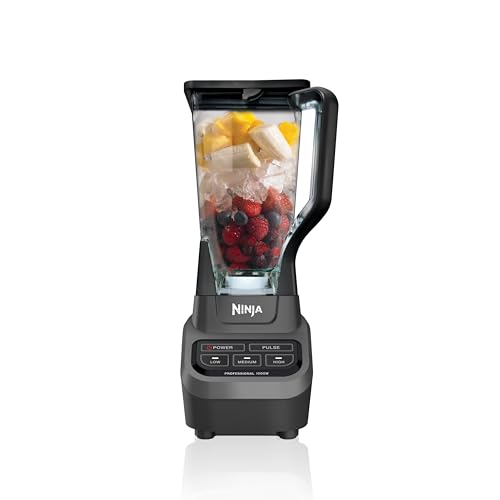
Ninja Professional Blender BL610 — Best Power for the Money
The BL610 breaks the affordable tier’s usual compromise by importing a higher class’s engine: a true 1,000-watt motor driving stacked Total Crushing blades through a 72-ounce pitcher. In its own power class it is the reference machine; in a value guide it is the pick for buyers whose blending is frozen and frequent, because nothing else near this level destroys ice and frozen fruit with the same indifference. The stacked blade column processes the whole jar height, the pitcher serves a crowd in one cycle, and the controls are three speeds and a pulse — power without a learning curve. It suits smoothie families and frozen-drink households. It does not suit the noise-sensitive, and its plastic pitcher will not please glass loyalists.
Strengths
- True 1,000-watt motor with stacked blades — the strongest blending in this guide.
- 72-ounce pitcher makes family rounds and party batches in a single cycle.
- Dishwasher-safe jar and blade assembly keep daily cleanup painless.
Trade-offs
- Loud at full speed, especially on ice.
- Plastic pitcher and a tall storage profile.
- Overkill for a one-person shake routine — you will wash a big jar often.
| Spec | Detail |
|---|---|
| Motor | 1,000 watts |
| Pitcher | 72 oz, dishwasher safe |
| Blade system | Total Crushing stacked blades |
| Controls | 3 speeds plus pulse |
The value argument for the BL610 is cost per capability over years. It sits at the top of the affordable conversation yet performs the frozen jobs that usually require leaving the tier entirely, and its parts ecosystem is as deep as any blender’s. Households that blend frozen smoothies daily will extract more performance per dollar from this machine than from any budget alternative, because it never asks for technique, thawing, or apologies. If your blending is gentle, its power is wasted; if your blending is frozen, nothing else here is close.
Best for: frozen smoothie and drink households wanting maximum power per dollar. / Not suited for: quiet kitchens or glass-jar loyalists.
Check the current price on Amazon

Oster Vortex Plus Glass Blender — Best for Big Batches
The Vortex Plus scales the affordable formula up: a 76-ounce glass jar — the largest glass capacity in this guide — a 1,200-watt-class motor, four iBlend auto programs, reversible blades, and a Blend-N-Go cup for the single-serving days. Big glass jars are rare because they are heavy and expensive to ship, and Oster’s willingness to build one at this level is the story: families get one-cycle batches without accepting a plastic pitcher. The auto programs run sensible timed cycles for smoothies and frozen drinks, and the reversing blade keeps the big load engaged. It suits families and entertainers who blend in volume and prefer glass. It does not suit small kitchens — this is a large, heavy appliance — or buyers who will never fill it past halfway.
Strengths
- 76-ounce glass jar is the biggest batch capacity in the affordable class.
- Four iBlend programs automate the standard jobs with timed cycles.
- Reversible blades plus a Blend-N-Go cup cover both batch and solo work.
Trade-offs
- A full glass jar this size is a serious two-handed lift.
- Large footprint and storage demands; measure your cabinets first.
- Half-empty loads blend less efficiently — it wants to be filled.
| Spec | Detail |
|---|---|
| Motor | 1,200 watts class |
| Jar | 76 oz glass |
| Programs | 4 iBlend auto programs |
| Extras | Blend-N-Go cup included |
Batch blending exposes weak machines: a big jar multiplies the load, and underpowered motors bog down exactly when the party is waiting. The Vortex Plus was clearly specced against that failure — the motor class, the reversing blade, and the jar geometry all serve volume. For a household that blends pitchers of margaritas on weekends and family smoothies on weekdays, it replaces two appliances’ worth of work at an affordable-tier commitment. Just be honest about your counter and your biceps before you order it.
Best for: families and entertainers blending large batches in glass. / Not suited for: small kitchens or mostly-solo blenders.
Check the current price on Amazon

Hamilton Beach Wave Crusher Blender 54221 — Best for Frozen Drinks
Some affordable blenders tolerate ice; the Wave Crusher is built around it. Its Ice Sabre blades are shaped to bite into frozen loads, the Wave Action jar keeps the mixture circulating so the crush evens out, and the 14-function panel is drink-centric. Frozen margaritas come out with the uniform, sippable texture that defines the difference between a drink and a chore, and smoothies inherit the same evenness. The 40-ounce glass jar sizes it for two to four drinkers. It suits weekend drink culture and smoothie households alike. It does not suit cooks whose blending is mostly hot and savory — the Power Elite serves them identically for the same kind of money.
Strengths
- Ice Sabre blades produce the most even frozen-drink texture in the tier.
- Circulation jar prevents the layered shard-and-syrup failure of weak blenders.
- Glass jar and dishwasher-friendly parts keep party cleanup short.
Trade-offs
- 700 watts sets a ceiling: thick, dry loads are out of scope.
- Function count exceeds what most owners will ever touch.
- Mid-size jar means true party volume runs in two cycles.
| Spec | Detail |
|---|---|
| Motor | 700 watts |
| Jar | 40 oz glass |
| Blades | Ice Sabre blades |
| Functions | 14 functions |
The Wave Crusher’s value is specialization done cheaply: instead of spreading its budget across features, Hamilton Beach spent it on the blade and jar geometry that frozen drinks actually test. If your blender’s hardest shift is a Friday-night margarita round, this machine returns more enjoyment per dollar than a stronger generalist, because it was designed for exactly the load you will give it. Specialists beat generalists when the specialty is your whole use case — and for drink households, it is.
Best for: frozen drinks and smoothie households that prize texture. / Not suited for: heavy cooking loads.
Check the current price on Amazon

nutribullet Personal Blender NB30150 — Best Personal Option
The NB30150 brings the value argument to the personal format: a 700-watt base, a 21-ounce tumbler cup, and an 18-ounce cup, in a footprint that fits where pitcher blenders cannot. Personal blenders win on friction — blend in the cup, swap the blade for a lid, rinse two pieces — and at 700 watts this one has enough headroom for frozen fruit and greens in single servings, which is exactly where cheaper personal machines give up. It suits solo smoothie drinkers, office-adjacent kitchens, dorms, and anyone whose blending is a personal habit rather than a household service. It does not suit families, batch cooking, or hot liquids of any kind.
Strengths
- 700 watts is strong for the personal class — frozen fruit blends smoothly.
- Two cup sizes cover shakes and full smoothies without extra purchases.
- Minimal cleanup and footprint make the daily habit nearly frictionless.
Trade-offs
- One serving at a time, by design.
- Blade-base gaskets need periodic checking and eventual replacement.
- No pitcher work: sauces and soups belong to another machine.
| Spec | Detail |
|---|---|
| Motor | 700 watts |
| Cups | 21 oz tumbler cup, 18 oz cup |
| Format | Personal blender |
| Model | NB30150 |
Value, for a personal blender, is measured in mornings. The NB30150’s two-minute loop — fill, blend, lid, go — is the fastest route from intention to smoothie of any machine in this guide, and habits that fast survive busy lives. Its 700 watts matter precisely because the format’s classic failure is a weak motor leaving frozen berries in chunks; this one does not. For the solo drinker, it is not the cheap version of a real blender. It is the right tool, priced kindly.
Best for: solo smoothie and shake drinkers who prize speed and easy cleanup. / Not suited for: families or any hot-liquid work.
Check the current price on Amazon
Job by Job: Where Affordable Performance Peaks and Where It Ends
Smoothies — the tier’s home turf
Every machine in this guide makes a good smoothie, and the ranking among them is about texture ceiling and convenience rather than basic success. The Ninja BL610 and Oster Pro 1200 produce the smoothest results with frozen fruit; the Hamilton Beach pair are a half-step behind on the most fibrous loads; the nutribullet matches them all at single-serving scale. A buyer whose life is smoothies can choose on format alone and be happy with any pick here.
Frozen drinks — a blade-design contest
Ice is where engineering shows. Stacked blades (BL610) crush from the whole column; Ice Sabre blades (Wave Crusher) bite and circulate; dual-direction blades (Pro 1200) fold the load back into the cut. All three approaches produce genuinely good frozen drinks, which was not true of this tier a decade ago. The honest limit is volume and repetition: these are home machines, happiest making drinks for a table, not a tiki bar.
Green smoothies — the fibrous frontier
Leafy greens separate the list more than fruit does. Spinach vanishes anywhere. Kale stems, celery, and ginger reward the stronger and better-circulating machines — the BL610, the Pro 1200, and the NB30150 at personal scale — and punish weak vortexes with stringiness. The technique in the how-to section (greens and liquid first) closes much of the gap for the rest, which is why it is printed in this guide rather than left as folklore.
Sauces, salsas, and batters — quiet excellence
The affordable tier is arguably better matched to cooking jobs than to smoothie theater. Glass jars, moderate power, and pulse control produce excellent salsas, dressings, purees, and batters — jobs where premium torque adds nothing. The Oster Pro 1200’s dual-direction blade is the standout for controlled, chunky textures, and the classic glass-jar format is what generations of cooks actually used. Buyers who cook more than they smoothie should weight this section heavily.
Nut butters and doughs — the honest border
No pick in this guide is a nut-butter machine, and pretending otherwise would be the kind of claim that makes buyers distrust guides. Thick pastes need sustained torque, a tamper, and jar geometry from the professional class. The machines here can produce a small, loose batch with added oil and rest breaks, as an occasional party trick. Weekly nut butter is a different purchase, and this guide’s job is to tell you that before your motor does.
Making an Affordable Blender Last: The Ownership Playbook
The difference between a budget blender that dies in a year and one that serves for a decade is mostly behavior. Three habits account for nearly all of it. First, thermal kindness: motors in this tier are cooled by the air they move while running, and they suffer most in long, stalled, overloaded cycles. Work in intervals on thick loads, respect fill lines, and let a hot-smelling machine rest. Second, gasket discipline: the soft ring at the blade base is a consumable, and treating it as one — cleaning it, seating it flat, replacing it when it flattens — prevents the leaks that owners misdiagnose as fatal flaws. Third, prompt cleaning: residue left to dry becomes abrasive scrubbing later, and scrubbing is what clouds jars and dulls finishes. A blender rinsed in the minute after use stays pleasant for years.
Storage and handling complete the picture. Glass jars want a cabinet shelf they do not share with cast iron; blade assemblies want to be stored assembled or in a drawer where the edges cannot be knocked; personal-blender cups want their lids kept with them, because a cup without its lid is a cup that gets retired. None of this is complicated, and all of it is cheaper than the replacement purchase. The picks in this guide were chosen partly for how well they reward this playbook — established models with replaceable wear parts turn small maintenance into long service, which is the entire economic argument for buying them.
Finally, know the upgrade triggers so you spend once, at the right moment. If your household size doubles, capacity — not power — is your reason to change machines. If your recipes turn toward fibrous greens daily, torque and circulation are the reasons. If hot soups and nut butters become weekly habits, you have changed categories entirely and should shop in the professional class. Absent one of those triggers, the affordable machine you chose well will keep earning its counter space, and the best value decision is the unglamorous one: maintain it, and keep blending.
Comparison Table
| Pick | Badge | Key spec | Best for |
|---|---|---|---|
| Oster Pro 1200 | Best Overall | Glass jar, dual-direction blade, 24 oz cup | All-round blending above its tier |
| Hamilton Beach Power Elite 58148AG | Best for Everyday Smoothies | 700W, 40 oz glass, Wave Action | Daily smoothies with zero fuss |
| Ninja BL610 | Best Power for the Money | 1,000W, 72 oz pitcher | Frozen loads at family scale |
| Oster Vortex Plus | Best for Big Batches | 76 oz glass jar, 4 iBlend programs | Families and entertainers |
| Hamilton Beach Wave Crusher 54221 | Best for Frozen Drinks | 700W, Ice Sabre blades | Margaritas and slush drinks |
| nutribullet NB30150 | Best Personal Option | 700W, 21 oz + 18 oz cups | Solo blending, minimal cleanup |
How to Choose: Where the Money Goes in an Affordable Blender
Understanding value means understanding what a blender’s price is actually made of. Four components consume nearly all of it, and the smart brands in this tier spend on the two that matter while economizing on the two that mostly decorate.
The motor and drive: spend here
The motor sets the ceiling and the drive — the coupling between motor and blade — decides whether you reach it for years or for months. This is why the guide favors machines like the Oster Pro 1200 and the Ninja BL610, whose drivetrains are proven, over stronger-sounding unknowns. When you compare two affordable blenders, weight the brand’s history with that exact drive system more heavily than a wattage difference you can barely feel in a smoothie.
The jar: spend here too
Jar geometry is performance. Wave Action shaping, a well-tapered classic jar, or a cup sized to its vortex — these decide whether ingredients circulate or stratify. Jar material is the second half: the glass jars on most of this list resist the staining and odor retention that make budget plastic jars feel old within a year. A cheap blender with a great jar beats a strong blender with a bad one in daily life, and it is not close.
The electronics: economize here
Touch panels, app connections, and long function lists are where affordable brands pad perceived value. A timed program is genuinely useful — the Vortex Plus’s iBlend cycles earn their place — but the fifteenth preset is not a feature, it is a label. If a choice forces you to trade jar or drive quality for electronics, take the jar and drive every time.
The finish: ignore it
Brushed finishes and color options do not blend. Buy the machine whose working parts are best, in whatever color it comes, and spend the savings on frozen fruit. This sounds obvious and is violated constantly, because finish is the one attribute fully visible in a product photo while drive quality is invisible. Let this guide’s verification do the invisible part for you.
How to Get Premium Results From an Affordable Blender
The gap between budget and premium results is half machine, half method. These techniques close most of the method half.
- Pre-crush your ice. Thirty seconds of pulsing ice with a splash of water before adding other ingredients gives an even base that any of these machines can finish smoothly.
- Cut frozen fruit smaller. Halved frozen strawberries blend like fresh ones; whole ones test the motor. A minute of knife work replaces hundreds of watts.
- Respect the two-thirds rule. Fill the jar no more than two-thirds with solids; circulation space is an ingredient.
- Blend longer, not harder. A full 60-second cycle at high speed produces a silkier smoothie than 20 seconds ever will, on any machine in this guide.
- Use the pause. For thick loads, blend 20 seconds, rest 10, scrape once, repeat. Budget motors prefer intervals, and the texture rewards the patience.
- Finish with the self-clean. Warm water and a drop of soap, 30 seconds, rinse. Machines that are easy to clean get used; machines that get used get good.
Troubleshooting: Squeezing More From the Machine You Bought
Problem: Frozen fruit rides on top and never blends. Your vortex is broken by a dry or overfilled load. Add liquid, reduce the batch, and start on low to get the column moving before going to high.
Problem: The smoothie is smooth but thin and icy-tasting. Too much ice relative to fruit and liquid. Ice is a texture ingredient, not the main event; rebalance toward frozen fruit, which brings both body and chill.
Problem: Salsa turns to soup. You blended a pulse job. Use three to five one-second pulses and check between them — chunky textures are made by restraint, not by settings.
Problem: The base walks across the counter. Vibration on a hard, dry surface. Blend on a folded towel or a silicone mat, and check that the jar is fully seated before blaming the machine.
Problem: Greens come out stringy. Blend greens with the liquid alone for 20 seconds first, then add everything else. Giving the blades a liquid-only pass at the fibrous material is the single most effective green-smoothie technique at any price.
A Word on Wattage Claims in the Budget Tier
No number in appliance marketing is massaged like blender wattage, and the budget tier massages hardest. Three different figures circulate: rated watts, which describe sustained power; peak watts, which describe a momentary maximum under load; and horsepower conversions, which are sometimes derived from the most flattering measurement available. A machine advertised at a big number may be quoting a peak its motor touches for a second, while a conservative brand’s smaller number may describe what its motor does all day. This guide quotes each pick’s figure the way its own verified listing states it, and flags peak ratings as peak wherever they appear — you will find that discipline in the spec boxes above.
The practical translation for shoppers is simple. Within a brand and a rating convention, more watts generally does mean more headroom. Across brands and conventions, the number is close to meaningless, and the tiebreakers that actually predict your experience are blade design, jar geometry, and drive construction — the subjects this guide keeps returning to because they are the ones that show up in the glass. A 700-watt machine with a circulation jar will out-smoothie a stronger machine with a lazy vortex on the loads most people blend, and it will do it every morning without complaint. Buy the engineering, not the arithmetic.
There is one more subtlety worth knowing: personal blenders concentrate their watts into a small volume, which is why a 700-watt personal machine like the NB30150 can produce smoother single servings than a 700-watt pitcher machine produces in a full jar. Power density, not raw power, is the personal format’s secret. Conversely, the big-jar machines spread their watts across volume and win on batch consistency. Neither fact appears on any box, and both explain results that confuse buyers who shop by the number alone.
Common Buying Mistakes
- Judging by the photo, not the drivetrain. Finish is visible; couplings are not. In the affordable tier, the invisible parts decide whether you bought a bargain or a rental.
- Buying capacity you will not fill. A 76-ounce jar run at one-third capacity blends worse than a right-sized jar run correctly. Match capacity to your real batch.
- Chasing the longest feature list. Fourteen functions that are four speeds in costume add cost without adding capability.
- Expecting one machine to cover every format. Pitcher and personal blenders are different tools. The households happiest with affordable gear own the format that matches their dominant habit.
- Ignoring the parts catalog. If the brand does not sell the jar, gasket, and blade for your model, the machine’s lifespan is whatever its weakest part decides.
- Upgrading within the tier instead of across it. If your jobs outgrow affordable machines, the answer is the next class, not the most expensive budget model.
The Format Decision: Pitcher, Personal, or Both
Most affordable-blender regret is format regret. The machine works fine; it is simply the wrong shape for the life it entered. Pitcher blenders are batch tools: they serve households, parties, and cooking projects, and they ask for a sink-sized wash in return. Personal blenders are habit tools: they serve one person’s routine at maximum speed and minimum cleanup, and they cannot scale up when friends arrive. Choosing between them is not about quality — the NB30150 and the BL610 are both excellent at their jobs — it is about which job is actually yours.
Run the numbers on your last twenty blends. If fifteen were single servings consumed immediately, you are a personal-blender household whatever you currently own, and the pitcher machine is the specialty tool. If fifteen were shared batches or cooking projects, the reverse is true. Mixed households — the genuine fifty-fifty cases — are the one situation where owning both formats is rational rather than indulgent, and the affordable tier makes that pairing attainable: a personal machine for the weekday routine and a pitcher for the weekend, together still costing less than a single premium appliance. Several picks in this guide are bought exactly that way, and their owners tend to report the highest satisfaction in the category, because each machine only ever does the job it is shaped for.
If you can only choose one, choose the format of your most frequent blend and accept the compromise on the rare one. A pitcher owner blending solo can use the included smoothie cup (the Pro 1200 thought of this) or simply wash the jar; a personal-blender owner hosting friends can blend in rounds. Frequency, not the exceptional event, should drive the purchase — you will live with the daily routine a thousand times for every one party.
Quick Decision Guide: Sixty Seconds to Your Pick
If you have read this far and still feel torn, decide by elimination. Blend mostly for a household, with cooking in the mix? The Oster Pro 1200. Blend mostly frozen, for several people, as often as possible? The Ninja BL610. Blend in genuinely large batches and prefer glass? The Oster Vortex Plus. Blend smoothies daily for one or two people and want the least possible friction? The Power Elite — or, if those smoothies are strictly solo and speed is everything, the nutribullet NB30150. Blend frozen drinks above all else? The Wave Crusher. Notice what this exercise never asks: which machine has the most watts or the most functions. That is deliberate. In the affordable tier, the right shape of machine, from a brand that supports it, beats the biggest numbers on the box — and every pick above was chosen to prove it in a different kitchen.
Final Recommendation
For the widest range of home blending at an affordable commitment, the Oster Pro 1200 is the standout: its dual-direction blade delivers results that embarrass its tier. Frozen-load households should take the Ninja BL610 and its true 1,000 watts; big-batch families, the Oster Vortex Plus; daily smoothie minimalists, the Power Elite; and solo drinkers, the nutribullet NB30150. Each of these is a case of the affordable tier at its best — which, chosen well, is genuinely good enough for most kitchens. Buy the one whose format matches your mornings, keep its gasket healthy and its jar rinsed, and it will repay the modest investment for years — which is, in the end, the only honest meaning of the word affordable for any kitchen appliance, at any price, in any kitchen, anywhere.
Keep comparing within the cluster: Best Affordable Blenders, Best Affodable Blenders, Best Affordable Blenders For Frozen Drinks, Best Affordable Blenders For Green Smoothies, and Best Afforadble Personal Blenders.
Frequently Asked Questions
What makes a blender good value rather than just cheap?
Performance on your most frequent job, minus ownership friction. A good-value blender blends your daily smoothie well, cleans in a minute, and has replacement parts available for years. A merely cheap one saves money on day one and charges it back in frustration and early replacement.
Is a 1,200-watt affordable blender as good as a premium one?
For smoothies and frozen drinks, it comes surprisingly close — the Oster Pro 1200 and Vortex Plus in this guide are proof. The premium class still wins on sustained torque for thick pastes, on noise, on fine speed control, and on the refinement of its results with fibrous ingredients.
Should I choose glass or plastic in the affordable tier?
Glass is usually the better build at this level: it resists stains and odors and ages gracefully. Plastic wins on weight and drop survival, and dominates very large pitchers for practical reasons. Five of the six picks here use glass for a reason.
How do dual-direction blades help?
By alternating the blade’s rotation, the blender keeps folding ingredients back into the cutting zone instead of letting them ride in a stable vortex above the blades. The result is fewer stalls and more even textures on thick or awkward loads — the affordable tier’s most useful piece of engineering.
Can an affordable blender handle a daily smoothie habit?
Yes — that is precisely the job this tier is built around. Every pick in this guide will run a daily smoothie routine for years if you respect fill lines, clean promptly, and replace the gasket when it eventually asks. Daily use is a maintenance habit more than a hardware challenge.
When is a personal blender better value than a pitcher model?
When one person blends one serving at a time. The personal format eliminates the jar wash, shrinks the footprint, and speeds the routine to about two minutes. The moment you regularly blend for two or more people at once, the pitcher model’s value takes over. Many households eventually own both formats — a personal machine for weekday mornings and a pitcher for weekends — and at affordable-tier pricing that pairing is a reasonable strategy rather than an extravagance, since each machine then spends its life doing only the job it was shaped to do well.


