Disclosure: As an Amazon Associate, airfryerkitchensupply.com earns from qualifying purchases. Links on this page are affiliate links; they cost you nothing extra. Prices and availability change often, so check the current Amazon listing before you buy.
Weighing pizza stone pros and cons honestly means holding two truths at once: few tools improve a home pizza base as much as a stone, and few kitchen tools punish impatience as reliably as one can. This guide covers the pizza stone pros and cons question in full, for home bakers using a standard kitchen oven, with safety woven through every section rather than tucked away at the end. See also pizza stone review pizza stone reviews pizza stone buying guide for the companion guides in this cluster.
Pizza Stone Pros and Cons
In this guide
Key Takeaways
Best for: home bakers who make pizza, flatbread, or crusty loaves often enough to learn one piece of equipment properly. Not suited for: anyone unwilling to preheat patiently or handle a heavy, extremely hot surface with two hands and proper mitts. Preheat the stone with the oven from cold, never wash a hot stone, use no soap on cordierite, and consider a baking steel honestly before you buy, because steel is the main alternative and it wins for some bakers.
Judge cost by tier and by use, not by a headline figure. An entry-tier stone that you use every week is better value than a premium stone that lives in a cupboard, and a mid-tier stone from a maker with a clear replacement policy may be the wisest buy of all. Think about the whole purchase qualitatively: the peel you may need, the mitts you should already own, the storage space the stone will occupy, and the learning bakes where the results are edible but imperfect. Prices change often, so check the current listing when you are ready, and weigh the tier against how often pizza night really happens in your house.
Most cracked stones share a short list of causes, and almost all of them are habits rather than defects. Putting a cold stone into a hot oven is the classic. Washing or wetting a hot stone is the second. Setting a hot stone down on a cold, wet, or sealed surface is the third. Using the stone under a broiler or over direct flame when the maker does not allow it, dropping frozen food onto a fully heated surface, and cutting pizza on the stone with a wheel or knife all add avoidable stress. Learn the short list, teach it to anyone else who uses your kitchen, and a stone can serve for years.
Your first few bakes are information, not verdicts. A pale base with a done top means the stone needed more preheat or a lower rack. A scorched base with pale cheese means the stone was too hot for that dough, the rack was too low, or sugary toppings migrated underneath. A soggy centre usually points to overloaded toppings, wet ingredients that needed draining, or a launch that took so long the dough soaked through. Change one variable at a time, write down what you did if you are serious, and let the stone teach you your own oven’s habits over a handful of sessions.
Stone and steel deserve an honest comparison, because steel is the main alternative and for some bakers it is the better one. A baking steel transfers heat into dough faster, resists cracking, shrugs off thermal shock far better than stone, and suits bakers who launch several pizzas back to back or who love a deeply browned, fast-cooked base. A stone tends to give a slightly gentler, drier heat, a classic crisp-chewy texture, and a more forgiving surface for breads and longer bakes, often at a more accessible tier. Neither wins for everyone. Your dough style, your oven, your budget tier, and how rough you are with heavy hot equipment should decide, not fashion.
A stone rewards a little choreography. Make or proof the dough early, prepare toppings in small bowls before the oven goes on, and put the stone in the cold oven at the very start so the preheat is built into your prep time rather than added to it. Stretch one base at a time, keep finished pizzas on a rack rather than a plate so the bases stay crisp, and let the stone recover briefly between bakes instead of launching pizza after pizza onto a cooling surface. That rhythm turns pizza night from a scramble into a routine the whole household can join, with jobs for small hands well away from the hot oven.
The Pros
Crisper bases than a sheet pan
Preheating with the oven, from cold, is both the safety rule and the quality rule, and the two cannot be separated. Put the stone on its rack while the oven is cold, choose a rack position that leaves room above for the pizza and room below for air to circulate, then let the oven and the stone climb together. When the oven claims it is ready, the stone is usually still catching up, so giving it extra time is not fussiness, it is the method itself. That same slow climb protects the stone from thermal shock, which is why rushing the preheat is the single most expensive habit a new stone owner can develop.
A hot pizza stone is heavy and extremely hot at the same time, and that combination deserves respect rather than confidence. Always use two hands and proper oven mitts that cover your wrists, keep a clear path before you open the oven door, and decide in advance where the stone would go if you truly had to remove it. That landing place must be a stable trivet or another heat-safe, dry surface. Never set a hot stone on counters or on sealed surfaces, where trapped heat can damage the finish and where a cold countertop can shock the stone itself. Children, pets, loose sleeves, and dangling towels all belong well away from the transfer.
Rack position is a quiet variable with loud consequences. Too high and the top browns before the base is ready, especially under a fierce top element. Too low and the base can scorch while the cheese is still pale. The middle or just below it suits most home ovens and most doughs, but your oven has its own personality, and a few deliberate test bakes will reveal it faster than any generic chart. Keep the stone away from direct contact with elements, leave space around it for air to move, and remember that a stone that fills the entire rack wall to wall can trap heat below it and bake unevenly.
Better oven spring for lean doughs
Rack position is a quiet variable with loud consequences. Too high and the top browns before the base is ready, especially under a fierce top element. Too low and the base can scorch while the cheese is still pale. The middle or just below it suits most home ovens and most doughs, but your oven has its own personality, and a few deliberate test bakes will reveal it faster than any generic chart. Keep the stone away from direct contact with elements, leave space around it for air to move, and remember that a stone that fills the entire rack wall to wall can trap heat below it and bake unevenly.
Care is mostly a matter of leaving the stone alone. Let it cool in the oven, scrape rather than scrub, and store it where it will not be knocked, stacked under heavy pans, or used as an impromptu shelf. Many owners simply leave the stone living on its oven rack, which removes the risky business of carrying it in and out for every bake and keeps it ready for bread, flatbreads, and reheating leftovers. If you do store it in a cupboard, stand it securely or lay it flat with protection around it, because a chipped edge from a careless stack is a sad and avoidable ending for a good stone.
Versatility beyond pizza
Care is mostly a matter of leaving the stone alone. Let it cool in the oven, scrape rather than scrub, and store it where it will not be knocked, stacked under heavy pans, or used as an impromptu shelf. Many owners simply leave the stone living on its oven rack, which removes the risky business of carrying it in and out for every bake and keeps it ready for bread, flatbreads, and reheating leftovers. If you do store it in a cupboard, stand it securely or lay it flat with protection around it, because a chipped edge from a careless stack is a sad and avoidable ending for a good stone.
A pizza stone earns its keep far beyond pizza night. Bakers use it as a hearth for crusty loaves, where the stored heat helps the base set and the crust develop. Flatbreads, naan, pita, and tortillas puff and blister beautifully on a hot stone. Roasted vegetables benefit from the searing contact, cookies bake more evenly than on a thin sheet, and yesterday’s pizza reheats on a warming stone with its crispness restored instead of microwaved into sadness. Frozen items, though, should be thawed or handled with real care, because very cold food on a very hot stone is exactly the thermal contrast this guide keeps warning about.
A drier surface for wet doughs
A pizza stone earns its keep far beyond pizza night. Bakers use it as a hearth for crusty loaves, where the stored heat helps the base set and the crust develop. Flatbreads, naan, pita, and tortillas puff and blister beautifully on a hot stone. Roasted vegetables benefit from the searing contact, cookies bake more evenly than on a thin sheet, and yesterday’s pizza reheats on a warming stone with its crispness restored instead of microwaved into sadness. Frozen items, though, should be thawed or handled with real care, because very cold food on a very hot stone is exactly the thermal contrast this guide keeps warning about.
Fit comes before brand. Measure your oven honestly, including the door swing and the rack supports, and leave breathing room around the stone for air and for your peel to work. Round stones suit round pizzas and turn easily in the imagination, while rectangular stones give you more usable surface for loaves, multiple flatbreads, and awkwardly shaped bakes. A stone that is too large is a daily annoyance and a handling risk, and a stone that is too small turns every launch into a precision exercise. Handles and lips sound helpful, yet they can steal flat working surface, so think about how you actually launch before you fall for a feature.
Cordierite, the material behind many familiar stones, is porous, and that porosity explains the no-soap rule. Soap can soak into a cordierite stone and come back out later as an off flavour in your crust, so cleaning stays deliberately simple and qualitative: let the stone cool completely in the oven, scrape off baked-on bits with a bench scraper or a stiff brush, wipe with a barely damp cloth if you must, and let darkening and stains be what they are. A seasoned-looking stone is not a dirty stone. Burned cheese and flour marks are cosmetic history, not a problem to scrub away with detergents or soaking.
Simple, durable technology with no moving parts
Fit comes before brand. Measure your oven honestly, including the door swing and the rack supports, and leave breathing room around the stone for air and for your peel to work. Round stones suit round pizzas and turn easily in the imagination, while rectangular stones give you more usable surface for loaves, multiple flatbreads, and awkwardly shaped bakes. A stone that is too large is a daily annoyance and a handling risk, and a stone that is too small turns every launch into a precision exercise. Handles and lips sound helpful, yet they can steal flat working surface, so think about how you actually launch before you fall for a feature.
Cordierite, the material behind many familiar stones, is porous, and that porosity explains the no-soap rule. Soap can soak into a cordierite stone and come back out later as an off flavour in your crust, so cleaning stays deliberately simple and qualitative: let the stone cool completely in the oven, scrape off baked-on bits with a bench scraper or a stiff brush, wipe with a barely damp cloth if you must, and let darkening and stains be what they are. A seasoned-looking stone is not a dirty stone. Burned cheese and flour marks are cosmetic history, not a problem to scrub away with detergents or soaking.
Thickness is a trade-off you can feel in your arms and in your schedule. A thicker stone stores more heat, recovers better between back-to-back pizzas, and forgives a slightly short preheat, but it takes longer to heat through and weighs noticeably more when you move it. A thinner stone heats faster and is kinder to handle, yet it gives up its heat more quickly and can struggle when several pizzas go in one after another. There is no universally right answer, only the right match for how many pizzas you bake in a session and how patient you are willing to be before the first one.
Reheating that restores crispness
Thickness is a trade-off you can feel in your arms and in your schedule. A thicker stone stores more heat, recovers better between back-to-back pizzas, and forgives a slightly short preheat, but it takes longer to heat through and weighs noticeably more when you move it. A thinner stone heats faster and is kinder to handle, yet it gives up its heat more quickly and can struggle when several pizzas go in one after another. There is no universally right answer, only the right match for how many pizzas you bake in a session and how patient you are willing to be before the first one.
Judge cost by tier and by use, not by a headline figure. An entry-tier stone that you use every week is better value than a premium stone that lives in a cupboard, and a mid-tier stone from a maker with a clear replacement policy may be the wisest buy of all. Think about the whole purchase qualitatively: the peel you may need, the mitts you should already own, the storage space the stone will occupy, and the learning bakes where the results are edible but imperfect. Prices change often, so check the current listing when you are ready, and weigh the tier against how often pizza night really happens in your house.
The Cons
It can crack from thermal shock
Rack position is a quiet variable with loud consequences. Too high and the top browns before the base is ready, especially under a fierce top element. Too low and the base can scorch while the cheese is still pale. The middle or just below it suits most home ovens and most doughs, but your oven has its own personality, and a few deliberate test bakes will reveal it faster than any generic chart. Keep the stone away from direct contact with elements, leave space around it for air to move, and remember that a stone that fills the entire rack wall to wall can trap heat below it and bake unevenly.
Care is mostly a matter of leaving the stone alone. Let it cool in the oven, scrape rather than scrub, and store it where it will not be knocked, stacked under heavy pans, or used as an impromptu shelf. Many owners simply leave the stone living on its oven rack, which removes the risky business of carrying it in and out for every bake and keeps it ready for bread, flatbreads, and reheating leftovers. If you do store it in a cupboard, stand it securely or lay it flat with protection around it, because a chipped edge from a careless stack is a sad and avoidable ending for a good stone.
It is heavy and dangerously hot to move
Care is mostly a matter of leaving the stone alone. Let it cool in the oven, scrape rather than scrub, and store it where it will not be knocked, stacked under heavy pans, or used as an impromptu shelf. Many owners simply leave the stone living on its oven rack, which removes the risky business of carrying it in and out for every bake and keeps it ready for bread, flatbreads, and reheating leftovers. If you do store it in a cupboard, stand it securely or lay it flat with protection around it, because a chipped edge from a careless stack is a sad and avoidable ending for a good stone.
A pizza stone earns its keep far beyond pizza night. Bakers use it as a hearth for crusty loaves, where the stored heat helps the base set and the crust develop. Flatbreads, naan, pita, and tortillas puff and blister beautifully on a hot stone. Roasted vegetables benefit from the searing contact, cookies bake more evenly than on a thin sheet, and yesterday’s pizza reheats on a warming stone with its crispness restored instead of microwaved into sadness. Frozen items, though, should be thawed or handled with real care, because very cold food on a very hot stone is exactly the thermal contrast this guide keeps warning about.
It demands a long, honest preheat
A pizza stone earns its keep far beyond pizza night. Bakers use it as a hearth for crusty loaves, where the stored heat helps the base set and the crust develop. Flatbreads, naan, pita, and tortillas puff and blister beautifully on a hot stone. Roasted vegetables benefit from the searing contact, cookies bake more evenly than on a thin sheet, and yesterday’s pizza reheats on a warming stone with its crispness restored instead of microwaved into sadness. Frozen items, though, should be thawed or handled with real care, because very cold food on a very hot stone is exactly the thermal contrast this guide keeps warning about.
Fit comes before brand. Measure your oven honestly, including the door swing and the rack supports, and leave breathing room around the stone for air and for your peel to work. Round stones suit round pizzas and turn easily in the imagination, while rectangular stones give you more usable surface for loaves, multiple flatbreads, and awkwardly shaped bakes. A stone that is too large is a daily annoyance and a handling risk, and a stone that is too small turns every launch into a precision exercise. Handles and lips sound helpful, yet they can steal flat working surface, so think about how you actually launch before you fall for a feature.
Cordierite, the material behind many familiar stones, is porous, and that porosity explains the no-soap rule. Soap can soak into a cordierite stone and come back out later as an off flavour in your crust, so cleaning stays deliberately simple and qualitative: let the stone cool completely in the oven, scrape off baked-on bits with a bench scraper or a stiff brush, wipe with a barely damp cloth if you must, and let darkening and stains be what they are. A seasoned-looking stone is not a dirty stone. Burned cheese and flour marks are cosmetic history, not a problem to scrub away with detergents or soaking.
Porous stone cannot take soap or soaking
Fit comes before brand. Measure your oven honestly, including the door swing and the rack supports, and leave breathing room around the stone for air and for your peel to work. Round stones suit round pizzas and turn easily in the imagination, while rectangular stones give you more usable surface for loaves, multiple flatbreads, and awkwardly shaped bakes. A stone that is too large is a daily annoyance and a handling risk, and a stone that is too small turns every launch into a precision exercise. Handles and lips sound helpful, yet they can steal flat working surface, so think about how you actually launch before you fall for a feature.
Cordierite, the material behind many familiar stones, is porous, and that porosity explains the no-soap rule. Soap can soak into a cordierite stone and come back out later as an off flavour in your crust, so cleaning stays deliberately simple and qualitative: let the stone cool completely in the oven, scrape off baked-on bits with a bench scraper or a stiff brush, wipe with a barely damp cloth if you must, and let darkening and stains be what they are. A seasoned-looking stone is not a dirty stone. Burned cheese and flour marks are cosmetic history, not a problem to scrub away with detergents or soaking.
Thickness is a trade-off you can feel in your arms and in your schedule. A thicker stone stores more heat, recovers better between back-to-back pizzas, and forgives a slightly short preheat, but it takes longer to heat through and weighs noticeably more when you move it. A thinner stone heats faster and is kinder to handle, yet it gives up its heat more quickly and can struggle when several pizzas go in one after another. There is no universally right answer, only the right match for how many pizzas you bake in a session and how patient you are willing to be before the first one.
It gives up heat between back-to-back pizzas
Thickness is a trade-off you can feel in your arms and in your schedule. A thicker stone stores more heat, recovers better between back-to-back pizzas, and forgives a slightly short preheat, but it takes longer to heat through and weighs noticeably more when you move it. A thinner stone heats faster and is kinder to handle, yet it gives up its heat more quickly and can struggle when several pizzas go in one after another. There is no universally right answer, only the right match for how many pizzas you bake in a session and how patient you are willing to be before the first one.
Judge cost by tier and by use, not by a headline figure. An entry-tier stone that you use every week is better value than a premium stone that lives in a cupboard, and a mid-tier stone from a maker with a clear replacement policy may be the wisest buy of all. Think about the whole purchase qualitatively: the peel you may need, the mitts you should already own, the storage space the stone will occupy, and the learning bakes where the results are edible but imperfect. Prices change often, so check the current listing when you are ready, and weigh the tier against how often pizza night really happens in your house.
Storage and handling take real space and care
Judge cost by tier and by use, not by a headline figure. An entry-tier stone that you use every week is better value than a premium stone that lives in a cupboard, and a mid-tier stone from a maker with a clear replacement policy may be the wisest buy of all. Think about the whole purchase qualitatively: the peel you may need, the mitts you should already own, the storage space the stone will occupy, and the learning bakes where the results are edible but imperfect. Prices change often, so check the current listing when you are ready, and weigh the tier against how often pizza night really happens in your house.
Most cracked stones share a short list of causes, and almost all of them are habits rather than defects. Putting a cold stone into a hot oven is the classic. Washing or wetting a hot stone is the second. Setting a hot stone down on a cold, wet, or sealed surface is the third. Using the stone under a broiler or over direct flame when the maker does not allow it, dropping frozen food onto a fully heated surface, and cutting pizza on the stone with a wheel or knife all add avoidable stress. Learn the short list, teach it to anyone else who uses your kitchen, and a stone can serve for years.
What the Trade-Offs Mean for You
Most cracked stones share a short list of causes, and almost all of them are habits rather than defects. Putting a cold stone into a hot oven is the classic. Washing or wetting a hot stone is the second. Setting a hot stone down on a cold, wet, or sealed surface is the third. Using the stone under a broiler or over direct flame when the maker does not allow it, dropping frozen food onto a fully heated surface, and cutting pizza on the stone with a wheel or knife all add avoidable stress. Learn the short list, teach it to anyone else who uses your kitchen, and a stone can serve for years.
Your first few bakes are information, not verdicts. A pale base with a done top means the stone needed more preheat or a lower rack. A scorched base with pale cheese means the stone was too hot for that dough, the rack was too low, or sugary toppings migrated underneath. A soggy centre usually points to overloaded toppings, wet ingredients that needed draining, or a launch that took so long the dough soaked through. Change one variable at a time, write down what you did if you are serious, and let the stone teach you your own oven’s habits over a handful of sessions.
Stone and steel deserve an honest comparison, because steel is the main alternative and for some bakers it is the better one. A baking steel transfers heat into dough faster, resists cracking, shrugs off thermal shock far better than stone, and suits bakers who launch several pizzas back to back or who love a deeply browned, fast-cooked base. A stone tends to give a slightly gentler, drier heat, a classic crisp-chewy texture, and a more forgiving surface for breads and longer bakes, often at a more accessible tier. Neither wins for everyone. Your dough style, your oven, your budget tier, and how rough you are with heavy hot equipment should decide, not fashion.
A stone rewards a little choreography. Make or proof the dough early, prepare toppings in small bowls before the oven goes on, and put the stone in the cold oven at the very start so the preheat is built into your prep time rather than added to it. Stretch one base at a time, keep finished pizzas on a rack rather than a plate so the bases stay crisp, and let the stone recover briefly between bakes instead of launching pizza after pizza onto a cooling surface. That rhythm turns pizza night from a scramble into a routine the whole household can join, with jobs for small hands well away from the hot oven.
Disappointment usually has a mechanical explanation, and mechanical explanations can be fixed. Check that the stone really is preheating with the oven from cold, that you are giving it time beyond the oven’s ready signal, that your dough is not too thick for the heat, and that wet toppings are not undoing the base. Confirm the stone is clean of old flour that can burn and smoke, and that nothing is blocking airflow around it. Only after those basics are honest should you blame the stone itself, and even then, comparing your results with a baking steel in a friend’s kitchen may tell you more than another purchase would.
Heat stored in the stone is the whole point. A thin metal sheet pan starts almost empty and has to borrow heat from the oven air while the dough is already sitting on it, so the base steams before it crisps. A properly preheated stone arrives at the launch already full of stored heat and gives that heat up steadily into the underside of the dough. The result, when the preheat is honest, is a base that sets quickly, browns evenly, and releases cleanly instead of sticking and tearing. Shortchange the preheat and you have simply bought a heavier, slower pan, which is why patience before the bake matters more than almost any brand difference.
Keep the wider picture in view as you read: how to use a pizza stone develops a neighbouring part of this topic, and the habits in this section only pay off when the safety basics travel with them, every single bake.
How to Buy Smart
A stone rewards a little choreography. Make or proof the dough early, prepare toppings in small bowls before the oven goes on, and put the stone in the cold oven at the very start so the preheat is built into your prep time rather than added to it. Stretch one base at a time, keep finished pizzas on a rack rather than a plate so the bases stay crisp, and let the stone recover briefly between bakes instead of launching pizza after pizza onto a cooling surface. That rhythm turns pizza night from a scramble into a routine the whole household can join, with jobs for small hands well away from the hot oven.
Disappointment usually has a mechanical explanation, and mechanical explanations can be fixed. Check that the stone really is preheating with the oven from cold, that you are giving it time beyond the oven’s ready signal, that your dough is not too thick for the heat, and that wet toppings are not undoing the base. Confirm the stone is clean of old flour that can burn and smoke, and that nothing is blocking airflow around it. Only after those basics are honest should you blame the stone itself, and even then, comparing your results with a baking steel in a friend’s kitchen may tell you more than another purchase would.
Keep the wider picture in view as you read: best dutch ovens braisers develops a neighbouring part of this topic, and the habits in this section only pay off when the safety basics travel with them, every single bake.
Setup and Care That Reduce the Cons
Keep the wider picture in view as you read: best toaster oven develops a neighbouring part of this topic, and the habits in this section only pay off when the safety basics travel with them, every single bake.
Bottom Line
Keep the wider picture in view as you read: best wall ovens for baking develops a neighbouring part of this topic, and the habits in this section only pay off when the safety basics travel with them, every single bake.
Detailed Picks in Prose

Lodge Cast Iron Pizza Pan
Best for: bakers whose habits match what the Lodge Cast Iron Pizza Pan is built to do well, in a qualitative tier that makes sense for regular home use rather than occasional experimentation. Not suited for: anyone who wants to skip the preheat, rush the cool-down, or treat a hot, heavy baking surface casually. In prose terms this pick earns its place through steady heat, a forgiving working surface, and behaviour you can learn and repeat, bake after bake, once you respect the thermal shock rules that protect every stone and stone-style pan in this guide.
Strengths: steady stored heat for a crisper base; a surface that releases well-floured dough cleanly; versatility across pizza, flatbreads, and hearth-style loaves.
Trade-offs: heavy and extremely hot in use, so two-hand mitts and a stable trivet are non-negotiable; needs a full preheat with the oven from cold; needs patient, soap-free care where the material is porous.

Hans Grill Pizza Stone
Best for: bakers whose habits match what the Hans Grill Pizza Stone is built to do well, in a qualitative tier that makes sense for regular home use rather than occasional experimentation. Not suited for: anyone who wants to skip the preheat, rush the cool-down, or treat a hot, heavy baking surface casually. In prose terms this pick earns its place through steady heat, a forgiving working surface, and behaviour you can learn and repeat, bake after bake, once you respect the thermal shock rules that protect every stone and stone-style pan in this guide.
Strengths: steady stored heat for a crisper base; a surface that releases well-floured dough cleanly; versatility across pizza, flatbreads, and hearth-style loaves.
Trade-offs: heavy and extremely hot in use, so two-hand mitts and a stable trivet are non-negotiable; needs a full preheat with the oven from cold; needs patient, soap-free care where the material is porous.
CastElegance Pizza Stone
Best for: bakers whose habits match what the CastElegance Pizza Stone is built to do well, in a qualitative tier that makes sense for regular home use rather than occasional experimentation. Not suited for: anyone who wants to skip the preheat, rush the cool-down, or treat a hot, heavy baking surface casually. In prose terms this pick earns its place through steady heat, a forgiving working surface, and behaviour you can learn and repeat, bake after bake, once you respect the thermal shock rules that protect every stone and stone-style pan in this guide.
Strengths: steady stored heat for a crisper base; a surface that releases well-floured dough cleanly; versatility across pizza, flatbreads, and hearth-style loaves.
Trade-offs: heavy and extremely hot in use, so two-hand mitts and a stable trivet are non-negotiable; needs a full preheat with the oven from cold; needs patient, soap-free care where the material is porous.
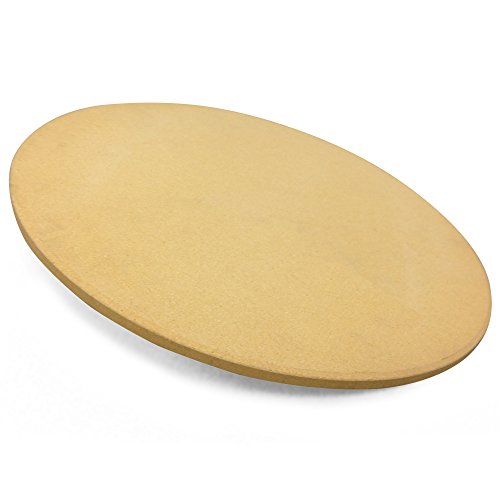
Cuisinart Pizza Stone
Best for: bakers whose habits match what the Cuisinart Pizza Stone is built to do well, in a qualitative tier that makes sense for regular home use rather than occasional experimentation. Not suited for: anyone who wants to skip the preheat, rush the cool-down, or treat a hot, heavy baking surface casually. In prose terms this pick earns its place through steady heat, a forgiving working surface, and behaviour you can learn and repeat, bake after bake, once you respect the thermal shock rules that protect every stone and stone-style pan in this guide.
Strengths: steady stored heat for a crisper base; a surface that releases well-floured dough cleanly; versatility across pizza, flatbreads, and hearth-style loaves.
Trade-offs: heavy and extremely hot in use, so two-hand mitts and a stable trivet are non-negotiable; needs a full preheat with the oven from cold; needs patient, soap-free care where the material is porous.

FibraMent Baking Stone
Best for: bakers whose habits match what the FibraMent Baking Stone is built to do well, in a qualitative tier that makes sense for regular home use rather than occasional experimentation. Not suited for: anyone who wants to skip the preheat, rush the cool-down, or treat a hot, heavy baking surface casually. In prose terms this pick earns its place through steady heat, a forgiving working surface, and behaviour you can learn and repeat, bake after bake, once you respect the thermal shock rules that protect every stone and stone-style pan in this guide.
Strengths: steady stored heat for a crisper base; a surface that releases well-floured dough cleanly; versatility across pizza, flatbreads, and hearth-style loaves.
Trade-offs: heavy and extremely hot in use, so two-hand mitts and a stable trivet are non-negotiable; needs a full preheat with the oven from cold; needs patient, soap-free care where the material is porous.
Strengths and Trade-Offs
Strengths:
- Stored heat that crisps bases a thin pan cannot match.
- A dry, porous surface that helps wet doughs stay crisp.
- Versatility across pizza, breads, flatbreads, and reheating.
Trade-offs:
- Thermal shock can crack it if cold meets screaming-hot carelessly.
- Heavy and extremely hot, demanding mitts, a trivet, and attention.
- Slow to preheat and slow to cool, with soap-free care on cordierite.
Final Verdict
On balance, the pizza stone pros and cons verdict is favourable for bakers who will respect the method: preheat with the oven, launch confidently, cool slowly, clean gently, and compare stone with steel honestly before deciding. Do that, and a stone is one of the most satisfying upgrades a home oven can get. Further reading in this cluster and beyond: best toaster oven best wall ovens for baking best baking cooling racks.
Where the Trade-Offs Surface in Daily Use: Pizza stone Edge Cases Worth Weighing First
Advantages and drawbacks read neatly in a list, but they do not arrive neatly in daily life. The trade-offs of a pizza stone show up at specific moments — the busy one, the wet one, the one where guests are waiting — and those moments are what this section examines. Judged against your oven or grill and the pizzas and breads you bake most, the same feature can be a genuine strength on an ordinary week and the source of the main complaint on a hard one.
This is the drawback side of the ledger, stated plainly. Start with fit, because fit failures cannot be fixed by enthusiasm later. In practice that means three things: check the stone’s shape against your largest pizza or loaf; decide where it will live, since a heavy stone that stays in the oven gets used more; and measure your oven or grill so the stone fits with air space around it. Write the answers down rather than holding them in your head, because a pizza stone is usually chosen over several browsing sessions, and the constraint you checked on Monday is the one forgotten by Friday. If any of the three checks produces an awkward answer, treat it as information about format, not as a problem to wave away — a different format of pizza stone often removes the conflict entirely, while a compromise on fit tends to be re-litigated every time the product is used.
The advantage column looks different once this scenario arrives. Then picture the product in its real situations rather than its best one. The routine cases are easy to imagine: a grill setup used for flatbreads and pizzas outdoors in summer, or occasional frozen pizzas that benefit from a properly heated base. The more useful exercise is the harder day: flour and toppings burning onto the surface during a busy pizza night; and moving a heavy, hot stone without a clear landing spot ready. A pizza stone does not need to be perfect in those moments, but it does need a workable answer to them — a way to be moved, covered, adjusted, cleaned or simply tolerated until conditions improve. If the honest answer is that the hard day would make you stop using it altogether, that is a decision-grade fact, and it is far cheaper to learn it now than after delivery.
Frequently Asked Questions
Can a pizza stone crack in the oven?
Yes, and thermal shock is the usual reason. A cold stone entering a screaming-hot oven, cold water touching a hot stone, or a cold spill landing on a fully heated surface can all crack it. Preheat the stone with the oven from cold, keep liquids away from the hot surface, never wash a hot stone, and let it cool in the oven. Those four habits prevent most cracks, and they cost nothing but patience.
Should I wash a pizza stone with soap?
No, not if the stone is porous cordierite. The material can absorb soap and release it later as an off flavour in your food. Let the stone cool completely in the oven, scrape off baked-on residue, brush it clean, and accept the darkened, seasoned look as normal. Stains from cheese, flour, and sauce are cosmetic. They do not affect performance, and chasing them with detergent or soaking does more harm than good.
Is a baking steel better than a pizza stone?
For some bakers, honestly, yes. Steel transfers heat faster, browns bases quickly, recovers well between pizzas, and does not crack from thermal shock. A stone gives a gentler, drier heat, a classic crisp-chewy crust, and a surface many bread bakers prefer. If you bake many pizzas back to back and want speed and durability, steel may suit you better. If you value traditional texture, versatility with loaves, and a more accessible tier, a stone remains a strong choice.
How long should a pizza stone preheat?
Longer than the oven’s ready signal suggests, and always from cold with the oven itself. The oven air reaches temperature well before a thick stone is heated through, so extra time is part of the method rather than an optional extra. A stone that starts cold with the oven is also a stone protected from thermal shock. If your bases come out pale, the first fix to try is almost always a longer, honest preheat, not a new stone.
Can I leave a pizza stone in the oven all the time?
Many bakers do, and it can be a sensible routine. Leaving the stone on its rack removes repeated carrying of a heavy object, keeps it ready for bread and reheating, and avoids cupboard knocks and stacking damage. Just remember it is there when you preheat for other dishes, allow for its effect on heat distribution, and never forget that it stays hot long after the oven is switched off. Tell other people in the household that the stone lives there.
Can I cut pizza on the stone?
It is better not to. Cutting on the stone dulls your cutter, risks scratching or stressing the surface, and usually means handling a pizza on a surface that is still extremely hot. Slide the finished pizza onto a board or a rack, let it rest briefly so the base stays crisp, and cut it there. The stone stays in the oven to cool slowly and safely, which is exactly where it wants to be after a bake.
Related Guides
pizza stone review pizza stone reviews pizza stone buying guide is a pizza stone worth it how to use a pizza stone best dutch ovens braisers best toaster oven best wall ovens for baking best baking cooling racks


