Rugs wear most where people walk and where furniture presses down. Turning a rug now and then can spread that wear and fading more evenly. The key is to rotate it deliberately, within the limits of its design and care instructions, rather than guessing each time.
What to do
Check whether the rug can be rotated in its location, which depends on its shape and the room. Move the furniture safely, follow the approved cleaning method before replacing the rug, and then restore the furniture so it sits stably on the rug again.
In this guide
A simple rotation routine
- Lift, don’t drag: ask for help with heavy items and use furniture sliders or lifts rather than pulling furniture across the rug.
- Vacuum both sides: if the rug allows it, clean the back and the floor beneath before relaying it.
- Turn by a set amount: a half-turn suits many rectangular rugs, and a quarter-turn suits square ones.
- Reset the furniture: place legs on slightly different spots to avoid pressing the same dents.
- Note the date: so you know when the next turn is due.
A mistake to avoid
Do not drag heavy furniture across a rug to save lifting effort. It can damage the pile, the backing and the floor underneath, and risks injury. Use appropriate help and protect both the floor and the furniture while you work.
A detail worth checking
Check the rug’s pattern and dimensions after rotation. An asymmetrical design or a room obstruction may mean a half-turn works differently from a quarter-turn. Some rugs have a directional pile that looks different when turned, so choose a permitted arrangement deliberately and look at it from the main viewpoint in the room.
Try this practical check
Photograph the starting arrangement and label the rug’s orientation in your care notes, for example “label corner by the window”. Plan the next check around the traffic in the room, not an arbitrary promised lifespan. A busy hallway rug may need turning more often than one in a seldom-used bedroom.
Rotation Choices Compared: Quarter Turn, Half Turn or Flip
Not every rug needs the same move. The way you turn it depends on its shape, its construction and how the furniture sits on it. This table lays out the usual options so you can pick one on purpose.
| Move | Best suited to | Watch out for |
|---|---|---|
| Half turn (180 degrees) | Rectangular rugs in hallways and living rooms | Pattern direction and any visible pile lean |
| Quarter turn (90 degrees) | Square rugs and rugs under a round table | Whether the rug still reaches under the furniture legs |
| Flip front to back | Thin, flat-woven rugs with a similar face on each side | Rugs with a backing that is not meant to show |
| Slide and shift only | Large rugs under a bed or sofa | Shifting too far and leaving bare floor exposed |
If you cannot tell which row describes your rug, check the care tag or the maker’s instructions. Some constructions are meant to stay in one orientation, and the label will usually say so.
Gathering What You Need Before You Lift
A turn goes much more smoothly when the room is prepared. Spend five minutes setting up and you will avoid scrapes on the floor and strained shoulders.
- A helper, if the rug is large or heavy.
- Furniture sliders or soft cloths for pieces that need to be shifted.
- Painter’s tape or chalk to mark the first corner, so you remember which edge was where.
- A vacuum, so you can clean the floor and the rug back while it is exposed.
- A phone camera to take a quick photo of how the furniture sat before you moved it.
The photo is surprisingly useful. When the rug is back down, you can match the furniture positions again instead of guessing and nudging pieces for ten minutes.
Handling Furniture Without Damaging Floors or Legs
The trickiest part of rotating a rug is rarely the rug itself. It is the sofa, bed or table sitting on top of it. If a piece is too heavy to lift, do not try to drag it across a hard floor with the rug half beneath it. Instead, lift one end a little at a time, or ask for help, and place the legs on sliders. Follow the furniture maker’s guidance on lifting and moving, since some pieces have weak joints or detachable legs.
When you can, work in sections. Move one side of the furniture onto a clear patch of floor, turn that half of the rug, then bring the furniture back. For a bed, that often means shifting one corner at a time. For a sofa, it can be easier to roll the rug up from the open end until it meets the legs, turn what you can, and finish once the other end is free.
For very heavy furniture, or when a piece is fragile or valuable, consider asking a professional mover or a rug cleaner to help. Straining your back to turn a rug is not worth it.
A Plain-English Glossary for Rug Care
- Pile: the raised surface fibers of a rug, which can lean in one direction after use.
- Nap: the direction in which the pile lies, which changes how color looks from different angles.
- Flat weave: a rug without raised pile, which is usually thin and sometimes reversible.
- Foundation: the woven base that holds the fibers in place.
- Shedding: loose fibers that come away in the first weeks, especially from wool rugs.
- Traffic path: the strip of the rug that receives the most footsteps.
A Calendar Approach That Removes the Guesswork
The simplest way to avoid forgetting is to tie rotation to something you already do. Many households connect it to seasonal cleaning, the change of clocks, or a regular deep clean of the room. Put a reminder in your phone or write the date on a note inside a cupboard door.
Keep a short log. After each turn, note the date, the move you made, and anything you noticed, such as an area that looks flatter than the rest. Over a year, that tiny record tells you far more than memory will, and it helps you decide whether the schedule needs to be adjusted.
When to Follow the Maker and When to Call for Help
Your rug’s care label and any maker’s guidance take priority over general advice. Delicate hand knotted rugs, antique pieces and rugs with fringe or special backings may need specific handling. If you see damage, strong odors, moisture trapped under the rug, or signs of pests, stop and contact a qualified rug specialist or the retailer. A professional can also advise on cleaning schedules and on how to protect a valuable rug from uneven wear.
Troubleshooting Common Surprises After the Turn
Once the rug is back in place, a few things may look different at first. None of them is necessarily a problem, but it helps to know what is normal and what deserves a closer look.
- Slight color difference between areas: a rug that has faded unevenly will look different once the sunnier section moves into shade. This usually evens out visually over time.
- A raised ridge along a former fold: let the rug lie flat for a day or two, and follow the maker’s guidance if it persists.
- Furniture dents: soft indentations in the pile may relax gradually. The maker or a rug specialist can suggest gentle ways to lift the fibers without harming them.
- A rug that slides: check that the pad or grip underneath is positioned correctly and replace it if it has worn out.
- Corners that curl: lay the rug flat and give it time, or ask the retailer how to handle it.
If a smell or damp patch appears, lift a corner and look underneath. Trapped moisture is worth taking seriously, so dry the area thoroughly and consult the rug’s care guidance or a specialist before putting the rug back down.


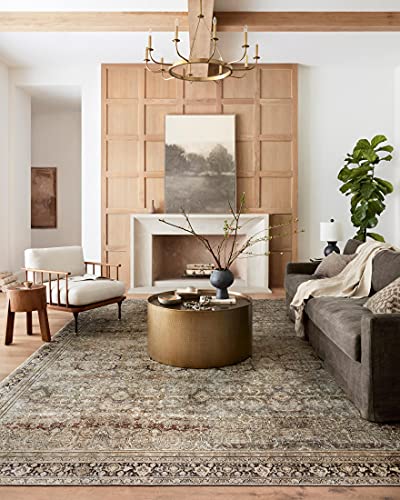
Products Worth a Look
As an Amazon Associate, Air Fryer Kitchen Supply earns from qualifying purchases. These picks come from our guide: 6 Best Area Rugs for Living Rooms: Styles and Piles (2026).
-
Safavieh Madison Collection
 SAFAVIEH Madison Collection Area Rug
-
nuLOOM Moroccan Blythe
 nuLOOM 5x7 Moroccan Blythe Area Rug
-
Loloi Layla Olive/Charcoal Area Rug, 7'6 x 9'6
 Loloi Layla Olive/Charcoal 7'-6" x 9'-6" Area Rug
Quick Answers
How often should a rug be rotated?
There is no fixed answer. Busy rooms may need it more often, and a seasonal habit works for many households.
Does rotating help with fading?
It can even out sun exposure. Curtains or blinds during the brightest hours also help.
What if the rug has a pattern with a clear direction?
Then a half-turn may not suit it. Consider the pattern before you turn the rug, or reposition the furniture instead.
Map the Room Before You Move Anything
Most rotation problems start before the first chair is lifted. Spend a few minutes looking at how the rug sits now. Note which edges run along walls, which side faces the door, and where the heaviest pieces stand. A quick sketch or phone photo of the room, with the rug and every furniture leg that touches it, becomes your guide for putting things back.
Then decide which pieces actually need to come off the rug. Light chairs and side tables are easy to carry out. A sofa or bed frame is another matter. For heavy items you can often lift one end at a time and slide the rug out in stages, if the rug and the furniture design allow it. Check the furniture maker’s guidance on lifting, since some frames are not meant to be raised by one end.
Clear a spot for the items you remove so they are not stacked on a walkway. Pick up small objects from the surface, fold back fringe, and check the rug for loose threads before you start. If the rug is large, measure the doorway and the path around the room so you are not surprised halfway through. Ask a second person to help with anything awkward, because a rug that is rolled or folded wrongly can crease or crack along the backing.
- Sketch or photograph the current layout.
- List the pieces that must come off and those that can stay.
- Clear a landing area and a clean path.
- Line up a helper for heavy items.
Doing this planning first keeps the job short and stops you from improvising with a heavy piece in your hands.
Protecting the Floor While You Work
A rug rotation exposes the floor beneath it, and that floor deserves a quick look. Sweep or vacuum it with a soft attachment before the rug goes back down. Grit trapped under a rug acts like fine sandpaper under foot traffic and under furniture legs, so removing it is one of the more useful parts of the job.
While the floor is bare, look for signs of moisture, discolouration, or marks from the rug backing. A faint outline of the rug is common and usually just shows where light has reached the floor and where it has not. Marks that feel sticky or look cloudy deserve a closer look at what the backing or any underlay is made of, so check the floor maker’s care guidance if you see them.
Protect the surface from your own tools too. Furniture sliders and felt pads help, but make sure sliders match the floor type, because hard plastic can scratch some finishes. Never roll a heavy piece across a rug edge, since it can crush the pile and leave a permanent line. When you carry a rolled rug, keep it rolled with the pile facing in, unless the maker says otherwise, and set it down gently rather than dragging it.
Once everything is back, press a hand across the rug to feel for ridges or curled corners. Flatten them by walking over them or by following the maker’s advice, and look at the edges near doors, where a lifted corner can become a trip hazard.
How Shape and Construction Change the Turn
Not every rug turns the same way, and the right move depends on shape and make. A rectangular rug usually has two sensible positions, original and half-turned, because a quarter-turn changes which edges meet the walls and may leave it looking off in the room. A square rug has four, which gives more room to spread wear. Round and oval rugs can be shifted in smaller steps, though an oval behaves like a rectangle when it comes to which ends face the traffic.
Construction matters as well. A flat-woven rug often looks similar from every side, so rotating it is easy. A rug with a deep or directional pile can catch light differently depending on its orientation, and a half-turn may make it look lighter or darker from the main seating area. Some rugs have a clear top and bottom to the design, such as a border that is wider at one end, and those may need to stay put and have the furniture adjusted instead.
Check the maker’s care label for anything that restricts handling, such as folding limits or guidance on hanging. Rugs with a stiff backing can crack when bent sharply, and delicate fibres may not take being rolled tightly. If the label is missing, look up the care notes for that product or ask the seller.
- Rectangular: usually a half-turn.
- Square: a quarter-turn is possible.
- Round: small shifts spread wear.
- Directional or patterned: confirm the layout looks right before committing.
Busy Rooms, Sunny Rooms and Seasonal Habits
How often you turn a rug depends on what happens in the room. A hallway or entryway rug takes steady foot traffic along a narrow path, so wear builds in a line. A living room rug may show wear mainly in front of the sofa and in the route to a doorway. Bedroom rugs often wear least, mostly beside the bed. Use this to set your own schedule rather than a fixed rule, and shorten the interval if you see a worn track forming.
Sunlight is the other driver. A rug near a bright window may fade on one side while the far side stays rich. Turning it can even this out, but it is slower than blocking the light. Curtains, blinds or window film that suits your home reduce the exposure, and rotating then becomes a bonus rather than the only defence.
Many households link the turn to something they already do, such as a seasonal deep clean, a change of curtains or moving furniture for the holidays. Tying the task to a habit makes it more likely to happen. Write the date and the orientation on a note in your care file, or set a reminder on your phone, so you can see at a glance when it was last done.
Keep in mind that different rooms may need different timing. A single approach for the whole house usually means the busiest rug is turned too rarely and the quiet one too often.
Reading the Signs That a Rug Needs More Than a Turn
Rotation spreads wear, but it does not repair damage. Learn to spot the signs that something else is going on. Flattened patches that do not bounce back after vacuuming may point to heavy furniture pressing too long on one spot, and rearranging legs or adding appropriate pads can help. Check the pad material against your rug and floor first.
Curling corners, ripples or buckles often mean the rug is shifting on the floor, which suggests that the grip or underlay needs attention. A rug that creeps while you walk is a safety concern, so look at how it is held in place and follow the maker’s guidance. Edge fraying, exposed backing, or bald patches are signs that wear has progressed past what turning can fix, and a professional cleaner or repairer may be a better route than another rotation.
Odours, damp spots or dark marks on the floor underneath are another red flag. Lift the rug fully, let both rug and floor dry, and find the source before relaying it. If the rug has been exposed to a spill that soaked through, follow the care label for drying instructions.
Finally, consider whether the rug still suits its location. If it is too small for the furniture, with legs only partly on it, it may look uneven and wear unevenly however often you turn it. In that case, a better size matters more than a better routine.
Common Questions
Can I rotate a rug that sits under a sofa or bed?
Often yes, but you may need to lift one end of the furniture at a time or move it off completely. Check the furniture maker's guidance on lifting, and ask for help with heavy pieces so the frame and the rug are not strained.
Should I vacuum before or after turning the rug?
Both can help. Vacuum the floor and the back of the rug while it is lifted, then vacuum the pile after it is down to lift the fibres. Follow the care label for what the rug allows.
Do rug pads or underlay affect rotation?
They can. Pads may need to be turned or repositioned to match the rug, and a worn pad can cause the rug to shift. Check that the pad still lies flat and suits your floor.
Will turning a rug remove dents from furniture legs?
It moves the dents rather than removing them. Fibres in the old spots may recover slowly if left free of weight, and your care label may suggest ways to lift the pile.
Is it worth turning a thin or flat-woven rug?
Usually it is easy to do, and it spreads wear and light exposure evenly. Flat weaves can often be turned with little effort, though you should still check the label for handling limits.
What if my rug is too heavy to move alone?
Do not try to drag or lift it by yourself. Ask someone to help, or hire a professional to handle it, so you protect your back, the rug and the floor.
Can I turn a rug that has fringe?
Yes, but fold or tuck the fringe so it is not caught under furniture or in your grip. Check the ends afterwards for tangling or tears.
Related reading
6 Best Runner Rugs for Hallways: Washable to Shag (2026)
Reference and further practice
Going Deeper: What How the rug’s position, direction and clearances change when it turns within the furniture layout Really Tells You
Most guides stop at the headline measurement, but how the rug’s position, direction and clearances change when it turns within the furniture layout is really a bundle of smaller judgements working together. There is the figure itself, the reference points you took it between, the condition of the space on the day you measured, and the way the item will actually be used once it is in place. Treating those as separate things, and checking each one deliberately, is what separates a purchase that settles in quietly from one that needs adjusting, returning or working around for years.
Start by asking what the measurement is protecting you from. In the case of rotating a rug around furniture, the honest answer is rarely the object itself; it is the routine around the object. Doors still need to swing, people still need to pass, light and air still need to move, and cleaning still needs to happen underneath, behind and between things. When you measure with those routines in mind, the number you write down represents the space as it is lived in, not the space as it appears in an empty room on the day you happen to measure it.
It also helps to separate the figures you cannot change from the ones you can. Walls, doorways, fixed fittings and the footprint of furniture you are keeping are facts. The position of the new item, the direction it faces, and how much clearance you leave around it are choices. A good plan for rugs respects the facts completely and spends the choices wisely, instead of hoping a tight fact will somehow become flexible once the delivery arrives.
Finally, remember that measurements age. Rooms get repainted, floors get covered, furniture moves and households change. The figures you record today are a snapshot, and the most useful habit you can build is to re-check the critical one, how the rug’s position, direction and clearances change when it turns within the furniture layout, whenever the room changes in a way that touches it. That single re-check, which takes minutes, protects every decision that was based on the original set of numbers.
A Careful Second Pass: Checking Rotating a rug around furniture Step by Step
The first pass through this guide gives you a working set of figures. This second pass is about turning those figures into ones you would trust with an order you cannot easily undo. Work through it in order, with the item or the space in front of you, and do not skip a step because an earlier one went well; each step below catches a different kind of error, and the errors that cause returns are usually the ones nobody thought to look for.
Photograph and note the current layout
Before anything moves, record how the room is arranged now: which legs stand on the rug, where the edges fall and where the traffic crosses. Rotation changes all of these relationships, and a record of the working arrangement is your safety net if the new one disappoints. Write the figure down as soon as you take it rather than trusting your memory, and note which point it came from, because the later steps build on these early numbers and a swapped figure is hard to spot once you are comparing listings.
Empty the rug completely
Move every piece of furniture off the rug rather than dragging pieces across it. Dragging distorts the rug, scores the floor beneath and makes the turn a wrestling match; a clear rug can be lifted, turned and relaid by two people in minutes. If the number surprises you, take it once more before moving on. A second reading that agrees gives you confidence, while a different reading tells you the tape slipped, the surface was not square, or something in the way distorted the first attempt.
Decide the turn: end-to-end or a quarter turn
An end-to-end turn swaps the worn and fresh halves of a rectangular rug and suits most rooms. A quarter turn changes the rug’s orientation entirely and only works if the room and furniture accept the swapped dimensions, so check the new footprint against your layout before lifting anything. Keep the tape or ruler in the same orientation for every reading in this step. Changing how you hold it halfway through a set of measurements introduces small differences that add up and can make two matching items look as though they do not match.
Check the new edge positions
In the rotated position the rug’s edges land in new places: check them against door swings, thresholds, hearths and traffic routes, using the clearance checks in this guide. An edge that was harmless along a wall may sit mid-route after the turn. Note any obstruction, slope or soft surface that affected this reading next to the number itself. When you come back to your notes days later, that short comment explains why one figure differs from the others and stops you discarding the wrong one.
Relay the underlay with the rug
Lift, clean and reposition the underlay as part of the same job, checking its condition while it is exposed. Rotating a rug on tired, bunched or misaligned underlay bakes the old problems into the new arrangement, and the exposed moment is the cheapest time to replace underlay that has given up. Compare this figure with the one from the previous step before you continue. The two should tell a consistent story about the space; if they contradict each other, it is far easier to re-check now, while everything is still in place, than after an order arrives.
Re-seat the furniture by your leg rule
Put the furniture back according to the same rule you used before, all legs or front legs on, and check each piece is level and steady on the new arrangement. Then stand at the doorway and judge the room as a visitor would; rotation sometimes improves the look as well as the wear. Take a quick photograph of the tape in position if you can. A picture settles arguments with your own notes later, shows a partner or housemate exactly what you measured, and gives you a reference if you need to ask a seller a question.
When you finish, read the full set of figures aloud once, in order. Hearing them as a list makes inconsistencies obvious in a way that scanning a page does not, and it gives you a natural moment to ask whether the numbers describe the space you are standing in. If anything sounds wrong, it probably is, and now is the cheapest possible time to find out.
How Rotating a rug around furniture Plays Out in Everyday Situations
Measurements become real when they meet a routine. The situations below are the ones readers describe most often when a choice about rugs either proves itself or starts to annoy, and each one tests how the rug’s position, direction and clearances change when it turns within the furniture layout in a slightly different way. Read them against your own household and note which of them resembles your busiest, least tidy day, because that is the version of life your decision has to survive.
A rug fading by a bright window
Sunlight fades the exposed half of a rug while the half under a sofa stays rich, until the difference becomes a visible line. Rotating end-to-end on a schedule shares the light between both halves, and while it cannot undo fading, it keeps the rug ageing as one object rather than two. The lesson from situations like this is that how the rug’s position, direction and clearances change when it turns within the furniture layout only makes sense in context. A figure that looks generous on paper can feel tight once real life fills the space around it, and a figure that looks modest can work well when the layout supports it. Work through your own version of this scenario with your actual numbers before you commit, and pay attention to the moments of the day when the space is busiest, because that is when a poor fit stops being a minor irritation and starts changing how you use the room.
A family room with one heavy traffic lane
Most rooms have a single worn path, door to sofa, sofa to kitchen, worn into the pile years before the rest of the rug tires. Rotation moves that lane onto fresher pile and gives the compressed path a rest, which is the simplest life-extension a rug can be given for free. What helps most here is rehearsing the routine rather than imagining the object on its own. Walk through the movements involved, in the order you would really make them, and notice where you turn, pause, set things down or reach past something else. If a rehearsal feels awkward with nothing in place, it will feel worse once the real item arrives, so treat that awkwardness as useful information and adjust the plan, the position or the size while changing your mind is still free.
A room being rearranged anyway
When furniture is moving for decorating, guests or a new piece, rotation costs almost nothing extra, because the rug is already clear. Build the turn into the rearrangement plan rather than treating it as a separate chore, and the rug gets its maintenance as a by-product of a job already happening. Households differ, and this is where a choice that suits one home quietly fails in another. Think about who else uses the space, how often, and what they bring with them, from bags and coats to toys, laptops and laundry. A decision about rotating a rug around furniture that accounts for the busiest realistic day, rather than the tidiest possible day, tends to keep working long after the novelty has worn off and the space has settled into everyday use.
Care, Cleaning and Storage That Protect the Fit
A good fit is not permanent by default. Dust, moisture, heat, sunlight and ordinary wear all change how rugs sit, hang, slide or stand over time, and many problems that look like buying mistakes are actually care problems that developed slowly. The habits below protect the result you measured for, and they are deliberately simple, because a routine you keep beats an elaborate one you abandon by the second month.
Clean both sides during the turn
A rotation is the one moment the rug’s back and the floor beneath are fully exposed. Vacuum the back, clear the grit from the floor and underlay, and treat any marks you find on either side before the rug goes down again in its new orientation. Build this into a routine tied to something you already do, such as a seasonal clean or the start of a new term, rather than relying on noticing a problem. Small, regular attention of this kind protects the fit you worked to achieve and catches wear while it is still cheap and simple to deal with.
Rest the compressed areas
Pile that has carried a sofa leg or a traffic lane for years benefits from being left unloaded after the turn. Where the rotated layout still loads the same spots, consider small furniture cups or pads to spread the weight, and tease lifted dents gently rather than expecting them to vanish overnight. Always check the care label or the maker’s instructions for the specific item before using any product or method on it, because materials that look similar can react very differently. Test anything new on a hidden area first, and stop if the surface changes colour, texture or smell.
Keep a simple rotation rhythm
Tie rotation to events you will not forget, a spring clean, the clocks changing, a decorating job, rather than to a date you will miss. A rhythm of once or twice a year suits most rooms; bright, sunny or heavily trafficked rooms earn the more frequent end of that range. When you store or move the item, protect the edges, corners and surfaces that decide how it sits and fits. Damage usually happens in cupboards, lofts and hallways rather than in daily use, and a few minutes of padding or careful stacking prevents the slow distortion that later shows up as a poor fit.
Once or twice a year, do a short fit audit: stand back, look at how the item sits compared with the day it arrived, and re-check how the rug’s position, direction and clearances change when it turns within the furniture layout if anything has shifted, sagged, swollen or shrunk. Catching a small change early usually means a small correction; leaving it means the same correction later, plus whatever the poor fit has been doing to the floor, the wall or the item itself in the meantime.
Comparing the Options in This Guide Against Each Other
Once your shortlist is down to the options discussed in this guide, the temptation is to choose by appearance and be done. Resist it for ten more minutes and compare those options on the points that decide daily satisfaction with rugs. The criteria below are the ones that most often separate the pick that keeps pleasing from the pick that merely looked right on the screen, and each one can be checked from the details already given in this guide and in the listings themselves.
End-to-end versus quarter turn
Compare the two turns by what your room allows and what your wear pattern needs. End-to-end is the safe default that preserves every furniture relationship; a quarter turn is a redesign that must re-earn its place against door swings, leg rules and traffic routes before it is allowed to happen. Put the figures for this point side by side for every option on your shortlist, using the same units and the same reference points. Listings describe things in different ways, so the honest comparison is the one you build yourself from your own worksheet rather than the one assembled from marketing headings.
Rotating versus replacing the underlay only
Sometimes the rug is fine and the movement, rippling or discomfort blamed on it is the underlay failing beneath. Compare the cost and effect: fresh underlay under a sound rug restores the arrangement without changing the room, while rotation addresses wear and fading that underlay cannot touch. Treat this as a pass-or-fail check rather than a matter of taste. An option that fails here will not be rescued by a colour you love or a finish that matches the room, because you will meet this limitation every single day, long after you have stopped noticing how the item looks.
Pattern behaviour after the turn
Directional patterns, borders and worn designs read differently once turned. Compare how the rug will look in the new orientation, in daylight and lamplight, before committing; a border that framed the room may argue with a fireplace or doorway once the rug has turned a quarter. If two options look equal on this point, let it go and move to the next criterion instead of forcing a difference that is not really there. Shortlists are decided by the two or three points where options genuinely differ, and those are the points worth your time and questions.
Write your comparison down as a simple grid, one row per option and one column per criterion, and mark only clear wins rather than inventing scores. The right choice usually identifies itself in that grid: it is the option with no failures on the points you cannot compromise, even if another option beats it on a point you care about less.
Mistakes That Only Show Up After a Few Weeks
The mistakes that matter most with rotating a rug around furniture rarely appear on the first day. On the first day everything is new, the room is tidy, and you are paying attention. The problems arrive later, disguised as small daily frictions: the thing that has to be moved before something else can be used, the corner that never gets cleaned because access is awkward, the item that is always slightly in the way of a door, a drawer or a person. Each friction is trivial alone; together they are how a reasonable purchase turns into a quiet regret.
One common pattern is measuring for the object but not for its life. Rugs get opened, pulled out, sat on, walked around, cleaned under and bumped into, and each of those actions needs room that a footprint measurement does not show. When you review your figures, add a mental rehearsal of the object’s busiest hour and ask where everyone and everything stands during it. If the rehearsal needs someone to hold something, move something or wait for something, the plan, not the household, should change.
Another pattern is trusting a single measurement taken once, in a hurry, in an empty room. Floors slope, walls wander, cushions compress and fabrics relax, and a figure that was accurate for the object alone can still be wrong for the object in use. The defence is boring but effective: measure twice, at the points of greatest stress, and keep the least forgiving figure as the one you plan around. Planning around the tightest honest number feels cautious; living with the result feels easy, which is the point.
The last pattern is forgetting that other people use the space differently. The person who measured imagines their own routine and, without meaning to, plans for a household of one. Children, partners, guests, pets and future occupants all bring their own heights, habits and belongings. A decision about rotating a rug around furniture that has been tested against at least one other person’s routine, ideally the person least like you, survives contact with real life far better than one tested only against your own.
More Questions Readers Ask
The common questions earlier in this guide cover the essentials. The questions below come up once people have measured, ordered or lived with the result for a while, and they are answered here in the same spirit: from your own figures first, and from general product claims last.
How often should a rug be rotated?
For most rooms, once or twice a year balances the benefit against the effort. Rotate more often where one area takes strong sun or heavy traffic, and less where wear is even. The right moment is when you can see a pattern of use emerging, a path, a fade line, a dent field, not after it has become the rug’s permanent character. If you are still unsure, return to the measurements in this guide and test the idea against your own figures rather than general advice, because your space, not an average room, decides whether it works.
Can I rotate a rug under heavy furniture alone?
The honest answer is that heavy pieces should be moved properly, with help and with sliders or lifting rather than dragging, and a large rug under a heavy suite is a two-person job at minimum. Attempting it solo by pulling corners distorts the rug and risks the floor, the furniture and your back in roughly equal measure. When the answer depends on a product detail, check the listing or the maker’s instructions for that exact item, since construction and fittings vary between ranges that otherwise look alike.
Will rotation fix a rug that creeps or ripples?
Rotation alone rarely fixes movement, because creep is a grip problem between rug, underlay and floor. Use the exposed moment during the turn to diagnose which surface is travelling and to renew or resize the underlay; the rotation then maintains a fixed arrangement instead of rearranging a moving one. A quick rehearsal with tape, boxes or a paper template usually settles questions like this in minutes and is far more reliable than picturing the result and hoping for the best.
Does rotation work for round or shaped rugs?
Round rugs rotate freely and benefit just as much, since their wear patterns follow traffic rather than shape. Shaped or cut-to-fit rugs may only turn one way, or not at all, if they were made for a specific footprint; check the new fit against every edge before assuming the turn is available. Keep your written measurements with the order confirmation or guarantee paperwork, so that if the question comes up again you can answer it from your notes instead of starting the whole process again.
What if the rotated rug no longer suits the room?
That can happen, especially with a quarter turn or a strongly directional pattern, and it is why you kept a record of the original layout. Live with the new arrangement for a few days before judging, because rooms look strange after any change; if it still argues with the room, your notes let you restore the old arrangement exactly. If two people in the household disagree, let the measurements arbitrate: test both ideas against the figures you recorded, and choose the one that works on the busiest day, not the quietest.