
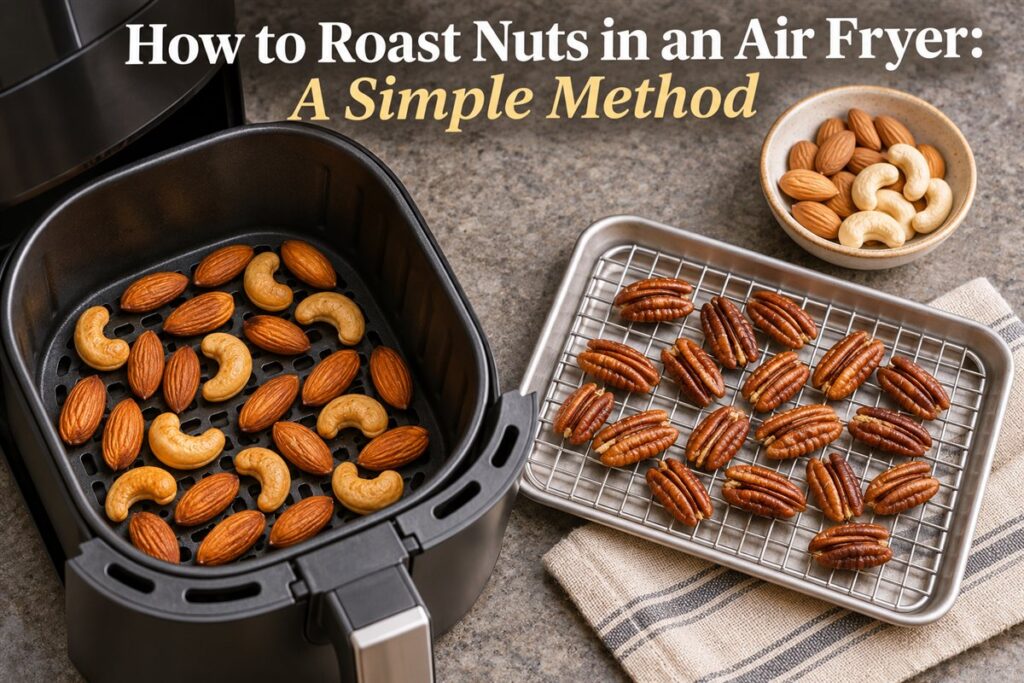
You can roast nuts in an air fryer in a matter of minutes by using a small batch, moderate heat and plenty of shaking. The moving air toasts the surface quickly, so the main skill is watching them closely rather than trusting a timer.
What You Need
- Raw, unsalted nuts such as almonds, pecans, walnuts, cashews or hazelnuts
- A light coating of oil or none at all, plus salt or spices if you like
- A basket that is clean and dry, with a liner only if the maker’s manual allows it
- A plate or tray for cooling
Step-by-Step Roasting
- Warm the air fryer for a couple of minutes if your model has a preheat setting or if the manual suggests it.
- Spread the nuts in one thin layer. A crowded basket toasts unevenly and can leave some nuts pale while others darken.
- Set a moderate temperature. Many cooks begin somewhere around 150 to 175 C (300 to 350 F) and adjust once they see how their own model behaves.
- Run the first round for about 3 to 4 minutes, then pull the basket out and shake it well.
- Continue in short bursts of one to two minutes, checking colour and smell each time.
- When the nuts look a shade lighter than the colour you want, tip them onto a plate. They keep darkening from residual heat.
- If you want seasoning, toss them while still warm so it clings.
Timing Ranges by Nut Type
These are loose ranges to help you plan, not rules. Small baskets with strong fans run hotter than large ones, so trust your eyes and nose first.
| Nut | Typical range | What to watch for |
|---|---|---|
| Almonds | 6 to 10 minutes | Slightly darker centre when cut open |
| Pecans and walnuts | 4 to 7 minutes | Fragrant aroma; they burn quickly |
| Cashews | 5 to 8 minutes | Even golden tone |
| Hazelnuts | 6 to 9 minutes | Skins beginning to loosen |
Tips for Even Results
Keep batches the same size and shape. Chopped nuts and whole nuts should be roasted separately because the smaller pieces finish first. If light pieces blow around in the basket, a mesh insert approved in your manual can help hold them in place.
Let the nuts cool fully before storing them in an airtight jar. Trapping warm nuts in a container creates condensation and softens them. Because nuts are small and hot, tip them out carefully and keep the basket and tray away from children.
Choosing and Prepping Nuts Before They Go In
Good roasting starts before the basket is loaded. Fresh nuts roast more evenly and taste better than stale ones, so smell a few before you start. A rancid, paint-like or stale odor means the oils have turned, and roasting will not fix it. Buy from a source that turns stock over, and check the date on the packet if there is one.
Think about size and moisture. Nuts of similar size cook at the same pace, so sort out very small broken pieces and roast them separately. Raw nuts with skins on, such as almonds or hazelnuts, will roast differently from blanched ones, and the skins may flake off in the moving air. If you plan to season with a wet coating, dry the nuts well first, because moisture steams instead of toasting.
- Keep different nut types in separate batches.
- Remove shell fragments and any damaged pieces.
- Let cold nuts from the fridge or freezer sit for a short while so condensation does not form in the basket.
If you are roasting for someone with a nut allergy in the household, clean the basket thoroughly afterward and keep nuts away from shared food areas.
Seasoning Without Burning It
Seasoning is where roasted nuts become interesting, but sugar and fine spices burn faster than the nuts themselves. Add dry salt after roasting, while the nuts are warm, so it sticks and does not fall into the drawer. For savory blends, use a small amount of oil or a beaten egg white to help spices cling, and toss until coated before loading the basket.
For sweet nuts, a sticky coating of sugar and a little liquid can scorch in a hot basket. Cook at a lower temperature, shake often, and expect the coating to set as it cools. Keep the layer thin so that it does not clump into a single mass. If something begins to smoke, pause the cook, let it cool, and clean the drawer before continuing.
- Dry spices such as paprika, cumin, or garlic powder work better after roasting.
- Fresh herbs burn easily, so add them at the end.
- Taste a cooled nut before adding more seasoning, because warmth hides saltiness.
Sweet and spicy mixes should be tested in small batches first, since each unit runs hot or cool in its own way.
Handling Small Batches and Loose Pieces
Nuts are small and light, and a strong fan can push them around. Pieces can lodge in the basket holes, drop into the drawer, or even rise toward the heating area. Keep the batch modest, and avoid filling the basket more than one thin layer deep. A smaller batch also gives you a better chance of catching the moment when the color is right.
If your manual allows an insert, mesh tray, or small pan, it can keep nuts from falling through the basket. Check that any accessory fits with space around it and has a stated heat limit. Do not use loose paper, since it can lift in the airflow and touch the element. If a nut drops into the drawer, remove it once the unit has cooled, because it can scorch and smoke on the next round.
Shake the basket by pulling it out and giving it a firm but careful shake, then check how the nuts look and smell. Use oven mitts, because the basket and the nuts become very hot. Tip the nuts onto a plate or cool tray right away, since leaving them in the hot basket carries on cooking them. Stay nearby during the whole process, as nuts can go from perfect to overdone quickly.
Cooling and Storing Roasted Nuts
How you cool the nuts affects the crunch. Spread them in a single layer on a plate or tray and leave them until they are fully cool to the touch. They will feel slightly soft when hot and firm up as they cool, so do not judge crispness straight from the basket. Putting them in a container while warm traps steam and can make them soft or stale.
Once cool, store them in an airtight container away from heat and light. The oils in nuts can turn rancid over time, and warmth speeds that up. Homemade roasted nuts often have a shorter shelf life than sealed commercial ones, so make smaller batches more often. For longer storage, some people keep nuts in the fridge or freezer; if you do, let the container come to room temperature before opening it to avoid condensation.
- Label the container with the date.
- Keep seasoned and plain nuts apart.
- Discard any nuts that smell sour or taste off.
Check for any signs of moisture or mold if nuts have been stored for a while. When in doubt, do not eat them.
Clean-Up After Roasting
Roasting nuts leaves oils, salt, and fine crumbs in the basket. Let the unit cool fully before cleaning, and unplug it first. Tip out the crumbs, then wash the basket and drawer in warm soapy water if the manual allows. A soft brush helps with the holes in the basket and the corners of the drawer.
Seasonings can leave strong smells. If a spice blend lingers, wash again and dry thoroughly, leaving the drawer open so air circulates. Avoid abrasive pads on coated surfaces. Check the rim and vents for stray crumbs that could scorch next time.
Think about the order of cooking too. If you plan to cook a mild food afterward, such as bread or fish, clean well first so flavors do not carry over. Nut oils also leave a thin film on the basket, and a quick soapy wash usually handles it. If you roast nuts often, give the unit a deeper clean at regular intervals, following the maker’s cleaning notes, so that old residue does not build up and smoke during later cooks.
FAQ
Do I need to add oil?
Not necessarily. Nuts already contain their own oil, so a plain batch works fine. A teaspoon of oil mainly helps salt and spices stick.
Why did my nuts taste bitter?
Most often they went a little too far. Lower the temperature, shorten the rounds and remove them sooner next time, since they continue to darken on the plate.
Can I roast different nuts together?
It works best to roast them separately, because sizes and oil content differ. Mixed batches usually leave some nuts pale and others overdone.
Should I roast nuts with the shell on?
Most home methods use shelled nuts. Shells can trap steam and vary in thickness, so check your recipe and manual first.
Why are my nuts soft after roasting?
They are often still warm, and nuts firm up as they cool. If they stay soft, they may have been stored while warm or exposed to moisture.
How can I make seasoning stick?
Toss the nuts with a small amount of oil, or season them while still warm. Dry blends cling better to a thin, even coating.
Is it safe to roast nuts for a household with allergies?
Be careful with cross-contact. Wash the basket, drawer, and tools thoroughly, and keep nuts and nut-free food apart.
How long do homemade roasted nuts keep?
It varies by nut and storage. Keep them airtight and cool, make small batches, and discard any that smell sour.
Can I roast nuts in a unit with a nonstick basket?
Yes, if your manual permits the settings and tools you use. Avoid metal utensils that scratch the coating.
The Short Version
Use a thin layer, moderate heat and short rounds with a shake between each. Take them out just before they reach the colour you want, and let them cool before storing. Always check your maker’s manual for basket and temperature limits.









