
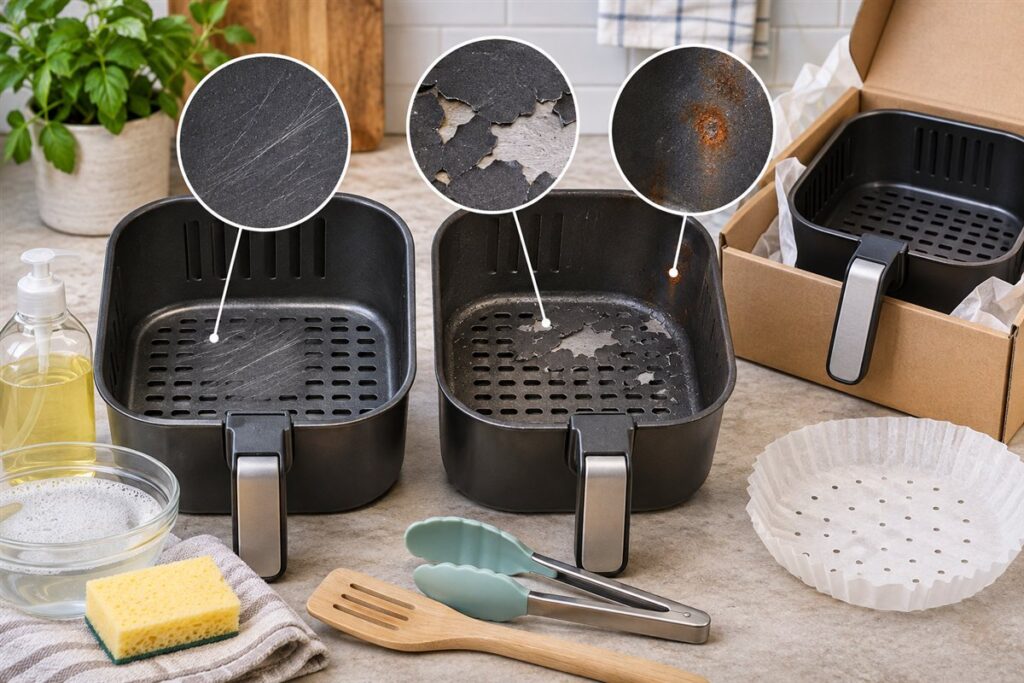
A scratched air fryer basket cannot truly be restored at home, but you can tell light marks from real damage and limit further wear. Light surface scuffs are usually cosmetic. Flaking or peeling means the part should be replaced through the maker.
Light Marks Versus Real Damage
| What you see | What it likely means | General guidance |
|---|---|---|
| Faint scuffs or dull streaks | Surface wear from use and washing | Keep cleaning gently and monitor |
| Deep gouges that reach bare metal | Coating has been cut through | Consider replacement |
| Flaking, peeling, or bubbling | Coating is failing | Stop using the basket and contact the maker |
| Rust spots | Metal is exposed to moisture | Replace the part |
Gentle Care for Light Wear
- Wash after each use with a soft sponge and mild dish soap.
- Soak stuck-on food briefly in warm soapy water instead of scrubbing hard.
- Dry the basket completely before storing it.
- Turn food with silicone or wooden tools, not metal ones.
- Use an approved liner to shield the surface from direct contact.
What Not to Try
- Do not sand, scrape, or scour the surface.
- Do not apply sprays or home coating products.
- Do not use steel wool or abrasive powders.
- Do not keep using a basket that sheds flakes into food.
Finding a Replacement
Many makers sell spare baskets or trays that match a given model. Look up your model name and number in the manual, and check with the maker or the seller. A matching part fits correctly, which matters for airflow and for the basket sitting properly in the unit. If no replacement exists, consider whether the unit still suits you.
Slowing Future Wear
Avoid stacking heavy items on the basket, and keep sharp tools away from it. Do not use aerosol oil sprays if your manual warns against them, since some can leave a sticky film that affects the coating. Gentle habits go a long way.
Think about how the damage happened, because that tells you how to avoid a repeat. Metal tongs, stacked cookware, and abrasive scrubbers are the usual causes. Keep a silicone-tipped tool by the unit, rinse the basket soon after use so food never needs scraping, and store it where nothing will rub against it. These small habits help the next basket or tray last much longer.
If you are unsure whether damage is only cosmetic, take a clear photo and send it to the maker. They can tell you whether the part is still fit for use and which replacement matches your model.
How Nonstick Coatings Are Built and How They Wear
A basic understanding of the coating makes it easier to judge scratches. Most nonstick baskets have a metal base, usually aluminum or steel, covered by one or more thin layers of a slippery coating. Makers differ in the materials and the number of layers, and your manual or the maker’s website tells you what yours uses. The coating is thin by design, so it is far more delicate than the metal underneath.
Wear usually comes from a few causes. Abrasion from utensils, scouring pads, or stacked cookware cuts into the surface. Heat that is higher than the coating is rated for can degrade it over time. Harsh dishwasher detergents may dull or lift some finishes, which is why many makers advise hand washing. Thick, baked-on residue encourages people to scrub harder, and that scrubbing causes further scratches.
- Abrasion: the most common cause, from metal tools and rough sponges.
- Heat stress: running the unit empty at a high setting or beyond the stated range.
- Chemical wear: strong cleaners, oven sprays, or aggressive detergents.
- Impact: dropping the basket or banging it against hard edges.
Because the coating is a thin layer, even minor damage tends to grow if the cause continues. Fixing the habit is more valuable than any cosmetic remedy.
Judging Whether the Basket Is Still Fit for Use
Not every mark is a problem, but some are. A practical way to assess the basket is to examine it in good light, with the surface clean and dry, and to run a finger lightly across any marks. Surface scuffs that you can see but barely feel usually reflect minor wear. Marks that catch your fingernail, show bare shiny metal, or have raised edges suggest the coating has been cut through.
Look at the whole basket, not only the bottom. Corners, welds, and the rim near the handle are places where coatings tend to chip. Check the surrounding rack or mesh and any removable inserts as well. Compare the condition with photos from when the basket was new if you have them. A change in how food releases can also be a clue: if foods that never stuck before now cling, the surface has probably worn.
- Wash and dry the basket and hold it under bright light.
- Look for flakes, bubbles, discoloration that looks like peeling, and bare metal.
- Feel gently for rough patches or raised edges.
- Check for rust or white powdery corrosion on the metal.
- Look inside the unit for stray flakes that may have fallen into the cooking chamber.
If you find flaking or any sign of the coating coming off into food, stop using the basket. When in doubt, follow the maker’s advice, and share clear photos if they ask.
Choosing Replacement Parts and Checking Compatibility
A basket is a fitted part, so a replacement needs to match your unit. Start with the model name and number, which are typically printed on a label on the back or underside of the appliance and on the manual. Search for that exact model, because a similar-looking air fryer can have a different basket shape, handle lock, or depth. A basket that fits loosely can rattle and leave gaps that change the airflow, while one that is too tight may not seat fully.
Where possible, buy replacement parts from the maker or an authorized seller, since they can confirm compatibility and the materials used. Third-party baskets may be offered for popular models. If you consider one, check the listing carefully for the models it claims to fit, the material and coating information, and the seller’s return policy. Do not assume a part is compatible just because the dimensions look close.
- Match the model number exactly, including any suffix letters.
- Check the handle and locking design, since these differ even within a range.
- Look for stated care instructions and temperature limits for the part.
- Keep the old basket until the new one arrives and fits well.
- Ask about warranty cover if the damage appeared early in the life of the unit.
If the maker no longer sells baskets for an older model, weigh the cost of a new unit against the value of continuing to use the old one.
Alternatives to Direct Contact with a Worn Surface
While you wait for a replacement, or if the damage is only cosmetic, you can limit contact between food and the worn area. Perforated parchment liners made for air fryers are one option, and silicone mats designed for your model are another. These must leave airflow openings and be weighed down by food. They cannot make a failing coating safe, so they are a stopgap for light wear, not a remedy for flaking.
A different approach is to cook in a separate container that fits the basket and is rated for the heat, such as a small oven-safe dish. Food then touches the dish rather than the basket. This works for casseroles, baked eggs, and sauced dishes, though not for foods that depend on airflow around every side for crisping. Check the dish dimensions and your manual first.
- Use a liner or dish only if the maker allows it.
- Make sure it leaves a gap around all edges.
- Keep it clear of the fan and element.
- Replace any liner or mat that is damaged or sticky.
Some people consider recoating products sold for pans. Makers rarely approve them for appliances, and the coating may not be rated for the heat or safe in contact with food, so avoid them unless the maker states otherwise.
Making the Next Basket Last Longer
A replacement basket will repeat the same fate unless the cause changes. Think about how the old one was damaged and put a specific fix in place. For utensil scratches, keep silicone, wooden, or nylon tools with heat ratings next to the air fryer so that they are the first thing you reach for. For cleaning damage, switch to a soft sponge, a short soak, and mild dish soap, and follow the care instructions on dishwasher use.
Loading habits count too. Dropping frozen blocks into the basket from a height, wedging in large items, or sliding heavy dishes across the surface can all chip the coating. Place food gently and lift it out instead of dragging it. Do not stack heavy pots on the basket in a cupboard or drawer.
- Preheat only as the manual says, and do not run the unit empty at high heat for long.
- Use a light amount of oil and avoid products the maker warns against.
- Remove residue early, before it bakes on and tempts you to scrape.
- Inspect the basket now and then, so you can catch wear before it spreads.
When a basket does reach the end of its life, ask the maker whether there is a recycling or take-back option for the part.
FAQ
Is a scratched basket harmful to use?
Minor scuffs are common. If the coating is flaking, follow the maker’s guidance and stop using it until you have a replacement.
Can I cook directly on bare metal instead?
Only if the maker says so. A damaged basket is best replaced.
Can scratches in an air fryer basket make me ill?
Light scuffs are common and usually cosmetic. If the coating is flaking or peeling, stop using it and ask the maker for advice, since coating pieces should not end up in food.
Can I touch up a scratch with a repair product?
Avoid it unless the maker specifically approves a product for your basket. Many repair products are not designed for contact with food or for high heat.
Is a dishwasher bad for the basket?
It depends on the model. Some makers allow it and others advise hand washing, since strong detergents can dull some coatings. Check the manual for your part.
How can I tell rust from stains?
Rust looks orange or reddish brown and often appears where the coating has been cut through. Stains from food are usually yellow or brown and wipe away. Rust means the part should be replaced.
Does a scratched basket cook worse?
It can cause more sticking and uneven release, but it does not usually change how well the unit heats. The main concern is condition, especially flaking.
Can I use a basket from a different air fryer?
Only if the maker states it fits your model. A mismatched basket can affect airflow, fit, and safety.
Should I contact the maker even if the unit is old?
Yes, it is worth asking. They may still sell the part or have advice, and early damage might be covered under a warranty.
The Short Version
Light scuffs can stay with gentle care, but flaking or deep damage calls for a replacement. Contact the maker and follow the manual.









