
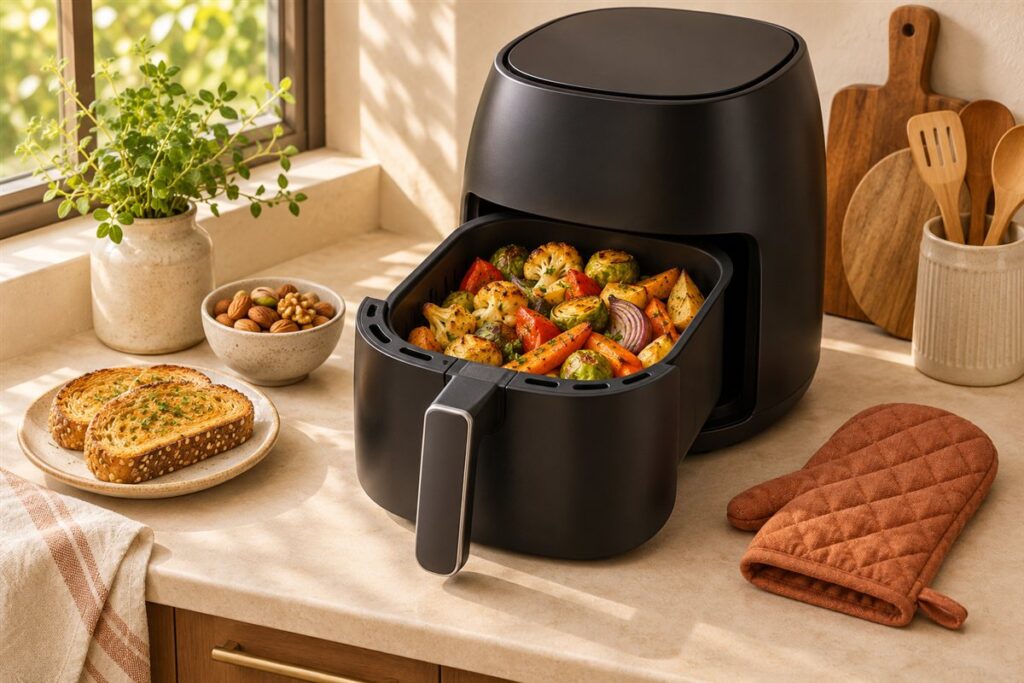
A small turkey breast cooks well in an air fryer, usually in about 40 to 70 minutes depending on weight and bone. A thermometer is the only reliable way to know it is done, so plan to use one.
Size and Fit First
The breast must sit in the basket with space around it and no contact with the element. Boneless roasts of around 1 to 1.5 kg (2 to 3 lb) suit larger air fryers best. Bone-in breasts are taller and may not fit, so check before you season.
Prep Checklist
- Thaw completely in the refrigerator if frozen. This can take a day or more.
- Pat the skin or surface very dry.
- Rub with oil, then salt, pepper, herbs, garlic or smoked paprika.
- If the roast is netted or tied, leave the string in place so it keeps its shape.
- Wash your hands and tools after handling raw poultry.
Cooking Sequence
- Set the air fryer to about 160 to 180 C (320 to 355 F). A moderate temperature helps the centre cook without the outside drying out.
- Place the turkey skin-side down for the first half of the cook if the skin is on, or either side for boneless roasts.
- After 20 to 25 minutes, turn it over carefully with tongs.
- Check the temperature with an instant-read thermometer in the thickest part. Compare the number with the food-safety guidance for poultry where you live.
- If the surface is browning too fast, loosely cover with a piece of foil if your manual allows it, or lower the temperature.
- Keep cooking in 5-minute blocks until the thermometer shows it is done.
Rest, Then Slice
Move the turkey to a board and cover loosely for 10 to 15 minutes. The juices settle back into the meat, and slices hold together better. Cut across the grain in even slices. Pour any juices from the drawer into a small pan for a quick gravy once cool enough to handle.
Approximate Time Guide
| Weight | Likely window |
|---|---|
| About 1 kg boneless | 40 to 55 minutes |
| About 1.5 kg boneless | 55 to 70 minutes |
| Small bone-in | Often longer; rely on thermometer |
Leftover turkey is useful through the week. Slice it thinly for sandwiches, dice it into salads or soups, or reheat slices gently with a spoonful of stock so they do not dry out. Cool the meat promptly, store it in a covered container in the refrigerator and use it within the period given by food-safety guidance in your area. Because cooking time depends so heavily on weight and shape, note the result of your first attempt, including the thermometer reading, so the next one is easier to plan.
Bone-In Versus Boneless Breast
The first choice is between bone-in and boneless. Bone-in breast includes the rib bones and often the skin, and it tends to hold moisture and flavor, though it takes longer and needs more room. Boneless breast is easier to carve, usually fits more easily, and cooks faster, but it can dry out if overcooked. Some boneless breasts are sold rolled and tied or netted, which affects shape and cooking.
Check the weight and the shape. A compact, even roast cooks more evenly than a long, uneven one. If the breast is too wide or tall, it may touch the heating element or crowd the basket, which blocks airflow and can cause burning. Compare the product dimensions with your basket and check the manual for maximum food size. If it does not fit, ask a butcher to cut it into smaller pieces, or cut it yourself into two or three portions.
Look at labels for added solution or brine. Some turkey breasts are pre-seasoned or injected with a salt solution, which affects how much salt you add. Read the package for cooking directions and any notes about thawing. Skin-on breast gives a crisp surface, while skinless needs a little extra care to stay moist.
Seasoning, Brining and Butter Options
Turkey breast is lean, so seasoning and moisture matter. A dry brine of salt applied ahead of time draws moisture out and then back in, seasoning the meat and helping it hold juices. Wet brining in salted water also works, but needs space in the refrigerator and careful handling. If the turkey has been pre-brined or injected, skip extra salt or use less, and check the label.
Herb butter placed under the skin adds richness and helps keep the meat moist. Mix softened butter with herbs, garlic and pepper, and gently loosen the skin to spread it. Rubbing the skin with a little oil helps it brown. For skinless breast, a thin layer of oil or butter on the surface prevents drying.
- Pat the surface dry before seasoning so the skin can crisp.
- Season all sides and the underside as well.
- Avoid sugar-heavy rubs, which can darken before the meat is done.
- Keep raw turkey chilled until cooking.
Wash hands and surfaces after handling raw poultry, and avoid rinsing the meat, which can spread bacteria. Use a separate board and utensils for raw turkey.
Positioning and Protecting the Skin
How the turkey sits in the basket affects the result. Place it skin side up if you want crispy skin, and keep it centered with space around all sides for air to circulate. Do not let it press against the sides or top. If the top browns too fast, lower the setting or tent it loosely with foil, but check your manual for whether foil is allowed, and make sure it does not block airflow or touch the element.
A rack or perforated tray, if available for your unit, lifts the meat and lets air flow underneath. If cooking directly on the basket, lightly oil the surface to prevent sticking. Some units benefit from turning the meat partway through, such as flipping to cook the underside, then back to skin side up for crisping.
Watch for fat dripping into the drawer. Turkey breast is lean, but any skin or butter can smoke. Clean the drawer if it builds up between batches. If the skin starts to blacken at the edges, adjust the setting. Some people finish with a short blast of higher heat for color, but watch it closely. A thermometer helps you avoid over-browning while the center is still undercooked.
Temperature Checking and Carryover Heat
The only reliable way to know that turkey is safe is a food thermometer. Insert it into the thickest part of the breast, away from bone, and follow current food safety guidance for the safe internal temperature of poultry. Check more than one spot, especially in an uneven roast. Do not trust color, time or clear juices alone.
Meat continues to cook a little after it is removed from heat, which is called carryover. Because turkey breast is lean, overshooting the target dries it out. Some cooks take it out right as it reaches the safe temperature and let it rest, verifying that it has stayed at or above the threshold. Follow official guidance and, when in doubt, cook a touch longer rather than risk undercooked poultry.
If the breast is not done when the outside is dark, lower the heat and extend the cooking time, tenting if suitable. If it is done early, rest it covered loosely and keep it warm. Calibrate your thermometer from time to time, using the instructions that come with it. Clean the probe after each use, especially between raw and cooked checks, so you do not transfer bacteria.
Leftovers and Turning Them Into Meals
Cooked turkey breast makes good leftovers. Cool it promptly and refrigerate within the time food safety guidance recommends. Slice it before storing so it is ready to use, and keep it in a covered container. Use leftovers within a safe period, and freeze extra portions if you will not eat them soon.
Reheating thin slices can dry them out, so add a little broth or sauce and warm gently. The air fryer can reheat slices in a short time at a moderate setting, but cover or add moisture if needed. Make sure leftover turkey is steaming hot throughout.
Leftover turkey works in sandwiches, salads, wraps, soups, grain bowls and casseroles. Chopped turkey with a creamy dressing makes a quick salad, and shredded turkey can top flatbreads or tacos. Store any juices separately and use them for gravy or to moisten reheated slices. If you are unsure whether leftovers are still good, throw them out. After cooking, clean the basket and drawer thoroughly, since poultry fat and juices can leave residue and odors.
FAQ
How do I keep it moist?
Use a moderate temperature, avoid overcooking and rest it before slicing. Brushing with butter or oil partway helps the surface.
Can I stuff it?
Stuffing slows the cooking and makes doneness harder to judge, so cook stuffing separately.
Can I cook a frozen turkey breast in the air fryer?
It is best to thaw it fully in the refrigerator first. Cooking from frozen can leave the center undercooked while the outside overcooks.
Is bone-in or boneless better for an air fryer?
Boneless usually fits and cooks faster, while bone-in can stay moister but needs more room. Choose based on your basket size.
How do I get crispy skin?
Pat the skin dry, rub it with a little oil and cook it skin side up with space around it. Avoid crowding the basket.
Should I use foil to protect the top?
Only if your manual allows it, and make sure it does not block airflow or touch the heating element.
How long should the turkey rest?
A short rest, loosely covered, helps the juices settle. Check the temperature has stayed at a safe level before slicing.
How do I know if my thermometer is accurate?
Follow the manufacturer's instructions for calibration. Checking occasionally keeps your readings reliable.
How long can I keep leftover turkey?
Follow standard food safety guidance for cooked poultry, store it promptly in the refrigerator and reheat until steaming hot. If in doubt, throw it out.
The Short Version
Choose a size that fits with gaps all round, cook at a moderate setting, and trust a thermometer with food-safety guidance. Rest before slicing and follow your manual.









