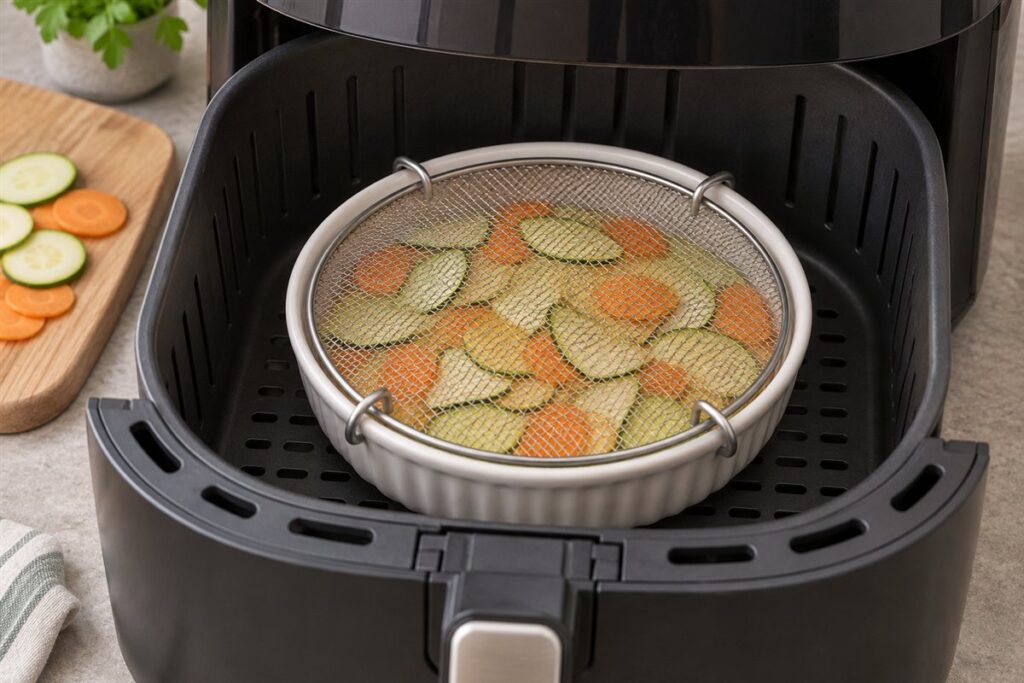
Small, light foods, such as herbs, nuts, leafy greens and thin slices, can blow around in the moving air and even touch the heating element. To keep them in place, cook them in a small pan or mold, use a rack with fine spacing, or weigh them down with heavier food. Always check the maker’s manual and safety instructions.
Why Items Move
Air fryers use a fan to push hot air around the food. Light items catch that air and shift. The effect is strongest near the fan and at higher fan speeds. Loose pieces can also pile up, which leads to uneven cooking, and in the worst case they touch the heating element.
Practical Fixes
- Small pan or foil-free dish: holds crumbs, nuts and herbs in one place.
- Silicone mold or cup: works for very small items you want to keep together.
- Fine-mesh rack: stops items falling through, though it may reduce airflow a little.
- Weighted layering: place heavier food on top of lighter pieces.
- Skewers: pin down thin slices or leaves alongside other food.
Step-by-Step
- Choose a pan or mold that fits the basket with space around it.
- Add the light items in a thin layer, not a pile.
- Press them gently so they sit flat.
- Use a lower setting for the first few minutes if your model allows it.
- Check early and shake gently, keeping your hands clear of hot parts.
- Remove with care, since the dish will be hot.
Matching Items to Methods
| Item | Method | Watch for |
|---|---|---|
| Nuts and seeds | Small pan, thin layer | They darken fast |
| Leafy greens | Toss with a little oil, use a mold | Burn at the edges |
| Herbs | Mix into heavier food | Scorch quickly |
| Thin slices | Lay flat on a rack | Overlapping slices stick |
Safety Notes
Never leave loose paper, foil or light sheets unweighted in the basket. Paper that lifts can contact the heating element, so follow the maker’s manual for what may be used. Keep an eye on small items, because they cook in minutes and can darken or burn if left.
Everyday Examples
Toasted nuts, seeds and coconut flakes are popular small items, and they work best in a shallow dish at a modest setting. Croutons can be tossed with oil and cooked in a single thin layer inside a pan. Herbs are better added to heavier food or used as a topping after cooking.
Cheese shreds and breadcrumb toppings can also lift off a dish. Press them onto the food and let the top set for a moment before putting the dish in.
Accessories That Hold Food Down
Light food moves because the fan pushes air fast. One of the simplest fixes is to put weight or a barrier on the food, and a few accessories exist for this. A rack designed to sit over small items, a perforated pan, or a small oven-safe dish with holes can keep pieces in place while letting air through. Check the listing and the air fryer manual for what is allowed, and confirm the accessory fits with clearance around it.
Metal and silicone accessories have different strengths. Metal racks are rigid and conduct heat, which helps browning, but can scratch a nonstick basket. Silicone tools are gentler but should be heat-rated and must not block the airflow. Do not use anything that touches the heating element, and do not use items that could blow into the fan.
- Perforated liners: help catch small pieces but may need weight on top.
- Small ramekins or pans: keep loose items together, with dry food only.
- Skewers and racks: hold items upright and stop them rolling.
- Wire racks with a flat top: press light items against the base.
Whatever you use, make sure it is clean and dry before it goes in, and check the maker’s advice on accessories before buying anything new.
Prep Techniques That Add Weight and Grip
How you prepare small items makes a big difference. Pat them dry, since wet items stick to one another or to paper, and then coat them lightly so they develop a slightly tacky surface. A light film of oil and seasoning can give food a bit of weight and help it hold its coating. Heavy coatings of loose crumbs, however, can still blow away, so press crumbs on firmly and let the coating rest before cooking.
Consider using a binder. Egg wash, a thin paste of flour and water, or a small amount of mustard can help crumbs stick. Chill the coated items for a short time so the coating sets. That step is simple but changes the result a lot.
Cut pieces slightly larger when possible. Tiny cubes or thin slivers are the most likely to fly, and a modest increase in size gives them more weight. Group pieces together in a shallow pile rather than scattering them, because pieces touching each other tend to stay put. Check for any lightweight items such as paper, foil or parchment that might lift. If you use any of these, weigh them down with food, and follow the manual on their use.
Loading the Basket for Stability
The way you arrange food is as important as the food itself. Place heavier pieces on top of or around lighter ones, and keep the lightest items toward the center, away from the strongest airflow. Do not fill the basket to the top, as overfilling blocks air and leads to uneven cooking, but do not spread a few pieces over an enormous surface either.
If your unit’s fan is strong, try a lower fan or temperature setting if one exists. Some models have different modes that move air less aggressively. Start with the manual’s guidance and make small changes. Cooking at slightly lower heat for a little longer often produces similar results with less movement.
Check the basket after the first few minutes instead of waiting until the end. If items are shifting, pause the cycle with the unit off, rearrange them and consider adding a barrier. Remove anything that looks likely to be pulled toward the heating element. Keep your hands away from hot parts and use tongs. After cooking, clean up any stray bits so they do not burn on the next use. A tidy basket is also a safer one.
Foods That Need Extra Caution
Some foods are especially prone to flying or burning. Fresh herbs and leafy greens can fly or scorch quickly, and are better added after cooking or sealed in a small dish. Loose seeds, spices and breadcrumbs can drift, so use a binder or press them onto food. Light snacks such as small pieces of bread or pastry can lift in the airflow.
Powdered coatings that do not stick can end up around the heating element and smoke. Sugar dust can burn. If something lands on the element, switch the unit off, let it cool, and clean it as the manual directs. Do not try to remove hot debris.
- Test a small batch before committing a full meal.
- Avoid very thin, dry chips or flakes unless the recipe is designed for the air fryer.
- Keep paper and foil secured or avoid them where the manual advises.
- Use caution with spray oils on nonstick surfaces and follow maker advice.
If a food repeatedly misbehaves, it may suit a different cooking method better. Not every item is a good air fryer candidate, and it is fine to use the oven or stovetop for the trickiest ones.
Cleanup After Cooking Light Items
Small items scatter crumbs, seeds and debris. After the unit has cooled, empty the drawer and basket into the trash, not into the sink. Wipe or wash the parts as directed, taking care of the corners where crumbs gather. Check beneath the basket and around the edge for stuck pieces.
Look inside the unit with a flashlight, if safe, to see whether debris has landed near the heating element or fan. Only clean those areas as the manual instructs, and with the unit unplugged and cool. A soft brush or damp cloth is usually acceptable, but check first. Do not poke around with sharp objects.
Regular cleanup prevents smoke and bad smells on the next cook. Burnt crumbs can taste bitter and make the unit smoke. If you often cook crumbly or seeded foods, make cleaning a routine after each use. Dry all parts fully before putting them back. If you see persistent smoke, a burning smell without food, or visible damage, stop using the unit and contact the maker. A clean machine and a stable load are the best insurance against flying food.
FAQ
Why do my breadcrumbs blow off?
They are light and dry. Press them onto food with a bit of oil or egg, and spray lightly to help them cling.
Will a lower setting help?
Often yes, because the fan runs more gently on some models. Check how yours behaves.
Why does the same food move more in some air fryers?
Fan strength and airflow design differ between models. Smaller baskets with a strong fan can blow light items around more.
Can I weigh food down with a metal rack?
Only if the rack is designed for your unit, fits with clearance and does not touch the heating element. Check the manual first.
Should I use toothpicks to hold items?
Wooden picks may burn or loosen in hot air, and loose picks can be a hazard. Use accessories made for air fryers if you need to secure food.
Is parchment safe to use in an air fryer?
Some products are designed for it, but loose paper can lift into the heating element. Follow the manual, weigh the paper down with food and avoid covering the whole basket.
How can I stop seasoning from blowing off?
Add a light film of oil or a binder first so seasoning sticks, and apply it right before cooking. You can also season after cooking.
What if something lands on the heating element?
Switch off and unplug the unit, let it cool, and clean it as the manual says. Do not reach in while it is hot.
Do air fryer liners help?
Perforated liners can help keep pieces in one place, but they can also block airflow. Choose ones designed for your unit and make sure they are weighted down.
The Short Version
Contain light items in a pan or mold, weigh them down and keep an eye on them. Follow the manual, and never let loose pieces lift near the heating area.